Wainzua
Italy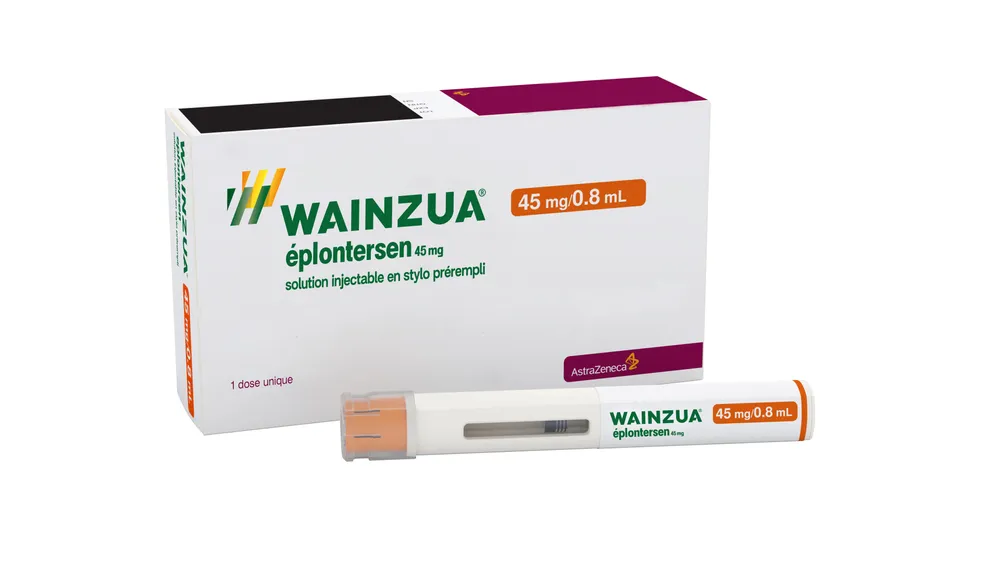
Table of Contents
- Package leaflet: Information for the patient
- Wainzua 45 mg injectable solution in a pre-filled pen
- 1. What Wainzua is and what it is used for
- 2. What you need to know before using Wainzua
- 3. How to use Wainzua
- 4. Possible side effects
- 5. How to store Wainzua
- 6. Package contents and other information
- INSTRUCTIONS FOR USE
- WAINZUA 45 mg solution for injection in a pre-filled pen
Package leaflet: Information for the patient
Wainzua 45 mg injectable solution in a pre-filled pen
eplontersen
This medicinal product is under additional monitoring. This will allow for rapid identification of new safety information. You can help by reporting any side effects you experience while taking this medicine. See the end of section 4 for information on how to report side effects.
Please read this leaflet carefully before using this medicine because it contains important information for you.
- Keep this leaflet. You may need to read it again.
- If you have any questions, ask your doctor, pharmacist, or nurse.
- This medicine has been prescribed for you only. Do not give it to others, even if their symptoms are the same as yours, as it could be harmful.
- If you experience any side effect, including those not listed in this leaflet, tell your doctor, pharmacist, or nurse. See section 4.
Contents of this leaflet
- What Wainzua is and what it is used for
- What you need to know before using Wainzua
- How to use Wainzua
- Possible side effects
- How to store Wainzua
- Contents of the pack and other information
1. What Wainzua is and what it is used for
The active substance of Wainzua is eplontersen, a type of medicine called an antisense oligonucleotide.
Wainzua is used to treat adults who have nerve damage throughout the body (polyneuropathy)
caused by hereditary transthyretin amyloidosis (ATTRv).
In people with ATTRv, the TTR protein is defective and breaks apart easily. This causes it to aggregate, forming what are known as amyloid deposits, which can accumulate around or within nerves and in other parts of the body, impairing their normal function.
Wainzua works by reducing the amount of TTR protein produced by the liver. As a result, less TTR protein that forms amyloid deposits is present in the blood, which may help reduce the symptoms of the disease.
2. What you need to know before using Wainzua
Do not use Wainzua:
- if you are allergic to eplontersen or to any of the other ingredients of this medicine (listed in section 6).
Warnings and precautions
During treatment with Wainzua, you will need to take a vitamin A supplement.
This medicine reduces the amount of vitamin A in the blood. Your doctor will measure your vitamin A
levels before starting treatment.
- Your doctor will ask you to take an oral vitamin A supplement every day during treatment.
Signs of low vitamin A levels may include reduced vision, especially at night,
dry eyes, blurred or hazy vision, or eye inflammation (redness, pain, excessive tearing or other discharge, or a sensation of a foreign body in the eye).
- Contact your doctor if you notice any vision problems or any other eye-related issues while using Wainzua. If necessary, your doctor may refer you for an ophthalmological examination.
You must confirm that you are not pregnant before starting treatment with Wainzua.
Both excessively high and low levels of vitamin A can harm fetal development. Women of childbearing potential must use effective contraceptive methods during treatment with Wainzua (see section “Pregnancy and breastfeeding” below in this leaflet).
- Vitamin A levels may remain low for more than 15 weeks after the last dose of Wainzua.
- Inform your doctor if you are planning a pregnancy. Your doctor will instruct you to stop taking Wainzua and vitamin A supplements. Your doctor will also ensure that your vitamin A levels have returned to normal before attempting pregnancy.
- Inform your doctor if you become pregnant unexpectedly during treatment. Your doctor will instruct you to stop taking Wainzua. During the first 3 months of pregnancy, your doctor may advise you to stop taking vitamin A supplements. During the last 6 months of pregnancy, your doctor may recommend resuming vitamin A supplementation if your levels have not yet normalized, due to the increased risk of vitamin A deficiency during the final 3 months of pregnancy.
Children and adolescents
Wainzua must not be used in children and adolescents under 18 years of age. Safety and efficacy have not been established in this age group.
Other medicines and Wainzua
Inform your doctor or pharmacist if you are currently using, have recently used, or might use any other
medicines.
Pregnancy and breastfeeding
If you are pregnant, suspect you may be pregnant, are planning a pregnancy, or are breastfeeding, consult your doctor or pharmacist before using this medicine.
Women of childbearing potential
Wainzua will reduce vitamin A levels in the blood, and vitamin A is important for normal fetal development (see section “Warnings and precautions” above in this leaflet).
- You must use effective contraceptive methods during treatment with Wainzua if you are a woman of childbearing potential.
- Speak to your doctor or nurse for advice on suitable contraceptive methods.
- You must confirm that you are not pregnant before starting treatment with Wainzua.
- Inform your doctor if you are planning a pregnancy or if you become pregnant during treatment. Your doctor will advise you to stop taking Wainzua.
Pregnancy
You must not use Wainzua if you are pregnant.
Breastfeeding
It is not known whether the active substance of Wainzua passes into breast milk. A risk to the breastfed infant cannot be excluded. Before starting treatment, inform your doctor if you are breastfeeding or planning to breastfeed. Your doctor may instruct you to stop taking Wainzua.
Driving and using machines
It is unlikely that Wainzua will affect your ability to drive or operate machinery. Your doctor will advise you whether your medical condition allows you to drive and use machinery safely.
Wainzua contains sodium
This medicine contains less than 1 mmol (23 mg) of sodium per 0.8 mL dose, i.e., essentially ‘sodium-free’.
3. How to use Wainzua
Use this medicine exactly as instructed by your doctor, pharmacist, or nurse. If you have any doubts, consult your doctor or pharmacist.
The recommended dose is one 45 mg injection once a month.
Wainzua is administered by subcutaneous injection (under the skin). The injection may be given in the abdominal area (abdomen) or the upper thigh. If administered by a caregiver or healthcare professional, Wainzua may also be given in the back of the upper arm. Do not inject the medicine into bruised, tender, red, hardened, scarred, or damaged skin. The area around the navel should be avoided.
You and your doctor or nurse will decide whether you, your caregiver, or a healthcare professional should administer the Wainzua injection. You or your caregiver will receive instructions on how to properly prepare and inject this medicine. Read the 'Instructions for Use' carefully before using the pre-filled pen (provided in a separate leaflet).
Your doctor will tell you how long you need to be treated with Wainzua. Do not stop treatment unless instructed to do so by your doctor.
If you use more Wainzua than you should
If you inject too much medicine, seek immediate medical help or go to a hospital emergency department. Do this even if you do not notice any symptoms. Take the medicine packaging or the pen with you.
If you forget to use Wainzua
If you miss a dose of Wainzua, take the next dose as soon as possible and continue with monthly injections from that date onward. Do not administer a double dose.
If you have any questions about the use of this medicine, consult your doctor, pharmacist, or nurse.
4. Possible side effects
Like all medicines, this medicine can cause side effects, although not everybody gets them.
Very common (may affect more than 1 in 10 people)
- Low levels of vitamin A, as shown by blood tests.
Common (may affect up to 1 in 10 people)
- Vomiting.
- Redness (erythema), itching, pain at the injection site.
Reporting of side effects
If you experience any side effect, including those not listed in this leaflet, talk to your doctor, pharmacist or nurse. You can also report side effects directly through the national reporting system detailed in Annex V. By reporting side effects, you can help provide more information on the safety of this medicine.
5. How to store Wainzua
Keep this medicine out of the sight and reach of children.
Do not use Wainzua after the expiry date which is stated on the label of the pre-filled pen and on the
carton after “Exp./EXP”. The expiry date refers to the last day of that month.
Store in the refrigerator (2 °C – 8 °C). Do not freeze.
If necessary, Wainzua may be stored outside the refrigerator at a temperature below 30 °C
in the original packaging for a maximum of 6 weeks. Dispose of the medicine if not used within 6 weeks and if no longer refrigerated.
Keep in the original packaging to protect the medicine from light.
Do not dispose of medicines via wastewater or household waste. Ask your pharmacist how to dispose of medicines no longer required. These measures will help protect the environment.
6. Package contents and other information
What Wainzua contains
The active substance is eplontersen. Each pre-filled pen contains 45 mg of eplontersen (as
eplontersen sodium) in 0.8 mL of solution.
The other components are disodium dihydrogen phosphate dihydrate, anhydrous disodium hydrogen phosphate, sodium chloride and water for injections. Hydrochloric acid and sodium hydroxide may be used to adjust the pH (see “Wainzua contains sodium” in section 2).
Description of the appearance of Wainzua and contents of the pack
Wainzua is a clear, colourless to yellow injectable solution.
Wainzua is available in a pack containing 1 single-use pre-filled pen.
Marketing Authorisation Holder
AstraZeneca AB
SE-151 85 Södertälje
Sweden
Manufacturer
AstraZeneca AB
Gärtunavägen
SE-152 57 Södertälje
Sweden
For further information about this medicinal product, please contact the local representative of the Marketing Authorisation Holder:
België/Belgique/Belgien Lietuva
AstraZeneca S.A./N.V. UAB AstraZeneca Lietuva
Tél/Tel: +32 2 370 48 11 Tel: +370 5 2660550
България Luxembourg/Luxemburg
АстраЗенека България ЕООД AstraZeneca S.A./N.V.
Тел.: +359 (2) 44 55 000 Tél/Tel: +32 2 370 48 11
Česká republika Magyarország
AstraZeneca Czech Republic s.r.o. AstraZeneca Kft.
Tel: +420 222 807 111 Tel.: +36 1 883 6500
Danmark Malta
AstraZeneca A/S Associated Drug Co. Ltd.
Tlf: +45 43 66 64 62 Tel: +356 2277 8000
Deutschland Nederland
AstraZeneca GmbH AstraZeneca BV
Tel: +49 40 809034100 Tel: +31 85 808 9900
Eesti Norge
AstraZeneca AstraZeneca AS
Tel: +372 6549 600 Tlf: +47 21 00 64 00
Ελλάδα Österreich
AstraZeneca A.E. AstraZeneca Österreich GmbH
Τηλ: +30 210 6871500 Tel: +43 1 711 31 0
España Polska
AstraZeneca Farmacéutica Spain, S.A. AstraZeneca Pharma Poland Sp. z o.o.
Tel: +34 91 301 91 00 Tel.: +48 22 245 73 00
France Portugal
AstraZeneca AstraZeneca Produtos Farmacêuticos Lda Tel:
Tél: +33 1 41 29 40 00 +351 21 434 61 00
Hrvatska România
AstraZeneca d.o.o. AstraZeneca Pharma SRL
Tel: +385 1 4628 000 Tel: +40 21 317 60 41
Ireland Slovenija
AstraZeneca Pharmaceuticals (Ireland) DAC Tel: AstraZeneca UK Limited
+353 1609 7100 Tel: +386 1 51 35600
Ísland Slovenská republika
Vistor hf. AstraZeneca AB, o.z.
Sími: +354 535 7000 Tel: +421 2 5737 777
Italia Suomi/Finland
AstraZeneca S.p.A. AstraZeneca Oy
Tel: +39 02 00704500 Puh/Tel: +358 10 23 010
Κύπρος Sverige
Αλέκτωρ Φαρµακευτική Λτδ AstraZeneca AB
Τηλ: +357 22490305 Tel: +46 8 553 26 000
Latvija
SIA AstraZeneca Latvija
Tel: +371 67377100
Other sources of information
More detailed information on this medicinal product is available on the website of the European Medicines Agency, https://www.ema.europa.eu .
INSTRUCTIONS FOR USE
WAINZUA 45 mg solution for injection in a pre-filled pen
(eplontersen)
These instructions for use contain information on how to inject Wainzua 45 mg solution for injection in a pre-filled pen.
Read these Instructions for Use before starting to use the pre-filled pen and each time you receive a new one. New information may be available.
These instructions do not replace discussions with your healthcare provider regarding your medical condition or treatment.
Your healthcare provider must show you or the person assisting you how to correctly use the pre-filled pen. If you or the person assisting you has any questions, please consult your healthcare provider.
Important information to know before using the pen
- Store the Wainzua pen in the refrigerator at a temperature between 2 °C and 8 °C in its original packaging until ready to use. If necessary, the unopened package may be stored at room temperature up to 30 °C for a maximum of 6 weeks.
- Keep the pen in its box until ready to use.
- Each pen contains one dose and can only be used once.
- The dose must be administered exclusively as a subcutaneous (under the skin) injection.
Do not use the pen if:
- It has been frozen.
- It has been dropped, damaged, or appears tampered with.
- The expiry date (Exp.) has passed.
Do not share the pen with anyone.
- Keep the pen and all medicines out of sight and reach of children.
The pre-filled pen
Do not remove the cap until shortly before administering the injection.
Do not touch the orange needle shield.
Before use After use
Cap
Viewing
(removed)
window Wings
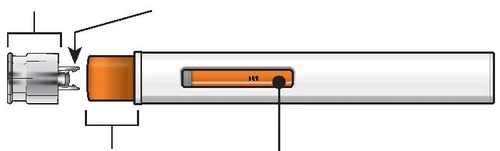
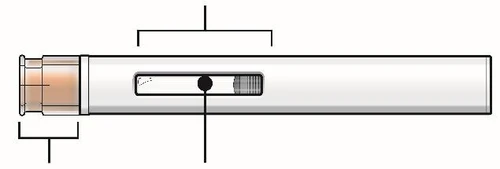
protective
Orange needle shield Plunger
Medicine
Orange
liquid
(needle hidden inside)
Preparing for injection
Step 1 – Gather injection materials
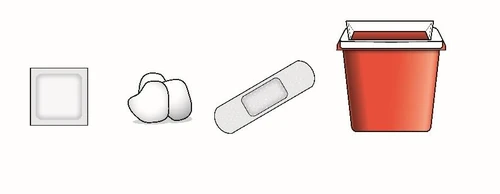
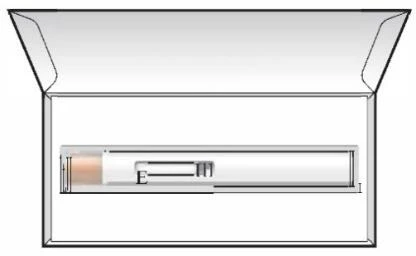
1 alcohol-impregnated 1 cotton ball or 1 plaster
1 pen
wipe gauze pad

Not included
Step 2 – Remove from refrigerator and wait 30 minutes

Leave the pre-filled pen in its packaging for 30 minutes at room temperature between 20 °C and 25 °C before administering the injection.
- Do not heat the pen in any other way. For example, do not heat it in a microwave, warm water, or near other heat sources.
- Keep the pen away from light or direct sunlight.
Step 3 – Remove the pre-filled pen from packaging and inspect it
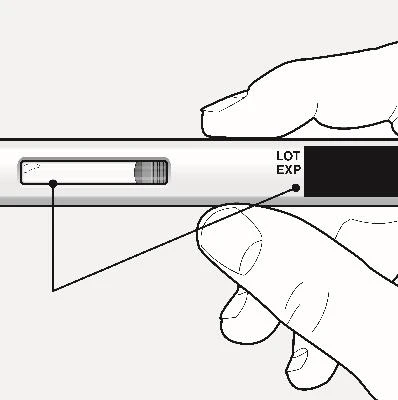
Check the pre-filled pen for any signs of damage.
Check the expiry date (Exp.).
Inspect the liquid through the viewing window.
- It is normal to see small air bubbles in the liquid.
- The liquid should be clear and colourless to slightly yellow. Inspect carefully.
- Do not use the medicine if the liquid is cloudy, discoloured, or contains visible particles.
Administering the injection with the pre-filled pen
Step 4 – Choose the injection site
For all users
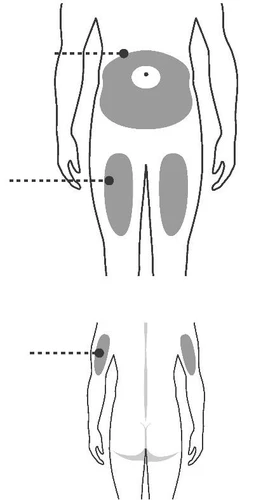
You or the person assisting you may administer the
abdomen
injection into the front of the thigh or lower
abdomen (abdomen).
The person assisting you or the healthcare provider may
also administer the injection into the back of the
upper arm.
Do not attempt to self-inject into the back of the
upper arm.
For each injection, select a site at least 3 cm away
from the previous injection site.
Do not administer the injection:
- Within a 5 cm radius around the navel.
- In areas where the skin is red, warm, painful, bruised, cracked, or hardened.
- On scars or on damaged, discoloured, or tattooed skin.
- Through clothing.
thigh
Only for patient’s caregiver or healthcare provider
back of
upper arm
Step 5 – Wash hands and clean the injection site
Wash hands thoroughly with soap and water.
Clean the injection site with an alcohol wipe or soap and water. Allow the area to air dry.
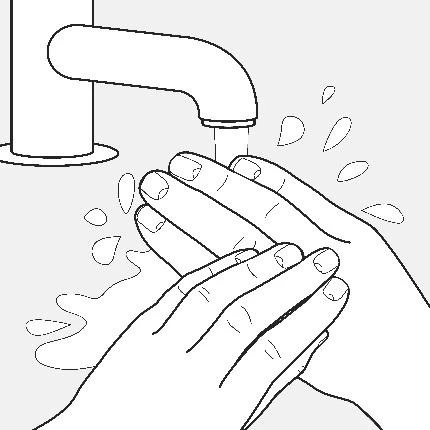
Do not touch the cleaned area
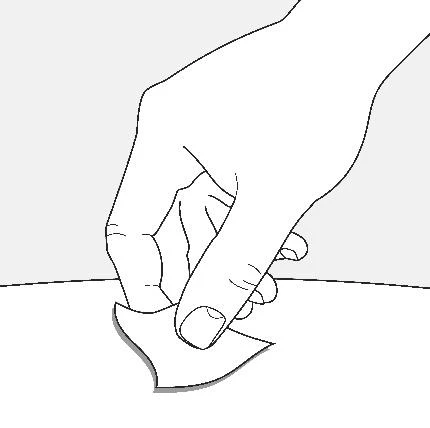
before administering the injection.
Step 6 – Remove the cap
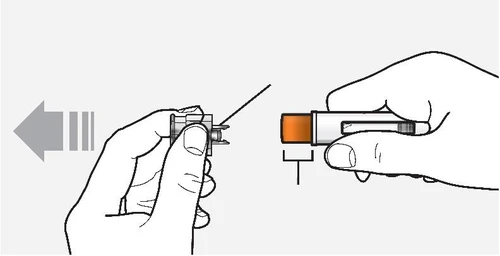
Holding the body of the pen with one hand, carefully remove the transparent cap with the other hand, without tilting it. At this point, the orange needle shield is exposed and the needle remains hidden beneath it.
- Discard (dispose of) the transparent cap.
- Do not touch the needle or press the orange needle shield with your fingers.
Orange
needle
shield
- Do not recap the pre-filled pen. This could cause premature leakage of the medicine or damage the pre-filled pen.
Step 7 – Administer the injection
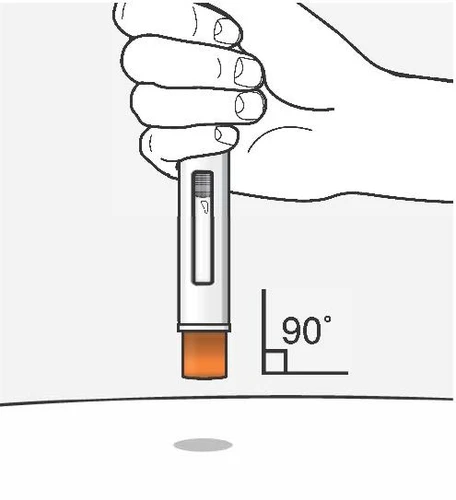
Administer the injection using the pre-filled pen by following the steps illustrated in figures a, b, c, and d.
During the injection, press and hold the pen for 10 seconds until the orange plunger fills the viewing window. You may hear a first 'click' at the beginning of the injection and a second 'click' at the end. This is normal.
Do not move or reposition the pre-filled pen during the injection.
Position the pre-filled pen.
- Place the orange needle shield against the skin horizontally (at a 90-degree angle).
- Ensure the viewing window is clearly visible.
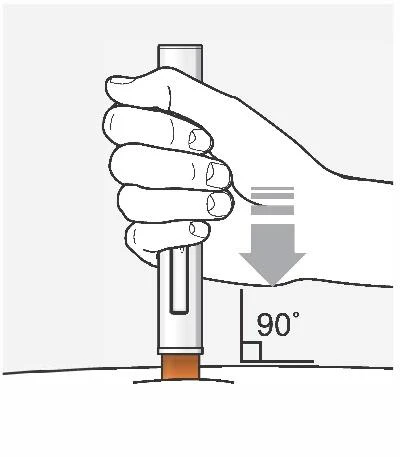
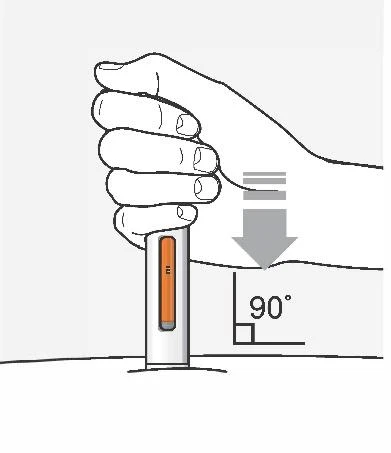
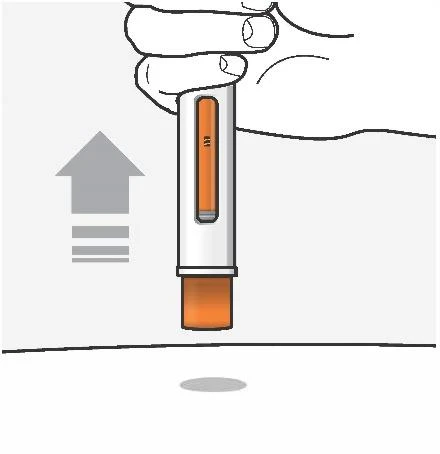
b) c) d)

Press firmly and hold Hold firmly pressed After completing
down. for about 10 seconds. the injection, lift the pen
- You may hear the • The orange plunger • The orange needle shield
immediately the first will fill the viewing will slide downward and
'click', indicating the window. lock into place over the
start of administration. • You may hear the second needle.
• The orange plunger will 'click' at the end of
move downward in the administration.
viewing window.
Step 8 – Check the viewing window
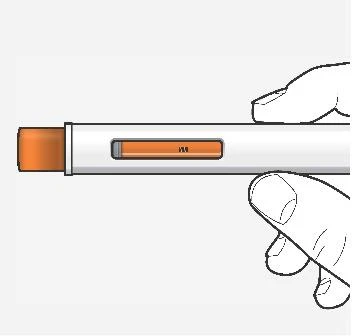
Observe the viewing window to ensure that the entire dose has been injected.
If the viewing window is not completely filled by the orange plunger, the full dose may not have been administered.
If this occurs or if you have any concerns, contact your doctor or healthcare provider.
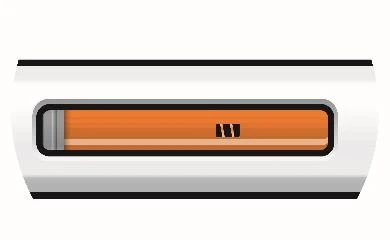
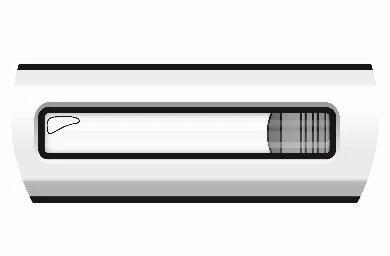
Before injection After injection
Step 9 – Check the injection site
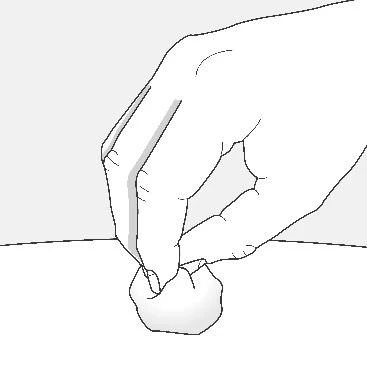
A small amount of blood or liquid may appear at the injection site. This is normal.
If needed, apply gentle pressure with a cotton ball or gauze pad and apply a plaster.
Step 10 – Dispose of the used pre-filled pen
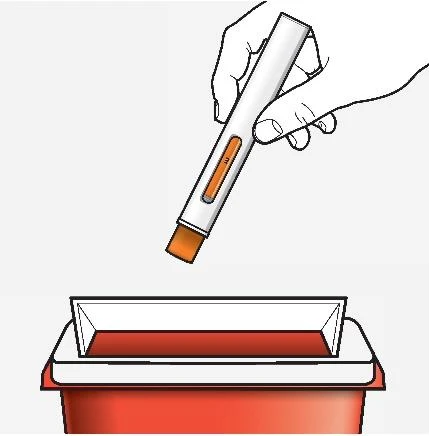
Immediately after use, place the used pen into a sharps container that is puncture-resistant.
Do not dispose of the pen in household waste.
Disposal guidelines
Dispose of the full sharps container according to the instructions provided by your healthcare provider or pharmacist.
Do not recycle the used sharps container.