Voranigo
Italy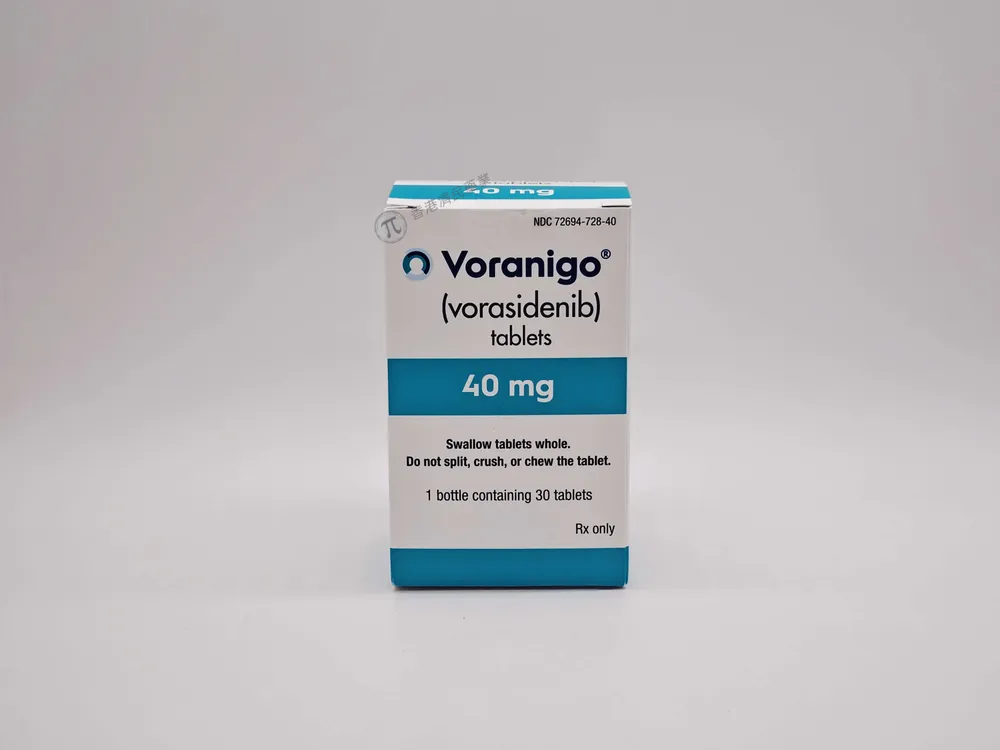
Table of Contents
- Package leaflet: Information for the user
- Voranigo 10 mg film-coated tablets, 40 mg film-coated tablets
- 1. What Voranigo is and what it is used for
- 2. What you should know before taking Voranigo
- 3. How to take Voranigo
- 4. Possible side effects
- 5. How to store Voranigo
- 6. Package contents and other information
Package leaflet: Information for the user
Voranigo 10 mg film-coated tablets, 40 mg film-coated tablets
vorasidenib
This medicinal product is subject to additional monitoring. This will allow any new safety information to be identified quickly. You can help by reporting any side effects you experience while taking this medicine. See the end of section 4 for information on how to report side effects.
Please read all of this leaflet carefully before you start taking this medicine, as it contains important information for you.
- Keep this leaflet. You may need to read it again.
- If you have any questions, ask your doctor, pharmacist, or nurse.
- This medicine has been prescribed for you only. Do not give it to other people, even if their symptoms are the same as yours, as it may be harmful.
- If you experience any side effect, including those not listed in this leaflet, talk to your doctor, pharmacist, or nurse. See section 4.
Contents of this leaflet
- What Voranigo is and what it is used for
- What you need to know before taking Voranigo
- How to take Voranigo
- Possible side effects
- How to store Voranigo
- Contents of the pack and other information
1. What Voranigo is and what it is used for
What Voranigo is and how it works
Voranigo is an anticancer medicine that contains the active substance vorasidenib.
It is used to treat brain tumours called astrocytoma or oligodendroglioma in adults and adolescents aged 12 years and older who weigh at least 40 kg, who have undergone surgery as their only treatment, and who do not immediately require further treatments such as radiotherapy or chemotherapy.
This medicine is used only when tumour cells have alterations (mutations) in genes that produce proteins known as IDH1 and IDH2. Your doctor will perform a test to check whether the cells have this mutation before starting treatment. The IDH1 and IDH2 proteins play an important role in cellular energy production; when the IDH1 or IDH2 gene is mutated, these proteins become altered and do not function properly. This leads to changes in cells that can result in cancer development.
The active substance in Voranigo, vorasidenib, blocks the abnormal IDH1 and IDH2 proteins. In patients with astrocytoma or oligodendroglioma of the brain, these proteins malfunction, causing overproduction of a substance called 2-hydroxyglutarate (2-HG), which contributes to the transformation of normal cells into tumour cells. By blocking these proteins, vorasidenib interrupts the abnormal production of 2-HG, helping to slow down or stop tumour growth.
2. What you should know before taking Voranigo
Do not take Voranigo
- if you are allergic to vorasidenib or to any of the other ingredients of this medicine (listed in section 6).
Warnings and precautions
Talk to your doctor, pharmacist, or nurse before taking Voranigo if:
- you have kidney problems
- you have liver problems
Monitoring of liver function
Voranigo may affect how your liver works. Your doctor will perform blood tests to check your liver function before starting treatment with Voranigo and, as needed, during treatment. If necessary, your doctor may reduce the dose or temporarily or permanently stop treatment.
Contact your doctor, pharmacist, or nurse immediately if you experience any of the following symptoms, which may be signs or symptoms of liver problems:
- yellowing of the skin or whites of the eyes (jaundice)
- dark "tea-colored" urine
- loss of appetite
- pain in the upper right part of the stomach area
- feeling weak or tired
Pregnancy and contraception
This medicine may harm an unborn baby. Women of childbearing potential must use effective contraception during treatment and for at least 2 months after stopping treatment.
Men taking Voranigo must also use effective contraception during treatment and for at least 2 months after stopping treatment if their partner is of childbearing potential (see "Contraception in women and men").
Children
Do not give this medicine to children under 12 years of age. It has not been studied in this age group.
Other medicines and Voranigo
Tell your doctor or pharmacist if you are taking, have recently taken, or might take any other medicines. This is because Voranigo may affect how other medicines work, and other medicines may affect how Voranigo works.
In particular, inform your doctor or pharmacist if you are taking any of the following medicines listed below.
The following medicines may increase the risk of Voranigo side effects by increasing the amount of Voranigo in the blood:
- Ciprofloxacin (used to treat bacterial infections)
- Fluvoxamine (used to treat depression)
The following medicines may reduce the effectiveness of Voranigo by decreasing the amount of Voranigo in the blood:
- Rifampicin (used to treat tuberculosis or other infections)
- Phenytoin (used to treat epilepsy)
Voranigo may reduce the effectiveness of the following medicines by decreasing their amount in the blood:
- Alfentanil (used for anesthesia in surgery)
- Carbamazepine, fosphenytoin, phenobarbital, phenytoin (used to treat epileptic seizures)
- Cyclosporine, everolimus, sirolimus, tacrolimus (medicines used after organ transplantation to control the body's immune response)
- Fentanyl (used for severe pain)
- Pimozide (used to treat abnormal thoughts and emotions)
- Quinidine (used to treat irregular heartbeats)
- Ibrutinib, ifosfamide, tamoxifen (used to treat certain types of cancer)
- Buspirone (used to treat nervous system disorders and/or relieve anxiety)
- Darunavir, saquinavir, tipranavir (medicines used to treat HIV infection)
- Midazolam, triazolam (used to help sleep and/or relieve anxiety)
- Amitriptyline, dosulepin, imipramine, trimipramine (used to treat depression)
- Bupropion (used to stop smoking)
- Celecoxib (used to treat arthritis)
- Repaglinide (used to treat diabetes)
- Rosuvastatin (used to lower cholesterol in the blood)
- Valproic acid (used to treat epilepsy)
- Warfarin (used to treat blood clots)
- Hormonal contraceptives (medicines used to prevent pregnancy, such as birth control pills). See the section "Contraception in women and men" below.
The medicines listed here may not be the only ones that interact with Voranigo. Ask your doctor or pharmacist for advice before taking any medicine.
Pregnancy
Voranigo must not be used during pregnancy because it may harm the fetus. If you are of childbearing potential, your doctor will perform a pregnancy test before starting treatment.
If you are pregnant, suspect you may be pregnant, or are planning a pregnancy, consult your doctor before taking this medicine. Contact your doctor or nurse immediately if you become pregnant while taking Voranigo.
Contraception in women and men
Voranigo must not be used during pregnancy because it may harm the fetus. Women of childbearing potential or men with partners of childbearing potential must use effective contraception to avoid pregnancy during treatment with Voranigo and for at least 2 months after the last dose. Voranigo may interfere with the effectiveness of hormonal contraceptives (such as birth control pills, patches, or contraceptive implants). If you or your partner use hormonal contraception, you must also use a barrier method (such as a condom or diaphragm) to prevent pregnancy.
Talk to your doctor or nurse to find out which contraceptive methods are most suitable for you and your partner.
Breast-feeding
It is not known whether Voranigo passes into breast milk. Do not breast-feed during treatment with Voranigo and for at least 2 months after the last dose.
Fertility
Voranigo may affect the ability to have children. Before using this medicine, consult your doctor.
Driving and using machines
Voranigo is not expected to affect the ability to drive or use machinery.
Voranigo contains lactose
This medicine contains lactose (a sugar found in milk or dairy products). If your doctor has diagnosed you with an intolerance to certain sugars, contact them before taking this medicine.
Voranigo contains sodium
This medicine contains less than 1 mmol (23 mg) of sodium per tablet, i.e., essentially 'sodium-free'.
3. How to take Voranigo
Take this medicine exactly as your doctor or pharmacist has told you. If you have any doubts, consult your doctor or pharmacist.
The recommended dose for adults and adolescents (from 12 years of age) is:
- For patients weighing at least 40 kg, take 40 mg (one 40 mg tablet) once daily.
- Patients weighing less than 40 kg must not take Voranigo.
If certain side effects occur while taking Voranigo (see section 4 “Possible side effects”), your doctor may reduce the dose or temporarily or permanently stop treatment. Do not change the dose or stop taking Voranigo without first talking to your doctor.
How and when to take Voranigo
- Take Voranigo orally once daily. Try to take the medicine at the same time each day.
- Swallow the tablet whole with a glass of water. Do not divide, crush, or chew the tablet; if you do not swallow the tablet whole, you may not receive the full dose.
- Do not eat for at least 2 hours before and 1 hour after taking the tablet.
- If you vomit after taking your usual dose, do not take an additional dose. Take the next dose at the scheduled time.
Do not ingest the desiccant pack contained in the bottle.
If you take more Voranigo than you should
If you accidentally take too many tablets, inform your doctor, pharmacist, or nurse immediately. Medical intervention may be urgently required.
If you forget to take Voranigo
Be careful not to miss a dose of Voranigo. If you miss a dose by less than 6 hours, take it as soon as you remember, and take the next dose at the scheduled time. If you miss a dose by more than 6 hours, do not take the missed dose and wait to take the next dose at the scheduled time.
If you stop taking Voranigo
Do not stop taking Voranigo unless your doctor tells you to. It is important to take Voranigo every day for the entire duration prescribed by your doctor.
If you have any questions about how to take this medicine, consult your doctor, pharmacist, or nurse.
4. Possible side effects
Like all medicines, this medicine can cause side effects, although not everybody gets them.
Tell your doctor, pharmacist or nurse if you notice any of the following side effects:
Serious side effects
If you experience serious side effects, stop taking the medicine and inform your doctor immediately.
Your doctor may reduce the dose, suspend or completely stop the treatment.
Very common (may affect more than 1 in 10 people):
- Increased liver enzymes, measured by blood tests (see section 2, “Monitoring of liver function”)
Other side effects
Very common (may affect more than 1 in 10 people):
- Abdominal pain (stomach ache)
- Diarrhoea
- Decrease in platelet count, components that help blood to clot, measured in blood tests; this may cause bleeding and bruising
- Fatigue
- Dizziness (light-headed feeling)
Common (may affect up to 1 in 10 people):
- Increased blood sugar levels (hyperglycaemia)
- Decreased appetite
- Low levels of phosphate in the blood measured by blood tests (hypophosphataemia); this may cause confusion or muscle weakness
- Difficulty in breathing
- Condition in which stomach juices flow back into the oesophagus
Reporting of side effects
If you get any side effects, including those not listed in this leaflet, talk to your doctor, pharmacist or nurse.
You can also report side effects directly via the national reporting system listed in Annex V.* By reporting side effects, you can help provide more information on the safety of this medicine.
5. How to store Voranigo
Keep this medicine out of the sight and reach of children.
Do not use this medicine after the expiry date which is stated on the label of the vial and the
packaging after EXP. The expiry date refers to the last day of the month.
This medicine does not require any special storage conditions.
Do not dispose of any medicine via wastewater or household waste. Ask your pharmacist how to
dispose of medicines you no longer use. This will help protect the environment.
6. Package contents and other information
What Voranigo contains
The active substance is vorasidenib.
- Voranigo 10 mg: Each film-coated tablet contains 10 mg of vorasidenib (as hemicitric acid, hemihydrate).
- Voranigo 40 mg: Each film-coated tablet contains 40 mg of vorasidenib (as hemicitric acid, hemihydrate).
The other components are:
- Tablet core: microcrystalline cellulose (E460), sodium croscarmellose, silicified microcrystalline cellulose, magnesium stearate (E470b), and sodium lauryl sulfate (E487)
- Film coating: hypromellose, titanium dioxide (E171), lactose monohydrate, and macrogol (E1521)
- Printing ink: black iron oxide (E172), propylene glycol (E1520), and hypromellose (E464). See section 2 “Voranigo contains lactose” and “Voranigo contains sodium”.
Description of the appearance of Voranigo and the contents of the pack
10 mg film-coated tablets
- Round tablets, white to off-white in colour, with “10” engraved on one side
40 mg film-coated tablets
- Oblong tablets, white to off-white in colour, with “40” engraved on one side.
Voranigo is available in a plastic bottle with child-resistant closure containing 30
film-coated tablets and 3 desiccant containers. The bottles are packaged in a
cardboard box. Each box contains 1 bottle.
Marketing Authorisation Holder
Les Laboratoires Servier
50, rue Carnot
92284 Suresnes cedex
France
Manufacturer
Servier (Ireland) Industries Ltd.
Gorey Road
Arklow
Co. Wicklow
Y14 E284
Ireland
For further information on this medicinal product, please contact the local representative of the Marketing Authorisation Holder:
België/Belgique/Belgien Lietuva
S.A. Servier Benelux N.V. UAB Servier Pharma
Tél/Tel: +32 (0)2 529 43 11 Tel: +370 (5) 2 63 86 28
България Luxembourg/Luxemburg
Сервие Медикал ЕООД S.A. Servier Benelux N.V.
Тел.: +359 2 921 57 00 Tél/Tel: +32 (0)2 529 43 11
Česká republika Magyarország
Servier s.r.o. Servier Hungaria Kft.
Tel: +420 222 118 111 Tel.: +36 1 238 7799
Danmark Malta
Servier Danmark A/S V.J. Salomone Pharma Ltd
Tlf.: +45 36 44 22 60 Tel: + 356 21 22 01 74
Deutschland Nederland
Servier Deutschland GmbH Servier Nederland Farma B.V.
Tel: +49 (0)89 57095 01 Tel: +31 (0)71 5246700
Eesti Norge
Servier Laboratories OÜ Servier Danmark A/S
Tel:+ 372 664 5040 Tlf: +45 36 44 22 60
Ελλάδα Österreich
ΣΕΡΒΙΕ ΕΛΛΑΣ ΦΑΡΜΑΚΕΥΤΙΚΗ ΕΠΕ Servier Austria GmbH
Τηλ: +30 210 939 1000 Tel: +43 (1) 524 39 99
España Polska
Laboratorios Servier S.L. Servier Polska Sp. z o.o.
Tel: +34 91 748 96 30 Tel.: +48 (0) 22 594 90 00
France Portugal
Les Laboratoires Servier Servier Portugal, Lda
Tél: +33 (0)1 55 72 60 00 Tel: +351 21 312 20 00
Hrvatska România
Servier Pharma, d. o. o. Servier Pharma SRL
Tel: +385 (0)1 3016 222 Tel: +4 021 528 52 80
Ireland Slovenija
Servier Laboratories (Ireland) Ltd. Servier Pharma d. o. o.
Tel: +353 (0)1 663 8110 Tel: +386 (0)1 563 48 11
Ísland Slovenská republika
Servier Laboratories
c/o Icepharma hf Servier Slovensko spol. s r.o.
Sími: +354 540 8000 Tel:+421 (0) 2 5920 41 11
Italia Suomi/Finland
Servier Italia S.p.A. Servier Finland Oy
Tel: +39 06 669081 Puh /Tel: +358 (0)9 279 80 80
Κύπρος Sverige
C.A. Papaellinas Ltd. Servier Sverige AB
Τηλ: +357 22741741 Tel: +46 (0)8 522 508 00
Latvija
SIA Servier Latvia
Tel: +371 67502039
Further sources of information
More detailed information on this medicinal product is available on the website of the European Medicines Agency: http://www.ema.europa.eu/ .
This leaflet is available in all languages of the European Union/European Economic Area on the website of the European Medicines Agency.