Vitrakvi
Italy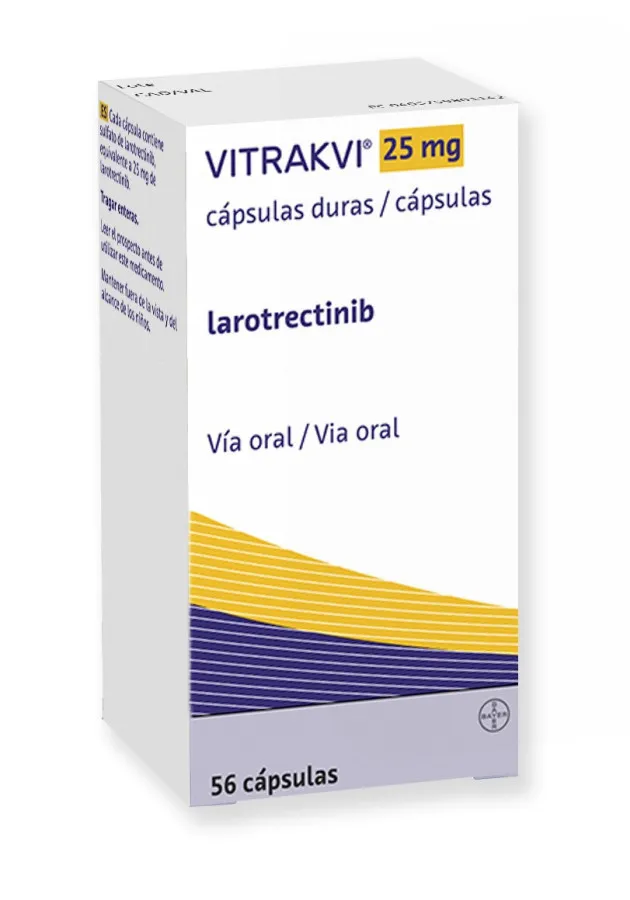
Table of Contents
- Package leaflet: Information for the patient
- VITRAKVI 25 mg hard capsules, 100 mg hard capsules
- 1. What VITRAKVI is and what it is used for
- 2. What you should know before taking VITRAKVI
- 3. How to take VITRAKVI
- 4. Possible side effects
- 5. How to store VITRAKVI
- 6. Package contents and other information
- Package leaflet: Information for the patient
- VITRAKVI 20 mg/mL oral solution
- 1. What VITRAKVI is and what it is used for
- 2. What you need to know before taking VITRAKVI
- 3. How to take VITRAKVI
- 4. Possible side effects
- 5. How to store VITRAKVI
- 6. Package contents and other information
- Patient Information Leaflet
- VITRAKVI 20 mg/mL oral solution
- 1. What VITRAKVI is and what it is used for
- 2. What you need to know before taking VITRAKVI
- 3. How to take VITRAKVI
- 4. Possible side effects
- 5. How to store VITRAKVI
- 6. Package contents and other information
Package leaflet: Information for the patient
VITRAKVI 25 mg hard capsules, 100 mg hard capsules
larotrectinib
This medicinal product is subject to additional monitoring. This will allow for rapid identification of new safety information. You can help by reporting any side effects you experience while taking this medicine. See the end of section 4 for information on how to report side effects.
Please read all of this leaflet carefully before taking this medicine because it contains important information for you.
- Keep this leaflet. You may need to read it again.
- If you have any questions, ask your doctor, pharmacist, or nurse.
- This medicine has been prescribed for you only. Do not give it to other people, even if they have the same symptoms as yours, because it may be harmful.
- If you experience any side effect, including those not listed in this leaflet, talk to your doctor, pharmacist, or nurse. See section 4.
- In this patient information leaflet, it is assumed that the reader is the person taking the medicine. If you are administering this medicine to your child, replace "you" with "your child".
Contents of this leaflet
- What VITRAKVI is and what it is used for
- What you need to know before taking VITRAKVI
- How to take VITRAKVI
- Possible side effects
- How to store VITRAKVI
- Contents of the pack and other information
1. What VITRAKVI is and what it is used for
What VITRAKVI is used for
VITRAKVI contains the active substance larotrectinib.
It is used in adults, adolescents, and children to treat solid tumours (cancer) in various parts of the body that are caused by an alteration in the NTRK gene (Neurotrophic Tyrosine Receptor Kinase, neurotrophic tyrosine receptor kinase).
VITRAKVI is used only if
- these tumours are in an advanced stage of disease or have spread to other parts of the body, or when surgical removal of the tumour could lead to serious complications and
- no satisfactory alternative treatment options are available.
Before administering VITRAKVI, your doctor will perform a test to confirm the presence of this NTRK gene alteration.
How VITRAKVI works
In patients with tumours caused by an alteration in the NTRK gene, this genetic change causes the body to produce an abnormal protein called TRK fusion protein, which can lead to uncontrolled cell growth and tumour development.
VITRAKVI blocks the activity of TRK fusion proteins and therefore may reduce or stop tumour growth. It may also help shrink the tumour.
If you have any questions about how VITRAKVI works or why it has been prescribed for you, please consult your doctor, pharmacist, or nurse.
2. What you should know before taking VITRAKVI
Do not take VITRAKVI if
- you are allergic to larotrectinib or to any of the other ingredients of this medicine (listed in section 6).
Tests and monitoring
VITRAKVI may increase the levels of the liver enzymes ALT, AST, and bilirubin in the blood. Your doctor will perform blood tests before and during treatment to measure the levels of ALT, AST, and bilirubin and to monitor liver function.
Other medicines and VITRAKVI
Tell your doctor, pharmacist, or nurse if you are taking, have recently taken, or might take any other medicines. This is because some medicines may affect the action of VITRAKVI or because VITRAKVI may affect the action of other medicines.
In particular, inform your doctor, pharmacist, or nurse if you are taking any of the following medicines:
- medicines used to treat fungal or bacterial infections, such as itraconazole, voriconazole, clarithromycin, telithromycin, troleandomycin
- a medicine used to treat Cushing's syndrome, ketoconazole
- medicines used to treat HIV infection, such as atazanavir, indinavir, nelfinavir, ritonavir, saquinavir, rifabutin, efavirenz
- a medicine used to treat depression, nefazodone
- medicines used to treat epilepsy, such as phenytoin, carbamazepine, phenobarbital
- a herbal medicine used to treat depression, known as St. John's wort
- a medicine used to treat tuberculosis, rifampicin
- a medicine used to relieve severe pain, alfentanil
- medicines used to prevent organ transplant rejection, such as cyclosporine, sirolimus, tacrolimus
- a medicine used to treat heart rhythm disorders, quinidine
- medicines used to treat migraine, such as dihydroergotamine, ergotamine
- a medicine used for long-term pain management, fentanyl
- a medicine used to control involuntary movements or sounds, pimozide
- a medicine that helps to stop smoking, bupropion
- medicines to lower blood sugar levels, such as repaglinide, tolbutamide
- a medicine that prevents blood clots, warfarin
- a medicine used to reduce stomach acid production, omeprazole
- a medicine that helps control high blood pressure, valsartan
- a group of medicines that help lower cholesterol, the statins
- hormonal medicines used for contraception; see the section “Contraception – for men and women” below.
If any of these apply to you (or if you are unsure), speak to your doctor, pharmacist, or nurse.
VITRAKVI with food and drink
Do not eat grapefruit or drink grapefruit juice during treatment with VITRAKVI. This is because grapefruit may increase the amount of VITRAKVI in your body.
Pregnancy and breastfeeding
Pregnancy
If you are pregnant, think you might be pregnant, or are planning to become pregnant, ask your doctor or pharmacist for advice before taking this medicine.
You must not take VITRAKVI during pregnancy, as the effect of VITRAKVI on the unborn baby is unknown.
Breastfeeding
Do not breastfeed while taking this medicine and for 3 days after your last dose. It is unknown whether VITRAKVI passes into breast milk.
Contraception – for men and women
You must avoid becoming pregnant while taking this medicine.
If you are of childbearing age, your doctor will perform a pregnancy test before starting treatment.
You must use effective contraception while taking VITRAKVI and for at least 1 month after the last dose if:
- you are of childbearing age. If you are using hormonal contraceptives, you must also use a barrier method, such as a condom.
- you have sexual intercourse with a woman of childbearing age. Ask your doctor which contraceptive method is most suitable for you.
Driving, cycling, and using machines
VITRAKVI may cause dizziness or fatigue. If this occurs, do not drive, cycle, or use any tools or machinery.
3. How to take VITRAKVI
Take this medicine exactly as instructed by your doctor or pharmacist. If you have any doubts, consult your doctor, pharmacist, or nurse.
What dose to take
Adults (from 18 years of age)
- The recommended dose of VITRAKVI is 100 mg (1 capsule of 100 mg or 4 capsules of 25 mg), twice daily.
- Your doctor will monitor the dose and adjust it as necessary.
Children and adolescents
- The pediatrician will determine the appropriate dose for your child based on height and weight.
- The maximum recommended dose is 100 mg (1 capsule of 100 mg or 4 capsules of 25 mg), twice daily.
- The pediatrician will monitor the dose and adjust it as necessary.
An oral solution of VITRAKVI is available for patients unable to swallow capsules.
How to take this medicine
- VITRAKVI can be taken with or without food.
- Do not eat grapefruit or drink grapefruit juice during treatment with this medicine.
- Swallow VITRAKVI capsules whole with a glass of water. Do not open, chew, or crush the capsule, as it has a very bitter taste.
If you take more VITRAKVI than you should
Contact your doctor, pharmacist, or nurse, or go to hospital immediately. Take the medicine pack and this leaflet with you.
If you forget to take a dose of VITRAKVI
Do not take a double dose to make up for the missed dose, or if you vomit after taking the medicine. Take the next dose at your usual time.
If you stop taking VITRAKVI
Do not stop treatment with this medicine without first consulting your doctor. It is important that you take VITRAKVI for the entire duration prescribed by your doctor.
If you are unable to take the medicine as prescribed, contact your doctor immediately.
If you have any doubts about how to use this medicine, consult your doctor, pharmacist, or nurse.
4. Possible side effects
Like all medicines, this medicine can cause side effects, although not everyone gets them.
Contact your doctor immediately if you experience any of the following serious side effects:
- dizziness (a very common side effect which may affect more than 1 in 10 people), tingling, numbness, or a burning sensation in the hands and feet, difficulty walking normally (a common side effect which may affect up to 1 in 10 people). These side effects may be symptoms of nervous system disorders. Your doctor may decide to reduce the dose or to stop or permanently discontinue treatment.
Inform your doctor, pharmacist, or nurse if you notice any of the following side effects:
Very common (may affect more than 1 in 10 people):
- pale skin and awareness of heartbeat, which could be symptoms of a low red blood cell count (anaemia)
- flu-like symptoms, including fever, which could be symptoms of a low white blood cell count (neutropenia, leucopenia)
- feeling unwell (nausea or vomiting)
- diarrhoea
- constipation
- muscle pain (myalgia)
- feeling of tiredness (fatigue)
- increased levels of liver enzymes in blood tests
- weight gain.
Common (may affect up to 1 in 10 people):
- increased tendency to bruise or bleed, which could be a sign of reduced platelet count (thrombocytopenia)
- altered taste perception (dysgeusia)
- muscle weakness
- increased levels of “alkaline phosphatase” in blood tests (very common in children).
Not known (frequency cannot be estimated from the available data):
- a condition may occur involving fatigue, pain in the upper right part of the abdomen, loss of appetite, nausea or vomiting, yellowing of the skin or eyes (jaundice), increased tendency to bruise or bleed, and dark urine. These could be symptoms of liver problems.
Reporting of side effects
If you get any side effects, including those not listed in this leaflet, talk to your doctor, pharmacist, or nurse. You can also report side effects directly through the national reporting system listed in Annex V. By reporting side effects, you can help provide more information on the safety of this medicine.
5. How to store VITRAKVI
- Keep this medicine out of the sight and reach of children.
- Do not use this medicine after the expiry date stated on the carton and label of the vial after “Exp.” / “EXP”. The expiry date refers to the last day of that month.
- This medicine does not require any special storage conditions.
- Do not use this medicine if you notice that the capsules appear damaged.
- Do not dispose of any medicine via wastewater or household waste. Ask your pharmacist how to dispose of medicines no longer required. This will help protect the environment.
6. Package contents and other information
What VITRAKVI contains
The active substance is larotrectinib.
Each 25 mg VITRAKVI capsule contains 25 mg of larotrectinib (as sulfate).
Each 100 mg VITRAKVI capsule contains 100 mg of larotrectinib (as sulfate).
The other components are:
Capsule shell:
- Gelatin
- Titanium dioxide (E 171) Printing ink:
- Shellac, bleached and de-waxed
- Aluminium lake containing indigo carmine (E 132)
- Titanium dioxide (E 171)
- Propylene glycol (E 1520)
- Dimethicone 1000
Description of the appearance of VITRAKVI and package contents
- VITRAKVI 25 mg is supplied as an opaque white hard gelatin capsule (18 mm length x 6 mm width), with the BAYER cross and “25 mg” printed in blue on the capsule body.
- VITRAKVI 100 mg is supplied as an opaque white hard gelatin capsule (22 mm length x 7 mm width), with the BAYER cross and “100 mg” printed in blue on the capsule body.
Each carton contains 1 child-resistant plastic bottle with 56 hard gelatin capsules.
Marketing Authorization Holder
Bayer AG
51368 Leverkusen
Germany
Manufacturer
Bayer AG
Kaiser-Wilhelm-Allee
51368 Leverkusen
Germany
For further information about this medicinal product, please contact the local representative of the Marketing Authorization Holder:
België/Belgique/Belgien Lietuva
Bayer SA-NV UAB Bayer
Tél/Tel: +32-(0)2-535 63 11 Tel. +37 05 23 36 868
България Luxembourg/Luxemburg
Байер България ЕООД Bayer SA-NV
Tел.: +359 (0)2 4247280 Tél/Tel: +32-(0)2-535 63 11
Česká republika Magyarország
Bayer s.r.o. Bayer Hungária KFT
Tel: +420 266 101 111 Tel:+36 14 87-41 00
Danmark Malta
Bayer A/S Alfred Gera and Sons Ltd.
Tlf: +45 45 23 50 00 Tel: +35 621 44 62 05
Deutschland Nederland
Bayer Vital GmbH Bayer B.V.
Tel: +49 (0)214-30 513 48 Tel: +31-23-799 1000
Eesti Norge
Bayer OÜ Bayer AS
Tel: +372 655 8565 Tlf: +47 23 13 05 00
Ελλάδα Österreich
Bayer Ελλάς ΑΒΕΕ Bayer Austria Ges.m.b.H.
Τηλ: +30-210-61 87 500 Tel: +43-(0)1-711 46-0
España Polska
Bayer Hispania S.L. Bayer Sp. z o.o.
Tel: +34-93-495 65 00 Tel: +48 22 572 35 00
France Portugal
Bayer HealthCare Bayer Portugal, Lda.
Tél (N° vert): +33-(0)800 87 54 54 Tel: +351 21 416 42 00
Hrvatska România
Bayer d.o.o. SC Bayer SRL
Tel: +385-(0)1-6599 900 Tel: +40 21 529 59 00
Ireland Slovenija
Bayer Limited Bayer d. o. o.
Tel: +353 1 216 3300 Tel: +386 (0)1 58 14 400
Ísland Slovenská republika
Icepharma hf. Bayer spol. s r.o.
Sími: +354 540 8000 Tel. +421 2 59 21 31 11
Italia Suomi/Finland
Bayer S.p.A. Bayer Oy
Tel: +39 02 397 8 1 Puh/Tel: +358- 20 785 21
Κύπρος Sverige
NOVAGEM Limited Bayer AB
Tηλ: +357 22 48 38 58 Tel: +46 (0) 8 580 223 00
Latvija
SIA Bayer
Tel: +371 67 84 55 63
This medicinal product has been granted a conditional marketing authorization. This means that
further data on this medicinal product are required.
The European Medicines Agency will review new information on this medicinal product at least annually, and this package leaflet will be updated as necessary.
More detailed information on this medicinal product is available on the website of the European Medicines Agency: https://www.ema.europa.eu.
Package leaflet: Information for the patient
VITRAKVI 20 mg/mL oral solution
larotrectinib
This medicinal product is subject to additional monitoring. This will allow for rapid identification of
new safety information. You can help by reporting any side effects you experience while taking this
medicinal product. See the end of section 4 for information on how to report side effects.
Please read this leaflet carefully before taking this medicine, as it contains important information for you.
- Keep this leaflet. You may need to read it again.
- If you have any questions, ask your doctor, pharmacist, or nurse.
- This medicine has been prescribed for you only. Do not give it to other people, even if their symptoms are the same as yours, as it may be harmful.
- If you experience any side effects, including those not listed in this leaflet, contact your doctor, pharmacist, or nurse. See section 4.
- In this patient information leaflet, it is assumed that the reader is the person taking the medicine. If you are administering this medicine to your child, please replace "you" with "your child".
Contents of this leaflet
- What VITRAKVI is and what it is used for
- What you need to know before taking VITRAKVI
- How to take VITRAKVI
- Possible side effects
- How to store VITRAKVI
- Contents of the pack and other information
1. What VITRAKVI is and what it is used for
What VITRAKVI is used for
VITRAKVI contains the active substance larotrectinib.
It is used in adults, adolescents, and children to treat solid tumours (cancer) in various parts of the body that are caused by an alteration in the NTRK (Neurotrophic Tyrosine Receptor Kinase) gene.
VITRAKVI is used only if
- these tumours are in an advanced stage of disease or have spread to other parts of the body, or when surgical removal of the tumour could cause serious complications and
- no satisfactory treatment options are available.
Before administering VITRAKVI, your doctor will perform a test to check for the presence of this NTRK gene alteration.
How VITRAKVI works
In patients with tumours caused by an alteration in the NTRK gene, this alteration causes the body to produce an abnormal protein called TRK fusion protein, which can lead to uncontrolled cell growth and tumour development.
VITRAKVI blocks the activity of TRK fusion proteins and therefore may reduce or stop tumour growth. It may also help shrink the tumour.
If you have any questions about how VITRAKVI works or why it has been prescribed for you, please consult your doctor, pharmacist, or nurse.
2. What you need to know before taking VITRAKVI
Do not take VITRAKVI if
- you are allergic to larotrectinib or to any of the other ingredients of this medicine (listed in section 6).
Tests and monitoring
VITRAKVI may increase blood levels of the liver enzymes ALT, AST, and bilirubin. Your doctor will perform blood tests before and during treatment to measure ALT, AST, and bilirubin levels and monitor liver function.
Other medicines and VITRAKVI
Tell your doctor, pharmacist, or nurse if you are taking, have recently taken, or might take any other medicines. This is because some medicines may affect how VITRAKVI works, or VITRAKVI may affect how other medicines work.
In particular, inform your doctor, pharmacist, or nurse if you are taking any of the following medicines:
- medicines used to treat fungal or bacterial infections, such as itraconazole, voriconazole, clarithromycin, telithromycin, troleandomycin
- a medicine used to treat Cushing's syndrome, ketoconazole
- medicines used to treat HIV infection, such as atazanavir, indinavir, nelfinavir, ritonavir, saquinavir, rifabutin, efavirenz
- a medicine used to treat depression, nefazodone
- medicines used to treat epilepsy, such as phenytoin, carbamazepine, phenobarbital
- a herbal medicine used to treat depression, known as St. John’s wort
- a medicine used to treat tuberculosis, rifampicin
- a medicine used to relieve severe pain, alfentanil
- medicines used to prevent organ transplant rejection, such as cyclosporine, sirolimus, tacrolimus
- a medicine used to treat heart rhythm disorders, quinidine
- medicines used to treat migraine, such as dihydroergotamine, ergotamine
- a medicine used for long-term pain treatment, fentanyl
- a medicine used to control involuntary movements or sounds, pimozide
- a medicine to help stop smoking, bupropion
- medicines to reduce blood sugar levels, such as repaglinide, tolbutamide
- a medicine that prevents blood clots, warfarin
- a medicine used to reduce stomach acid production, omeprazole
- a medicine that helps control high blood pressure, valsartan
- a group of medicines that help lower cholesterol, the statins
- hormonal medicines used for contraception; see the section “Contraception – for men and women” below.
If any of these apply to you (or if you have any doubts), speak with your doctor, pharmacist, or nurse.
VITRAKVI with food and drinks
Do not eat grapefruit or drink grapefruit juice during treatment with VITRAKVI. This is because grapefruit may increase the amount of VITRAKVI in your body.
Pregnancy and breastfeeding
Pregnancy
If you are pregnant, think you might be pregnant, or are planning to become pregnant, consult your doctor or pharmacist before taking this medicine.
You must not take VITRAKVI during pregnancy, as the effect of VITRAKVI on the unborn baby is unknown.
Breastfeeding
Do not breastfeed while taking this medicine and for 3 days after your last dose. This is because it is not known whether VITRAKVI passes into breast milk.
Contraception – for men and women
You must avoid becoming pregnant while taking this medicine.
If you are of childbearing age, your doctor should perform a pregnancy test before starting treatment.
You must use effective contraception while taking VITRAKVI and for at least 1 month after the last dose if:
- you are of childbearing age. If you are using hormonal contraceptives, you must also use a barrier method, such as a condom.
- you have sexual intercourse with a woman of childbearing age. Ask your doctor which contraceptive method is most suitable for you.
Driving, cycling, and using machines
VITRAKVI may cause dizziness or fatigue. If this happens, do not drive, ride a bicycle, or operate any tools or machinery.
VITRAKVI contains:
- sucrose: may be harmful to teeth. If your doctor has diagnosed you with an intolerance to certain sugars, contact them before taking this medicine.
- 22 mg of sorbitol in 1 mL. Sorbitol is a source of fructose. If your doctor has told you that you or your child has an intolerance to certain sugars, or if you have been diagnosed with hereditary fructose intolerance, a rare genetic disorder in which patients cannot metabolize fructose, speak with your doctor before you or your child takes this medicine.
- less than 1 mmol (23 mg) of sodium per 5 mL, i.e., essentially 'sodium-free'.
- 1.2 mg of propylene glycol in 1 mL. If the child is less than 4 weeks old, speak with your doctor or pharmacist before administering this medicine, especially if the child is taking other medicines containing propylene glycol or alcohol.
- parahydroxybenzoates: may cause allergic reactions (including delayed reactions).
3. How to take VITRAKVI
Take this medicine exactly as instructed by your doctor or pharmacist. If
you have any doubts, consult your doctor, pharmacist, or nurse.
What dose to take
Adults (from 18 years of age)
- The recommended dose of VITRAKVI is 100 mg (5 mL), taken twice daily.
- Your doctor will monitor the dose and adjust it as necessary.
Children and adolescents
- The paediatrician will determine the appropriate dose for your child based on height and weight.
- The maximum recommended dose is 100 mg (5 mL), taken twice daily.
- The paediatrician will monitor the dose and adjust it as necessary.
How to take this medicine
- VITRAKVI may be taken with or without food.
- Do not eat grapefruit or drink grapefruit juice during treatment with this medicine.
- To take this medicine, you will need a bottle adapter (28 mm diameter) and an oral syringe suitable for administering oral medications. Use a 1 mL syringe with 0.1 mL increments for doses less than 1 mL. Use a 5 mL syringe with 0.2 mL increments for doses equal to or greater than 1 mL.
- Press down on the closure cap of the bottle and twist it counterclockwise to open the bottle.
- Insert the adapter into the neck of the bottle and ensure it is securely attached.
- Fully depress the plunger of the syringe, then insert the syringe into the opening of the adapter. Invert the bottle.
- Draw a small amount of solution into the syringe by pulling the plunger down, then push the plunger up to remove any large air bubbles from the syringe.
- Pull the plunger down to the mark corresponding to the dose in mL prescribed by your doctor.
- Hold the bottle upright and remove the syringe from the adapter.
- Place the syringe in the mouth, directing it towards the inside of the cheek—this helps facilitate natural swallowing. Slowly depress the plunger.
- Close the bottle tightly with the closure cap—leave the adapter in the bottle. If necessary, VITRAKVI may be administered via a nasogastric tube. For detailed information, consult your doctor, pharmacist, or nurse.
If you take more VITRAKVI than you should
Contact your doctor, pharmacist, or nurse immediately or go to hospital straight away. Take the
medicine pack and this leaflet with you.
If you forget to take a dose of VITRAKVI
Do not take a double dose to make up for a missed dose, or if you vomit after taking the
medicine. Take the next dose at your usual scheduled time.
If you stop taking VITRAKVI
Do not stop treatment with this medicine without consulting your doctor. It is important
to take VITRAKVI for the entire duration prescribed by your doctor.
If you are unable to take the medicine as prescribed, contact your doctor immediately.
If you have any questions about how to use this medicine, consult your doctor, pharmacist, or
nurse.
4. Possible side effects
Like all medicines, this medicine can cause side effects, although not everybody gets them.
Contact your doctor immediately if you experience any of the following serious side effects:
- dizziness (a very common side effect that may affect more than 1 in 10 people), tingling, numbness or burning sensations in the hands and feet, difficulty walking normally (a common side effect that may affect up to 1 in 10 people). These side effects may be symptoms of nervous system problems. Your doctor may decide to reduce the dose or to stop or permanently discontinue treatment.
Inform your doctor, pharmacist or nurse if you notice any of the following side effects:
Very common (may affect more than 1 in 10 people):
- pale skin and awareness of heart beat, which could be symptoms of a low number of red blood cells (anaemia)
- flu-like symptoms, including fever, which could be symptoms of a low number of white blood cells (neutropenia, leucopenia)
- feeling unwell (nausea or vomiting)
- diarrhoea
- constipation
- muscle pain (myalgia)
- feeling tired (fatigue)
- increased levels of liver enzymes in blood tests
- weight gain.
Common (may affect up to 1 in 10 people):
- increased tendency to bruise or bleed, which could be a sign of low platelet count (thrombocytopenia)
- altered taste perception (dysgeusia)
- muscle weakness
- increased level of “alkaline phosphatase” in blood tests (very common in children).
Not known (frequency not known):
- you may experience fatigue, pain in the upper right part of the stomach, loss of appetite, nausea or vomiting, yellowing of the skin or eyes, increased tendency to bruise or bleed, and dark urine. These could be symptoms of liver problems.
Reporting of side effects
If you get any side effects, including those not listed in this leaflet, talk to your doctor, pharmacist or nurse. You can also report side effects directly via the national reporting system referred to in Annex V. By reporting side effects, you can help provide more information on the safety of this medicine.
5. How to store VITRAKVI
- Keep this medicine out of the sight and reach of children.
- Do not use this medicine after the expiry date which is stated on the carton and label of the bottle after “Exp.” / “EXP”. The expiry date refers to the last day of that month.
- Store in the refrigerator (2 °C - 8 °C).
- Do not freeze.
- After opening the bottle, the medicine must be used within 30 days of opening.
- Do not take the medicine if the bottle or its screw cap appears damaged or if there appears to be any leakage.
- Do not dispose of any medicine via wastewater or household waste. Ask your pharmacist how to dispose of medicines you no longer use. This will help protect the environment.
6. Package contents and other information
What VITRAKVI contains
The active substance is larotrectinib.
Each mL of oral solution contains 20 mg of larotrectinib (as sulfate).
The other components are:
- Purified water
- Sucrose
- Hydroxypropyl betadex 0.69
- Glycerol (E 422)
- Sorbitol (E 420)
- Sodium citrate (E 331)
- Disodium hydrogen phosphate dihydrate (E 339)
- Citric acid (E 330)
- Propylene glycol (E 1520)
- Potassium sorbate (E 202)
- Methyl parahydroxybenzoate (E 218)
- Citrus flavour
- Natural flavour
See “VITRAKVI contains” in section 2 for further information.
Description of the appearance of VITRAKVI and contents of the pack
VITRAKVI is a clear, yellow to orange oral solution.
Each carton contains 1 child-resistant glass bottle containing 100 mL of oral solution.
Marketing Authorisation Holder
Bayer AG
51368 Leverkusen
Germany
Manufacturer
Bayer AG
Kaiser-Wilhelm-Allee
51368 Leverkusen
Germany
For further information about this medicinal product, please contact the local representative of the Marketing Authorisation Holder:
België/Belgique/Belgien Lietuva
Bayer SA-NV UAB Bayer
Tél/Tel: +32-(0)2-535 63 11 Tel. +37 05 23 36 868
България Luxembourg/Luxemburg
Байер България ЕООД Bayer SA-NV
Tел.: +359 (0)2 4247280 Tél/Tel: +32-(0)2-535 63 11
Česká republika Magyarország
Bayer s.r.o. Bayer Hungária KFT
Tel: +420 266 101 111 Tel:+36 14 87-41 00
Danmark Malta
Bayer A/S Alfred Gera and Sons Ltd.
Tlf: +45 45 23 50 00 Tel: +35 621 44 62 05
Deutschland Nederland
Bayer Vital GmbH Bayer B.V.
Tel: +49 (0)214-30 513 48 Tel: +31-23-799 1000
Eesti Norge
Bayer OÜ Bayer AS
Tel: +372 655 8565 Tlf: +47 23 13 05 00
Ελλάδα Österreich
Bayer Ελλάς ΑΒΕΕ Bayer Austria Ges.m.b.H.
Τηλ: +30-210-61 87 500 Tel: +43-(0)1-711 46-0
España Polska
Bayer Hispania S.L. Bayer Sp. z o.o.
Tel: +34-93-495 65 00 Tel: +48 22 572 35 00
France Portugal
Bayer HealthCare Bayer Portugal, Lda.
Tél (N° vert): +33-(0)800 87 54 54 Tel: +351 21 416 42 00
Hrvatska România
Bayer d.o.o. SC Bayer SRL
Tel: +385-(0)1-6599 900 Tel: +40 21 529 59 00
Ireland Slovenija
Bayer Limited Bayer d. o. o.
Tel: +353 1 216 3300 Tel: +386 (0)1 58 14 400
Ísland Slovenská republika
Icepharma hf. Bayer spol. s r.o.
Sími: +354 540 8000 Tel. +421 2 59 21 31 11
Italia Suomi/Finland
Bayer S.p.A. Bayer Oy
Tel: +39 02 397 8 1 Puh/Tel: +358- 20 785 21
Κύπρος Sverige
NOVAGEM Limited Bayer AB
Tηλ: +357 22 48 38 58 Tel: +46 (0) 8 580 223 00
Latvija
SIA Bayer
Tel: +371 67 84 55 63
This medicinal product has been granted a marketing authorisation “under conditional approval”. This means that
further data on this medicinal product are required.
The European Medicines Agency will review new information on this medicinal product at least annually, and this package leaflet will be updated if necessary.
More detailed information on this medicinal product is available on the website of the European Medicines Agency: https://www.ema.europa.eu .
Patient Information Leaflet
VITRAKVI 20 mg/mL oral solution
larotrectinib
This medicinal product is subject to additional monitoring. This will allow for rapid identification of new safety information. You can help by reporting any side effects you experience while taking this medicine. See the end of section 4 for information on how to report side effects.
Please read this leaflet carefully before taking this medicine as it contains important information for you.
- Keep this leaflet. You may need to read it again.
- If you have any questions, consult your doctor, pharmacist, or nurse.
- This medicine has been prescribed for you only. Do not give it to others, even if their symptoms are the same as yours, as it may be harmful.
- If you experience any side effect, including those not listed in this leaflet, consult your doctor, pharmacist, or nurse. See section 4.
- In this patient information leaflet, it is assumed that the reader is the person taking the medicine. If you are administering this medicine to your child, please replace “you” with “your child”.
Contents of this leaflet
- What VITRAKVI is and what it is used for
- What you need to know before taking VITRAKVI
- How to take VITRAKVI
- Possible side effects
- How to store VITRAKVI
- Contents of the pack and other information
1. What VITRAKVI is and what it is used for
What VITRAKVI is used for
VITRAKVI contains the active substance larotrectinib.
It is used in adults, adolescents, and children to treat solid tumours (cancer) in various parts of the body that are caused by an alteration in the NTRK (Neurotrophic Tyrosine Receptor Kinase) gene.
VITRAKVI is used only if
- these tumours are in an advanced stage of disease or have spread to other parts of the body, or when surgical removal of the tumour could cause serious complications and
- no satisfactory treatment options are available.
Before administering VITRAKVI, your doctor will perform a test to check for the presence of this NTRK gene alteration.
How VITRAKVI works
In patients with tumours caused by an alteration in the NTRK gene, this genetic change causes the body to produce an abnormal protein called TRK fusion protein, which can lead to uncontrolled cell growth and tumour development.
VITRAKVI blocks the activity of TRK fusion proteins and therefore may reduce or stop tumour growth. It may also help shrink the tumour.
If you have any questions about how VITRAKVI works or why it has been prescribed for you, please consult your doctor, pharmacist, or nurse.
2. What you need to know before taking VITRAKVI
Do not take VITRAKVI if
- you are allergic to larotrectinib or to any of the other ingredients of this medicine (listed in section 6).
Tests and monitoring
VITRAKVI may increase blood levels of the liver enzymes ALT, AST, and bilirubin. Your doctor will perform blood tests before and during treatment to measure ALT, AST, and bilirubin levels and to monitor liver function.
Other medicines and VITRAKVI
Tell your doctor, pharmacist, or nurse if you are taking, have recently taken, or might take any other medicines. This is because some medicines may affect how VITRAKVI works, or because VITRAKVI may affect how other medicines work.
In particular, inform your doctor, pharmacist, or nurse if you are taking any of the following medicines:
- medicines used to treat fungal or bacterial infections, such as itraconazole, voriconazole, clarithromycin, telithromycin, troleandomycin
- ketoconazole, a medicine used to treat Cushing's syndrome
- medicines used to treat HIV infection, such as atazanavir, indinavir, nelfinavir, ritonavir, saquinavir, rifabutin, efavirenz
- nefazodone, a medicine used to treat depression
- medicines used to treat epilepsy, such as phenytoin, carbamazepine, phenobarbital
- St. John’s wort, a herbal medicine used to treat depression
- rifampicin, a medicine used to treat tuberculosis
- alfentanil, a medicine used to relieve severe pain
- medicines used to prevent organ transplant rejection, such as cyclosporine, sirolimus, tacrolimus
- quinidine, a medicine used to treat heart rhythm disorders
- medicines used to treat migraine, such as dihydroergotamine, ergotamine
- fentanyl, a medicine used for long-term pain treatment
- pimozide, a medicine used to control involuntary movements or sounds
- bupropion, a medicine that helps to stop smoking
- medicines to reduce blood sugar levels, such as repaglinide, tolbutamide
- warfarin, a medicine that prevents blood clots
- omeprazole, a medicine used to reduce stomach acid production
- valsartan, a medicine used to help control high blood pressure
- statins, a group of medicines that help lower cholesterol
- hormonal medicines used for contraception—see the section “Contraception – for men and women” below.
If any of these apply to you (or if you have any doubts), speak to your doctor, pharmacist, or nurse.
VITRAKVI with food and drinks
Do not eat grapefruit or drink grapefruit juice during treatment with VITRAKVI. This is because grapefruit may increase the amount of VITRAKVI in your body.
Pregnancy and breastfeeding
Pregnancy
If you are pregnant, think you might be pregnant, or are planning to become pregnant, ask your doctor or pharmacist for advice before taking this medicine.
You must not take VITRAKVI during pregnancy, as the effect of VITRAKVI on the unborn baby is unknown.
Breastfeeding
Do not breastfeed while taking this medicine and for 3 days after the last dose. This is because it is not known whether VITRAKVI passes into breast milk.
Contraception – for men and women
You must avoid becoming pregnant while taking this medicine.
If you are of childbearing potential, your doctor will perform a pregnancy test before starting treatment.
You must use effective contraception while taking VITRAKVI and for at least 1 month after the last dose, if:
- you are of childbearing potential. If you are using hormonal contraceptives, you must also use a barrier method such as a condom.
- you have sexual intercourse with a woman of childbearing potential. Ask your doctor which contraceptive method is most suitable for you.
Driving, cycling, and using machines
VITRAKVI may cause dizziness or fatigue. If this happens, do not drive, ride a bicycle, or operate any tools or machinery.
VITRAKVI contains:
- 2 mg of benzoic acid sodium salt in 1 mL
- less than 1 mmol (23 mg) of sodium per 5 mL, i.e. essentially 'sodium-free'.
3. How to take VITRAKVI
Take this medicine exactly as instructed by your doctor or pharmacist. If
you have any doubts, consult your doctor, pharmacist, or nurse.
What dose to take
Adults (from 18 years of age)
- The recommended dose of VITRAKVI is 100 mg (5 mL), twice daily.
- Your doctor will monitor and adjust the dose as necessary.
Children and adolescents
- The paediatrician will determine the appropriate dose for your child based on height and weight.
- The maximum recommended dose is 100 mg (5 mL), twice daily.
- The paediatrician will monitor and adjust the dose as necessary.
How to take this medicine
- VITRAKVI may be taken with or without food.
- Do not eat grapefruit or drink grapefruit juice during treatment with this medicine.
- To take this medicine, you will need a bottle adapter (28 mm diameter) and an oral syringe suitable for administering medicines by mouth. Use a 1 mL syringe with 0.1 mL increments for doses less than 1 mL. Use a 5 mL syringe with 0.2 mL increments for doses equal to or greater than 1 mL.
- Press down on the closure cap of the bottle and turn it counterclockwise to open the bottle.
- Insert the adapter into the neck of the bottle and ensure it is securely attached.
- Fully depress the plunger of the syringe, then insert the syringe into the opening of the adapter. Invert the bottle.
- Draw a small amount of solution into the syringe by pulling the plunger down, then push the plunger up to remove any large air bubbles in the syringe.
- Pull the plunger down to the mark corresponding to the dose in mL prescribed by your doctor.
- Upright the bottle and remove the syringe from the adapter.
- Place the syringe in the mouth, directing it towards the inside of the cheek – this helps you swallow the medicine naturally. Slowly push the plunger.
- Close the bottle tightly with the closure cap – leave the adapter in the bottle. If needed, VITRAKVI can be administered via a nasogastric tube. For detailed information, consult your doctor, pharmacist, or nurse.
If you take more VITRAKVI than you should
Contact your doctor, pharmacist, or nurse, or go to hospital immediately. Bring the medicine pack and this leaflet with you.
If you forget a dose of VITRAKVI
Do not take a double dose to make up for a missed dose, or if you vomit after taking the medicine. Take the next dose at your usual time.
If you stop treatment with VITRAKVI
Do not stop treatment with this medicine without consulting your doctor. It is important that you take VITRAKVI for the entire duration prescribed by your doctor.
If you are unable to take the medicine as directed, contact your doctor immediately.
If you have any doubts about how to use this medicine, consult your doctor, pharmacist, or nurse.
4. Possible side effects
Like all medicines, this medicine can cause side effects, although not everyone gets them.
Contact your doctor immediately if you experience any of the following serious side effects:
- dizziness (a very common side effect which may affect more than 1 in 10 people), tingling, numbness, or burning sensations in the hands and feet, difficulty walking normally (a common side effect which may affect up to 1 in 10 people). These side effects may be symptoms of nervous system problems. Your doctor may decide to reduce the dose or to stop or permanently discontinue treatment.
Inform your doctor, pharmacist, or nurse if you notice any of the following side effects:
Very common (may affect more than 1 in 10 people):
- pale skin and awareness of heartbeat, which could be symptoms of a low number of red blood cells (anaemia)
- flu-like symptoms, including fever, which could be symptoms of a low number of white blood cells (neutropenia, leucopenia)
- feeling unwell (nausea or vomiting)
- diarrhoea
- constipation
- muscle pain (myalgia)
- feeling tired (fatigue)
- increased levels of liver enzymes in blood tests
- weight gain.
Common (may affect up to 1 in 10 people):
- increased tendency to bruising and bleeding, which could be a symptom of a reduced number of platelets (thrombocytopenia)
- altered taste perception (dysgeusia)
- muscle weakness
- increased level of “alkaline phosphatase” in blood tests (very common in children).
Not known (frequency cannot be estimated from the available data):
- you may experience fatigue, pain in the upper right part of the stomach, loss of appetite, nausea or vomiting, yellowing of the skin or eyes, increased tendency to bruising and bleeding, and dark urine. These could be symptoms of liver problems.
Reporting of side effects
If you experience any side effect, including those not listed in this leaflet, talk to your doctor, pharmacist, or nurse. You can also report side effects directly through the national reporting system listed in Annex V. By reporting side effects, you can help provide more information on the safety of this medicine.
5. How to store VITRAKVI
- Keep this medicine out of the sight and reach of children.
- Do not use this medicine after the expiry date stated on the carton and on the label of the vial after “Scad.” / “EXP”. The expiry date refers to the last day of that month.
- Store in a refrigerator (2 °C - 8 °C).
- Do not freeze.
- After opening the vial, the medicine must be used within 10 days of opening.
- Do not use the medicine if the vial or its screw cap appears damaged or if there seems to be any leakage.
- Do not dispose of medicines via wastewater or household waste. Ask your pharmacist how to dispose of medicines you no longer use. This will help protect the environment.
6. Package contents and other information
What VITRAKVI contains
The active substance is larotrectinib.
Each mL of oral solution contains 20 mg of larotrectinib (as sulfate).
The other components are:
- purified water
- hydroxypropyl betadex 0.69
- sucralose (E 955)
- sodium citrate (E 331)
- sodium benzoate (E 211)
- strawberry flavouring
- citric acid (E 330)
See “VITRAKVI contains” in section 2 for further information.
Description of the appearance of VITRAKVI and package contents
VITRAKVI is an oral solution ranging from colourless to yellow, orange, red or brownish.
Each carton contains 2 child-resistant glass bottles, each containing 50 mL of oral solution.
Marketing Authorisation Holder
Bayer AG
51368 Leverkusen
Germany
Manufacturer
Bayer AG
Kaiser-Wilhelm-Allee
51368 Leverkusen
Germany
For further information about this medicinal product, please contact the local representative of the Marketing Authorisation Holder:
België/Belgique/Belgien Lietuva
Bayer SA-NV UAB Bayer
Tél/Tel: +32-(0)2-535 63 11 Tel. +37 05 23 36 868
България Luxembourg/Luxemburg
Байер България ЕООД Bayer SA-NV
Tел.: +359 (0)2 4247280 Tél/Tel: +32-(0)2-535 63 11
Česká republika Magyarország
Bayer s.r.o. Bayer Hungária KFT
Tel: +420 266 101 111 Tel:+36 14 87-41 00
Danmark Malta
Bayer A/S Alfred Gera and Sons Ltd.
Tlf: +45 45 23 50 00 Tel: +35 621 44 62 05
Deutschland Nederland
Bayer Vital GmbH Bayer B.V.
Tel: +49 (0)214-30 513 48 Tel: +31-23-799 1000
Eesti Norge
Bayer OÜ Bayer AS
Tel: +372 655 8565 Tlf: +47 23 13 05 00
Ελλάδα Österreich
Bayer Ελλάς ΑΒΕΕ Bayer Austria Ges.m.b.H.
Τηλ: +30-210-61 87 500 Tel: +43-(0)1-711 46-0
España Polska
Bayer Hispania S.L. Bayer Sp. z o.o.
Tel: +34-93-495 65 00 Tel: +48 22 572 35 00
France Portugal
Bayer HealthCare Bayer Portugal, Lda.
Tél (N° vert): +33-(0)800 87 54 54 Tel: +351 21 416 42 00
Hrvatska România
Bayer d.o.o. SC Bayer SRL
Tel: +385-(0)1-6599 900 Tel: +40 21 529 59 00
Ireland Slovenija
Bayer Limited Bayer d. o. o.
Tel: +353 1 216 3300 Tel: +386 (0)1 58 14 400
Ísland Slovenská republika
Icepharma hf. Bayer spol. s r.o.
Sími: +354 540 8000 Tel. +421 2 59 21 31 11
Italia Suomi/Finland
Bayer S.p.A. Bayer Oy
Tel: +39 02 397 8 1 Puh/Tel: +358- 20 785 21
Κύπρος Sverige
NOVAGEM Limited Bayer AB
Tηλ: +357 22 48 38 58 Tel: +46 (0) 8 580 223 00
Latvija
SIA Bayer
Tel: +371 67 84 55 63
This medicinal product has been granted a conditional marketing authorisation. This means that further data on this medicinal product are required.
The European Medicines Agency will review new information on this medicinal product at least annually, and this package leaflet will be updated if necessary.
More detailed information on this medicinal product is available on the European Medicines Agency website: https://www.ema.europa.eu.