Vinorelbine Aurobindo
Italy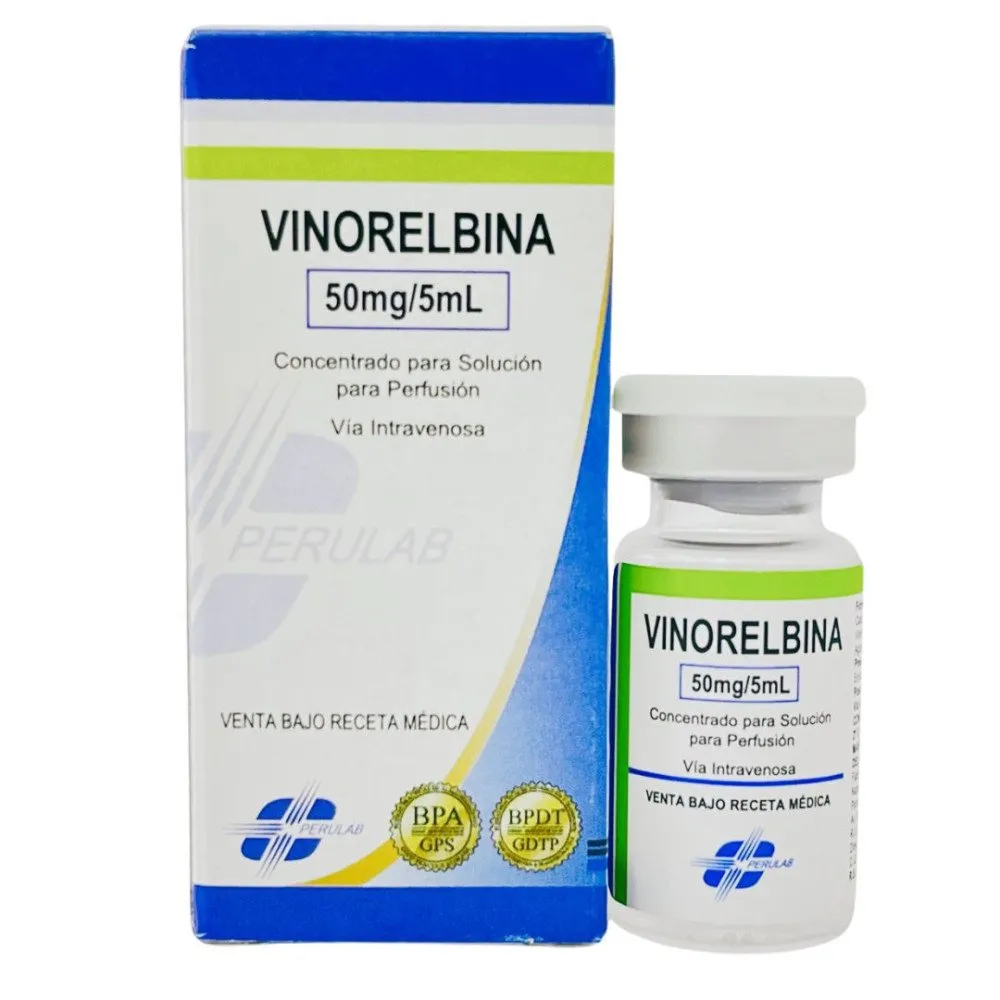
Table of Contents
- Package leaflet: Information for the user
- Vinorelbine Aurobindo 10 mg/ml concentrate for solution for infusion
- 1. What Vinorelbina Aurobindo is and what it is used for
- 2. What you should know before using Vinorelbina Aurobindo
- 3. How to use Vinorelbina Aurobindo
- 4. Possible side effects
- 5. How to store Vinorelbina Aurobindo
- 6. Package contents and other information
Package leaflet: Information for the user
Vinorelbine Aurobindo 10 mg/ml concentrate for solution for infusion
Equivalent medicinal product
Please read all of this leaflet carefully before you start using this medicine, as it contains important information for you.
- Keep this leaflet. You may need to read it again.
- If you have any questions, ask your doctor or nurse.
- This medicine has been prescribed for you only. Do not pass it on to others, even if their symptoms are the same as yours, as it may be harmful.
- If you experience any side effects, including those not listed in this leaflet, tell your doctor or nurse. See section 4.
Contents of this leaflet:
- What Vinorelbine Aurobindo is and what it is used for
- What you need to know before using Vinorelbine Aurobindo
- How to use Vinorelbine Aurobindo
- Possible side effects
- How to store Vinorelbine Aurobindo
- Contents of the pack and other information
1. What Vinorelbina Aurobindo is and what it is used for
Vinorelbina Aurobindo is indicated for use in adults.
Vinorelbina Aurobindo is used in the treatment of cancer and belongs to a group of medicines known as
vinca alkaloids.
Vinorelbina Aurobindo is used to treat certain types of lung and breast cancer.
2. What you should know before using Vinorelbina Aurobindo
Do not use Vinorelbina Aurobindo
- If you are allergic to vinorelbine or other vinca alkaloids or to any of the other ingredients of this medicine (listed in section 6).
- If you have or have recently had severe infections or a severe decrease in white blood cells (neutropenia).
- If you have a severe reduction in platelets.
- If you are breastfeeding.
- If you are a woman of childbearing potential who is not using effective contraception.
- In combination with the yellow fever vaccine.
The medicine is strictly for intravenous use only and must not be injected into the spinal canal.
Warnings and precautions
Talk to your doctor or nurse before using Vinorelbina Aurobindo:
- If you have had heart problems involving reduced blood supply to the heart (ischaemic heart disorders, angina).
- If you are undergoing radiotherapy and the treatment field includes the liver.
- If you develop signs or symptoms indicating infection (such as fever, chills, sore throat), inform your doctor immediately so that appropriate tests can be carried out.
- If you have impaired liver function.
- If you need vaccination. You must inform your doctor about your treatment before any vaccination.
- If you are receiving a cancer medicine called mitomycin C.
- If you are of Japanese origin, as you may be more susceptible to lung problems during treatment with Vinorelbina Aurobindo.
- If the pelvis, spine, or long bones are irradiated simultaneously with vinorelbine administration, greater bone marrow damage (myelotoxicity) is expected. The same applies to prior radiation treatment (< 3 weeks ago) of the aforementioned regions.
- If treatment with vinorelbine is continued or if you are at higher risk, neurological assessments should be performed.
Vinorelbina Aurobindo must not come into contact with the eyes, as there is a risk of severe irritation and even corneal ulceration. If this occurs, immediately rinse the eyes with physiological saline solution and consult an ophthalmologist.
Men and women being treated with Vinorelbina Aurobindo must use effective contraception during treatment. Both men and women must read the information described in the section on pregnancy and breastfeeding.
Before each administration of Vinorelbina Aurobindo, a blood sample must be taken for analysis of blood components. If the results of these tests are unsatisfactory, treatment may be delayed and further tests performed until values return to normal.
Other medicines and Vinorelbina Aurobindo
Inform your doctor if you are taking, have recently taken, or might take any other medicines.
This is particularly important if you are taking any of the following medicines:
- Other medicines that may affect the bone marrow, e.g. cancer medicines.
- Carbamazepine, phenytoin or fosphenytoin, and phenobarbital (medicines for the treatment of epilepsy).
- Antibiotics such as rifampicin, erythromycin, clarithromycin, telithromycin.
- St. John’s wort (Hypericum perforatum).
- Ketoconazole or posaconazole and itraconazole (medicines for the treatment of fungal infections).
- Antiviral medicines for the treatment of HIV infections, e.g. ritonavir (HIV protease inhibitors).
- Nefazodone (medicines for the treatment of depression).
- Cyclosporine and tacrolimus (medicines that reduce the activity of the immune system).
- Other cancer treatment medicines, e.g. mitomycin C, cisplatin.
- Anticoagulant medicines, e.g. warfarin.
- Yellow fever vaccine and other live vaccines. You must inform your doctor if you need any vaccination, as serious adverse effects may occur if vaccination is performed during treatment with Vinorelbina Aurobindo.
Pregnancy, breastfeeding and fertility
If you are pregnant, suspect you may be pregnant, planning to become pregnant, or breastfeeding, consult your doctor or pharmacist before using this medicine.
Vinorelbina Aurobindo must not be administered to pregnant women, as it causes severe birth defects.
If you are a woman of childbearing age, you must use an effective method of contraception during treatment and for 3 months after stopping treatment. If you become pregnant during treatment, inform your doctor immediately. If you are or become pregnant during treatment with vinorelbine, genetic counselling is recommended.
If you are a man, you must avoid fathering a child during treatment with vinorelbine and for 6 months after stopping treatment. Treatment with Vinorelbina Aurobindo may also lead to male infertility, and you may wish to seek advice on sperm preservation before starting treatment.
Although it is not known whether vinorelbine passes into breast milk and thereby affects the infant, you must stop breastfeeding before starting treatment with Vinorelbina Aurobindo.
Consult your doctor or pharmacist before taking any medicine.
Driving and using machines
Caution is advised due to possible side effects
3. How to use Vinorelbina Aurobindo
Vinorelbina Aurobindo will be administered to you under the supervision of a doctor experienced in this type
of treatment.
Recommended dose
The dose depends on the condition being treated, your response to therapy, and other treatments you have
received. Your general condition and response to treatment will be closely monitored before, during, and after
vinorelbine treatment.
The usual dose of vinorelbine is 25–30 mg/m² of body surface area administered once weekly.
Elderly patients
Clinical experience has not shown significant differences in how elderly patients respond to Vinorelbina Aurobindo; however, some elderly patients may be more sensitive to this medicine.
Patients with hepatic impairment
The dose will be reduced if you have severe liver problems.
Patients with renal impairment
Dose reduction is not required in patients with renal impairment.
Use in children
Safety and efficacy in children under 18 years of age have not been established, and therefore administration is not recommended.
Method of administration
The medicine must be diluted before use with a sodium chloride or glucose solution and administered intravenously either as an injection over 6–10 minutes or by infusion (intravenous drip) over 20–30 minutes. After administration, a sodium chloride solution should be used to flush the vein.
If you use more Vinorelbina Aurobindo than you should
Although this medicine is administered in a hospital setting and it is unlikely that you will receive too little or too much, inform your doctor or pharmacist if you have any concerns. Paralytic ileus (intestinal obstruction) may also occur.
Information for the physician:
Since there is no specific antidote for vinorelbine overdose, symptomatic measures are required in case of overdose. These measures include:
- Continuous monitoring of vital signs and particularly close observation of the patient.
- Daily complete blood counts to promptly identify the need for transfusions, administration of growth factors, or intensive therapy, and to assess infection risk.
- Measures to prevent paralytic ileus.
- Monitoring of the circulatory system and liver function.
Complications related to infection can be treated with broad-spectrum antibiotics, and paralytic ileus with tube decompression.
4. Possible side effects
Like all medicines, this medicine can cause side effects, although not everybody gets them.
Serious side effects – if any of the following side effects occur, contact your doctor immediately:
Uncommon (may affect up to 1 in 100 people):
Severe infections with severe failure of various organs or sepsis. Shortness of breath and narrowing of the airways (bronchospasm).
Rare (may affect up to 1 in 1,000 people):
Chest pain that may spread to the neck and arms, caused by reduced blood flow to the heart (angina pectoris). Heart attack (myocardial infarction).
Not known (frequency cannot be estimated from the available data):
Widespread and very severe allergic reactions. Symptoms may include sudden difficulty breathing, swelling of the lips, tongue, throat or body, difficulty swallowing, rash, confusion, fainting (anaphylaxis / anaphylactic shock / anaphylactoid reaction), chest pain, shortness of breath and fainting, which may be symptoms of a blood clot in a blood vessel in the lungs (pulmonary embolism), headache, altered mental status that may cause confusion and coma, seizures, blurred vision and high blood pressure, which may be signs of a neurological condition such as reversible posterior encephalopathy syndrome.
These are very serious side effects. You may need immediate medical treatment.
Other side effects – if any of the following side effects occur, contact your doctor as soon as possible:
Very common (may affect more than 1 in 10 people):
Low red blood cell count (anaemia), which may make you feel tired. Loss of tendon reflexes. Weakness in the lower limbs. Inflammation of the mouth or throat. Nausea and vomiting. Constipation. Abnormal results in liver function tests. Hair loss. Redness (erythema), burning pain, discoloration of veins and/or inflammation of veins (local phlebitis) at the injection site.
Common (may affect up to 1 in 10 people):
Infections (bacterial, viral or fungal) in the body (respiratory, urinary, gastrointestinal systems and others) with symptoms such as pain. Low platelet count in the blood (risk of bleeding). Diarrhoea. Joint and muscle pain, including jaw pain. Changes in kidney function (increased creatinine levels). Weakness, fatigue, fever, pain in various sites.
Uncommon (may affect up to 1 in 100 people):
Severe numbness (paraesthesia). Low blood pressure, high blood pressure, hot flushes and cold sensation in the extremities.
Rare (may affect up to 1 in 1,000 people):
Low sodium levels in the blood (this may cause symptoms such as tiredness, confusion, muscle cramps and coma). Changes in heart activity (ECG changes). Severe drop in blood pressure or collapse. Lung disease (interstitial pneumonitis). Inflammation of the pancreas. Intestinal paralysis (ileus). Skin reactions such as rash, itching and hives. Necrosis at the injection site. Swelling of tissues (angioedema).
Very rare (may affect up to 1 in 10,000 people):
Sepsis that may be life-threatening. Strong heartbeat, rapid heartbeat, heart rhythm disorders.
Not known (frequency cannot be estimated from the available data):
Abnormal liver function. Chills with fever. Loss of muscle coordination that may be associated with abnormal gait, speech abnormalities and abnormal eye movements (ataxia). Headache. Cough. Abdominal pain and gastrointestinal bleeding. Weight loss. A generalized infection in combination with a drop in white blood cell count in the blood (neutropenic sepsis). A drop in white blood cell count with fever (febrile neutropenia). Reduction in the number of both red and white blood cells, as well as platelets in the blood. Low sodium levels due to overproduction of a hormone causing fluid retention, resulting in weakness, fatigue or disorientation (SIADH syndrome). Loss of appetite (anorexia). Redness (erythema) of the hands and feet, darker skin colour along the path of the veins. Acute lung dysfunction (respiratory failure) leading to death after previous radiotherapy.
As with other vinca alkaloids, vinorelbine is a moderate vesicant.
Because blood changes may occur, your doctor may prescribe blood tests to monitor them (low white blood cell count, anaemia and/or low platelet count, effects on liver and kidney function and on the body's electrolyte balance).
Reporting of side effects
If you get any side effects, including ones not listed in this leaflet, talk to your doctor or pharmacist. You can also report side effects directly via the national reporting system at www.aifa.gov.it/content/segnalazioni-reazioni-avverse. By reporting side effects, you can help provide more information on the safety of this medicine.
5. How to store Vinorelbina Aurobindo
Keep this medicine out of the sight and reach of children.
Store in a refrigerator (2°C - 8°C). DO NOT FREEZE.
Keep the vial in the outer carton to protect from light.
Do not use this medicine after the expiry date stated on the vial label and
on the carton, after Exp. The expiry date refers to the last day of that month.
Do not dispose of medicines via wastewater. Ask your pharmacist how to dispose of medicines you no longer use.
This will help protect the environment.
6. Package contents and other information
What Vinorelbina Aurobindo contains
- The active substance is vinorelbine. 1 ml of concentrate for solution for infusion contains 10 mg of vinorelbine (as tartrate). Each 1 ml vial contains 10 mg of vinorelbine (as tartrate). Each 5 ml vial contains 50 mg of vinorelbine (as tartrate).
- The other component is water for injections.
Description of the appearance of Vinorelbina Aurobindo and contents of the pack
Vinorelbina Aurobindo 10 mg/ml concentrate for solution for infusion is a clear solution, colourless to slightly yellow.
Packs:
1 vial x 1 ml
10 vials x 1 ml
1 vial x 5 ml
10 vials x 5 ml
Not all pack sizes may be marketed.
Marketing Authorisation Holder
Eugia Pharma (Malta) Limited
Vault 14, Level 2,
Valletta Waterfront,
Floriana FRN 1914, Malta
Responsible person for batch release
APL Swift Services (Malta) Ltd.
HF26, Hal Far Industrial Estate, Hal Far,
Birzebbugia, BBG 3000,
Malta
This medicinal product is authorised in the European Economic Area Member States under the following names:
Belgium Vinorelbin Eugia 10 mg/ml concentrate for solution for infusion / solution à diluer pour perfusion / Konzentrat zur Herstellung einer Infusionslösung
Germany Vinorelbin Aurobindo 10 mg/ml Konzentrat zur Herstellung einer Infusionslösung
Spain Vinorelbina Aurovitas 10 mg/ml concentrado para solución para perfusión EFG
France Vinorelbine Arrow 10mg/ml solution à diluer pour perfusion
Italy Vinorelbina Aurobindo
Portugal Vinorrelbina Aurovitas
The following information is intended exclusively for medical or healthcare professionals:
Vinorelbina Aurobindo 10 mg/ml concentrate for solution for infusion
Instructions for use
ANTINEOPLASTIC AGENT
For detailed information regarding this product, refer to the summary of product characteristics.
Handling and disposal
Preparation and administration of injectable cytotoxic agents must be carried out by trained personnel familiar with the drugs used, ensuring protection of the environment and particularly of personnel handling the medicinal product. This requires the establishment of a dedicated area for this purpose.
Smoking, eating or drinking is prohibited in this area.
Personnel must be provided with appropriate handling materials: long-sleeved gowns, protective masks, head covers, protective goggles, sterile disposable gloves, protective mats for the work area, and containers and waste bags for disposal.
Syringes and infusion sets should be assembled carefully to prevent leakage (use of Luer connectors is recommended).
Instructions for withdrawing the appropriate volume from the vial
To ensure complete aspiration of the drug from a vial, it is recommended to use a gauge 21 needle or smaller, which facilitates efficient transfer of the solution.
Spills and leaks must be cleaned up immediately.
Precautions must be taken to avoid exposure of personnel during pregnancy.
All contact with the eyes must be strictly avoided. If contact occurs, immediately rinse the eye with abundant physiological saline solution. In case of irritation, consult an ophthalmologist.
In case of skin contact, thoroughly wash the affected area with water.
At the end of the procedure, all exposed surfaces must be thoroughly cleaned and hands and face washed.
Any unused product or waste material must be disposed of in accordance with applicable regulations.
Incompatibilities
Vinorelbina Aurobindo must not be diluted in alkaline solutions (risk of precipitation).
In the absence of compatibility studies, this medicinal product must not be mixed with other medicinal products except those specified in the section “Dilution and administration”.
There is no incompatibility between Vinorelbina Aurobindo and glass vials, PVC bags, polyethylene vials or polypropylene syringes.
Dilution and administration
Vinorelbina Aurobindo must be administered only intravenously and only after dilution.
Vinorelbina Aurobindo should be administered either as a slow bolus (6-10 minutes) after dilution in 20-50 ml of sodium chloride 9 mg/ml (0.9%) solution for injection or in 5% glucose solution for injection, or as a short infusion (20-30 minutes) after dilution in 125 ml of sodium chloride 9 mg/ml (0.9%) solution for injection or in 5% glucose solution for injection. Administration must always be followed by at least 250 ml of sodium chloride 9 mg/ml (0.9%) solution for injection to flush the vein.
It is very important to ensure that the cannula is correctly positioned in the vein before starting the injection. If Vinorelbina Aurobindo infiltrates into surrounding tissues during intravenous administration, severe irritation may occur. In such cases, the injection must be stopped immediately, the vein flushed with physiological saline solution, and the remainder of the dose administered through another vein. In cases of extravasation, intravenous glucocorticoids may be administered to reduce the risk of phlebitis.
Excreta and vomit must be handled with care.
Storage
Commercial packaging
Store in a refrigerator (2°C – 8°C). Keep the vial in the outer carton to protect from light. DO NOT FREEZE. Do not use Vinorelbina Aurobindo after the expiry date stated on the vial label and carton.
After opening
The contents of the vial should be used immediately after first opening.
After dilution
Chemical, physical and microbiological stability of the drug has been demonstrated for 24 hours at 2-8°C and at 25°C when diluted in the recommended infusion solutions.
From a microbiological standpoint, the medicinal product should be used immediately.
If not used immediately, the storage times and conditions of the ready-to-use solution are the responsibility of the user and should normally not exceed 24 hours at 2-8°C, unless the preparation was carried out under controlled and validated aseptic conditions.