Vincristine Teva Italia
Italy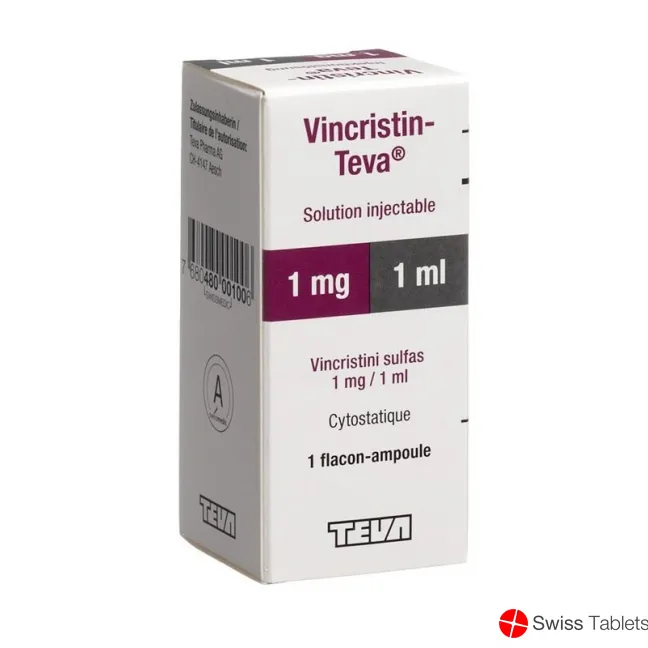
Table of Contents
- Package leaflet: Information for the user
- Vincristina Teva Italia 1 mg/ml injection solution
- 1. What Vincristina Teva Italia is and what it is used for
- 2. What you need to know before using Vincristine Teva Italia
- 3. How to use Vincristina Teva Italia
- 4. Possible side effects
- 5. How to store Vincristine Teva Italia
- 6. Package contents and other information
Package leaflet: Information for the user
Vincristina Teva Italia 1 mg/ml injection solution
vincristine sulfate
Equivalent medicine
Please read all of this leaflet carefully before you start using this medicine because it contains important information for you.
- Keep this leaflet. You may need to read it again.
- If you have any questions, ask your doctor or pharmacist.
- This medicine has been prescribed for you only. Do not give it to other people, even if their symptoms are the same as yours, as it could be harmful.
- If you experience any side effects, including those not listed in this leaflet, tell your doctor or pharmacist. See section 4.
Contents of this leaflet:
- What Vincristina Teva Italia is and what it is used for
- What you need to know before using Vincristina Teva Italia
- How to use Vincristina Teva Italia
- Possible side effects
- How to store Vincristina Teva Italia
- Contents of the pack and other information
1. What Vincristina Teva Italia is and what it is used for
Vincristine sulfate belongs to a group of medicines called antimitotic cytostatic agents. These are
medicines that inhibit the growth of tumour cells.
Vincristina Teva Italia is generally used in combination with other medicines to treat:
- Acute lymphoblastic leukemia, a rapidly progressing type of cancer in which the body produces a very high number of immature white blood cells.
- Hodgkin’s lymphoma, a cancer of the lymphatic system.
- Non-Hodgkin’s lymphoma, a cancer of the lymph nodes not caused by Hodgkin’s lymphoma.
- Small cell lung cancer.
- Rhabdomyosarcoma, a cancer of the muscles.
- Ewing’s sarcoma, a type of bone cancer.
- Hemangiomas (internal bleeding) with reduced platelet count (idiopathic thrombocytopenic purpura).
- Cancer of the adrenal medulla (part of the adrenal gland).
- Neuroectodermal tumour, a cancer of a part of the nervous system.
- Wilms’ tumour, a type of kidney cancer.
- Breast carcinoma that has spread to other parts of the body.
- Multiple myeloma, a cancer of immune system cells.
- Retinoblastoma, a type of eye cancer.
2. What you need to know before using Vincristine Teva Italia
DO NOT use Vincristine Teva Italia if:
- you are allergic to vincristine sulfate or to any of the other ingredients of this medicine (listed in section 6).
- you have a nerve and muscle disorder called Charcot-Marie-Tooth syndrome.
- your liver function is severely impaired.
- you have constipation or are at risk of intestinal blockage (ileus), especially in children.
- you are undergoing radiotherapy to the liver.
Warnings and precautions
Vincristine Teva Italia must be administered only under the strict supervision of physicians experienced in the use of cytostatic (antineoplastic) agents.
Vincristine Teva Italia must be administered only intravenously (directly into a vein), not by any other route. Administration by other routes may be fatal.
Care must be taken to avoid leakage into surrounding tissues (extravasation), as this may cause significant irritation. The injection must be stopped immediately if this occurs.
Contact of vincristine sulfate with the eyes must be avoided. If vincristine enters the eye, immediately rinse thoroughly with water and consult a doctor if irritation persists.
In case of accidental skin contact, wash thoroughly with water, then with mild soap, and rinse again carefully.
Consult your doctor or pharmacist before using Vincristine Teva Italia:
- if you have disorders of the nervous system.
- if your liver is not functioning properly; see also section “How to use Vincristine Teva Italia”.
- if you are taking medicines that may be harmful to the nervous system; your doctor will closely monitor you during treatment.
- if you develop constipation due to treatment, your doctor will take necessary preventive measures, such as adjusting your diet or using products that improve intestinal motility (laxatives, particularly lactulose).
- if you have heart disorders, such as ischemic heart disease (heart and blood circulation problems).
- if you have or develop an infection; inform your doctor if this occurs.
- if you have an active sex life, during treatment and for 6 months after stopping therapy, you and your partner must take precautions to avoid pregnancy.
Before starting therapy, during treatment, and before each treatment cycle, your doctor will perform tests to monitor your liver and kidney function, blood counts, and neurological functions. Based on the results, it may be necessary to reduce the dose, suspend, or discontinue treatment.
Other medicines and Vincristine Teva Italia
Inform your doctor or pharmacist if you are taking, have recently taken, or might take any other medicines.
Interactions may occur when this medicine is used concomitantly with:
- certain medicines that inhibit liver enzymes, for example ritonavir (used to treat HIV), nelfinavir (used to treat HIV), ketoconazole (used to treat fungal infections), itraconazole (used to treat fungal infections), erythromycin (used to treat infections), and nefazodone (used to treat depression); concomitant administration with vincristine may lead to earlier and/or more severe muscle disorders.
- certain medicines for high blood pressure, for example nifedipine; the amount of vincristine in the blood may increase, which in turn may cause additional adverse effects.
- certain medicines for epilepsy, for example (fos)phenytoin; vincristine may reduce the amount of phenytoin in the blood.
- certain medicines used to treat cancer and other bone marrow suppressants, such as doxorubicin (particularly in combination with prednisone); the effect, adverse effects, and bone marrow suppression may be enhanced.
- certain medicines that may be harmful to the nervous system, such as isoniazid (a medicine used to treat tuberculosis), L-asparaginase (a medicine used to treat blood cancer), and cyclosporine A (a medicine that suppresses the immune system); these products may enhance the harmful effects of vincristine on the nervous system.
- vaccines (vaccinations); vincristine suppresses the immune system and may affect the body’s ability to respond to vaccines.
- digoxin (a medicine used to treat reduced heart function and cardiac arrhythmias); vincristine may reduce the effect of digoxin.
- mitomycin C (a medicine used to treat certain types of cancer); concomitant administration may cause breathing problems.
- radiotherapy (treatment of diseases using radiation); radiotherapy may enhance the adverse effects of vincristine on the nervous system.
- cyclosporine, tacrolimus; when used concomitantly, the immune system may be unable to protect the body from disease (immunosuppression), with a risk of abnormal cell growth (lymphoproliferation).
- GM-CSF and G-CSF (medicines used to stimulate blood cell growth after chemotherapy); when used concomitantly, they may cause nerve disorders (neuropathy).
- dactinomycin; in patients with renal carcinoma (Wilms' tumor), severe liver damage has been reported.
- bleomycin; this combination may cause a disorder affecting blood flow to the extremities, including toes, fingers, nose, and ears, especially when exposed to temperature changes or stress (Raynaud's syndrome).
- azole antifungals (a group of medicines used to treat fungal infections such as itraconazole, posaconazole, fluconazole, isavuconazole, or voriconazole);
- ketoconazole (used to treat Cushing's syndrome, a condition characterized by excessive cortisol hormone production).
Pregnancy, breastfeeding, and fertility
If you are pregnant, think you may be pregnant, are planning to become pregnant, or are breastfeeding, consult your doctor or pharmacist before taking this medicine.
Pregnancy
- Vincristine therapy is not recommended during pregnancy.
- Men and women must use effective contraception during therapy and for 6 months after stopping treatment.
- If you suspect you are pregnant or wish to become pregnant, you must consult your doctor.
- Adequate data on the use of vincristine sulfate in pregnant women are not available to determine potential harmful effects. This medicine has shown harmful effects in animal testing.
Breastfeeding
- DO NOT breastfeed during treatment with Vincristine Teva Italia.
Fertility
- Vincristine may cause irreversible damage to fertility. Male patients should be advised not to father children during treatment or within 6 months after stopping treatment. They are also encouraged to contact a sperm bank before starting therapy to obtain information about sperm preservation.
Driving and using machines
- Vincristine Teva Italia therapy may sometimes cause adverse effects on the nervous system, such as reduced reflexes, muscle weakness, and visual and gastrointestinal problems (see section “Possible side effects”). If you experience one or more of these adverse effects, DO NOT drive or operate machinery that requires unimpaired alertness.
Vincristine Teva Italia contains sodium
This medicine contains less than 1 mmol (23 mg) of sodium per vial, i.e., essentially “sodium-free”.
3. How to use Vincristina Teva Italia
Follow your doctor's instructions for using Vincristina Teva Italia carefully. If you have any doubts,
consult your doctor or pharmacist.
Consult your doctor if you feel that the effect of Vincristina Teva Italia is too strong or too weak.
Vincristine must be administered intravenously (by intravenous route) only.
The recommended dose is
- Adults: The usual dose for adults is 1.4 mg per square metre of body surface area (your body surface area) (up to a maximum of 2 mg) once a week.
- Children: For children weighing more than 10 kg, the usual dose is 1.5–2.0 mg per square metre of body surface area once a week. For children weighing 10 kg or less, the initial dose is 0.05 mg per kg of body weight once a week. Note: In neonates, the dose is calculated based on individual body weight (not on body surface area).
- Patients with impaired liver function: If your liver does not function properly, your doctor will adjust the dose if necessary.
Method of administration
Vincristina Teva Italia is administered by infusion or by slow injection directly into a vein (intravenously) through the tubing of a continuous infusion. Vincristine sulfate must be administered only under the strict supervision of physicians experienced in the use of cytotoxic drugs.
If you receive more Vincristina Teva Italia than you should
If you suspect that you have received an excessive dose of Vincristina Teva Italia, contact your doctor or pharmacist immediately.
If you have received an overdose of Vincristina Teva Italia, the side effects described may be intensified or lead to more serious consequences.
There is no specific effective treatment for vincristine overdose. In case of overdose, your doctor will provide supportive measures and monitor you closely.
If you miss a dose of Vincristina Teva Italia
Your doctor will determine the timing for administration of the medicine. If you think you have missed a dose, contact your doctor as soon as possible.
If you have any doubts about how to use this medicine, consult your doctor or pharmacist.
4. Possible side effects
Like all medicines, this medicine can cause side effects, although not everyone experiences them.
Side effects may be more pronounced in patients with hepatic impairment.
The following side effects may occur at the approximate frequencies listed below:
Very common (may affect more than 1 in 10 people)
Common (may affect up to 1 in 10 people)
Uncommon (may affect up to 1 in 100 people)
Rare (may affect up to 1 in 1,000 people)
Very rare (may affect up to 1 in 10,000 people)
Not known: frequency cannot be estimated from the available data.
Immune system
- Rare: Hypersensitivity reaction with severe drop in blood pressure, pallor, restlessness, rapid and weak pulse, moist skin and reduced level of consciousness (anaphylaxis), skin rash and fluid accumulation.
Blood
- Common: Temporary increase in platelet count; headache, dizziness, tingling in hands, fingers or feet, bluish discoloration of the nose, bruising or bleeding gums may occur.
- Uncommon: Inhibition of bone marrow function, blood disorders such as anaemia (manifesting as weakness, fatigue and/or general malaise), deficiency of white blood cells (associated with increased risk of infections), and deficiency of platelets (may result in tendency to bruising and bleeding).
Nervous system
- Common: Peripheral neuropathy, including damage to the peripheral nervous system, nerves carrying electrical signals between the brain and spinal cord and the rest of the body. It may affect movement, sensation and bodily functions; symptoms may include sensory disturbances, tingling, itching or pins and needles without apparent cause, nerve pain (e.g. in jaw/mandible or testicles), movement problems, loss of certain reflexes (deep tendon reflexes), paralysis or muscle weakness in the feet (foot drop), muscle weakness, coordination problems (e.g. walking as if drunk), and paralysis. Cranial nerves may be affected, leading to paralysis of certain muscles, laryngeal muscle weakness, hoarseness, vocal cord paralysis, weakness of the external eye muscles, drooping eyelids (ptosis), double vision, disturbances of ocular nerves, disturbances of external eye nerves, blindness (transient).
- Uncommon: Seizures, often accompanied by increased blood pressure. In children, some cases of seizures followed by coma have been reported. Altered mental status and psychiatric disorders such as depression, agitation, insomnia, confusion, severe mental disorders with impaired control of behaviour and actions (psychosis), perception of non-existent things (hallucinations).
- Not known: Brain white matter disease (leukoencephalopathy). Symptoms include mental dysfunction and seizures.
Heart
- Uncommon: In some patients treated with vincristine in combination with other anticancer agents and who previously received radiotherapy to the area around the heart, disturbances of cardiac blood vessels and heart attacks have occurred.
- Rare: Increase or decrease in blood pressure.
Respiratory system
- Common: Sudden onset of laboured breathing and shortness of breath due to spasms of airway muscles (bronchospasm), particularly if the medicine is used concomitantly with mitomycin C.
Gastrointestinal tract
- Common: Constipation, abdominal pain, painful abdominal attacks due to cramps in the intestine and biliary system (organs and ducts such as bile ducts, gallbladder and associated structures involved in the production and transport of bile), colicky abdominal pain, nausea, vomiting.
- Uncommon: Loss of appetite, weight loss, diarrhoea, reduced intestinal function due to paralysis (paralytic ileus, in which the intestine stops functioning and peristalsis is absent), especially in young children.
- Rare: Inflammation of the mucous membrane of the mouth, death of tissue in the small intestine and/or damage to intestinal walls.
- Very rare: Inflammation of the pancreas (pancreatitis).
Liver or bile
- Rare: Liver disorders as a result of blockage of veins in the liver, particularly in children.
Skin
- Very common: Hair loss (reversible after discontinuation of treatment).
Ears and balance organs
- Uncommon: Deafness.
Kidneys and urinary system
Elderly patients taking medicines that cause poor ability to urinate (urinary retention) should discontinue these medicines shortly after administration of vincristine.
- Uncommon: Problems with urination (painful urination, frequent urination or inability to urinate normally). Elevated levels of a certain waste product (uric acid) in the blood (hyperuricaemia).
- Rare: Inappropriate release of antidiuretic hormone (ADH), causing low blood pressure, dehydration, abnormal levels of nitrogen-containing compounds (dry mouth, confusion, fatigue may occur), water retention, which may in turn lead to oedema and sodium deficiency (syndrome of inappropriate antidiuretic hormone secretion - SIADH).
- Very rare: Incontinence.
Sex organs
Irreversible infertility is more common in men than in women.
- Common: Seminal fluid deficiency, nerve pain in the testicles.
- Uncommon: Absence of menstrual periods.
Other
Therapy-related cancer. In some patients treated with vincristine in combination with other anticancer drugs, another form of cancer has developed after treatment.
- Common: Irritation at the injection site.
- Uncommon: Pain and inflammation of veins and subcutaneous connective tissue during intravenous injection, fever.
- Rare: Headache.
Reporting of side effects
If you experience any side effects, including those not listed in this leaflet, talk to your doctor or pharmacist. You can also report side effects directly via the national reporting system at www.aifa.gov.it/content/segnalazioni-reazioni-avverse.
By reporting side effects, you can help provide more information on the safety of this medicine.
5. How to store Vincristine Teva Italia
Keep this medicine out of the sight and reach of children.
Store in the refrigerator (2°C - 8°C).
Keep the vial in the original packaging to protect the medicine from light.
Do not use Vincristine Teva Italia after the expiry date stated on the label of the vial and on the
carton after “Exp.”. The expiry date refers to the last day of that month.
Do not use Vincristine Teva Italia if you notice that the solution is not clear and colourless or pale
yellow.
Do not dispose of medicines via wastewater or household waste. Ask your pharmacist how to
dispose of medicines you no longer use. These measures will help protect the environment.
6. Package contents and other information
What Vincristina Teva Italia contains
The active substance is vincristine sulfate, 1 mg per each ml of injectable solution.
The other components are mannitol, sulfuric acid and/or sodium hydroxide, water for injectable preparations.
Description of the appearance of Vincristina Teva Italia and contents of the pack
Vincristina Teva Italia is a clear, colourless or pale yellow solution free from particles except for gas bubbles.
Pack sizes
1 vial of 1 ml containing 1 mg of vincristine sulfate
1 vial of 2 ml containing 2 mg of vincristine sulfate
1 vial of 5 ml containing 5 mg of vincristine sulfate
Not all pack sizes may be marketed.
Marketing Authorization Holder
Teva Italia S.r.l. - Piazzale Luigi Cadorna, 4 - 20123 Milano, Italy
Manufacturer
Pharmachemie B.V. - Swensweg 5, P.O Box 552 - 2003 RN Haarlem, The Netherlands
This medicinal product is authorized in the European Economic Area (EEA) and in the United Kingdom (Northern Ireland) under the following names:
Czech Republic: Vincristin-Teva
France: VINCRISTINE TEVA 1 mg/ml, solution for injection
Germany: Vincristinsulfat-TEVA 1 mg / ml Injektionslösung
Italy: Vincristina Teva Italia
Latvia: Vincristine Teva
Lithuania: Vincristine Teva 1 mg/ml injekcinis tirpalas
Poland: Vincristine Teva
Spain: Vincristina Teva 1 mg/ml solución para inyección EFG
Netherlands: Vincristinesulfaat Teva 1 mg/ml
United Kingdom (Northern Ireland): Vincristine sulfate, solution for injection 1 mg/ml