Vincristine Pfizer Italia
Italy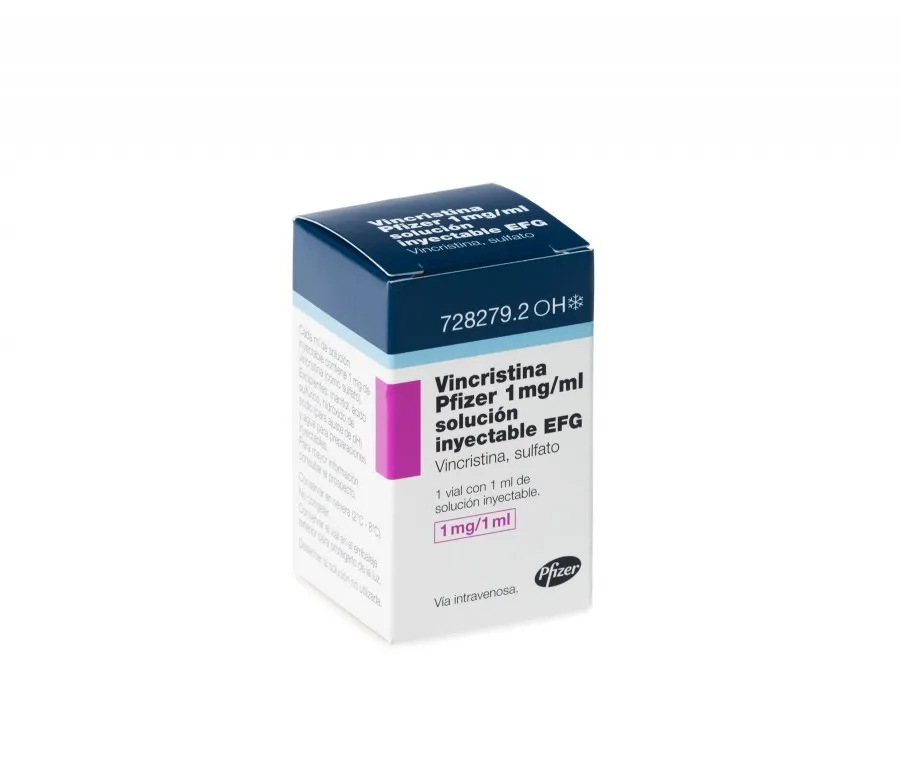
Table of Contents
- Package leaflet: Information for the user
- VINCRISTINE Pfizer Italia 1 mg/1 ml solution for injection for intravenous use
- 1. What Vincristina Pfizer Italia is and what it is used for
- 2. What you should know before Vincristina Pfizer Italia is administered
- 3. How to administer Vincristina Pfizer Italia
- 4. Possible side effects
- 5. How to store Vincristina Pfizer Italia
- 6. Package contents and other information
- The following information is intended exclusively for physicians or healthcare professionals
Package leaflet: Information for the user
VINCRISTINE Pfizer Italia 1 mg/1 ml solution for injection for intravenous use
Vincristine sulfate
Please read this leaflet carefully before this medicine is administered to you because it contains important information for you.
- Keep this leaflet. You may need to read it again.
- If you have any questions, consult your doctor, the doctor treating your child, or the nurse.
- If you experience any side effects, including those not listed in this leaflet, consult your doctor, the doctor treating your child, or the nurse. See section 4.
Contents of this leaflet:
- What Vincristine Pfizer Italia is and what it is used for
- What you need to know before Vincristine Pfizer Italia is administered
- How Vincristine Pfizer Italia is administered
- Possible side effects
- How to store Vincristine Pfizer Italia
- Contents of the pack and other information
1. What Vincristina Pfizer Italia is and what it is used for
Vincristina Pfizer Italia contains the active substance vincristine sulfate, which belongs to a group of
medicinal products called antineoplastic vinca alkaloids that act against tumours. Vincristine sulfate
acts by interfering with the growth of tumour cells, which are eventually destroyed.
This medicine, used in combination with other anti-tumour medicinal products, is indicated in adults and children for the
treatment of several types of tumours (neoplasms) such as:
- blood cancers (acute leukaemia, malignant lymphomas including Hodgkin's lymphoma)
- tumour of the lymphatic tissues (lymphosarcoma)
- tumour of lymphatic tissues, bones, skin and gastrointestinal tract (reticulosarcoma).
2. What you should know before Vincristina Pfizer Italia is administered
Vincristina Pfizer Italia must not be administered to you or your child:
- if you are allergic to vincristine sulfate, to other medicines in the same group (antineoplastic vinca alkaloids), or to any of the other components of this medicine (listed in section 6), particularly mannitol;
- if you have a peripheral nervous system disorder called demyelinating Charcot-Marie-Tooth disease (ask your doctor or your child’s doctor);
- if you are undergoing radiotherapy to the liver area;
- if you are pregnant, suspect you may be pregnant, are planning a pregnancy, or are breastfeeding;
- if you have bacterial infections;
- by injection into the spinal canal, known as INTRATECAL ADMINISTRATION. Intrathecal administration of vincristine sulfate is usually fatal.
Warnings and precautions
This medicine must be administered to you or your child under the supervision of experienced specialist doctors
in cancer therapies and only in facilities equipped with adequate resources to manage potential complications.
Before administering this medicine, the doctor will evaluate the potential benefits and risks for you or your child.
Vincristina Pfizer Italia must be administered exclusively into a vein via intravenous bolus injection (IV push) or intravenous infusion (IV).
Vincristina Pfizer Italia must not be administered by intramuscular injection, subcutaneous injection, or intrathecal injection (into the spinal canal).
Contact your doctor, your child’s doctor, or the nurse before Vincristina Pfizer Italia is administered if you think any of the following conditions apply to you or your child (see also section 4 “Possible side effects”):
- you have or have previously had heart problems due to reduced blood flow (cardiac ischemia);
- you have blood cancer (leukemia) that has spread to the central nervous system. Vincristina Pfizer Italia cannot act on the central nervous system, and in such cases, the doctor will consider using other more suitable medicines for you or your child;
- you are taking other medicines that cause toxic effects on the nervous system, undergoing radiotherapy to the spinal cord area, have nervous system disorders, or you are over 65 years of age. In these cases, concomitant administration of Vincristina Pfizer Italia may cause or worsen nervous system toxicity;
- you have or have previously had liver problems or yellowing of the skin and whites of the eyes (jaundice). In such cases, the doctor may adjust the dose of Vincristina Pfizer Italia;
- you are undergoing radiotherapy: the use of Vincristina Pfizer Italia should be postponed until radiotherapy has been completed.
Inform your doctor, your child’s doctor, or the nurse if any of the following conditions occur or worsen during
treatment with Vincristina Pfizer Italia (see also section 4 “Possible side effects”):
- irritation, burning, redness, pain, and other reactions—even severe ones—due to leakage of the medicine from the vein where the needle was inserted (extravasation). This medicine is highly irritating, and in such cases, the injection must be immediately stopped. Your doctor will provide the best treatment for you or your child to minimize these reactions;
- you are taking another anticancer medicine called mitomycin-C. In such cases, administration of Vincristina Pfizer Italia may cause breathing difficulties in you or your child. Breathing difficulties may occur minutes or several hours after administration of Vincristina Pfizer Italia or up to two weeks after the last dose of mitomycin-C. In such cases, treatment with Vincristina Pfizer Italia must be suspended, and the doctor will initiate the most appropriate treatment for you or your child to manage breathing difficulties (see also section “Other medicines and Vincristina Pfizer Italia”);
- decrease in the total number of white blood cells in the blood (leukopenia) or in a specific type of white blood cells called granulocytes (granulocytopenia). Sometimes, as a result of reduced levels of these cells, infections may occur;
- excessive increase in the amount of uric acid in the blood.
Inform your doctor, your child’s doctor, or the nurse if the following conditions occur after administration of
Vincristina Pfizer Italia (see also section 4 “Possible side effects”):
- development of new tumors not present before starting treatment with this medicine (secondary tumors). This may occur when Vincristina Pfizer Italia is administered together with other anticancer medicines. The role of Vincristina Pfizer Italia in causing secondary tumors is unknown;
- occurrence of infections.
Vincristina Pfizer Italia is highly irritating and may cause severe reactions (corneal ulcers) if accidentally
contacted with the eyes.
Other medicines and Vincristina Pfizer Italia
Inform your pharmacist, doctor, or nurse if you are taking, have recently taken, or might take any other medicines or treatments.
Interactions may occur between vincristine sulfate and other medicines such as:
- allopurinol (a medicine used to treat gout and lower uric acid levels in the blood). Concomitant administration with Vincristina Pfizer Italia may increase bone marrow toxicity;
- medicines used to treat peripheral nervous system disorders. Concomitant use with Vincristina Pfizer Italia may increase the risk of adverse effects on the peripheral nervous system;
- live vaccines. Vincristina Pfizer Italia causes immunosuppression, and concomitant administration with live vaccines may lead to serious infections. A waiting period of 3 months to 1 year after stopping the medicine is required before the ability to respond to vaccination is restored.
- phenytoin (an antiepileptic medicine). Concomitant administration with Vincristina Pfizer Italia may reduce phenytoin efficacy and increase seizure frequency;
- mitomycin-C (an anticancer medicine). Concomitant administration with Vincristina Pfizer Italia may cause breathing difficulties (see also section “Warnings and precautions”);
- azole antifungals (a group of medicines used to treat fungal infections such as itraconazole, posaconazole, fluconazole, isavuconazole, or voriconazole), ketoconazole (used to treat Cushing's syndrome, a condition characterized by excessive cortisol hormone production), and other medicines that may reduce the metabolism of vincristine sulfate in the body (CYP3A4 enzyme inhibitors). Concomitant administration with Vincristina Pfizer Italia may increase the frequency and severity of nervous and muscular system side effects; inducers such as St. John's wort should be used with caution;
- clozapine and other medicines for mental disorders (antipsychotics). Concomitant use with Vincristina Pfizer Italia may increase the risk of severe reduction in granulocytes in the blood (agranulocytosis);
- nifedipine (a medicine for high blood pressure). Concomitant use with Vincristina Pfizer Italia may increase peripheral nervous system side effects, delirium, and seizures;
- digoxin (a medicine to increase the heart’s contractile force);
- medicines for treating low white blood cell counts (granulocyte colony-stimulating factors, G-CSF). Concomitant administration with vincristine sulfate may reduce blood cell production in the bone marrow (myelosuppression).
Pregnancy, breastfeeding, and fertility
If you are pregnant, suspect you may be pregnant, are planning a pregnancy, or are breastfeeding, consult your doctor or nurse before this medicine is administered.
Pregnancy
Avoid becoming pregnant while being treated with Vincristina Pfizer Italia, as this medicine may harm the unborn child (congenital anomalies).
If it is necessary to administer this medicine during an existing pregnancy or if you suspect you are pregnant during treatment, your doctor will inform you of the possible risks to your baby.
Breastfeeding
It is unknown whether Vincristina Pfizer Italia passes into breast milk. Because there may be risks of serious adverse effects in your baby, this medicine must not be administered if you are breastfeeding. If you cannot discontinue this medicine, breastfeeding should be stopped for the entire duration of treatment and for at least 1 month after the last dose. Your doctor will advise you accordingly.
Fertility
Vincristina Pfizer Italia may have negative effects on fertility in both men and women.
In women, temporary absence of menstruation (amenorrhea) may occur.
In men, sperm damage and cessation of sperm production (azoospermia) may occur.
In some cases, but not all, sperm production or return of menstruation may resume several months after stopping treatment with this medicine. If you wish to have children after treatment with vincristine, consult your doctor before starting treatment to discuss available options for preserving fertility.
When treatment with Vincristina Pfizer Italia is given to individuals of both sexes before puberty, lack of sperm production or complete absence of menstruation may be permanent.
Contraceptive measures in men and women
Women must always use an effective method of birth control (contraception) during treatment and for at least 7 months after the last dose. Male patients with female partners of childbearing potential must always use highly effective contraceptive measures to prevent pregnancy during treatment and for at least 4 months after the last dose.
Consult your doctor to determine the most appropriate contraceptive methods for you and your partner.
Driving and use of machines
There are no data available to assess the effect of this medicine on the ability to drive or operate machinery. However, it is recommended to avoid driving vehicles or operating machinery during treatment with this medicine.
Vincristina Pfizer Italia contains sodium
Vincristina Pfizer Italia 1 mg/1 ml solution for intravenous injection contains less than 1 mmol (23 mg) of sodium per vial, i.e., it is practically “sodium-free”.
3. How to administer Vincristina Pfizer Italia
This medicine must be administered to you or your child under the supervision of physicians
specialized in cancer therapies with anti-tumor drugs and only in facilities equipped with adequate
equipment in case of potential complications. Before administering this medicine, the doctor will evaluate the
potential benefits and risks for you or your child.
Vincristina Pfizer Italia must be administered exclusively into a vein via intravenous bolus injection (IV push) or intravenous infusion (IV).
Vincristina Pfizer Italia must not be administered by injection into a muscle (intramuscular injection), under the skin (subcutaneous injection), or into the spinal canal (intrathecal injection).
If the doctor considers it necessary, they may decide to administer Vincristina Pfizer Italia in combination
with other medicines for cancer treatment.
Adults and Elderly
The usual dose is 0.4 – 1.4 mg/m² of body surface area. The doctor will determine the dose based on your health condition.
Children
The usual dose is 1.5 – 2.0 mg/m² of body surface area. In children weighing less than 10 kg, the dose is 0.05 mg per kg of body weight, weekly.
Use in patients with liver, biliary tract, or peripheral nervous system disorders
In patients with such conditions, the doctor will reduce the dose of the medicine and determine the most appropriate dose for you or your child.
If more Vincristina Pfizer Italia has been administered than required
If you believe that you or your child have received more Vincristina Pfizer Italia than necessary, inform the doctor, the child's treating physician, or the nurse immediately, as the following may occur:
- adults: severe symptoms (see also section 4 “Possible side effects”);
- children: severe symptoms and, in some cases, death;
4. Possible side effects
Like all medicines, this medicine can cause side effects, although not everybody gets them.
Side effects caused by Vincristina Pfizer Italia generally resolve upon discontinuation of this medicine, and their severity depends on the administered dose.
Immediately contact your doctor if you or your child experience any of the following side effects, as they may be serious:
Common (may affect up to 1 in 10 people):
- paralysis of normal intestinal motility (paralytic ileus)
Uncommon (may affect up to 1 in 100 people):
- coma
Not known (frequency cannot be estimated from the available data):
- decrease in blood levels of total white blood cells (leucopenia) or of certain types of white blood cells called granulocytes (granulocytopenia) or neutrophils (neutropenia), accompanied by fever
- severe allergic reaction (anaphylactic reaction)
- swelling of the skin of the face, lips, tongue, throat, and consequent difficulty in breathing (angioedema)
- seizures frequently associated with increased blood pressure (arterial hypertension) (adult)
- seizures followed by coma (child)
- paralysis of certain parts of the body or areas of the face, head and neck (especially around the eyes and throat)
- transient loss of vision
- abnormal reduction in size of certain eye structures (optic atrophy)
- hearing loss
- heart problems: reduced normal blood flow to the heart (cardiac ischemia), sudden acute chest pain with changes in electrocardiogram (ECG) results, heart attack, coronary artery disease (the arteries supplying the heart muscle)
- intestinal perforation
- death (necrosis) of tissues forming the walls of the stomach and intestine (gastrointestinal necrosis)
- liver problems due to blockage of small veins within the liver (veno-occlusive liver disease)
- severe pain in the throat, parotid glands (salivary glands), lower back bones, arms and legs, and muscles
The following side effects may also occur:
Very common (may affect more than 1 in 10 people):
- reduced number of platelets (a type of blood cell)
- anaemia
- reduced sodium levels in the blood
- decreased appetite
- paralysis of the peroneal nerve (a nerve in the leg)
- sensations of tingling, cramps or numbness in certain body parts without specific stimulation
- constipation
- abdominal pain
- nausea and vomiting
- hair loss (alopecia), accompanied by reversible arrest of beard growth in men
- muscle pain
- bone pain
- weight loss
Common (may affect up to 1 in 10 people):
- mouth and throat pain
- jaw pain
- diarrhoea
- inability to completely empty the bladder (urinary retention)
Not known (frequency cannot be estimated from the available data):
- skin rashes and swelling
- abnormal secretion of antidiuretic hormone (a hormone produced by a gland in the brain)
- dehydration
- increased levels of uric acid in the blood (hyperuricemia) and kidney damage
- reduced sensitivity and response to a stimulus
- loss of sensation
- absence of reflexes
- nerve pain (neuralgia) and nerve damage
- pain in the salivary glands
- involuntary movement of the eyeballs (nystagmus)
- loss of muscular coordination (ataxia)
- balance disorders
- walking difficulties
- dizziness
- headache
- difficulty in moving
- vertigo
- abnormally low (hypotension) or high (hypertension) blood pressure
- damage to lung capillaries causing severe respiratory failure (acute respiratory distress syndrome)
- narrowing of the bronchi causing breathing difficulties (bronchospasm)
- acute or progressive difficulty in breathing (acute or progressive dyspnoea)
- mouth ulcers
- muscle atrophy
- pain in the extremities and back
- excessive production of urine (polyuria)
- difficulty in urination (dysuria)
- loss of bladder muscle tone (vesical atony)
- fever
- reactions at the site where the intravenous needle was inserted
Reporting of side effects
If you or your child experience any side effect, including those not listed in this leaflet, talk to your doctor, the doctor treating your child, or to a pharmacist. You can also report side effects directly via the national reporting system at https://www.aifa.gov.it/content/segnalazioni-reazioni-avverse. Reporting side effects can help provide more information on the safety of this medicine.
5. How to store Vincristina Pfizer Italia
Keep this medicine out of the sight and reach of children.
Do not use this medicine after the expiry date stated on the carton and vial after "Exp.". The expiry date refers to the last day of that month.
Store and transport in a refrigerator (between +2°C and +8°C) in the original packaging. Do not freeze. Protect the medicine from light.
Do not dispose of any medicine via wastewater or household waste. Healthcare professionals know how to properly dispose of unused medicines. This will help protect the environment.
6. Package contents and other information
What Vincristina Pfizer Italia 1 mg/1 ml injectable solution for intravenous use contains
- The active substance is vincristine sulfate. Each vial contains 1 mg of vincristine sulfate per ml.
- The other components are mannitol, sodium hydroxide (see section 2 “Vincristina Pfizer Italia contains sodium”), sulfuric acid, and water for injections.
Description of the appearance of Vincristina Pfizer Italia and contents of the pack
Vincristina Pfizer Italia 1 mg/1 ml injectable solution for intravenous use is available in a pack containing 1 vial made of clear glass, with a closure made of bromobutyl rubber, free of latex, and sealed with an aluminum cap with a "flip-off" top. Each vial is individually packed in a transparent plastic pouch.
Marketing Authorization Holder and Manufacturer
Marketing Authorization Holder
Pfizer Italia S.r.l.
Via Isonzo, 71
04100 Latina – Italy
Manufacturer
Pfizer Service Company BV - Hoge Wei 10, 1930 Zaventem (Belgium)
The following information is intended exclusively for physicians or healthcare professionals
Compatibility
Solutions of sulfate vincristine should be maintained at a pH between 3.5 and 5.5.
Therefore, sulfate vincristine must not be mixed with any other liquid except physiological saline or glucose solution.
Incompatibilities
Other medications must not be mixed in the same infusion as sulfate vincristine.
Mixing solutions of sulfate vincristine and furosemide results in immediate precipitation. No other incompatibilities have been reported.
Shelf life
Two years.
Vincristine Pfizer Italia does not contain preservatives or bacteriostatic agents. Therefore, vials must be used only once, and any unused portion must be discarded after use.
Dosage
Administration must be performed exclusively by intravenous (IV) route, usually at weekly intervals, and by personnel experienced in the administration of sulfate vincristine.
Intrathecal administration of sulfate vincristine usually results in patient death.
VINCRISTINA Pfizer Italia is administered according to various dosage regimens and in combination with other drugs. Since the therapeutic index is narrow and individual response may vary, the dose must always be carefully adjusted to the individual patient's needs.
Extreme caution must be exercised when calculating and administering the dose of sulfate vincristine, as overdose may result in severe or fatal effects.
The calculated dose of injectable sulfate vincristine solution must be administered ONLY into a vein, either as an intravenous bolus injection (IV push) or by intravenous infusion (IV), according to the treatment protocol, and under continuous monitoring for extravasation.
Intravenous bolus injection (IV push)
Direct injection into the vein (IV push) or into a catheter/needle can be completed within approximately one minute.
Intravenous infusion
Diluted sulfate vincristine injection may be infused via a flexible plastic container (e.g., infusion bag) or into the drip chamber of an ongoing intravenous infusion of normal saline or glucose solution, as appropriate for the patient. It is recommended to administer the solution over 5–10 minutes after dilution in a 50 ml infusion bag (50 ml of sodium chloride or another compatible diluent). After administration, the vein should be thoroughly flushed. Care must be taken to avoid extravasation, which may cause local ulceration.
In children: The usual dose of sulfate vincristine is 1.5–2.0 mg/m² of body surface area.
In children weighing less than 10 kg, the dose is 0.05 mg/kg/week.
In adults: The usual dose of sulfate vincristine is 0.4–1.4 mg/m² of body surface area.
In the elderly: Use as in adults.
Cases requiring dosage adjustment: Patients with: biliary obstruction; pre-existing neuropathies; hepatic dysfunction.
In patients with direct bilirubin levels exceeding 3 mg/100 ml, the dose of sulfate vincristine must be immediately reduced by 50%.
Before injection, check the position of the needle. If swelling occurs or extravasation is observed, discontinue the injection/infusion and administer the remaining dose at another site. Appropriate local therapies (hyaluronidase infiltration or application of warm compresses) should be initiated to reduce tissue damage and the risk of cellulitis.
When used in combination with L-asparaginase, sulfate vincristine should be administered 12–24 hours before the enzyme to reduce toxicity.
Sulfate vincristine must not be administered by intramuscular, subcutaneous, or intrathecal routes.
INSTRUCTIONS FOR PREPARATION AND USE
As with all other antineoplastic agents, VINCRISTINA Pfizer Italia must be handled by trained personnel in a designated area (preferably under a laminar flow hood suitable for handling cytotoxic compounds). Personnel should wear protective mask and gloves. In case of accidental contact of the solution with skin or mucous membranes, the affected area must be immediately washed with copious amounts of water and soap.
It is recommended that cytotoxic drugs such as sulfate vincristine should not be handled by female personnel who are pregnant.
Use of Luer-Lock syringes is recommended. Wide-bore needles are preferred to minimize pressure and the potential for aerosol formation.
To reduce the risk of fatal medication errors due to incorrect route of administration, it is strongly recommended to dilute sulfate vincristine in a flexible plastic container rather than in a syringe. The minibag must be clearly labeled as follows:
"FOR INTRAVENOUS USE ONLY – FATAL IF ADMINISTERED BY OTHER ROUTES".
Syringes containing sulfate vincristine must also be labeled: "FOR INTRAVENOUS USE ONLY – FATAL IF ADMINISTERED BY OTHER ROUTES".
Syringes prepared extemporaneously containing sulfate vincristine must be placed in a labeled wrapper bearing the statement: "Do not remove wrapper until time of injection. FOR INTRAVENOUS USE ONLY – FATAL IF ADMINISTERED BY OTHER ROUTES".
Materials used in the preparation of VINCRISTINA Pfizer Italia solutions or for the collection of organic waste must be disposed of in polyethylene bags with double closure and incinerated at 1,100°C.
Procedure to follow in case of solution spillage
In case of spillage, access to the affected area must be restricted. Personnel must wear two pairs of gloves (latex rubber), a respiratory mask, a protective gown, and safety goggles. Limit dispersion of spilled solution using absorbent material, such as paper, sawdust, or absorbent gravel (e.g., pet litter). A 5% sodium hydroxide solution may also be used. The used absorbent material and any other waste must be collected, placed in plastic containers, sealed, and appropriately labeled. Cytotoxic waste must be considered hazardous or toxic and clearly labeled: "CYTOTOXIC WASTE – TO BE INCINERATED AT 1,100°C". Waste must be incinerated at 1,100°C for at least one second. Clean the spill area thoroughly with abundant water.
Special precautions for disposal and handling
It is recommended not to add any liquid to the vial contents before withdrawing the exact required dose. It is therefore advised to withdraw the precisely calculated dose using a perfectly dry syringe, without adding liquids in an attempt to recover residual drug.
Warnings
Emergency treatment for accidental intrathecal administration.
In such cases, immediate removal of cerebrospinal fluid and irrigation with Ringer's Lactate solution or other solutions have not been sufficient to prevent ascending paralysis and patient death.
In a single reported case in an adult patient, progression of paralysis was halted and some recovery of motor function was achieved by immediately initiating the following treatment after accidental intrathecal administration:
- Removal of as much cerebrospinal fluid as possible.
- Subarachnoid space irrigation with 150 ml/h of Ringer's Lactate solution via a catheter placed in the lateral cerebral ventricle. Fluid was removed via lumbar route. Irrigation was continued while awaiting availability of fresh frozen plasma.
- Infusion of 75 ml/h of Ringer's Lactate solution containing 25 ml of fresh frozen plasma per liter, administered via a catheter placed in the lateral cerebral ventricle, with removal via lumbar route; infusion rate adjusted to maintain cerebrospinal fluid protein levels around 150 mg/dl.
- Administration of 10 g of glutamic acid intravenously for 24 hours, followed by 500 mg three times daily orally for one month. The role of glutamic acid in this treatment is uncertain and may not be essential.
Overdose
Adverse effects are dose-related to sulfate vincristine.
Fatalities have been reported in children under 13 years of age following doses of sulfate vincristine 10 times higher than those recommended for therapy. Severe symptoms may occur at dosages of 3–4 mg/m².
In adults, severe symptoms can be expected after a single dose of 3 mg/m² or higher.
Treatment
For supportive therapy, the following is recommended:
- Prevent side effects from inappropriate antidiuretic hormone secretion by restricting fluid intake or administering a diuretic acting on the loop of Henle or distal tubule;
- Administer anticonvulsants;
- Prevent paralytic ileus with enemas, laxatives, or gastrointestinal decompression, when necessary;
- Monitor cardiovascular system;
- Perform daily complete blood counts to determine need for transfusions.
Occasional reports suggest potential benefit from folinic acid. The proposed regimen is 100 mg of folinic acid administered intravenously every 3 hours for 24 hours, then every 6 hours for at least 48 hours. Theoretically, based on pharmacokinetic data, tissue levels of sulfate vincristine are expected to remain significantly elevated for at least 72 hours. Treatment with folinic acid does not eliminate the need for the aforementioned supportive measures.
No published clinical data are available on the consequences of oral ingestion of sulfate vincristine.
If such an event occurs, the stomach should be emptied, followed by oral administration of activated charcoal and a laxative.
Given that only small amounts of the drug are found in dialysate, hemodialysis does not appear useful in cases of overdose.
For further information, please consult the Summary of Product Characteristics.