Vimpat
Italy
Table of Contents
- Package leaflet: Information for the patient
- Vimpat 50 mg film-coated tablets, 100 mg film-coated tablets, 150 mg film-coated tablets, 200 mg film-coated tablets
- 1. What Vimpat is and what it is used for
- 2. What you should know before taking Vimpat
- 3. How to take Vimpat
- 4. Possible side effects
- 5. How to store Vimpat
- 6. Package contents and other information
- Package leaflet: Information for the user
- Vimpat 50 mg film-coated tablets, 100 mg film-coated tablets, 150 mg film-coated tablets, 200 mg film-coated tablets
- 1. What Vimpat is and what it is used for
- 2. What you need to know before taking Vimpat
- 3. How to take Vimpat
- 4. Possible side effects
- 5. How to store Vimpat
- 6. Package contents and other information
- Patient Information Leaflet
- Vimpat 10 mg/mL syrup
- 1. What Vimpat is and what it is used for
- 2. What you should know before taking Vimpat
- 3. How to take Vimpat
- Instructions for use: Oral administration syringe
- 4. Possible side effects
- 5. How to store Vimpat
- 6. Package contents and other information
- Patient information leaflet
- Vimpat 10 mg/mL solution for infusion
- 1. What Vimpat is and what it is used for
- 2. What you need to know before using Vimpat
- 3. How to use Vimpat
- 4. Possible side effects
- 5. How to store Vimpat
- 6. Package contents and other information
- The following information is intended exclusively for healthcare professionals:
Package leaflet: Information for the patient
Vimpat 50 mg film-coated tablets, 100 mg film-coated tablets, 150 mg film-coated tablets, 200 mg film-coated tablets
lacosamide
Please read this leaflet carefully before taking this medicine because it contains
important information for you.
- Keep this leaflet. You may need to read it again.
- If you have any questions, ask your doctor or pharmacist.
- This medicine has been prescribed for you only. Do not give it to other people, even if their symptoms are the same as yours, because it could be harmful.
- If you experience any adverse reactions, including those not listed in this leaflet, talk to your doctor or pharmacist. See section 4.
Contents of this leaflet
- What Vimpat is and what it is used for
- What you need to know before taking Vimpat
- How to take Vimpat
- Possible side effects
- How to store Vimpat
- Contents of the pack and other information
1. What Vimpat is and what it is used for
What Vimpat is
Vimpat contains the active substance lacosamide. It belongs to a group of medicines called "antiepileptic medicines". These medicines are used to treat epilepsy.
- This medicine has been prescribed to reduce the number of seizures (epileptic fits) you experience.
What Vimpat is used for
- Vimpat is used:
- alone or in combination with other antiepileptic medicines in adults, adolescents, and children from 2 years of age, to treat a specific type of epilepsy characterized by partial-onset seizures with or without secondary generalization. In this type of epilepsy, seizures initially involve only one side of the brain. However, they may then spread to broader areas on both sides of the brain;
- in combination with other antiepileptic medicines in adults, adolescents, and children from 4 years of age, to treat primary generalized tonic-clonic seizures (complex epileptic seizures, including loss of consciousness) in patients with idiopathic generalized epilepsy (the type of epilepsy believed to have a genetic cause).
2. What you should know before taking Vimpat
Do not take Vimpat
- if you are allergic to lacosamide or to any of the other ingredients of this medicine (listed in section 6). If you are unsure whether you are allergic, consult your doctor.
- if you have a specific type of heart rhythm problem called second- or third-degree AV block.
Do not take Vimpat if any of the above apply to you. If you are unsure, consult your doctor or pharmacist before taking this medicine.
Warnings and precautions
Talk to your doctor before taking Vimpat if:
- you have had thoughts of harming yourself or of suicide. A small number of people treated with antiepileptic medicines such as lacosamide have had thoughts of harming themselves or of suicide. If you have any such thoughts at any time, inform your doctor immediately.
- you have a heart condition affecting your heart rhythm and often experience a particularly slow, fast, or irregular heartbeat (e.g. AV block, atrial fibrillation, or atrial flutter).
- you have a serious heart condition, such as heart failure, or have had a heart attack.
- you frequently feel dizzy or fall. Vimpat may cause dizziness – this may increase the risk of accidental injury or falls. This means you should be cautious until you are accustomed to the effects of this medicine.
If any of the above apply to you (or if you are unsure), consult your doctor or pharmacist before taking Vimpat. If you are already taking Vimpat, contact your doctor if you experience seizures of a different type or if your existing seizures worsen. If you are taking Vimpat and develop symptoms of an abnormal heartbeat (such as slow, rapid, or irregular heartbeat, palpitations, shortness of breath, dizziness, or fainting), consult your doctor immediately (see section 4).
Children
Vimpat is not recommended for children under 2 years of age with epilepsy characterized by partial-onset seizures, and is not recommended for children under 4 years of age with primary generalized tonic-clonic seizures. This is because it is not yet known whether it is effective and safe in children within these age groups.
Other medicines and Vimpat
Inform your doctor or pharmacist if you are taking, have recently taken, or might take any other medicines.
In particular, inform your doctor or pharmacist if you are taking any of the following medicines that affect the heart: this is because Vimpat may also affect your heart:
- medicines used to treat heart diseases;
- medicines that can prolong the "P-R interval" on a heart scan (ECG or electrocardiogram), such as medicines for epilepsy or pain called carbamazepine, lamotrigine, or pregabalin;
- medicines used to treat certain types of irregular heartbeat or heart failure.
If any of the above apply to you (or if you are unsure), consult your doctor or pharmacist before taking Vimpat.
Also inform your doctor or pharmacist if you are taking any of the following medicines – because they may increase or decrease the effect of Vimpat in your body:
- antifungal medicines such as fluconazole, itraconazole, or ketoconazole;
- HIV medicines such as ritonavir;
- medicines used to treat bacterial infections such as clarithromycin or rifampicin;
- a herbal medicine used to treat mild anxiety and depression called St. John’s wort.
If any of the above apply to you (or if you are unsure), consult your doctor or pharmacist before taking Vimpat.
Vimpat and alcohol
As a precautionary safety measure, do not take Vimpat with alcohol.
Pregnancy and breastfeeding
Women of childbearing potential should discuss the use of contraceptive measures with their doctor.
If you are pregnant, think you may be pregnant, planning to become pregnant, or breastfeeding, ask your doctor or pharmacist for advice before taking this medicine.
Vimpat is not recommended during pregnancy, as the effects of Vimpat on the unborn baby are unknown.
Breastfeeding is not recommended while taking Vimpat, as Vimpat passes into breast milk.
Consult your doctor immediately if you are pregnant or planning a pregnancy. Your doctor will help you decide whether you should take Vimpat.
Do not stop treatment without first consulting your doctor, as this may lead to an increase in seizures. Worsening of your condition may also be harmful to your baby.
Driving and using machines
Do not drive, ride a bicycle, or operate tools or machinery until you know how this medicine affects you. This is because Vimpat may cause dizziness or blurred vision.
3. How to take Vimpat
Take this medicine exactly as directed by your doctor or pharmacist. If you have any doubts, consult your doctor or pharmacist. Other forms of this medicine may be more suitable for children: please ask your doctor or pharmacist.
Taking Vimpat
- Take Vimpat twice daily, approximately 12 hours apart.
- Try to take it at about the same time each day.
- Swallow the Vimpat tablet with a glass of water.
- You may take Vimpat with or without food.
You will usually start on a lower daily dose, and your doctor will gradually increase it over several weeks. When the appropriate dose for you is reached, this is called the "maintenance dose", so you will then take the same amount every day. Vimpat is used as a long-term treatment. You must continue taking Vimpat until your doctor tells you to stop.
Dosage
Below are the usual recommended doses of Vimpat for different age groups and weight categories. Your doctor may prescribe a different dose if you have kidney or liver problems.
Adolescents and children weighing 50 kg or more, and adults
When taking Vimpat alone
- The usual starting dose of Vimpat is 50 mg twice daily.
- Your doctor may also prescribe a starting dose of 100 mg of Vimpat twice daily.
- Your doctor may increase your daily dose by 50 mg twice daily each week, up to a maintenance dose between 100 mg and 300 mg twice daily.
When taking Vimpat with other antiepileptic medicines
- The usual starting dose of Vimpat is 50 mg twice daily.
- Your doctor may increase your daily dose by 50 mg twice daily each week, up to a maintenance dose between 100 mg and 200 mg twice daily.
- If you weigh 50 kg or more, your doctor may decide to start treatment with a single "loading dose" of 200 mg of Vimpat. Twelve hours later, you would then start your maintenance dose.
Children and adolescents weighing less than 50 kg
- For the treatment of partial-onset seizures: note that Vimpat is not recommended in children below 2 years of age.
- For the treatment of primary generalized tonic-clonic seizures: note that Vimpat is not recommended in children below 4 years of age.
- The dose depends on body weight. Treatment usually starts with the oral syrup, and patients may switch to tablets only if they are able to swallow them and can receive the correct dose with the available tablet strengths. Your doctor will prescribe the most appropriate formulation for the patient.
If you take more Vimpat than you should
Contact your doctor immediately if you have taken more Vimpat than prescribed. Do not attempt to drive.
You may experience:
- dizziness;
- nausea or vomiting;
- seizures (epileptic fits), heart rhythm problems such as slow, fast or irregular heartbeat, coma, or a drop in blood pressure with rapid heartbeat and sweating.
If you forget to take Vimpat
- If you forget to take a dose of Vimpat and less than 6 hours have passed since your usual time, take the missed dose as soon as you remember.
- If you forget to take a dose and more than 6 hours have passed since your usual time, do not take the missed tablet. Instead, take your next dose at the usual time.
- Do not take a double dose to make up for a forgotten dose.
If you stop taking Vimpat
- Do not stop taking Vimpat without consulting your doctor, as epilepsy may return or worsen.
- If your doctor decides to discontinue your treatment with Vimpat, they will give you instructions on how to gradually reduce the dose. If you have any questions about the use of this medicine, consult your doctor or pharmacist.
4. Possible side effects
Like all medicines, this medicine can cause side effects, although not everyone will experience them.
Nervous system side effects such as dizziness may be more frequent after a single "loading" dose.
Consult your doctor or pharmacist if you experience any of the following symptoms:
Very common: may affect more than 1 in 10 people
- Headache;
- Dizziness or nausea;
- Double vision (diplopia).
Common: may affect up to 1 in 10 people
- Brief spasms in a muscle or group of muscles (myoclonic jerks);
- Difficulty coordinating movements or walking;
- Problems maintaining balance, tremors, tingling (paraesthesia), or muscle spasms, increased tendency to fall and bruise;
- Memory problems, difficulty thinking or finding words, confusion;
- Rapid and uncontrollable eye movements (nystagmus), blurred vision;
- Sensation of spinning (vertigo), feeling of drunkenness;
- Vomiting, dry mouth, constipation, indigestion, excess gas in the stomach or intestines, diarrhoea;
- Reduced touch or sensitivity, difficulty articulating words, attention disturbance;
- Ringing noises in the ear such as buzzing, ringing, or whistling;
- Irritability, difficulty sleeping, depression;
- Drowsiness, fatigue or weakness (asthenia);
- Itching, irritation.
Uncommon: may affect up to 1 in 100 people
- Reduced heart rate, palpitations, irregular heartbeat, or other changes in the electrical activity of your heart (cardiac conduction disorder);
- Exaggerated feeling of well-being, seeing and/or hearing things that are not present;
- Allergic reaction following medicine intake, hives;
- Blood tests may show abnormal liver function, liver damage;
- Self-harming thoughts or suicidal thoughts, suicide attempt: inform your doctor immediately;
- Feeling of anger or agitation;
- Abnormal thoughts or loss of contact with reality;
- Severe allergic reaction causing swelling of the face, throat, hands, feet, ankles, or lower legs;
- Fainting;
- Abnormal involuntary movements (dyskinesia).
Not known: frequency cannot be determined from the available data
- Increased heart rate (ventricular tachyarrhythmia);
- Sore throat, high fever, and experiencing more infections than usual. Blood tests may show a severe decrease in the number of cells of a specific class of white blood cells (agranulocytosis);
- Severe skin reaction that may include high fever and other flu-like symptoms, facial rash, widespread rash, swollen glands (enlarged lymph nodes). Blood tests may show increased levels of liver enzymes and of a type of white blood cells (eosinophilia);
- Widespread skin rash with blisters and peeling of the skin, particularly around the mouth, nose, eyes, and genitals (Stevens-Johnson syndrome), and a more severe form causing skin peeling over more than 30% of the body surface (toxic epidermal necrolysis);
- Seizure.
Additional side effects in children
Additional side effects observed in children include fever (pyrexia), runny nose (nasopharyngitis), sore throat (pharyngitis), eating less than usual (reduced appetite), changes in behaviour, behaviour different from normal (abnormal behaviour), and lack of energy (lethargy). Drowsiness is a very common side effect in children and may affect more than 1 in 10 children.
Reporting of side effects
If you experience any side effect, including those not listed in this leaflet, talk to your doctor or pharmacist. You can also report side effects directly via the national reporting system detailed in Annex V. Reporting side effects can help provide more information on the safety of this medicine.
5. How to store Vimpat
Keep this medicine out of the sight and reach of children.
Do not use this medicine after the expiry date which is stated on the carton after "Exp." and on the
blister after EXP. The expiry date refers to the last day of that month.
This medicine requires no special storage conditions.
Do not dispose of medicines via wastewater or household waste. Ask your pharmacist how to
dispose of medicines you no longer use. This will help protect the environment.
6. Package contents and other information
What Vimpat contains
The active substance is lacosamide.
One tablet of Vimpat 50 mg contains 50 mg of lacosamide.
One tablet of Vimpat 100 mg contains 100 mg of lacosamide.
One tablet of Vimpat 150 mg contains 150 mg of lacosamide.
One tablet of Vimpat 200 mg contains 200 mg of lacosamide.
The other components are:
Tablet core: microcrystalline cellulose, hydroxypropylcellulose,
low-substituted hydroxypropylcellulose, anhydrous colloidal silica, crospovidone (pharmaceutical grade poliplasdone
XL-10), magnesium stearate.
Coating: polyvinyl alcohol, polyethylene glycol, talc, titanium dioxide (E171), colourants*
* The colourants are:
Tablets of 50 mg: red iron oxide (E172), black iron oxide (E172), indigotine (E132).
Tablets of 100 mg: yellow iron oxide (E172).
Tablets of 150 mg: yellow iron oxide (E172), red iron oxide (E172), black iron oxide (E172).
Tablets of 200 mg: indigotine (E132).
Description of the appearance of Vimpat and contents of the pack
- Film-coated tablets of Vimpat 50 mg are pink, oval-shaped, approximately 10.4 mm x 4.9 mm in size, with the imprint ‘SP’ on one side and ‘50’ on the other.
- Film-coated tablets of Vimpat 100 mg are dark yellow, oval-shaped, approximately 13.2 mm x 6.1 mm in size, with the imprint ‘SP’ on one side and ‘100’ on the other.
- Film-coated tablets of Vimpat 150 mg are salmon-coloured, oval-shaped, approximately 15.1 mm x 7.0 mm in size, with the imprint ‘SP’ on one side and ‘150’ on the other.
- Film-coated tablets of Vimpat 200 mg are blue, oval-shaped, approximately 16.6 mm x 7.8 mm in size, with the imprint ‘SP’ on one side and ‘200’ on the other.
Vimpat is available in packs of 14, 28, 56, 60, 14 x 1 and 56 x 1 film-coated tablets.
Vimpat 50 mg and Vimpat 100 mg are also available in packs of 168 film-coated tablets, and
Vimpat 150 mg and Vimpat 200 mg are available in multiple packs containing 3 boxes, each with 56 tablets.
Packs of 14 x 1 and 56 x 1 film-coated tablets are available in divisible unit-dose blisters made of PVC/PVDC sealed with an aluminium foil.
Packs of 14, 28, 56 and 168 are available in standard blisters made of PVC/PVDC sealed with an aluminium foil.
Packs of 60 are available in HDPE bottles with child-resistant closures.
Not all pack sizes may be marketed.
Marketing Authorisation Holder
UCB Pharma S.A., Allée de la Recherche 60, B-1070 Brussels, Belgium.
Manufacturer
UCB Pharma S.A., Chemin du Foriest, B-1420 Braine-l’Alleud, Belgium
or
Aesica Pharmaceuticals GmbH, Alfred-Nobel Strasse 10, D-40789 Monheim am Rhein, Germany.
For further information on this medicinal product, please contact the local representative of the Marketing Authorisation Holder.
België/Belgique/Belgien Lietuva
UCB Pharma SA/NV UCB Pharma Oy Finland
Tél/Tel: + 32 / (0)2 559 92 00 Tel: + 358 9 2514 4221 (Suomija)
България Luxembourg/Luxemburg
Ю СИ БИ България ЕООД UCB Pharma SA/NV
Teл.: + 359 (0) 2 962 30 49 Tél/Tel: + 32 / (0)2 559 92 00 (Belgique/Belgien)
Česká republika Magyarország
UCB s.r.o. UCB Magyarország Kft.
Tel: + 420 221 773 411 Tel.: + 36-(1) 391 0060
Danmark Malta
UCB Nordic A/S Pharmasud Ltd.
Tlf: + 45 / 32 46 24 00 Tel: + 356 / 21 37 64 36
Deutschland Nederland
UCB Pharma GmbH UCB Pharma B.V.
Tel: + 49 /(0) 2173 48 4848 Tel.: + 31 / (0)76-573 11 40
Eesti Norge
UCB Pharma Oy Finland UCB Nordic A/S
Tel: + 358 9 2514 4221 (Soome) Tlf: + 47 / 67 16 5880
Ελλάδα Österreich
UCB Α.Ε. UCB Pharma GmbH
Τηλ: + 30 / 2109974000 Tel: + 43 (0) 1 291 80 00
España Polska
UCB Pharma, S.A. UCB Pharma Sp. z o.o. / VEDIM Sp. z o.o.
Tel: + 34 / 91 570 34 44 Tel: + 48 22 696 99 20
France Portugal
UCB Pharma S.A. UCB Pharma (Produtos Farmacêuticos), Lda
Tél: + 33 / (0)1 47 29 44 35 Tel: + 351 21 302 5300
Hrvatska România
Medis Adria d.o.o. UCB Pharma Romania S.R.L.
Tel: +385 (0) 1 230 34 46 Tel: + 40 21 300 29 04
Ireland Slovenija
UCB (Pharma) Ireland Ltd. Medis, d.o.o.
Tel: + 353 / (0)1-46 37 395 Tel: + 386 1 589 69 00
Ísland Slovenská republika
Vistor hf. UCB s.r.o., organizačná zložka
Simi: + 354 535 7000 Tel: + 421 (0) 2 5920 2020
Italia Suomi/Finland
UCB Pharma S.p.A. UCB Pharma Oy Finland
Tel: + 39 / 02 300 791 Puh/Tel: + 358 9 2514 4221
Κύπρος Sverige
Lifepharma (Z.A.M.) Ltd UCB Nordic A/S
Τηλ: + 357 22 05 63 00 Tel: + 46 / (0) 40 29 49 00
Latvija United Kingdom (Northern Ireland)
UCB Pharma Oy Finland UCB (Pharma) Ireland Ltd
Tel: + 358 9 2514 4221 (Somija) Tel: + 353 / (0)1-46 37 395
Other sources of information
More detailed information on this medicinal product is available on the website of the European Medicines Agency: http://www.ema.europa.eu.
Package leaflet: Information for the user
Vimpat 50 mg film-coated tablets, 100 mg film-coated tablets, 150 mg film-coated tablets, 200 mg film-coated tablets
lacosamide
The starter pack is suitable only for adolescents and children weighing 50 kg or more and for adults.
Please read this leaflet carefully before taking this medicine, as it contains important information for you.
- Keep this leaflet. You may need to read it again.
- If you have any questions, consult your doctor or pharmacist.
- This medicine has been prescribed for you only. Do not give it to others, even if their symptoms are the same as yours, as it could be harmful.
- If you experience any side effects, including those not listed in this leaflet, contact your doctor or pharmacist. See section 4.
Contents of this leaflet
- What Vimpat is and what it is used for
- What you need to know before taking Vimpat
- How to take Vimpat
- Possible side effects
- How to store Vimpat
- Contents of the pack and other information
1. What Vimpat is and what it is used for
What Vimpat is
Vimpat contains lacosamide. It belongs to a group of medicines called "antiepileptic medicines". These medicines are used to treat epilepsy.
- This medicine has been prescribed to you to reduce the number of seizures (epileptic fits) you experience.
What Vimpat is used for
- Vimpat is used:
- alone and in combination with other antiepileptic medicines in adults, adolescents and children from 2 years of age for the treatment of a specific type of epilepsy characterized by partial-onset seizures with or without secondary generalization. In this type of epilepsy, seizures initially involve only one side of your brain. However, they may then spread to broader areas on both sides of your brain;
- in combination with other antiepileptic medicines in adults, adolescents and children from 4 years of age for the treatment of primary generalized tonic-clonic seizures (complex epileptic seizures, including loss of consciousness) in patients with idiopathic generalized epilepsy (the type of epilepsy believed to have a genetic cause).
2. What you need to know before taking Vimpat
Do not take Vimpat
- if you are allergic to lacosamide or to any of the other ingredients of this medicine (listed in section 6). If you are unsure whether you are allergic, consult your doctor
- if you have a specific type of heart rhythm problem called second- or third-degree AV block.
Do not take Vimpat if any of the above apply to you. If you are unsure, speak to your doctor or pharmacist before taking this medicine.
Warnings and precautions
Talk to your doctor before taking Vimpat if:
- you have had thoughts of harming yourself or of suicide. A small number of people treated with antiepileptic medicines such as lacosamide have had thoughts of harming themselves or of suicide. If you experience any such thoughts at any time, inform your doctor immediately.
- you have a heart condition affecting your heartbeat and often experience a particularly slow, fast, or irregular heartbeat (e.g., AV block, atrial fibrillation, or atrial flutter).
- you have a serious heart condition such as heart failure or have had a heart attack.
- you frequently suffer from dizziness or falls. Vimpat can cause dizziness – this may increase the risk of accidental injury or falls. This means you should be cautious until you are accustomed to the effects of this medicine. If any of the above apply to you (or you are unsure), speak to your doctor or pharmacist before taking Vimpat. If you are taking Vimpat, contact your doctor if you experience seizures of a different type or if your existing seizures worsen. If you are taking Vimpat and develop symptoms of abnormal heartbeat (such as slow, fast, or irregular heartbeat, palpitations, shortness of breath, dizziness, or fainting), consult your doctor immediately (see section 4).
Children
Vimpat is not recommended for children under 2 years of age with epilepsy characterized by partial-onset seizures, and is not recommended for children under 4 years of age with primary generalized tonic-clonic seizures. This is because it is not yet known whether it is effective and safe in children of these age groups.
Other medicines and Vimpat
Inform your doctor or pharmacist if you are taking, have recently taken, or might take any other medicines.
In particular, inform your doctor or pharmacist if you are taking any of the following medicines that affect the heart: this is because Vimpat may also affect your heart:
- medicines used to treat heart diseases;
- medicines that may prolong the "P-R interval" on a heart scan (ECG or electrocardiogram), such as medicines for epilepsy or pain called carbamazepine, lamotrigine, or pregabalin;
- medicines used to treat certain types of irregular heartbeat or heart failure. If any of the above apply to you (or you are unsure), speak to your doctor or pharmacist before taking Vimpat.
Also inform your doctor or pharmacist if you are taking any of the following medicines – because they may increase or decrease the effect of Vimpat in your body:
- antifungal medicines such as fluconazole, itraconazole, or ketoconazole;
- HIV medicines such as ritonavir;
- medicines used to treat bacterial infections, such as clarithromycin or rifampicin;
- a herbal medicine used to treat mild anxiety and depression, called St. John’s wort. If any of the above apply to you (or you are unsure), speak to your doctor or pharmacist before taking Vimpat.
Vimpat and alcohol
As a precautionary safety measure, do not take Vimpat with alcohol.
Pregnancy and breastfeeding
Women of childbearing potential should discuss the use of contraceptive measures with their doctor.
If you are pregnant, suspect you may be pregnant, plan to become pregnant, or are breastfeeding, consult your doctor or pharmacist before taking this medicine.
It is recommended not to take Vimpat during pregnancy, as the effects of Vimpat on the fetus are unknown.
It is recommended not to breastfeed while taking Vimpat, as Vimpat passes into breast milk.
Contact your doctor immediately if you are pregnant or planning a pregnancy. Your doctor will help you decide whether or not to take Vimpat.
Do not stop treatment without first consulting your doctor, as this may lead to an increase in seizures. Worsening of your condition may also be harmful to your baby.
Driving and using machines
Do not drive, ride a bicycle, or operate tools or machinery until you know how this medicine affects you. This is because Vimpat may cause dizziness or blurred vision.
3. How to take Vimpat
Take this medicine exactly as directed by your doctor or pharmacist. If you have any doubts, consult your doctor or pharmacist. Other forms of this medicine might be more suitable for children: please ask your doctor or pharmacist.
Taking Vimpat
- Take Vimpat twice daily, approximately 12 hours apart.
- Try to take it at about the same time each day.
- Swallow the Vimpat tablet with a glass of water.
- You may take Vimpat with or without food.
You will usually start with a lower daily dose, which your doctor will gradually increase over several weeks. When the appropriate dose for you is reached, this is called the "maintenance dose," and you should continue taking the same amount every day. Vimpat is used as a long-term treatment. You must keep taking Vimpat until your doctor tells you otherwise.
Dosage instructions
Below are the usual recommended doses of Vimpat for different age groups and weight categories. Your doctor may prescribe a different dose if you have kidney or liver problems.
Adolescents and children weighing 50 kg or more, and adults
When taking Vimpat alone:
The usual starting dose of Vimpat is 50 mg twice daily.
Your doctor may also prescribe a starting dose of 100 mg of Vimpat twice daily.
Your doctor may increase your daily dose by 50 mg twice daily each week, up to a maintenance dose ranging between 100 mg and 300 mg twice daily.
When taking Vimpat with other antiepileptic medicines:
Initiation of therapy (first 4 weeks)
This package (initiation pack) is intended to start your treatment with Vimpat. The pack contains 4 different blister packs for the first 4 weeks of therapy, one for each week.
Each blister pack contains 14 tablets, corresponding to 2 tablets per day for 7 days.
Each blister pack contains a different dosage of Vimpat, allowing you to gradually increase the dose.
You will start treatment with a low dose of Vimpat, usually 50 mg twice daily, and increase the dose gradually week by week. The most commonly prescribed daily doses for the first 4 weeks of therapy are shown in the table below. Your doctor will advise you whether you need to use all 4 blister packs.
Table: Initiation of therapy (first 4 weeks)
| Week | Blister pack to use | First dose (in the morning) | Second dose (in the evening) | Total daily dose | |----------|-------------------------|----------------------------------|----------------------------------|----------------------| | Week 1 | Blister pack labeled "Week 1" | 50 mg (1 tablet of Vimpat 50 mg) | 50 mg (1 tablet of Vimpat 50 mg) | 100 mg | | Week 2 | Blister pack labeled "Week 2" | 100 mg (1 tablet of Vimpat 100 mg) | 100 mg (1 tablet of Vimpat 100 mg) | 200 mg | | Week 3 | Blister pack labeled "Week 3" | 150 mg (1 tablet of Vimpat 150 mg) | 150 mg (1 tablet of Vimpat 150 mg) | 300 mg | | Week 4 | Blister pack labeled "Week 4" | 200 mg (1 tablet of Vimpat 200 mg) | 200 mg (1 tablet of Vimpat 200 mg) | 400 mg |
- Maintenance therapy (after the first 4 weeks)
After the first 4 weeks of treatment, your doctor may adjust the dose you continue to take for long-term therapy. This is called the maintenance dose and depends on your response to Vimpat. For most patients, the maintenance dose ranges between 200 mg and 400 mg per day.
Children and adolescents weighing less than 50 kg
The initiation pack is not suitable for children and adolescents weighing less than 50 kg.
If you take more Vimpat than you should
Contact your doctor immediately if you have taken more Vimpat than prescribed. Do not attempt to drive.
You may experience:
- dizziness;
- nausea or vomiting;
- seizures (epileptic fits), heart rhythm problems such as slow, fast or irregular heartbeat, coma, or low blood pressure with rapid heartbeat and sweating.
If you forget to take Vimpat
- If you forget to take a dose of Vimpat and less than 6 hours have passed since your usual time, take the missed dose as soon as you remember.
- If you forget to take a dose and more than 6 hours have passed since your usual time, do not take the missed tablet. Take the next dose at your usual time instead.
- Do not take a double dose to make up for a forgotten dose.
If you stop taking Vimpat
- Do not stop taking Vimpat without consulting your doctor, as epilepsy may return or worsen.
- If your doctor decides to discontinue your treatment with Vimpat, they will give you instructions on how to gradually reduce the dose.
If you have any questions about the use of this medicine, consult your doctor or pharmacist.
4. Possible side effects
Like all medicines, this medicine can cause side effects, although not everyone gets them.
Contact your doctor or pharmacist if you experience any of the following symptoms:
Very common: may affect more than 1 in 10 people
- Headache;
- Dizziness or nausea;
- Double vision (diplopia).
Common: may affect up to 1 in 10 people
- Brief spasms in a muscle or group of muscles (myoclonic seizures);
- Difficulty coordinating movements or walking;
- Problems maintaining balance, tremors, tingling (paresthesia) or muscle spasms, increased tendency to fall and bruise;
- Memory problems, difficulty thinking or finding words, confusion;
- Rapid and uncontrollable eye movements (nystagmus), blurred vision;
- Sensation of spinning (vertigo), feeling of drunkenness;
- Vomiting, dry mouth, constipation, indigestion, excess gas in the stomach or intestines, diarrhea;
- Reduced sense of touch or sensitivity, difficulty articulating words, attention disturbance;
- Ringing, buzzing, or whistling noises in the ears (tinnitus);
- Irritability, difficulty sleeping, depression;
- Drowsiness, fatigue or weakness (asthenia);
- Itching, irritation.
Uncommon: may affect up to 1 in 100 people
- Reduced heart rate, palpitations, irregular heartbeat, or other changes in the electrical activity of your heart (cardiac conduction disorder);
- Exaggerated feeling of well-being, seeing and/or hearing things that are not present;
- Allergic reaction after taking the medicine, hives;
- Blood tests may show abnormal liver function, liver damage;
- Self-harming thoughts or suicidal thoughts, suicide attempt – inform your doctor immediately;
- Feeling of anger or agitation;
- Abnormal thoughts or loss of contact with reality;
- Severe allergic reaction causing swelling of the face, throat, hands, feet, ankles, or lower legs;
- Fainting;
- Abnormal involuntary movements (dyskinesia).
Frequency not known: frequency cannot be estimated from the available data
- Increased heart rate (ventricular tachyarrhythmia);
- Sore throat, high fever, and experiencing more infections than usual. Blood tests may show a severe decrease in the number of a specific type of white blood cells (agranulocytosis);
- Severe skin reaction which may include high fever and other flu-like symptoms, facial rash, widespread rash, swollen glands (enlarged lymph nodes). Blood tests may show increased levels of liver enzymes and of a type of white blood cells (eosinophilia);
- Widespread skin rash with blisters and peeling skin, particularly around the mouth, nose, eyes, and genitals (Stevens-Johnson syndrome), and a more severe form causing skin peeling over more than 30% of the body surface (toxic epidermal necrolysis);
- Seizure.
Additional side effects in children
Additional side effects observed in children include fever (pyrexia), runny nose (nasopharyngitis), sore throat (pharyngitis), eating less than usual (reduced appetite), changes in behaviour, abnormal behaviour, and lack of energy (lethargy). Drowsiness is a very common side effect in children and may affect more than 1 in 10 children.
Reporting of side effects
If you experience any side effect, including those not listed in this leaflet, talk to your doctor or pharmacist. You can also report side effects directly via the national reporting system listed in Annex V. By reporting side effects, you can help provide more information on the safety of this medicine.
5. How to store Vimpat
Keep this medicine out of the sight and reach of children.
Do not use this medicine after the expiry date which is stated on the carton after "Exp" and on the
blister after "EXP". The expiry date refers to the last day of that month.
This medicine does not require any special storage conditions.
Do not dispose of medicines via wastewater or household waste. Ask your pharmacist how to
dispose of medicines you no longer use. This will help protect the environment.
6. Package contents and other information
What Vimpat contains
- The active substance is lacosamide. One tablet of Vimpat 50 mg contains 50 mg of lacosamide. One tablet of Vimpat 100 mg contains 100 mg of lacosamide. One tablet of Vimpat 150 mg contains 150 mg of lacosamide. One tablet of Vimpat 200 mg contains 200 mg of lacosamide.
- The other components are: Tablet core: microcrystalline cellulose, hydroxypropylcellulose, low-substituted hydroxypropylcellulose, anhydrous colloidal silica, crospovidone (Pharmaceutical grade Poliplasdone XL-10), magnesium stearate. Coating: polyvinyl alcohol, polyethylene glycol, talc, titanium dioxide (E171), colourants* * The colourants are: 50 mg tablets: iron oxide red (E172), iron oxide black (E172), indigotine (E132). 100 mg tablets: iron oxide yellow (E172).
150 mg tablets: iron oxide yellow (E172), iron oxide red (E172), iron oxide black (E172).
200 mg tablets: indigotine (E132).
Description of the appearance of Vimpat and contents of the pack
The film-coated tablets of Vimpat 50 mg are pink, oval-shaped, approximately 10.4 mm x 4.9 mm in size, with the inscription 'SP' engraved on one side and '50' on the other.
- The film-coated tablets of Vimpat 100 mg are dark yellow, oval-shaped, approximately 13.2 mm x 6.1 mm in size, with the inscription 'SP' engraved on one side and '100' on the other.
- The film-coated tablets of Vimpat 150 mg are salmon-coloured, oval-shaped, approximately 15.1 mm x 7.0 mm in size, with the inscription 'SP' engraved on one side and '150' on the other.
- The film-coated tablets of Vimpat 200 mg are blue, oval-shaped, approximately 16.6 mm x 7.8 mm in size, with the inscription 'SP' engraved on one side and '200' on the other.
The starter pack contains 56 film-coated tablets, divided into 4 packages:
- The package labelled 'Week 1' contains 14 tablets of 50 mg,
- The package labelled 'Week 2' contains 14 tablets of 100 mg,
- The package labelled 'Week 3' contains 14 tablets of 150 mg,
- The package labelled 'Week 4' contains 14 tablets of 200 mg.
Marketing Authorisation Holder
UCB Pharma S.A., Allée de la Recherche 60, B-1070 Bruxelles, Belgium.
Manufacturer
UCB Pharma S.A., Chemin du Foriest, B-1420 Braine-l’Alleud, Belgium
or
Aesica Pharmaceuticals GmbH, Alfred-Nobel Strasse 10, D-40789 Monheim am Rhein, Germany.
For further information about this medicinal product, please contact the local representative of the Marketing Authorisation Holder.
België/Belgique/Belgien Lietuva
UCB Pharma SA/NV UCB Pharma Oy Finland
Tél/Tel: + 32 / (0)2 559 92 00 Tel: + 358 9 2514 4221 (Suomija)
България Luxembourg/Luxemburg
UCB Bulgaria EOOD UCB Pharma SA/NV
Tel.: + 359 (0) 2 962 30 49 Tél/Tel: + 32 / (0)2 559 92 00 (Belgique/Belgien)
Česká republika Magyarország
UCB s.r.o. UCB Magyarország Kft.
Tel: + 420 221 773 411 Tel.: + 36-(1) 391 0060
Danmark Malta
UCB Nordic A/S Pharmasud Ltd.
Tlf: + 45 / 32 46 24 00 Tel: + 356 / 21 37 64 36
Deutschland Nederland
UCB Pharma GmbH UCB Pharma B.V.
Tel: + 49 /(0) 2173 48 4848 Tel.: + 31 / (0)76-573 11 40
Eesti Norge
UCB Pharma Oy Finland UCB Nordic A/S
Tel: + 358 9 2514 4221 (Soome) Tlf: + 47 / 67 16 5880
Ελλάδα Österreich
UCB A.E. UCB Pharma GmbH
Tel: + 30 / 2109974000 Tel: + 43 (0) 1 291 80 00
España Polska
UCB Pharma, S.A. UCB Pharma Sp. z o.o. / VEDIM Sp. z o.o.
Tel: + 34 / 91 570 34 44 Tel: + 48 22 696 99 20
France Portugal
UCB Pharma S.A. UCB Pharma (Produtos Farmacêuticos), Lda
Tél: + 33 / (0)1 47 29 44 35 Tel: + 351 21 302 5300
Hrvatska România
Medis Adria d.o.o. UCB Pharma Romania S.R.L.
Tel: +385 (0) 1 230 34 46 Tel: + 40 21 300 29 04
Ireland Slovenija
UCB (Pharma) Ireland Ltd. Medis, d.o.o.
Tel: + 353 / (0)1-46 37 395 Tel: + 386 1 589 69 00
Ísland Slovenská republika
Vistor hf. UCB s.r.o., organizačná zložka
Simi: + 354 535 7000 Tel: + 421 (0) 2 5920 2020
Italia Suomi/Finland
UCB Pharma S.p.A. UCB Pharma Oy Finland
Tel: + 39 / 02 300 791 Puh/Tel: + 358 9 2514 4221
Κύπρος Sverige
Lifepharma (Z.A.M.) Ltd UCB Nordic A/S
Tel: + 357 22 05 63 00 Tel: + 46 / (0) 40 29 49 00
Latvija United Kingdom (Northern Ireland)
UCB Pharma Oy Finland UCB (Pharma) Ireland Ltd
Tel: + 358 9 2514 4221 (Somija) Tel: + 353 / (0)1-46 37 395
Other sources of information
More detailed information on this medicinal product is available on the website of the European Medicines Agency: http://www.ema.europa.eu.
Patient Information Leaflet
Vimpat 10 mg/mL syrup
lacosamide
Please read this leaflet carefully before taking this medicine, as it contains
important information for you.
- Keep this leaflet. You may need to read it again.
- If you have any questions, consult your doctor or pharmacist.
- This medicine has been prescribed for you only. Do not give it to other people, even if their symptoms are the same as yours, as it may be harmful.
- If you experience any side effects, including those not listed in this leaflet, contact your doctor or pharmacist. See section 4.
Contents of this leaflet
- What Vimpat is and what it is used for
- What you need to know before taking Vimpat
- How to take Vimpat
- Possible side effects
- How to store Vimpat
- Contents of the pack and other information
1. What Vimpat is and what it is used for
What Vimpat is
Vimpat contains lacosamide. It belongs to a group of medicines called "antiepileptic medicines". These medicines are used to treat epilepsy.
- This medicine has been prescribed for you to reduce the number of seizures (epileptic fits) you experience.
What Vimpat is used for
- Vimpat is used:
- alone or in combination with other antiepileptic medicines in adults, adolescents, and children from 2 years of age, to treat a specific type of epilepsy characterized by partial-onset seizures with or without secondary generalization. In this type of epilepsy, seizures initially involve only one side of your brain. However, they may then spread to broader areas on both sides of your brain;
- in combination with other antiepileptic medicines in adults, adolescents, and children from 4 years of age, to treat primary generalized tonic-clonic seizures (complex epileptic seizures, including loss of consciousness) in patients with idiopathic generalized epilepsy (the type of epilepsy believed to have a genetic cause).
2. What you should know before taking Vimpat
Do not take Vimpat
- if you are allergic to lacosamide or to any of the other ingredients of this medicine (listed in section 6). If you are unsure whether you are allergic, consult your doctor.
- if you have a specific type of heart rhythm problem called second- or third-degree AV block.
Do not take Vimpat if any of the above apply to you. If you are unsure, speak to your doctor or pharmacist before taking this medicine.
Warnings and precautions
Talk to your doctor before taking Vimpat if:
- you have had thoughts of harming yourself or of suicide. A small number of people treated with antiepileptic medicines such as lacosamide have had thoughts of harming themselves or of suicide. If you experience any such thoughts at any time, inform your doctor immediately.
- you have a heart condition affecting your heartbeat and often experience a heartbeat that is particularly slow, fast, or irregular (e.g. AV block, atrial fibrillation, or atrial flutter).
- you have a serious heart condition, such as heart failure or have had a heart attack.
- you frequently experience dizziness or falls. Vimpat may cause dizziness – this may increase the risk of accidental injury or falls. This means you should be cautious until you have become accustomed to the effects of this medicine.
If any of the above apply to you (or if you are unsure), speak to your doctor or pharmacist before taking Vimpat. If you are taking Vimpat, contact your doctor if you experience seizures of a different type or if your existing seizures worsen. If you are taking Vimpat and develop symptoms of abnormal heartbeat (such as slow, rapid, or irregular heartbeat, palpitations, shortness of breath, dizziness, or fainting), consult your doctor immediately (see section 4).
Children
Vimpat is not recommended for children under 2 years of age with partial-onset seizures and is not recommended for children under 4 years of age with primary generalized tonic-clonic seizures. This is because it is not yet known whether it is effective or safe in children in these age groups.
Other medicines and Vimpat
Tell your doctor or pharmacist if you are taking, have recently taken, or might take any other medicines.
In particular, inform your doctor or pharmacist if you are taking any of the following medicines that affect the heart: this is because Vimpat may also affect your heart:
- medicines used to treat heart diseases;
- medicines that can prolong the "P-R interval" on a heart scan (ECG or electrocardiogram), such as medicines for epilepsy or pain called carbamazepine, lamotrigine, or pregabalin;
- medicines used to treat certain types of irregular heartbeat or heart failure.
If any of the above apply to you (or if you are unsure), speak to your doctor or pharmacist before taking Vimpat.
Also inform your doctor or pharmacist if you are taking any of the following medicines – because they may increase or decrease the effect of Vimpat in your body:
- antifungal medicines such as fluconazole, itraconazole, or ketoconazole;
- HIV medicines such as ritonavir;
- medicines used to treat bacterial infections such as clarithromycin or rifampicin;
- a herbal medicine used to treat mild anxiety and depression called St. John’s wort (Hypericum perforatum).
If any of the above apply to you (or if you are unsure), speak to your doctor or pharmacist before taking Vimpat.
Vimpat and alcohol
As a precautionary safety measure, do not take Vimpat with alcohol.
Pregnancy and breastfeeding
Women of childbearing age should discuss the use of contraception with their doctor.
If you are pregnant, think you might be pregnant, planning to become pregnant, or are breastfeeding, consult your doctor or pharmacist before taking this medicine.
Vimpat is not recommended during pregnancy, as the effects of Vimpat on the unborn baby are unknown.
Breastfeeding is not recommended while taking Vimpat, as Vimpat passes into breast milk.
Contact your doctor immediately if you are pregnant or planning a pregnancy. Your doctor will help you decide whether or not to take Vimpat.
Do not stop treatment without first consulting your doctor, as this may lead to an increase in seizures. Worsening of your condition may also be harmful to your baby.
Driving and using machines
Do not drive, ride a bicycle, or operate tools or machinery until you know how this medicine affects you. This is because Vimpat may cause dizziness or blurred vision.
Vimpat contains sorbitol, sodium, sodium methyl parahydroxybenzoate, aspartame, propylene glycol, and potassium
- Sorbitol (a type of sugar): this medicine contains 187 mg of sorbitol per mL. Sorbitol is a source of fructose. If your doctor has diagnosed you (or your child) with intolerance to certain sugars or if you have hereditary fructose intolerance (HFI), a rare genetic disorder in which fructose cannot be properly metabolized, contact your doctor before you (or your child) take or receive this medicine. Sorbitol may cause gastrointestinal discomfort and a mild laxative effect.
- Sodium (salt): this medicine contains 1.42 mg of sodium (a main component of table salt) per mL. This amount is equivalent to 0.07% of the maximum daily recommended sodium intake for an adult.
- Sodium methyl parahydroxybenzoate (E219) may cause allergic reactions (including delayed reactions).
- Aspartame (E951): this medicine contains 0.032 mg of aspartame per mL. Aspartame is a source of phenylalanine. It may be harmful if you have phenylketonuria (PKU), a rare genetic disorder in which phenylalanine accumulates because the body cannot metabolize it properly.
- Propylene glycol (E1520): this medicine contains 2.14 mg of propylene glycol per mL.
- Potassium: this medicine contains less than 1 mmol (39 mg) of potassium per 60 mL, which is essentially "potassium-free."
3. How to take Vimpat
Take this medicine exactly as prescribed by your doctor or pharmacist. If
you have any doubts, consult your doctor or pharmacist.
Taking Vimpat
- Take Vimpat twice daily, approximately 12 hours apart.
- Try to take it at approximately the same time each day.
- You may take Vimpat with or without food.
You will usually start with a lower daily dose, which your doctor will gradually increase over several weeks. Once the appropriate dose for you has been reached, this is called the "maintenance dose", and you should continue taking the same amount every day. Vimpat is intended for long-term treatment. You must continue taking Vimpat until your doctor tells you otherwise.
Dosage
Below are the usual recommended doses of Vimpat for different age groups and weight categories. Your doctor may prescribe a different dose if you have kidney or liver problems.
Use the 10 mL oral syringe (with black graduated markings) or the 30 mL dosing cup provided in the package, depending on the required dose. See the instructions for use below.
Adolescents and children weighing 50 kg or more, and adults
When taking Vimpat as monotherapy
- The usual initial dose of Vimpat is 50 mg (5 mL) twice daily.
- Your doctor may also prescribe an initial dose of 100 mg (10 mL) of Vimpat twice daily.
- Your doctor may increase your daily dose by 50 mg (5 mL) twice daily each week, up to a maintenance dose ranging from 100 mg (10 mL) to 300 mg (30 mL) twice daily.
When taking Vimpat with other antiepileptic medicines
- The usual initial dose of Vimpat is 50 mg (5 mL) twice daily.
- Your doctor may increase your daily dose by 50 mg (5 mL) twice daily each week, up to a maintenance dose ranging from 100 mg (10 mL) to 200 mg (20 mL) twice daily.
- If you weigh 50 kg or more, your doctor may decide to start treatment with a single "loading dose" of 200 mg (20 mL). Twelve hours later, you would then begin your regular maintenance dose.
Children and adolescents weighing less than 50 kg
- For the treatment of partial-onset seizures: note that Vimpat is not recommended in children below 2 years of age.
- For the treatment of primary generalized tonic-clonic seizures: note that Vimpat is not recommended in children below 4 years of age.
When taking Vimpat as monotherapy
- Your doctor will determine the Vimpat dose based on your body weight.
- The usual initial dose is 1 mg (0.1 mL) per kilogram (kg) of body weight, twice daily.
- Your doctor may then increase your daily dose weekly by 1 mg (0.1 mL) per kg of body weight, twice daily, until a maintenance dose is reached.
- The dosing tables below show the recommended doses, including the maximum recommended dose. For reference only. Your doctor will calculate the appropriate dose for you.
To be taken twice daily in children from 2 years of age weighing from 10 kg to less than 40 kg
| Weight | Week 1 Initial dose: 0.1 mL/kg | Week 2 0.2 mL/kg | Week 3 0.3 mL/kg | Week 4 0.4 mL/kg | Week 5 0.5 mL/kg | Week 6 Maximum recommended dose: 0.6 mL/kg | ||||||||
| Use the 10 mL syringe (black graduated markings) for volumes between 1 mL and 20 mL *Use a 30 mL dosing cup (black graduated markings) for volumes greater than 20 mL | ||||||||||||||
| 10 kg | 1 mL | 2 mL | 3 mL | 4 mL | 5 mL | 6 mL | ||||||||
| 15 kg | 1.5 mL | 3 mL | 4.5 mL | 6 mL | 7.5 mL | 9 mL | ||||||||
| 20 kg | 2 mL | 4 mL | 6 mL | 8 mL | 10 mL | 12 mL | ||||||||
| 25 kg | 2.5 mL | 5 mL | 7.5 mL | 10 mL | 12.5 mL | 15 mL | ||||||||
| 30 kg | 3 mL | 6 mL | 9 mL | 12 mL | 15 mL | 18 mL | ||||||||
| 35 kg | 3.5 mL | 7 mL | 10.5 mL | 14 mL | 17.5 mL | 21 mL* | ||||||||
To be taken twice daily for children and adolescents weighing between 40 kg and less
than 50 kg :
| Weight | Week 1 Initial dose: 0.1 mL/kg | Week 2 0.2 mL/kg | Week 3 0.3 mL/kg | Week 4 0.4 mL/kg | Week 5 Maximum recommended dose: 0.5 mL/kg |
| Use the 10 mL syringe (black graduated markings) for volumes between 1 mL and 20 mL * Use the 30 mL dosing cup (black graduated markings) for volumes greater than 20 mL | |||||
| 40 kg | 4 mL | 8 mL | 12 mL | 16 mL | 20 mL |
| 45 kg | 4.5 mL | 9 mL | 13.5 mL | 18 mL | 22.5 mL* |
When taking Vimpat with other antiepileptic medicines
- Your doctor will determine the dose of Vimpat based on your body weight.
- The usual starting dose is 1 mg (0.1 mL) per kilogram (kg) of body weight, twice daily.
- Your doctor may then increase your daily dose by 1 mg (0.1 mL) per kg of body weight twice daily each week, until a maintenance dose is reached.
- The dosing tables below are provided, including the recommended maximum dose. For informational purposes only. Your doctor will calculate the correct dose for you.
To be taken twice daily for children aged 2 years and older weighing 10 kg
up to but less than 20 kg
| Weight | Week 1 Initial dose: 0.1 mL/kg | Week 2 0.2 mL/kg | Week 3 0.3 mL/kg | Week 4 0.4 mL/kg | Week 5 0.5 mL/kg | Week 6 Maximum recommended dose: 0.6 mL/kg |
| Use the 10 mL syringe (black graduated markings) for volumes between 1 mL and 20 mL | ||||||
| 10 kg | 1 mL | 2 mL | 3 mL | 4 mL | 5 mL | 6 mL |
| 12 kg | 1.2 mL | 2.4 mL | 3.6 mL | 4.8 mL | 6 mL | 7.2 mL |
| 14 kg | 1.4 mL | 2.8 mL | 4.2 mL | 5.6 mL | 7 mL | 8.4 mL |
| 15 kg | 1.5 mL | 3 mL | 4.5 mL | 6 mL | 7.5 mL | 9 mL |
| 16 kg | 1.6 mL | 3.2 mL | 4.8 mL | 6.4 mL | 8 mL | 9.6 mL |
| 18 kg | 1.8 mL | 3.6 mL | 5.4 mL | 7.2 mL | 9 mL | 10.8 mL |
To be taken twice daily for children and adolescents with body weight between 20 kg and
less than 30 kg :
| Weight | Week 1 Initial dose: 0.1 mL/kg | Week 2 0.2 mL/kg | Week 3 0.3 mL/kg | Week 4 0.4 mL/kg | Week 5 Maximum recommended dose: 0.5 mL/kg | |||||
| *Use the 10 mL syringe (black graduated markings) for volumes between 5 mL and 20 mL | ||||||||||
| 20 kg | 2 mL | 4 mL | 6 mL | 8 mL | 10 mL | |||||
| 22 kg | 2.2 mL | 4.4 mL | 6.6 mL | 8.8 mL | 11 mL | |||||
| 24 kg | 2.4 mL | 4.8 mL | 7.2 mL | 9.6 mL | 12 mL | |||||
| 25 kg | 2.5 mL | 5 mL | 7.5 mL | 10 mL | 12.5 mL | |||||
| 26 kg | 2.6 mL | 5.2 mL | 7.8 mL | 10.4 mL | 13 mL | |||||
| 28 kg | 2.8 mL | 5.6 mL | 8.4 mL | 11.2 mL | 14 mL | |||||
To be taken twice daily for children and adolescents with body weight between 30 kg
and less than 50 kg:
| Weight | Week 1 Initial dose: 0.1 mL/kg | Week 2 0.2 mL/kg | Week 3 0.3 mL/kg | Week 4 Maximum recommended dose: 0.4 mL/kg |
| Use the 10 mL syringe (black graduated markings) for volumes between 1 mL and 20 mL | ||||
| 30 kg | 3 mL | 6 mL | 9 mL | 12 mL |
| 35 kg | 3.5 mL | 7 mL | 10.5 mL | 14 mL |
| 40 kg | 4 mL | 8 mL | 12 mL | 16 mL |
| 45 kg | 4.5 mL | 9 mL | 13.5 mL | 18 mL |
Instructions for use
It is important to use the correct dosing device to measure the dose. Your doctor or pharmacist will
inform you which dosing device to use, depending on the dose prescribed to you.
| 10 mL oral dosing syringe | 30 mL dosing cup | |
| The 10 mL oral dosing syringe has black graduation marks every 0.25 mL. If the required dose is between 1 mL and 10 mL, use the 10 mL oral dosing syringe and the adapter provided in this package. If the required dose is between 10 mL and 20 mL, you will need to use the 10 mL syringe twice. | The 30 mL dosing cup has black graduation marks every 5 mL. If the required dose is greater than 20 mL, you should use the 30 mL dosing cup provided in this package. |
Instructions for use: measuring cup
- Shake the bottle well before use.
- Fill the measuring cup up to the mark indicating the dose in millilitres (mL) prescribed by the doctor.
- Swallow the dose of syrup.
- Then drink some water.
Instructions for use: Oral administration syringe
Your doctor will show you how to use the oral administration syringe before your first dose. If you have any questions, please consult your doctor or pharmacist again.
Shake the bottle well before use.
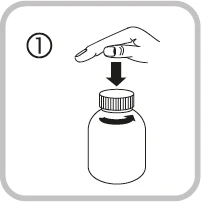
Open the bottle by pressing down on the cap while simultaneously turning it counterclockwise (Figure 1).
Follow these steps the first time you take Vimpat:
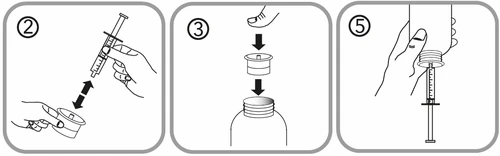
- Remove the adapter from the oral administration syringe (Figure 2).
- Place the adapter into the neck of the bottle (Figure 3). Make sure it is securely attached. There is no need to remove the adapter after use.
Follow these steps every time you take Vimpat:
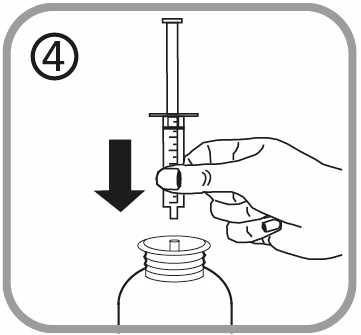
- Insert the oral administration syringe into the opening of the adapter (Figure 4).
- Invert the bottle (Figure 5).
- Hold the inverted bottle with one hand and use the other hand to fill the oral administration syringe.
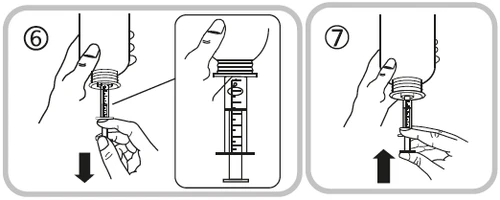
- Pull the plunger down to fill the syringe with a small amount of solution (Figure 6).
- Push the plunger upward to expel any air bubbles (Figure 7).
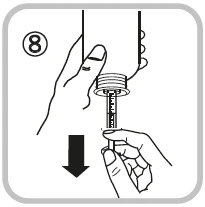
- Pull the plunger down to the mark indicating the dose in millilitres (mL) prescribed by your doctor (Figure 8). The plunger may move up along the barrel of the syringe during the first dosing. Therefore, make sure to keep the plunger in position until the oral administration syringe is disconnected from the bottle.
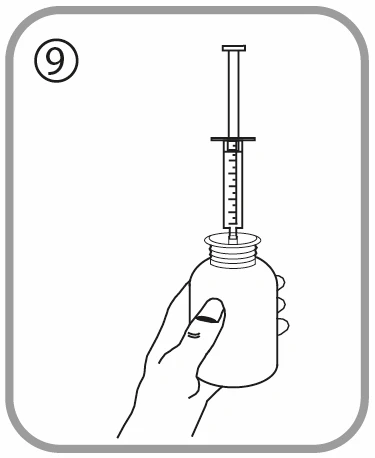
- Return the bottle to its upright position (Figure 9).
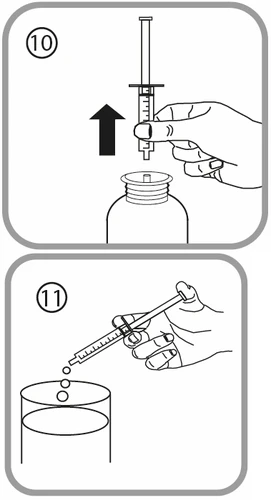
- Remove the oral administration syringe from the adapter (Figure 10).
You may choose one of two ways to take the medicine:
- empty the contents of the oral administration syringe into a small amount of water by pushing the plunger fully down (Figure 11) – then drink all the water (therefore, add only enough water to make drinking the syrup easier) or
- drink the solution directly from the oral administration syringe, without water (Figure 12)
- drink all the contents of the oral administration syringe.
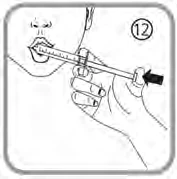
- Close the bottle with the plastic screw cap (there is no need to remove the adapter).
- To clean the oral administration syringe, rinse it only with cold water, moving the plunger up and down several times to draw in and expel the water, without separating the two parts of the syringe (Figure 13).
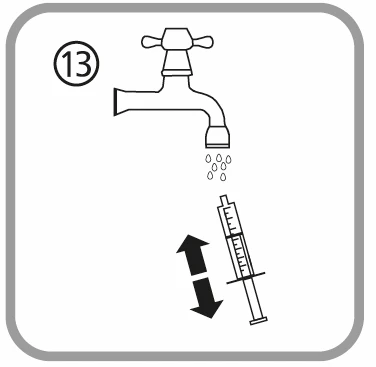
- Store the bottle, the oral administration syringe, and the package leaflet in the cardboard box.
If you take more Vimpat than you should
Contact your doctor immediately if you have taken more Vimpat than you should. Do not attempt to drive.
You may experience:
- dizziness;
- nausea or vomiting;
- seizures (epileptic fits), heart problems such as slow, fast, or irregular heartbeat, coma, or a drop in blood pressure accompanied by rapid heartbeat and sweating.
If you forget to take Vimpat
- If you forget to take a dose of Vimpat and less than 6 hours have passed since your usual dosing time, take Vimpat as soon as you remember.
- If you forget to take a dose and more than 6 hours have passed since your usual dosing time, do not take the missed dose. Instead, take your next dose at the usual time.
- Do not take a double dose to make up for a forgotten dose.
If you stop taking Vimpat
- Do not stop taking Vimpat without consulting your doctor, as seizures may return or worsen.
- If your doctor decides that you should stop treatment with Vimpat, they will give you instructions on how to gradually reduce the dose. If you have any doubts about how to use this medicine, consult your doctor or pharmacist.
4. Possible side effects
Like all medicines, this medicine can cause side effects, although not everybody gets them.
Side effects affecting the nervous system, such as dizziness, may be more frequent after a single "loading" dose.
Contact your doctor or pharmacist if you experience any of the following symptoms:
Very common: may affect more than 1 in 10 people
- Headache;
- Dizziness or nausea;
- Double vision (diplopia).
Common: may affect up to 1 in 10 people
- Brief spasms in a muscle or group of muscles (myoclonic jerks);
- Difficulty coordinating movements or walking;
- Problems maintaining balance, tremors, tingling (paraesthesia), muscle spasms, increased tendency to fall or bruise;
- Memory problems, difficulty thinking or finding words, confusion;
- Rapid and uncontrolled eye movements (nystagmus), blurred vision;
- Sensation of spinning (vertigo), feeling of drunkenness;
- Vomiting, dry mouth, constipation, indigestion, excess gas in the stomach or intestines, diarrhoea;
- Reduced touch or sensation, difficulty speaking, attention disturbance;
- Ringing noises in the ears such as buzzing, ringing, or whistling (tinnitus);
- Irritability, difficulty sleeping, depression;
- Drowsiness, fatigue or weakness (asthenia);
- Itching, irritation.
Uncommon: may affect up to 1 in 100 people
- Reduced heart rate, palpitations, irregular heartbeat, or other changes in the electrical activity of your heart (cardiac conduction disorder);
- Exaggerated feeling of well-being, seeing and/or hearing things that are not present;
- Allergic reaction after taking the medicine, hives (urticaria);
- Blood tests may show abnormal liver function, liver damage;
- Suicidal thoughts or self-harming thoughts, suicide attempt – inform your doctor immediately;
- Feeling of anger or agitation;
- Abnormal thoughts or loss of contact with reality;
- Severe allergic reaction causing swelling of the face, throat, hands, feet, ankles, or lower legs;
- Fainting;
- Abnormal involuntary movements (dyskinesia).
Not known: frequency cannot be estimated from the available data
- Increased heart rate (ventricular tachyarrhythmia);
- Sore throat, high fever, and experiencing more infections than usual. Blood tests may show a severe decrease in the number of cells of a specific class of white blood cells (agranulocytosis);
- Severe skin reaction which may include high fever and other flu-like symptoms, facial rash, widespread rash, swollen glands (enlarged lymph nodes). Blood tests may show increased levels of liver enzymes and of a type of white blood cells (eosinophilia);
- Widespread rash with blisters and peeling of the skin, particularly around the mouth, nose, eyes, and genitals (Stevens-Johnson syndrome), and a more severe form causing skin peeling over more than 30% of the body surface (toxic epidermal necrolysis);
- Seizure.
Additional side effects in children
Additional side effects observed in children include fever (pyrexia), runny nose (nasopharyngitis), sore throat (pharyngitis), eating less than usual (reduced appetite), changes in behaviour, behaviour different from normal (abnormal behaviour), and lack of energy (lethargy). Drowsiness is a very common side effect in children and may affect more than 1 in 10 children.
Reporting of side effects
If you experience any side effect, including those not listed in this leaflet, talk to your doctor or pharmacist. You can also report side effects directly via the national reporting system detailed in Annex V. By reporting side effects, you can help provide more information on the safety of this medicine.
5. How to store Vimpat
Keep this medicine out of the sight and reach of children.
Do not use this medicine after the expiry date which is stated on the carton and on the bottle after
Exp. The expiry date refers to the last day of that month.
Do not refrigerate.
After opening the syrup bottle, do not use beyond 6 months.
Do not dispose of any medicine via wastewater or household waste. Ask your pharmacist how to
dispose of medicines you no longer use. This will help protect the environment.
6. Package contents and other information
What Vimpat contains
- The active substance is lacosamide. 1 mL of Vimpat syrup contains 10 mg of lacosamide.
- The other ingredients are: glycerol (E422), sodium carmellose, liquid sorbitol (crystallizable) (E420), polyethylene glycol 4000, sodium chloride, anhydrous citric acid, acesulfame potassium (E950), sodium methyl parahydroxybenzoate (E219), strawberry flavour (containing propylene glycol, maltol), masking flavour (containing propylene glycol, aspartame (E951), acesulfame potassium (E950), maltol, deionized water), purified water.
Description of the appearance of Vimpat and contents of the pack
- Vimpat 10 mg/mL syrup is a slightly viscous, clear liquid, colourless to yellow-brown.
- Vimpat is available in a 200 mL bottle.
Vimpat syrup cartons contain a 30 mL dosing cup made of polypropylene (with black graduated markings) and a 10 mL oral dosing syringe made of polyethylene/polypropylene (with black graduated markings) with a corresponding polyethylene adapter.
- The dosing cup is suitable for doses greater than 20 mL. Each graduated marking (5 mL) on the dosing cup corresponds to 50 mg of lacosamide (e.g. 2 graduated markings correspond to 100 mg).
- The 10 mL oral dosing syringe is suitable for doses between 1 mL and 20 mL. A full 10 mL oral dosing syringe corresponds to 100 mg of lacosamide. The minimum extractable volume is 1 mL, which equals 10 mg of lacosamide. After this, each graduated marking (0.25 mL) corresponds to 2.5 mg of lacosamide (e.g. 4 graduated markings correspond to 10 mg).
Marketing Authorization Holder
UCB Pharma S.A., Allée de la Recherche 60, B-1070 Bruxelles, Belgium.
Manufacturer
Aesica Pharmaceuticals GmbH, Alfred-Nobel Strasse 10, D-40789 Monheim am Rhein, Germany
or
UCB Pharma SA, Chemin du Foriest, B-1420 Braine-l’Alleud, Belgium.
For further information about this medicinal product, please contact the local representative of the Marketing Authorization Holder.
België/Belgique/Belgien Lietuva
UCB Pharma SA/NV UCB Pharma Oy Finland
Tél/Tel: + 32 / (0)2 559 92 00 Tel: + 358 9 2514 4221 (Suomija)
България Luxembourg/Luxemburg
Yu Si Bi Balgariya EOOD UCB Pharma SA/NV
Teл.: + 359 (0) 2 962 30 49 Tél/Tel: + 32 / (0)2 559 92 00 (Belgique/Belgien)
Česká republika Magyarország
UCB s.r.o. UCB Magyarország Kft.
Tel: + 420 221 773 411 Tel.: + 36-(1) 391 0060
Danmark Malta
UCB Nordic A/S Pharmasud Ltd.
Tlf: + 45 / 32 46 24 00 Tel: + 356 / 21 37 64 36
Deutschland Nederland
UCB Pharma GmbH UCB Pharma B.V.
Tel: + 49 /(0) 2173 48 4848 Tel.: + 31 / (0)76-573 11 40
Eesti Norge
UCB Pharma Oy Finland UCB Nordic A/S
Tel: + 358 9 2514 4221 (Soome) Tlf: + 47 / 67 16 5880
Ελλάδα Österreich
UCB Α.Ε. UCB Pharma GmbH
Τηλ: + 30 / 2109974000 Tel: + 43 (0) 1 291 80 00
España Polska
UCB Pharma, S.A. UCB Pharma Sp. z o.o. / VEDIM Sp. z o.o.
Tel: + 34 / 91 570 34 44 Tel: + 48 22 696 99 20
France Portugal
UCB Pharma S.A. UCB Pharma (Produtos Farmacêuticos), Lda
Tél: + 33 / (0)1 47 29 44 35 Tel: + 351 21 302 5300
Hrvatska România
Medis Adria d.o.o. UCB Pharma Romania S.R.L.
Tel: +385 (0) 1 230 34 46 Tel: + 40 21 300 29 04
Ireland Slovenija
UCB (Pharma) Ireland Ltd. Medis, d.o.o.
Tel: + 353 / (0)1-46 37 395 Tel: + 386 1 589 69 00
Ísland Slovenská republika
Vistor hf. UCB s.r.o., organizačná zložka
Simi: + 354 535 7000 Tel: + 421 (0) 2 5920 2020
Italia Suomi/Finland
UCB Pharma S.p.A. UCB Pharma Oy Finland
Tel: + 39 / 02 300 791 Puh/Tel: + 358 9 2514 4221
Κύπρος Sverige
Lifepharma (Z.A.M.) Ltd UCB Nordic A/S
Τηλ: + 357 22 05 63 00 Tel: + 46 / (0) 40 29 49 00
Latvija United Kingdom (Northern Ireland)
UCB Pharma Oy Finland UCB (Pharma) Ireland Ltd
Tel: + 358 9 2514 4221 (Somija) Tel: + 353 / (0)1-46 37 395
Other sources of information
More detailed information on this medicinal product is available on the website of the European Medicines Agency: http://www.ema.europa.eu.
Patient information leaflet
Vimpat 10 mg/mL solution for infusion
lacosamide
Please read this leaflet carefully before taking this medicine because it contains
important information for you.
- Keep this leaflet. You may need to read it again.
- If you have any questions, ask your doctor or pharmacist.
- If you experience any side effects, including those not listed in this leaflet, contact your doctor or pharmacist. See section 4.
Contents of this leaflet
- What Vimpat is and what it is used for
- What you need to know before using Vimpat
- How to use Vimpat
- Possible side effects
- How to store Vimpat
- Contents of the pack and other information
1. What Vimpat is and what it is used for
What Vimpat is
Vimpat contains lacosamide. It belongs to a group of medicines called "antiepileptic medicines". These medicines are used to treat epilepsy.
- This medicine has been prescribed to reduce the number of seizures (epileptic fits) you experience.
What Vimpat is used for
- Vimpat is used:
- as monotherapy and in combination with other antiepileptic medicines in adults, adolescents, and children from 2 years of age for the treatment of a specific type of epilepsy characterized by partial-onset seizures with or without secondary generalization. In this type of epilepsy, seizures initially involve only one side of the brain. However, they may then spread to broader areas on both sides of the brain;
- in combination with other antiepileptic medicines in adults, adolescents, and children from 4 years of age for the treatment of primary generalized tonic-clonic seizures (complex epileptic seizures, including loss of consciousness) in patients with idiopathic generalized epilepsy (the type of epilepsy believed to have a genetic cause).
2. What you need to know before using Vimpat
Do not use Vimpat
- if you are allergic to lacosamide or to any of the other ingredients of this medicine (listed in section 6). If you are unsure whether you are allergic, consult your doctor
- if you have a specific type of heart rhythm problem called second- or third-degree AV block.
Do not use Vimpat if any of the above apply to you. If you are unsure, consult your doctor or pharmacist before using this medicine.
Warnings and precautions
Talk to your doctor before using Vimpat if:
- you have had thoughts of harming or killing yourself. A small number of people treated with antiepileptic medicines such as lacosamide have had thoughts of harming or killing themselves. If you experience any such thoughts at any time, inform your doctor immediately.
- you have a heart condition affecting your heartbeat and often experience a particularly slow, fast, or irregular heartbeat (e.g., AV block, atrial fibrillation, or atrial flutter)
- you have a serious heart condition, such as heart failure or have had a heart attack
- you frequently experience dizziness or falls. Vimpat may cause dizziness – this may increase the risk of accidental injury or falls. This means you should be cautious until you have become accustomed to the effects of this medicine.
If any of the above apply to you (or if you are unsure), consult your doctor or pharmacist before using Vimpat. If you are taking Vimpat, contact your doctor if you experience seizures of a different type or if your existing seizures worsen. If you are taking Vimpat and develop symptoms of an abnormal heartbeat (such as slow, rapid, or irregular heartbeat, palpitations, shortness of breath, dizziness, or fainting), consult your doctor immediately (see section 4).
Children
Vimpat is not recommended for children under 2 years of age with epilepsy characterized by partial-onset seizures, and is not recommended for children under 4 years of age with primary generalized tonic-clonic seizures. This is because it is not yet known whether it is effective or safe in children in these age groups.
Other medicines and Vimpat
Inform your doctor or pharmacist if you are taking, have recently taken, or might take any other medicines.
In particular, inform your doctor or pharmacist if you are taking any of the following medicines that affect the heart: this is because Vimpat may also affect your heart:
- medicines used to treat heart diseases;
- medicines that may prolong the "P-R interval" on a heart scan (ECG or electrocardiogram), such as medicines for epilepsy or pain called carbamazepine, lamotrigine, or pregabalin;
- medicines used to treat certain types of irregular heartbeat or heart failure.
If any of the above apply to you (or if you are unsure), consult your doctor or pharmacist before using Vimpat.
Also inform your doctor or pharmacist if you are taking any of the following medicines – because they may increase or decrease the effect of Vimpat in your body:
- antifungal medicines such as fluconazole, itraconazole, or ketoconazole;
- an HIV medicine such as ritonavir;
- medicines used to treat bacterial infections such as clarithromycin or rifampicin;
- a herbal medicine used to treat mild anxiety and depression called St. John’s wort.
If any of the above apply to you (or if you are unsure), consult your doctor or pharmacist before using Vimpat.
Vimpat and alcohol
As a precautionary safety measure, do not take Vimpat with alcohol.
Pregnancy and breastfeeding
Women of childbearing potential should discuss the use of contraceptive measures with their doctor.
If you are pregnant, think you may be pregnant, planning to become pregnant, or breastfeeding, consult your doctor or pharmacist before using this medicine.
Vimpat is not recommended during pregnancy, as the effects of Vimpat on the unborn baby are unknown.
Breastfeeding is not recommended while taking Vimpat, as Vimpat passes into breast milk.
Contact your doctor immediately if you are pregnant or planning a pregnancy. Your doctor will help you decide whether or not to take Vimpat.
Do not stop treatment without first consulting your doctor, as this may lead to an increase in seizures (attacks). Worsening of your condition may also be harmful to your baby.
Driving and using machines
Do not drive, ride a bicycle, or operate tools or machinery until you know how this medicine affects you. This is because Vimpat may cause dizziness or blurred vision.
Vimpat contains sodium
This medicine contains 59.8 mg of sodium (a key component of table salt) per vial. This amount corresponds to 3% of the maximum daily recommended sodium intake for an adult.
3. How to use Vimpat
Use this medicine exactly as your doctor or pharmacist has told you. Consult your doctor or pharmacist if you are unsure.
Using Vimpat
- Vimpat may be started:
- by taking the medicine orally, or
- by administration as an intravenous infusion (sometimes referred to as "IV infusion"), in which the medicine is given into a vein by a doctor or nurse. It is administered over a period of 15 to 60 minutes.
- The IV infusion is usually used for a short period when you are unable to take the medicine by mouth.
- Your doctor will decide for how many days you will receive infusions. Data are available for two daily infusions of Vimpat for up to 5 days. For longer-term treatment, Vimpat tablets and oral syrup are available.
When switching from infusion to oral administration (or vice versa), the total daily amount you take and the frequency of dosing remain the same.
- Use Vimpat twice daily, approximately 12 hours apart.
- Try to use it at approximately the same time each day.
Dosage
Below are the usual recommended doses of Vimpat for different age and weight groups. Your doctor may prescribe a different dose if you have kidney or liver problems.
Adolescents and children weighing 50 kg or more, and adults
When using Vimpat as monotherapy
- The usual starting dose of Vimpat is 50 mg twice daily.
- Your doctor may also prescribe a starting dose of 100 mg of Vimpat twice daily.
- Your doctor may increase your daily dose by 50 mg twice daily each week, until reaching the maintenance dose, which ranges from 100 mg to 300 mg twice daily.
When using Vimpat with other antiepileptic medicines
- The usual starting dose of Vimpat is 50 mg twice daily.
- Your doctor may increase your daily dose by 50 mg twice daily each week, until reaching a maintenance dose ranging from 100 mg to 200 mg twice daily.
- If you weigh 50 kg or more, your doctor may decide to start treatment with a single "loading dose" of 200 mg of Vimpat. Twelve hours later, your maintenance dose would then begin.
Children and adolescents weighing less than 50 kg
- In the treatment of partial-onset seizures: note that Vimpat is not recommended in children below 2 years of age.
- In the treatment of primary generalized tonic-clonic seizures: note that Vimpat is not recommended in children below 4 years of age.
When using Vimpat as monotherapy
- Your doctor will determine the dose of Vimpat based on your body weight.
- The usual starting dose is 1 mg (0.1 mL) per kilogram (kg) of body weight, twice daily.
- Your doctor may then increase your daily dose by 1 mg (0.1 mL) per kg of body weight twice daily each week, until reaching a maintenance dose.
- The dosage tables below are provided, including the maximum recommended dose. For reference only. Your doctor will calculate the appropriate dose for you.
To be used twice daily in children from 2 years of age weighing between 10 kg
and less than 40 kg
| Weight | Week 1 Initial dose: 0.1 mL/kg | Week 2 0.2 mL/kg | Week 3 0.3 mL/kg | Week 4 0.4 mL/kg | Week 5 0.5 mL/kg | Week 6 Maximum recommended dose: 0.6 mL/kg |
| 10 kg | 1 mL | 2 mL | 3 mL | 4 mL | 5 mL | 6 mL |
| 15 kg | 1.5 mL | 3 mL | 4.5 mL | 6 mL | 7.5 mL | 9 mL |
| 20 kg | 2 mL | 4 mL | 6 mL | 8 mL | 10 mL | 12 mL |
| 25 kg | 2.5 mL | 5 mL | 7.5 mL | 10 mL | 12.5 mL | 15 mL |
| 30 kg | 3 mL | 6 mL | 9 mL | 12 mL | 15 mL | 18 mL |
| 35 kg | 3.5 mL | 7 mL | 10.5 mL | 14 mL | 17.5 mL | 21 mL |
To be used twice daily for children and adolescents weighing 40 kg and less than 50 kg:
| Weight | Week 1 Initial dose: 0.1 mL/kg | Week 2 0.2 mL/kg | Week 3 0.3 mL/kg | Week 4 0.4 mL/kg | Week 5 Maximum recommended dose: 0.5 mL/kg |
| 40 kg | 4 mL | 8 mL | 12 mL | 16 mL | 20 mL |
| 45 kg | 4.5 mL | 9 mL | 13.5 mL | 18 mL | 22.5 mL |
When using Vimpat with other antiepileptic medicines
- Your doctor will determine the dose of Vimpat based on your body weight.
- For children and adolescents with a body weight between 10 kg and less than 50 kg, the usual starting dose is 1 mg (0.1 mL) per kilogram (kg) of body weight, twice daily.
- Your doctor may then increase your twice-daily dose by 1 mg (0.1 mL) per kg of body weight each week, until a maintenance dose is reached.
- Dosage tables are provided below, including the maximum recommended dose. For informational purposes only. Your doctor will calculate the correct dose for you:
To be used twice daily for children from 2 years of age with body weight between 10 kg and
less than 20 kg
| Weight | Week 1 Initial dose: 0.1 mL/kg | Week 2 0.2 mL/kg | Week 3 0.3 mL/kg | Week 4 0.4 mL/kg | Week 5 0.5 mL/kg | Week 6 Maximum recommended dose: 0.6 mL/kg |
| 10 kg | 1 mL | 2 mL | 3 mL | 4 mL | 5 mL | 6 mL |
| 15 kg | 1.5 mL | 3 mL | 4.5 mL | 6 mL | 7.5 mL | 9 mL |
To be used twice daily for children and adolescents with a body weight between 20 kg and
less than 30 kg :
| Weight | Week 1 Initial dose: 0.1 mL/kg | Week 2 0.2 mL/kg | Week 3 0.3 mL/kg | Week 4 0.4 mL/kg | Week 5 Maximum recommended dose: 0.5 mL/kg |
| 20 kg | 2 mL | 4 mL | 6 mL | 8 mL | 10 mL |
| 25 kg | 2.5 mL | 5 mL | 7.5 mL | 10 mL | 12.5 mL |
To be used twice daily for children and adolescents with a body weight between 30 kg and
less than 50 kg:
| Weight | Week 1 Initial dose: 0.1 mL/kg | Week 2 0.2 mL/kg | Week 3 0.3 mL/kg | Week 4 Maximum recommended dose: 0.4 mL/kg |
| 30 kg | 3 mL | 6 mL | 9 mL | 12 mL |
| 35 kg | 3.5 mL | 7 mL | 10.5 mL | 14 mL |
| 40 kg | 4 mL | 8 mL | 12 mL | 16 mL |
| 45 kg | 4.5 mL | 9 mL | 13.5 mL | 18 mL |
If you stop treatment with Vimpat
If your doctor decides to discontinue treatment with Vimpat, the dose should be gradually reduced.
This is intended to prevent the recurrence or worsening of epilepsy.
If you have any doubts about using this medicine, consult your doctor or pharmacist.
4. Possible side effects
Like all medicines, this medicine can cause side effects, although not everybody gets them.
Side effects affecting the nervous system, such as dizziness, may be more frequent after a single "loading" dose.
Contact your doctor or pharmacist if you experience any of the following symptoms:
Very common: may affect more than 1 in 10 people
- Headache
- Dizziness or nausea
- Double vision (diplopia)
Common: may affect up to 1 in 10 people
- Brief spasms in a muscle or group of muscles (myoclonic jerks)
- Difficulty coordinating movements or walking
- Problems with balance, tremors, tingling (paraesthesia), muscle spasms, increased tendency to fall or bruise easily
- Memory problems, difficulty thinking or finding words, confusion
- Rapid and uncontrolled eye movements (nystagmus), blurred vision
- Sensation of spinning (vertigo), feeling of drunkenness
- Vomiting, dry mouth, constipation, indigestion, excess gas in the stomach or intestines, diarrhoea
- Reduced touch sensation or sensitivity, difficulty articulating words, attention disturbance
- Ringing or buzzing sounds in the ears (tinnitus)
- Irritability, difficulty sleeping, depression
- Drowsiness, fatigue or weakness (asthenia)
- Itching, irritation
Uncommon: may affect up to 1 in 100 people
- Reduced heart rate, palpitations, irregular heartbeat, or other changes in the electrical activity of the heart (cardiac conduction disorder)
- Exaggerated sense of well-being, seeing and/or hearing things that are not present (hallucinations)
- Allergic reaction after taking the medicine, hives (urticaria)
- Blood tests may show abnormal liver function, liver damage
- Self-harming or suicidal thoughts, suicide attempt – inform your doctor immediately
- Feeling angry or agitated
- Abnormal thoughts or loss of contact with reality
- Severe allergic reaction causing swelling of the face, throat, hands, feet, ankles or lower legs
- Fainting
- Abnormal involuntary movements (dyskinesia)
Not known: frequency cannot be estimated from the available data
- Fast heartbeat (ventricular tachyarrhythmia)
- Sore throat, high fever, and increased number of infections compared to usual. Blood tests may show a severe decrease in the number of a specific type of white blood cells (agranulocytosis)
- Severe skin reaction which may include high fever and other flu-like symptoms, facial rash, widespread rash, swollen glands (enlarged lymph nodes). Blood tests may show increased levels of liver enzymes and a type of white blood cells (eosinophilia)
- Widespread rash with blisters and peeling of the skin, particularly around the mouth, nose, eyes and genitals (Stevens-Johnson syndrome), and a more severe form causing skin peeling over more than 30% of the body surface (toxic epidermal necrolysis)
- Seizure
Additional side effects when administered as intravenous infusion
Local side effects may occur.
Common: may affect up to 1 in 10 people
- Pain, discomfort or irritation at the injection site
Uncommon: may affect up to 1 in 100 people
- Redness at the injection site
Additional side effects in children
Additional side effects observed in children include fever (pyrexia), runny nose (nasopharyngitis), sore throat (pharyngitis), eating less than usual (reduced appetite), changes in behaviour, abnormal behaviour, and lack of energy (lethargy). Drowsiness is a very common side effect in children and may affect more than 1 in 10 children.
Reporting of side effects
If you experience any side effect, including those not listed in this leaflet, talk to your doctor or pharmacist. You can also report side effects directly via the national reporting system listed in Annex V. By reporting side effects, you can help provide more information on the safety of this medicine.
5. How to store Vimpat
Keep this medicine out of the sight and reach of children.
Do not use this medicine after the expiry date stated on the carton and on the vial after Exp. The expiry date refers to the last day of that month.
Do not store above 25°C.
Each vial of Vimpat infusion solution must be used only once. Any unused solution remaining must be discarded.
The solution should only be used if it is clear, with no colour change and free from foreign particles.
Do not dispose of medicines via wastewater or household waste. Ask your pharmacist how to dispose of medicines no longer required. This will help protect the environment.
6. Package contents and other information
What Vimpat contains
- The active substance is lacosamide. 1 mL of Vimpat infusion solution contains 10 mg of lacosamide. One vial contains 20 mL of Vimpat infusion solution, equivalent to 200 mg of lacosamide.
- The other components are: sodium chloride, hydrochloric acid, water for injections.
Description of the appearance of Vimpat and contents of the pack
- Vimpat 10 mg/mL infusion solution is a clear, colourless solution. Vimpat infusion solution is available in packs of 1 vial and 5 vials. Each vial contains 20 mL. Not all pack sizes may be marketed.
Marketing Authorisation Holder
UCB Pharma S.A., Allée de la Recherche 60, B-1070 Bruxelles, Belgium.
Manufacturer
UCB Pharma S.A., Chemin du Foriest, B-1420 Braine-l’Alleud, Belgium
or
Aesica Pharmaceuticals GmbH, Alfred-Nobel Strasse 10, D-40789 Monheim am Rhein, Germany.
For further information about this medicinal product, please contact the local representative of the Marketing Authorisation Holder.
België/Belgique/Belgien Lietuva
UCB Pharma SA/NV UCB Pharma Oy Finland
Tél/Tel: + 32 / (0)2 559 92 00 Tel: + 358 9 2514 4221 (Suomija)
България Luxembourg/Luxemburg
Ю СИ БИ България ЕООД UCB Pharma SA/NV
Teл.: + 359 (0) 2 962 30 49 Tél/Tel: + 32 / (0)2 559 92 00 (Belgique/Belgien)
Česká republika Magyarország
UCB s.r.o. UCB Magyarország Kft.
Tel: + 420 221 773 411 Tel.: + 36-(1) 391 0060
Danmark Malta
UCB Nordic A/S Pharmasud Ltd.
Tlf: + 45 / 32 46 24 00 Tel: + 356 / 21 37 64 36
Deutschland Nederland
UCB Pharma GmbH UCB Pharma B.V.
Tel: + 49 /(0) 2173 48 4848 Tel.: + 31 / (0)76-573 11 40
Eesti Norge
UCB Pharma Oy Finland UCB Nordic A/S
Tel: + 358 9 2514 4221 (Soome) Tlf: + 47 / 67 16 5880
Ελλάδα Österreich
UCB Α.Ε. UCB Pharma GmbH
Τηλ: + 30 / 2109974000 Tel: + 43 (0) 1 291 80 00
España Polska
UCB Pharma, S.A. UCB Pharma Sp. z o.o. / VEDIM Sp. z o.o.
Tel: + 34 / 91 570 34 44 Tel: + 48 22 696 99 20
France Portugal
UCB Pharma S.A. UCB Pharma (Produtos Farmacêuticos), Lda
Tél: + 33 / (0)1 47 29 44 35 Tel: + 351 21 302 5300
Hrvatska România
Medis Adria d.o.o. UCB Pharma Romania S.R.L.
Tel: +385 (0) 1 230 34 46 Tel: + 40 21 300 29 04
Ireland Slovenija
UCB (Pharma) Ireland Ltd. Medis, d.o.o.
Tel: + 353 / (0)1-46 37 395 Tel: + 386 1 589 69 00
Ísland Slovenská republika
Vistor hf. UCB s.r.o., organizačná zložka
Simi: + 354 535 7000 Tel: + 421 (0) 2 5920 2020
Italia Suomi/Finland
UCB Pharma S.p.A. UCB Pharma Oy Finland
Tel: + 39 / 02 300 791 Puh/Tel: + 358 9 2514 4221
Κύπρος Sverige
Lifepharma (Z.A.M.) Ltd UCB Nordic A/S
Τηλ: + 357 22 05 63 00 Tel: + 46 / (0) 40 29 49 00
Latvija United Kingdom (Northern Ireland)
UCB Pharma Oy Finland UCB (Pharma) Ireland Ltd
Tel: + 358 9 2514 4221 (Somija) Tel: + 353 / (0)1-46 37 395
Other sources of information
More detailed information on this medicinal product is available on the website of the European Medicines Agency: http://www.ema.europa.eu.
The following information is intended exclusively for healthcare professionals:
Each vial of Vimpat infusion solution is for single use only.
Any unused solution must be discarded (see section 3).
Vimpat infusion solution may be administered without further dilution, or it may be
diluted with the following solutions: sodium chloride 9 mg/mL (0.9%), glucose 50 mg/mL (5%), or
Ringer lactate solution.
From a microbiological standpoint, the product should be used immediately. If not used
immediately, the storage times and conditions prior to use are the responsibility of the user and should
not exceed 24 hours between 2 and 8 °C, unless dilution has been carried out under controlled and validated aseptic conditions.
Chemical and physical in-use stability has been demonstrated for 24 hours at temperatures up to 25°C for the product mixed with these diluents and stored in glass containers or PVC bags.