Verkazia
Italy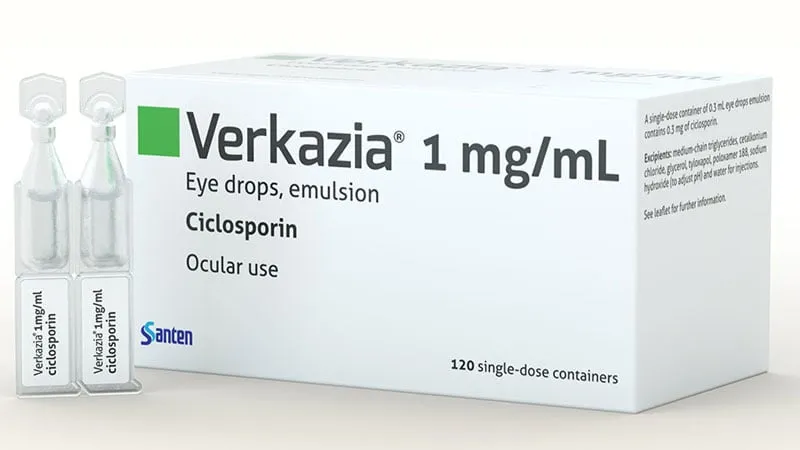
Table of Contents
- Patient Information Leaflet
- 1. What Verkazia is and what it is used for
- 2. What you need to know before using Verkazia
- 3. How to use Verkazia
- 4. Possible side effects
- 5. How to store Verkazia
- 6. Package contents and other information
- Package leaflet: Information for the patient
- 1. What Verkazia is and what it is used for
- 2. What you need to know before using Verkazia
- 3. How to use Verkazia
- 4. Possible side effects
- 5. How to store Verkazia
- 6. Package contents and other information
Patient Information Leaflet
Verkazia 1 mg/ml eye drops, emulsion
ciclosporin (ciclosporin)
Please read all of this leaflet carefully before you start using this medicine, as it contains important information for you.
- Keep this leaflet. You may need to read it again.
- If you have any questions, ask your doctor or pharmacist.
- This medicine has been prescribed for you only. Do not give it to other people, even if their symptoms are the same as yours, as it may be harmful to them.
- If you experience any side effects, including those not listed in this leaflet, tell your doctor or pharmacist. See section 4.
Contents of this leaflet
- What Verkazia is and what it is used for
- What you need to know before using Verkazia
- How to use Verkazia
- Possible side effects
- How to store Verkazia
- Contents of the pack and other information
1. What Verkazia is and what it is used for
Verkazia contains the active substance ciclosporin. Ciclosporin reduces the activity of the body's immune (defence) system and thereby reduces inflammation (the body's response to harmful stimuli).
Verkazia is used in the treatment of severe vernal keratoconjunctivitis (an allergic condition of the eye occurring more frequently in spring, affecting the transparent layer at the front of the eye and the thin membrane covering the front part of the eye).
2. What you need to know before using Verkazia
Do not use Verkazia
- if you are allergic to ciclosporin or to any of the other ingredients of this medicine (listed in section 6)
- if you have had or currently have a tumour located in the eye or the area around the eye
- if you have an eye infection.
Warnings and precautions
Use Verkazia in the eye only as described in section 3. Do not exceed the treatment period prescribed by your doctor.
Consult your doctor or pharmacist before using Verkazia:
- if you have had or suspect you may have an eye infection
- if you have any other eye disease
- if you wear contact lenses (use of Verkazia is not recommended while wearing contact lenses).
Children and adolescents
Do not use Verkazia in children under 4 years of age.
Other medicines and Verkazia
Tell your doctor or pharmacist if you are using, have recently used, or might use any other medicines.
Consult your doctor if you are using steroid-containing eye drops at the same time as Verkazia, as this combination may increase the risk of local infections.
If you use Verkazia for more than 12 months, consult a doctor regularly, for example every 3–6 months.
If you are using other eye drops, use Verkazia at least 15 minutes after using the other eye drops.
Pregnancy and breastfeeding
If you are pregnant, think you might be pregnant, planning a pregnancy, or are breastfeeding, ask your doctor or pharmacist for advice before using this medicine.
Verkazia must not be used during pregnancy. If you could become pregnant, you must use contraception while using this medicine.
Verkazia may be present in breast milk in very small amounts. If you are breastfeeding, consult your doctor before using this medicine.
Driving and using machines
After using Verkazia eye drops, you may experience temporary blurred vision or other visual disturbances. If this occurs, wait until your vision clears before driving or using machinery.
Verkazia contains cetalkonium chloride
Cetalkonium chloride may cause eye irritation.
3. How to use Verkazia
Use this medicine exactly as instructed by your doctor or pharmacist. If you have
any doubts, consult your doctor or pharmacist.
A family member or caregiver should assist the child at the beginning of
treatment with Verkazia, especially if the child is under 10 years of age, and continue to supervise until
the child is able to use Verkazia correctly without help.
The recommended dose is 1 drop of Verkazia in each affected eye 4 times a day (morning,
noon, afternoon, and evening). Continue treatment with Verkazia as prescribed by
your doctor.
Instructions for use
Follow these instructions carefully. If anything is unclear, consult your doctor or
pharmacist.
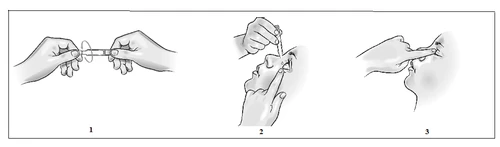
- Wash your hands.
- Open the aluminium pouch containing 5 single-dose containers.
- Take one single-dose container from the aluminium pouch, leaving the others inside.
- Gently shake the single-dose container.
- Unscrew the cap (figure 1).
- Pull down the lower eyelid (figure 2).
- Tilt your head back and look upwards.
- Gently squeeze the container to release one drop of medicine, allowing it to fall into the eye. Be careful not to let the tip of the single-dose container touch the eye.
- Open and close the eyelid to help spread the medicine over the eye surface.
- After applying Verkazia, press gently with a finger on the inner corner of the eye near the nose for 2 minutes (figure 3). In this area there is a small duct that drains tears from the eye into the nose. Applying pressure at this point closes the opening of the drainage duct, thus preventing Verkazia from spreading into the rest of the body.
- If applying the eye drops to both eyes, repeat steps 6 to 9 for the other eye.
- Immediately discard the single-dose container after use, even if there is some medicine remaining.
If the drop does not fall into the eye, repeat the procedure.
If you use more Verkazia than you should, rinse the eye with water. Do not apply further drops until the next scheduled dose.
If you forget to use Verkazia, wait for the next dose as planned. Do not use a double dose to make up for a forgotten dose. Do not use more than 1 drop 4 times a day in each affected eye.
If you stop treatment with Verkazia without consulting your doctor, ocular allergy will not be controlled and you may develop long-term vision problems.
If you have any questions about how to use this medicine, consult your doctor or pharmacist.
4. Possible side effects
Like all medicines, this medicine can cause side effects, although not everybody will experience them.
The following side effects have been reported with Verkazia:
The most common side effects affect the eye and the periocular area.
Very common side effects (may affect more than 1 in 10 people)
Pain when the drops come into contact with the eye.
Common side effects (may affect up to 1 in 10 people)
Common eye-related side effects:
Itching, redness, irritation and discomfort in the eye or periocular area, including a sensation of a foreign body in the eye. Increased tear production and blurred vision when the drops come into contact with the eye. Swelling and redness of the eyelid.
Common side effects not affecting the eye:
Upper respiratory tract infection, cough, headache.
Uncommon side effects (may affect up to 1 in 100 people)
Swelling of the eyelid and conjunctiva (the thin membrane covering the front part of the eye). Bacterial infection of the cornea (the transparent front part of the eye). Ocular infection caused by the herpes zoster virus.
Reporting of side effects
If you experience any side effect, including those not listed in this leaflet, contact your doctor or pharmacist. You can also report side effects directly through the national reporting system listed in Annex V. By reporting side effects, you can help provide more information on the safety of this medicine.
5. How to store Verkazia
Keep this medicine out of the sight and reach of children.
Do not use this medicine after the expiry date stated on the carton, on the label of the aluminium bag, and on the label of the single-dose container after “Exp.” or “EXP”. The expiry date refers to the last day of that month.
Do not freeze.
Store below 25°C.
Keep the single-dose containers in their pouches to protect the medicine from light and to prevent evaporation.
Immediately discard any opened single-dose containers after use.
Do not dispose of any medicine via wastewater or household waste. Ask your pharmacist how to dispose of medicines you no longer use. This will help protect the environment.
6. Package contents and other information
What Verkazia contains
- The active substance is cyclosporine. One ml of Verkazia contains 1 mg of cyclosporine.
- The other components are medium-chain triglycerides, cetalkonium chloride, glycerol, tyloxapol, poloxamer 188, sodium hydroxide (to adjust pH), and water for injections.
Description of the appearance of Verkazia and contents of the pack
Verkazia is a white, milky emulsion eye drop.
It is supplied in single-dose containers made of low-density polyethylene (LDPE).
Each single-dose container holds 0.3 ml of eye drop emulsion.
The single-dose containers are individually sealed in aluminium pouches.
Pack sizes: 30, 60, 90 and 120 single-dose containers.
Not all pack sizes may be marketed.
Marketing Authorisation Holder
Santen Oy
Niittyhaankatu 20
33720 Tampere
Finland
Manufacturers
EXCELVISION
27 rue de la Lombardière
ZI la Lombardière
07100 Annonay
France
Santen Oy
Kelloportinkatu 1
33100 Tampere
Finland
For further information about this medicinal product, please contact the local representative of the Marketing Authorisation Holder:
België/Belgique/Belgien Lietuva
Santen Oy Santen Oy
Tél/Tel : +32 (0) 24019172 Tel: +370 37 366628
България Luxembourg/Luxemburg
Santen Oy Santen Oy
Teл.: +359 (0) 888 755 393 Tél/Tel : +352 (0) 27862006
Česká republika Magyarország
Santen Oy Santen Oy
Tel: +358 (0) 3 284 8111 Tel.: +358 (0) 3 284 8111
Danmark Malta
Santen Oy Santen Oy
Tlf: +45 898 713 35 Tel: +358 (0) 3 284 8111
Deutschland Nederland
Santen GmbH Santen Oy
Tel: +49 (0) 3030809610 Tel: +31 (0) 207139206
Eesti Norge
Santen Oy Santen Oy
Tel: +372 5067559 Tlf: +47 21939612
Ελλάδα Österreich
Santen Oy Santen Oy
Τηλ: +358 (0) 3 284 8111 Tel: +43 (0) 720116199
España Polska
Santen Pharmaceutical Spain S.L. Santen Oy
Tel: +34 914 142 485 Tel.: +48(0) 221042096
France Portugal
Santen S.A.S. Santen Oy
Tél: +33 (0) 1 70 75 26 84 Tel: +351 308 805 912
Hrvatska România
Santen Oy Santen Oy
Tel: +358 (0) 3 284 8111 Tel: +358 (0) 3 284 8111
Ireland Slovenija
Santen Oy Santen Oy
Tel: +353 (0) 16950008 Tel: +358 (0) 3 284 8111
Ísland Slovenská republika
Santen Oy Santen Oy
Sími: +358 (0) 3 284 8111 Tel: +358 (0) 3 284 8111
Italia Suomi/Finland
Santen Italy S.r.l. Santen Oy
Tel: +39 0236009983 Puh/Tel: +358 (0) 974790211
Κύπρος Sverige
Santen Oy Santen Oy
Τηλ: +358 (0) 3 284 8111 Tel: +46 (0) 850598833
Latvija United Kingdom (Northern Ireland)
Santen Oy Santen Oy
Tel: +371 677 917 80 Tel: ++353 (0) 169 500 08
(UK Tel: +44 (0) 345 075 4863)
More detailed information on this medicinal product is available on the website of the European Medicines Agency: http://www.ema.europa.eu .
Package leaflet: Information for the patient
Verkazia 1 mg/ml eye drops, emulsion
ciclosporin (ciclosporin)
Please read all of this leaflet carefully before you start using this medicine because it contains important information for you.
- Keep this leaflet. You may need to read it again.
- If you have any questions, ask your doctor or pharmacist.
- This medicine has been prescribed for you only. Do not give it to other people, even if their symptoms are the same as yours, as it may be harmful.
- If you experience any side effects, including those not listed in this leaflet, talk to your doctor or pharmacist. See section 4.
Contents of this leaflet
- What Verkazia is and what it is used for
- What you need to know before using Verkazia
- How to use Verkazia
- Possible side effects
- How to store Verkazia
- Contents of the pack and other information
1. What Verkazia is and what it is used for
Verkazia contains the active substance ciclosporin. Ciclosporin reduces the activity of the body's immune (defence) system and thereby reduces inflammation (the body's response to harmful stimuli).
Verkazia is used in the treatment of severe vernal keratoconjunctivitis (an allergic condition of the eye occurring more frequently in spring, affecting the transparent layer at the front of the eye and the thin membrane covering the front of the eye).
2. What you need to know before using Verkazia
Do not use Verkazia
- if you are allergic to ciclosporin or to any of the other ingredients of this medicine (listed in section 6)
- if you have had or currently have a tumour localised in the eye or in the area around the eye
- if you have an eye infection.
Warnings and precautions
Use Verkazia in the eye only as described in section 3. Do not exceed the treatment period prescribed by your doctor.
Talk to your doctor or pharmacist before using Verkazia:
- if you have had or suspect you have an eye infection
- if you have any other eye disease
- if you wear contact lenses (use of Verkazia is not recommended with contact lenses).
Children and adolescents
Do not use Verkazia in children under 4 years of age.
Other medicines and Verkazia
Tell your doctor or pharmacist if you are using, have recently used or might use any other medicines.
Consult your doctor if you are using steroid-containing eye drops administered simultaneously with Verkazia, as this combination may increase the risk of local infections.
If you use Verkazia for more than 12 months, consult a doctor regularly, for example every 3–6 months.
If you are using other eye drops, use Verkazia at least 15 minutes after using the other eye drops.
Pregnancy and breastfeeding
If you are pregnant, think you may be pregnant, planning to become pregnant, or are breastfeeding, ask your doctor or pharmacist for advice before using this medicine.
Verkazia must not be used during pregnancy. If you could become pregnant, you must use contraception while using this medicine.
Verkazia may be present in breast milk in very small amounts. If you are breastfeeding, consult your doctor before using this medicine.
Driving and using machines
After using Verkazia eye drops, you may experience temporary blurred vision or other visual disturbances. If this occurs, wait until your vision improves before driving or using machines.
Verkazia contains cetalkonium chloride
Cetalkonium chloride may cause eye irritation.
3. How to use Verkazia
Use this medicine exactly as directed by your doctor or pharmacist. If you have
any doubts, consult your doctor or pharmacist.
It is necessary that a family member or caregiver assist the child at the beginning of
treatment with Verkazia, especially if the child is under 10 years of age, and continue to supervise them
until the child is able to use Verkazia correctly without help.
The recommended dose is 1 drop of Verkazia in each affected eye 4 times a day (morning,
noon, afternoon, and evening). Continue treatment with Verkazia as prescribed by
your doctor.
Instructions for use
Follow these instructions carefully. If there is anything you do not understand, consult your doctor or pharmacist.
Before administering the eye drops:
Wash your hands before opening the bottle.
Do not use this medicine if you notice that the tamper-evident seal on the neck of the bottle is
broken before first use.
When using the bottle for the first time, before administering a drop into the eye,
become familiar with the use of the bottle by gently squeezing it to
release one drop away from the eye.
Once you are confident in your ability to administer one drop at a time, choose the position that
feels most comfortable to you (sitting, lying on your back, or standing in front of a mirror).
Each time you open a new bottle, discard one drop into the waste to activate the bottle.
Administration:
- Gently shake the bottle. To open the bottle, hold it just below the cap and unscrew the cap. The open end of the bottle must not come into contact with anything to avoid contaminating the medicine.
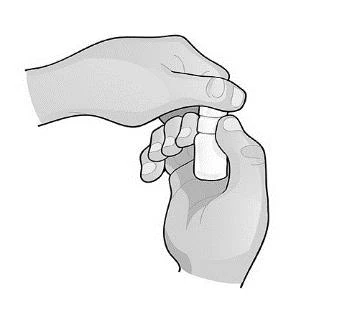
- Tilt your head back and hold the bottle above the eye.
- Pull down the lower eyelid and look upward. Gently squeeze the middle of the bottle and let one drop of medicine fall into the eye. Note that after squeezing the bottle, it may take a few seconds before the drop comes out. Do not squeeze the bottle too hard.
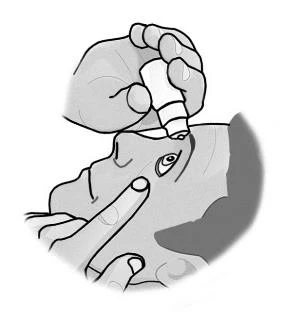
- Close the eye and press with a finger on the inner corner of the eye for about two minutes. This will help prevent the medicine from spreading into the rest of the body.

- Repeat steps 2 to 4 to administer one drop into the other eye, if instructed by your doctor. Sometimes treatment is only required in one eye. Your doctor will tell you if this applies to you and which eye should be treated.
- After each use and before replacing the cap, shake the bottle once downward without touching the dropper tip, to remove any residual emulsion from the tip. This step is necessary to ensure proper release of the next drop.
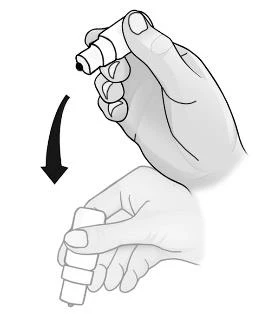
- Wipe away any excess emulsion around the eye with a clean tissue.
At the end of the 4-week treatment period, some emulsion will remain in the
bottle. Do not use any remaining medicine in the bottle after completing the
treatment. Do not use the eye drops for more than 4 weeks after first opening the bottle.
If the drop misses the eye, repeat the procedure.
If you use more Verkazia than you should, rinse the eye with water. Do not apply further drops until the next scheduled dose.
If you forget to use Verkazia, wait for the next dose as scheduled. Do not use a double dose to make up for a forgotten dose. Do not use more than 1 drop 4 times a day in each affected eye.
If you stop treatment with Verkazia without consulting your doctor, ocular allergy will not be
controlled and you may develop long-term vision problems.
If you have any doubts about how to use this medicine, consult your doctor or pharmacist.
4. Possible side effects
Like all medicines, this medicine can cause side effects, although not everybody gets them.
The following side effects have been reported with Verkazia:
The most common side effects affect the eye and the area around the eye.
Very common side effects (may affect more than 1 in 10 people)
Pain when the drops come into contact with the eye.
Common side effects (may affect up to 1 in 10 people)
Common eye-related side effects:
Itching, redness, irritation, and discomfort in the eye or the area around the eye, including a sensation of a foreign body in the eye. Increased tear production and blurred vision when the drops come into contact with the eye. Swelling and redness of the eyelid.
Common side effects not affecting the eye:
Upper respiratory tract infection, cough, headache.
Uncommon side effects (may affect up to 1 in 100 people)
Swelling of the eyelid and conjunctiva (the thin membrane covering the front part of the eye). Bacterial infection of the cornea (the transparent front part of the eye). Ocular infection caused by the herpes zoster virus.
Reporting of side effects
If you experience any side effect, including those not listed in this leaflet, talk to your doctor or pharmacist. You can also report side effects directly via the national reporting system listed in Annex V. By reporting side effects, you can help provide more information on the safety of this medicine.
5. How to store Verkazia
Keep this medicine out of the sight and reach of children.
Do not use this medicine after the expiry date stated on the carton and label of the bottle after “Exp.” or “EXP”. The expiry date refers to the last day of that month.
Do not freeze.
Store below 25°C.
After first opening the bottle, the emulsion can be used for 4 weeks. The bottle must be kept tightly closed.
Do not use this medicine if you notice that the seal has been tampered with the first time you use the container.
Do not dispose of any medicine via wastewater or household waste. Ask your pharmacist how to dispose of medicines no longer required. This will help protect the environment.
6. Package contents and other information
What Verkazia contains
- The active substance is cyclosporine. One ml of Verkazia contains 1 mg of cyclosporine.
- The other components are medium-chain triglycerides, cetalkonium chloride, glycerol, tyloxapol, poloxamer 188, sodium hydroxide (to adjust pH), and water for injections.
Description of the appearance of Verkazia and contents of the pack
Verkazia is a white, milky eye drop emulsion.
It is supplied in a white plastic bottle with a white dropper applicator and a white plastic screw cap.
Each bottle contains 9 ml of medicinal product and each pack contains one bottle.
Marketing Authorisation Holder
Santen Oy
Niittyhaankatu 20
33720 Tampere
Finland
Manufacturers
EXCELVISION
27 rue de la Lombardière
ZI la Lombardière
07100 Annonay
France
Santen Oy
Kelloportinkatu 1
33100 Tampere
Finland
For further information about this medicinal product, please contact the local representative of the Marketing Authorisation Holder:
België/Belgique/Belgien Lietuva
Santen Oy Santen Oy
Tél/Tel: +32 (0) 24019172 Tel: +370 37 366628
България Luxembourg/Luxemburg
Santen Oy Santen Oy
Teл.: +359 (0) 888 755 393 Tél/Tel: +352 (0) 27862006
Česká republika Magyarország
Santen Oy Santen Oy
Tel: +358 (0) 3 284 8111 Tel.: +358 (0) 3 284 8111
Danmark Malta
Santen Oy Santen Oy
Tlf: +45 898 713 35 Tel: +358 (0) 3 284 8111
Deutschland Nederland
Santen GmbH Santen Oy
Tel: +49 (0) 3030809610 Tel: +31 (0) 207139206
Eesti Norge
Santen Oy Santen Oy
Tel: +372 5067559 Tlf: +47 21939612
Ελλάδα Österreich
Santen Oy Santen Oy
Τηλ: +358 (0) 3 284 8111 Tel: +43 (0) 720116199
España Polska
Santen Pharmaceutical Spain S.L. Santen Oy
Tel: +34 914 142 485 Tel.: +48(0) 221042096
France Portugal
Santen S.A.S. Santen Oy
Tél: +33 (0) 1 70 75 26 84 Tel: +351 308 805 912
Hrvatska România
Santen Oy Santen Oy
Tel: +358 (0) 3 284 8111 Tel: +358 (0) 3 284 8111
Ireland Slovenija
Santen Oy Santen Oy
Tel: +353 (0) 16950008 Tel: +358 (0) 3 284 8111
Ísland Slovenská republika
Santen Oy Santen Oy
Sími: +358 (0) 3 284 8111 Tel: +358 (0) 3 284 8111
Italia Suomi/Finland
Santen Italy S.r.l. Santen Oy
Tel: +39 0236009983 Puh/Tel: +358 (0) 974790211
Κύπρος Sverige
Santen Oy Santen Oy
Τηλ: +358 (0) 3 284 8111 Tel: +46 (0) 850598833
Latvija United Kingdom (Northern Ireland)
Santen Oy Santen Oy
Tel: +371 677 917 80 Tel: +353 (0) 169 500 08
(UK Tel: +44 (0) 345 075 4863)
More detailed information on this medicinal product is available on the website of the European Medicines Agency: http://www.ema.europa.eu.