Verapamil Hexal
Italy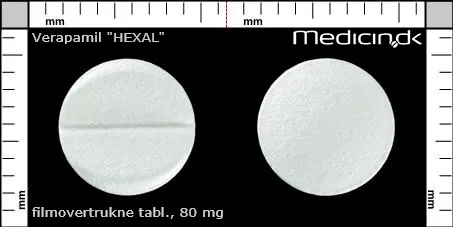
Table of Contents
- Package leaflet: Information for the patient
- Verapamil Hexal 80 mg film-coated tablets, 120 mg prolonged-release tablets
- 1. What Verapamil Hexal is and what it is used for
- 2. What you need to know before taking Verapamil Hexal
- 3. How to take Verapamil Hexal
- 4. Possible side effects
- 5. How to store Verapamil Hexal
- 6. Package contents and other information
Package leaflet: Information for the patient
Verapamil Hexal 80 mg film-coated tablets, 120 mg prolonged-release tablets
Generic Medicine
Please read all of this leaflet carefully before you start taking this medicine because it contains important information for you.
- Keep this leaflet. You may need to read it again.
- If you have any questions, ask your doctor or pharmacist.
- This medicine has been prescribed for you only. Do not give it to others, even if their symptoms are the same as yours, as it may be harmful.
- If you experience any side effects, including those not listed in this leaflet, inform your doctor or pharmacist. See section 4.
Contents of this leaflet:
- What Verapamil Hexal is and what it is used for
- What you need to know before taking Verapamil Hexal
- How to take Verapamil Hexal
- Possible side effects
- How to store Verapamil Hexal
- Contents of the pack and other information
1. What Verapamil Hexal is and what it is used for
Verapamil Hexal contains the active substance verapamil, which belongs to a group of
medicines called calcium channel blockers (calcium antagonists), which help relax the
heart and blood vessels.
Verapamil Hexal is indicated for the treatment of:
- heart problems due to reduced blood supply (acute and chronic coronary insufficiency);
- abnormal changes in heart rhythm (supraventricular tachyarrhythmias such as paroxysmal supraventricular tachycardia, atrial fibrillation and atrial flutter with rapid ventricular response, extrasystoles);
- high blood pressure (arterial hypertension).
This medicine is also indicated as a treatment following a heart attack (myocardial infarction).
Verapamil Hexal 120 mg prolonged-release tablets are also indicated to prevent a new heart attack in the absence of heart problems and when other medicines (beta-blockers) cannot be used.
2. What you need to know before taking Verapamil Hexal
Do not take Verapamil Hexal
- if you are allergic to the active substance or to any of the other ingredients of this medicine (listed in section 6);
- if you have a serious heart condition known as cardiogenic shock, which occurs when your heart does not pump enough blood throughout the body;
- if you recently had a heart attack and developed complications such as a markedly slow heart rate (myocardial infarction complicated by marked bradycardia);
- if your heart function is reduced below normal (left ventricular contractile failure, decompensated congestive heart failure);
- if you have severe conduction disorders and irregular heartbeat (complete AV block, partial AV block; incomplete bundle branch block, sick sinus syndrome, except in patients with a functioning artificial ventricular pacemaker; second- or third-degree AV block, except in patients with a functioning artificial ventricular pacemaker, wide-complex ventricular tachycardia, atrial fibrillation/flutter with concomitant Wolff-Parkinson-White syndrome, Lown-Ganong-Levine syndrome, short PR syndromes);
- if you have a very slow heart rate (marked bradycardia with less than 50 beats/minute);
- if you have low blood pressure (hypotension with systolic pressure below 90 mm Hg) (see section “Warnings and precautions”);
- if you are taking medicines used to treat depression (MAO inhibitors), or for heart problems (quinidine-type treatments), or for high blood pressure (beta-blockers) (see section “Other medicines and Verapamil Hexal”);
- if you are already taking a medicine containing ivabradine for the treatment of certain heart conditions.
Warnings and precautions
Talk to your doctor or pharmacist before taking Verapamil Hexal.
Do not take Verapamil Hexal if your heart function is severely reduced below normal (severe left ventricular dysfunction). If you have a mild form of this condition, your doctor may prescribe other medicines (digitalis and/or diuretics) before starting treatment with this medicine.
During treatment with this medicine, the following may occur:
- a drop in blood pressure below normal levels, which may cause dizziness or other symptoms related to low blood pressure (symptomatic hypotension);
- a temporary increase in liver enzymes (transaminases), with or without an increase in other blood substances (alkaline phosphatase, bilirubin). Your doctor may perform periodic liver function tests during treatment with this medicine;
- heart problems (asymptomatic first-degree atrioventricular block, transient bradycardia, sometimes accompanied by nodal escape rhythms). If you experience any heart-related symptoms, consult your doctor, as it may be necessary to reduce the dose or discontinue verapamil treatment, or initiate appropriate therapy (see section “Possible side effects”).
Take Verapamil Hexal with caution and inform your doctor if:
- you have a specific heart condition called Wolff-Parkinson-White syndrome or Lown-Ganong-Levine syndrome. In these cases, your condition may worsen (very rapid ventricular response or ventricular fibrillation);
- you have liver problems. In this case, your doctor will periodically monitor your heart function and may adjust your dose;
- you have kidney problems. Your doctor will periodically monitor your heart function;
- you have a very slow heart rate (bradycardia) or low blood pressure (hypotension) (see section “Do not take Verapamil Hexal”);
- you have severe muscle disorders (severe myasthenia gravis, Lambert-Eaton syndrome, advanced Duchenne muscular dystrophy).
Children and adolescents
Verapamil Hexal 80 mg film-coated tablets
Your doctor will determine the appropriate dosage.
Verapamil Hexal 120 mg prolonged-release tablets
There are no data available to establish the safety and efficacy of verapamil in children and adolescents; therefore, the use of this medicine is not recommended in children and adolescents.
Other medicines and Verapamil Hexal
Tell your doctor or pharmacist if you are taking, have recently taken, or might take any other medicines. Specific monitoring may be required if you are taking other medicines.
Take this medicine with caution and inform your doctor if you are taking the following medicines:
- alpha-blockers, medicines used to treat high blood pressure and to help urine flow in patients with an enlarged prostate (benign prostatic hyperplasia) (terazosin, prazosin);
- medicines used to treat heart rhythm disorders (quinidine, flecainide, dronedarone);
- theophylline, a medicine used to treat asthma;
- dabigatran etexilate and sulfinpyrazone (medicines to prevent blood clots);
- carbamazepine, a medicine used to treat epilepsy (anticonvulsant);
- imipramine, a medicine used to treat depression;
- glibenclamide, a medicine used to treat diabetes;
- medicines used to treat bacterial infections (clarithromycin, erythromycin, rifampicin, telithromycin);
- doxorubicin, a medicine used to treat certain types of cancer;
- phenobarbital, a medicine used to induce anesthesia and to treat epilepsy;
- medicines used to treat anxiety and to promote sleep (buspirone, midazolam);
- beta-blockers (metoprolol, propranolol), medicines used to treat high blood pressure and certain heart conditions;
- digitalis (digitoxin, digoxin), medicines used to treat heart problems (heart failure) (see section “Warnings and precautions”);
- cimetidine, a medicine used to treat stomach and intestinal problems such as acidity or ulcers;
- medicines used after organ transplantation (cyclosporine, everolimus, sirolimus, tacrolimus);
- medicines used to lower high blood fat levels (atorvastatin, lovastatin, simvastatin);
- almotriptan, a medicine used to treat migraine;
- St. John’s wort (hypericum), used to treat depression;
- medicines used to treat AIDS (anti-HIV agents);
- medicines used for anesthesia (neuromuscular blockers and inhaled anesthetics);
- acetylsalicylic acid, a medicine used to treat pain, fever, and inflammation or to prevent blood clots (thrombi);
- other medicines used to treat high blood pressure (e.g., vasodilators, angiotensin-converting enzyme inhibitors, diuretics);
- disopyramide, a medicine used to prevent and treat certain heart rhythm disorders. Do not take disopyramide within 48 hours before or 24 hours after taking Verapamil Hexal;
- lithium, a medicine used to treat certain mental disorders;
- aliskiren, a medicine used to treat high blood pressure;
- metformin, because verapamil may reduce the hypoglycemic effect of metformin.
Avoid taking Verapamil Hexal if you are taking:
- colchicine, a medicine used to prevent and treat joint inflammation (gouty arthritis);
- ivabradine, a medicine used to treat certain heart conditions (angina pectoris, chronic heart failure, etc.);
- dantrolene (administered by infusion), a medicine used to treat a muscle disorder called malignant hyperthermia.
Verapamil Hexal with grapefruit juice and alcohol
Avoid consuming grapefruit juice and alcoholic beverages during treatment with this medicine.
Pregnancy, breastfeeding, and fertility
If you are pregnant, think you may be pregnant, are planning to become pregnant, or are breastfeeding, consult your doctor or pharmacist before taking this medicine.
Verapamil Hexal is contraindicated during pregnancy, except in cases of absolute necessity and under strict medical supervision.
Verapamil is excreted in breast milk. Verapamil Hexal is contraindicated during breastfeeding, except in cases of genuine necessity, as verapamil passes into breast milk.
Driving and using machines
This medicine may impair your ability to drive or operate machinery, especially at the beginning of treatment, when the dose is increased, when your doctor changes your therapy (switching from other medicines to Verapamil Hexal), or if you consume alcohol.
Verapamil Hexal contains lactose and sodium
This medicine contains lactose, a type of sugar. If your doctor has diagnosed you with an intolerance to certain sugars, contact them before taking this medicine.
This medicine contains less than 1 mmol (23 mg) of sodium per tablet, i.e., essentially “sodium-free”.
3. How to take Verapamil Hexal
Take this medicine exactly as directed by your doctor or pharmacist. If you have any doubts, consult your doctor or pharmacist.
Verapamil Hexal 80 mg film-coated tablets
The recommended dose is 1 tablet three times a day, preferably taken with meals.
If you are taking this medicine to maintain a regular heartbeat (recurrent tachyarrhythmias), your doctor may instruct you to take the tablets at shorter intervals (1 tablet every 3–4 hours).
Use in children and adolescents
The recommended dose of Verapamil Hexal 80 mg film-coated tablets in children and adolescents is 1 tablet 2–3 times daily.
Early infancy: Your doctor will determine the appropriate dose of Verapamil Hexal 80 mg film-coated tablets.
Verapamil Hexal 120 mg prolonged-release tablets
Treatment of heart circulation disorders (moderate severity coronary insufficiency) and prevention of heart rhythm disorders (tachyarrhythmias)
The recommended dose is 1 tablet in the morning and 1 tablet in the evening (240 mg/day).
If necessary, this dose may be increased to 2 tablets twice daily (480 mg/day).
Use in children and adolescents
The use of Verapamil Hexal 120 mg prolonged-release tablets is not recommended in children (see section “Children and adolescents”).
If you take more Verapamil Hexal than you should
Symptoms of overdose may include low blood pressure (hypotension), reduced heart rate (bradycardia) up to heart activity blockage (high-grade AV block and sinus arrest), high blood sugar levels (hyperglycaemia), feeling tired and uninterested (apathy), increased blood acidity (metabolic acidosis). Death has occurred following ingestion of very high doses (overdose).
If you accidentally take too much Verapamil Hexal, contact your doctor immediately or go to the nearest hospital.
If you forget to take Verapamil Hexal
Do not take a double dose to make up for the missed tablet.
If you stop taking Verapamil Hexal
If you stop treatment with Verapamil Hexal, consult your doctor.
If you have any questions about the use of this medicine, consult your doctor or pharmacist.
4. Possible side effects
Like all medicines, this medicine can cause side effects, although not everybody gets them.
The following side effects may occur:
Common (may affect up to 1 in 10 people)
- dizziness, headache;
- heart problems (heart failure/pulmonary edema);
- slow heart rate (bradycardia);
- disturbances in the heart's electrical conduction (atrioventricular block);
- low blood pressure (hypotension);
- constipation;
- nausea;
- swelling due to fluid accumulation (edema);
- fatigue.
Uncommon (may affect up to 1 in 100 people)
- severe disturbances in the heart's electrical conduction (complete atrioventricular block);
- sensation of warmth (hot flushes).
Frequency not known (frequency cannot be estimated from the available data)
- bruising (ecchymosis);
- allergic reactions (hypersensitivity);
- mental disturbances;
- tingling sensation in arms and legs (paraesthesia);
- tremor;
- movement disorders (extrapyramidal disorders);
- disturbances in blood circulation to the brain (cerebrovascular accidents);
- confusion;
- balance disorders;
- insomnia, drowsiness;
- visual disturbances (blurred vision);
- dizziness;
- perception of ringing or buzzing in the ears (tinnitus);
- severe heart problems (atrioventricular block, sinus bradycardia, sinus arrest, heart failure, angina pectoris, myocardial infarction, chest pain);
- swelling of arms and legs due to fluid accumulation (peripheral edema);
- increased heart rate (tachycardia);
- awareness of heartbeats (palpitations);
- temporary loss of consciousness (syncope);
- difficulty walking due to poor circulation (intermittent claudication);
- severe skin problems (purpura);
- difficulty breathing (dyspnea);
- vomiting;
- severe intestinal problems (ileus);
- gum swelling (gingival hyperplasia);
- abdominal pain and discomfort;
- diarrhea;
- dry mouth;
- stomach and intestinal disturbances;
- swelling of the face, extremities, lips, tongue, mouth and/or throat (angioedema);
- severe skin disorders (Stevens-Johnson syndrome, erythema multiforme, maculopapular rash);
- hair loss (alopecia);
- skin eruptions (urticaria, rash, exanthema), itching;
- thickening of the skin (hyperkeratosis);
- skin spots (patches), bruising;
- increased sweating (hyperhidrosis);
- muscle weakness, muscle pain (myalgia), joint pain (arthralgia), involuntary muscle contractions (spasms);
- frequent passage of small amounts of urine (pollakiuria);
- sexual disorders (erectile dysfunction);
- breast enlargement in men (gynaecomastia);
- milk secretion (galactorrhoea);
- excessive bleeding between menstrual periods (metrorrhagia);
- changes in certain blood tests used to monitor liver function (increased liver enzymes), increased levels of a hormone (prolactin);
- changes in blood sugar levels (impaired glucose tolerance);
- paralysis (tetraparesis) when verapamil is taken together with colchicine (see section "Other medicines and Verapamil Hexal").
If you experience serious side effects such as a marked drop in blood pressure (severe hypotension) or severe disturbances in the heart's electrical conduction (complete AV block), contact your doctor immediately.
Reporting of side effects
If you get any side effects, including those not listed in this leaflet, talk to your doctor or pharmacist. You can also report side effects directly via the national reporting system at https://www.aifa.gov.it/content/segnalazioni-reazioni-avverse .
By reporting side effects, you can help provide more information on the safety of this medicine.
5. How to store Verapamil Hexal
Keep this medicine out of the sight and reach of children.
Do not use this medicine after the expiry date stated on the label after "Exp.".
The expiry date refers to the last day of that month.
Verapamil Hexal 80 mg film-coated tablets
This medicinal product does not require any special storage conditions.
Verapamil Hexal 120 mg prolonged-release tablets
Store below 30°C.
Do not dispose of medicines via wastewater or household waste. Ask your pharmacist
how to dispose of medicines no longer required. This will help protect the environment.
6. Package contents and other information
What Verapamil Hexal contains
Verapamil Hexal 80 mg film-coated tablets
- The active substance is: verapamil hydrochloride. Each film-coated tablet contains 80 mg of verapamil hydrochloride.
- The other components are: lactose, maize starch, povidone, microcrystalline cellulose, sodium starch glycolate, colloidal anhydrous silica, magnesium stearate, methylhydroxypropylcellulose, hydroxypropylcellulose, macrogol 6000, titanium dioxide.
Verapamil Hexal 120 mg prolonged-release tablets
- The active substance is verapamil hydrochloride. Each prolonged-release tablet contains 120 mg of verapamil hydrochloride.
- The other components are: lactose, polyvidone, microcrystalline cellulose, sodium alginate, colloidal anhydrous silica, magnesium stearate, hydroxypropylmethylcellulose, macrogol 4000, titanium dioxide, yellow iron oxide.
Description of the appearance of Verapamil Hexal and pack contents
Verapamil Hexal 80 mg film-coated tablets
Alu/PP blister pack containing 30 tablets.
Verapamil Hexal 120 mg prolonged-release tablets
Alu/PP blister pack containing 30 tablets or 60 tablets.
Marketing Authorization Holder
Sandoz S.p.A. - Largo U. Boccioni 1, 21040 Origgio (VA) - Italy
Manufacturer
Salutas Pharma GmbH - Otto-von-Guericke-Allee 1, 39179 Barleben (Germany)