Ventolin
Italy
Table of Contents
- Patient Information Leaflet
- Ventolin 100 micrograms pressurised suspension
- 1. What Ventolin pressurised suspension is and what it is used for
- 2. What you need to know before using Ventolin pressurized suspension
- 3. How to use Ventolin pressurised suspension
- 4. Possible side effects
- Package leaflet: information for the user
- Ventolin 500 micrograms/1 ml Injection Solution
- 4. What Ventolin injectable solution is and what it is used for
- 5. What you need to know before using Ventolin injectable solution
- 6. How to use Ventolin injectable solution
- 4. Possible side effects
- Patient Information Leaflet: Information for the user
- Ventolin 100 micrograms/5 ml Injectable Solution
- 1. What Ventolin injectable solution is and what it is used for
- 2. What you need to know before using Ventolin injectable solution
- 3. How to use Ventolin injectable solution
- 4. Possible side effects
- 5. How to store Ventolin
- 6. Package contents and other information
Patient Information Leaflet
Ventolin 100 micrograms pressurised suspension
salbutamol sulfate
Please read all of this leaflet carefully before you start using this medicine because it contains important information for you.
- Keep this leaflet. You may need to read it again.
- If you have any questions, ask your doctor, nurse or pharmacist.
- This medicine has been prescribed for you only. Do not give it to other people, even if they have the same symptoms as you, because it may be harmful.
- If you need more information or advice, speak to your doctor, nurse or pharmacist.
- If you experience any side effect, including those not listed in this leaflet, tell your doctor, nurse or pharmacist. See section 4.
Contents of this leaflet:
- What Ventolin pressurised suspension is and what it is used for
- What you need to know before using Ventolin pressurised suspension
- How to use Ventolin pressurised suspension
- Possible side effects
- How to store Ventolin pressurised suspension
- Contents of the pack and other information
1. What Ventolin pressurised suspension is and what it is used for
Ventolin pressurised suspension contains a medicinal ingredient called salbutamol. It belongs to a group of medicines called bronchodilators.
- Bronchodilators help the airways in the lungs to stay open. This makes it easier for air to pass through.
- They help to relieve chest tightness, wheezing and coughing.
Ventolin pressurised suspension is used to treat severe breathing problems in people with asthma and similar conditions.
2. What you need to know before using Ventolin pressurized suspension
Do not use Ventolin pressurized suspension
- if you are allergic to salbutamol sulfate or to any of the other ingredients of this medicine (listed in section 6).
Warnings and precautions
Consult a doctor, nurse, or pharmacist before using Ventolin pressurized suspension if:
- your asthma is uncontrolled (for example, if you have frequent symptoms, exacerbations, or limited physical performance). Your doctor may start or increase your dose of an asthma control medication, such as an inhaled corticosteroid.
- you have high blood pressure
- you have diabetes
- you have hyperthyroidism (overactive thyroid)
- you have low levels of potassium in your blood (hypokalaemia)
- you have glaucoma (high pressure inside the eye)
- you have a phaeochromocytoma (an adrenal gland tumour causing release into the body of substances that increase blood pressure)
- you have thyrotoxicosis (a condition caused by excess thyroid hormones in the blood)
- you have a history of heart problems, such as irregular or rapid heartbeat or angina.
Inhaler without dose counter
The inhaler contains enough medicine for only 200 sprays (both inhaled and released into the air for testing) and includes a propellant gas to deliver the medicine. However, after 200 sprays, the inhaler may continue to spray gas but cannot guarantee the correct dose of salbutamol. Therefore, after 200 sprays, you cannot be sure that you are receiving the medicine. The inhaler does not have a dose counter. Methods to determine whether the inhaler is empty, such as shaking it, weighing it, or immersing it in water, are not reliable and are not recommended. Cases of severe worsening of asthma symptoms have been reported following accidental use of empty inhalers. It is recommended to keep track of the number of sprays used. It is advisable to keep a spare inhaler available. If you use more than one inhaler, it is recommended to track the number of sprays for each inhaler separately.
Other medicines and Ventolin pressurized suspension
Inform your doctor, nurse, or pharmacist if you are taking, have recently taken, or might take any other medicines, including those obtained without a prescription. This includes herbal remedies. If you need to go to hospital, remember to bring this medicine with you.
In particular, inform your doctor, nurse, or pharmacist if you are taking any of the following:
- medicines for irregular or rapid heartbeat
- other beta-blockers (such as propranolol)
- xanthine medicines (used to aid breathing)
- steroid medicines
- diuretic medicines
- diabetes medicines that lower blood sugar
- tricyclic antidepressants and digoxin.
Ventolin pressurized suspension with food and drink
You may use Ventolin pressurized suspension at any time of day, with or without food.
Pregnancy, breastfeeding, and fertility
If you are pregnant, think you might be pregnant, are planning a pregnancy, or are breastfeeding, consult your doctor, nurse, or pharmacist before using this medicine.
Driving and using machines
It is unlikely that Ventolin will affect your ability to drive or operate machinery.
For those engaged in sports
Using this medicine without a therapeutic need constitutes doping and may lead to a positive result in anti-doping tests.
3. How to use Ventolin pressurised suspension
Use this medicine exactly as directed by your doctor. If you have any doubts, consult your doctor,
nurse, or pharmacist.
Ventolin pressurised suspension should be used as needed rather than on a regular basis.
If asthma is active (for example, frequent symptoms or exacerbations such as shortness of breath making it
difficult to speak, eat, or sleep, coughing, wheezing, chest tightness, or limitation of physical activity), you must
inform your doctor immediately. The doctor may start or increase a medicine for asthma control, such as an
inhaled corticosteroid.
Inform your doctor immediately if the medicine does not seem to work as well as before (for example, if higher
doses are needed to relieve breathing problems, or if the inhaler does not provide rapid relief for at least 3
hours after administration), as asthma may be worsening and another medicine may be required.
Inform your doctor if asthma worsens or if this medicine no longer relieves asthma symptoms as previously.
If you use Ventolin pressurised suspension more than twice a week to treat asthma symptoms, excluding
preventive use before exercise, this indicates poorly controlled asthma and may increase the risk of severe
asthma attacks (worsening of asthma) which can lead to serious complications and may be life-threatening or
even fatal. You should contact your doctor as soon as possible to review your asthma treatment.
If you are taking daily medication for lung inflammation, such as an inhaled corticosteroid, it is important to
continue using it regularly, even if you feel better.
Use this medicine exactly as directed by your doctor. If you have any doubts, consult your doctor,
nurse, or pharmacist.
Adults and adolescents aged 12 years and older
Treatment of acute bronchospasm and management of episodic asthma
1–2 inhalations (100–200 micrograms).
Chronic therapy
1–2 inhalations (200 micrograms) four times daily.
As-needed use of Ventolin should not exceed four doses per day. Administer no more than two spray
doses at a time and do not repeat treatment sooner than 4 hours.
Children under 12 years of age
Treatment of acute bronchospasm and management of episodic asthma
1 inhalation (100 micrograms).
The dose may be increased to 2 inhalations (200 micrograms), if necessary.
As-needed use of Ventolin pressurised inhalation suspension should not exceed four doses per day. Administer
no more than two spray doses at a time and do not repeat treatment sooner than 4 hours.
Chronic therapy
1–2 inhalations (200 micrograms) four times daily.
Instructions for use
Ventolin pressurised suspension produces a fine mist, which is inhaled into the lungs through the mouth. Your
doctor, nurse, or pharmacist should show you how to use the inhaler. If you are unsure, ask your doctor, nurse,
or pharmacist.
Each pressurised suspension canister provides 200 inhalations.
Do not use the inhaler more often than your doctor has instructed. Inform your doctor if the medicine does not
seem to work as well as before, since your chest tightness symptoms may be worsening and a different
medicine may be needed. Your doctor may have instructed you to take additional doses, as this is an
emergency treatment in case of worsening breathlessness or breathing difficulties. It is very important to take
the medicine exactly as instructed by your doctor regarding the number of inhalations and frequency of
inhaler use.
| Checking the inhaler's function • When using the inhaler for the first time, test whether it works. Remove the mouthpiece cap by gently pressing the sides with your thumb and index finger and pulling it off. • To ensure it functions correctly, shake well, point the mouthpiece away from you, and spray one dose into the air. If you have not used the inhaler for 5 days or more, shake it well and spray into the air twice. | 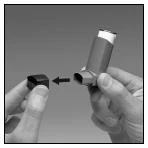 |
| Using the inhaler Before using the inhaler, it is important to begin breathing out as slowly as possible. 1 When using the inhaler, remain standing or sitting in an upright position. 2 Remove the mouthpiece cap (as shown in the first image). Check inside and outside to ensure the mouthpiece is clean and free of obstructions. | |
| 3 Shake the inhaler 4 or 5 times to ensure any blockages are cleared and the contents are evenly mixed. | 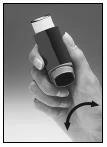 |
| 4 Hold the inhaler upright with your thumb on the base, beneath the mouthpiece. Breathe out fully until comfortable. Do not inhale yet. | 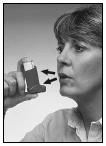 |
| 5 Place the mouthpiece in your mouth between your teeth. Close your lips around it. Do not bite it. | 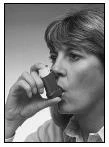 |
| 6 Breathe in through your mouth. Immediately after starting to inhale, press down on the top of the canister to release a puff of medicine. Do this while breathing in steadily and deeply. | 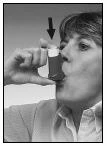 |
| 7 Hold your breath; remove the inhaler from your mouth and your finger from the top of the inhaler. Continue holding your breath for a few seconds, or longer if comfortable. | 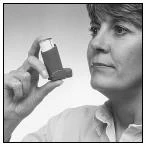 |
| 8 If your doctor has instructed you to take two puffs, wait approximately half a minute before inhaling a second dose, repeating steps 3 to 7. | |
| 9 After use, replace the mouthpiece cap to prevent dust from entering. Close the cap firmly by pressing until it clicks into place. For the first few times, practice in front of a mirror. If you see a 'mist' coming from the top of the inhaler or from the sides of your mouth, start again. | |
| Younger children may need assistance, and their parents may need to use the inhaler for them. Encourage the child to breathe out and only use the inhaler after the child begins to inhale. Practice the technique together. You may consider using a Volumatic® spacer device with a mask, or the Babyhaler® device, which may be helpful when administering Ventolin pressurized suspension to a child under 5 years of age. Consult your doctor if you think you may need to use one of these devices. | |
| Older children or individuals with weak hands may find it easier to hold the inhaler with both hands. Place both index fingers on top of the inhaler and both thumbs on the base beneath the mouthpiece. Your doctor, nurse, or pharmacist can advise you. | |
Cleaning the inhaler
To prevent the inhaler from becoming blocked, it is important to clean it at least once a week.
To clean the inhaler:
- Remove the metal canister from the plastic holder.
- Rinse the plastic holder thoroughly with plenty of warm running water.
- Dry the plastic holder well, both inside and outside.
- Place the canister back into the plastic holder and replace the mouthpiece cap. Do not immerse the metal container in water.
If you use more Ventolin pressurised suspension than you should
If you use more than you should, consult your doctor as soon as possible.
You may experience the following effects:
- your heart beats faster than normal
- you feel tremors
- you feel overactive. These effects usually disappear within a few hours.
If you forget to use Ventolin pressurised suspension
- If you forget a dose, take it as soon as you remember.
- However, if it is already time for the next dose, skip the missed dose.
- Do not take a double dose to make up for the forgotten dose.
If you stop using Ventolin pressurised suspension
Do not stop using Ventolin pressurised suspension without first consulting your doctor.
If you have any doubts about using this medicine, speak to your doctor, nurse, or pharmacist.
4. Possible side effects
If your breathing or breathlessness worsens immediately after taking this medicine, stop using it
immediately and contact your doctor as soon as possible.
Like all medicines, this medicine can cause side effects, although not everybody gets them.
The following side effects may occur with this medicine:
Allergic reactions (may affect up to 1 in 10,000 people)
If you experience an allergic reaction, stop using Ventolin pressurised suspension and contact your doctor immediately.
Signs of an allergic reaction include: swelling of the face, lips, mouth, tongue or throat which may cause difficulty swallowing or breathing (angioedema), itchy rash (urticaria), bronchospasm, low blood pressure (hypotension), and collapse.
Contact your doctor as soon as possible if:
- you feel your heart beating faster or stronger than usual (palpitations).
- you feel an irregular heartbeat or extra beats.
Do not stop using this medicine unless told to do so by your doctor.
Tell your doctor if you experience any of the following side effects, which may also occur with this
medicine:
Common (may affect up to 1 in 10 people)
- tachycardia (increased heart rate)
- tremor
- headache
Uncommon (may affect up to 1 in 100 people)
- palpitations
- irritation of the mouth and throat
- muscle cramps
Rare (may affect up to 1 in 1,000 people)
- low levels of potassium in the blood
- increased blood flow to the extremities (peripheral vasodilation)
Very rare (may affect up to 1 in 10,000 people)
- myocardial ischemia (when blood flow to the heart is reduced), cardiac arrhythmias including atrial fibrillation, supraventricular tachycardia and extrasystoles
- hyperactivity
- paradoxical bronchospasm
Reporting of side effects
If you experience any side effect, including those not listed in this leaflet, contact your doctor or pharmacist. Side effects can also be reported directly via the website.
Reporting side effects helps provide more information on the safety of this medicine.
5 How to store Ventolin
Keep this medicine out of the sight and reach of children.
Do not store above 30°C. Protect from freezing and direct sunlight.
If the inhaler is very cold, remove the metal canister from the plastic holder and warm it in your hands for a few minutes before use. Never use any other method to heat it.
The metal canister contains a pressurised liquid. Do not expose to temperatures above 50°C.
Do not pierce, do not place near heat sources—even when empty—do not freeze, and do not expose to direct sunlight.
Do not use this medicine after the expiry date stated on the label and carton after 'EXP'.
The expiry date refers to the last day of that month.
Do not dispose of medicines via wastewater or household waste. Ask your pharmacist how to dispose of medicines no longer required. This will help protect the environment.
6 Contents of the pack and other information
What Ventolin pressurised suspension contains
- The active substance is salbutamol sulfate.
- The other component is HFA 134a. This medicine contains fluorinated greenhouse gases. Each inhaler contains 18 g of HFC-134a (also known as norflurane or HFA 134a), equivalent to 0.0257 tonnes of CO2 (global warming potential GWP = 1,430).
Description of the appearance of Ventolin pressurised suspension and contents of the pack
Ventolin pressurised suspension consists of an aluminium canister sealed with a valve cap, an actuator, and a dust cap.
Each canister contains 200 doses of 100 micrograms of salbutamol (as salbutamol sulfate).
Marketing Authorisation Holder and Manufacturer
Marketing Authorisation Holder
GlaxoSmithKline S.p.A.
Viale dell’Agricoltura, 7
37135 Verona, Italy
Manufacturer
Glaxo Wellcome Production - 23 Rue Lavoisier - Zone Industrielle, 2 - Evreux - France
Glaxo Wellcome S.A. - Avenida de Extremadura, 3 - Aranda de Duero (Burgos) – Spain
Package leaflet: information for the user
Ventolin 500 micrograms/1 ml Injection Solution
salbutamol sulfate
Please read this leaflet carefully before using this medicine because it contains
important information for you.
- Keep this leaflet. You may need to read it again.
- If you have any questions, consult your doctor, nurse, or pharmacist.
- This medicine has been prescribed for you only. Do not give it to other people, even if their symptoms are the same as yours, as it could be harmful.
- If you need further information or advice, consult your doctor, nurse, or pharmacist.
- If you experience any side effect, including those not listed in this leaflet, contact your doctor, nurse, or pharmacist. See section 4.
Contents of this leaflet:
- What Ventolin injection solution is and what it is used for
- What you need to know before using Ventolin injection solution
- How to use Ventolin injection solution
- Possible side effects
- How to store Ventolin injection solution
- Package contents and other information
4. What Ventolin injectable solution is and what it is used for
Ventolin injectable solution contains an active substance called salbutamol.
It belongs to a group of medicines called short-acting bronchodilators.
- Bronchodilators help the airways in the lungs to stay open. This makes it easier for air to pass through.
- They help to relieve chest tightness, wheezing, and coughing.
Ventolin injectable solution is used to treat severe breathing problems in adults with asthma and similar conditions.
5. What you need to know before using Ventolin injectable solution
Do not use Ventolin injectable solution
- If you are allergic to salbutamol sulfate or to any of the other ingredients of this medicine (listed in section 6).
- If you have an unexpected threat of abortion.
Warnings and precautions
Consult a doctor, nurse, or pharmacist before receiving an injection of Ventolin injectable solution if:
- you have high blood pressure
- you have low levels of potassium in your blood (hypokalaemia)
- you have glaucoma (high pressure inside the eye)
- you have a phaeochromocytoma (a tumour of the adrenal gland that causes the release of substances into the body which increase blood pressure)
- you have thyrotoxicosis (a condition caused by excess thyroid hormones in the blood)
- you are diabetic
- you have hyperthyroidism (overactive thyroid)
- you have a history of heart disease characterized by breathlessness, palpitations, or angina.
Other medicines and Ventolin injectable solution
Inform your doctor, nurse, or pharmacist if you are taking, have recently taken, or might take any other medicines, including those obtained without a prescription. This includes herbal medicines. Ventolin injectable solution may affect how some medicines work, and some medicines may affect how Ventolin injectable solution works.
In particular, inform your doctor, nurse, or pharmacist if you are taking any of the following:
- medicines for irregular or fast heartbeat
- other beta-blockers (such as propranolol)
- xanthine medicines (used to aid breathing)
- steroid medicines
- diuretics
- diabetes medicines that lower blood sugar (such as insulin, metformin, or glibenclamide)
- other medicines for asthma.
Ventolin injectable solution must not be infused in the same syringe or in the same infusion with other medicines.
If you are scheduled for surgery under general anaesthesia, your doctor will suspend your treatment with Ventolin injectable solution 6 hours before the procedure, where possible, to protect you from unwanted effects (e.g. irregular heartbeat).
If you think this medicine is not working well enough for you
If the medicine seems not to be working as well as usual, inform your doctor as soon as possible. Your chest problems may worsen and you may need a different medicine.
Ventolin injectable solution with food and drink
You may use Ventolin injectable solution at any time of day, with or without food.
Pregnancy and breastfeeding
If you are pregnant, think you might be pregnant, planning to become pregnant, or are breastfeeding, ask your doctor, nurse, or pharmacist for advice before using this medicine.
Driving and using machines
It is unlikely that Ventolin will affect your ability to drive or operate machinery.
For those engaged in sports activities
Using this medicine without therapeutic need constitutes doping and may lead to a positive result in anti-doping tests.
Ventolin contains sodium
This medicine contains less than 1 mmol of sodium (23 mg) per 1 mL vial, i.e. it is essentially “sodium-free”.
6. How to use Ventolin injectable solution
How the injectable solution is administered
Ventolin injectable solution is usually administered by a doctor or a nurse. It can be given directly into a vein or a muscle (intravenous or intramuscular route). You will never be expected to self-administer this medicine. It will always be administered by a qualified person.
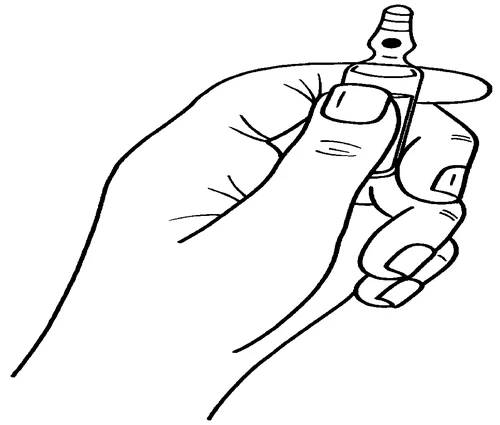
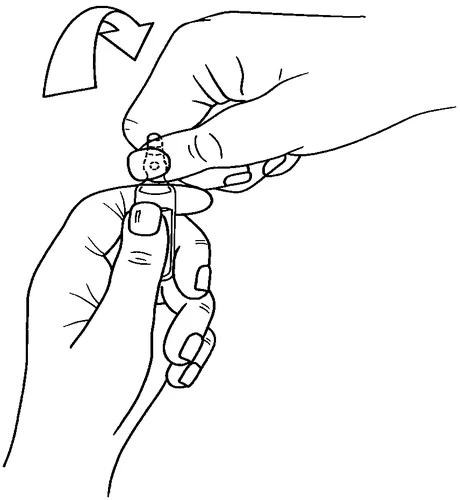
The vials are equipped with a Break-Off Point, an opening system, and must be opened according to the following instructions:
- Hold the lower part of the vial with one hand.
- Place the other hand on the upper part of the vial, position the thumb over the coloured mark and press.
Intramuscular route
The usual dose is 8 micrograms per kilogram of body weight (500 micrograms), repeated, if necessary, every four hours.
Intravenous route
- The usual dose is 4 micrograms per kilogram of body weight (from 100 micrograms to 250 micrograms), administered slowly (over 3–5 minutes).
- It is injected slowly and may be repeated, if necessary.
- Ventolin injectable solution may be diluted with 10 ml of water for injections.
Infusion route
- In status asthmaticus and other forms of severe bronchospasm, the usual dosage of Ventolin injectable solution is 10 micrograms/ml of solution.
- The infusion rate may range from 3 to 20 micrograms per minute; however, if you suffer from respiratory insufficiency, higher infusion rates may be successfully used.
- An initial dose of 5 micrograms/minute is recommended, with appropriate adjustments based on your clinical response.
Children
Currently, there are insufficient data to recommend the use of Ventolin injectable solution in children.
If you receive more Ventolin injectable solution than you should
Ventolin injectable solution is always carefully administered under controlled conditions. However, if you think you have received more than you should, speak to your doctor or nurse as soon as possible.
You may experience the following effects:
- Your heart beats faster than usual
- You feel tremors
- You become hyperactive
- Accumulation of acid in the body may cause increased breathing rate.
These effects usually disappear within a few hours.
If you stop treatment with Ventolin injectable solution
Do not stop using Ventolin injectable solution without first consulting your doctor.
If you have any doubts about using this medicine, consult your doctor, nurse, or pharmacist.
4. Possible side effects
If breathing or breathlessness worsens immediately after taking this medicine, stop using it
immediately and contact your doctor as soon as possible.
Like all medicines, this medicine can cause side effects, although not everybody gets them. The following side effects may occur with this medicine:
Allergic reactions (may affect up to 1 in 10,000 people)
If you have an allergic reaction, stop using Ventolin injection solution and contact your doctor immediately.
Signs of an allergic reaction include: swelling of the face, lips, mouth, tongue or throat which may cause difficulty in swallowing or breathing, itchy rash, bronchospasm, low blood pressure and collapse.
Contact your doctor as soon as possible if:
- your heart beats faster or stronger than usual (palpitations). This symptom is usually harmless and typically stops after using the medicine.
- you feel an irregular heartbeat or an extra heartbeat. These effects may affect fewer than 1 in 10 people.
If any of these effects happen to you, talk to your doctor as soon as possible. Do not stop using this
medicine unless told to do so by your doctor.
Inform your doctor if you experience any of the following side effects which may also occur with this
medicine:
Very common (may affect more than 1 in 10 people)
- tremor
- tachycardia (increased heart rate)
- palpitations (sensation of rapid heartbeat)
Common (may affect up to 1 in 10 people)
- headache
- muscle cramps
Uncommon (may affect up to 1 in 100 people)
- fluid accumulation in the lungs (pulmonary edema) which may cause breathing difficulties *
- myocardial ischemia (when blood flow to the heart is reduced)*
*during treatment of pre-term labour with injectable salbutamol.
Rare (may affect up to 1 in 1,000 people)
- hypokalaemia (low potassium levels in the blood)
- unusual or irregular heartbeats
- increased fluid flow in the extremities (peripheral vasodilation)
Very rare (may affect up to 1 in 10,000 people)
- lactic acidosis (a condition that may cause stomach pain, hyperventilation, shortness of breath, cold hands and feet, irregular heartbeat and thirst)
- hyperactivity
- myocardial ischemia (when blood flow to the heart is reduced)
- nausea, vomiting
- mild pain or burning after intramuscular injection of undiluted solution.
Very rarely, chest pain (due to heart problems such as angina) may occur in some patients.
Inform your doctor as soon as possible, avoiding stopping treatment unless advised to do so.
Reporting of side effects
If you experience any side effects, including those not listed in this leaflet, talk to your doctor, pharmacist or nurse. You can also report side effects directly via the website
By reporting side effects you can help provide more information on the safety of this medicine.
5 How to store Ventolin
- Keep this medicine out of the sight and reach of children.
- Keep the ampoules in the outer carton to protect them from light.
- Use the medicine within 24 hours after mixing with other liquids.
- Do not use this medicine after the expiry date stated on the ampoule label and carton after 'EXP'. The expiry date refers to the last day of that month.
Do not dispose of medicines via wastewater or household waste. Ask your pharmacist how to dispose of medicines no longer required. These measures will help protect the environment.
6 Contents of the pack and other information
What Ventolin injection solution contains
- The active substance is salbutamol sulfate.
- The other components are water, salt (sodium chloride), sodium hydroxide, sulfuric acid and nitrogen.
Description of the appearance of Ventolin injection solution and contents of the pack
Ventolin injection solution is contained in a 1 ml glass ampoule in a plastic tray containing 5.
Each 1 ml glass ampoule contains 0.1 mg of salbutamol. Each pack contains 10 ampoules.
Marketing Authorisation Holder and Manufacturer
Marketing Authorisation Holder
GlaxoSmithKline S.p.A.
Viale dell’Agricoltura, 7
Verona
Italy
Manufacturer
GlaxoSmithKline Manufacturing S.p.A.
San Polo di Torrile
Parma
Italy
INSTRUCTIONS FOR OPENING THE AMPULE
The ampoules are equipped with a safety pre-break and must be opened as follows:
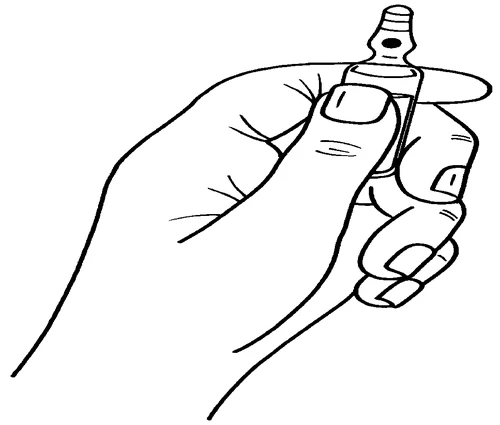
- hold the lower part of the ampoule with one hand as shown in figure 1;
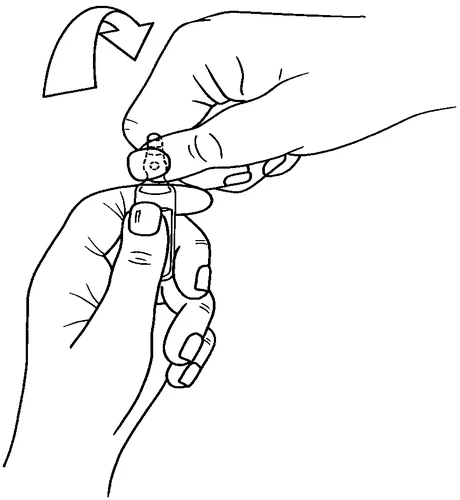
- place the other hand on the upper part, positioning the thumb above the COLOURED DOT and apply pressure as shown in figure 2.
Patient Information Leaflet: Information for the user
Ventolin 100 micrograms/5 ml Injectable Solution
salbutamol sulfate
Please read this leaflet carefully before taking this medicine as it contains
important information for you.
- Keep this leaflet. You may need to read it again.
- If you have any questions, consult your doctor, nurse, or pharmacist.
- This medicine has been prescribed for you only. Do not give it to others, even if their symptoms are the same as yours, as it could be harmful.
- If you need more information or advice, consult your doctor, nurse, or pharmacist.
- If you experience any side effects, including those not listed in this leaflet, consult your doctor, nurse, or pharmacist. See section 4.
Contents of this leaflet:
- What Ventolin injectable solution is and what it is used for
- What you need to know before using Ventolin injectable solution
- How to use Ventolin injectable solution
- Possible side effects
- How to store Ventolin injectable solution
- Contents of the pack and other information
1. What Ventolin injectable solution is and what it is used for
Ventolin injectable solution contains an active substance called salbutamol.
It belongs to a group of medicines called short-acting bronchodilators.
- Bronchodilators help the airways in the lungs to stay open. This makes it easier for air to pass through.
- They help to relieve chest tightness, wheezing, and coughing.
Ventolin injectable solution is used for the treatment of severe breathing problems in adults with asthma and similar conditions.
2. What you need to know before using Ventolin injectable solution
Do not use Ventolin injectable solution
- If you are allergic to salbutamol sulfate or to any of the other ingredients of this medicine (listed in section 6).
- If you have unexpected threatened miscarriage.
Warnings and precautions
Consult a doctor, nurse or pharmacist before receiving an injection of Ventolin injectable solution if:
- you have high blood pressure
- you have low levels of potassium in your blood (hypokalaemia)
- you have glaucoma (high pressure within the eye)
- you have a phaeochromocytoma (a tumour of the adrenal gland that causes the release into the body of substances that increase blood pressure)
- you have thyrotoxicosis (a condition caused by excess thyroid hormones in the blood)
- you are diabetic
- you have hyperthyroidism (overactive thyroid)
- you have a history of heart disease characterized by shortness of breath, palpitations or angina.
Other medicines and Ventolin injectable solution
Inform your doctor, nurse or pharmacist if you are taking, have recently taken or might take any other medicines, including those obtained without a prescription. This includes herbal medicines. Ventolin injectable solution may affect how some medicines work, and some medicines may affect how Ventolin injectable solution works.
In particular, inform your doctor, nurse or pharmacist if you are taking any of the following:
- medicines for irregular or fast heartbeat
- other beta-blockers (such as propranolol)
- xanthine medicines (used to aid breathing)
- steroid medicines
- diuretics
- diabetes medicines that lower blood sugar (such as insulin, metformin or glibenclamide)
- other medicines for asthma.
Ventolin injectable solution must not be infused in the same syringe or administered by infusion together with other medicines.
If you are scheduled for surgery under general anaesthesia, your doctor will suspend your treatment with Ventolin injectable solution 6 hours before the procedure, whenever possible, to protect you from unwanted effects (e.g. irregular heartbeat).
If you think this medicine is not working well enough for you
If the medicine seems not to be working as well as usual, inform your doctor as soon as possible. Your chest problems may be worsening and you may need a different medicine.
Ventolin injectable solution with food and drink
You may use Ventolin injectable solution at any time of day, with or without food.
Pregnancy and breastfeeding
If you are pregnant, think you might be pregnant, planning to become pregnant, or are breastfeeding, ask your doctor, nurse or pharmacist for advice before using this medicine.
Driving and using machines
It is unlikely that Ventolin will affect your ability to drive or use machinery.
For those engaged in sports
Using this medicine without therapeutic need constitutes doping and may lead to a positive result in anti-doping tests.
Ventolin contains sodium
This medicine contains less than 1 mmol of sodium (23 mg) per 5 mL vial, i.e. it is essentially “sodium-free”.
3. How to use Ventolin injectable solution
How the injectable solution is administered
Ventolin injectable solution is usually administered by a doctor or a nurse. It may be given
subcutaneously (subcutaneous injection), or directly into a vein or muscle (intravenous or intramuscular route).
You will never be expected to self-administer this medicine. It will always be administered by a qualified person.
The ampoules are equipped with a Breakpoint, a special opening system, and must be opened according to the following instructions:
- Hold the lower part of the ampoule with one hand.
- Place the other hand on the upper part of the ampoule, position the thumb over the coloured mark and press.
Intramuscular route
The usual dose is 8 micrograms per kilogram of body weight (500 micrograms), repeated, if necessary, every four hours.
Intravenous route
- The usual dose is 4 micrograms per kilogram of body weight (from 100 micrograms to 250 micrograms), administered slowly (over 3–5 minutes).
- It is injected slowly and may be repeated if necessary.
- Ventolin injectable solution may be diluted with 10 ml of water for injections.
Infusion route
- In status asthmaticus and other forms of severe bronchospasm, the usual dosage of Ventolin injectable solution is 10 micrograms/ml of solution.
- The infusion rate may range from 3 to 20 micrograms per minute; however, if you have respiratory insufficiency, higher infusion rates may be successfully used.
- An initial dose of 5 micrograms/minute is recommended, with appropriate dosage adjustments based on your clinical response.
Children
Currently, there are insufficient data to recommend the use of Ventolin injectable solution in children.
If you receive more Ventolin injectable solution than you should
Ventolin injectable solution will always be carefully administered under controlled conditions. However,
if you think you have been given more than you should, speak to your doctor or nurse as soon as possible.
You may experience the following effects:
- Your heart beats faster than normal
- You may feel tremors
- You may feel hyperactive
- Accumulation of acid in the body may cause increased breathing rate. These effects usually disappear within a few hours.
If you stop treatment with Ventolin injectable solution
Do not stop using Ventolin injectable solution without first consulting your doctor.
If you have any doubts about how to use this medicine, consult your doctor, nurse, or pharmacist.
4. Possible side effects
If breathing or breathlessness worsens immediately after taking this medicine, stop using it immediately and inform your doctor as soon as possible.
Like all medicines, this medicine can cause side effects, although not everyone experiences them. The following side effects may occur with this medicine:
Allergic reactions (may affect up to 1 in 10,000 people)
If you have an allergic reaction, stop using Ventolin injection solution and contact your doctor immediately.
Signs of an allergic reaction include: swelling of the face, lips, mouth, tongue or throat which may cause difficulty in swallowing or breathing, itchy rash, bronchospasm, low blood pressure and collapse.
Contact your doctor as soon as possible if:
- your heart beats faster or stronger than usual (palpitations). This symptom is usually harmless and typically stops after using the medicine
- you feel an irregular heartbeat or an extra heartbeat
These effects may affect fewer than 1 in 10 people.
If any of these effects occur in you, speak to your doctor as soon as possible. Do not stop using this medicine unless instructed to do so.
Inform your doctor if you experience any of the following side effects, which may also occur with this medicine:
Very common (may affect more than 1 in 10 people)
- tremors
- tachycardia (increased heart rate)
- palpitations (awareness of increased heartbeat)
Common (may affect up to 1 in 10 people)
- headache
- muscle cramps
Uncommon (may affect up to 1 in 100 people)
- fluid accumulation in the lungs (pulmonary edema) which may cause breathing difficulties*
- myocardial ischemia (when blood flow to the heart is reduced)*
*during treatment of pre-term labour with injectable salbutamol.
Rare (may affect up to 1 in 1,000 people)
- low levels of potassium in the blood
- unusual or irregular heartbeats
- increased fluid flow in the extremities (peripheral vasodilation)
Very rare (may affect up to 1 in 10,000 people)
- lactic acidosis (a condition that may cause stomach pain, hyperventilation, shortness of breath, cold hands and feet, irregular heartbeat and thirst)
- hyperactivity
- myocardial ischemia (when blood flow to the heart is reduced)
- nausea, vomiting
- mild pain or burning after intramuscular injection of undiluted solution
Very rarely, chest pain (due to heart problems such as angina) may occur in some patients.
Inform your doctor as soon as possible, avoiding stopping treatment unless advised to do so.
Reporting of side effects
If you experience any side effect, including those not listed in this leaflet, talk to your doctor, pharmacist or nurse. You can also report side effects directly via the website https://www.aifa.gov.it/web/content/segnalazioni-reazioni-avverse. By reporting side effects, you can help provide more information on the safety of this medicine.
5. How to store Ventolin
- Keep this medicine out of the sight and reach of children.
- Store the vials in the outer carton to protect them from light.
- Use the medicine within 24 hours after mixing with other liquids.
- Do not use this medicine after the expiry date which is stated on the label of the vial and on the carton after 'EXP'. The expiry date refers to the last day of that month.
Do not dispose of any medicine via wastewater or household waste. Ask your pharmacist how to dispose of medicines you no longer use. This will help protect the environment.
6. Package contents and other information
What Ventolin injectable solution contains
- The active substance is salbutamol sulfate.
- The other components are water, salt (sodium chloride), sodium hydroxide, and sulfuric acid.
Description of the appearance of Ventolin injectable solution and contents of the pack
Ventolin injectable solution is contained in 5 ml glass vials, placed in a plastic tray containing 5 vials.
Each 5 ml glass vial contains 0.1 mg of salbutamol. Each pack contains 10 vials.
Marketing Authorization Holder and Manufacturer
Marketing Authorization Holder
GlaxoSmithKline S.p.A.
Viale dell’Agricoltura, 7
Verona
Italy
Manufacturer
GlaxoSmithKline Manufacturing S.p.A.
San Polo di Torrile
Parma
Italy
INSTRUCTIONS FOR OPENING THE VIAL
The vials are equipped with a safety break ring and must be opened as follows:
- Hold the lower part of the vial with one hand as shown in Figure 1;
- Place the other hand on the upper part, positioning the thumb over the COLOURED DOT, and apply pressure as shown in Figure 2.