Ventavis
Italy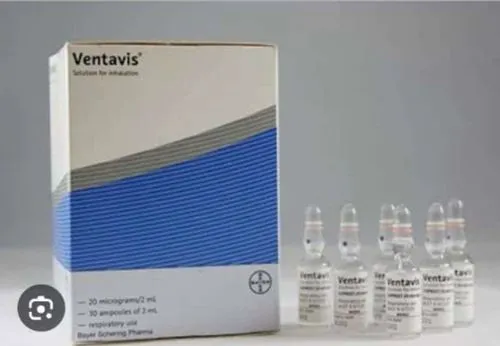
Table of Contents
- Package leaflet: Information for the user
- Ventavis 10 micrograms/ml solution for nebulisation
- 1. What Ventavis is and what it is used for
- 2. What you should know before using Ventavis
- 3. How to use Ventavis
- Instructions for use of the nebulizer.
- 4. Possible side effects
- 5. How to store Ventavis
- 6. Package contents and other information
- The following information is intended for healthcare professionals only:
- Instructions for use and handling
- Package leaflet: Information for the user
- Ventavis 20 micrograms/ml solution for nebulization
- 1. What Ventavis is and what it is used for
- 2. What you must know before using Ventavis
- 3. How to use Ventavis
- Instructions for use of the nebulizer.
- 4. Possible side effects
- 5. How to store Ventavis
- 6. Package contents and other information
- The following information is intended exclusively for healthcare professionals:
- Instructions for use and handling
Package leaflet: Information for the user
Ventavis 10 micrograms/ml solution for nebulisation
Iloprost
Please read all of this leaflet carefully before you start using this medicine, as it contains important information for you.
- Keep this leaflet. You may need to read it again.
- If you have any questions, ask your doctor, pharmacist or nurse.
- This medicine has been prescribed for you only. Do not give it to other people, even if they have the same symptoms as yours, as it may be harmful.
- If you experience any side effect, including those not listed in this leaflet, tell your doctor, pharmacist or nurse. See section 4.
Contents of this leaflet
- What Ventavis is and what it is used for
- What you need to know before using Ventavis
- How to use Ventavis
- Possible side effects
- How to store Ventavis
- Contents of the pack and other information
1. What Ventavis is and what it is used for
What Ventavis is
The active substance of Ventavis is iloprost. It mimics the action of a naturally occurring substance called prostacyclin. Ventavis prevents unwanted blockage or constriction of blood vessels and allows a greater amount of blood to flow through the vessels.
What Ventavis is used for
Ventavis is used to treat moderate cases of primary pulmonary hypertension (PPH) in adult patients. PPH is a type of pulmonary hypertension in which the cause of the increased blood pressure is unknown.
This is a disease in which the blood pressure in the vessels carrying blood between the heart and the lungs is too high.
Ventavis is used to improve the ability to perform physical activity and to relieve symptoms.
How Ventavis works
By inhaling the nebulized solution, Ventavis is delivered directly to the lungs where it acts most effectively on the artery located between the heart and the lungs. Improving blood flow enhances oxygen delivery to the body and reduces the workload on the heart.
2. What you should know before using Ventavis
Do not use Ventavis
- if you are allergic to iloprost or any of the other ingredients of this medicine (listed in section 6),
- if you are at risk of bleeding – for example, if you have an active stomach or duodenal ulcer (duodenal ulcer), if you have sustained a physical injury (trauma), or if you are at risk of intracranial bleeding,
- if you have had heart problems, such as
- inadequate blood flow to the heart (severe coronary artery disease or unstable angina). Symptoms may include chest pain,
- a heart attack within the last six months,
- heart failure (cardiac decompensation) that is not under close medical supervision,
- severely unstable heart rate,
- a heart valve defect (congenital or acquired) causing heart failure (not related to pulmonary hypertension),
- if you have had a stroke within the last 3 months or any other event that reduced blood supply to the brain (e.g., transient ischemic attack),
- if your pulmonary hypertension is caused by a blockage or narrowing of the veins (veno-occlusive disease).
Warnings and precautions
Talk to your doctor, pharmacist, or nurse before using Ventavis:
- Inhalation of Ventavis may cause breathing difficulties (see section 4), especially in patients with bronchospasm (sudden constriction of the muscles in the walls of the small airways) and wheezing. Inform your doctor if you have a lung infection, severe asthma, or chronic lung diseases (chronic obstructive pulmonary disease). Your doctor will monitor you closely.
- Your blood pressure will be measured before treatment begins, and if it is too low (systolic blood pressure below 85 mmHg), Ventavis therapy should not be initiated.
- In general, you should be particularly careful to avoid effects of low blood pressure, such as fainting and dizziness:
- Inform your doctor if you are taking any other medicines, as their combined effects with Ventavis may further lower your blood pressure (see below “Other medicines and Ventavis”).
- Rise slowly from a chair or bed.
- If you tend to faint when getting up from bed, it may be helpful to take the first daily dose while still lying down.
- If you are prone to fainting, avoid excessive exertion, for example during physical exercise; it may be helpful to inhale Ventavis before exercising.
- Episodes of fainting may be due to your underlying disease. Inform your doctor if these episodes worsen. Your doctor may consider adjusting your dose or changing your therapy.
- If you have heart failure, such as right-sided heart failure, and feel that your condition is worsening, discuss this with your doctor. Symptoms of worsening may include swelling of the feet and ankles, shortness of breath, palpitations, frequent need to urinate at night, or edema. Your doctor will assess whether your treatment should be changed.
- If you experience difficulty breathing, coughing up blood and/or excessive sweating, these may be signs that you have fluid in your lungs ( pulmonary edema). Stop treatment with Ventavis and contact your doctor immediately. Your doctor will investigate the cause of your symptoms and take appropriate measures.
- If you have liver problems or severe kidney problems requiring dialysis, talk to your doctor. You may be prescribed a gradual dose or a lower dose of Ventavis than other patients (see section 3 “How to use Ventavis”).
Contact of Ventavis with skin or ingestion of Ventavis
- DO NOT allow Ventavis solution to come into contact with your skin or eyes. If this happens, rinse the skin or eyes immediately with plenty of water.
- DO NOT drink or swallow Ventavis solution. If you accidentally swallow it, drink plenty of water and inform your doctor.
Children and adolescents
The safety and efficacy of Ventavis have not been established in children and adolescents under 18 years of age.
Other medicines and Ventavis
Tell your doctor or pharmacist if you are using, have recently used, or might use any other
medicines. Ventavis and certain other medicines may affect each other’s action in the body.
Inform your doctor if you are taking:
- Medicines used to treat high blood pressure or heart diseases, such as
- beta-blockers,
- nitrovasodilators,
- ACE inhibitors. Your blood pressure may drop too much. Your doctor may adjust your dosage.
- Medicines that thin the blood or inhibit blood clotting, including
- acetylsalicylic acid (ASA – a substance found in many medicines that reduce fever and relieve pain),
- heparin,
- coumarin anticoagulants, such as warfarin or phenprocoumon,
- non-steroidal anti-inflammatory drugs (NSAIDs),
- non-selective phosphodiesterase inhibitors, such as pentoxifylline,
- selective phosphodiesterase 3 (PDE 3) inhibitors, such as cilostazol or anagrelide,
- ticlopidine,
- clopidogrel,
- glycoprotein IIb/IIIa antagonists, such as
- abciximab,
- eptifibatide,
- tirofiban,
- defibrotide. Your doctor will monitor you carefully.
Before taking any medicine, ask your doctor or pharmacist for advice. They can provide you with
more information about medicines you should use with caution or avoid while using Ventavis.
Ventavis with food and drink
Food and drink should not affect Ventavis. However, you should avoid eating or drinking during inhalation.
Pregnancy
- If you have pulmonary hypertension, avoid pregnancy, as pregnancy can worsen your condition and may endanger your life.
- If you could become pregnant, use reliable contraception from the start of treatment and throughout treatment.
- If you are pregnant, suspect you may be pregnant, or are planning a pregnancy, consult your doctor immediately before taking this medicine. Ventavis should only be used during pregnancy if your doctor decides that the potential benefit outweighs the potential risk to you and the fetus.
Breast-feeding
It is not known whether Ventavis passes into breast milk. A potential risk to breastfed infants cannot be ruled out; therefore, breast-feeding should be avoided during treatment with Ventavis.
Consult your doctor or pharmacist before taking any medicine.
Newborns, children, and pregnant women should not be in the same room while you are inhaling Ventavis.
Driving and using machines
Ventavis lowers blood pressure and may cause dizziness or lack of concentration in some people.
Do not drive or operate machinery if you experience these effects.
Ventavis contains ethanol
Ventavis 10 micrograms/ml contains 0.81 mg of alcohol (ethanol) per ml, equivalent to 0.081% (w/v). The amount of 0.81 mg of alcohol in 1 ml of this medicine is equivalent to less than 1 ml of beer or wine.
The small amount of alcohol in this medicine will not produce significant effects.
3. How to use Ventavis
Ventavis therapy must be initiated exclusively by a physician experienced in the treatment of pulmonary hypertension.
How much Ventavis to inhale and for how long
Always use this medicine exactly as your doctor has instructed. If you have any doubts, consult your doctor.
The appropriate dose of Ventavis and duration of treatment for you will depend on your individual condition. Your doctor will advise you accordingly. Do not change the recommended dose without first consulting your doctor.
Different nebulizing devices may be used to administer Ventavis. Depending on the type of device used and the prescribed dose, 1 ml or 2 ml of Ventavis 10 micrograms/ml may be appropriate.
- Breelib nebulizer
If you are starting treatment with Ventavis or previously used a different device, the first inhalation should be performed with Ventavis 10 micrograms/ml (1 ml vial with white and yellow rings). If you tolerate this dose well, the next inhalation should be with Ventavis 20 micrograms/ml (vial with yellow and red rings). You should then continue with this dose.
If you do not tolerate inhalation of Ventavis 20 micrograms/ml, consult your doctor, who may prescribe Ventavis 10 micrograms/ml (1 ml vial).
Most people will have 6 to 9 inhalation sessions spread throughout the day. The duration of each session with Breelib is generally about 3 minutes.
When you begin using the Breelib nebulizer, your doctor will supervise your treatment to ensure you tolerate the dose and inhalation rate.
- I-Neb AAD nebulizer (1 ml vial with white and yellow rings)
Generally, at the start of treatment with Ventavis, the first inhaled dose should correspond to 2.5 micrograms of iloprost delivered at the mouthpiece. If you tolerate this dose well, the dose should be increased to 5 micrograms of iloprost and maintained at this level. If you do not tolerate the 5 microgram dose, it should be reduced to 2.5 micrograms.
Most people will have 6 to 9 inhalation sessions spread throughout the day. The duration of each session with I-Neb AAD ranges between 4 and 10 minutes, depending on the prescribed dose.
- Venta-Neb nebulizer (2 ml vial with white and pink rings)
Generally, at the start of treatment with Ventavis, the first inhaled dose should correspond to 2.5 micrograms of iloprost delivered at the mouthpiece. If you tolerate this dose well, the dose should be increased to 5 micrograms of iloprost and maintained at this level. If you do not tolerate the 5 microgram dose, it should be reduced to 2.5 micrograms.
Most people will have 6 to 9 inhalation sessions spread throughout the day. The duration of each inhalation session with Venta-Neb ranges between 4 and 10 minutes, depending on the prescribed dose.
Depending on individual needs, Ventavis may be used for long-term treatment.
If you have kidney or liver problems
In patients with mild or moderate renal impairment (patients with creatinine clearance >30 ml/min), dose adjustment is not necessary.
In cases of severe renal impairment requiring dialysis or in patients with liver disease, your doctor will initiate Ventavis therapy gradually and may prescribe fewer inhalations per day. Begin therapy with the inhalation of 2.5 micrograms of iloprost using a 1 ml vial of Ventavis 10 micrograms/ml (with white and yellow rings). Allow intervals of 3–4 hours between inhalations (this corresponds to a maximum of 6 administrations per day). Subsequently, your doctor may cautiously reduce the dosing intervals, depending on your tolerance to treatment. If your doctor decides to increase the dose up to a maximum of 5 micrograms, intervals of 3–4 hours should initially be observed again, which may then be reduced depending on your tolerance.
If you feel that the effect of Ventavis is too strong or too weak, consult your doctor or pharmacist.
Ask your doctor to have someone assist you in becoming familiar with the use of the nebulizer. Do not switch to another type of nebulizer without consulting your treating physician.
How to perform the inhalation
For each inhalation session, a new vial of Ventavis must be used. Immediately before starting inhalation, break the glass vial and pour the solution into the nebulizer chamber, following the nebulizer’s instructions for use.
Strictly follow all instructions provided with the device, particularly those relating to hygiene and cleaning of the nebulizer.
Always take Ventavis exactly as your doctor has instructed.
- The Ventavis 10 micrograms/ml solution for nebulization must be inhaled through the nebulizers prescribed by your doctor (Breelib, Venta-Neb, or the I-Neb AAD system).
- The nebulizer converts the Ventavis solution into an aerosol, which you inhale through your mouth.
- For inhalation, you must use a mouthpiece to prevent Ventavis from coming into contact with your skin. Do not use a face mask.
- Carefully follow all instructions provided by the device manufacturer. Consult your doctor or pharmacist if you have any doubts.
- Any remaining solution of Ventavis left in the nebulizer after inhalation must be discarded (see section 5).
Room ventilation
Ensure that the room in which you have taken Ventavis is well ventilated or aired. Other people could accidentally inhale Ventavis through the room air. In particular, newborns, children, and pregnant women must not be present in the same room while you are inhaling Ventavis.
- Breelib
Pour Ventavis into the nebulizer chamber immediately before use, following the
Instructions for use of the nebulizer.
| Device | Medicine | Iloprost dose at the mouthpiece | Estimated inhalation time |
| Breelib | Ventavis 10 µg/ml (1 ml vial with white and yellow rings) | 2.5 µg | 3 minutes |
- I-Neb AAD
- Immediately before inhaling, break the glass vial containing 1 ml of solution and marked with two colored rings (white - yellow), and pour the entire contents into the nebulizer chamber.
- The predetermined dose delivered by the I-Neb AAD system is controlled by the nebulizer chamber in combination with a control disc. There are two nebulizer chambers, each distinguished by a different color. Each nebulizer chamber corresponds to a colored control disc:
- To deliver a dose of 2.5 micrograms, use the nebulizer chamber with the red safety stopper together with the red control disc.
- To deliver a dose of 5 micrograms, use the nebulizer chamber with the purple safety stopper together with the purple control disc. 3. To ensure you receive the prescribed dose, check the color of the nebulizer chamber and the control disc. They must be the same color—red for the 2.5 microgram dose or purple for the 5 microgram dose.
| Device | Iloprost dose at the mouthpiece | Estimated inhalation time |
| I-Neb AAD | 2.5 micrograms 5 micrograms | 3.2 min 6.5 min |
The following table provides a summary of instructions for the use of I-Neb:
| Medicinal product | Colored ring on vial | Dose | I-Neb AAD | |
| Reservoir of nebulizer chamber | Control disc | |||
| Ventavis 10 µg/ml | 1 ml vial with white-yellow ring | 2.5 µg | red | red |
| 5 µg | purple | purple | ||
- Venta-Neb
- Immediately before starting inhalation, break the glass vial containing 2 ml of solution and marked with two colored rings (white - pink), and pour the entire contents into the nebulizer chamber.
- You may choose between two programs:
- Your doctor will adjust Venta-Neb to the program you need to receive the prescribed dose.
- P1 Program 1: 5 micrograms of active substance over 25 inhalation cycles via the mouthpiece.
- P2 Program 2: 2.5 micrograms of active substance over 10 inhalation cycles via the mouthpiece.
- Use the green deflector to obtain droplets of optimal size for the administration of Ventavis.
| Device | Iloprost dose at the mouthpiece | Estimated inhalation time |
| Venta-Neb | 2.5 micrograms 5 micrograms | 4 min 8 min |
For further details, please read the nebulizer instruction manual or consult your doctor.
If you use more Ventavis than you should
Using more Ventavis than prescribed may cause dizziness, headache, facial flushing, nausea (feeling unwell), jaw or back pain.
An increase or decrease in blood pressure, bradycardia (slowing of the heart rate), tachycardia (acceleration of the heart rate), vomiting, diarrhoea, or limb pain may also occur. If you experience any of these symptoms after inhaling more Ventavis than you should have, you must:
- stop the inhalation session immediately
- contact your doctor. Your doctor will monitor you and treat any symptoms. A specific antidote is not known.
If you forget to use Ventavis
Do not take a double dose to make up for a forgotten dose. Contact your doctor, who will advise you what to do.
If you stop using Ventavis
If you stop or wish to stop treatment, consult your doctor first.
If you have any doubts about using this medicine, consult your doctor, pharmacist, or nurse.
4. Possible side effects
Like all medicines, this medicine can cause side effects, although not everyone will experience them.
The following serious side effects may occur. If you experience any of these, consult your doctor immediately.
Very common (may affect more than 1 in 10 people):
- Bleeding events (especially nosebleeds (epistaxis) and coughing up blood from the respiratory tract (haemoptysis)) may occur very commonly, particularly if you are also taking medicines that thin the blood (anticoagulants). The risk of bleeding may increase in patients receiving concomitant platelet aggregation inhibitors or anticoagulants (see also section 2). Fatal cases have been reported very rarely, including cases of bleeding in the brain (cerebral and intracranial haemorrhage).
Common (may affect up to 1 in 10 people):
- Fainting (syncope) is a symptom of your disease but may also occur during treatment with Ventavis (see also section 2 “Warnings and precautions” for advice on how to avoid it).
- Reduction in blood pressure (hypotension)
Not known (frequency cannot be estimated from the available data):
- Bronchospasm (sudden constriction of the muscles in the walls of the small airways) and wheezing (see also section 2 “Warnings and precautions”)
The following is a list of other side effects, listed in order of frequency:
Very common: may affect more than 1 in 10 people
- widening of blood vessels (vasodilatation). Symptoms may include flushing or facial redness.
- chest discomfort or pain
- cough
- headache
- nausea
- jaw pain or jaw muscle spasm (trismus)
- swelling of the limbs (peripheral oedema)
Common: may affect up to 1 in 10 people
- breathing difficulties (dyspnoea)
- dizziness
- vomiting
- diarrhoea
- pain on swallowing (pharyngolaryngeal irritation)
- throat irritation
- mouth and tongue irritation, accompanied by pain
- skin rash
- rapid heartbeat (tachycardia)
- awareness of a fast or strong heartbeat (palpitations)
Not known: frequency cannot be estimated from the available data.
- decrease in the number of platelets in the blood (thrombocytopenia)
- hypersensitivity (e.g. allergy)
- taste disturbances (dysgeusia)
Other possible side effects
- Swelling, especially in the ankles and legs, due to fluid retention (peripheral oedema) is a very common symptom of the disease itself but may also occur during treatment with Ventavis.
Reporting of side effects
If you experience any side effect, including those not listed in this leaflet, tell your doctor. You can also report side effects directly via the national reporting system referred to in Annex V. By reporting side effects, you can help provide more information on the safety of this medicine.
5. How to store Ventavis
Keep this medicine out of the sight and reach of children.
Do not use this medicine after the expiry date stated on the carton and vial.
There are no special storage instructions.
Any residual Ventavis solution remaining in the nebulizer after inhalation must be discarded.
Do not dispose of any medicine via wastewater or household waste. Ask your pharmacist how to dispose of medicines you no longer use. This will help protect the environment.
6. Package contents and other information
What Ventavis contains:
- Active substance: iloprost
1 ml of solution contains 10 micrograms of iloprost (as iloprost tromethamine).
Each 1 ml vial contains 10 micrograms of iloprost. Each 2 ml vial contains 20 micrograms of iloprost.
- Other components: tromethamine, ethanol, sodium chloride, hydrochloric acid (for pH adjustment), and water for injections.
Description of Ventavis and contents of the pack:
Ventavis is a clear, colourless solution for nebuliser, for inhalation using the Breelib, I-Neb or Venta-Neb nebuliser.
Ventavis 10 micrograms/ml is supplied in colourless vials, each containing 1 ml or 2 ml of solution for nebulisation.
Ventavis 10 micrograms/ml is available in the following pack sizes:
-
1 ml vials for use with the Breelib or I-Neb nebuliser:
- Pack containing 30 or 42 vials for use with the Breelib and I-Neb nebulisers.
- Multipack containing 168 (4 x 42) vials for use with the Breelib and I-Neb nebulisers.
- Multipack containing 168 (4 x 42) vials with Breelib consumables (including 1 mouthpiece and 1 nebuliser chamber).
The 1 ml vials are marked with two coloured rings (white - yellow).
-
2 ml vials for use with the Venta-Neb:
- Pack containing 30, 90, 100 or 300 vials.
- Multipack containing 90 (3 x 30) or 300 (10 x 30) vials.
The 2 ml vials are marked with two coloured rings (white - pink).
Not all pack sizes may be marketed.
Marketing Authorisation Holder:
Bayer AG
51368 Leverkusen
Germany
Manufacturer:
Berlimed S.A.
Francisco Alonso 7
Poligono Industrial Santa Rosa
28806 Alcala de Henares
Madrid
Spain
For further information about this medicinal product, please contact the local representative of the Marketing Authorisation Holder.
België / Belgique / Belgien Lietuva
Bayer SA-NV UAB Bayer
Tél/Tel: +32-(0)2-535 63 11 Tel. +37 05 23 36 868
България Luxembourg / Luxemburg
Байер България ЕООД Bayer SA-NV
Тел. +359 (0)2-424 72 80 Tél/Tel: +32-(0)2-535 63 11
Česká republika Magyarország
Bayer s.r.o. Bayer Hungária KFT
Tel: +420 266 101 111 Tel.: +36 14 87-41 00
Danmark Malta
Bayer A/S Alfred Gera and Sons Ltd.
Tlf: +45-45 23 50 00 Tel: +35 621 44 62 05
Deutschland Nederland
Bayer Vital GmbH Bayer B.V.
Tel: +49 (0)214-30 513 48 Tel: +31-(0)23 799 1000
Eesti Norge
Bayer OÜ Bayer AS
Tel: +372 655 8565 Tlf. +47 23 13 05 00
Ελλάδα Österreich
Bayer Ελλάς ΑΒΕΕ Bayer Austria Ges. m. b. H.
Τηλ: +30 210 61 87 500 Tel: +43-(0)1-711 46-0
España Polska
Bayer Hispania S.L. Bayer Sp. z o.o.
Tel: +34-93-495 65 00 Tel.: +48 22 572 35 00
France Portugal
Bayer HealthCare Bayer Portugal, Lda.
Tél(N° vert): +33-(0)800 87 54 54 Tel: +351 21 416 42 00
Hrvatska România
Bayer d.o.o. SC Bayer SRL
Tel: + 385-(0)1-6599 900 Tel: +40 21 529 59 00
Ireland Slovenija
Bayer Limited Bayer d. o. o.
Tel: +353 1 216 3300 Tel.: +386 (0)1 58 14 400
Ísland Slovenská republika
Icepharma hf. Bayer, spol. s r.o.
Sími: +354 540 8000 Tel: +421 2 59 21 31 11
Italia Suomi/Finland
Bayer S.p.A. Bayer Oy
Tel: +39 02 397 81 Puh/Tel: +358 20 785 21
Κύπρος Sverige
NOVAGEM Limited Bayer AB
Τηλ: +357 22 48 38 58 Tel: +46 (0) 8 580 223 00
Latvija United Kingdom (Northern Ireland)
SIA Bayer Bayer AG
Tel: +371 67 84 55 63 Tel: +44-(0)118 206 3000
More detailed information on this medicinal product is available on the European Medicines Agency website: http://www.ema.europa.eu. In addition, links to other websites on rare diseases and their treatments are provided.
The following information is intended for healthcare professionals only:
Instructions for use and handling
Patients stabilised with one type of nebuliser must not switch to another nebuliser without
close supervision by their physician, as different nebulisers produce an aerosol with
slightly different physical characteristics and may deliver the solution more rapidly (see
section 5.2 of the product characteristics summary).
To minimise accidental exposure, it is recommended that the environment be well ventilated.
- Breelib
For use of the Breelib nebuliser, follow the instructions for use provided with the device.
Pour Ventavis into the nebuliser chamber immediately before use.
| Device | Medicine | Iloprost dose via nebulizer | Estimated inhalation time |
| Breelib | Ventavis 10µg/ml (1ml vial with white and yellow rings) | 2.5µg | 3 minutes |
- I-Neb AAD
The I-Neb AAD System is a portable, handheld nebulizer based on vibrating mesh technology.
This system uses ultrasound to generate droplets by forcing the solution through a mesh. The I-Neb
AAD nebulizer is suitable for the administration of Ventavis 10 micrograms/ml (1 ml vial with white
and yellow rings).
The mass median aerodynamic diameter (MMAD) of the aerosol droplets was 2.1 micrometers.
This nebulizer monitors the breathing pattern to determine the aerosol release intervals required
to deliver the preset dose of 2.5 or 5 micrograms of iloprost.
The dose delivered by the I-Neb AAD system is controlled by the nebulizer chamber in combination
with a control disc. Each nebulizer chamber is color-coded and corresponds to a colored control disc.
- To deliver a dose of 2.5 micrograms, use the nebulizer chamber with the red safety lock together with the red control disc.
- To deliver a dose of 5 micrograms, use the nebulizer chamber with the purple safety lock together with the purple control disc.
For each inhalation session with the I-Neb AAD, transfer the contents of one 1 ml vial of Ventavis,
marked with two colored rings (white – yellow), into the nebulizer chamber immediately before use.
| Device | Iloprost dose at mouthpiece | Estimated inhalation time |
| I-Neb AAD | 2.5 micrograms 5 micrograms | 3.2 min 6.5 min |
The following table provides a summary of instructions for using I-Neb with Ventavis:
| Medicinal | Colored ring vial | Dose | I-Neb AAD | |
| Nebulizer chamber stop | Control disc | |||
| Ventavis 10 µg/ml | 1 ml vial with white-yellow ring | 2.5 µg | red | red |
| 5 µg | purple | purple | ||
- Venta-Neb
Venta-Neb, a portable, battery-operated ultrasonic nebulizer, has also proven suitable for the administration of Ventavis 10 micrograms/ml. The measured MMAD value of aerosol droplets is 2.6 micrometers. For each inhalation session, the contents of one vial containing 2 ml of Ventavis 10 micrograms/ml solution for nebulizer, marked with two colored rings (white – pink), shall be transferred into the nebulizer chamber immediately before use.
Two programs can be used:
- PI Program 1: 5 micrograms of active substance over 25 inhalation cycles via mouthpiece.
- P2 Program 2: 2.5 micrograms of active substance over 10 inhalation cycles via mouthpiece. The preset program is selected by the physician.
Venta-Neb signals inhalation to the patient with an optical and an acoustic signal. It stops automatically at the end of the preset dose administration. To obtain droplets of optimal size for the administration of Ventavis, the use of the green deflector is recommended. For further details, please refer to the instruction manual of the Venta-Neb nebulizer.
| Device | Iloprost dose at the mouthpiece | Estimated inhalation time |
| Venta-Neb | 2.5 micrograms 5 micrograms | 4 min 8 min |
The efficacy and tolerability of inhaled iloprost administered via other nebulization systems, which impart different nebulization characteristics to the iloprost solution, have not been established.
Package leaflet: Information for the user
Ventavis 20 micrograms/ml solution for nebulization
Iloprost
Please read this leaflet carefully before using this medicine because it contains important information for you.
- Keep this leaflet. You may need to read it again.
- If you have any questions, consult your doctor, pharmacist, or nurse.
- This medicine has been prescribed for you only. Do not give it to others, even if their symptoms are the same as yours, as it could be harmful.
- If you experience any side effect, including those not listed in this leaflet, contact your doctor, pharmacist, or nurse. See section 4.
Contents of this leaflet
- What Ventavis is and what it is used for
- What you need to know before using Ventavis
- How to use Ventavis
- Possible side effects
- How to store Ventavis
- Contents of the pack and other information
1. What Ventavis is and what it is used for
What Ventavis is
The active substance in Ventavis is iloprost. It mimics the action of a natural substance called
prostacyclin. Ventavis prevents unwanted blockage or constriction of blood vessels and allows a greater amount of blood to flow through the vessels.
What Ventavis is used for
Ventavis is used to treat moderate cases of primary pulmonary hypertension (PPH) in adult patients. PPH is a type of pulmonary hypertension in which the cause of increased blood pressure is unknown.
This is a disease in which the blood pressure in the vessels carrying blood between the heart and the lungs is too high.
Ventavis is used to improve the ability to perform physical activity and to relieve symptoms.
How Ventavis works
By inhaling the nebulized solution, Ventavis reaches the lungs where it acts most effectively on the artery between the heart and the lungs. Improving blood flow promotes better oxygen delivery to the body and reduces the workload on the heart.
2. What you must know before using Ventavis
Do not use Ventavis
- if you are allergic to iloprost or to any of the other ingredients of this medicine (listed in section 6),
- if you are at risk of bleeding – for example, if you have an active stomach or duodenal ulcer, if you have sustained a physical injury (trauma), or if you are at risk of intracranial bleeding,
- if you have heart problems, such as
- inadequate blood supply to the heart (severe coronary artery disease or unstable angina); symptoms may include chest pain,
- a heart attack within the last six months,
- heart failure (cardiac decompensation) that is not under close medical supervision,
- markedly unstable heart rate,
- a heart valve defect (congenital or acquired) causing heart failure (not related to pulmonary hypertension),
- if you have had a stroke within the last 3 months or any other event that reduced blood flow to the brain (e.g. transient ischemic attack),
- if your pulmonary hypertension is caused by blockage or narrowing of the pulmonary veins (veno-occlusive disease).
Warnings and precautions
Talk to your doctor, pharmacist, or nurse before using Ventavis:
- Inhaling Ventavis may cause breathing difficulties (see section 4), especially in patients with bronchospasm (sudden constriction of the muscles in the walls of the small airways) and wheezing. Inform your doctor if you have a lung infection, severe asthma or chronic lung diseases (chronic obstructive pulmonary disease). Your doctor will monitor you closely.
- Your blood pressure will be measured before treatment begins; if it is too low (less than 85 mmHg systolic), treatment with Ventavis should not be started.
- In general, you should be particularly careful to avoid the effects of low blood pressure, such as fainting and dizziness:
o Inform your doctor if you are taking any other medicines, as their combined effects may further lower your blood pressure (see below “Other medicines and Ventavis”).
o Rise slowly from sitting or lying down.
o If you tend to faint when getting up from bed, it may be helpful to take the first daily dose while still lying down.
o If you are prone to fainting, avoid excessive exertion, such as during physical exercise; it may be helpful to inhale Ventavis before exercising. - Episodes of fainting may be due to your underlying disease. Inform your doctor if these episodes worsen. They may consider adjusting your dose or changing your therapy.
- If you have heart failure, such as right-sided heart failure, and feel your condition is worsening, discuss this with your doctor. Symptoms of worsening may include swelling of the feet and ankles, shortness of breath, palpitations, frequent need to urinate at night, or edema. Your doctor will assess whether your therapy should be changed.
- If you experience difficulty breathing, coughing up blood and/or excessive sweating, these may be signs that you have fluid in your lungs (pulmonary edema). Stop treatment with Ventavis and contact your doctor immediately. Your doctor will determine the cause of your symptoms and take appropriate measures.
- If you have liver problems or severe kidney problems requiring dialysis, talk to your doctor. You may be prescribed a gradual dose or a lower dose of Ventavis than other patients (see section 3 “How to use Ventavis”).
Contact of Ventavis with skin or ingestion of Ventavis
- DO NOT allow the Ventavis solution to come into contact with your skin or eyes. If this happens, rinse the skin or eyes immediately with plenty of water.
- DO NOT drink or swallow the Ventavis solution. If you accidentally swallow it, drink plenty of water and inform your doctor.
Children and adolescents
The safety and efficacy of Ventavis have not been established in children and adolescents under 18 years of age.
Other medicines and Ventavis
Tell your doctor or pharmacist if you are taking, have recently taken, or might take any
other medicines. Ventavis and certain other medicines may affect each other’s action in the body.
Inform your doctor if you are taking:
- Medicines used to treat high blood pressure or heart diseases, such as
- beta-blockers,
- nitrovasodilators,
- ACE inhibitors. Your blood pressure may drop too much. Your doctor may adjust the dosage.
- Medicines that thin the blood or inhibit blood clotting, including
- acetylsalicylic acid (ASA – a substance found in many medicines that reduce fever and relieve pain),
- heparin,
- coumarin anticoagulants, such as warfarin or phenprocoumon,
- non-steroidal anti-inflammatory drugs,
- non-selective phosphodiesterase inhibitors, such as pentoxifylline,
- selective phosphodiesterase 3 (PDE 3) inhibitors, such as cilostazol or anagrelide,
- ticlopidine,
- clopidogrel,
- glycoprotein IIb/IIIa antagonists, such as
- abciximab,
- eptifibatide,
- tirofiban,
- defibrotide. Your doctor will monitor you closely.
Before taking any medicine, consult your doctor or pharmacist, who can provide
more information about medicines that require caution or should be avoided
when using Ventavis.
Ventavis with food and drink
Food and drink should not affect Ventavis. However, you should avoid eating or drinking
during inhalation.
Pregnancy
- If you have pulmonary hypertension, avoid pregnancy, as pregnancy can worsen the condition and may endanger your life.
- If you could become pregnant, use reliable contraception from the start of treatment and throughout treatment.
- If you are pregnant, suspect you may be pregnant, or are planning a pregnancy, consult your doctor immediately before taking this medicine. Ventavis should only be used during pregnancy if your doctor decides that the potential benefit outweighs the potential risk to you and the fetus.
Breast-feeding
It is not known whether Ventavis passes into breast milk. The potential risk to breastfed infants cannot be ruled out; therefore, breast-feeding should be avoided during treatment with Ventavis.
Consult your doctor or pharmacist before taking any medicine.
Newborns, children, and pregnant women must not be present in the same room while you are
inhaling Ventavis.
Driving and using machines
Ventavis lowers blood pressure and may cause dizziness or lack of concentration in some people.
Do not drive or operate machinery if you experience these effects.
Ventavis contains ethanol
Ventavis 20 micrograms/ml contains 1.62 mg of alcohol (ethanol) per ml, equivalent to
0.162% (w/v). The amount of 1.62 mg of alcohol in 1 ml of this medicine is less than
1 ml of beer or wine.
The small amount of alcohol in this medicine will not produce significant effects.
3. How to use Ventavis
Treatment with Ventavis must be initiated exclusively by a physician experienced in the
management of pulmonary hypertension.
How much Ventavis to inhale and for how long
Always use this medicine exactly as your doctor has instructed. If you have any doubts, consult your
doctor.
The dose of Ventavis and duration of treatment appropriate for you will depend on your individual condition.
Your doctor will advise you accordingly. Do not change the recommended dose without first consulting
your doctor.
Various nebulizing devices can be used to administer Ventavis 20 µg/mL.
- Breelib nebulizer
If you are starting treatment with Ventavis or previously used a different device, the first
inhalation should be performed with Ventavis 10 micrograms/mL (1 mL vial with white and yellow rings). If
you tolerate this dose well, the next inhalation should be with Ventavis 20 micrograms/mL (vial with
yellow and red rings). You should then continue with this dose.
If you do not tolerate inhalation of Ventavis 20 micrograms/mL, consult your doctor, who may prescribe
Ventavis 10 micrograms/mL (1 mL vial).
Most patients require 6 to 9 inhalation sessions per day, distributed throughout the day.
The duration of each inhalation session with Breelib is generally about 3 minutes.
When you begin using the Breelib nebulizer, your doctor will supervise your treatment to ensure
you tolerate the dose and inhalation rate.
- I-Neb nebulizer
Because your inhalation times with Ventavis 10 micrograms/mL (1 mL vial with white and
yellow rings) have been repeatedly prolonged, your doctor has decided to switch to
Ventavis 20 micrograms/mL.
Ventavis 20 micrograms/mL has double the concentration of Ventavis 10 micrograms/mL. The active
substance can thus be delivered more rapidly to the lungs.
The switch from Ventavis 10 micrograms/mL to Ventavis 20 micrograms/mL will be performed under
medical supervision, and your doctor will monitor how well you tolerate the higher concentration.
The dose should be administered 6 to 9 times daily, depending on individual need and tolerability.
Depending on individual requirements, Ventavis may be used for long-term treatment.
If you have kidney or liver problems
In patients with mild or moderate renal impairment (patients with creatinine clearance >30 mL/min),
dose adjustment is not necessary.
In case of severe renal impairment requiring dialysis or in patients with liver disease, your doctor will
initiate Ventavis therapy gradually and may prescribe fewer inhalations per day. Begin therapy by
inhaling 2.5 micrograms of iloprost using Ventavis 10 micrograms/mL (1 mL vial with white and yellow rings).
Maintain a 3–4 hour interval between doses (corresponding to a maximum of 6 doses per day). Subsequently,
your doctor may cautiously reduce the dosing intervals, depending on your tolerance to treatment.
If your doctor decides to increase the dose up to a maximum of 5 micrograms, the initial 3–4 hour
intervals must again be observed and may later be reduced depending on your tolerance.
If you feel that the effect of Ventavis is too strong or too weak, consult your doctor or pharmacist.
Ask your doctor to have someone assist you in becoming familiar with the use of the nebulizer.
Do not switch to another type of nebulizer without consulting your treating physician.
How to perform inhalation
For each inhalation session, use a new vial of Ventavis. Immediately before starting inhalation, break
the glass vial and
pour the solution into the nebulizer chamber, following the nebulizer’s instructions for use.
Strictly follow all instructions provided with the device, particularly those concerning
hygiene and cleaning of the nebulizer.
Always take Ventavis exactly as your doctor has instructed.
- The Ventavis 20 micrograms/mL nebulizer solution must be inhaled using the nebulizers prescribed by your doctor (Breelib or I-Neb AAD nebulizers).
- The nebulizer converts the Ventavis solution into an aerosol, which you inhale through your mouth.
- For inhalation, you must use a mouthpiece to prevent Ventavis from coming into contact with your skin. Do not use a face mask.
- Carefully follow all instructions provided by the device manufacturer. Consult your doctor or pharmacist if you have any doubts.
- Any residual Ventavis solution remaining in the nebulizer after inhalation must be discarded (see section 5).
Ventilation of the room
Ensure that the room in which you take Ventavis is well ventilated or aired. Other people
might accidentally inhale Ventavis through the air in the room. In particular, newborns,
children, and pregnant women must not be present in the same room while you are inhaling Ventavis.
- Breelib
Pour Ventavis into the nebulizer chamber immediately before use, following the
Instructions for use of the nebulizer.
| Device | Medicine | Iloprost dose at mouthpiece | Estimated inhalation time |
| Breelib | Ventavis 20 µg/ml (1 ml vial with yellow and red rings) | 5 µg | 3 minutes |
- I-Neb AAD
- Immediately before inhaling, take the vial of Ventavis 20 micrograms/ml marked with the yellow – red colors, break the glass vial and pour the entire contents of 1 ml into the gold-colored chamber of the nebulizer.
- The pre-set dose delivered by the I-Neb AAD nebulizer is controlled by the nebulizer chamber in combination with a control disc. For Ventavis 20 micrograms/ml (5 microgram dose), use the nebulizer chamber with the gold safety stopper together with the gold control disc.
- To ensure you receive the prescribed dose, check the color of the nebulizer chamber and control disc. They must be the same color.
Since the I-Neb AAD nebulizer can be used for both Ventavis 10 micrograms/ml and
Ventavis 20 micrograms/ml, the table below summarizes the instructions for
the user of I-Neb for the two Ventavis concentrations:
| Medicinal | Colored ring vial | Dose | I-Neb AAD | |
| Chamber stop of nebulizer | Control disc | |||
| Ventavis 10 µg/ml | 1 ml vial with white-yellow ring | 2.5 µg | red | red |
| 5 µg | purple | purple | ||
| Ventavis 20 µg/ml | 1 ml vial with yellow-red ring | 5 µg | gold | gold |
For further details, please read the instruction manual of the nebulizer or consult your doctor.
If you use more Ventavis than you should
Using more Ventavis than prescribed may cause dizziness, headache, facial flushing, nausea (feeling unwell), jaw or back pain.
An increase or decrease in blood pressure, bradycardia (slowing of the heartbeat), tachycardia (acceleration of the heartbeat), vomiting, diarrhoea or limb pain may also occur. If you experience any of these symptoms after having taken more Ventavis than you should have, you must:
- stop the inhalation session immediately
- contact your doctor. The doctor will monitor you and treat any symptoms. A specific antidote is not known.
If you forget to use Ventavis
Do not take a double dose to make up for the forgotten dose. Contact your doctor, who will advise you on what to do.
If you stop using Ventavis
If you stop or wish to stop treatment, consult your doctor first.
If you have any questions about the use of this medicine, consult your doctor, pharmacist, or nurse.
4. Possible side effects
Like all medicines, this medicine can cause side effects, although not everyone gets them.
The following serious side effects may occur. If this happens, consult your doctor immediately.
Very common (may affect more than 1 in 10 people):
Bleeding events (especially nosebleeds (epistaxis) and coughing up blood from the respiratory tract (haemoptysis)) may occur very commonly, particularly if you are also taking medicines that thin the blood (anticoagulants). The risk of bleeding may increase in patients receiving concomitant platelet aggregation inhibitors or anticoagulants (see also section 2). Fatal cases have been reported very rarely, including cases of bleeding in the brain (cerebral and intracranial haemorrhage).
Common (may affect up to 1 in 10 people):
- Fainting (syncope) is a symptom of your disease but may also occur during treatment with Ventavis (see also section 2 “Warnings and precautions” for advice on how to avoid it).
- Low blood pressure (hypotension)
Not known (frequency cannot be estimated from the available data):
- Bronchospasm (sudden constriction of the muscles in the walls of the small airways) and wheezing (see also section 2 “Warnings and precautions”)
The following additional side effects are listed below in order of frequency:
Very common: may affect more than 1 in 10 people
- widening of blood vessels (vasodilation). Symptoms may include flushing or facial redness.
- chest discomfort or pain
- cough
- headache
- nausea
- jaw pain or spasm of the jaw muscles (trismus)
- swelling of the limbs (peripheral oedema)
Common: may affect up to 1 in 10 people
- breathing difficulties (dyspnoea)
- dizziness
- vomiting
- diarrhoea
- pain on swallowing (pharyngolaryngeal irritation)
- throat irritation
- irritation of the mouth and tongue, accompanied by pain
- skin rashes
- fast heartbeat (tachycardia)
- awareness of a fast or strong heartbeat (palpitations)
Not known: frequency cannot be estimated from the available data.
- decrease in the number of platelets in the blood (thrombocytopenia)
- hypersensitivity (e.g. allergy)
- taste disturbances (dysgeusia)
Other possible side effects
- Swelling, especially in the ankles and legs, due to fluid retention (peripheral oedema) is a very common symptom of the disease itself but may also occur during treatment with Ventavis.
Reporting of side effects
If you experience any side effects, including those not listed in this leaflet, talk to your doctor. You can also report side effects directly via the national reporting system detailed in Annex V. By reporting side effects, you can help provide more information on the safety of this medicine.
5. How to store Ventavis
Keep this medicine out of the sight and reach of children.
Do not use this medicine after the expiry date stated on the carton and vial.
There are no special storage instructions.
Any residual Ventavis solution remaining in the nebulizer after inhalation must be discarded.
Do not dispose of any medicine via wastewater or household waste. Ask your pharmacist how to dispose of medicines you no longer use. This will help protect the environment.
6. Package contents and other information
What Ventavis contains:
- The active substance is iloprost. 1 ml of solution contains 20 micrograms of iloprost (as iloprost tromethamol). Each 1 ml vial contains 20 micrograms of iloprost.
- The other components are tromethamol, ethanol, sodium chloride, hydrochloric acid for pH adjustment, and water for injections.
Description of the appearance of Ventavis and contents of the pack:
Ventavis is a clear, colourless to slightly yellowish solution for nebuliser, for inhalation using the Breelib or I-Neb nebuliser.
Ventavis 20 micrograms/ml is supplied in colourless vials, each containing 1 ml of solution for nebuliser.
Ventavis 20 micrograms/ml is available in the following pack sizes:
- Pack containing 30 vials or 42 vials for use with the Breelib and I-Neb nebuliser.
- Multiple pack containing 168 (4 x 42) vials for use with the Breelib and I-Neb nebuliser.
- Multiple pack containing 168 (4 x 42) vials with Breelib consumables (including 1 mouthpiece and 1 nebuliser chamber).
The vials containing 1 ml are marked with two coloured rings (yellow - red).
Not all pack sizes may be marketed.
Marketing Authorisation Holder:
Bayer AG
51368 Leverkusen
Germany
Manufacturer:
Berlimed S.A.
Francisco Alonso 7
Poligono Industrial Santa Rosa
28806 Alcala de Henares
Madrid
Spain
For further information on this medicinal product, please contact the local representative of the Marketing Authorisation Holder.
België / Belgique / Belgien Lietuva
Bayer SA-NV UAB Bayer
Tél/Tel: +32-(0)2-535 63 11 Tel. +37 05 23 36 868
България Luxembourg / Luxemburg
Байер България ЕООД Bayer SA-NV
Тел. +359 (0)2-424 72 80 Tél/Tel: +32-(0)2-535 63 11
Česká republika Magyarország
Bayer s.r.o. Bayer Hungária KFT
Tel: +420 266 101 111 Tel.: +36 14 87-41 00
Danmark Malta
Bayer A/S Alfred Gera and Sons Ltd.
Tlf: +45-45 23 50 00 Tel: +35 621 44 62 05
Deutschland Nederland
Bayer Vital GmbH Bayer B.V.
Tel: +49 (0)214-30 513 48 Tel: +31-(0)23 799 1000
Eesti Norge
Bayer OÜ Bayer AS
Tel: +372 655 8565 Tlf. +47 23 13 05 00
Ελλάδα Österreich
Bayer Ελλάς ΑΒΕΕ Bayer Austria Ges. m. b. H.
Τηλ: +30 210 61 87 500 Tel: +43-(0)1-711 46-0
España Polska
Bayer Hispania S.L. Bayer Sp. z o.o.
Tel: +34-93-495 65 00 Tel.: +48 22 572 35 00
France Portugal
Bayer HealthCare Bayer Portugal, Lda.
Tél(N° vert): +33-(0)800 87 54 54 Tel: +351 21 416 42 00
Hrvatska România
Bayer d.o.o. SC Bayer SRL
Tel: + 385-(0)1-6599 900 Tel: +40 21 529 59 00
Ireland Slovenija
Bayer Limited Bayer d. o. o.
Tel: +353 1 216 3300 Tel.: +386 (0)1 58 14 400
Ísland Slovenská republika
Icepharma hf. Bayer, spol. s r.o.
Sími: +354 540 8000 Tel: +421 2 59 21 31 11
Italia Suomi/Finland
Bayer S.p.A. Bayer Oy
Tel: +39 02 397 81 Puh/Tel: +358 20 785 21
Κύπρος Sverige
NOVAGEM Limited Bayer AB
Τηλ: +357 22 48 38 58 Tel: +46 (0) 8 580 223 00
Latvija United Kingdom (Northern Ireland)
SIA Bayer Bayer AG
Tel: +371 67 84 55 63 Tel: +44-(0)118 206 3000
More detailed information on this medicinal product is available on the website of the European Medicines Agency: http://www.ema.europa.eu.
In addition, links to other websites on rare diseases and their therapeutic treatments are provided.
The following information is intended exclusively for healthcare professionals:
Instructions for use and handling
Patients stabilised with one type of nebuliser should not switch to another nebuliser without
close supervision by their physician, as different nebulisers produce an aerosol with
slightly different physical characteristics and may deliver the solution more rapidly (see
section 5.2 of the product characteristics summary).
To minimise accidental exposure, it is recommended to ensure adequate ventilation of the environment.
- Breelib
For use of the Breelib nebuliser, follow the instructions for use provided with the device.
Dispense Ventavis into the nebuliser chamber immediately before use.
| DeviceM | MedicinalDda | Dose Tdi iloprost via nebulizer | Estimated inhalation time |
| Breelib V | Ventavis 20µg/ml (1ml vial with yellow and red rings) 5 | 5µg 3 | 3minutes |
- I-Neb AAD
The I-Neb AAD System is a portable, handheld, vibrating mesh nebulizer. To generate droplets, this system uses ultrasound to push the solution through a mesh. This nebulizer monitors the breathing pattern to determine the aerosol release intervals required to deliver the predetermined dose of 5 micrograms of iloprost from the Ventavis 20 micrograms/ml nebulization solution (1 ml vial with yellow and red rings).
The nebulizer delivers 5 micrograms of iloprost at the mouthpiece. The mass median aerodynamic diameter (MMAD) of the aerosol ranges between 1 and 5 micrometers.
For instructions on using the I-Neb AAD system, follow the directions below.
The dose delivered by the I-Neb AAD system is controlled by the nebulizer chamber in combination with a control disc. Each nebulizer chamber is color-coded and corresponds to a colored control disc.
For each inhalation session with the I-Neb AAD, immediately before use, transfer the entire contents of one 1 ml vial of Ventavis 20 micrograms/ml, marked with two colored rings (yellow – red), into the appropriate nebulizer chamber, using the gold-colored safety clip with a gold control disc.
Since the I-Neb AAD system can be used with both Ventavis 10 micrograms/ml and Ventavis 20 micrograms/ml, the table below provides a summary of user instructions for I-Neb AAD for both Ventavis concentrations.
| Medicinal product | Vial coloured rings | Dose | I-Neb AAD | |
| Nebulizer chamber safety stop | Control disc | |||
| Ventavis 10 µg/ml | 1 ml vial white-yellow ring | 2.5 µg | red | red |
| 5 µg | purple | purple | ||
| Ventavis 20 µg/ml | 1 ml vial yellow-red ring | 5 µg | gold | gold |
The efficacy and tolerability of inhaled iloprost administered via other nebulization systems, which provide different nebulization characteristics to the iloprost solution, have not been established.