Venoruton
Italy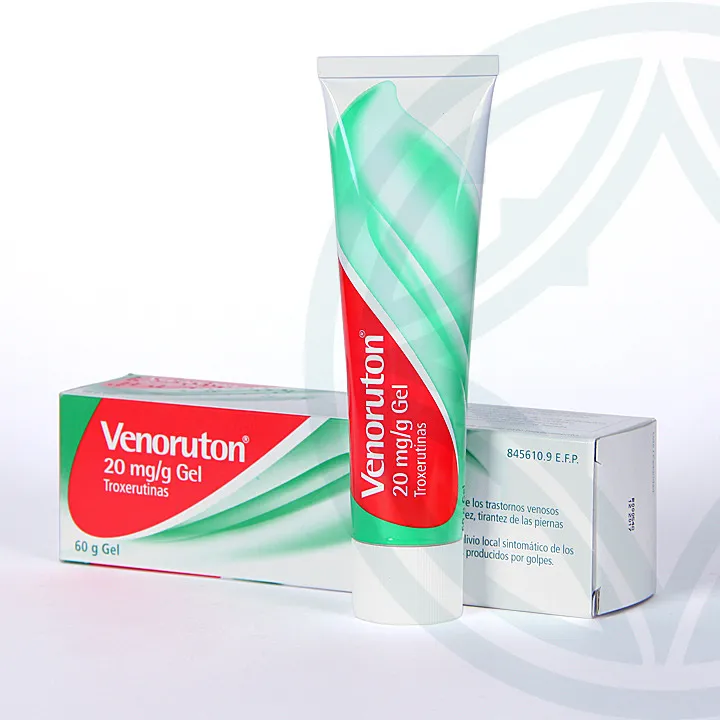
Table of Contents
- Package leaflet: Information for the patient
- Venoruton 500 mg effervescent tablets, 1000 mg effervescent tablets
- 1. What Venoruton is and what it is used for
- 2. What you should know before taking Venoruton
- 3. How to take Venoruton
- 4. Possible side effects
- 5. How to store Venoruton
- 6. Package contents and other information
- Patient information leaflet
- Venoruton 1000 mg powder for oral solution, 500 mg film-coated tablets, 2% gel
- 1. What Venoruton is and what it is used for
- 2. What you need to know before using Venoruton
- 3. How to use Venoruton
- 4. Possible side effects
- 5. How to store Venoruton
- 6. Package contents and other information
Package leaflet: Information for the patient
Venoruton 500 mg effervescent tablets, 1000 mg effervescent tablets
oxerutin
Please read all of this leaflet carefully before taking this medicine because it contains important information for you.
Always take this medicine exactly as described in this leaflet or as your doctor or pharmacist has instructed you.
- Keep this leaflet. You may need to read it again.
- If you need more information or advice, consult your pharmacist.
- If you experience any side effects, including those not listed in this leaflet, contact your doctor or pharmacist. See section 4.
- Contact your doctor if you do not notice any improvement or if your symptoms worsen.
Contents of this leaflet:
- What Venoruton is and what it is used for
- What you need to know before taking Venoruton
- How to take Venoruton
- Possible side effects
- How to store Venoruton
- Contents of the pack and other information
1. What Venoruton is and what it is used for
Venoruton is a medicine containing the active substance oxerutin, a compound derived from the flowers and leaves of Sophora Japonica, belonging to the flavonoid family. Oxerutin has antioxidant properties and protects blood vessels.
Venoruton is indicated for the treatment of:
- venous insufficiency (a condition affecting the venous system, particularly in the lower limbs, which may manifest, for example, as swelling, a sensation of heaviness, pain or cramps in the legs and feet).
- capillary fragility (easy rupture of capillaries, becoming visible on the skin and potentially causing spots and bruising).
Consult your doctor if you do not feel better or if you feel worse, if the condition recurs repeatedly, or if you notice any recent changes in its characteristics.
2. What you should know before taking Venoruton
Do not take Venoruton
- if you are allergic to the active substance or to any of the other ingredients of this medicine (listed in section 6).
Warnings and precautions
Talk to your doctor or pharmacist before taking Venoruton.
You must not take Venoruton if you have leg swelling caused by heart, kidney, or liver diseases.
Children and adolescents
Venoruton must not be used in children and adolescents.
Other medicines and Venoruton
Inform your doctor or pharmacist if you are currently taking, have recently taken, or might take any other medicines.
To date, no specific interactions between oxerutins and other medicines have been reported, although interaction with other medicines cannot be completely ruled out.
Pregnancy and breastfeeding
If you are pregnant, suspect you may be pregnant, planning a pregnancy, or are breastfeeding, consult your doctor or pharmacist before taking this medicine.
Pregnancy
Venoruton is not recommended during pregnancy, as the safety of this medicine in pregnancy has not been established.
Breastfeeding
Oxerutins pass into breast milk in negligible amounts; therefore, at recommended doses, no effects on newborns/infants are expected.
Driving and using machines
Venoruton does not affect or affects negligibly the ability to drive and use machines.
In rare cases, fatigue and dizziness have been reported.
If you experience these symptoms, do not drive and do not operate machinery.
Venoruton 500 mg and 1000 mg effervescent tablets contain potassium and sodium
This medicine contains 10.15 mmol (or 396 mg) of potassium per tablet. This should be taken into consideration in patients with impaired renal function or in patients on a low-potassium diet.
This medicine contains 82 mg of sodium (a main component of table salt) per tablet. This corresponds to 4.1% of the maximum daily recommended dietary intake for an adult.
3. How to take Venoruton
Take this medicine exactly as stated in this leaflet or as instructed by your doctor or pharmacist. If you are in doubt, consult your doctor or pharmacist.
The recommended dose is:
- Venoruton 1000 mg effervescent tablets: 1 tablet per day.
- Venoruton 500 mg effervescent tablets: 2 tablets per day.
Dissolve the tablet thoroughly in a glass of water and drink it before or during a meal.
Use only for short treatment periods.
Do not exceed the recommended doses.
If symptoms do not improve or recur, consult your doctor or pharmacist before continuing or restarting treatment.
Consult your doctor or pharmacist if you do not feel better or if you feel worse, if the condition recurs repeatedly, or if you notice any recent change in its characteristics.
If you take more Venoruton than you should
Signs or symptoms of Venoruton overdose have never been reported.
In case of accidental ingestion of an excessive dose of Venoruton, contact your doctor immediately or go to the nearest hospital.
If you forget to take Venoruton
Do not take a double dose to make up for the forgotten dose.
If you stop taking Venoruton
If you have any doubts about using this medicine, consult your doctor or pharmacist.
4. Possible side effects
Like all medicines, this medicine can cause side effects, although not everybody gets them.
Rare side effects (may affect up to 1 in 1,000 people)
- Stomach or intestinal disturbances;
- Gas in the stomach or intestines (flatulence);
- Diarrhea;
- Abdominal pain;
- Indigestion (dyspepsia);
- Skin rash;
- Itching;
- Hives (urticaria).
Very rare side effects (may affect up to 1 in 10,000 people)
- Severe allergic reactions, even after the first dose (anaphylactoid reactions);
- Allergic reactions (hypersensitivity reactions);
- Dizziness;
- Headache;
- Hot flushes;
- Fatigue.
Following the instructions in this leaflet reduces the risk of side effects.
Reporting of side effects
If you experience any side effect, including those not listed in this leaflet, talk to your doctor or pharmacist. You can also report side effects directly via the national reporting system at https://www.aifa.gov.it/content/segnalazioni-reazioni-avverse. By reporting side effects, you can help provide more information on the safety of this medicine.
5. How to store Venoruton
Keep this medicine out of the sight and reach of children.
Store below 30°C.
Keep the container tightly closed to protect the medicine from light and moisture.
Do not use this medicine after the expiry date stated on the packaging after "Exp".
The expiry date refers to the last day of that month.
Do not dispose of medicines via wastewater or household waste. Ask your pharmacist how to
dispose of medicines you no longer use. This will help protect the environment.
It is important to always keep the medicine information available; therefore, retain both the
packaging and the leaflet.
6. Package contents and other information
What Venoruton contains
- The active substance is oxerutins. Each effervescent tablet contains 500 mg or 1000 mg of oxerutins.
- The other components are: citric acid, potassium carbonate, potassium bicarbonate, sodium bicarbonate, macrogols, acesulfame potassium, povidone, orange flavour (carried on maltodextrin), magnesium stearate.
Description of the appearance of Venoruton and the contents of the pack
Venoruton is available as effervescent tablets of 500 mg or 1000 mg, packed in tubes with desiccant caps.
The pack sizes are:
- 20 effervescent tablets of 500 mg.
- 30 effervescent tablets of 1000 mg (2 tubes containing 15 tablets each).
Not all pack sizes may be marketed.
Marketing Authorization Holder
EG S.p.A., Via Pavia 6 – 20136 Milan, Italy
Manufacturer
Novartis Consumer Health GmbH OTC, Zielstattstrasse 40, Munich, Germany.
Patient information leaflet
Venoruton 1000 mg powder for oral solution, 500 mg film-coated tablets, 2% gel
oxerutin
Please read this leaflet carefully before using this medicine because it contains important information for you.
Use this medicine exactly as described in this leaflet or as your doctor or pharmacist has instructed you.
- Keep this leaflet. You may need to read it again.
- If you would like more information or advice, consult your pharmacist.
- If you experience any of the side effects, including those not listed in this leaflet, contact your doctor or pharmacist. See section 4.
- Contact your doctor if you do not notice any improvement or if your symptoms worsen.
Contents of this leaflet:
- What Venoruton is and what it is used for
- What you need to know before taking Venoruton
- How to take Venoruton
- Possible side effects
- How to store Venoruton
- Contents of the pack and other information
1. What Venoruton is and what it is used for
Venoruton is a medicine containing the active substance oxerutin, a compound derived from the flowers and leaves of Sophora japonica, belonging to the flavonoid family. Oxerutin has antioxidant properties and protects blood vessels.
Venoruton is indicated for the treatment of:
- venous insufficiency (a disorder affecting the venous system, particularly in the lower limbs and the anal region veins (haemorrhoids), which may manifest, for example, with swelling, heaviness, pain or cramps in the legs and feet).
- capillary fragility (easy rupture of capillaries, which become visible on the skin and may cause spots and bruising).
Consult your doctor if you do not feel better or if you feel worse, if the condition recurs repeatedly, or if you notice any recent changes in its characteristics.
2. What you need to know before using Venoruton
Do not use Venoruton
If you are allergic to the active substance or to any of the other ingredients of this medicine
(listed in section 6).
Warnings and precautions
Talk to your doctor or pharmacist before using Venoruton.
You must not take Venoruton if you have leg swelling caused by heart, kidney, or liver diseases.
If skin irritation or allergic reactions occur when using Venoruton gel, especially with prolonged use, discontinue treatment with Venoruton gel and consult your doctor for appropriate management.
Children and adolescents
Venoruton must not be used in children and adolescents.
Other medicines and Venoruton
Inform your doctor or pharmacist if you are currently taking, have recently taken, or might take any other medicines.
To date, no specific interactions between oxerutins and other medicines have been reported, although interaction with other medicines cannot be entirely ruled out.
Pregnancy and breastfeeding
If you are pregnant, suspect you may be pregnant, planning a pregnancy, or breastfeeding, consult your doctor or pharmacist before using this medicine.
Pregnancy
Venoruton is not recommended during pregnancy, as the safety of this medicine in pregnancy has not been established.
Breastfeeding
Oxerutin passes into breast milk in negligible amounts; therefore, at recommended doses, no effects on newborns/infants are expected.
Driving and operating machinery
Venoruton does not affect, or affects only insignificantly, the ability to drive vehicles or operate machinery.
Rarely, fatigue and dizziness have been reported.
If you experience these symptoms, do not drive or operate machinery.
Venoruton gel does not affect the ability to drive vehicles or operate machinery.
Venoruton 1000 mg powder contains sodium saccharin
This medicine contains less than 1 mmol (23 mg) of sodium per dose, i.e. essentially 'sodium-free'.
Venoruton 500 mg film-coated tablets contain the azo dye Sunset Yellow aluminium lake (E110)
This medicine contains Sunset Yellow aluminium lake (E110), which may cause allergic reactions.
Venoruton gel contains benzalkonium chloride
This medicine contains 0.391 mg of benzalkonium chloride per dose, equivalent to 0.05 mg/g. Benzalkonium chloride may cause skin irritation. If you are breastfeeding, do not apply this medicine to the breast area, as the infant could ingest it through breast milk.
3. How to use Venoruton
Use this medicine exactly as stated in this leaflet or as instructed by your doctor or pharmacist. If you have any doubts, consult your doctor or pharmacist.
The recommended dose is:
- Venoruton 1000 mg powder: 2 to 3 sachets per day, depending on the severity of symptoms, including venous insufficiency of the hemorrhoidal plexus (haemorrhoids). Dissolve the contents of each sachet thoroughly in a small amount of water and drink before or during meals.
- Venoruton 500 mg coated tablets: 2–3 tablets per day, including for venous insufficiency of the hemorrhoidal plexus (haemorrhoids). Take the tablets whole, with a little water, without chewing, before or during meals.
- Venoruton gel: Apply a sufficient amount of gel to the affected area as well as the surrounding areas, twice daily (morning and evening). Gently massage the treated area to allow the medicine to penetrate until completely absorbed, i.e. until the skin feels dry to the touch.
Use only for short treatment periods.
Do not exceed the recommended doses.
If symptoms do not improve or recur, consult your doctor or pharmacist before continuing or restarting treatment.
Consult your doctor or pharmacist if you do not feel better or if you feel worse, if the condition recurs repeatedly, or if you notice any recent changes in its characteristics.
If you take more Venoruton than you should
Signs or symptoms of Venoruton overdose have never been reported.
In case of accidental ingestion of an excessive dose of Venoruton, contact your doctor immediately or go to the nearest hospital.
If you forget to take Venoruton
Do not take a double dose to make up for the missed dose.
If you stop using Venoruton
If you have any doubts about how to use this medicine, consult your doctor or pharmacist.
4. Possible side effects
Like all medicines, this medicine can cause side effects, although not everyone experiences them.
For 1000 mg powder for oral solution and Venoruton 500 mg film-coated tablets:
Rare side effects (may affect up to 1 in 1,000 people)
- stomach or intestinal disturbances;
- gas in the stomach (flatulence);
- diarrhoea;
- abdominal pain;
- indigestion (dyspepsia);
- skin rash;
- itching;
- urticaria.
Very rare side effects (may affect up to 1 in 10,000 people)
- severe allergic reactions, even after the first dose (anaphylactoid reactions);
- allergic reactions (hypersensitivity reactions);
- dizziness;
- headache;
- hot flushes;
- fatigue.
For Venoruton 2% gel:
Rare side effects (may affect up to 1 in 1,000 people)
- allergic reactions with skin changes, which resolve upon discontinuation of treatment. Adhering to the instructions provided in the package leaflet reduces the risk of side effects.
Reporting of side effects
If you experience any side effect, including those not listed in this leaflet, talk to your doctor or pharmacist. You can also report side effects directly via the national reporting system at https://www.aifa.gov.it/content/segnalazioni-reazioni-avverse.
By reporting side effects, you can help provide more information on the safety of this medicine.
5. How to store Venoruton
Keep this medicine out of the sight and reach of children.
Do not use this medicine after the expiry date stated on the packaging after Exp.
The expiry date refers to the last day of that month.
Do not dispose of any medicine via wastewater or household waste. Ask your pharmacist how to
dispose of medicines no longer in use. This will help protect the environment.
It is important to always keep the medicine information available; therefore, retain both the
packaging and the leaflet.
6. Package contents and other information
What Venoruton contains
- The active substance is oxerutin.
- Venoruton 1000 mg powder for oral solution: each sachet contains 1000 mg of oxerutin.
- Venoruton 500 mg film-coated tablets: each tablet contains 500 mg of oxerutin.
- Venoruton gel: 100 g of gel contain 2 g of oxerutin.
- The other components are:
- Powder for oral solution: mannitol, sodium saccharin, citric acid monohydrate.
- Film-coated tablets: polyacrylate dispersion 30 percent, talc, magnesium stearate, macrogols, copovidone, sunset yellow aluminium lake (E 110), titanium dioxide.
- Gel: carbomers, sodium hydroxide, disodium edetate, benzalkonium chloride, purified water.
Description of the appearance of Venoruton and contents of the pack
- 1000 mg oral solution powder: pale yellow, odourless powder, packed in single-dose sachets. Pack contents: 30 sachets.
- 500 mg film-coated tablets for oral use: orange, oblong tablets, packed in blisters. Pack contents: 20, 30 or 60 tablets.
- 2% gel: homogeneous, clear to slightly opalescent, transparent, golden-yellow gel for topical use, virtually odourless, packed in tubes. Pack contents: 40 g or 100 g of gel. Not all pack sizes may be marketed.
Marketing Authorisation Holder
EG S.p.A., Via Pavia 6 – 20136 Milan, Italy
Manufacturer
- Venoruton 1000 mg powder for oral solution: SMITHKLINE BEECHAM, S.A., Ctra. De Ajalvir, Alcalá de Henares, Madrid (Spain)
- Venoruton 500 mg film-coated tablets: Novartis Farma S.p.A., Via Provinciale Schito n. 131, Torre Annunziata (NA), or at Recipharm Uppsala AB, Björkgatan 30, Uppsala, 751 82 Uppsala, Sweden
- Venoruton 2% gel:
Novartis Farma S.p.A., Via Provinciale Schito n. 131, Torre Annunziata (NA)
or at
GlaxoSmithKline Consumer Healthcare GmbH & Co. KG, Barthstraße 4, 80339 Munich, Germany