Vellofent
Italy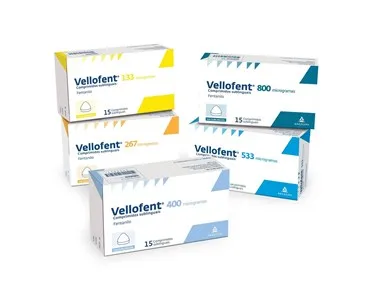
Table of Contents
- Package leaflet: Information for the user
- Vellofent 67 micrograms, sublingual tablets, 133 micrograms, sublingual tablets, 267 micrograms, sublingual tablets, 400 micrograms, sublingual tablets, 533 micrograms, sublingual tablets, 800 micrograms, sublingual tablets
- 1. What Vellofent is and what it is used for
- 2. What you should know before taking Vellofent
- 3. How to take Vellofent
- 4. Possible side effects
- 5. How to store Vellofent
- 6. Package contents and other information
Package leaflet: Information for the user
Vellofent 67 micrograms, sublingual tablets, 133 micrograms, sublingual tablets, 267 micrograms, sublingual tablets, 400 micrograms, sublingual tablets, 533 micrograms, sublingual tablets, 800 micrograms, sublingual tablets
fentanyl
Please read all of this leaflet carefully before you start taking this medicine because it contains important information for you.
- Keep this leaflet. You may need to read it again.
- If you have any questions, ask your doctor or pharmacist.
- This medicine has been prescribed for you only. Do not give it to other people, even if they have the same symptoms as yours, because it may be harmful.
- If you experience any side effects, including those not listed in this leaflet, talk to your doctor or pharmacist. See section 4.
Contents of this leaflet
- What Vellofent is and what it is used for
- What you need to know before taking Vellofent
- How to take Vellofent
- Possible side effects
- How to store Vellofent
- Contents of the pack and other information
1. What Vellofent is and what it is used for
Vellofent contains the active substance fentanyl, which belongs to a group of potent analgesics known as opioids.
Vellofent is used for the treatment of breakthrough cancer pain in adult patients who are already receiving opioid analgesics for chronic (continuous) cancer-related pain.
Breakthrough cancer pain is sudden, additional pain that occurs even though you are already taking your regular opioid pain-relief medicine.
2. What you should know before taking Vellofent
Do not take Vellofent:
- if you are allergic to fentanyl or to any of the other ingredients of this medicine (listed in section 6);
- if you have severe respiratory problems or a serious lung disorder;
- if you are currently taking monoamine oxidase inhibitor (MAOI) medicines for severe depression (or have taken them within the last 2 weeks);
- if you are not already using, on a daily and regular basis, an opioid medicine prescribed for persistent pain (e.g. codeine, fentanyl, hydromorphone, morphine, oxycodone, pethidine) for at least one week. If you are not using these medicines, you must not use Vellofent, as this could increase the risk of your breathing becoming dangerously slow and/or shallow, or even stopping;
- if you suffer from short-term pain other than breakthrough cancer pain;
- if you are being treated with medicines containing sodium oxybate.
Warnings and precautions
Vellofent contains an active substance in an amount that could be fatal for a child. Therefore,
always keep all tablets out of sight and reach of children and of individuals not using this medicine.
Keep the tablets in a locked place and do not store them once removed from the blister pack.
Consult your doctor or pharmacist before taking Vellofent.
Store this medicine in a safe and secure place, inaccessible to others (see section 5, “How to store Vellofent”, for more information).
Before starting treatment, inform your doctor if you currently have or have recently had any of the following conditions, as these may influence the prescribed dose:
- the other opioid painkiller used for persistent (continuous) cancer pain has not yet been stabilized;
- you suffer from any condition affecting your respiratory function (such as asthma, wheezing, or shortness of breath);
- you have a head injury;
- you have heart problems, particularly if your heartbeat is slow or irregular, or if you have low blood volume or low blood pressure;
- you have any liver or kidney problems, as these organs affect how the medicine is metabolized;
- if you are taking antidepressants or antipsychotics, refer to section “Other medicines and Vellofent”.
Consult your doctor during treatment with Vellofent if:
- you experience pain or increased sensitivity to pain (hyperalgesia) that does not respond to an increase in the prescribed dose;
- you experience a combination of the following symptoms: nausea, vomiting, loss of appetite, fatigue, weakness, dizziness, and low blood pressure. Together, these symptoms may indicate a potentially life-threatening condition called adrenal insufficiency, in which the adrenal glands do not produce sufficient hormones;
- you have previously developed adrenal insufficiency or lack of sex hormones (androgen deficiency) while using opioids.
Long-term use and tolerance
This medicine contains fentanyl, an opioid painkiller. Repeated use of opioid painkillers may make the medicine less effective (you become accustomed to it, a phenomenon known as drug tolerance). You may also become more sensitive to pain while using Vellofent. This is known as hyperalgesia.
Increasing the dose of Vellofent may help reduce pain for a while, but it may also be harmful. If you notice the medicine becoming less effective, consult your doctor. Your doctor will decide whether it is better to increase the dose or gradually reduce the use of Vellofent.
Dependence and drug abuse
This medicine contains fentanyl, an opioid. It may cause dependence and/or drug abuse.
Repeated use of Vellofent may lead to dependence, abuse, and drug addiction, which could result in a potentially fatal overdose. The risk of these adverse effects may increase with higher doses and prolonged duration of use. Dependence or drug addiction may make you feel that you no longer have control over the amount of medicine needed or how often you must take it. You may feel a need to continue using the medicine even if it does not help relieve your pain.
The risk of developing dependence or drug addiction varies from person to person. Your risk may be higher if:
you or a family member have previously suffered from alcohol, prescription medicine, or illegal substance abuse or addiction (“drug addiction”);
you are a smoker;
you have previously had mood disorders (depression, anxiety, or a personality disorder) or have been treated by a psychiatrist for other mental illnesses.
The appearance of any of the following signs during Vellofent use may indicate dependence or drug abuse:
You feel the need to use the medicine for longer than prescribed by your doctor;
You feel the need to use a higher dose than recommended;
You use the medicine for reasons other than prescribed, e.g., “to stay calm” or “to help sleep”;
You have repeatedly tried to stop or control use of this medicine without success;
When you stop taking the medicine, you feel unwell (e.g. nausea, vomiting, diarrhoea, anxiety, chills, tremors, and sweating), and feel better when you resume taking it (“withdrawal effects”).
If you notice any of these signs, consult your doctor to discuss the best treatment approach for you, including whether it is appropriate to stop treatment and how to do so safely.
Sleep-related breathing disorders
Vellofent may cause sleep-related breathing disorders such as sleep apnoea (pauses in breathing during sleep) and sleep-related hypoxemia (low blood oxygen levels). Symptoms may include breathing pauses during sleep, waking up at night due to breathlessness, difficulty maintaining sleep, or excessive daytime sleepiness. If you or someone else notices these symptoms, consult your doctor. Your doctor may consider reducing the dose.
Children and adolescents
Vellofent must not be used in children and adolescents under 18 years of age.
Other medicines and Vellofent
Inform your doctor or pharmacist if you are taking, have recently taken, or might take any other medicines, especially:
- monoamine oxidase inhibitors (MAOIs) (used for severe depression) – see “Do not take Vellofent” above. Inform your doctor if you have taken these medicines within the last two weeks;
- sleeping pills, medicines for anxiety, antihistamines, tranquillisers, certain muscle relaxants, or any medicine that normally causes drowsiness (sedative effect), and certain nerve pain medicines (gabapentin and pregabalin);
- medicines that may affect the effect of Vellofent (by influencing how your body metabolizes it), such as:
- medicines for HIV infection (e.g. ritonavir, indinavir, nelfinavir, saquinavir);
- medicines used to treat fungal infections (e.g. ketoconazole, itraconazole, fluconazole);
- medicines for bacterial infections (e.g. clarithromycin, erythromycin, telithromycin), including tuberculosis (e.g. rifabutin, rifampicin);
- medicines used to treat severe nausea (e.g. aprepitant, dronabinol);
- medicines for high blood pressure or heart disease (e.g. diltiazem, verapamil);
- medicines for depression (e.g. fluoxetine or St. John’s wort - Hypericum perforatum);
- medicines for heartburn and indigestion (e.g. cimetidine);
- sleeping pills or sedatives (e.g. phenobarbital);
- medicines for controlling epileptic seizures/convulsions (e.g. carbamazepine, phenytoin, oxcarbazepine);
- antiviral medicines (e.g. efavirenz, nevirapine);
- anti-inflammatory or immunosuppressive medicines (e.g. glucocorticoids);
- medicines for diabetes (e.g. pioglitazone);
- psychostimulant medicines (e.g. modafinil).
- Certain types of strong painkillers known as partial agonist/antagonists, e.g., buprenorphine, nalbuphine, and pentazocine (medicines for pain treatment). When used together with these medicines, symptoms of drug withdrawal (nausea, vomiting, diarrhoea, anxiety, chills, tremors, and sweating) may occur. These medicines may reduce or counteract the effect of Vellofent.
- The risk of adverse effects increases if you are taking medicines such as certain antidepressants or antipsychotics. Vellofent may interact with these medicines, leading to changes in mental status (e.g. agitation, hallucinations, coma) and other effects such as body temperature above 38°C, rapid heartbeat, unstable blood pressure, exaggerated reflexes, muscle rigidity, lack of coordination, and/or gastrointestinal symptoms (e.g. nausea, vomiting, diarrhoea). Your doctor will advise whether Vellofent is suitable for you.
- Concomitant use of Vellofent and sedative medicines such as benzodiazepines or related drugs increases the risk of drowsiness, breathing difficulties (respiratory depression), coma, and may be life-threatening. Therefore, concomitant use should only be considered when no other therapeutic options are possible. However, if your doctor prescribes Vellofent together with sedative medicines, the dose and duration of concomitant treatment must be minimized. Inform your doctor about all sedative medicines you are taking and strictly follow the recommended dosage. It may be helpful to inform friends and family to watch for the symptoms listed above. Contact your doctor if these symptoms occur.
- Concomitant use of medicines containing sodium oxybate and fentanyl is contraindicated (see section “Do not take Vellofent”). Treatment with sodium oxybate must be discontinued before starting Vellofent.
Vellofent with food, drinks, and alcohol
- Vellofent may be taken before or after, but not during meals. You may drink water to moisten your mouth before using Vellofent, but do not eat or drink while taking it.
- During treatment with Vellofent, do not drink grapefruit juice, as it may affect how your body metabolizes fentanyl.
- Do not drink alcohol during treatment with Vellofent. This may increase the risk of dangerous side effects.
Pregnancy and breastfeeding
If you are pregnant, think you may be pregnant, are planning to become pregnant, or are breastfeeding, consult your doctor or pharmacist before taking this medicine.
Vellofent must not be used during pregnancy without discussing it with your doctor.
Vellofent must not be used during labour, as fentanyl may cause respiratory depression and withdrawal symptoms in the fetus or newborn.
Fentanyl may pass into breast milk and cause adverse effects in the breastfed infant. Do not take Vellofent while breastfeeding. You may resume breastfeeding your baby only at least 5 days after the last dose of Vellofent.
Driving and using machines
Discuss with your doctor whether it is safe for you to drive or operate machinery after taking Vellofent.
Do not drive or operate machinery if: you feel drowsy or dizzy; you have blurred vision or double vision; or you have difficulty concentrating. It is important that you understand how you react to Vellofent before driving or operating machinery.
Vellofent contains sodium
This medicine contains less than 1 mmol (23 mg) of sodium per tablet, i.e., essentially “sodium-free”.
For athletes: using this medicine without therapeutic need constitutes doping and may lead to a positive anti-doping test.
3. How to take Vellofent
Before starting treatment and regularly during treatment, your doctor will discuss with you what to expect from using Vellofent, when and for how long it should be used, when to contact your doctor, and when you should stop treatment (see also section 2).
This medicine must be taken by placing the tablet under the tongue (sublingual use).
Always take this medicine exactly as your doctor or pharmacist has told you. If you are unsure, consult your doctor or pharmacist.
If your doctor has decided to switch you to treatment with Vellofent, you must not take the fentanyl-based medicine you previously used for breakthrough pain at the same time. Dispose of the previous medicine. However, during treatment with Vellofent, continue taking your opioid painkiller for persistent (ongoing) cancer pain as prescribed.
Initial phase – Identifying the most appropriate dose
For Vellofent therapy to be effective, your doctor must identify the most appropriate dose for treating a single episode of breakthrough pain. Vellofent sublingual tablets are available in a range of strengths. To find the most suitable dose, you may need to try different strengths of Vellofent sublingual tablets during separate episodes of breakthrough pain. Your doctor will assist you with this and work with you to determine the best dosage to use.
If you do not achieve adequate pain relief with one tablet, your doctor may instruct you to take two tablets to treat an episode of breakthrough pain. Do not take a second tablet unless specifically instructed by your doctor, as this may lead to overdose. Your doctor will advise you which dose to use.
You must always use the dose of Vellofent prescribed by your doctor, which may differ from the dose you used with other medicines for breakthrough pain.
Maintenance phase – After identifying the most appropriate dose
Once the appropriate dose of Vellofent tablets has been identified with your doctor to control breakthrough pain, you must not take that dose more than four times a day. A dose of Vellofent may consist of more than one tablet.
If you feel that the dose of Vellofent you are taking does not satisfactorily control your breakthrough pain, inform your doctor, as a dose adjustment may be necessary.
Do not change the dose of Vellofent unless your doctor tells you to do so.
How to take the medicine
Vellofent must be taken sublingually. This means placing the tablet under the tongue, where it will dissolve rapidly, allowing fentanyl to be absorbed through the mucosal tissue lining the inside of the mouth.
When you experience an episode of breakthrough pain, take the dose recommended by your doctor as follows:
- If your mouth is dry, drink a sip of water to moisten it; spit out or swallow the water.
- Remove the tablet(s) from the blister pack immediately before use.
- Carefully peel back the foil on one blister as shown on the packaging and gently remove the tablet. Do not attempt to push the Vellofent sublingual tablets through the foil.
- Place the tablet under the tongue as far back as possible and wait for it to dissolve completely.
- Vellofent will dissolve rapidly under the tongue and be absorbed to exert its analgesic effect. Therefore, it is important not to suck, chew, or swallow the tablet.
- After 30 minutes, if any residue from the tablet remains in the mouth, it may be swallowed.
- Do not eat or drink anything until the tablet has completely dissolved under the tongue.
If you take more Vellofent than you should
- Remove any remaining tablets from the mouth.
- Inform the person assisting you or anyone else about what has happened.
- You or the person assisting you must contact your doctor, pharmacist, or the nearest hospital immediately to discuss the necessary actions. Symptoms of overdose include altered mental state, loss of consciousness, severe drowsiness, shallow and slow breathing. If this occurs, seek immediate emergency medical treatment. Overdose may also cause a brain disorder known as toxic leukoencephalopathy.
Note for caregivers
While waiting for medical help:
- Keep the person awake by talking to them or gently shaking them periodically.
- Ensure their airway is clear and they are breathing.
If you suspect someone has accidentally taken Vellofent, seek immediate emergency medical treatment.
If you forget to take Vellofent
Do not take a double dose to make up for the missed tablet.
If you stop taking Vellofent
If you no longer experience breakthrough pain, you should stop treatment with Vellofent. However, you must continue taking your usual opioid painkiller for persistent cancer pain, following your doctor’s instructions. If you stop treatment with Vellofent, you may experience symptoms of drug withdrawal syndrome similar to the possible side effects of Vellofent. Consult your doctor if you develop withdrawal symptoms or have concerns about pain relief. Your doctor will assess whether to prescribe a medicine to reduce or eliminate withdrawal symptoms.
If you have any doubts about using this medicine, consult your doctor or pharmacist.
4. Possible side effects
Like all medicines, this medicine can cause side effects, although not everyone gets them.
The most serious side effects are:
- slowed and shallow breathing (uncommon, may affect up to 1 in 100 people);
- low or very low blood pressure and shock.
If you feel very drowsy and/or experience any of the side effects listed above, you must stop taking Vellofent and you or the person assisting you must contact your doctor immediately and seek urgent medical help.
Other possible side effects:
Very common (may affect more than 1 in 10 people):
- nausea,
- constipation,
- drowsiness,
- sedation,
- dizziness.
Common (may affect up to 1 in 10 people):
- confusion, anxiety, seeing or hearing things that are not real (hallucinations), abnormal thinking,
- asthenia (weakness),
- headache, muscle spasms, feeling dizzy or lightheaded, loss of consciousness,
- dry mouth, altered taste,
- low blood pressure,
- vomiting, abdominal pain, indigestion,
- sweating, skin itching,
- falls.
Uncommon (may affect up to 1 in 100 people):
- decreased appetite, flatulence, abdominal bloating, tooth deterioration, intestinal blockage (ileus),
- malaise,
- tingling or numbness, difficulty in coordinating movements, seizure (convulsive seizures), coma,
- abnormal dreams, feeling detached, depression, mood swings, excessive feeling of well-being,
- severe breathing problems,
- blurred or double vision,
- skin rash, increased or abnormal sensitivity to touch,
- difficulty urinating.
Not known (frequency cannot be estimated from the available data):
- gingival recession, tooth loss,
- flushing,
- sensation of intense heat,
- diarrhoea,
- swelling of the arms or legs,
- fatigue,
- insomnia,
- fever,
- withdrawal syndrome (may occur with the appearance of the following side effects: nausea, vomiting, diarrhoea, anxiety, chills, tremors and sweating),
- substance dependence (addiction) (see section 2),
- drug abuse (see section 2),
- delirium (symptoms may include a combination of agitation, restlessness, disorientation, confusion, fear, seeing or hearing things that are not real, sleep disturbances, nightmares),
- drug tolerance (see section 2).
Prolonged fentanyl treatment during pregnancy may cause withdrawal symptoms in the newborn baby, which can be fatal (see section 2).
Reporting of side effects
If you experience any side effect, including those not listed in this leaflet, talk to your doctor or pharmacist. You can also report side effects directly via the national reporting system at https://www.aifa.gov.it/content/segnalazioni-reazioni-avverse.
By reporting side effects, you can help provide more information on the safety of this medicine.
5. How to store Vellofent
The pain-relieving ingredient contained in Vellofent is very potent and may be life-threatening if
accidentally taken by a child. Keep this medicine out of sight and reach of children.
Store this medicine in a safe and secure place, inaccessible to other people. Accidental or intentional use of
this medicine by individuals for whom it has not been prescribed may cause serious harm or be fatal.
Store Vellofent in a locked place.
Do not use this medicine after the expiry date stated on the carton after "EXP". The expiry date refers to the
last day of that month.
This medicine does not require any special storage temperature.
Keep in the original blister pack to protect the medicine from light.
Do not store the tablets once removed from the blister pack.
Any unused or partially used product should not be disposed of via wastewater or household waste. If possible, it should be returned to a pharmacist for safe disposal. This is a safety precaution and will also help protect the environment.
6. Package contents and other information
What Vellofent contains
- The active substance is: fentanyl. Each sublingual tablet contains 67, 133, 267, 400, 533 or 800 micrograms of fentanyl (as citrate).
- The other components are: anhydrous calcium hydrogen phosphate, microcrystalline cellulose, anhydrous disodium phosphate, hypromellose, macrogol, magnesium stearate, maltodextrin, titanium dioxide (E171), triacetin, printing ink [shellac, black iron oxide (E172)].
Description of the appearance of Vellofent and package contents
Vellofent 67 micrograms is a white, convex, triangular tablet, 5.6 mm in height, printed on one side with the number "0" in black ink.
Vellofent 133 micrograms is a white, convex, triangular tablet, 5.6 mm in height, printed on one side with the number "1" in black ink.
Vellofent 267 micrograms is a white, convex, triangular tablet, 5.6 mm in height, printed on one side with the number "2" in black ink.
Vellofent 400 micrograms is a white, convex, triangular tablet, 5.6 mm in height, printed on one side with the number "4" in black ink.
Vellofent 533 micrograms is a white, convex, triangular tablet, 5.6 mm in height, printed on one side with the number "5" in black ink.
Vellofent 800 micrograms is a white, convex, triangular tablet, 5.6 mm in height, printed on one side with the number "8" in black ink.
Vellofent sublingual tablets are available in child-resistant blister packs with peelable foil, in pack sizes of 3, 4, 15 or 30 tablets.
Not all pack sizes may be marketed.
Marketing Authorization Holder
Angelini Pharma S.p.A.
Viale Amelia 70
00181 Rome, Italy
Manufacturers:
ETHYPHARM,
Chemin de la Poudrière,
76120 Grand Quevilly,
France
Aziende Chimiche Riunite Angelini Francesco - ACRAF S.p.A.
Via Vecchia del Pinocchio, 22 - 60131 Ancona, Italy
This medicinal product is authorized in the European Economic Area countries under the following names:
Sweden: Vellofent
Bulgaria: Vellofent
Czech Republic: Vellofent
Greece: Vellofent
Spain: Avaric
Italy: Vellofent
Poland: Vellofent
Portugal: Vellofent
The instructional video for this product is available by scanning the QR Code on the outer package with a smartphone or device. The same information is also available at the following URL:
https://qrcode.angelinipharma.it/sku001/001