Vaxchora
Italy
Table of Contents
- Package leaflet: Information for the user
- Vaxchora effervescent powder and powder for oral suspension
- 1. What Vaxchora is and what it is used for
- 2. What you need to know before taking Vaxchora
- 3. How to take Vaxchora
- 4. Possible side effects
- 5. How to store Vaxchora
- 6. Package contents and other information
Package leaflet: Information for the user
Vaxchora effervescent powder and powder for oral suspension
cholera vaccine (live, recombinant, oral)
Please read all of this leaflet carefully before taking this vaccine because it contains important information for you.
- Keep this leaflet. You may need to read it again.
- If you have any questions, ask your doctor, pharmacist, or nurse.
- This vaccine has been prescribed for you only. Do not give it to others.
- If you experience any side effects, including those not listed in this leaflet, contact your doctor, pharmacist, or nurse. See section 4.
Contents of this leaflet
- What Vaxchora is and what it is used for
- What you need to know before taking Vaxchora
- How to take Vaxchora
- Possible side effects
- How to store Vaxchora
- Contents of the pack and other information
1. What Vaxchora is and what it is used for
Vaxchora is an oral cholera vaccine that stimulates the immune defenses in the intestine. It is used
to protect adults and children aged 2 years and older against cholera. The vaccine must be taken
at least 10 days before travelling to an area affected by cholera.
How Vaxchora works
Vaxchora prepares the immune system (the body's defenses) to fight against cholera. When a person
takes the vaccine, the immune system produces proteins called antibodies, which counteract the
cholera bacterium and its toxin (a harmful substance) that causes diarrhea. This way, the immune
system is ready to fight the cholera bacteria if the individual comes into contact with them.
2. What you need to know before taking Vaxchora
Do not take Vaxchora:
- if you are allergic to any of the ingredients of this medicine (listed in section 6);
- if you have a weakened immune system, for example, if you were born with a weakened immune system or if you are receiving treatments such as high-dose corticosteroids, anticancer medicines, or radiotherapy, which can weaken the immune system.
Warnings and precautions
Talk to your doctor, pharmacist, or nurse before taking Vaxchora.
Contact a doctor immediately if you experience any of the following serious adverse reactions (also see section 4):
- severe allergic reactions causing swelling of the face or throat, hives, itchy rash, shortness of breath and/or drop in blood pressure and fainting.
If you have any of the following symptoms—nausea, vomiting, diarrhoea, or abdominal pain—or any combination of these, talk to your doctor, pharmacist, or nurse before taking the vaccine. Vaccination should be postponed until after recovery, as protection against cholera may be reduced.
Not all individuals who take this vaccine will achieve full protection against cholera. It is important to follow hygiene advice and to be especially careful about food and water consumption in areas affected by cholera.
This vaccine may be less effective if you have HIV infection.
Vaccine bacteria may be present in the faeces for at least 7 days after taking the vaccine. To avoid possible contamination, wash your hands thoroughly after using the toilet, changing diapers, and before preparing food, for at least 14 days after taking this vaccine.
Children and adolescents
Do not administer this vaccine to children under 2 years of age, as efficacy has not been demonstrated in this age group.
Other medicines and Vaxchora
Inform your doctor, pharmacist, or nurse if you are taking, have recently taken, or might take any other medicines or vaccines. This includes over-the-counter medicines, including herbal products, because this vaccine may affect the effectiveness of certain medicines and vaccines.
In particular, inform your doctor, pharmacist, or nurse if you are taking:
- antibiotics, as this vaccine may not be effective if taken while also taking antibiotics. Take this vaccine no earlier than 14 days after the last dose of an antibiotic. After taking this vaccine, avoid taking antibiotics for 10 days;
- chloroquine for malaria prevention, as this vaccine may not be effective if taken while also taking chloroquine. Take this vaccine at least 10 days before starting chloroquine or 14 days after stopping chloroquine;
- the typhoid vaccine Ty21a, as this vaccine may not be effective if taken together with Ty21a. Take this vaccine at least 2 hours before or after taking Ty21a.
If any of the above situations apply to you, consult your doctor, pharmacist, or nurse before taking this vaccine.
Vaxchora with food and drinks
Do not eat or drink anything for 60 minutes before and after taking Vaxchora, as this could interfere with the vaccine's effectiveness.
Pregnancy, breastfeeding, and fertility
If you are pregnant, suspect you may be pregnant, planning to become pregnant, or breastfeeding, consult your doctor or pharmacist before taking this medicine.
Driving and using machines
Vaxchora does not affect, or affects negligibly, the ability to drive or operate machinery. However, some of the effects listed in section 4 “Possible side effects” might temporarily affect your ability to drive or use machinery. Do not drive or operate machinery if you do not feel well after vaccination.
Vaxchora contains lactose, sucrose, and sodium
If you have been diagnosed with an intolerance to certain sugars, consult your doctor before taking this medicine.
This vaccine contains 863 mg of sodium (the main component of table salt) per dose. This corresponds to 43% of the maximum daily recommended dietary intake for an adult. If you are on a low-sodium diet, take this into account.
3. How to take Vaxchora
Take this medicine exactly as instructed by your doctor, pharmacist, or
nurse. If you have any doubts, consult your doctor, pharmacist, or nurse.
The recommended dose is the contents of the two sachets in the pack. However, for children aged
between 2 and less than 6 years, please note step 8 in the instructions for preparing the vaccine,
provided below.
Protection against cholera begins within 10 days after taking Vaxchora. Your doctor, pharmacist, or
nurse will advise you when to take the vaccine before travelling.
Instructions:
PREPARE THIS VACCINE EXACTLY AS DESCRIBED IN THIS
PACKAGE LEAFLET
Read the following instructions before starting:
Vaxchora may not be effective in the following situations:
- improper storage; the vaccine must be stored in a refrigerator (2 °C–8 °C);
- use of an incorrect amount of water; 100 mL must be used;
- use of an incorrect type of water; bottled water must be used, either still or carbonated, cold or at room temperature;
- mixing the sachets in the wrong order; the contents of sachet 1 must be added to the water first. If the sachets are mixed in the wrong order, discard the vaccine and obtain a replacement dose;
- eating or drinking: must be avoided for 60 minutes before and after taking the vaccine; food and drinks may reduce the effectiveness of the vaccine.
Do not touch your eyes during vaccine preparation to avoid contamination.
If powder or liquid is spilled, clean the surface with hot, soapy water or an antibacterial disinfectant.
If the spill is significant (more than a few drops or granules of powder), discard the vaccine and
obtain a new dose from your doctor or pharmacist. DO NOT take the remaining medicine.
Step 1 Prepare the materials:
- clean glass
- mixing utensil
- bottled water (still or carbonated, cold or at room temperature, equal to or below 25 °C)
- measuring device for 100 mL of bottled water (e.g., a graduated jug)
- scissors
Step 2 Remove the vaccine from the refrigerator.
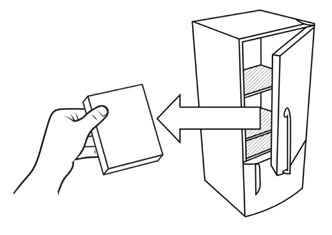
Step 3 Identify the two sachets: the sachets are
labelled as 1 and 2.
Sachet 1 contains the "Vaxchora buffer" and is black and white. Sachet 2
contains the "active substance of Vaxchora" and is
blue and white.
If a sachet appears damaged, do not use either sachet from the pack and
contact your doctor, pharmacist, or nurse to obtain a replacement dose. Using a damaged sachet may reduce the vaccine's effectiveness.
Step 4 Measure 100 mL of bottled water, still or
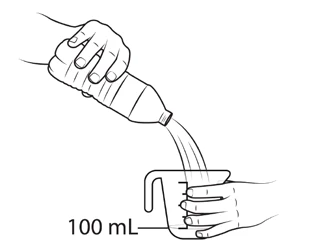
carbonated, cold or at room temperature, and transfer it to a clean glass.
It is essential to use bottled water to ensure the vaccine is effective; using non-bottled water (e.g., tap water) may render the vaccine ineffective.
Step 5 Using scissors, cut the top of sachet 1.
Do not insert fingers into the sachet. If you come into contact with the sachet's contents, wash your hands to reduce the risk of contamination.
Step 6 Pour the contents of sachet 1 into the glass.
Bubbles may form.
Step 7 Mix until the powder is completely dissolved.
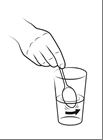
Step 8 For children aged between 2 and < 6 years only:
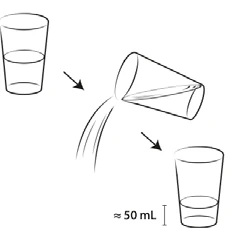
pour out and discard half of the buffer solution. (Note: this step is NOT required for children aged 6 years and older or adults.)
Step 9 Using scissors, cut the top of sachet 2.
Do not insert fingers into the sachet. If you come into contact with the sachet's contents, wash your hands to reduce the risk of contamination.
Step 10 Pour the contents of sachet 2 into the glass.
Step 11 Mix for at least 30 seconds. The powder in
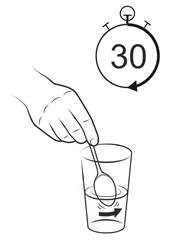
sachet 2 may not dissolve completely. In this case, a slightly cloudy mixture with some white particles may form.
If desired, after mixing sachet 2 for at least 30 seconds, you may add a stevia-based sweetener (no more than 1 gram or ¼ teaspoon) or sugar (sucrose, no more than 4 grams or 1 teaspoon) and mix it into the suspension. DO NOT add other sweeteners as this may reduce the vaccine's effectiveness.
Step 12 Drink the entire contents of the glass within 15 minutes of preparation. Some residue may remain in the glass and should be disposed of. If you or your child take less than half of the dose, contact your doctor, pharmacist, or nurse immediately to discuss whether the dose should be repeated.
Step 13 Dispose of the empty sachets according to local
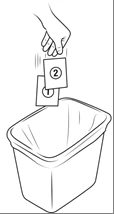
biosafety guidelines.
Ask your doctor, pharmacist, or nurse how to dispose of waste from the medicine.
Step 14 If the vaccine is spilled while mixing or drinking,
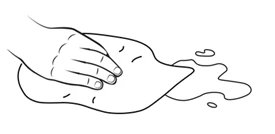
or if residue remains on the mixing surface (powder or liquid left on the mixing utensil, glass, or other object), clean up the spilled substance or residue preferably with a paper towel or disposable cloth using hot, soapy water or an antibacterial disinfectant.
Dispose of the paper towel together with the sachets (see above).
Step 15
Wash the glass and spoon or mixing utensil with
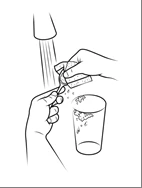
soap and hot water.
Step 16 Wash your hands thoroughly with soap and hot
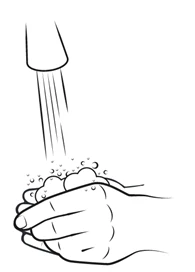
water to prevent possible contamination.
If you have any doubts about using this medicine, consult your doctor, pharmacist, or nurse.
4. Possible side effects
Like all vaccines, this vaccine may cause side effects, although not everybody will experience them.
Contact a doctor immediately if you experience the following serious side effects:
- severe allergic reactions causing swelling of the face or throat, hives, itchy rash, shortness of breath and/or drop in blood pressure and fainting.
Other side effects:
Very common side effects (may affect more than 1 in 10 people)
- tiredness
- headache
- stomach ache
- nausea or vomiting
- loss of appetite
Common side effects (may affect up to 1 in 10 people)
- diarrhoea
Uncommon side effects (may affect up to 1 in 100 people)
- fever
- joint pain
- dizziness
- flatulence (abdominal bloating)
- skin rash
- dry mouth
- constipation
- flatulence
- burping
- indigestion
- change in faeces
Rare side effects (may affect up to 1 in 1,000 people):
- chills
Additional side effects in children and adolescents
Based on clinical studies, the type of adverse reactions is expected to be similar in children and adults. Some adverse reactions have been more common in children than in adults, such as tiredness, stomach ache, vomiting, loss of appetite and fever.
Reporting of side effects
If you experience any side effect, including those not listed in this leaflet, talk to your doctor, pharmacist or nurse. You can also report side effects directly via the national reporting system listed in Annex V. By reporting side effects, you can help provide more information on the safety of this medicine.
5. How to store Vaxchora
Keep this vaccine out of the sight and reach of children.
Do not use this vaccine after the expiry date stated on the carton. The expiry date refers to the last day of that month.
Store in a refrigerator (2 °C – 8 °C).
Keep in the original packaging to protect the medicine from light and moisture.
This vaccine in its original packaging is stable for up to 12 hours at 25 °C. After this period, the vaccine must be used immediately or discarded. Avoid exposing Vaxchora to temperatures above 25 °C.
Do not use this vaccine if you notice that the sachets are damaged; contact your doctor, pharmacist, or nurse for a replacement dose.
This medicine contains genetically modified organisms. Follow local biosafety guidelines for unused medicine or waste derived from this medicine. Ask your doctor, pharmacist, or nurse how to dispose of medicines you no longer use or waste materials from medicines.
6. Package contents and other information
What Vaxchora contains
- Each dose contains from 4 × 10 to 2 × 10 live cells of the Vibrio cholerae CVD 103-HgR strain.
- The other components are sucrose, hydrolysed casein, ascorbic acid, lactose, sodium bicarbonate and sodium carbonate (see section 2: Vaxchora contains lactose, sucrose and sodium).
- This vaccine contains genetically modified organisms (GMOs).
Produced using recombinant DNA technology.
Description of the appearance of Vaxchora and contents of the pack
One dose of effervescent powder and oral suspension powder for Vaxchora is supplied in a box containing two sachets. One sachet contains buffer, effervescent sodium bicarbonate powder, white to off-white in colour. The other sachet contains the oral suspension powder of the vaccine's active substance, white to beige in colour.
Marketing Authorisation Holder
Bavarian Nordic A/S, Philip Heymans Alle 3, DK-2900 Hellerup, Denmark.
Manufacturer
IL-CSM GmbH
Marie-Curie-Strasse 8
D-79539 Lörrach
Germany
Other sources of information
More detailed information on this medicinal product is available on the website of the European Medicines Agency: https://www.ema.europa.eu.