Varcodes
Italy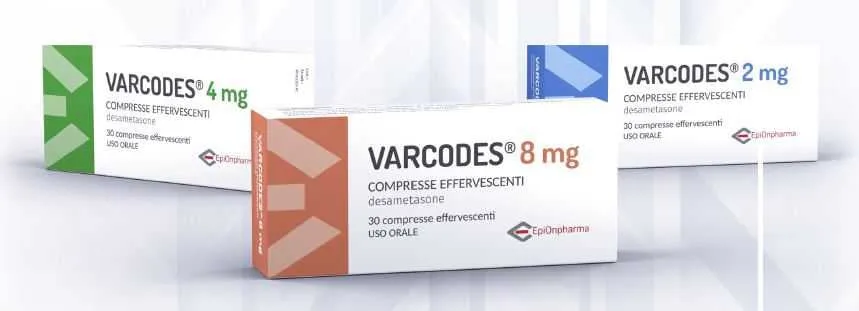
Table of Contents
Package Leaflet: Information for the User
Varcodes 2 mg effervescent tablets, 4 mg effervescent tablets, 8 mg effervescent tablets
Dexamethasone
Please read this leaflet carefully before taking this medicine because it contains important information for you.
- Keep this leaflet. You may need to read it again.
- If you have any questions, ask your doctor or pharmacist.
- This medicine has been prescribed for you only. Do not give it to others, even if their symptoms are the same as yours, because it could be harmful.
- If you experience any side effect, including those not listed in this leaflet, contact your doctor or pharmacist. See section 4.
Contents of this leaflet
- What Varcodes is and what it is used for
- What you need to know before taking Varcodes
- How to take Varcodes
- Possible side effects
- How to store Varcodes
- Contents of the pack and other information
1. What Varcodes is and what it is used for
Varcodes belongs to a group of medicines called corticosteroids.
Corticosteroids are hormones that occur naturally in the body and help maintain good health.
Supplementing the body's natural corticosteroids with corticosteroid medicines such as dexamethasone is an effective way
to treat various diseases involving inflammation in the body. Dexamethasone
reduces inflammation, which otherwise could worsen your condition. Take this medicine
exactly as prescribed by your doctor.
This medicine is indicated for the treatment in adults of a wide variety of disorders responsive to glucocorticoid therapy and for the control of cerebral edema in association with other therapies.
2. What you should know before taking Varcodes
Do not take Varcodes:
- if you are allergic (hypersensitive) to dexamethasone or to any of the other ingredients of this medicine (listed in section 6).
- if you have a systemic infection (unless you are receiving specific treatment for such infection)
- if you have a systemic fungal infection
- if you have gastric or duodenal ulcer
- if you have a parasitic infection (worms) following travel to a tropical area
- if you have been administered a live viral vaccine
- if you are breastfeeding
Warnings and precautions
Talk to your doctor or pharmacist before taking Varcodes:
- if you have ever had severe depression or manic depression (bipolar disorder), or if you have experienced episodes of depression before or during treatment with steroid medicines such as dexamethasone.
- if any of your close relatives have had these conditions
Mental health problems during treatment with Varcodes
Mental health problems may occur during treatment with steroids such as dexamethasone.
- These conditions can be serious.
- They usually begin within a few days or weeks after starting treatment with the medicine.
- They are more likely to occur at high doses.
- Most of these problems resolve when the dose is reduced or treatment is discontinued. However, if symptoms occur, they may require medical treatment.
Contact your doctor if you (or someone taking the medicine) experience any symptoms of mental health problems. This is particularly important if you feel depressed or have thoughts of suicide. In some cases, mental health problems have occurred when doses are reduced or treatment stopped.
Talk to your doctor before taking this medicine if:
- you have a bacterial or viral infection (such as hepatitis, poliomyelitis)
- you have kidney or liver problems
- you have high blood pressure, heart disease, or have recently had a heart attack
- you have diabetes or a family history of diabetes
- you have osteoporosis (thinning of the bones), especially if you are a post-menopausal woman
- you have previously experienced muscle weakness with this or other steroids
- you have glaucoma (increased eye pressure) or a family history of glaucoma
- you have severe myasthenia gravis (a condition causing muscle weakness)
- you have a bowel disorder (ulcerative colitis or diverticulitis), have recently had bowel surgery, or have a stomach ulcer (peptic or gastrointestinal ulcer)
- you have psychiatric disorders or a psychiatric illness that has been worsened by this type of medicine
- you have epilepsy (a condition characterized by repeated seizures or convulsions)
- you have migraine
- your thyroid gland is underactive (hypothyroidism)
- you have a parasitic infection ( worms ) or an internal fungal infection
- you have tuberculosis ( TB ) or have recently reacted to a tuberculosis vaccine
- you have septicemia
- you have a fungal infection of the eyes, or a wound or ulcer on the surface of the eye (corneal ulcer)
- you have cerebral malaria
- you have herpes ( herpes labialis or genital herpes )
- you have asthma
- you have been diagnosed with a suspected or confirmed adrenal gland tumour (pheochromocytoma)
The above conditions may influence the dose prescribed by your doctor, who may decide to administer other medicines simultaneously. The above conditions may be worsened by dexamethasone.
Additional important information about taking the medicine
- Consult your doctor if you need to stop treatment. Stopping treatment must be done gradually.
- Taking this medicine may increase your risk of getting an infection. It may also mask the symptoms of an existing or developing infection and make it more difficult to detect infections. If you develop an infection while taking this medicine, consult your doctor.
- Inform your doctor that you are taking or have taken Varcodes if you experience an accident, illness, or undergo surgery (including dental procedures) during or after treatment.
- Inform your doctor if you are given a vaccine (especially a 'live virus' vaccine), as it may not be effective or you may have an increased risk of contracting an infection from a 'live' vaccine.
- If you are undergoing an allergy test, a suppression test (a test for hormone levels), or a test for infection, you must inform the person performing the test that you are taking Varcodes, as it may interfere with the results.
- For those engaged in sports: using the medicine without therapeutic need constitutes doping and may lead to a positive anti-doping test.
- Your doctor may decide to perform regular monitoring while you are taking Varcodes. These checks may be more frequent if you have other health problems (such as diabetes or kidney problems) or if you are elderly, as adverse effects may be more severe.
- If you are taking the medicine for a long period, you should have regular check-ups (every 3 months).
- If you are taking high doses, your doctor may monitor your blood potassium levels. Your doctor may reduce the amount of salt in your diet and prescribe potassium supplementation while you are taking this medicine.
Varcodes and viral infections
- It is important that while you are taking the medicine, you avoid contact with anyone who has chickenpox, shingles, or measles. Contact your doctor immediately if you think you have been exposed to any of these diseases.
- Inform your doctor if you have ever had infectious diseases such as measles or chickenpox, and if you have been vaccinated against these diseases in the past.
Taking other medicines and Varcodes
Tell your doctor or pharmacist if you are taking, have recently taken, or might take any other medicines.
If you are taking any of the following medicines, you must consult your doctor before taking Varcodes:
- anticoagulant medicines that thin the blood (e.g., warfarin, coumarin)
- aspirin or NSAIDs (non-steroidal anti-inflammatory drugs) such as indometacin
- medicines used to treat diabetes
- medicines used to treat high blood pressure
- diuretics
- injectable amphotericin B
- phenytoin, carbamazepine (medicines used to treat epilepsy)
- rifabutin, rifampicin (antibiotics used to treat tuberculosis)
- antacids or charcoal
- barbiturates (medicines used to promote sleep and relieve anxiety)
- aminoglutethimide (anti-cancer treatment)
- carbenoxolone (used in the treatment of gastric ulcers)
- ephedrine (nasal decongestant)
- acetazolamide (used for glaucoma and epilepsy)
- hydrocortisone, cortisone, and other corticosteroids
- ketoconazole (for fungal infections)
- ritonavir (for HIV)
- antibiotics, including erythromycin
- cholestyramine (for high cholesterol levels)
- oestrogen hormones, including the contraceptive pill
- tetracosactide (used in testing adrenal function)
- sulpiride (used to calm emotions)
- cyclosporine (used to prevent transplant rejection)
- thalidomide
- praziquantel (given for worm infections)
- isoniazid for tuberculosis
Pregnancy, breastfeeding and fertility
If you are pregnant, think you may be pregnant, are planning to become pregnant, or are breastfeeding, consult your doctor or pharmacist before taking this medicine.
Varcodes may be prescribed during pregnancy only if the benefits outweigh the risks to the mother and child, particularly during the first trimester. If you become pregnant while using this product, inform your doctor immediately.
Infants born to mothers who have been treated with substantial doses of Varcodes during pregnancy should be carefully monitored for signs of reduced adrenal gland function.
Breastfeeding
Do not use Varcodes if you are breastfeeding, because Varcodes is excreted in breast milk.
Driving and using machines
Varcodes has no effect on the ability to drive vehicles or use machinery.
Important information about certain excipients
Varcodes 2 mg effervescent tablets
This medicine contains 14.96 mg of sodium (a component of common salt) per tablet.
This is equivalent to 0.75% of the maximum daily recommended dietary intake for an adult.
This medicine contains 0.06 mg of sunset yellow per tablet. This excipient may cause allergic reactions.
Varcodes 4 mg effervescent tablets
This medicine contains 29.95 mg of sodium (a component of common salt) per tablet.
This is equivalent to 1.5% of the maximum daily recommended dietary intake for an adult.
This medicine contains 0.12 mg of sunset yellow per tablet. This excipient may cause allergic reactions.
Varcodes 8 mg effervescent tablets
This medicine contains 59.88 mg of sodium (a component of common salt) per tablet.
This is equivalent to 3% of the maximum daily recommended dietary intake for an adult.
This medicine contains 0.24 mg of sunset yellow per tablet. This excipient may cause allergic reactions.
3. How to take Varcodes
Always take this medicine exactly as instructed by your doctor. If you have any doubts, consult your
doctor or pharmacist.
Varcodes is for oral use only. Your doctor will prescribe the most appropriate dose for your condition.
The tablets should be taken as a drink, after dissolving them in a glass of water.
Take the tablets as a single daily dose each morning, unless otherwise directed by your doctor.
The recommended dose is:
Adults:
The recommended dose of dexamethasone is 0.5 mg to 10 mg per day. If your doctor considers that you need
to take less than 2 mg per day, a different dexamethasone-containing product to Varcodes will be prescribed.
If Varcodes is administered as part of certain hospital tests, the recommended dose is 2 mg for a
short period of time.
If you take more Varcodes than you should
In case of accidental overdose, contact your doctor immediately or go to the nearest hospital.
If you forget to take Varcodes
Do not take a double dose to make up for the missed dose.
If you stop taking Varcodes
Do not stop taking this medicine abruptly. If treatment needs to be discontinued, follow your doctor’s advice, who will gradually reduce the dose until stopping completely.
Symptoms that have been reported when treatment was stopped too quickly include low blood pressure and, sometimes, relapse of the disease for which the medicine was prescribed.
A withdrawal syndrome may also occur, including fever, muscle and joint pain, inflammation of the nasal mucosa (rhinitis), weight loss, itching, and eye inflammation (conjunctivitis).
If you have any questions about the use of this medicine, consult your doctor or pharmacist.
4. Possible side effects
Like all medicines, this medicine can cause side effects, although not everybody gets them.
Tell your doctor immediately if you experience serious mental health problems. These may affect people taking medicines like Varcodes. These problems include:
- feelings of depression, including suicidal thoughts
- hypersensitivity (mania) or mood swings
- feelings of anxiety, sleep problems, difficulty thinking or confusion, and memory loss
- perceiving, seeing or hearing things that are not real, having strange and frightening thoughts, changes in behaviour, or feeling isolated.
Contact your doctor immediately or go to hospital immediately if any of the following side effects occur:
- red, lumpy rash
- difficulty breathing
- swelling of the face, mouth, lips or eyelids
Other side effects may include:
- mental health problems: feeling dependent, severe headache with visual disturbances (related to treatment withdrawal), worsening of schizophrenia (where you may perceive, see or hear things that are not real, become withdrawn, or have false beliefs or suspicions)
- stomach and intestinal problems: nausea, vomiting, hiccups, increased appetite, stomach discomfort, abdominal bloating, inflammation and ulcers in the oesophagus, heartburn, bleeding ulcers, inflammation of the pancreas (with back and abdominal pain), intestinal perforation, especially if you have inflammatory bowel disease, unusual fat deposits
- metabolic and electrolyte problems: weight gain, electrolyte imbalance, fluid retention in the body, loss of potassium due to low levels of carbon dioxide (hypokalemic alkalosis), loss of protein and calcium imbalance, increased need for diabetic medications, increased cholesterol levels
- heart and blood problems: blood clots, congestive heart failure in susceptible individuals, rupture of the heart muscle (especially if you recently had a heart attack), high blood pressure, increased or decreased levels of red and white blood cells, inflammation and thickening of veins or arteries
- muscle, bone and skin problems: thinning of the bones, with increased risk of fractures, bone diseases, ruptured tendons, muscle atrophy, weakness, increased body hair (especially in women), slow wound healing, fragile thin skin, specific skin markings, bruising, redness and inflammation of the skin, stretch marks, prominent swollen capillaries, acne, increased sweating, altered reaction to skin tests, skin rashes, hair thinning
- immune system disorders: mucus buildup, increased risk of infections, reactivation of tuberculosis if previously contracted, blood disorders due to infection
- eye problems: cataract, increased pressure in the eye, eye swelling, thinning of ocular membranes, worsening of existing eye infections, protrusion of the eyeballs
- reproductive system problems: irregular or absent menstrual periods, impotence
- hormonal problems: impaired hormonal regulation, slowed growth in children and adolescents, swelling and weight gain in the body and face (Cushingoid state)
- nervous system problems: seizures and worsening of epilepsy, dizziness, headache
- other general effects: changes in drug effectiveness following stress, trauma, surgery or illness; withdrawal syndrome (fever, muscle and joint pain, inflammation of eyes or nose, itching and weight loss)
Reporting of side effects
If you experience any side effect, including those not listed in this leaflet, talk to your doctor or pharmacist. You can also report side effects directly via the national reporting system at https://www.aifa.gov.it/content/segnalazioni-reazioni-avverse
By reporting side effects, you can help provide more information on the safety of this medicine.
5. How to store Varcodes
Keep this medicine out of the sight and reach of children.
Store at a temperature not exceeding 25°C.
Keep in the original packaging to protect the medicine from moisture.
Do not use this medicine after the expiry date which is stated on the blister and carton after "Exp". The expiry date refers to the last day of the month.
Do not dispose of any medicine via wastewater or household waste. Ask your pharmacist how to dispose of medicines you no longer use. This will help protect the environment.
What Varcodes contains
The active substance is dexamethasone.
Each 2 mg effervescent tablet contains 2 mg of dexamethasone (as dexamethasone sodium phosphate).
Each 4 mg effervescent tablet contains 4 mg of dexamethasone (as dexamethasone sodium phosphate).
Each 8 mg effervescent tablet contains 8 mg of dexamethasone (as dexamethasone sodium phosphate).
The other components are: sodium bicarbonate, sodium citrate 1.5 hydrate, povidone K 30, sodium saccharin, sodium benzoate, orange yellow S (E110).
Description of the appearance of Varcodes and contents of the pack
Varcodes 2 mg effervescent tablets are salmon-coloured, oblong tablets.
Varcodes 4 mg effervescent tablets are salmon-coloured, round, biconvex tablets.
Varcodes 8 mg effervescent tablets are salmon-coloured, round, biconvex tablets, with '8' engraved on one side.
Varcodes is available in blisters containing 30 effervescent tablets in PA/Alu/PVC-Al blisters.
Not all pack sizes may be marketed.
Marketing Authorization Holder
EPIONPHARMA GROUP S.R.L.
Via Leone 2 – Centro Commerciale
83025 Montoro (AV)
Manufacturer
All manufacturing stages:
RAFARM S.A.
Thesi Pousi-Xatzi, Agiou Louka Street, Paiania, AttiKi, TK 19002, Greece
Secondary packaging and batch release:
La.Fa.Re. S.r.l.
Via Sacerdote Benedetto Cozzolino 77
80056 Ercolano (NA) - Italy
This leaflet was last updated on