Valdoxan
Italy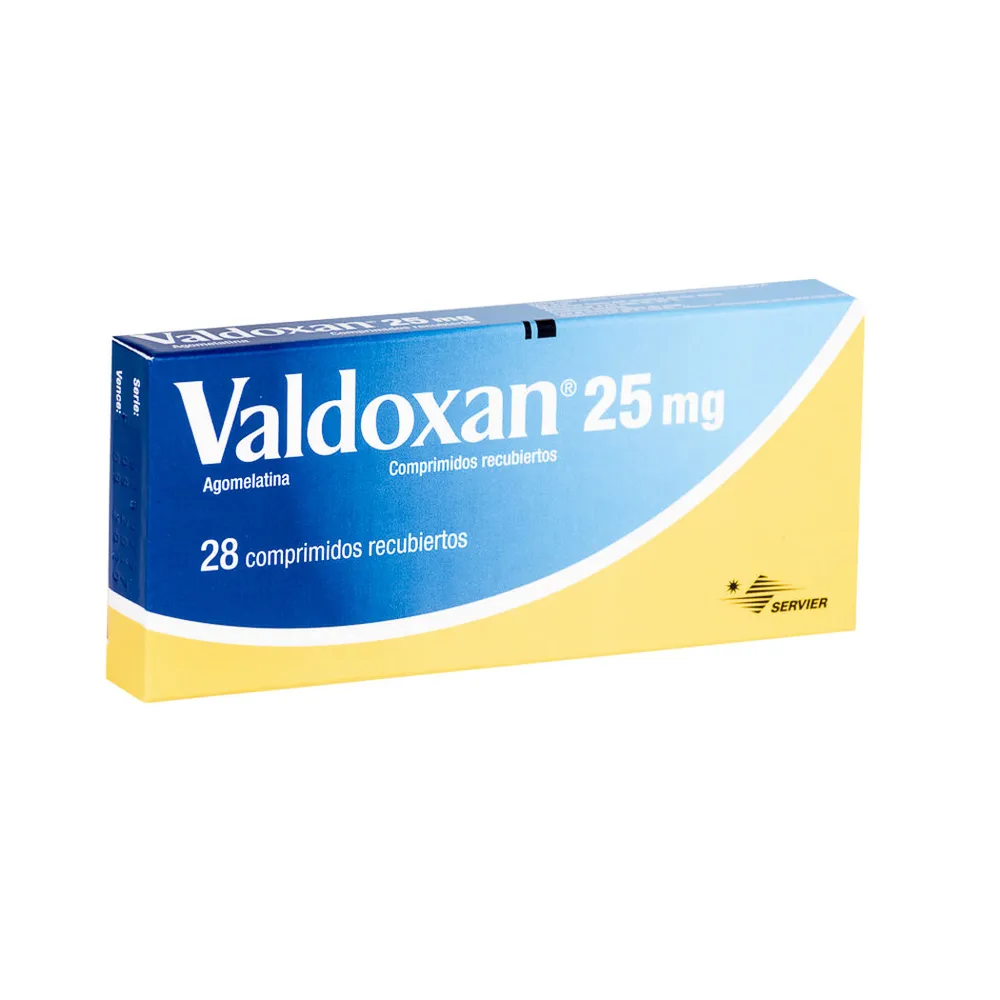
Table of Contents
Package leaflet: Information for the patient
Valdoxan 25 mg film-coated tablets
agomelatine
Please read all of this leaflet carefully before you start taking this medicine, because it contains
important information for you.
Keep this leaflet. You may need to read it again.
If you have any questions, ask your doctor or pharmacist.
This medicine has been prescribed for you only. Do not give it to other people, even if their symptoms are the same as yours, because it could be harmful.
If you experience any side effect, including those not listed in this leaflet, tell your doctor or pharmacist. See section 4.
Contents of this leaflet:
- What Valdoxan is and what it is used for
- What you need to know before taking Valdoxan
- How to take Valdoxan
- Possible side effects
- How to store Valdoxan
- Contents of the pack and other information
1. What Valdoxan is and what it is used for
Valdoxan contains the active substance agomelatine. It belongs to a group of medicines called
antidepressants. Valdoxan has been prescribed to you for the treatment of depression.
Valdoxan is used in adults.
Depression is a persistent mood disorder that interferes with everyday life. Symptoms of depression vary from person to person, but often include deep sadness, feelings of low self-worth, loss of interest in favourite activities, sleep disturbances, a sensation of slowing down, feelings of anxiety, and weight changes.
The expected benefits from Valdoxan are the gradual reduction and elimination of symptoms related to your depression.
2. What you need to know before taking Valdoxan
Do not take Valdoxan
- if you are allergic to agomelatine or to any of the excipients of this medicine (listed in section 6),
- if your liver is not functioning properly (hepatic impairment),
- if you are taking fluvoxamine (another medicine used in the treatment of depression) or ciprofloxacin (an antibiotic).
Warnings and precautions
Valdoxan may not be suitable for you for certain reasons:
-
If you are taking medicines that affect liver function. Ask your doctor for advice on which medicines these are.
-
If you are obese or overweight, consult your doctor.
-
If you have diabetes, consult your doctor.
-
If you have elevated liver enzyme levels before starting treatment, your doctor will decide whether Valdoxan is suitable for you.
-
If you have bipolar disorder, or if you have had or develop manic symptoms (a period of abnormally increased excitement and emotions), discuss this with your doctor before starting or continuing treatment with this medicine (see also “Possible side effects” in section 4).
-
If you suffer from dementia, your doctor will perform an individual assessment to determine whether taking Valdoxan is safe for you.
During treatment with Valdoxan:
What to do to avoid potential serious liver problems:
- Your doctor must ensure that your liver is functioning adequately before starting treatment. Some patients may experience increased levels of liver enzymes in the blood during treatment with Valdoxan. Therefore, regular monitoring must be carried out according to the following schedule:
| Before starting or in case of dose increase | Approximately 3 weeks | Approximately 6 weeks | Approximately 12 weeks | Approximately 24 weeks | |
| Blood tests |
Based on the evaluation of these tests, your doctor will decide whether you can start or continue taking Valdoxan (see also "How to take Valdoxan" in section 3).
Be alert for signs and symptoms that may indicate your liver is not functioning properly.
- If you notice any of the following signs or symptoms of liver problems: dark-coloured urine, pale-coloured stools, yellowing of the skin/eyes, pain in the upper right side of the stomach, unusual tiredness (especially if associated with the other symptoms listed above), contact a doctor immediately. The doctor may advise you to stop treatment with Valdoxan.
The effect of Valdoxan has not been documented in patients aged 75 years or older. Therefore, Valdoxan must not be used in these patients.
Suicidal thoughts and worsening of depression
If you are depressed, you may sometimes have thoughts of harming yourself or committing suicide. These thoughts may increase when you first start treatment with antidepressants, as these medicines take time to become effective—usually about two weeks, but sometimes longer.
You may be more likely to have such thoughts:
- if you have previously had thoughts of suicide or self-harm,
- if you are a young adult. Clinical studies have shown an increased risk of suicidal behaviour in young adults (under 25 years of age) with psychiatric disorders who were treated with an antidepressant. If at any time you experience thoughts of harming yourself or committing suicide, contact your doctor or go to a hospital immediately.
It may help to inform a relative or close friend that you are depressed and ask them to read this leaflet. You may wish to ask them to inform you if they think your depression is worsening or if they are concerned about changes in your behaviour.
Children and adolescents
Valdoxan is not recommended for children under 7 years of age due to lack of information. No data are available.
Valdoxan must not be used in children and adolescents aged between 7 and 17 years, as safety and efficacy have not been established.
Other medicines and Valdoxan
Inform your doctor or pharmacist if you are taking, have recently taken, or might take any other medicines.
You must not take Valdoxan together with certain medicines (see also "Do not take Valdoxan" in section 2): fluvoxamine (another medicine used to treat depression), ciprofloxacin (an antibiotic), as they may alter the expected blood levels of agomelatine.
Inform your doctor if you are taking any of the following medicines: propranolol (a beta-blocker used to treat hypertension, i.e. high blood pressure), enoxacin (an antibiotic).
Make sure to inform your doctor if you smoke more than 15 cigarettes per day.
Valdoxan and alcohol
It is not advisable to drink alcohol while being treated with Valdoxan.
Pregnancy and breastfeeding
If you are pregnant, suspect you may be pregnant, planning to become pregnant, or are breastfeeding, consult your doctor or pharmacist before taking this medicine.
Breastfeeding must be discontinued if you take Valdoxan.
Driving and using machines
You may experience dizziness or drowsiness, which could affect your ability to drive or operate machinery. Make sure your reactions are normal before driving or operating machinery.
Valdoxan contains lactose.
If your doctor has diagnosed you with an intolerance to certain sugars, contact him or her before taking this medicine.
Valdoxan contains sodium.
Valdoxan contains less than 1 mmol of sodium (23 mg) per tablet, i.e. essentially “sodium-free.”
3. How to take Valdoxan
Take this medicine exactly as directed by your doctor or pharmacist. If you have any doubts, consult your doctor or pharmacist.
The recommended dose of Valdoxan is one tablet (25 mg) taken at bedtime. In some cases, your doctor may prescribe a higher dose (50 mg), which corresponds to two tablets taken together at bedtime.
Method of administration
Valdoxan is for oral use. Swallow the tablet with a glass of water. Valdoxan may be taken with or without food.
Duration of treatment
In most patients with depression, Valdoxan begins to act on depressive symptoms within two weeks of starting treatment.
Depression should be treated for a sufficient period of at least 6 months to ensure resolution of symptoms.
Your doctor may continue to prescribe Valdoxan after you feel better to prevent recurrence of depression.
If you have kidney problems, your doctor will perform an individual assessment to determine whether Valdoxan is safe for you.
Liver function monitoring (see also section 2):
Your doctor may order laboratory tests to check your liver function before starting treatment and periodically thereafter, typically after 3 weeks, 6 weeks, 12 weeks, and 24 weeks of treatment.
If your doctor increases your dose to 50 mg, laboratory tests should be performed at the start of the new dosage and then periodically during treatment, usually after 3 weeks, 6 weeks, 12 weeks, and 24 weeks. After that, tests will be performed if your doctor considers it necessary.
Do not take Valdoxan if your liver is not functioning properly.
Switching from an antidepressant (SSRI/SNRI) to Valdoxan
If your doctor is switching your previous antidepressant treatment (an SSRI or SNRI) to Valdoxan, they will advise you on how to discontinue the previous treatment when starting Valdoxan.
Even if the dose of the previous antidepressant is gradually reduced, you may experience withdrawal symptoms for several weeks after stopping.
Withdrawal symptoms may include: dizziness, numbness, sleep disturbances, agitation or anxiety, headache, nausea, malaise, and tremor. These effects are generally mild to moderate and resolve spontaneously within a few days.
If you start taking Valdoxan while tapering off the previous antidepressant, possible withdrawal symptoms should not be mistaken for a lack of early benefit from Valdoxan.
When starting Valdoxan, discuss with your doctor the best way to discontinue your previous antidepressant therapy.
If you take more Valdoxan than you should
If you have taken more Valdoxan than prescribed, or if, for example, a child has accidentally ingested the medicine, contact your doctor immediately.
Experience with Valdoxan overdose is limited, but reported symptoms include upper abdominal pain, somnolence, fatigue, agitation, anxiety, tension, dizziness, cyanosis, or malaise.
If you forget to take Valdoxan
Do not take a double dose to make up for a missed dose. Take the next dose at your usual time.
The calendar printed on the tablet blister pack will help you remember when you last took a Valdoxan tablet.
If you stop taking Valdoxan
Do not stop taking this medicine without consulting your doctor, even if you feel better.
If you have any questions about how to use this medicine, ask your doctor or pharmacist.
4. Possible side effects
Like all medicines, this medicine can cause side effects, although not everyone gets them.
Most side effects are mild or moderate. They usually occur within the first two weeks of treatment and are generally temporary.
Side effects include:
-
Very common side effects (may affect more than 1 in 10 people): headache
-
Common side effects (may affect up to 1 in 10 people): dizziness, drowsiness, difficulty sleeping (insomnia), nausea, diarrhoea, constipation, abdominal pain, back pain, fatigue, anxiety, abnormal dreams, increased levels of liver enzymes in the blood, vomiting, weight gain.
-
Uncommon side effects (may affect up to 1 in 100 people): migraine, tingling in the fingers and toes (paraesthesia), blurred vision, restless legs syndrome (a disorder characterised by an uncontrollable urge to move the legs), ringing in the ears, excessive sweating (hyperhidrosis), eczema, itching, urticaria, agitation, irritability, restlessness, aggressive behaviour, nightmares, mania/hypomania (see also “Warnings and precautions” in section 2), suicidal thoughts or behaviour, confusion, weight loss, muscle pain.
-
Rare side effects (may affect up to 1 in 1,000 people): severe skin rashes (erythematous rash), facial swelling (oedema) and angioedema (swelling of the face, lips, tongue and/or throat which may cause difficulty breathing or swallowing), hepatitis, yellowing of the skin or the whites of the eyes (jaundice), liver failure*, hallucinations, inability to stay still (due to physical and mental agitation), inability to completely empty the bladder.
* There have been some reported cases resulting in liver transplantation or with fatal outcome
Reporting of side effects
If you experience any side effect, including those not listed in this leaflet, talk to your doctor or pharmacist. You may also report side effects directly through the national reporting system listed in Annex V.
By reporting side effects, you can help provide more information on the safety of this medicine.
5. How to store Valdoxan
Keep this medicine out of the sight and reach of children.
Do not use this medicine after the expiry date stated on the carton and blister pack. The expiry date refers to the last day of the month.
This medicine does not require any special storage conditions.
Do not dispose of medicines via wastewater or household waste. Ask your pharmacist how to dispose of medicines you no longer use. This will help protect the environment.
6. Package contents and other information
What Valdoxan contains
- The active substance is agomelatine. Each film-coated tablet contains 25 mg of agomelatine.
- The other components are: monohydrate lactose, maize starch, povidone (K30), sodium starch glycolate type A, stearic acid, magnesium stearate, anhydrous colloidal silica, hypromellose, glycerol, macrogol (6000), yellow iron oxide (E172) and titanium dioxide (E171). Printing ink: shellac, propylene glycol and aluminium lake containing indigo carmine (E132).
Description of the appearance of Valdoxan and contents of the pack
Valdoxan 25 mg film-coated tablets (tablet) are oblong, yellow-orange, with the

company logo imprinted in blue on one side.
Valdoxan 25 mg tablets are available in calendar blister packs. The packs contain
14, 28, 56, 84 or 98 tablets. Packs containing 100 film-coated tablets for hospital use are also available.
Not all pack sizes may be marketed.
Marketing Authorization Holder
Les Laboratoires Servier
50, rue Carnot
92284 Suresnes cedex
France
Manufacturer
Les Laboratoires Servier Industrie
905, route de Saran
45520 Gidy
France
Servier (Ireland) Industries Ltd
Gorey road
Arklow – Co. Wicklow – Ireland
Anpharm Przedsiebiorstwo Farmaceutyczne S.A.
03-236 Warszawa
ul. Annopol 6B
Poland
Laboratorios Servier, S.L.
Avda de los Madroños, 33
28043 Madrid
Spain
For further information about this medicinal product, please contact the local representative of the marketing authorization holder.
België/Belgique/Belgien Lietuva
S.A. Servier Benelux N.V. UAB “SERVIER PHARMA”
Tél/Tel: +32 (0)2 529 43 11 Tel: +370 (5) 2 63 86 28
България Luxembourg/Luxemburg
Сервие Медикал ЕООД S.A. Servier Benelux N.V.
Тел.: +359 2 921 57 00 Tél/Tel: +32 (0)2 529 43 11
Česká republika Magyarország
Servier s.r.o. Servier Hungaria Kft.
Tel: +420 222 118 111 Tel.: +36 1 238 7799
Danmark Malta
Servier Danmark A/S V.J. Salomone Pharma Ltd
Tlf.: +45 36 44 22 60 Tel: + 356 21 22 01 74
Deutschland Nederland
Servier Deutschland GmbH Servier Nederland Farma B.V.
Tel: +49 (0)89 57095 01 Tel: +31 (0)71 5246700
Eesti Norge
Servier Laboratories OÜ Servier Danmark A/S
Tel:+ 372 664 5040 Tlf: +45 36 44 22 60
Eλλάδα Österreich
ΣΕΡΒΙΕ ΕΛΛΑΣ ΦΑΡΜΑΚΕΥΤΙΚΗ ΕΠΕ Servier Austria GmbH
Τηλ: +30 210 939 1000 Tel: +43 (1) 524 39 99
España Polska
Laboratorios Servier S.L. Servier Polska Sp. z o.o.
Tel: +34 91 748 96 30 Tel.: +48 (0) 22 594 90 00
France Portugal
Les Laboratoires Servier Servier Portugal, Lda
Tél: +33 (0)1 55 72 60 00 Tel.: +351 21 312 20 00
Hrvatska România
Servier Pharma, d. o. o. Servier Pharma SRL
Tel: +385 (0)1 3016 222 Tel: +4 021 528 52 80
Ireland Slovenija
Servier Laboratories (Ireland) Ltd. Servier Pharma d. o. o.
Tel: +353 (0)1 663 8110 Tel: +386 (0)1 563 48 11
Ísland Slovenská republika
Servier Laboratories Servier Slovensko spol. s r.o.
c/o Icepharma hf Tel:+421 (0) 2 5920 41 11
Sími: +354 540 8000
Italia Suomi/Finland
Servier Italia S.p.A. Servier Finland Oy
Tel: +39 06 669081 Puh /Tel: +358 (0)9 279 80 80
Κύπρος Sverige
C.A. Papaellinas Ltd. Servier Sverige AB
Τηλ: +357 22741741 Tel: +46 (0)8 522 508 00
Latvija
SIA Servier Latvia
Tel: +371 67502039
More detailed information on this medicinal product is available on the website of the European Medicines Agency: https://www.ema.europa.eu
Annex IV
Scientific conclusions and grounds for the variation of the terms
of the marketing authorization(s)
Scientific conclusions
Taking into account the evaluation by the Pharmacovigilance Risk Assessment Committee (PRAC) of the Periodic Safety Update Report (PSUR) for agomelatine, the scientific conclusions are as follows:
Based on the measures to prevent hepatotoxicity reported in guidelines/clinical practice and adequately described in the SmPC and Package Leaflet, and based on the contraindication to strong CYP1A2 inhibitors adequately indicated in the SmPC and Package Leaflet, and on the decreasing number of contraindication cases, the PRAC agreed that additional risk minimization measures can be removed from Annex II.D and the RMP.
Having reviewed the PRAC's recommendation, the CHMP agrees with the general conclusions and reasoning of the PRAC's recommendation.
Grounds for the variation of the terms of the marketing authorization(s)
Based on the scientific conclusions regarding agomelatine, the CHMP considers that the benefit-risk balance of the medicinal product(s) containing agomelatine remains unchanged, subject to the proposed modifications to the product information.
The CHMP recommends the variation of the terms of the marketing authorization(s).