Vafseo
Italy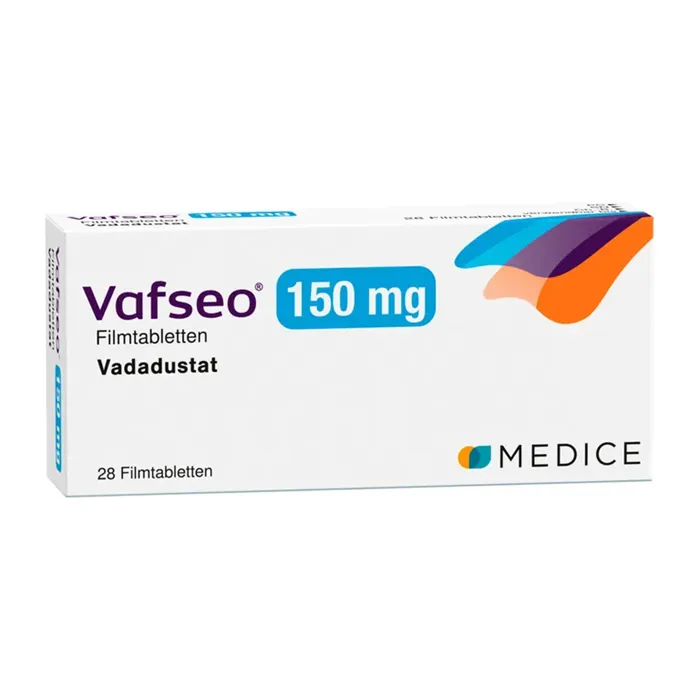
Table of Contents
- Patient Information Leaflet
- Vafseo 150 mg film-coated tablets, 300 mg film-coated tablets, 450 mg film-coated tablets
- 1. What Vafseo is and what it is used for
- 2. What you need to know before taking Vafseo
- 3. How to take Vafseo
- 4. Possible side effects
- 5. How to store Vafseo
- 6. Package contents and other information
Patient Information Leaflet
Vafseo 150 mg film-coated tablets, 300 mg film-coated tablets, 450 mg film-coated tablets
vadadustat
This medicinal product is under additional monitoring. This will allow for rapid identification of new safety information. You can help by reporting any side effects you experience while taking this medicine. See the end of section 4 for information on how to report side effects.
Please read this leaflet carefully before taking this medicine, as it contains important information for you.
- Keep this leaflet. You may need to read it again.
- If you have any questions, consult your doctor or pharmacist.
- This medicine has been prescribed for you only. Do not give it to others, even if their symptoms are the same as yours, as it may be harmful.
- If you experience any side effect, including those not listed in this leaflet, consult your doctor or pharmacist. See section 4.
Contents of this leaflet
- What Vafseo is and what it is used for
- What you need to know before taking Vafseo
- How to take Vafseo
- Possible side effects
- How to store Vafseo
- Contents of the pack and other information
1. What Vafseo is and what it is used for
Vafseo is a medicine that increases the amount of haemoglobin (the protein in red blood cells that carries oxygen around the body) and the number of red blood cells in the blood. It contains the active substance vadadustat.
Vafseo is indicated for the treatment of symptomatic anaemia (low levels of red blood cells or haemoglobin in the blood) associated with chronic kidney disease in adults on chronic maintenance dialysis. If haemoglobin levels or the number of red blood cells are low, cells in the body may not receive enough oxygen. Anaemia can cause symptoms such as tiredness, weakness, or shortness of breath.
How Vafseo works
Vafseo increases the level of a substance called "hypoxia-inducible factor" (HIF), which in turn increases red blood cell production when oxygen levels are low. By increasing HIF levels, Vafseo enhances red blood cell production and haemoglobin levels. This improves oxygen delivery in the body and may reduce the symptoms of anaemia.
2. What you need to know before taking Vafseo
Do not take Vafseo
- if you are allergic to vadadustat or to any of the other ingredients of this medicine (listed in section 6).
Warnings and precautions
Talk to your doctor or pharmacist before taking Vafseo if:
- you have had blood clots in the past and/or have risk factors for developing blood clots. This medicine increases red blood cell production, which may increase the risk of developing blood clots. Examples of risk factors include:
- being overweight
- diabetes
- heart disease
- prolonged sitting or lying down due to surgery or illness
- taking oral contraceptives. It is important to inform your doctor about any history of heart attack, stroke, blood clots, or risk factors so that they can determine whether this medicine is an appropriate treatment for your anaemia. Contact your doctor immediately if you suspect you may have developed a blood clot. A description of possible symptoms of blood clots is provided below in section 4;
- you have high blood pressure (hypertension). Vafseo may worsen high blood pressure. Therefore, it is very important that you take your prescribed medicines for high blood pressure and monitor your blood pressure frequently;
- you have severe liver disease;
- you have seizures or epileptic fits, or warning signs that seizures may occur, such as headache, irritability, fear, confusion, or unusual sensations;
- you are switching from high doses of an erythropoiesis-stimulating agent (ESA) to Vafseo, as you may require red blood cell transfusions or additional ESA while your doctor adjusts the dose of Vafseo. Talk to your doctor or pharmacist before taking Vafseo if you have any of the conditions listed above.
Improper use may cause an increase in the number of red blood cells and, consequently, make the blood thicker. This may lead to potentially life-threatening problems affecting the heart or blood vessels.
Blood tests
Chronic kidney disease can cause anaemia, which may increase the risk of heart and blood vessel problems, as well as death. It is therefore important to treat anaemia. Your doctor will perform regular checks of your haemoglobin levels in the blood.
Treatment may cause an increase in liver enzymes. Your doctor will perform regular blood tests to monitor these enzyme levels at the beginning of treatment and then once a month during the first 3 months of treatment.
Children and adolescents
Do not give Vafseo to children and adolescents under 18 years of age. There is insufficient information on its use in this age group.
Other medicines and Vafseo
Tell your doctor or pharmacist if you are taking, have recently taken, or might take any other medicines. Vafseo may affect the action of certain other medicines, and other medicines may affect the action of Vafseo.
In particular, inform your doctor or pharmacist if you have taken or are taking any of the following medicines:
- medicines used to reduce phosphate levels in the blood (called phosphate binders), such as sevelamer carbonate or calcium acetate, and medicines or supplements containing iron, such as ferric citrate, ferric oxyhydroxide sucrose complex, ferrous sulfate, sodium ferric citrate
- probenecid, a medicine used to treat gout
- sulfasalazine, a medicine used to treat severe intestinal inflammation and rheumatic joint inflammation
- medicines known as statins, used to reduce cholesterol levels in the blood (e.g., simvastatin, rosuvastatin, fluvastatin, or pitavastatin)
- furosemide or olmesartan, medicines used to treat high blood pressure
- nelfinavir, efavirenz, or zidovudine, medicines used to treat HIV
- topotecan, a medicine used to treat cancer
- famotidine, a medicine used to treat stomach ulcers
- methotrexate, a medicine used to treat cancer and autoimmune diseases
- sitagliptin, a medicine used to treat diabetes
- celecoxib, a medicine used to treat pain and inflammation
- warfarin, a medicine used to prevent blood clots
- phenytoin, a medicine used to treat epilepsy
- benzylpenicillin, a medicine used to treat infections
- teriflunomide, a medicine used to treat multiple sclerosis
- para-aminohippuric acid, a diagnostic substance used in kidney function tests
- bupropion, a medicine used to treat depression
Your doctor will decide how you should use these medicines during treatment with Vafseo.
Pregnancy, breastfeeding, and fertility
If you are pregnant, think you may be pregnant, planning to become pregnant, or breastfeeding, consult your doctor or pharmacist before taking this medicine.
It is not known whether vadadustat passes into breast milk.
Your doctor will decide whether you can take Vafseo during pregnancy or breastfeeding.
It is not known whether Vafseo affects fertility.
Driving and using machines
It is unlikely that Vafseo will affect your ability to drive or operate machinery.
Vafseo contains sodium
This medicine contains less than 1 mmol (23 mg) of sodium per film-coated tablet, i.e., essentially ‘sodium-free’.
3. How to take Vafseo
Take this medicine exactly as instructed by your doctor or pharmacist. If you have any doubts, consult your doctor or pharmacist.
Dosage
Your doctor will tell you what dose of Vafseo to take. Treatment with Vafseo usually starts at a daily dose of 300 mg. Subsequently, your doctor may increase or decrease the daily dose in increments or decrements of 150 mg. The minimum dose is 150 mg per day and the maximum dose is 600 mg per day.
Always take Vafseo exactly as prescribed by your doctor.
It is important that your doctor performs regular checks of your haemoglobin levels in the blood. Based on these results, your doctor may adjust the dose by increasing or decreasing it. If your haemoglobin level becomes too high, treatment will be stopped. Do not restart treatment until your doctor tells you to do so, and only use the dose prescribed by your doctor.
How to take Vafseo
- Vafseo film-coated tablets are taken orally with water.
- Swallow the Vafseo tablet whole, without chewing or crushing it.
- Take your dose of Vafseo once daily.
- Vafseo may be taken with food or on an empty stomach.
- You may take Vafseo at any time before, during, or after dialysis.
Phosphate binders and Vafseo
If you are taking phosphate binders that do not contain iron (such as sevelamer carbonate or calcium acetate) or medicines containing calcium, magnesium, or aluminium, you must take Vafseo at least 1 hour before or 2 hours after taking these medicines, because otherwise vadadustat will not be properly absorbed by the body. If the phosphate binder you are taking contains iron, refer to the information below.
Iron-containing products and Vafseo
If you are taking iron-containing medicines or phosphate binders containing iron, you must take Vafseo at least 1 hour before taking these products. If you do not follow these instructions, vadadustat will not be properly absorbed by the body.
If you take more Vafseo than you should
If you take more tablets or a higher dose than you should, contact your doctor immediately.
If you forget to take Vafseo
- Do not take a double dose to make up for a forgotten dose. Do not take two tablets in one day.
- If more than 24 hours (1 day) remain before your next scheduled dose: take the missed dose as soon as possible, then take your next dose on the next scheduled day.
- If less than 24 hours (1 day) remain before your next scheduled dose: skip the missed dose and take your next dose on the next scheduled day.
If you stop taking Vafseo
If you stop treatment with Vafseo, your anaemia may worsen. Do not stop taking this medicine unless instructed by your doctor.
If you have any questions about how to use this medicine, ask your doctor or pharmacist.
4. Possible side effects
Like all medicines, this medicine can cause side effects, although not everybody gets them.
Possible serious side effects
Contact your doctor immediately if any of the following occur:
Very common (may affect more than 1 in 10 people)
- high blood pressure (hypertension)
- blood clots (thromboembolic events), which may lead to:
- heart attack (myocardial infarction), with symptoms such as chest pain and/or pain in other parts of the body, dizziness, shortness of breath, nausea or vomiting, feeling of anxiety
- stroke (cerebrovascular accident), with symptoms such as sudden severe headache, seizures (epileptic attacks), loss of coordination, loss of balance
- blood clot in a blood vessel in the lungs (pulmonary embolism), with symptoms such as chest or upper back pain, difficulty breathing, coughing up blood
- blood clot in a vein, for example in the leg (known as deep vein thrombosis), with symptoms such as painful swelling and redness
- “mini stroke” (transient ischaemic attack), with symptoms such as speech and vision disturbances, and numbness or weakness of the face, arms and legs
- stenosis (arteriovenous fistula thrombosis and arteriovenous graft thrombosis), with symptoms such as bluish, prominent veins visible through the skin, similar to varicose veins.
Other possible side effects
Tell your doctor if any of the following side effects occur:
Very common (may affect more than 1 in 10 people)
- diarrhoea
Common (may affect up to 1 in 10 people)
- headache
- seizures
- low blood pressure (hypotension)
- hypersensitivity
- cough
- constipation
- nausea
- vomiting
- stomach pain in the upper abdomen
- increased liver enzymes
Uncommon (may affect up to 1 in 100 people)
- increased levels of bilirubin (a product of red blood cell breakdown) in the blood.
Reporting of side effects
If you get any side effects, including those not listed in this leaflet, talk to your doctor or pharmacist. You can also report side effects directly via the national reporting system referred to in Annex V. Reporting side effects can help provide more information on the safety of this medicine.
5. How to store Vafseo
Keep this medicine out of the sight and reach of children.
Do not use this medicine after the expiry date stated on the carton and blister after "Exp". The expiry date refers to the last day of that month.
This medicine does not require any special storage conditions.
Do not dispose of medicines via wastewater or household waste. Ask your pharmacist how to dispose of medicines you no longer use. This will help protect the environment.
6. Package contents and other information
What Vafseo contains
Vafseo 150 mg film-coated tablets
- The active substance is vadadustat. Each film-coated tablet contains 150 mg of vadadustat.
Vafseo 300 mg film-coated tablets
- The active substance is vadadustat. Each film-coated tablet contains 300 mg of vadadustat.
Vafseo 450 mg film-coated tablets
- The active substance is vadadustat. Each film-coated tablet contains 450 mg of vadadustat.
The other components are:
Tablet core
Microcrystalline cellulose (E 460), sodium starch glycolate, hypromellose (E 464), anhydrous colloidal silica (E 551), magnesium stearate. See section 2 “Vafseo contains sodium”.
Tablet coating
Polyvinyl alcohol (E 1203), macrogol (E 1521), talc (E 553b), titanium dioxide (E 171), iron oxide yellow (E 172) (only for 300 mg tablets), iron oxide red (E 172) and ferroso-ferric oxide (E 172) (both only for 450 mg tablets).
Description of the appearance of Vafseo and contents of the pack
Vafseo 150 mg film-coated tablets are round and white, with “VDT” engraved on one side and “150” on the other.
Vafseo 300 mg film-coated tablets are oval and yellow, with “VDT” engraved on one side and “300” on the other.
Vafseo 450 mg film-coated tablets are oval and pink, with “VDT” engraved on one side and “450” on the other.
Vafseo film-coated tablets are supplied in boxes containing 28 or 98 film-coated tablets in PVC/aluminum blisters.
Not all pack sizes may be marketed.
Marketing Authorisation Holder
Medice Arzneimittel Pütter GmbH & Co. KG
Kuhloweg 37
D-58638 Iserlohn
Germany
Tel +49 2371 937-0
Fax +49 2371 937-106
[email protected]
Manufacturer
Millmount Healthcare Limited
Block-7, City North Business Campus
Stamullen, Co. Meath, K32 YD60
Ireland
Medice Arzneimittel Pütter GmbH & Co. KG
Kuhloweg 37
58638 Iserlohn
Germany
For further information about this medicinal product, please contact the Marketing Authorisation Holder.
België/Belgique/Belgien Lietuva
MEDICE Arzneimittel Pütter GmbH & Co. KG MEDICE Arzneimittel Pütter GmbH & Co. KG
Tél/Tel: + 49 2371 937 0 Tel.: + 49 2371 937 0
България Luxembourg/Luxemburg
MEDICE Arzneimittel Pütter GmbH & Co. KG MEDICE Arzneimittel Pütter GmbH & Co. KG
Teл.: + 49 2371 937 0 Tél/Tel: + 49 2371 937 0
Česká republika Magyarország
MEDICE Arzneimittel Pütter GmbH & Co. KG MEDICE Arzneimittel Pütter GmbH & Co. KG
Tel: + 49 2371 937 0 Tel.: + 49 2371 937 0
Danmark Malta
MEDICE Nordic Denmark ApS MEDICE Arzneimittel Pütter GmbH & Co. KG
Tlf.: + 45 5786 2525 Tel: + 49 2371 937 0
Deutschland Nederland
MEDICE Arzneimittel Pütter GmbH & Co. KG MEDICE Arzneimittel Pütter GmbH & Co. KG
Tel.: + 49 2371 937 0 Tel: + 31 20 2622948
Eesti Norge
MEDICE Arzneimittel Pütter GmbH & Co. KG Medice Nordic Norway AS
Tel: + 49 2371 937 0 Tlf: + 47 69 31 11 11
Ελλάδα Österreich
MEDICE Arzneimittel Pütter GmbH & Co. KG MEDICE Arzneimittel Pütter GmbH & Co. KG
Τηλ: + 49 2371 937 0 Tel: + 49 2371 937 0
España Polska
MEDICE Arzneimittel Pütter GmbH & Co. KG MEDICE Arzneimittel Pütter GmbH & Co. KG
Tel: + 49 2371 937 0 Tel.: + 49 2371 937 0
France Portugal
MEDICE Arzneimittel Pütter GmbH & Co. KG MEDICE Arzneimittel Pütter GmbH & Co. KG
Tél: + 49 2371 937 0 Tel: + 49 2371 937 0
Hrvatska România
MEDICE Arzneimittel Pütter GmbH & Co. KG MEDICE Arzneimittel Pütter GmbH & Co. KG
Tel: + 49 2371 937 0 Tel: + 49 2371 937 0
Ireland Slovenija
MEDICE Arzneimittel Pütter GmbH & Co. KG MEDICE Arzneimittel Pütter GmbH & Co. KG
Tel: + 49 2371 937 0 Tel: + 49 2371 937 0
Ísland Slovenská republika
MEDICE Arzneimittel Pütter GmbH & Co. KG MEDICE Arzneimittel Pütter GmbH & Co. KG
Sími: + 49 2371 937 0 Tel: + 49 2371 937 0
Italia Suomi/Finland
MEDICE Arzneimittel Pütter GmbH & Co. KG MEDICE Arzneimittel Pütter GmbH & Co. KG
Tel: + 49 2371 937 0 Puh/Tel: + 49 2371 937 0
Κύπρος Sverige
MEDICE Arzneimittel Pütter GmbH & Co. KG MEDICE Nordic Sweden AB
Τηλ: + 49 2371 937 0 Tel: + 46 200898305
Latvija
MEDICE Arzneimittel Pütter GmbH & Co. KG
Tel: + 49 2371 937 0
Other sources of information
More detailed information on this medicinal product is available on the website of the European Medicines Agency, http://www.ema.europa.eu.