Ursoflor
Italy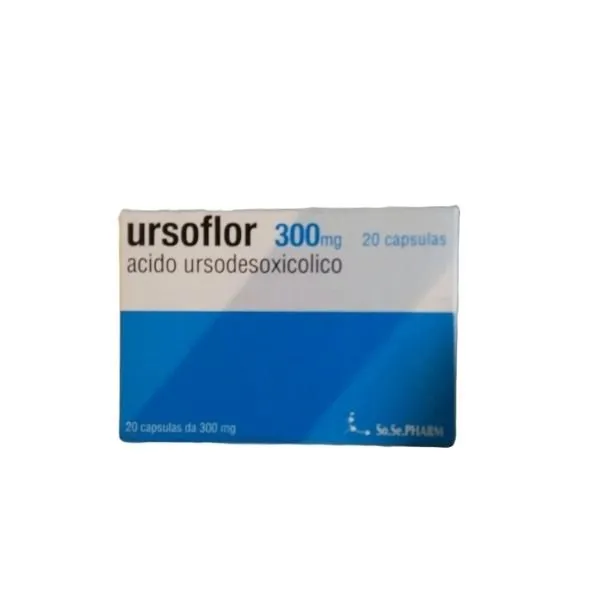
Table of Contents
- Patient Information Leaflet
- URSOFLOR 150 mg capsules, 300 mg capsules
- 1. What URSOFLOR is and what it is used for
- 2. What you need to know before taking URSOFLOR
- 3. How to take URSOFLOR
- 4. Possible side effects
- 5. How to store URSOFLOR
- 6. Package contents and other information
- Package leaflet: information for the patient
- URSOFLOR 450 mg prolonged-release tablets
- 1. What URSOFLOR is and what it is used for
- 2. What you should know before taking URSOFLOR
- 3. How to take URSOFLOR
- 4. Possible side effects
- 5. How to store URSOFLOR
- 6. Package contents and other information
Patient Information Leaflet
URSOFLOR 150 mg capsules, 300 mg capsules
ursodeoxycholic acid
Generic Medicine
Please read this leaflet carefully before taking this medicine, as it contains
important information for you.
- Keep this leaflet. You may need to read it again.
- If you have any questions, ask your doctor or pharmacist.
- This medicine has been prescribed for you only. Do not pass it on to others, even if they have the same symptoms as you, because it could be harmful.
- If you experience any adverse reactions, including those not listed in this leaflet, contact your doctor or pharmacist. See section 4.
Contents of this leaflet:
- What URSOFLOR is and what it is used for
- What you need to know before taking URSOFLOR
- How to take URSOFLOR
- Possible side effects
- How to store URSOFLOR
- Contents of the pack and other information
1. What URSOFLOR is and what it is used for
URSOFLOR contains the active substance ursodeoxycholic acid.
Ursodeoxycholic acid (UDCA) is one of the components of bile (bile acids), a solution produced by the liver that plays an important role in digestive processes. Ursodeoxycholic acid is able to solubilize cholesterol in bile.
URSOFLOR is used in the treatment of disorders related to bile production by the liver, reducing the formation of cholesterol stones and promoting the dissolution of existing stones, as well as in gastrointestinal disturbances caused by diseases affecting the ducts (biliary tract) that carry bile from the liver to the gallbladder (the organ that stores bile) and to the intestine (biliary dyspepsia).
2. What you need to know before taking URSOFLOR
Do not take URSOFLOR
- If you are allergic to the active substances or to any of the other ingredients of this medicine (listed in section 6);
- If you suffer from severe inflammation of the gallbladder (the bile storage organ) or of the bile ducts;
- If you have obstruction of the bile ducts;
- If you suffer from frequent, sudden, and severe abdominal pain due to gallstones in the gallbladder or bile ducts;
- If you have gallstones visible on abdominal X-ray;
- If you have reduced gallbladder contractility;
- If you are pregnant (see Pregnancy);
- If you have lesions in the inner lining of the stomach and/or the first part of the intestine (gastric and duodenal ulcers). URSOFLOR must not be given to pediatric patients (see section 3).
Warnings and precautions
Talk to your doctor or pharmacist before taking URSOFLOR:
- If you suffer from diarrhea: your doctor will advise you to reduce the dose, and if diarrhea persists, to stop treatment;
- If you are undergoing therapy for dissolution of gallstones: your doctor will assess the effectiveness of the drug by performing gallbladder examinations or ultrasound scans every 6 months;
- If you suffer from frequent biliary colic, biliary tract infections, severe pancreatic disorders, or intestinal disorders that may interfere with the normal bile acid cycle: it is advisable to avoid using this medicine;
- During the first 3 months of treatment with URSOFLOR: your doctor will monitor liver function through laboratory tests (liver enzyme levels in the blood), initially every 4 weeks and then every 3 months;
- If you are using URSOFLOR for the treatment of cholesterol gallstones: your doctor will monitor your gallbladder by means of an X-ray examination with orally ingested contrast agent 6–10 months after starting treatment, together with an ultrasound check;
- If the gallbladder cannot be visualized by X-ray imaging, in case of radiolucent stones, reduced gallbladder contractility, or frequent episodes of biliary colic: you must not use URSOFLOR (see section 2 "Do not take URSOFLOR");
- If you suffer from a condition known as primary biliary cirrhosis (chronic inflammation of the bile ducts within the liver) in its advanced stage: in very rare cases, the use of URSOFLOR may lead to decompensation of liver cirrhosis. Rarely, at the beginning of treatment, a worsening of symptoms of primary biliary cirrhosis may occur, for example increased pruritus: in such cases, consult your doctor, who will advise you on how to reduce the dose and will monitor your therapy;
- Women undergoing treatment with URSOFLOR for gallstone dissolution must use a non-hormonal contraceptive method, as hormonal contraceptives may increase the risk of gallstone formation (see section 2 "Other medicines and URSOFLOR" and "Pregnancy, breastfeeding and fertility"); The use of URSOFLOR for gallstone dissolution is recommended only if you have cholesterol-based gallstones (cholesterol stones), which are easily identifiable as radiolucent (not visible on X-ray), small in size, and associated with good gallbladder function. See also "Do not take URSOFLOR". Children The use of URSOFLOR in pediatric patients is contraindicated (see sections 2 "Do not take URSOFLOR" and 3).
Other medicines and URSOFLOR
Tell your doctor or pharmacist if you are taking, have recently taken, or might take any other medicines.
Inform your doctor if you are taking:
- Cyclosporine: concomitant use with URSOFLOR may affect blood levels of this substance. Your doctor will monitor your therapy and adjust doses if necessary;
- Ciprofloxacin (antibiotic): concomitant use with URSOFLOR may reduce blood levels of this substance;
- Nitrendipine (antihypertensive): concomitant use with URSOFLOR may reduce blood levels of this substance. Your doctor will closely monitor your therapy and may increase the dose of nitrendipine;
- Dapsone (a drug used in the treatment of leprosy): a reduction in the effectiveness of this medicine may occur;
- Rosuvastatin (a drug used to treat hypercholesterolemia): an increase in blood levels of this drug may occur. Do not take URSOFLOR with:
- Cholestyramine and colestipol (drugs used to lower blood cholesterol levels) or antacids containing aluminum hydroxide and/or smectite (aluminum oxide): these may impair the effectiveness and reduce the effects of URSOFLOR. If co-administration is necessary, inform your doctor, who will determine the appropriate dosing schedule;
- Substances that promote cholesterol excretion via bile (estrogens, hormonal contraceptives, certain drugs that reduce blood fat levels);
- Medicines that may be potentially harmful to the liver;
- Estrogens (hormones) and clofibrate (a substance that reduces blood cholesterol levels): these may increase cholesterol production by the liver and thereby increase the risk of gallstone formation (biliary lithiasis), which is a possible adverse effect associated with URSOFLOR use. Your doctor will evaluate whether it is safe to take them together.
URSOFLOR with food and drink
URSOFLOR may be taken regardless of meals, either during or after eating (see section 3).
Pregnancy, breastfeeding and fertility
If you are pregnant, think you may be pregnant, are planning a pregnancy, or are breastfeeding, consult your doctor or pharmacist before taking this medicine.
Pregnancy
There is limited data on the use of ursodeoxycholic acid in pregnant women. Animal studies have shown that ursodeoxycholic acid has toxic effects during the early stages of pregnancy.
Do not use URSOFLOR during pregnancy (see section 2 "Do not take URSOFLOR"). Your doctor will assess whether the potential benefits of its use outweigh the possible risks.
Women of childbearing potential should use URSOFLOR only if using a reliable contraceptive method: non-hormonal contraceptives or those with low estrogen content are recommended. However, in patients taking ursodeoxycholic acid for gallstone dissolution, an effective non-hormonal contraceptive method must be used, as hormonal oral contraceptives may increase the risk of gallstone formation (biliary lithiasis).
Pregnancy must be ruled out before starting treatment.
Breastfeeding
The amount of ursodeoxycholic acid that passes into breast milk during lactation is very low, and it is unlikely that adverse effects will occur in breastfed infants.
Fertility
In animal studies, ursodeoxycholic acid did not show any effect on fertility.
No data are available in humans.
Driving and using machines
This medicine does not affect or has negligible effects on the ability to drive vehicles or operate machinery.
3. How to take URSOFLOR
Take this medicine exactly as directed by your doctor or pharmacist. If
you have any doubts, consult your doctor or pharmacist.
For long-term use to reduce the tendency to form gallstones (lithogenic
characteristics of bile): the usual daily dose is 5–10 mg/kg of body weight; in most
cases, the dose ranges between 300 mg and 600 mg per day, taken after or during meals.
To maintain conditions suitable for dissolving existing gallstones: treatment should last at least 4–6 months, up to 9 months or longer, without interruption, and therapy should be continued for 3–4 months after gallstones have disappeared on radiographic or ultrasound examinations.
However, treatment with this medicine should not exceed 2 years.
In gastrointestinal disorders (dyspeptic syndromes) and in maintenance therapy:
300 mg per day, divided into 2–3 doses, is sufficient.
Your doctor may decide to adjust the dosage.
Use in children
URSOFLOR must not be used in pediatric patients (see section 2 “Do not take URSOFLOR”).
If you take more URSOFLOR than you should
In case of accidental ingestion/overdose of URSOFLOR, contact your doctor immediately or go to the nearest hospital.
An overdose of URSOFLOR may cause diarrhea. It is unlikely that other symptoms will occur following an overdose of URSOFLOR, since with ursodeoxycholic acid, the higher the dose taken, the greater the amount excreted in the feces.
If diarrhea occurs, do not take any specific measures, but treat the symptoms of diarrhea by drinking more fluids to replace lost body fluids.
Special populations
If high doses of ursodeoxycholic acid are used to treat a condition known as primary sclerosing cholangitis (which manifests through a series of disturbances in the bile ducts), a higher number of serious adverse events may occur over time.
If you forget to take URSOFLOR
If you forget to take URSOFLOR, inform your doctor or pharmacist. Do not take a double dose to make up for the missed dose.
If you stop taking URSOFLOR
If you have any questions about using this medicine, consult your doctor or pharmacist. Do not stop taking the medicine without first consulting your doctor; it is important that you complete the full course of treatment. If you stop taking URSOFLOR, inform your doctor or pharmacist.
4. Possible side effects
Like all medicines, this medicine can cause side effects, although not everybody gets them.
The assessment of side effects is based on the following frequency data:
Very common: may affect more than 1 in 10 people
Common: may affect up to 1 in 10 people
Uncommon: may affect up to 1 in 100 people
Rare: may affect up to 1 in 1,000 people
Not known: frequency cannot be estimated from the available data
Gastrointestinal disorders:
In clinical studies, episodes of soft stools or diarrhoea have commonly been reported during therapy with ursodeoxycholic acid.
Very rarely, severe upper right quadrant abdominal pain has occurred during treatment of primary biliary cirrhosis.
Hepatobiliary disorders:
In very rare cases, calcification of gallstones has occurred during treatment with ursodeoxycholic acid. During treatment of advanced-stage primary biliary cirrhosis, decompensation of liver cirrhosis has very rarely been observed, which partially regressed after discontinuation of treatment.
Skin and subcutaneous tissue disorders:
Very rarely, urticaria may occur.
Occasionally, bowel disturbances have been reported, which resolve during the course of treatment.
Reporting of side effects
If you experience any side effect, including those not listed in this leaflet, talk to your doctor or pharmacist. You can also report side effects directly via the national reporting system at www.agenziafarmaco.gov.it/it/responsabili.
By reporting side effects, you can help provide more information on the safety of this medicine.
5. How to store URSOFLOR
Keep this medicine out of the sight and reach of children.
Do not use this medicine after the expiry date stated on the label after "Exp.".
The expiry date refers to the last day of that month.
Store the medicine at room temperature.
Do not dispose of medicines via wastewater or household waste. Ask your pharmacist how to dispose of medicines you no longer use. This will help protect the environment.
6. Package contents and other information
What URSOFLOR contains
URSOFLOR 150 mg capsules
The active substance is ursodeoxycholic acid.
Each capsule contains 150 mg of ursodeoxycholic acid.
URSOFLOR 300 mg capsules
The active substance is ursodeoxycholic acid.
Each capsule contains 300 mg of ursodeoxycholic acid.
The other components are:
Maize starch, precipitated silica, magnesium stearate.
Capsule components: gelatin, titanium dioxide (E171), yellow iron oxide (E172).
Description of the appearance of URSOFLOR and contents of the pack
URSOFLOR 150 mg capsules
Carton box containing 20 capsules of 150 mg, packaged in blisters.
URSOFLOR 300 mg capsules
Carton box containing 20 capsules of 300 mg, packaged in blisters.
Marketing Authorization Holder and Manufacturer
MARKETING AUTHORIZATION HOLDER
So.Se.PHARM S.r.l. - Via dei Castelli Romani, 22 000471 Pomezia (RM) - Italy
MANUFACTURER
Special Product’s Line S.p.A – Via Campobello, 15 – 00040 Pomezia (RM) – Italy (only for 150 mg capsules)
Special Product’s Line S.p.A. – Strada Paduni, 240 – 03012 Anagni (FR) – Italy
Package leaflet: information for the patient
URSOFLOR 450 mg prolonged-release tablets
ursodeoxycholic acid
Generic Medicine
Please read this leaflet carefully before taking this medicine, as it contains
important information for you.
- Keep this leaflet. You may need to read it again.
- If you have any questions, consult your doctor or pharmacist.
- This medicine has been prescribed for you only. Do not give it to others, even if their symptoms are the same as yours, as it could be harmful.
- If you experience any adverse reactions, including those not listed in this leaflet, contact your doctor or pharmacist. See section 4.
Contents of this leaflet:
- What URSOFLOR is and what it is used for
- What you need to know before taking URSOFLOR
- How to take URSOFLOR
- Possible side effects
- How to store URSOFLOR
- Contents of the pack and other information
1. What URSOFLOR is and what it is used for
URSOFLOR contains the active substance ursodeoxycholic acid.
Ursodeoxycholic acid (UDCA) is one of the components of bile (bile acids), a solution produced by the liver that plays an important role in digestive processes. Ursodeoxycholic acid is able to solubilize cholesterol in bile.
URSOFLOR is used in the treatment of disorders related to bile production by the liver, reducing the formation of cholesterol stones and promoting the dissolution of existing stones, as well as in gastrointestinal disorders caused by diseases of the ducts (biliary tract) that carry bile from the liver to the gallbladder (the organ that stores bile) and to the intestine (biliary dyspepsia).
2. What you should know before taking URSOFLOR
Do not take URSOFLOR
- If you are allergic to the active substance or to any of the other ingredients of this medicine (listed in section 6);
- If you have severe inflammation of the gallbladder (the organ that stores bile) or of the bile ducts;
- If you have obstruction of the bile ducts;
- If you suffer from frequent, sudden, and severe abdominal pain due to gallstones in the gallbladder or bile ducts;
- If you have radiopaque gallstones (gallstones visible on abdominal X-ray);
- If you have reduced ability of the gallbladder to contract;
- If you are pregnant (see Pregnancy);
- If you have lesions of the inner lining of the stomach and/or the first part of the intestine (gastric and duodenal ulcers). URSOFLOR must not be given to pediatric patients (see section 3).
Warnings and precautions
Talk to your doctor or pharmacist before taking URSOFLOR:
- If you have diarrhea: your doctor will advise you to reduce the dose, and if diarrhea persists, to stop treatment;
- If you are undergoing therapy for dissolution of gallstones: your doctor will assess the effectiveness of the drug by performing gallbladder examinations or ultrasound scans every 6 months;
- If you suffer from frequent biliary colic, biliary tract infections, severe pancreatic disorders, or intestinal conditions that may interfere with the normal bile acid cycle: it is advisable to avoid using this medicine;
- During the first 3 months of treatment with URSOFLOR: your doctor will monitor liver function through laboratory tests (liver enzyme levels in the blood), initially every 4 weeks and thereafter every 3 months;
- If you are using URSOFLOR for the treatment of cholesterol-based gallstones: your doctor will monitor your gallbladder by means of an oral contrast X-ray examination 6–10 months after starting treatment, together with an ultrasound check;
- If the gallbladder cannot be visualized by X-ray, in cases of radiolucent stones, reduced gallbladder contractility, or frequent episodes of biliary colic: you must not use URSOFLOR (see section 2 “Do not take URSOFLOR”);
- If you have a condition known as advanced primary biliary cirrhosis (chronic inflammation of the bile ducts within the liver): in very rare cases, the use of URSOFLOR may lead to decompensation of cirrhotic liver disease. Rarely, at the beginning of treatment, worsening of symptoms of primary biliary cirrhosis may occur, for example increased pruritus: in such cases, consult your doctor, who will advise on dose reduction and monitor your therapy;
- Women undergoing treatment with URSOFLOR for gallstone dissolution must use a non-hormonal contraceptive method, as hormonal contraceptives may increase the risk of gallstone formation (see section 2 “Other medicines and URSOFLOR” and “Pregnancy, breastfeeding and fertility”);
The use of URSOFLOR for gallstone dissolution is recommended only if you have cholesterol-based gallstones (cholesterol gallstones), which are easily identifiable as radiolucent (not visible on X-ray), small in size, and associated with good gallbladder function. See also “Do not take URSOFLOR”.
Children
The use of URSOFLOR in pediatric patients is contraindicated (see sections 2 “Do not take URSOFLOR” and 3).
Other medicines and URSOFLOR
Tell your doctor or pharmacist if you are taking, have recently taken, or might take any other medicines.
Inform your doctor if you are taking:
- Cyclosporine: concomitant use with URSOFLOR may affect blood levels of this substance. Your doctor will monitor your treatment and adjust doses if necessary;
- Ciprofloxacin (antibiotic): concomitant use with URSOFLOR may reduce blood levels of this substance;
- Nitrendipine (antihypertensive): concomitant use with URSOFLOR may reduce blood levels of this substance. Your doctor will closely monitor your treatment and may increase the dose of nitrendipine;
- Dapsone (a drug used in the treatment of leprosy): reduced effectiveness of this medicine may occur;
- Rosuvastatin (a drug used in the treatment of hypercholesterolemia): increased blood levels of this drug may occur. Do not take URSOFLOR with:
- Cholestyramine and colestipol (drugs used in cholesterol-lowering therapy) or antacids containing aluminium hydroxide and/or smectite (aluminium oxide): these may impair the effectiveness and reduce the effects of URSOFLOR. If co-administration is necessary, inform your doctor, who will determine the appropriate dosing schedule;
- Substances that promote cholesterol excretion via bile (estrogens, hormonal contraceptives, certain lipid-lowering drugs);
- Medicines that may be potentially harmful to the liver;
- Estrogens (hormones) and clofibrate (a substance that reduces blood cholesterol levels): these may increase cholesterol production by the liver and thereby increase the risk of gallstone formation (biliary lithiasis), which is a possible adverse effect associated with URSOFLOR use. Your doctor will assess whether concomitant use is appropriate.
URSOFLOR with food and drinks
Take URSOFLOR once daily, preferably in the evening before bedtime (see section 3).
Pregnancy, breastfeeding and fertility
If you are pregnant, think you may be pregnant, are planning to become pregnant, or are breastfeeding, consult your doctor or pharmacist before taking this medicine.
Pregnancy
There is limited data on the use of ursodeoxycholic acid in pregnant women. Animal studies have shown that ursodeoxycholic acid has toxic effects during the first trimester of pregnancy.
Do not use URSOFLOR during pregnancy (see section 2 “Do not take URSOFLOR”). Your doctor will evaluate whether the potential benefits outweigh the possible risks.
Women of childbearing potential should use URSOFLOR only if using a reliable contraceptive method: non-hormonal contraceptives or low-estrogen oral contraceptives are recommended. However, in patients taking ursodeoxycholic acid for gallstone dissolution, a non-hormonal effective contraceptive method must be used, as hormonal oral contraceptives may increase the risk of gallstone formation (biliary lithiasis).
Pregnancy must be ruled out before starting treatment.
Breastfeeding
The amount of ursodeoxycholic acid that passes into breast milk during lactation is very low, and it is unlikely that adverse effects will occur in breastfed infants.
Fertility
In animal studies, ursodeoxycholic acid showed no effect on fertility. There are no available data in humans.
Driving and using machines
This medicine has no effect or negligible effect on the ability to drive or operate machinery.
URSOFLOR contains lactose
This medicine contains lactose. If your doctor has diagnosed you with an intolerance to certain sugars, consult them before taking this medicine.
3. How to take URSOFLOR
Take this medicine exactly as directed by your doctor or pharmacist.
If you have any doubts, consult your doctor or pharmacist.
The usual dose for long-term use is 450 mg daily. In obese patients and in those with gallstones larger than 2 cm in diameter, it may be appropriate to increase the dosage.
The duration of treatment required to ensure dissolution of gallstones should be at least 4–6 months, up to 9 months or longer, without interruption. Therapy should continue for 3–4 months after gallstones have disappeared on radiographic or ultrasound examinations.
However, treatment should not exceed 2 years.
In gastrointestinal disorders (dyspeptic syndromes) and in maintenance therapies, lower doses are sufficient; however, your doctor may decide to increase the dose if necessary.
Take URSOFLOR once daily, preferably in the evening before bedtime.
Use in children
URSOFLOR must not be used in pediatric patients (see section 2 “Do not take URSOFLOR”).
If you take more URSOFLOR than you should
In case of accidental ingestion/overdose of URSOFLOR, contact your doctor immediately or go to the nearest hospital.
Taking an excessive dose of URSOFLOR may cause diarrhea. It is unlikely that other symptoms will occur following an overdose of URSOFLOR, since with ursodeoxycholic acid, the higher the dose taken, the greater the amount excreted in the feces.
If diarrhea occurs, do not take any specific action but treat the symptoms of diarrhea by drinking more fluids to replace body fluids.
Special populations
If high doses of ursodeoxycholic acid are used to treat a condition known as primary sclerosing cholangitis (which manifests through a series of disturbances in the bile ducts), a higher number of serious adverse events may occur over time.
If you forget to take URSOFLOR
If you forget to take URSOFLOR, inform your doctor or pharmacist. Do not take a double dose to make up for the missed dose.
If you stop taking URSOFLOR
If you have any doubts about using this medicine, consult your doctor or pharmacist. Do not stop taking the medicine without first consulting your doctor, as it is important that you complete the full course of treatment. If you stop taking URSOFLOR, inform your doctor or pharmacist.
4. Possible side effects
Like all medicines, this medicine can cause side effects, although not everybody will experience them.
The assessment of side effects is based on the following frequency data:
Very common: may affect more than 1 in 10 people
Common: may affect up to 1 in 10 people
Uncommon: may affect up to 1 in 100 people
Rare: may affect up to 1 in 1,000 people
Not known: frequency cannot be estimated from the available data
Gastrointestinal disorders:
In clinical studies, episodes of pasty stools or diarrhoea have been commonly reported during treatment with ursodeoxycholic acid.
Very rarely, severe right upper quadrant abdominal pain has occurred during treatment for primary biliary cirrhosis.
Hepatobiliary disorders:
In very rare cases, calcification of gallstones has occurred during treatment with ursodeoxycholic acid. During treatment of advanced-stage primary biliary cirrhosis, very rarely hepatic decompensation has been observed, which partially regressed after discontinuation of treatment.
Skin and subcutaneous tissue disorders:
Very rarely, urticaria may occur.
Occasionally, bowel disturbances have been observed, which disappear during the course of treatment.
Reporting of side effects
If you experience any side effects, including those not listed in this leaflet, please inform your doctor or pharmacist. You may also report side effects directly via the national reporting system at the website: www.agenziafarmaco.gov.it/it/responsabili.
By reporting side effects, you can help provide more information on the safety of this medicine.
5. How to store URSOFLOR
Keep this medicine out of the sight and reach of children.
Do not use this medicine after the expiry date stated on the label after “Exp.”.
The expiry date refers to the last day of that month.
Store the medicine at room temperature.
Do not dispose of any medicine via wastewater or household waste. Ask your pharmacist how to dispose of medicines you no longer use. This will help protect the environment.
6. Package contents and other information
What URSOFLOR contains
URSOFLOR 450 mg prolonged-release tablets
The active substance is ursodeoxycholic acid.
Each tablet contains 450 mg of ursodeoxycholic acid.
The other components are:
Microcrystalline cellulose, methylcellulose, lactose, polyvinylpyrrolidone, polyethylene glycol, talc,
magnesium stearate, titanium dioxide.
Description of the appearance of URSOFLOR and package contents
URSOFLOR 450 mg prolonged-release tablets
Carton box containing 20 tablets of 450 mg, packed in blisters.
Marketing Authorization Holder and Manufacturer
MARKETING AUTHORIZATION HOLDER
So.Se.PHARM S.r.l. - Via dei Castelli Romani, 22, 00040 Pomezia (RM) - Italy
MANUFACTURERS
Special Product’s Line S.p.A. – Strada Paduni, 240 – 03012 Anagni (FR) – Italy