Ursobil HT
Italy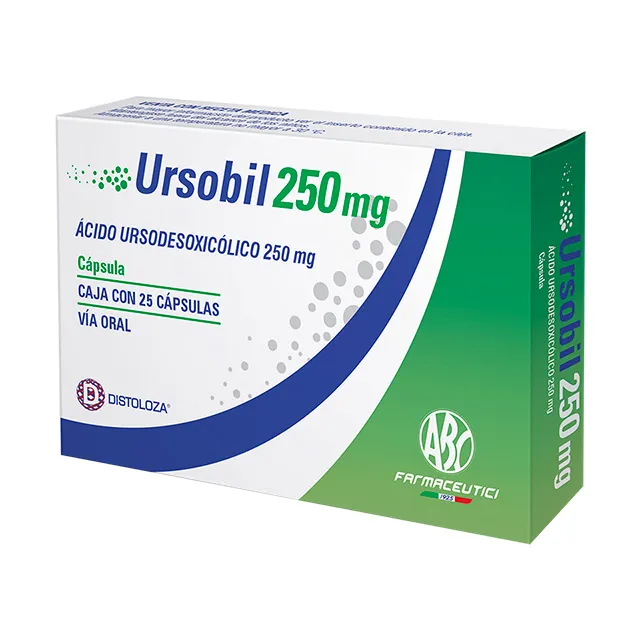
Table of Contents
Package leaflet
URSOBIL HT
“450 mg modified-release hard capsules” 20 capsules
“225 mg modified-release hard capsules” 20 capsules
Ursodeoxycholic Acid
PHARMACOTHERAPEUTIC CATEGORY
Biliary and hepatic therapy.
THERAPEUTIC INDICATIONS
Quantitative alterations in bile formation, including forms with cholesterol-supersaturated bile, to prevent the formation of cholesterol stones or to create conditions suitable for dissolution when radiolucent stones are already present; particularly gallbladder stones in a functioning gallbladder and residual or recurrent stones in the common bile duct after biliary tract surgery.
Biliary dyspepsia.
CONTRAINDICATIONS
URSOBIL HT must not be used in patients with:
- Acute inflammation of the gallbladder or biliary ducts
- Biliary tract obstruction (obstruction of the common bile duct or cystic duct)
- Frequent biliary colic
- Calcified, radiopaque gallstones
- Impaired gallbladder contractility
- Hypersensitivity to the active substance, bile acids, or to any of the other components of the formulation
DO NOT ADMINISTER IN PEDIATRIC AGE GROUPS.
PRECAUTIONS FOR USE
In patients with frequent biliary colic, biliary infections, severe pancreatic disorders, or intestinal conditions that may alter the enterohepatic circulation of bile acids (ileal resection and ileostomy, regional ileitis, etc.), use of the product should be avoided.
When initiating long-term dissolution therapy, preliminary monitoring of transaminases and alkaline phosphatase is advisable.
INTERACTIONS
Inform your doctor or pharmacist if you have recently taken any other medicines,
including those without a prescription.
URSOBIL HT must not be co-administered with cholestyramine, colestipol, or antacids containing aluminium hydroxide and/or smectite (aluminium oxide), as these bind ursodeoxycholic acid in the intestine and inhibit its absorption and efficacy. If use of these substances is necessary, they should be taken at least 2 hours before or after URSOBIL HT.
URSOBIL HT may affect the intestinal absorption of cyclosporine. In patients receiving cyclosporine, blood concentrations should be monitored by the physician and the cyclosporine dose adjusted if necessary.
In isolated cases, ursodeoxycholic acid may reduce the absorption of ciprofloxacin.
In clinical studies with healthy volunteers, co-administration of ursodeoxycholic acid (500 mg daily) and rosuvastatin (20 mg daily) caused a slight increase in rosuvastatin plasma levels. The clinical relevance of this interaction, as well as with other statins, is unknown.
Ursodeoxycholic acid has been shown to reduce the peak plasma concentration (Cmax) and area under the curve (AUC) of the calcium antagonist nitrendipine in healthy volunteers. Careful monitoring is recommended when nitrendipine and ursodeoxycholic acid are used concomitantly. An increase in the nitrendipine dose may be necessary.
An interaction resulting in reduced therapeutic effect of dapsone has also been reported. These observations, together with in vitro evidence, suggest a potential induction of cytochrome P450 3A enzymes by ursodeoxycholic acid. However, such induction was not observed in a well-designed interaction study with budesonide, a known substrate of cytochrome P450 3A.
Estrogens and cholesterol-lowering agents such as clofibrate increase hepatic cholesterol secretion and may therefore promote gallstone formation, which is a side effect when using ursodeoxycholic acid for stone dissolution.
Avoid combination with drugs that increase biliary cholesterol excretion (estrogens, hormonal contraceptives, certain lipid-lowering agents).
SPECIAL WARNINGS
URSOBIL HT must be taken under medical supervision.
During the first 3 months of treatment, liver function parameters AST (SGOT), ALT (SGPT), and -GT should be monitored by the physician every 4 weeks, and thereafter every 3 months. Besides enabling identification of responders and non-responders in treatment for primary biliary cirrhosis, this monitoring should also allow early detection of potential liver deterioration, particularly in patients with advanced primary biliary cirrhosis.
When used for dissolution of cholesterol stones:
To assess therapeutic improvement and to detect any temporary calcification of stones, the gallbladder should be visualized (oral cholecystography) with overview and occluded duct views in upright and supine positions (ultrasound monitoring) 6–10 months after starting treatment, depending on stone size.
URSOBIL HT must not be used if the gallbladder cannot be visualized by X-ray imaging, or in case of calcified stones, impaired gallbladder contractility, or frequent episodes of biliary colic.
Women taking URSOBIL HT for dissolution of gallstones must use an effective non-hormonal contraceptive method, as hormonal contraceptives may increase the risk of gallstone formation (see sections “Interactions” and “Pregnancy and lactation”).
When used for treatment of advanced primary biliary cirrhosis:
Very rarely, decompensation of hepatic cirrhosis has been observed, which partially regressed after discontinuation of treatment.
In patients with primary biliary cirrhosis, clinical symptoms may rarely worsen at the beginning of treatment; for example, pruritus may increase. In such cases, the dose of ursodeoxycholic acid should be reduced to 250 mg daily and then gradually increased again as described in the section “Dosage, method and timing of administration”.
In case of diarrhoea, the dose should be reduced; if diarrhoea persists, treatment should be discontinued.
TREATMENT IN PEDIATRIC AGE GROUPS IS NOT INDICATED.
FERTILITY, PREGNANCY AND LACTATION
Consult your doctor or pharmacist before taking any medicine.
Animal studies have not shown any effect of ursodeoxycholic acid on fertility. Data on effects on human fertility after treatment with ursodeoxycholic acid are not available.
There are no or limited data on the use of ursodeoxycholic acid in pregnant women. Animal studies have shown reproductive toxicity during early gestation.
URSOBIL HT must not be used during pregnancy unless clearly necessary.
Women of childbearing potential must only be treated if they use a reliable contraceptive method: non-hormonal or low-estrogen oral contraceptives are recommended. However, in patients taking URSOBIL HT for gallstone dissolution, an effective non-hormonal contraceptive method must be used, as hormonal oral contraceptives may increase the risk of gallstone formation. A possible pregnancy must be excluded before starting treatment.
Based on the few documented cases of breastfeeding, levels of ursodeoxycholic acid are very low and adverse effects in breastfed infants are unlikely.
EFFECTS ON THE ABILITY TO DRIVE AND USE MACHINES
Ursodeoxycholic acid does not alter or alters negligibly the ability to drive vehicles and use machinery.
DOSAGE, METHOD AND TIMING OF ADMINISTRATION
For long-term use to reduce the lithogenic characteristics of bile, the dosage is 450 mg daily.
In obese patients or in the presence of other significant lithogenic factors, the daily dose may be increased up to 675 mg; a higher dosage is also appropriate for stones larger than 2 cm.
To maintain conditions suitable for dissolution of existing stones, treatment duration should be at least 4–6 months, up to 9 months; furthermore, treatment should continue for 3–4 months after radiological or ultrasonographic disappearance of stones.
For dyspeptic syndromes and maintenance therapy, doses of 225 mg daily are sufficient.
Dosages may be adjusted at the physician’s discretion: in particular, the excellent tolerability of the product allows the use of considerably higher doses.
Administration of modified-release ursodeoxycholic acid should be performed as a single evening dose, preferably at bedtime.
OVERDOSE
In case of accidental ingestion/overdose of URSOBIL HT, contact your doctor immediately or go to the nearest hospital.
If you have any doubts about the use of URSOBIL HT, consult your doctor or pharmacist.
In case of accidental ingestion of ursodeoxycholic acid in doses significantly higher than 4 g daily (a dose well tolerated), it is recommended to take standard measures advised for intoxication and to administer cholestyramine, as it is capable of binding bile acids.
Diarrhoea may occur in case of overdose. Generally, other symptoms of overdose are unlikely, as absorption of ursodeoxycholic acid decreases with increasing dose, resulting in greater faecal excretion.
No specific countermeasures are required; consequences of diarrhoea should be treated symptomatically with fluid and electrolyte replacement.
Additional information on special patient populations:
Long-term, high-dose therapy with UDCA (28–30 mg/kg/day) in patients with primary sclerosing cholangitis (off-label use) has been associated with higher rates of serious adverse events.
UNDESIRABLE EFFECTS
Like all medicines, URSOBIL HT can cause adverse effects, although not everybody experiences them.
Tolerability of the product at recommended doses is generally good.
Occasionally, bowel irregularities have been reported, which usually resolve during continued treatment.
For classification of adverse reaction frequencies, the following convention is used:
Very common (≥ 1/10),
Common (≥ 1/100, < 1/10),
Uncommon (≥ 1/1,000, < 1/100),
Rare (≥ 1/10,000, < 1/1,000),
Very rare (< 1/10,000),
Not known (frequency cannot be estimated from available data)
Gastrointestinal disorders:
In clinical studies, episodes of soft stools or diarrhoea are commonly reported during treatment with ursodeoxycholic acid.
Very rarely, severe right upper quadrant abdominal pain has occurred during treatment of primary biliary cirrhosis.
Hepatobiliary disorders:
Very rarely, calcification of gallstones has occurred during treatment with ursodeoxycholic acid. During treatment of advanced primary biliary cirrhosis, very rare cases of hepatic decompensation have been observed, which partially regressed after discontinuation of treatment.
Skin and subcutaneous tissue disorders:
Very rarely, urticaria may occur.
Following the instructions in this leaflet reduces the risk of adverse effects.
Reporting of adverse effects
If you experience any adverse effect, including those not listed in this leaflet, contact your doctor or pharmacist. You may also report adverse effects directly via the national reporting system at
www.agenziafarmaco.gov.it/it/responsabili.
By reporting adverse effects, you help provide more information on the safety of this medicine.
EXPIRY DATE AND STORAGE
Expiry date: see date on the packaging.
The expiry date refers to the product in unopened packaging, correctly stored.
WARNING: Do not use the medicine after the expiry date stated on the packaging.
Medicines must not be disposed of via wastewater or household waste.
Ask your pharmacist how to dispose of medicines no longer required. This will help protect the environment.
KEEP THIS MEDICINE OUT OF THE SIGHT AND REACH OF CHILDREN.
COMPOSITION
Each modified-release hard capsule contains:
URSOBIL HT 225
Active substance
Ursodeoxycholic Acid 225 mg
Excipients:
Hydroxypropylcellulose, microcrystalline cellulose, gelatin, titanium dioxide.
URSOBIL HT 450
Active substance
Ursodeoxycholic Acid 450 mg
Excipients:
Hydroxypropylcellulose, microcrystalline cellulose, gelatin, titanium dioxide.
PHARMACEUTICAL FORM
Hard gelatin capsules containing modified-release granules for oral use.
EXCLUSIVE MARKETING AUTHORISATION HOLDER IN ITALY
Sofar S.p.A. - Trezzano Rosa (MI)
MARKETING AUTHORISATION HOLDER
ABC FARMACEUTICI S.p.A.
Corso Vittorio Emanuele II, 72 – 10121 Torino
MANUFACTURER
ABC FARMACEUTICI S.p.A.
Canton Moretti, 29 – 10090 San Bernardo d’Ivrea (TO)
AIFA Determination of