Upstaza
Italy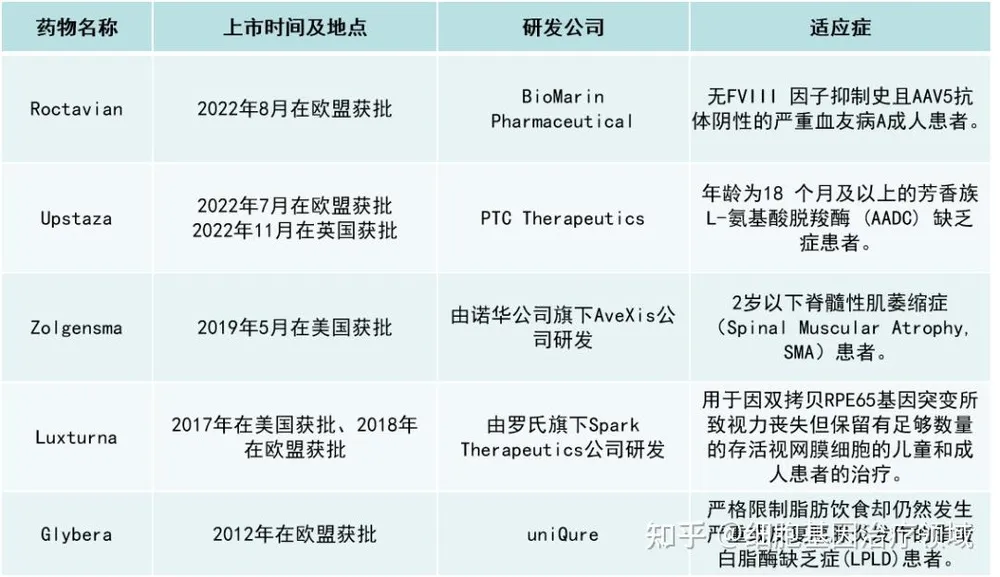
Table of Contents
- Package leaflet: Information for the patient
- Upstaza 2.8 × 10 vector genomes/0.5 mL solution for infusion
- 1. What Upstaza is and what it is used for
- 2. What you should know before Upstaza is administered to you or your child
- 3. How Upstaza is administered to you or your child
- 4. Possible side effects
- 5. How to store Upstaza
- 6. Package contents and other information
- The following information is intended exclusively for healthcare professionals:
Package leaflet: Information for the patient
Upstaza 2.8 × 10 vector genomes/0.5 mL solution for infusion
eladocagene exuparvovec
This medicinal product is subject to additional monitoring. This will allow for rapid identification of new safety information. You can help by reporting any side effects you or your child experience while receiving this medicinal product. See the end of section 4 for information on how to report side effects.
Please read this leaflet carefully before you or your child is given this medicine, as it contains important information.
- Keep this leaflet. You may need to read it again.
- If you have any questions, ask your doctor or nurse.
- If you or your child experience any side effects, including those not listed in this leaflet, tell your doctor or nurse. See section 4.
Contents of this leaflet
- What Upstaza is and what it is used for
- What you need to know before you or your child is given Upstaza
- How Upstaza is used in you or your child
- Possible side effects
- How to store Upstaza
- Contents of the pack and other information
1. What Upstaza is and what it is used for
What Upstaza is
Upstaza is a gene therapy medicinal product, containing the active substance eladocagene exuparvovec.
What Upstaza is used for
Upstaza is used for the treatment of patients aged 18 months and older with a deficiency of a protein called aromatic L-amino acid decarboxylase (AADC). This protein is essential for producing certain substances that the body's nervous system needs to function properly.
AADC deficiency is an inherited condition caused by a mutation (variation) in the gene that controls the production of AADC (also known as dopa decarboxylase or the DDC gene). This condition impairs the development of the child's nervous system, meaning that many of the body's functions do not develop properly during infancy, including movement, feeding, breathing, speech, and cognitive abilities.
How Upstaza works
The active substance in Upstaza, eladocagene exuparvovec, is a type of virus called an adeno-associated virus that has been modified to carry a functional copy of the DDC gene. Upstaza is administered by infusion (a drip injection) into an area of the brain called the putamen, where AADC is produced. The adeno-associated virus delivers the DDC gene into brain cells. This enables the cells to produce AADC, allowing the body to generate the substances required by the nervous system.
The adeno-associated virus used to deliver the gene does not cause disease in humans.
2. What you should know before Upstaza is administered to you or your child
Upstaza will not be given to you or your child if:
- you are allergic to eladocagene exuparvovec or to any of the other ingredients of this medicine (listed in section 6).
Warnings and precautions
- Mild or moderate involuntary, jerky movements (also known as dyskinesia) or sleep disorders (insomnia) may occur or worsen 1 month after treatment with Upstaza and may subsequently last for several months. Your doctor will decide whether you or your child needs treatment for these effects.
- Your doctor will monitor you or your child for complications related to treatment with Upstaza, such as loss of the fluid surrounding the brain, meningitis, or encephalitis.
- In the first few days after surgery, your doctor will monitor you or your child for possible complications related to the surgical procedure, the underlying disease, and general anesthesia. Some symptoms of the disease may appear more pronounced during this period.
- Certain specific symptoms of AADC deficiency may persist after treatment; examples include effects on mood, sweating, and body temperature regulation.
- After treatment, some medicines may be present in body fluids (e.g., tears, blood, nasal secretions, and cerebrospinal fluid); this is known as "shedding." You or your child, and your caregiver (especially if pregnant, breastfeeding, or immunocompromised), should wear gloves and place all used dressings and other waste materials that have come into contact with tears or nasal secretions into sealed bags before disposal. These precautions should be followed for 14 days.
- You or your child must not donate blood, organs, tissues, or cells for transplantation after treatment with Upstaza. This is because Upstaza is a gene therapy medicinal product.
Children and adolescents
Upstaza has not been studied in children below 18 months of age. Experience in patients older than 12 years is limited.
Other medicines and Upstaza
Inform your doctor if you or your child are taking, have recently taken, or might take any other medicines.
Your doctor will confirm whether you or your child can receive vaccinations as usual or whether adjustments to the vaccination schedule are needed.
Pregnancy, breastfeeding, and fertility
The effects of this medicine on pregnancy and the unborn child are unknown.
Upstaza has not been studied in women who are breastfeeding.
There is no available information on the effect of Upstaza on male or female fertility.
Upstaza contains sodium and potassium
This medicine contains less than 1 mmol (23 mg) of sodium per dose, i.e., essentially "sodium-free".
This medicine contains less than 1 mmol (39 mg) of potassium per dose, i.e., essentially "potassium-free".
3. How Upstaza is administered to you or your child
- Upstaza will be administered to you or your child in an operating room by neurosurgeons experienced in brain surgery.
- Upstaza is given under anesthesia. The neurosurgeon will discuss anesthesia with you and how it will be administered.
- Before administering Upstaza, the neurosurgeon will make two small holes in the skull, one on each side.
- Upstaza will then be infused through these holes into four sites in the brain, in an area called the putamen.
- After the infusion, the two holes will be closed and you or your child will undergo a brain scan.
- You or your child will need to stay in the hospital or nearby for several days to monitor recovery and check for any side effects related to the surgery or anesthesia.
- The doctor will examine you or your child in the hospital twice: once approximately 1 week after the procedure and again 3 weeks after the surgery, to continue monitoring recovery and check for any side effects of the procedure and treatment.
If you or your child is given more Upstaza than you should
Since this medicine is administered by a doctor, it is unlikely that an excessive amount will be given. However, if this does occur, the doctor will treat any symptoms as necessary.
If you have any doubts about the use of this medicine, consult your doctor or nurse.
4. Possible side effects
Like all medicines, this medicine can cause side effects, although not everyone experiences them.
The following side effects may occur with Upstaza:
Very common (may affect more than 1 in 10 people)
- Insomnia (difficulty sleeping)
- Dyskinesia (involuntary, jerky movements)
Common (may affect up to 1 in 10 people)
- Feeding difficulties
- Irritability
- Increased salivation
The following side effects may occur due to the surgical procedure required for administering
Upstaza:
Very common (may affect more than 1 in 10 people)
- Low levels of red blood cells (anaemia)
- Leakage of fluid surrounding the brain (called cerebrospinal fluid) (possible symptoms include headache, nausea and vomiting, neck pain or stiffness, changes in hearing, feeling unbalanced, dizziness or vertigo)
The following side effects may occur within the 2 weeks following the surgical procedure for
administration of Upstaza, due to anaesthesia or post-surgical effects:
Very common (may affect more than 1 in 10 people)
- Pneumonia
- Low levels of potassium in the blood
- Irritability
- Hypotension (low blood pressure)
- Gastrointestinal bleeding, diarrhoea
- Pressure sore
- Fever
- Abnormal breathing sounds
Common (may affect up to 1 in 10 people)
- Gastroenteritis
- Dyskinesia (involuntary, jerky movements)
- Cyanosis (bluish discolouration of the skin caused by lack of oxygen in the blood)
- Hypovolemic shock (severe loss of blood or body fluids)
- Respiratory failure
- Mouth ulceration
- Diaper rash, skin rash
- Hypothermia (low body temperature)
- Tooth extraction
Reporting of side effects
If you or your child experience any side effect, including those not listed in this leaflet, please inform your doctor or nurse. You may also report side effects directly through the national reporting system listed in Annex V. By reporting side effects, you can help provide more information on the safety of this medicine.
5. How to store Upstaza
The following information is intended for physicians only.
Upstaza will be stored at the hospital. It must be stored and transported frozen at ≤ -65 °C.
It is thawed before use and, once thawed, must be used within 6 hours. It must not be refrozen.
Do not use this medicinal product after the expiry date stated on the carton after “Exp.”.
6. Package contents and other information
What Upstaza contains
- The active substance is eladocagene exuparvovec. Each 0.5 mL of solution contains 2.8 × 10 genome copies of eladocagene exuparvovec.
The other components are: potassium chloride, sodium chloride, potassium dihydrogen phosphate, anhydrous disodium phosphate, poloxamer 188, water for injections (see section 2 “Upstaza contains sodium and potassium”).
Description of the appearance of Upstaza and contents of the pack
Upstaza is a clear to slightly opalescent, colourless to pale white solution for infusion, contained in a transparent glass vial.
Each pack contains 1 vial.
Marketing Authorisation Holder
PTC Therapeutics International Limited
70 Sir John Rogerson’s Quay
Dublin 2
Ireland
Manufacturer
Almac Pharma Services (Ireland) Limited
Finnabair Industrial Estate
Dundalk, Co. Louth, A91 P9KD
Ireland
For further information on this medicinal product, please contact the local representative of the Marketing Authorisation Holder:
AT, BE, BG, CY, CZ, DK, DE, EE, EL, ES, FR, HR, HU, IE, IS, IT, LT, LU, LV, MT, NL, NO, PL, PT, RO, SI, SK, FI, SE
PTC Therapeutics France
Tel: +33(0)1 76 70 10 01
PTC Therapeutics International Ltd. (Ireland)
[email protected]
+353 (0)1 447 5165
[email protected]
This medicinal product has been authorised under "exceptional circumstances". This means that, because the disease is rare, complete information on this medicinal product could not be obtained. The European Medicines Agency will review any new information on this medicinal product annually, and this patient information leaflet will be updated if necessary.
Other sources of information
More detailed information on this medicinal product is available on the website of the European Medicines Agency: http://www.ema.europa.eu/
The following information is intended exclusively for healthcare professionals:
Instructions for preparation, administration, measures to be taken in case of accidental exposure, and disposal of Upstaza
Each vial is for single use only. This medicinal product must be infused only using the SmartFlow cerebral cannula.
Precautions to be taken before handling or administering the medicinal product
This medicinal product contains genetically modified viruses. During preparation, administration, and disposal, personal protective equipment (including gown, safety goggles, mask, and gloves) must be worn when handling eladocagene exuparvovec and materials that have come into contact with the solution (solid and liquid residues).
Thawing in the hospital pharmacy
- Upstaza is delivered to the pharmacy frozen and must remain in its outer packaging at ≤ -65 °C until preparation for use.
- Upstaza must be handled aseptically under sterile conditions.
- Allow the frozen Upstaza vial to thaw upright at room temperature until the contents are completely thawed. Gently invert the vial approximately 3 times; DO NOT shake.
- Inspect Upstaza after mixing. If particulate matter, turbidity, or discoloration is visible, do not use the product.
Preparation prior to administration
- Transfer the vial, syringe, needle, syringe cap, sterile bags, or sterile wraps into the biological safety cabinet (BSC) in accordance with hospital procedures for transferring and using the filled syringe in the designated operating room, as well as labeling requirements. Wear sterile gloves and other personal protective equipment (including gown, safety goggles, and mask) as per standard procedures for work in the BSC.
- Open the 1 mL or 5 mL syringe [1 mL or 5 mL syringes made of polypropylene with a latex-free elastomeric plunger lubricated with medical-grade silicone oil] and label it as the product-filled syringe according to pharmacy procedures and local regulations.
- Attach the 18 or 19 Gauge filter needle [18 or 19 Gauge filter needles, 1.5 inches long, made of stainless steel, 5 µm] to the syringe.
- Aspirate the entire volume from the Upstaza vial into the syringe. Invert the vial and syringe and partially withdraw or tilt the needle to maximize product recovery, if necessary.
- Draw air into the syringe to empty the needle of product. Carefully remove the needle from the 1 mL or 5 mL syringe containing Upstaza. Expel air from the syringe until no air bubbles remain, then attach the syringe cap.
- Wrap the syringe in a sterile plastic bag (or multiple bags according to standard hospital procedure) and place it in an appropriate secondary container (e.g., hard-sided cooler) for transport to the operating room at room temperature. Use of the syringe (i.e., connecting the syringe to the pump and initiating cannula filling) must begin within 6 hours of starting product thawing.
Administration in the operating room
- Securely connect the syringe containing Upstaza to the SmartFlow cerebral cannula.
- Mount the Upstaza syringe on a syringe infusion pump compatible with 1 mL or 5 mL syringes. Infuse Upstaza at a rate of 0.003 mL/min until the first drop of Upstaza becomes visible at the needle tip. Pause and wait until ready to begin infusion.
Precautions for disposal of the medicinal product and in case of accidental exposure
- Accidental exposure to eladocagene exuparvovec, including contact with skin, eyes, or mucous membranes, must be avoided.
- In case of skin exposure, the affected area must be thoroughly washed with water and soap for at least 5 minutes. In case of eye exposure, the affected area must be thoroughly rinsed with water for at least 5 minutes.
- In case of needle-stick injury, the affected area must be thoroughly washed with water and soap and/or a disinfectant.
- Any unused eladocagene exuparvovec or waste materials derived from the medicinal product must be disposed of in accordance with local pharmaceutical waste guidelines. Any spills must be cleaned with absorbent gauze and disinfected first with a bleach-based solution, followed by alcohol-impregnated wipes.
- After administration, the risk of dissemination is considered low. Caregivers and patients' families should be informed and advised to follow appropriate precautions for handling body fluids and patient waste for 14 days after administration of eladocagene exuparvovec (see SmPC, section 4.4).
Dosage
The treatment must be administered in a specialized center for stereotactic neurosurgery by a qualified neurosurgeon under controlled aseptic conditions.
Patients will receive a total dose of 1.8 × 10¹⁴ vg, administered as four infusions of 0.08 mL (0.45 × 10¹⁴ vg) each (two per putamen).
The dosage is the same for the entire population covered by the indication.
Route of administration
Intraputaminal.
Administration of Upstaza may cause cerebrospinal fluid leakage following the procedure. Patients treated with Upstaza must be closely monitored after administration.
Neurosurgical administration
Upstaza is a single-use vial administered by bilateral intraputaminal infusion at two sites per putamen during a single surgical session. Four separate equal-volume infusions are delivered into the right anterior putamen, right posterior putamen, left anterior putamen, and left posterior putamen.
Follow the steps below to administer Upstaza:
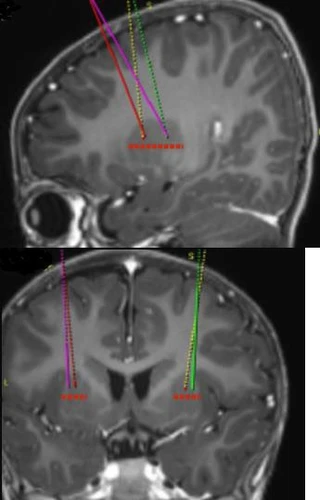
- The target infusion sites are defined according to standard stereotactic neurosurgical practice. Upstaza is administered as a bilateral infusion (two infusions per putamen) via an intracranial cannula. The four final targets for each trajectory must be defined as 2 mm dorsal (above) the anterior and posterior target points in the medio-horizontal plane (Figure 1).
Figure 1 Four target points for infusion sites
- After completion of stereotactic registration, the entry point must be marked on the skull. Surgical access must be performed through the skull bones and dura mater.
- The infusion cannula is placed at the designated putamen site using stereotactic instruments according to the planned trajectories. Note that the infusion cannula is placed and infusion performed separately for each putamen.
- Upstaza is infused at a rate of 0.003 mL/min at each of the two target points within the respective putamen; 0.08 mL of Upstaza is infused per putaminal site, for a total of four infusions and a total volume of 0.320 mL (or 1.8 × 10¹⁴ vg).
- Starting from the first target site, the cannula is inserted through a drilled burr hole into the putamen and then slowly withdrawn, distributing the 0.08 mL of Upstaza along the planned trajectory to optimize distribution within the putamen.
- After the first infusion, the cannula is withdrawn and reinserted into the next target site. The same procedure is repeated for the remaining three target sites (anterior and posterior of each putamen).
- After standard neurosurgical closure procedures, the patient must undergo postoperative brain imaging (magnetic resonance imaging [MRI] or computed tomography [CT]) to verify the absence of complications (i.e., hemorrhage).
- The patient must remain in close proximity to the hospital where the procedure was performed for at least 48 hours following the procedure. The patient may return home after the procedure, subject to the attending physician’s assessment. Post-treatment care must be managed by the referring neurosurgeon and neurologist. The patient must undergo a follow-up visit 7 days after surgery to ensure no complications have arisen. A second follow-up visit must be conducted 2 weeks after surgery (i.e., 3 weeks after surgery) to monitor post-surgical recovery and the occurrence of adverse events.
- Patients will be offered the opportunity to enroll in a registry to further evaluate the long-term safety and effectiveness of the treatment under normal clinical practice conditions.