Unidrox
Italy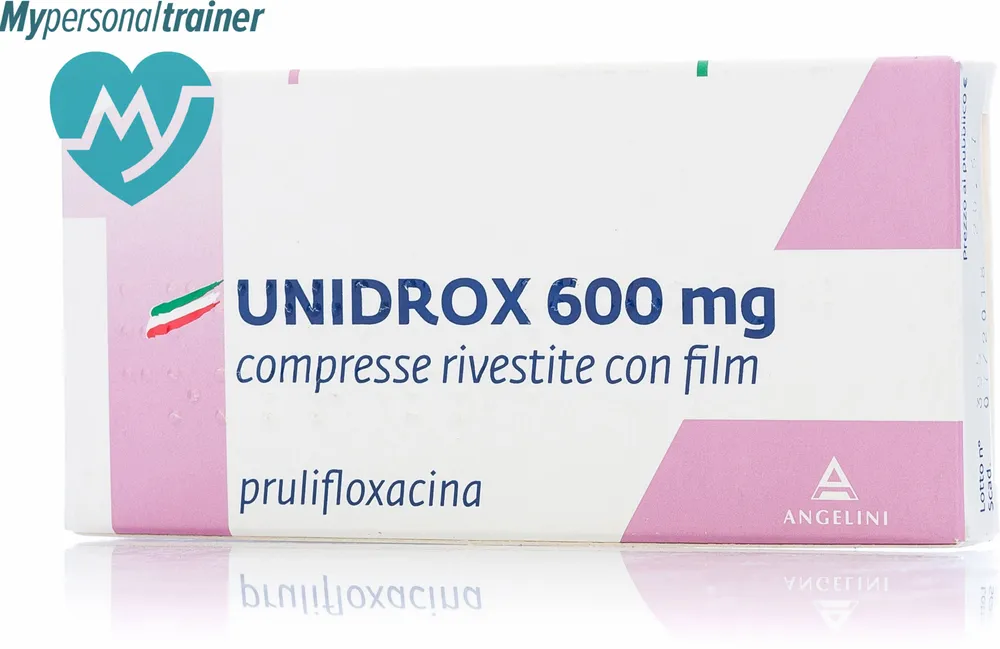
Table of Contents
PACKAGE LEAFLET: INFORMATION FOR THE USER
UNIDROX
600 mg film-coated tablets
Prulifloxacin
Read this leaflet carefully before taking this medicine because it contains
important information for you
- Keep this leaflet. You may need to read it again.
- If you have any questions, ask your doctor or pharmacist.
- This medicine has been prescribed for you only. Do not give it to other people, even if their symptoms are the same as yours, because it may be harmful.
- If you experience any adverse reactions, including those not listed in this leaflet, contact your doctor or pharmacist. See section 4.
Contents of this leaflet:
- What Unidrox is and what it is used for
- What you need to know before taking Unidrox
- How to take Unidrox
- Possible side effects
- How to store Unidrox
- Contents of the pack and other information
1. What Unidrox is and what it is used for
Unidrox belongs to a group of antibiotics known as fluoroquinolones.
Unidrox is indicated for the treatment of infections caused by bacteria sensitive to prulifloxacin in the following conditions:
- Lower urinary tract infections (uncomplicated cystitis),
- Lower urinary tract infections associated with other medical urinary complications (complicated cystitis),
- Acute exacerbation of chronic bronchitis,
- Acute bacterial rhinosinusitis.
Your doctor will diagnose and treat infectious rhinosinusitis in accordance with national and local guidelines on the management of infections. Unidrox may be used to treat infectious rhinosinusitis when symptoms have lasted less than 4 weeks, and in cases where standard antibiotics cannot be used or have not been effective.
2. What you should know before taking Unidrox
Do not take Unidrox:
- if you are allergic to prulifloxacin, to other fluoroquinolones, or to any of the other ingredients of this medicine (listed in section 6).
- if you have previously experienced tendon problems after using other quinolones, such as tendon inflammation (tendinitis).
- if you are pregnant or breastfeeding.
Warnings and precautions
Before taking this medicine
Do not take quinolone/fluoroquinolone antibacterial medicines, including
Unidrox, if you have previously had any serious adverse reaction during treatment with
a quinolone or fluoroquinolone. In such cases, inform your doctor as soon as possible.
Talk to your doctor or pharmacist before taking Unidrox:
- Quinolone antibiotics may cause an increase above your normal blood sugar levels (hyperglycaemia) or a decrease below your normal blood sugar levels, which in severe cases could potentially lead to loss of consciousness (hypoglycaemic coma) (see section 4). This is particularly important for people with diabetes. If you have diabetes, your blood sugar levels must be closely monitored.
- if you have epilepsy or a condition that makes seizures (convulsions) more likely.
- Since changes in heart rhythm (observed on ECG, a recording of the heart's electrical activity) have been reported with other antibiotics in the fluoroquinolone class, inform your doctor if you have a history of heart rhythm disorders. Unidrox has a very low potential for inducing QT interval prolongation.
- if you are taking medicines to control your heart rhythm or medicines that may have cardiac effects, such as antidepressants or other antibiotics (see “Taking Unidrox with other medicines”).
- if you have glucose-6-phosphate dehydrogenase (G6PD) enzyme deficiency, as this medicine may not be suitable.
- if you have liver or kidney problems.
- if you suffer from lactose intolerance, as this medicine contains lactose.
- if you have myasthenia gravis (muscle weakness).
- if you have been diagnosed with enlargement or “bulging” of a large blood vessel (aortic aneurysm or peripheral aneurysm of a large blood vessel).
- if you have previously experienced episodes of aortic dissection (a tear in the wall of the aorta).
- if you have been diagnosed with insufficiency of one of the heart valves (aortic or mitral regurgitation).
- if you have a family history of aortic aneurysm or dissection, congenital heart valve disease, or other risk factors or predisposing conditions (e.g. connective tissue disorders such as Marfan syndrome, Ehlers-Danlos syndrome, Turner syndrome, Sjögren’s syndrome [an autoimmune inflammatory disease], or vascular disorders such as Takayasu arteritis, giant cell arteritis, Behçet’s disease, known high blood pressure or atherosclerosis, rheumatoid arthritis [an autoimmune inflammatory disease], or endocarditis [inflammation of the heart]).
While taking this medicine
During treatment with antibiotics, including Unidrox, or even several weeks after stopping treatment, diarrhoea may occur. If diarrhoea worsens or persists, or if you notice blood or mucus in your stool, stop taking Unidrox immediately and contact your doctor. Do not take medicines that block or slow intestinal movements.
Rarely, joint pain and swelling, or tendon inflammation or rupture, may occur. The risk is higher if you are elderly (over 60 years), have received an organ transplant, have kidney problems, or are being treated with corticosteroids.
Tendon inflammation and rupture may occur within the first 48 hours of treatment and up to several months after stopping Unidrox. At the first sign of tendon pain or inflammation (e.g. in the ankle, wrist, elbow, shoulder, or knee), stop taking Unidrox, contact your doctor, and rest the affected area. Avoid unnecessary movement, as this may increase the risk of tendon rupture.
Contact your doctor immediately and stop taking Unidrox if, during treatment, you experience muscle pain, muscle weakness, or dark urine. The affected limb or limbs must be kept at rest until examined by your doctor.
Rarely, symptoms of nerve damage (neuropathy) such as pain, burning, tingling, numbness, and/or weakness, particularly in the feet and legs or hands and arms, may occur. In such cases, stop taking Unidrox and contact your doctor immediately to avoid permanent nerve damage.
If you experience sudden, severe pain in the abdomen, chest, or back, which may be a sign of aortic aneurysm or dissection, go immediately to the emergency room. The risk may be higher if you are taking systemic corticosteroid medicines.
Contact your doctor immediately if you notice a sudden onset of shortness of breath, especially when lying down, or swelling of the ankles, feet, or abdomen, or new episodes of palpitations (a sensation of rapid or irregular heartbeat).
Serious, prolonged, disabling, and potentially irreversible side effects
Fluoroquinolone/quinolone antibacterial medicines, including Unidrox, have been associated with very rare but serious side effects, some of which may be prolonged (lasting months or years), disabling, or may not improve. These include tendon, muscle, and joint pain in the arms and legs, difficulty walking, abnormal sensations such as pricking, tingling, itching, numbness, or burning (paresthesia), sensory organ disturbances such as changes in vision, taste, smell, or hearing, depression, memory impairment, severe fatigue, and severe sleep disturbances.
If you experience any of these side effects after taking Unidrox, contact your doctor immediately before continuing treatment. Your doctor will decide with you whether to continue treatment and may consider using an antibiotic from another class.
Since this medicine may cause the formation of tiny crystals in the urine, it is necessary to maintain a high fluid intake during treatment with Unidrox to prevent urine concentration.
During treatment with this medicine, avoid excessive exposure to sunlight, ultraviolet lamps, or sunbeds, as your skin may become more sensitive than normal. Stop treatment with this medicine and contact your doctor immediately if you experience severe sun reactions such as sunburn or peeling.
If your vision deteriorates or your eyes are otherwise affected, consult an ophthalmologist immediately.
Children and adolescents
Do not give this medicine to children and adolescents under 18 years of age due to safety concerns.
Other medicines and Unidrox
Inform your doctor or pharmacist if you are taking, have recently taken, or might take any other medicines.
Some medicines affect the action of Unidrox. Unidrox must be taken 2 hours before or at least 4 hours after taking these medicines.
- Medicines for indigestion, heartburn, or ulcers, such as cimetidine or antacids containing aluminium or magnesium
- Medicines containing iron or calcium
Unidrox may also affect the action of other medicines and increase the risk of side effects.
Inform your doctor if you are taking:
- Medicines for diabetes
- Medicines to control heart rhythm such as amiodarone, quinidine, or procainamide
- Other antibiotics such as erythromycin, clarithromycin, or azithromycin
- Medicines for depression such as amitriptiline, clomipramine, or imipramine
- Probenecid to reduce blood uric acid
- Fenbufen to relieve arthritis pain
- Theophylline for asthma or breathing difficulties
- Medicines to prevent blood clotting such as warfarin
- Nicardipine used to treat angina (chest pain) or high blood pressure
- Steroids such as prednisolone used to treat allergic or inflammatory conditions.
Unidrox with food and drink
Food and milk can affect the action of Unidrox.
Unidrox should be taken between meals on an empty stomach and should not be taken with milk or milk products.
Pregnancy, breastfeeding, and fertility
If you are pregnant, think you may be pregnant, are planning to become pregnant, or are breastfeeding, consult your doctor or pharmacist before taking this medicine.
Driving and using machines
Unidrox may cause dizziness and confusion. If you experience any of these symptoms, do not drive or operate any potentially dangerous tools or machinery.
Unidrox contains lactose
Unidrox contains lactose, a type of sugar. If your doctor has diagnosed you with an intolerance to certain sugars, contact him or her before taking this medicine.
Unidrox contains sodium
This medicine contains less than 1 mmol (23 mg) of sodium per film-coated tablet, i.e. essentially ‘sodium-free’.
3. How to take Unidrox
Take this medicine exactly as directed by your doctor. If you have any doubts, consult your doctor or pharmacist.
Unidrox tablets must be swallowed with water and taken between meals on an empty stomach. They must not be taken with milk or milk products.
Unidrox is for adults. The recommended dose is:
- For simple cystitis: one 600 mg tablet as a single dose.
- For complicated cystitis: one 600 mg tablet once daily for up to 10 days of treatment.
- For acute exacerbation of chronic bronchitis: one 600 mg tablet once daily for up to 10 days of treatment.
- For acute bacterial rhinosinusitis: one 600 mg tablet once daily for up to 10 days of treatment.
You must drink plenty of water during treatment with Unidrox.
The duration of treatment depends on the severity of the infection and the patient's response to therapy. You must always complete the entire course of tablets prescribed by your doctor, even if you start to feel better and symptoms disappear.
The tablet may be divided into equal parts.
If you take more Unidrox than you should
In case of overdose, contact your doctor immediately or go to the nearest hospital emergency department. The hospital doctor may need to perform a stomach emptying procedure. Always bring the package and the patient information leaflet with you, whether or not any Unidrox remains in the package.
If you forget to take Unidrox
If you forget to take a dose, take it as soon as you remember, unless it is already time for the next dose. Do not take a double dose to make up for the forgotten dose.
If you stop taking Unidrox
If you stop taking this medicine too early, the infection may recur.
If you have any doubts about how to use this medicine, consult your doctor or pharmacist.
4. Possible side effects
Like all medicines, Unidrox can cause side effects, although not everybody experiences them.
Immediately inform your doctor and stop treatment with Unidrox if you experience any of the following symptoms after taking this medicine. Although very rare, these symptoms can be serious.
- Sudden shortness of breath, difficulty breathing, swelling of eyelids, face or lips, skin rash or itching (especially affecting the whole body).
- Severe skin rash leading to blistering of the skin and sometimes inside the mouth and on the tongue. These could be symptoms of a condition known as Stevens-Johnson syndrome.
- Severe sun reactions such as sunburn or peeling of the skin.
- Symptoms of tendon inflammation such as swelling or pain in the affected limb. This most frequently affects the Achilles tendon and may lead to tendon rupture. The affected area should be kept at rest until examined by a doctor.
- Muscle pain, muscle weakness or dark urine.
- Severe episodes of watery diarrhoea, black-tarry or bloody stools.
- Low blood sugar levels which may cause tremor and irritability.
- Numbness, loss of sensitivity to pain.
- Redness and peeling of the skin (dermatitis).
- Formation of tiny crystals in the urine without symptoms.
Other possible side effects are:
Common side effects (affecting less than 1 in 10 people):
- Abdominal pain
Uncommon side effects (affecting less than 1 in 100 people):
- Feeling unwell
- Diarrhoea, vomiting, stomach inflammation
- Headache, dizziness
- Itching or skin rash
- Loss of appetite
Rare side effects (affecting less than 1 in 1,000 people):
- Fever, hot flushes
- Taste disturbances
- Sleep disorders, confusion or drowsiness
- Hearing loss
- Redness and irritation of the eyes
- Stomach pain, flatulence, bloating, indigestion or heartburn, abnormal stools
- Irritation of the lips, tongue or mouth, or fungal infection (oral thrush)
- Muscle spasms, muscle damage
- Dry and itchy skin (eczema), light sensitivity or development of red spots on the skin (urticaria)
- Increased liver enzymes seen in blood tests
- Feeling restless
- Mouth ulcers
- Widespread joint pain
- Increased levels of albumin (a protein) in the blood
- Increased levels of calcium in the blood
- Increased number of white blood cells
Frequency not known
(frequency cannot be estimated from the available data):
- Anaphylactic/anaphylactoid reactions including angioedema (symptoms may include lip swelling and facial swelling)
- Dyspnoea
- Stevens-Johnson syndrome
- Hypoglycaemia
- Hypoaesthesia
- Paresthesia
- Tremor
- Drug-induced dermatitis
- Rhabdomyolysis
- Phototoxicity
- Tachycardia
- Pseudomembranous colitis
- Muscle weakness. This is important for patients suffering from myasthenia gravis (a rare disorder of the nervous system).
- Loss of consciousness due to a severe drop in blood sugar levels (hypoglycaemic coma). See section 2.
Very rare cases of adverse drug reactions that are prolonged (lasting for months or years) or permanent, such as tendon inflammation, tendon rupture, joint pain, pain in arms or legs, difficulty walking, abnormal sensations such as pricking, tingling, tickling, burning, numbness or pain (neuropathy), fatigue, impaired memory and concentration, effects on mental health (which may include sleep disturbances, anxiety, panic attacks, depression and suicidal thoughts), as well as disturbances in hearing, vision, taste and smell, have been associated with the use of quinolone and fluoroquinolone antibiotics, in some cases regardless of pre-existing risk factors.
Cases of aortic wall dilation and weakening or aortic wall tear (aneurysms and dissections), with possible rupture that may result in death, as well as cases of blood regurgitation from heart valves, have been reported in patients treated with fluoroquinolones. See also section 2.
Reporting of side effects
If you experience any side effect, including those not listed in this leaflet, talk to your doctor or pharmacist. You can also report side effects directly via the national reporting system at
https://www.aifa.gov.it/content/segnalazioni-reazioni-avverse. By reporting side effects, you can help provide more information on the safety of this medicine.
5. How to store Unidrox
Keep this medicine out of the sight and reach of children.
Do not store above 30°C.
Store in the original container.
Do not use Unidrox after the expiry date stated on the packaging after EXP. The expiry date refers to the last day of the month.
Do not dispose of medicines via wastewater or household waste. Ask your pharmacist how to dispose of medicines you no longer use. This will help protect the environment.
6. Package contents and other information
What Unidrox contains
The active substance is prulifloxacin.
Each film-coated tablet contains 600 mg of prulifloxacin.
The other ingredients are: monohydrate lactose; microcrystalline cellulose; sodium croscarmellose; povidone; anhydrous colloidal silica; magnesium stearate; hypromellose; propylene glycol; titanium dioxide (E171); talc; iron oxide (E172).
Description of the appearance of Unidrox and package contents
Unidrox tablets are yellow, oblong, film-coated, with a central score line. They are available in cardboard packages containing a blister with 1, 2, 5 tablets or two blisters with 5 tablets each.
It is possible that not all pack sizes are marketed.
Marketing Authorization Holder
Aziende Chimiche Riunite Angelini Francesco - A.C.R.A.F. S.p.A.
Viale Amelia No. 70 - 00181 Rome - Italy
Manufacturer
A.C.R.A.F. S.p.A. - Via Vecchia del Pinocchio, 22 - 60131 Ancona – Italy.
This medicinal product is authorized in the European Economic Area countries under the following names:
Italy: UNIDROX 600 mg film-coated tablets
Portugal: UNIDROX, 600 mg, film-coated tablets
Greece: PRIXINA 600 mg δισκία επικαλυμμένα με υμένιο