Uman Albumin
Italy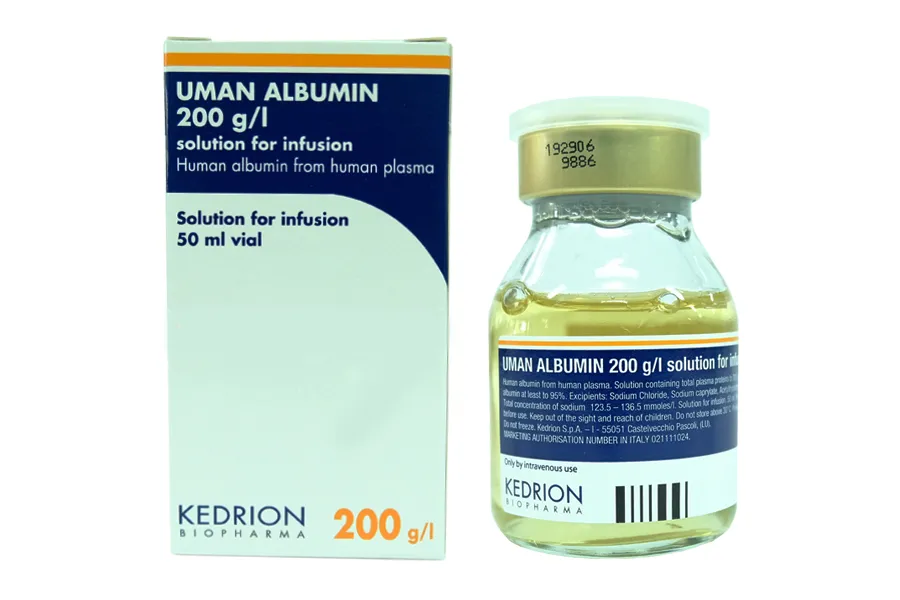
Table of Contents
- PACKAGE LEAFLET: INFORMATION FOR THE USER
- UMAN ALBUMIN 200 g/l Infusion Solution, 250 g/l Infusion Solution
- 1. WHAT HUMAN ALBUMIN IS AND WHAT IT IS USED FOR
- 2. WHAT YOU SHOULD KNOW BEFORE USING UMAN ALBUMIN
- 3. HOW TO USE UMAN ALBUMIN
- 4. POSSIBLE ADVERSE REACTIONS
- 5. HOW TO STORE HUMAN ALBUMIN
- 6. PACKAGING CONTENTS AND OTHER INFORMATION
- PATIENT LEAFLET: INFORMATION FOR THE USER
- UMAN ALBUMIN 50 g/l Solution for infusion
- 1. What UMAN ALBUMIN is and what it is used for
- 2. What you should know before using UMAN ALBUMIN
- 3. How to use UMAN ALBUMIN
- 4. Possible side effects
- 5. How to store UMAN ALBUMIN
- 6. Contents of the pack and other information
- The following information is intended for healthcare professionals only:
PACKAGE LEAFLET: INFORMATION FOR THE USER
UMAN ALBUMIN 200 g/l Infusion Solution, 250 g/l Infusion Solution
Human albumin from human plasma
Please read this leaflet carefully before you use this medicine because it contains important information for you.
- Keep this leaflet. You may need to read it again.
- If you have any questions, ask your doctor, pharmacist or nurse.
- This medicine has been prescribed for you only. Do not give it to other people, even if their symptoms are the same as yours, as it may be harmful.
- If you experience any side effect, including those not listed in this leaflet, tell your doctor, pharmacist or nurse. See section 4.
Contents of this leaflet:
- What UMAN ALBUMIN is and what it is used for
- What you need to know before using UMAN ALBUMIN
- How to use UMAN ALBUMIN
- Possible side effects
- How to store UMAN ALBUMIN
- Contents of the pack and other information
1. WHAT HUMAN ALBUMIN IS AND WHAT IT IS USED FOR
UMAN ALBUMIN contains albumin (an important protein in human blood) and belongs to a class of medicines called "Plasma expanders and plasma protein fractions". It is prepared from human blood collected from blood donors.
This medicine is used to restore and maintain the circulating blood volume in patients who have lost blood and/or body fluids for any reason and for whom the use of a colloid (plasma substitute) is appropriate.
2. WHAT YOU SHOULD KNOW BEFORE USING UMAN ALBUMIN
Do not use UMAN ALBUMIN
If you are allergic (hypersensitive) to human albumin or to any of the other components of this
medicinal product (listed in section 6).
Warnings and precautions
Talk to your doctor, pharmacist, or nurse before using UMAN ALBUMIN.
If you have previously experienced symptoms of an allergic reaction (hypersensitivity) to human albumin, inform your doctor or nurse immediately.
Suspected allergic or anaphylactic reactions require immediate discontinuation of the infusion.
In case of shock, standard medical treatments for shock must be initiated.
Albumin should be administered with caution in conditions where hypervolemia (increased blood volume) and its consequences, or hemo-dilution (i.e., blood dilution), may pose a particular risk to you.
Inform your doctor if you suffer from any of the following conditions:
- decompensated heart failure (reduced cardiac performance)
- hypertension (elevated blood pressure)
- esophageal varices (dilated veins in the esophagus)
- pulmonary edema (fluid accumulation in the lungs)
- hemorrhagic diathesis (tendency to bleed)
- severe anemia (deficiency of red blood cells and/or oxygen-carrying substance)
- renal and post-renal anuria (absence of urine production)
Human albumin solution (such as UMAN ALBUMIN) is more concentrated than plasma; therefore, when concentrated albumin is administered to you, your doctor must ensure you are adequately hydrated and must monitor you closely to avoid circulatory overload and hyperhydration (i.e., fluid accumulation causing heart and circulation problems).
Moreover, human albumin solutions with a concentration of 200–250 g/l, such as UMAN ALBUMIN, have a relatively low electrolyte (salt) content compared to human albumin solutions containing 40–50 g/l. Therefore, your doctor must monitor your electrolyte status (blood salt concentration) and take appropriate measures to restore or maintain electrolyte balance (see section “The following information is intended exclusively for physicians or healthcare professionals”).
Albumin solutions must not be diluted with water for injections, as this may cause hemolysis (rupture of red blood cells) in recipients.
If large volumes of blood need to be replaced, your doctor must monitor coagulation and hematocrit (the proportion of blood cells in the blood). Your doctor will take all necessary steps to adequately replace blood constituents (clotting factors, electrolytes, platelets, and red blood cells).
If hematocrit falls below 30%, your doctor may consider it necessary to administer concentrated red blood cells to maintain your blood’s oxygen-carrying capacity.
If the dose and infusion rate are not adjusted according to your circulatory condition, you may experience symptoms indicating increased blood volume (hypervolemia). If you notice any of the following symptoms, inform your doctor immediately, as the infusion must be stopped immediately: headache, dyspnea (difficulty breathing), jugular vein distension (swelling of the veins running down the neck), increased blood pressure, elevated venous pressure, pulmonary edema.
For athletes: Using this medicine without therapeutic need constitutes doping and may result in a positive anti-doping test.
Viral safety
When medicinal products are prepared from human blood or plasma, certain measures are taken to prevent transmission of infections to patients. These measures include careful selection of blood and plasma donors to ensure potentially infected donors are excluded, and testing of each donation and plasma pool to detect possible infections/viruses.
Manufacturers of these medicinal products also incorporate steps in the processing of blood and plasma that inactivate or remove viruses.
Despite these measures, the possibility of transmitting infectious agents cannot be completely ruled out when administering medicinal products prepared from human blood or plasma. This also applies to emerging or unknown viruses or other infectious agents.
No cases of viral transmission have been reported with albumin produced according to well-established processes and meeting specifications of the European Pharmacopoeia.
It is strongly recommended that, each time a dose of UMAN ALBUMIN is administered to you, both the product name and batch number are recorded, to ensure traceability of the batch used.
Patients with renal impairment
UMAN ALBUMIN may be administered to patients undergoing dialysis, as the aluminum content of the final product is less than 200 µg/l.
Children
The safety and efficacy of UMAN ALBUMIN in children have not been established in controlled clinical trials. The use of human albumin in children is based solely on established medical practice.
However, clinical experience with human albumin in children suggests that no harmful effects are expected, provided particular attention is paid to dosing to avoid circulatory overload.
UMAN ALBUMIN may be administered to premature infants.
Other medicines and UMAN ALBUMIN
Inform your doctor or pharmacist if you are taking, have recently taken, or might take any other medicines.
No specific interactions between human albumin and other medicinal products are known.
Incompatibilities: UMAN ALBUMIN must not be mixed with other medicinal products, whole blood, or red blood cell concentrates (except with the diluents recommended in the section “The following information is intended exclusively for physicians or healthcare professionals”).
Pregnancy, breastfeeding, and fertility
If you are pregnant, suspect you may be pregnant, planning to become pregnant, or breastfeeding, consult your doctor or pharmacist before using this medicinal product.
The safety of UMAN ALBUMIN during pregnancy has not been established in controlled clinical trials. However, clinical experience with albumin suggests that no harmful effects on the course of pregnancy, the fetus, or the newborn are expected. No animal reproductive studies have been conducted with UMAN ALBUMIN. Nevertheless, human albumin is a normal constituent of human blood.
In general, particular caution should be exercised when performing plasma volume replacement in a pregnant patient.
Driving and using machines
UMAN ALBUMIN does not affect or affects negligibly the ability to drive vehicles and use machines.
UMAN ALBUMIN contains sodium
This medicinal product contains up to a maximum of 157 mg of sodium (the main component of table salt) per 50 ml vial and 314 mg of sodium per 100 ml vial.
These amounts correspond to 7.85% and 15.7%, respectively, of the maximum daily dietary intake recommended for an adult.
3. HOW TO USE UMAN ALBUMIN
For instructions on correct use and dosage, refer to the section " The following information is intended exclusively for physicians or healthcare professionals "
Use this medicine exactly as directed by your doctor. If you have any doubts, consult your doctor.
UMAN ALBUMIN must be administered intravenously (into a vein) and must be given by a physician or a professional nurse.
Use in children
The safety and efficacy of UMAN ALBUMIN in children have not been established in controlled clinical studies, and its use in the pediatric population is based solely on established medical practice.
For this reason, UMAN ALBUMIN in children should be used only when absolutely necessary.
If you use more UMAN ALBUMIN than you should
If the dosage and infusion rate are too high, an increase in blood volume (hypervolemia) may occur. In this case, you may experience symptoms such as headache, dyspnea (difficulty breathing), jugular vein distension (i.e., swelling of the neck veins, which may indicate cardiovascular overload), increased blood pressure, elevated central venous pressure, and pulmonary edema (fluid accumulation in the lungs). As soon as you notice any of these symptoms, inform your doctor immediately, as the infusion must be stopped immediately and your hemodynamic parameters must be closely monitored. Furthermore, depending on the severity of the clinical condition, urine output should be increased and cardiac function improved.
If you have any doubts about how to use this medicine, consult your doctor.
4. POSSIBLE ADVERSE REACTIONS
Like all medicines, this medicine can cause adverse reactions, although not everybody experiences them.
If any of the following adverse reactions occur, contact your doctor immediately or go to the nearest
hospital.
The following adverse reactions may generally occur after treatment with human albumin-based solutions:
- Flushing;
- Urticaria;
- Fever;
- Nausea.
These mild reactions may rarely occur and usually disappear quickly by reducing the infusion rate or by stopping the infusion. Very rarely, severe reactions such as shock may occur. In such cases, the infusion must be stopped and appropriate treatment initiated. Adverse reactions reported following administration of UMAN ALBUMIN during post-marketing use of the medicine are described below:
Frequency Not Known (based on available data, it is not possible to estimate the frequency):
Urticaria
Pruritus
Dyspnea
Hypotension
Erythema
Chills
Pyrexia
Tremor
For information on viral safety, see section “2. WHAT YOU SHOULD KNOW BEFORE USING UMAN ALBUMIN”.
Additional adverse reactions in children
Although specific data in the paediatric population are not available, the limited published data from efficacy and safety studies have not shown significant differences between adults and children affected by the same condition, provided particular attention is paid to avoid overdose.
Reporting of adverse reactions
If you experience any adverse reaction, including those not listed in this leaflet, contact your doctor. You may also report adverse reactions directly via
https://www.aifa.gov.it/content/segnalazioni-reazioni-avverse .
By reporting adverse reactions, you can help provide more information on the safety of this medicine.
5. HOW TO STORE HUMAN ALBUMIN
Keep this medicine out of the sight and reach of children.
Do not use this medicine after the expiry date stated on the carton and label after "Exp.".
The expiry date refers to the last day of that month.
Store below 30°C.
Keep the vial in the outer packaging to protect it from light.
Do not freeze.
Storage conditions must be strictly followed.
Do not use this medicine if you notice that the solution is cloudy or contains particles. The presence of cloudiness or particles may indicate that the protein is unstable or that the solution has been contaminated.
Once the container has been opened, the contents should be used immediately.
Do not dispose of any medicine via wastewater or household waste. Ask your pharmacist how to dispose of medicines you no longer use. This will help protect the environment.
6. PACKAGING CONTENTS AND OTHER INFORMATION
What UMAN ALBUMIN contains
The active substance is human albumin.
| UMAN ALBUMIN 200 g/l | UMAN ALBUMIN 250 g/l | |
| Solution containing total plasma proteins at | 20% | 25% |
| consisting of human albumin of at least | 95% | 95% |
| one vial with 50 ml of solution contains human albumin in the amount of | 10 g | 12.5 g |
| one vial with 100 ml of solution contains human albumin in the amount of | 20 g | — |
| The solution is | hyperoncotic | hyperoncotic |
The other components, per 1 litre of solution, are the following:
UMAN ALBUMIN 200 g/l
Sodium chloride 4.52 g/l
Sodium caprylate 2.660 g/l (16 mmol/l)
N-acetyltryptophan 3.940 g/l (16 mmol/l)
Water for injections q.s. to 1000 ml
Total sodium concentration 123.5 – 136.5 mmol/l
UMAN ALBUMIN 250 g/l
Sodium chloride 3.52 g/l
Sodium caprylate 3.325 g/l (20 mmol/l)
N-acetyltryptophan 4.925 g/l (20 mmol/l)
Water for injections q.s. to 1000 ml
Total sodium concentration 123.5 – 136.5 mmol/l
Description of the appearance of UMAN ALBUMIN and contents of the pack
UMAN ALBUMIN is an infusion solution. It is a slightly viscous, clear liquid;
almost colourless, with a yellow, amber or green tint.
UMAN ALBUMIN 200 g/l: 50 ml vial
UMAN ALBUMIN 200 g/l: 100 ml vial
UMAN ALBUMIN 250 g/l: 50 ml vial
Marketing Authorisation Holder and Manufacturer
Marketing Authorisation Holder
Kedrion S.p.A. - Loc. Ai Conti, 55051 Castelvecchio Pascoli, Barga (Lucca).
Manufacturer
Kedrion S.p.A. - 55027 Bolognana, Gallicano (Lucca).
This medicinal product is authorised in the European Economic Area Member States under the following
names:
| Austria | Humanalbumin Kedrion 200 g/l infusion solution Humanalbumin Kedrion 250 g/l infusion solution |
| Greece | Human Albumin / Kedrion |
| Italy | Human Albumin |
| Portugal | Human Albumin Kedrion |
This leaflet was last updated on
The following information is intended for medical or healthcare professionals only:
The concentration of the albumin preparation, dosage, and rate of infusion must be determined according to the individual patient's needs.
The required dose depends on the patient's body weight, the severity of trauma or disease, and ongoing losses of body fluids and proteins. The necessary dose should be determined based on assessment of circulating volume adequacy, and not based on plasma albumin levels.
If human albumin is to be administered, hemodynamic performance must be monitored regularly; this may include monitoring of:
- arterial pressure and heart rate
- central venous pressure
- pulmonary artery wedge pressure
- urine output
- electrolytes
- hematocrit/hemoglobin.
UMAN ALBUMIN can be administered to premature neonates and to patients undergoing dialysis, as the aluminum content of the finished product is less than 200 μg/l.
Human albumin may be administered directly intravenously or may be diluted with isotonic solutions (e.g., 5% glucose or 0.9% sodium chloride).
Albumin solutions must not be diluted with water for injections, as this may cause hemolysis in recipients.
The infusion rate must be established according to the individual clinical condition and therapeutic indication.
In plasmapheresis, the infusion rate should be adjusted according to the plasma removal rate.
If large volumes are to be administered, the product should be warmed to room temperature or body temperature prior to use.
PATIENT LEAFLET: INFORMATION FOR THE USER
UMAN ALBUMIN 50 g/l Solution for infusion
Human albumin from human plasma
Please read this leaflet carefully before using this medicine because it contains important information for you.
- Keep this leaflet. You may need to read it again.
- If you have any questions, ask your doctor, pharmacist or nurse.
- This medicine has been prescribed for you only. Do not give it to others, even if their symptoms are the same as yours, as it could be harmful.
- If you experience any side effect, including those not listed in this leaflet, tell your doctor, pharmacist or nurse. See section 4.
Contents of this leaflet:
- What UMAN ALBUMIN is and what it is used for
- What you need to know before using UMAN ALBUMIN
- How to use UMAN ALBUMIN
- Possible side effects
- How to store UMAN ALBUMIN
- Contents of the pack and other information
1. What UMAN ALBUMIN is and what it is used for
UMAN ALBUMIN contains albumin (an important protein in human blood) and belongs to a class of medicines called "Plasma expanders and plasma protein fractions". It is prepared from human blood collected from blood donors.
This medicine is used to restore and maintain the circulating blood volume in patients who have lost blood and/or body fluids for any reason, and for whom the use of a colloid (plasma substitute) is appropriate.
2. What you should know before using UMAN ALBUMIN
Do not use UMAN ALBUMIN
If you are allergic (hypersensitive) to human albumin or to any of the other ingredients of this
medicinal product (listed in section 6).
Warnings and precautions
Talk to your doctor, pharmacist, or nurse before using UMAN ALBUMIN.
If you have previously experienced symptoms of an allergic reaction (hypersensitivity) to human albumin, inform
your doctor or nurse immediately.
Suspected allergic or anaphylactic reactions require immediate discontinuation of the infusion.
In case of shock, standard medical treatments for shock must be initiated.
Albumin should be administered with caution in conditions where hypervolemia (increased blood volume) and its consequences, or hemodilution (i.e., blood dilution), may pose a particular risk to you.
If you suffer from any of the following conditions, inform your doctor:
- decompensated heart failure (reduced cardiac performance)
- hypertension (increased blood pressure)
- esophageal varices (enlarged veins in the esophagus)
- pulmonary edema (fluid accumulation in the lungs)
- hemorrhagic diathesis (tendency to bleed)
- severe anemia (deficiency in red blood cells and/or oxygen-carrying substance)
- renal and post-renal anuria (absence of urine production)
Human albumin solution (such as UMAN ALBUMIN) is more concentrated than plasma; therefore, when concentrated albumin is administered to you, your doctor must ensure that you are adequately hydrated and must monitor you closely to avoid circulatory overload and hyperhydration (i.e., fluid accumulation causing heart and circulation problems).
When albumin is administered to you, your doctor must monitor your electrolyte status (blood salt concentrations) and take appropriate measures to restore or maintain electrolyte balance (see section "The following information is intended exclusively for doctors or healthcare professionals").
Albumin solutions must not be diluted with water for injectable preparations, as this may cause hemolysis (rupture of red blood cells) in recipients.
If large volumes of blood need to be replaced, your doctor must monitor coagulation and hematocrit (the proportion of blood cells in the blood). The doctor will take all necessary steps to adequately replace blood components (clotting factors, electrolytes, platelets, and red blood cells).
If hematocrit falls below 30%, your doctor may consider it necessary to administer concentrated red blood cells to maintain your blood's oxygen-carrying capacity.
If the dose and rate of infusion are not adjusted according to your circulatory condition, you may experience symptoms indicating increased blood volume (hypervolemia). If you notice any of the following symptoms, inform your doctor immediately, as the infusion must be stopped immediately: headache, dyspnea (difficulty breathing), jugular vein distension (swelling of the veins running down the neck), increased blood pressure, increased venous pressure, pulmonary edema.
For athletes: using this medicinal product without therapeutic need constitutes doping and may lead to a positive anti-doping test.
Viral safety
When medicinal products are prepared from human blood or plasma, certain measures are taken to prevent transmission of infections to patients. These measures include careful selection of blood and plasma donors to exclude potentially infected donors, and testing of each donation and plasma pool to detect possible infections/viruses.
Manufacturers of these medicinal products also incorporate steps in the processing of blood and plasma that inactivate or remove viruses.
Despite these measures, when administering medicinal products prepared from human blood or plasma, the possibility of transmitting infectious agents cannot be completely ruled out. This also applies to emerging or unknown viruses or other infectious agents.
No cases of viral transmission have been reported with albumin produced using well-established processes and meeting specifications of the European Pharmacopoeia.
It is strongly recommended that each time a dose of UMAN ALBUMIN is administered to you, both the product name and batch number are recorded, to ensure traceability of the batch used.
Patients with renal impairment
UMAN ALBUMIN can be administered to patients undergoing dialysis, as the aluminum content of the finished product is less than 200 µg/l.
Children
The safety and efficacy of UMAN ALBUMIN in children have not been established in controlled clinical studies. The use of human albumin in children is based solely on established medical practice.
However, clinical experience with human albumin in children suggests that no harmful effects are expected, provided particular attention is paid to dosing to avoid circulatory overload.
UMAN ALBUMIN may be administered to premature infants.
Other medicines and UMAN ALBUMIN
Inform your doctor or pharmacist if you are taking, have recently taken, or might take any other medicines.
No specific interactions between human albumin and other medicinal products are known.
Incompatibilities: UMAN ALBUMIN must not be mixed with other medicinal products, whole blood, or red blood cell concentrates (except for the diluents recommended in the section "The following information is intended exclusively for doctors or healthcare professionals").
Pregnancy, breastfeeding, and fertility
If you are pregnant, suspect you may be pregnant, are planning pregnancy, or are breastfeeding, consult your doctor or pharmacist before using this medicinal product.
The safety of using UMAN ALBUMIN during pregnancy has not been established in controlled clinical studies. However, clinical experience with albumin suggests that no harmful effects on pregnancy, the fetus, or the newborn are expected. No animal reproductive studies have been conducted with UMAN ALBUMIN. Nevertheless, human albumin is a normal constituent of human blood.
In general, particular caution should be exercised when performing plasma volume replacement in a pregnant patient.
Driving and using machines
UMAN ALBUMIN does not affect or has negligible influence on the ability to drive vehicles or operate machinery.
UMAN ALBUMIN contains sodium
This medicinal product contains up to a maximum of 920 mg of sodium (the main component of table salt) per 250 ml vial.
This amount corresponds to 46% of the maximum daily dietary intake recommended for an adult.
3. How to use UMAN ALBUMIN
For instructions on correct use and dosage, refer to the section " The following information is intended exclusively for healthcare professionals "
Use this medicine exactly as directed by your doctor. If you have any doubts, consult your doctor.
UMAN ALBUMIN must be administered intravenously (into a vein) and must be given by a doctor or a professional nurse.
Use in children
The safety and efficacy of UMAN ALBUMIN in children have not been established in controlled clinical trials, and its use in the pediatric population is based solely on established medical practice.
For this reason, UMAN ALBUMIN should be used in children only when absolutely necessary.
If you use more UMAN ALBUMIN than you should
If the dose and infusion rate are too high, an increase in blood volume (hypervolemia) may occur.
In this case, you may experience symptoms such as headache, dyspnea (difficulty breathing), jugular vein distension (i.e. swelling of the neck veins, which may indicate cardiovascular overload), increased blood pressure, increased central venous pressure, and pulmonary edema (fluid accumulation in the lungs).
As soon as you notice any of these symptoms, inform your doctor immediately, as the infusion must be stopped immediately and your hemodynamic parameters must be closely monitored.
Additionally, depending on the severity of the clinical condition, urine output should be increased and cardiac function improved.
If you have any questions about the use of this medicine, consult your doctor.
4. Possible side effects
Like all medicines, this medicine can cause side effects, although not everyone experiences them.
If you experience any of the following side effects, contact your doctor immediately or go to the nearest
hospital.
The following side effects may generally occur after treatment with human albumin-based solutions:
- flushing;
- urticaria;
- fever;
- nausea. These mild reactions may rarely occur and usually disappear rapidly by slowing down or stopping the infusion.
Very rarely, severe reactions such as shock may occur. In such cases, the infusion must be stopped and appropriate treatment initiated.
Side effects reported following administration of UMAN ALBUMIN during post-marketing use of the medicine are described below:
Frequency Not Known (based on available data, it is not possible to estimate the frequency)
Urticaria
Pruritus
Dyspnea
Hypotension
Erythema
Chills
Pyrexia
Tremor
For information on viral safety, see section “2. WHAT YOU SHOULD KNOW BEFORE USING UMAN ALBUMIN”.
Additional side effects in children
Although specific data in the pediatric population are not available, the limited published data from efficacy and safety studies have not shown significant differences between adults and children affected by the same condition, provided particular attention is paid to avoid overdose.
Reporting of side effects
If you experience any side effect, including those not listed in this leaflet, contact your doctor. You may also report side effects directly via the national reporting system at https://www.aifa.gov.it/content/segnalazioni-reazioni-avverse .
By reporting side effects, you can help provide more information on the safety of this medicine.
5. How to store UMAN ALBUMIN
Keep this medicine out of the sight and reach of children.
Do not use this medicine after the expiry date which is stated on the carton and label after "Exp.".
The expiry date refers to the last day of that month.
Store below 30°C.
Keep the vial in the outer packaging to protect it from light.
Do not freeze.
Storage conditions must be strictly observed.
Do not use this medicine if you notice that the solution is cloudy or contains deposits. The presence of cloudiness or deposits may indicate that the protein is unstable or that the solution has become contaminated.
Once the container has been opened, the contents should be used immediately.
Do not dispose of any medicine via wastewater or household waste. Ask your pharmacist how to dispose of medicines you no longer use. This will help protect the environment.
6. Contents of the pack and other information
What UMAN ALBUMIN contains
The active substance is human albumin.
| HUMAN ALBUMIN 50 g/l | |
| Solution containing total plasma proteins at | 5% |
| consisting of human albumin of at least | 95% |
| one 250 ml vial contains human albumin in the amount of | 12.5 g |
| The solution is | isotonic |
The other components, per 1 litre of solution, are the following:
Sodium chloride 8.39 g/l
Sodium caprylate 0.665 g/l (4 mmol/l)
Acetyltryptophanate 0.985 g/l (4 mmol/l)
Water for injections to 1000 ml
Total sodium concentration 145 – 160 mmol/l
Description of the appearance of UMAN ALBUMIN and contents of the pack
UMAN ALBUMIN is an infusion solution. It is a slightly viscous, clear liquid;
almost colourless with a yellow, amber or green tint.
UMAN ALBUMIN 50 g/l: 250 ml vial
Marketing Authorisation Holder and Manufacturer
Marketing Authorisation Holder
Kedrion S.p.A. - Loc. Ai Conti, 55051 Castelvecchio Pascoli, Barga (Lucca).
Manufacturer
Kedrion S.p.A. - 55027 Bolognana, Gallicano (Lucca).
This leaflet was last updated on
The following information is intended for healthcare professionals only:
The concentration of the albumin preparation, dosage, and rate of infusion should be established according to the individual patient's needs.
The required dose depends on the patient's body weight, the severity of trauma or illness, and ongoing losses of body fluids and proteins. The necessary dose should be determined based on assessment of circulating volume adequacy, and not according to plasma albumin levels.
When human albumin is administered, hemodynamic performance must be monitored regularly; this may include monitoring of:
- arterial pressure and heart rate
- central venous pressure
- pulmonary artery wedge pressure
- urine output
- electrolytes
- hematocrit/hemoglobin.
UMAN ALBUMIN can be administered to premature infants and to patients undergoing dialysis, as the aluminum content of the finished product is less than 200 μg/l.
Human albumin may be administered directly intravenously or may be diluted with isotonic solutions (e.g., 5% glucose or 0.9% sodium chloride).
Albumin solutions must not be diluted with water for injections, as this may cause hemolysis in recipients.
The infusion rate should be determined according to the individual patient's clinical condition and therapeutic indication.
In plasmapheresis, the infusion rate should be adjusted according to the rate of removal.
If large volumes are to be administered, the product should be warmed to room or body temperature prior to use.