Ultraproct
Italy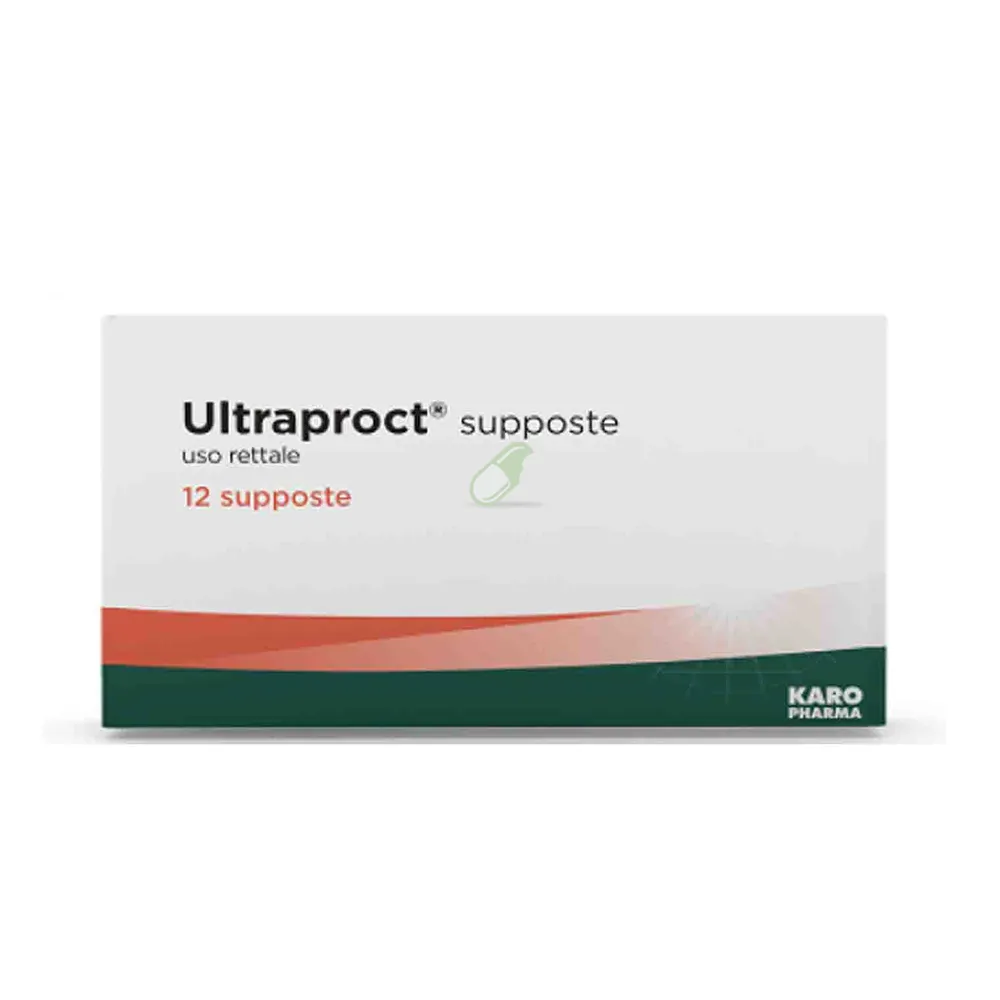
Table of Contents
- Package leaflet: Information for the patient
- Ultraproct rectal ointment
- 1. What Ultraproct is and what it is used for
- 2. What you need to know before using Ultraproct
- 3. How to use Ultraproct
- 4. Possible side effects
- 5. How to store Ultraproct
- 6. Package contents and other information
- Package leaflet: information for the patient
- Ultraproct suppositories
- 1. What Ultraproct is and what it is used for
- 2. What you need to know before using Ultraproct
- 3. How to use Ultraproct
- 4. Possible side effects
- 5. How to store Ultraproct
- 6. Package contents and other information
Package leaflet: Information for the patient
Ultraproct rectal ointment
fluocortolone pivalate + fluocortolone caproate + cincocaine hydrochloride
Please read all of this leaflet carefully before you start using this medicine because it contains important information for you.
Use this medicine exactly as described in this leaflet or as your doctor or pharmacist has instructed you.
- Keep this leaflet. You may need to read it again.
- If you want more information or advice, consult your pharmacist.
- If you experience any side effects, including those not listed in this leaflet, consult your doctor or pharmacist. See section 4.
- Consult your doctor if you do not notice any improvement or if your symptoms worsen.
Contents of this leaflet:
- What Ultraproct is and what it is used for
- What you need to know before using Ultraproct
- How to use Ultraproct
- Possible side effects
- How to store Ultraproct
- Contents of the pack and other information
1. What Ultraproct is and what it is used for
Ultraproct contains two active substances: fluocortolone (as pivalate and as caproate) and cinchocaine hydrochloride.
Fluocortolone (pivalate and caproate) belongs to a class of medicines called corticosteroids, which are anti-inflammatory drugs.
Cinchocaine hydrochloride belongs to a class of medicines called local anaesthetics.
Ultraproct is indicated for the treatment of internal and external haemorrhoids (swollen and inflamed veins inside the anal canal and around the anus), anal fissures (small wounds at the edge of the anus), and proctitis (inflammation of the rectum).
If you do not feel better or if you feel worse, consult your doctor.
2. What you need to know before using Ultraproct
Do not use Ultraproct
- if you are allergic to fluocortolone pivalate, fluocortolone caproate, or cinchocaine hydrochloride, or to any of the other ingredients of this medicine (listed in section 6);
- if there are tuberculous, luetic (caused by syphilis), or viral lesions (such as smallpox, chickenpox, or vaccinia pustules) in the area to be treated.
Warnings and precautions
Talk to your doctor or pharmacist before using Ultraproct.
Avoid contact with the eyes.
Wash your hands thoroughly after using the medicine.
If there is a fungal infection (mycosis) in the area to be treated, your doctor will prescribe a topical antifungal to be used in combination.
The use, especially prolonged use, of topical products may lead to sensitization (allergy). If this occurs, stop treatment and consult your doctor to establish an appropriate therapy.
When applied over large areas, on damaged skin, or under occlusive dressings, corticosteroids may be absorbed in sufficient amounts to cause systemic adverse effects.
Treatment duration should not exceed, whenever possible, 4 weeks.
If latex products, such as condoms, are used simultaneously in the same treatment area as Ultraproct, the excipients in this medicine may damage latex products.
As a result, these products may no longer be effective as contraceptives or for protection against sexually transmitted infections such as HIV. Consult your doctor or pharmacist if you need further information.
Contact your doctor if you experience blurred vision or other visual disturbances.
For athletes: using this medicine without therapeutic need constitutes doping and may lead to a positive result in anti-doping tests.
Children
In very early infancy, this medicine should be administered only when strictly necessary and under direct medical supervision.
Other medicines and Ultraproct
Inform your doctor or pharmacist if you are taking or have recently taken any other medicines, including those obtained without a prescription.
Some medicines may increase the effects of Ultraproct, and your doctor may decide to monitor you closely if you are taking such medicines (including certain HIV treatments: ritonavir, cobicistat).
Pregnancy and breastfeeding
If you are pregnant, suspect you may be pregnant, planning a pregnancy, or breastfeeding, consult your doctor or pharmacist before using this medicine.
Do not use Ultraproct during the first trimester of pregnancy unless the potential benefits outweigh the possible risks to the fetus.
If you are pregnant, use this medicine only when strictly necessary and under direct medical supervision.
Driving and using machines
Ultraproct does not affect the ability to drive or operate machinery.
Ultraproct contains castor oil
This medicine contains castor oil, hydrogenated castor oil, macrogol 400 monoricinoleate, which may cause localized skin reactions.
Ultraproct contains perfumed oil Citrus Rose
This medicine contains a fragrance (perfumed oil Citrus Rose), which itself contains allergens (amyl cinnamal, , benzyl alcohol, benzyl benzoate, cinnamal, cinnamyl alcohol, citral, citronellol, coumarin, d-limonene, eugenol, farnesol, geraniol, , hydroxycitronellal, linalool) that may cause allergic reactions.
3. How to use Ultraproct
Use this medicine exactly as stated in this leaflet or as instructed by your doctor or pharmacist. If you have any doubts, consult your doctor or pharmacist.
Apply a thin layer of the rectal ointment.
On the first day, 3–4 applications of the preparation are recommended to achieve a faster relief of symptoms; thereafter, 2 applications per day will be sufficient.
To prevent recurrences, continue treatment with one daily application for a few more days after complete disappearance of symptoms.
The intrarectal administration of the ointment can be performed using the dedicated nozzle provided with the package, taking care to carry out the application after bowel evacuation. A small amount of cream may be applied into the rectum by gently squeezing the tube (for use and cleaning of the applicator, see section 5. How to store Ultraproct).
If you use more Ultraproct than you should
In case of accidental oral ingestion, symptoms such as seizures, inhibition or arrest of respiratory functions, and cardiocirculatory disturbances (depression or cessation of cardiac function) may occur.
If an excessive dose of Ultraproct has been accidentally ingested, contact your doctor immediately or go to the nearest hospital.
If you have any doubts about how to use this medicine, consult your doctor or pharmacist.
4. Possible side effects
Like all medicines, this medicine can cause side effects, although not everyone experiences them.
Rare cases of local irritation with burning sensation and allergic reactions in predisposed individuals have been reported,
related to one or more components of the medicine, especially cinchocaine hydrochloride.
In rare cases, allergic skin reactions may occur.
With prolonged treatment periods (more than 4 weeks), local symptoms such as skin atrophy (thinning of the skin) may appear.
The low doses of active substances contained in the medicine make systemic adverse effects due to absorption into the body unlikely. If such effects occur,
they would have the general characteristics of classic corticosteroid side effects, although of very limited severity.
Blurred vision may occur, but the frequency is not known (frequency cannot be estimated from the available data).
Reporting of side effects
If you experience any side effect, including those not listed in this leaflet, talk to your doctor or pharmacist. You may also report side effects directly through the national reporting system at https://www.aifa.gov.it/content/segnalazioni-reazioni-avverse.
By reporting side effects, you can help provide more information on the safety of this medicine.
5. How to store Ultraproct
Keep this medicine out of the sight and reach of children.
Do not use this medicine after the expiry date stated on the packaging after "Exp.". The expiry date refers to the last day of that month. The indicated expiry date applies to the product kept in its original, unopened packaging and stored correctly.
Use of the applicator:
do not use the applicator if it is damaged. Screw the applicator fully onto the tube. After each use, clean the applicator externally with a paper swab, then remove any remaining product from inside the applicator with a cotton swab and clean thoroughly again with a paper swab.
Rinse the applicator under warm water for about 1 minute and dry the applicator externally with a paper swab.
Usable for 3 months after first opening.
Store below 25°C.
Do not dispose of any medicine via wastewater or household waste. Ask your pharmacist how to dispose of medicines no longer in use. This will help protect the environment.
6. Package contents and other information
What Ultraproct contains
- The active substances are: fluocortolone pivalate, fluocortolone caproate, cinchocaine hydrochloride. 1 g of rectal ointment contains: 0.918 mg of fluocortolone pivalate, 0.945 mg of fluocortolone caproate, 5 mg of cinchocaine hydrochloride.
- The other components are: 2-octyldodecanol, refined castor oil, hydrogenated castor oil, macrogol 400 ricinoleate, Citrus Rose perfumed oil. *Citrus Rose perfumed oil contains the following allergens: amyl cinnamal, , benzyl alcohol, benzyl benzoate, cinnamal, cinnamyl alcohol, citral, citronellol, coumarin, d-limonene, eugenol, farnesol, geraniol, , hydroxycitronellal, linalool (see paragraph 2).
Description of the appearance of Ultraproct and package contents
Rectal ointment, 30 g tube + 1 applicator.
Marketing Authorization Holder
Karo Healthcare AB, Box 16184, SE-103 24 Stockholm, Sweden.
Manufacturer
Temmler Italia S.r.L., Via Delle Industrie 2 - 20061 Carugate (MI), Italy.
February 2026
Package leaflet: information for the patient
Ultraproct suppositories
fluocortolone pivalate + fluocortolone caproate + cinchocaine hydrochloride
Please read this leaflet carefully before using this medicine because it contains important information for you.
Use this medicine exactly as described in this leaflet or as your doctor or pharmacist has instructed you.
- Keep this leaflet. You may need to read it again.
- If you would like more information or advice, consult your pharmacist.
- If you experience any side effects, including those not listed in this leaflet, contact your doctor or pharmacist. See section 4.
- Contact your doctor if you do not notice any improvement or if your symptoms worsen.
Contents of this leaflet:
- What Ultraproct is and what it is used for
- What you need to know before using Ultraproct
- How to use Ultraproct
- Possible side effects
- How to store Ultraproct
- Contents of the pack and other information
1. What Ultraproct is and what it is used for
Ultraproct contains two active substances: fluocortolone (as pivalate and as caproate) and cinchocaine hydrochloride.
Fluocortolone (pivalate and caproate) belongs to a class of medicines called corticosteroids, which are anti-inflammatory drugs.
Cinchocaine hydrochloride belongs to a class of medicines called local anaesthetics.
Ultraproct is indicated for the treatment of internal haemorrhoids (swollen and inflamed veins inside the anal canal), anal fissures (small wounds at the edge of the anus), and proctitis (inflammation of the rectum).
If you do not feel better or feel worse, talk to your doctor.
2. What you need to know before using Ultraproct
Do not use Ultraproct
- if you are allergic to fluocortolone pivalate, fluocortolone caproate, or cinchocaine hydrochloride, or to any of the other ingredients of this medicine (listed in section 6);
- if there are tuberculous, luetic (due to syphilis), or viral lesions (such as smallpox, chickenpox, or vaccinia pustules) in the area to be treated.
Warnings and precautions
Talk to your doctor or pharmacist before using Ultraproct.
Avoid contact with the eyes.
Wash your hands thoroughly after using the medicine.
If there is a fungal infection (mycosis) in the area to be treated, your doctor will prescribe a topical antifungal medicine to be used in combination.
The use, especially if prolonged, of topical products may lead to sensitization reactions (allergy). If this occurs, stop treatment and consult your doctor to establish appropriate therapy.
When applied over large areas, on damaged skin, or under occlusive dressings, corticosteroids may be absorbed in sufficient amounts to cause systemic adverse effects.
Treatment duration should not exceed, whenever possible, four weeks.
If latex products such as condoms are used simultaneously in the same treatment area as Ultraproct, the excipient in this medicine may damage latex products.
As a result, these products may no longer be effective as contraceptives or for protection against sexually transmitted diseases such as HIV infection. Consult your doctor or pharmacist if you need further information.
Contact your doctor if you experience blurred vision or other visual disturbances.
For athletes: using this medicine without therapeutic need constitutes doping and may lead to a positive anti-doping test.
Children
In very early infancy, this medicine should be administered only when clearly necessary and under direct medical supervision.
Other medicines and Ultraproct
Inform your doctor or pharmacist if you are taking, have recently taken, or might take any other medicines, including those obtained without a prescription.
Some medicines may increase the effects of Ultraproct, and your doctor may decide to monitor you closely if you are taking these medicines (including certain HIV treatments: ritonavir, cobicistat).
Pregnancy and breastfeeding
If you are pregnant, think you might be pregnant, planning a pregnancy, or breastfeeding, consult your doctor or pharmacist before using this medicine.
Do not use Ultraproct during the first trimester of pregnancy unless the potential benefits outweigh the potential risks to the unborn child.
Driving and using machines
Ultraproct does not affect the ability to drive or operate machinery.
3. How to use Ultraproct
Use this medicine exactly as stated in this leaflet or as directed by your doctor or pharmacist. If you have any doubts, consult your doctor or pharmacist.
The recommended dose is one suppository per day.
After complete disappearance of symptoms, it is recommended to continue treatment for a further week using one suppository every two days.
It is advisable to insert the suppository after defecation.
If the suppositories have become soft due to heat, they should be immersed in cold water before opening the wrapper, until they regain a sufficiently firm consistency.
If you use more Ultraproct than you should
In case of accidental oral ingestion, symptoms such as seizures, respiratory depression or respiratory arrest, and cardio-circulatory disturbances (cardiac depression or cardiac arrest) may occur.
If an excessive dose of Ultraproct has been accidentally ingested, contact your doctor immediately or go to the nearest hospital.
If you have any doubts about how to use this medicine, consult your doctor or pharmacist.
4. Possible side effects
Like all medicines, this medicine can cause side effects, although not everybody will experience them.
Rare cases of local irritation with burning sensation and allergic reactions in predisposed individuals have been reported,
related to one or more components of the medicine, especially cincocaine hydrochloride.
In rare cases, skin allergic reactions may occur.
With prolonged treatment periods (more than 4 weeks), local symptoms such as skin atrophy (thinning of the skin) may appear.
The low doses of active substances contained in the medicine make systemic adverse effects due to absorption into the body unlikely.
If such effects do occur, they would have the general characteristics of classic corticosteroid side effects, although of very low intensity.
The following may occur at an unknown frequency (frequency cannot be estimated from the available data): Blurred vision.
Reporting of side effects
If you experience any side effect, including those not listed in this leaflet, talk to your doctor or pharmacist.
You can also report side effects directly via the national reporting system at https://www.aifa.gov.it/content/segnalazioni-reazioni-avverse.
By reporting side effects, you can help provide more information on the safety of this medicine.
5. How to store Ultraproct
Keep this medicine out of the sight and reach of children.
Do not use this medicine after the expiry date stated on the packaging after "Exp".
The expiry date refers to the last day of that month. The indicated expiry date applies to the product when unopened and stored correctly.
Store in a refrigerator (2°C – 8°C).
Do not dispose of any medicine via wastewater or household waste. Ask your pharmacist how to dispose of medicines no longer required. This will help protect the environment.
6. Package contents and other information
What Ultraproct contains
- The active substances are: fluocortolone pivalate, fluocortolone caproate, cinchocaine hydrochloride. Each suppository contains 0.612 mg of fluocortolone pivalate, 0.630 mg of fluocortolone caproate, and 1 mg of cinchocaine hydrochloride.
- The other component is: saturated fatty acid glycerides.
Description of the appearance of Ultraproct and package contents
Pack containing 2 strips of 6 suppositories (12 suppositories).
Marketing Authorization Holder
Karo Healthcare AB, Box 16184, SE-103 24 Stockholm, Sweden.
Manufacturer
Istituto de Angeli S.r.l
Località Prulli, 103/C
50066 Reggello (Florence)
Italy
August 2024