Tyverb
Italy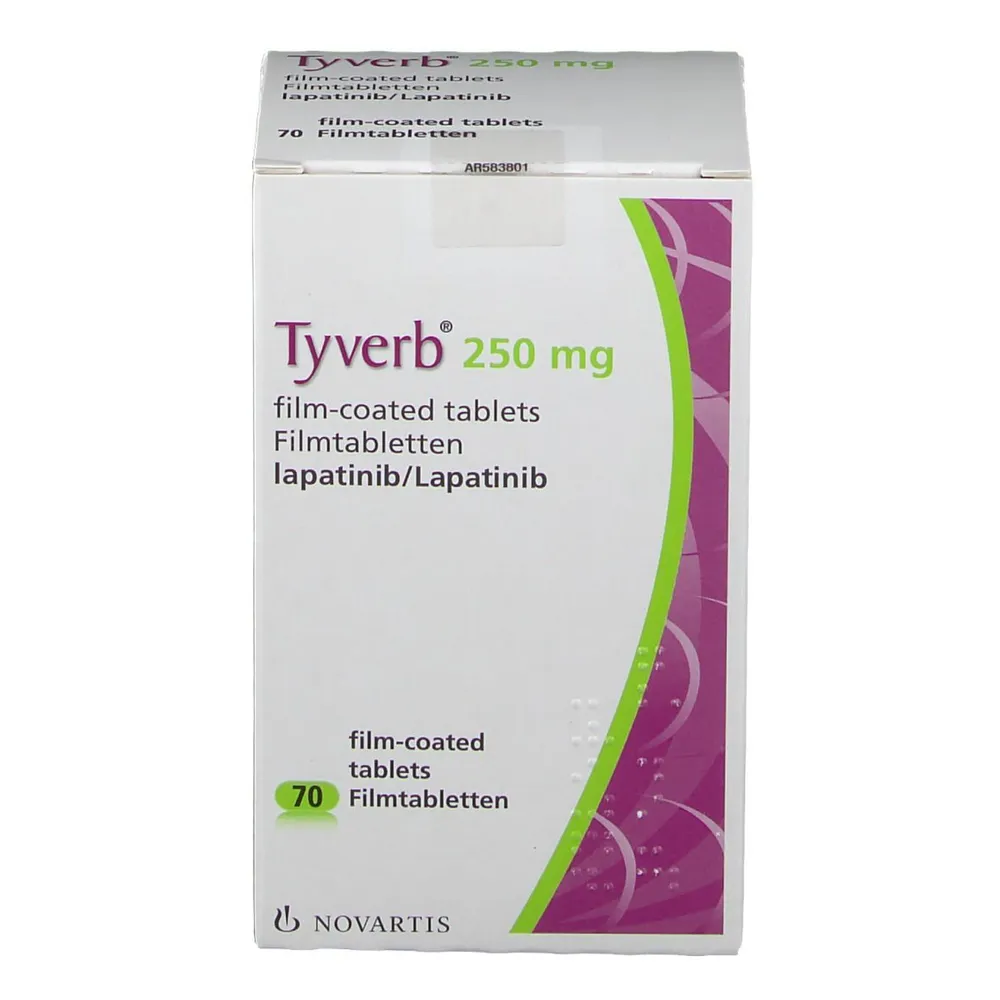
Table of Contents
Package leaflet: Information for the user
Tyverb 250 mg film-coated tablets
lapatinib
Please read all of this leaflet carefully before you start taking this medicine because it contains important information for you.
- Keep this leaflet. You may need to read it again. If you have any further questions, ask your doctor or pharmacist.
- This medicine has been prescribed for you only. Do not pass it on to other people, even if their symptoms are the same as yours, as it may be harmful.
- If you experience any side effects, including those not listed in this leaflet, tell your doctor or pharmacist. See section 4.
Contents of this leaflet:
- What Tyverb is and what it is used for
- What you need to know before taking Tyverb
- How to take Tyverb
- Possible side effects
- How to store Tyverb
- Contents of the pack and other information
1. What Tyverb is and what it is used for
Tyverb is used to treat certain types of breast cancer (HER2-positive)
that have spread beyond the original tumour or to other organs (advanced or
metastatic breast cancer).
It may slow down or stop the growth of cancer cells, or may kill them.
Tyverb is prescribed to be taken in combination with other anticancer medicines.
Tyverb is prescribed in combination with capecitabine in patients who have previously received
treatment for advanced or metastatic breast cancer. These prior treatments for
metastatic breast cancer must have included trastuzumab.
Tyverb is prescribed in combination with trastuzumab in patients with metastatic breast cancer
that is hormone receptor-negative and who have received prior treatment for advanced or metastatic
breast cancer.
Tyverb is prescribed in combination with an aromatase inhibitor in patients with hormone-sensitive
metastatic breast cancer (breast cancer that is more likely to grow in the presence of hormones), for
whom chemotherapy is currently not indicated.
Information about these medicines is described in their respective package leaflets. Please ask your
doctor for information about these other medicines.
2. What you need to know before taking Tyverb
Do not take Tyverb
- if you are allergic to lapatinib or to any of the other ingredients of this medicine (listed in section 6).
Exercise particular caution with Tyverb
Your doctor will perform tests to monitor that your heart is functioning properly
before and during treatment with Tyverb.
Before taking Tyverb, inform your doctor if you have any heart problems.
Before taking Tyverb, your doctor should also know:
- if you have a lung disease
- if you have inflammation of the lungs
- if you have any liver problems
- if you have any kidney problems
- if you have diarrhoea (see section 4).
Before and during treatment with Tyverb, your doctor will carry out tests to check that your
liver is functioning properly.
Inform your doctor if any of these situations apply to you.
Severe skin reactions
Severe skin reactions have occurred with Tyverb. Symptoms may include rash,
blistering and skin peeling.
Inform your doctor as soon as possible if you experience any of these symptoms.
Other medicines and Tyverb
Inform your doctor or pharmacist if you are taking, have recently taken, or might
take any other medicines. This includes herbal medicines and any medicines
purchased without a prescription.
It is especially important to inform your doctor if you are taking or have recently taken
any of the following medicines. Some medicines may affect the activity of Tyverb or
Tyverb may affect the activity of other medicines. These medicines include those
belonging to the following groups:
- St. John’s wort – an extract of an herb used to treat depression
- erythromycin, ketoconazole, itraconazole, posaconazole, voriconazole, rifabutin, rifampicin, telithromycin – medicines used to treat infections
- ciclosporin – a medicine used to suppress the immune system, for example after an organ transplant
- ritonavir, saquinavir – medicines used to treat HIV
- phenytoin, carbamazepine – medicines used to treat seizures
- cisapride – a medicine used to treat certain digestive system problems
- pimozide – a medicine used to treat certain mental health problems
- quinidine, digoxin – medicines used to treat certain heart problems
- repaglinide – a medicine used to treat diabetes
- verapamil – a medicine used to treat high blood pressure or heart problems (angina)
- nefazodone – a medicine used to treat depression
- topotecan, paclitaxel, irinotecan, docetaxel – medicines used to treat certain types of cancer
- rosuvastatin – a medicine used to treat high cholesterol
- medicines that reduce stomach acid – used to treat stomach ulcers or indigestion
Inform your doctor if you are taking or have recently taken any of these medicines.
Your doctor will review the medicines you are taking to ensure you are not taking anything
that should not be taken with Tyverb. Your doctor will inform you about any alternative treatments
available.
Tyverb with food and drink
Do not drink grapefruit juice while being treated with Tyverb. This may affect how the
medicine works.
Pregnancy and breastfeeding
It is not known whether Tyverb has any effect during pregnancy. You must not use Tyverb if you are
pregnant unless specifically recommended by your doctor.
- If you are pregnant or planning a pregnancy, inform your doctor.
- Use a reliable method of contraception to prevent pregnancy while you are taking Tyverb and for at least 5 days after the last dose.
- If you become pregnant while being treated with Tyverb, inform your doctor.
It is not known whether Tyverb passes into breast milk. While taking Tyverb, you must not breastfeed
and for at least 5 days after the last dose.
- If you are breastfeeding or planning to breastfeed, inform your doctor.
If you have any doubts, ask your doctor or pharmacist before taking Tyverb.
Driving and using machines
You are responsible for deciding whether you are fit to drive a motor vehicle or perform other activities requiring increased concentration. Due to the possible side effects of Tyverb, your ability to drive vehicles or operate machinery may be affected. These effects are described in section 4 “Possible side effects”.
Tyverb contains sodium
This medicine contains less than 1 mmol (23 mg) of sodium per tablet, i.e. essentially
‘sodium-free’.
3. How to take Tyverb
Take this medicine exactly as your doctor has told you. If you are unsure, consult your doctor or pharmacist.
Your doctor will determine the correct dose of Tyverb based on the type of breast cancer to be treated.
If your doctor has prescribed Tyverb in combination with capecitabine, the recommended dose is 5 Tyverb tablets per day, taken as a single dose.
If your doctor has prescribed Tyverb in combination with trastuzumab, the recommended dose is 4 Tyverb tablets per day, taken as a single dose.
If your doctor has prescribed Tyverb in combination with an aromatase inhibitor, the recommended dose is 6 Tyverb tablets per day, taken as a single dose.
Take the prescribed dose every day until your doctor tells you to stop.
Your doctor will inform you about the dose of the other anticancer medicines and how to take them.
Taking the tablets
- Swallow the tablets whole with water, one after the other, every day at the same time.
- Take Tyverb at least one hour before or at least one hour after food. Take Tyverb every day at the same time in relation to food – for example, you may take the tablets always one hour before breakfast.
While taking Tyverb
- Depending on the side effects you experience, your doctor may recommend reducing the dose or temporarily stopping treatment.
- Your doctor will also perform tests to monitor heart and liver function before and during treatment with Tyverb.
If you take more Tyverb than you should
Contact a doctor or pharmacist immediately. If possible, show them the pack.
If you forget to take Tyverb
Do not take a double dose to make up for the missed dose. Take only the next dose at the scheduled time.
4. Possible side effects
Like all medicines, this medicine can cause side effects, although not everybody gets them.
A severe allergic reaction is a rare side effect (may occur in up to 1 in 1,000 people) and can develop rapidly. Symptoms may include:
- rash (including blotchy rash, itchy rash)
- unusually short breath, or difficulty breathing
- swelling of the eyelids, lips or tongue
- muscle or joint pain
- collapse or loss of consciousness
Contact your doctor immediately if you experience any of these symptoms. Do not take any more tablets.
Very common side effects (may occur in more than 1 in 10 people)
- diarrhoea (which may cause dehydration and can lead to more serious complications)
Contact your doctor immediately at the first sign of diarrhoea (loose stools), as it is important that this is treated immediately. Contact your doctor immediately if diarrhoea worsens.
Additional advice on reducing the risk of diarrhoea can be found at the end of paragraph 4. - skin rash, dry skin, itching
Contact your doctor if you develop a skin rash.
Additional advice on reducing the risk of skin rash can be found at the end of paragraph 4.
Other very common side effects
- loss of appetite
- nausea
- vomiting
- tiredness, feeling weak
- indigestion
- constipation
- mouth pain/ulcers in the mouth
- stomach pain
- trouble sleeping
- back pain
- pain in hands and feet
- joint or back pain
- a skin reaction on the palms of the hands and soles of the feet (including tingling, numbness, pain, swelling or redness)
- cough, shortness of breath
- headache
- nose bleed
- hot flushes
- unusual hair loss or thinning
Contact your doctor if any of these side effects worsen or become troublesome.
Common side effects (may occur in up to 1 in 10 people)
- an effect on how your heart works
In many cases, the effect on the heart will not cause any symptoms. If you do experience symptoms related to this side effect, they may include irregular heartbeat and shortness of breath.
- liver problems, which may cause itching, yellowing of the eyes and skin (jaundice), dark urine, or pain or discomfort in the upper right part of the stomach
- changes in nails – such as painful infections and swelling of the cuticles (skin around the nails)
- skin fissures (deep cracks or splits in the skin)
Contact your doctor if you experience any of these symptoms.
Uncommon side effects (may occur in up to 1 in 100 people)
- treatment-related inflammation of the lungs, which may cause shortness of breath or cough
Contact your doctor immediately if you experience any of these symptoms.
Other uncommon side effects include:
- blood test results showing changes in liver function (usually mild and temporary)
Rare side effects (may occur in up to 1 in 1,000 people)
- severe allergic reactions (see beginning of paragraph 4)
The frequency of some side effects is not known (cannot be estimated from the available data):
- irregular heartbeat (change in the heart's electrical activity)
- severe skin reaction which may include: rash, redness of the skin, blistering of the lips, eyes or mouth, peeling of the skin, fever, or any combination of these events
- pulmonary arterial hypertension (increased blood pressure in the arteries of the lungs)
If you experience any other side effects
Contact your doctor or pharmacist if you notice any side effect not listed in this leaflet.
Reducing the risk of diarrhoea and skin rash
Tyverb can cause severe diarrhoea
If you develop diarrhoea while taking Tyverb:
- drink plenty of fluids (8 to 10 glasses per day), such as water, sports drinks or other clear liquids
- eat low-fat, high-protein foods instead of fatty or spicy foods
- eat cooked vegetables instead of raw vegetables and peel fruit before eating
- avoid milk and dairy products (including ice cream)
- avoid herbal supplements (some may cause diarrhoea)
Contact your doctor if diarrhoea continues.
Tyverb can cause skin rash
Your doctor will check your skin before and during treatment.
To care for sensitive skin:
- wash with a soap-free cleanser
- use fragrance-free, hypoallergenic skin care products
- use sunscreen (Sun Protection Factor [SPF] 30 or higher)
Contact your doctor if you develop a skin rash.
Reporting of side effects
If you experience any side effect, including ones not listed in this leaflet, talk to your doctor or pharmacist. You can also report side effects directly via the national reporting system listed in Annex V. By reporting side effects, you can help provide more information on the safety of this medicine.
5. How to store Tyverb
Keep this medicine out of the sight and reach of children.
Do not use this medicine after the expiry date stated on the blister, bottle, and carton.
Do not store above 30°C.
Do not dispose of any medicine via wastewater or household waste. Ask your pharmacist how to
dispose of medicines you no longer use. This will help protect the environment.
6. Package contents and other information
What Tyverb contains
- The active substance in Tyverb is lapatinib. Each film-coated tablet contains lapatinib ditosylate monohydrate, equivalent to 250 mg of lapatinib.
- The other components are: microcrystalline cellulose, povidone (K30), sodium starch glycolate (Type A), magnesium stearate, hypromellose, titanium dioxide (E171), macrogol (400), polysorbate 80, yellow iron oxide (E172) and red iron oxide (E172).
Description of the appearance of Tyverb and contents of the pack
Tyverb film-coated tablets are film-coated, oval, biconvex, yellow tablets, marked “GS XJG” on one side.
Tyverb is available in blisters or bottles.
Blister packs
Each Tyverb pack contains 70 or 84 tablets in aluminium blisters containing 10 or 12 tablets each. Each aluminium sheet has a perforation in the middle and can be divided into two blisters of 5 or 6 tablets each, depending on the pack size.
Tyverb is also available in multiple packs containing 140 tablets, consisting of 2 packs, each containing 70 tablets.
Bottles
Tyverb is also available in plastic bottles containing 70, 84, 105 or 140 tablets.
Not all pack sizes may be marketed.
Marketing Authorisation Holder
Novartis Europharm Limited
Vista Building
Elm Park, Merrion Road
Dublin 4
Ireland
Manufacturer
Glaxo Wellcome S.A.
Avenida de Extremadura 3
09400 Aranda de Duero
Burgos
Spain
Novartis Pharma GmbH
Roonstraße 25
D-90429 Nuremberg
Germany
Novartis Farmacéutica S.A.
Gran Via de les Corts Catalanes, 764
08013 Barcelona
Spain
Novartis Pharmaceuticals S.R.L.
Str. Livezeni nr. 7A
540472 Targu Mures
Romania
Novartis Pharma GmbH
Sophie-Germain-Strasse 10
90443 Nuremberg
Germany
For further information on this medicinal product, please contact the local representative of the Marketing Authorisation Holder:
België/Belgique/Belgien Lietuva
Novartis Pharma N.V. SIA Novartis Baltics Lietuvos filialas
Tél/Tel: +32 2 246 16 11 Tel: +370 5 269 16 50
България Luxembourg/Luxemburg
Novartis Bulgaria EOOD Novartis Pharma N.V.
Тел: +359 2 489 98 28 Tél/Tel: +32 2 246 16 11
Česká republika Magyarország
Novartis s.r.o. Novartis Hungária Kft.
Tel: +420 225 775 111 Tel.: +36 1 457 65 00
Danmark Malta
Novartis Healthcare A/S Novartis Pharma Services Inc.
Tlf: +45 39 16 84 00 Tel: +356 2122 2872
Deutschland Nederland
Novartis Pharma GmbH Novartis Pharma B.V.
Tel: +49 911 273 0 Tel: +31 88 04 52 555
Eesti Norge
SIA Novartis Baltics Eesti filiaal Novartis Norge AS
Tel: +372 66 30 810 Tlf: +47 23 05 20 00
Ελλάδα Österreich
Novartis (Hellas) A.E.B.E. Novartis Pharma GmbH
Τηλ: +30 210 281 17 12 Tel: +43 1 86 6570
España Polska
Novartis Farmacéutica, S.A. Novartis Poland Sp. z o.o.
Tel: +34 93 306 42 00 Tel.: +48 22 375 4888
France Portugal
Novartis Pharma S.A.S. Novartis Farma - Produtos Farmacêuticos, S.A.
Tél: +33 1 55 47 66 00 Tel: +351 21 000 8600
Hrvatska România
Novartis Hrvatska d.o.o. Novartis Pharma Services Romania SRL
Tel. +385 1 6274 220 Tel: +40 21 31299 01
Ireland Slovenija
Novartis Ireland Limited Novartis Pharma Services Inc.
Tel: +353 1 260 12 55 Tel: +386 1 300 75 50
Ísland Slovenská republika
Vistor hf. Novartis Slovakia s.r.o.
Sími: +354 535 7000 Tel: +421 2 5542 5439
Italia Suomi/Finland
Novartis Farma S.p.A. Novartis Finland Oy
Tel: +39 02 96 54 1 Puh/Tel: +358 (0)10 6133 200
Κύπρος Sverige
Novartis Pharma Services Inc. Novartis Sverige AB
Τηλ: +357 22 690 690 Tel: +46 8 732 32 00
Latvija
SIA Novartis Baltics
Tel: +371 67 887 070
More detailed information on this medicinal product is available on the website of the European Medicines Agency, http://www.ema.europa.eu.