Truvinut
ItalyTable of Contents
Patient Information Leaflet
Truvinut 700 mg medicated patch
Lidocaine
Please read all of this leaflet carefully before using this medicine because it contains important information for you.
- Keep this leaflet. You may need to read it again.
- If you have any questions, ask your doctor or pharmacist.
- This medicine has been prescribed for you only. Do not give it to other people, even if their symptoms are the same as yours, as it could be harmful.
- If you experience any side effects, including those not listed in this leaflet, please tell your doctor or pharmacist. See section 4.
Contents of this leaflet:
- What Truvinut is and what it is used for
- What you need to know before using Truvinut
- How to use Truvinut
- Possible side effects
- How to store Truvinut
- Contents of the pack and other information
1. What Truvinut is and what it is used for
Truvinut contains lidocaine, a local anaesthetic, which works by reducing pain at the skin level.
It has been prescribed to treat pain caused by post-herpetic neuralgia. This condition is
typically characterised by localized symptoms such as burning, stabbing, or shooting pain.
2. What you need to know before using Truvinut
Do not use Truvinut
- if you are allergic to lidocaine or to any of the other ingredients of this medicine (listed in section 6)
- if you have had an allergic reaction to other products similar to lidocaine, such as bupivacaine, etidocaine, mepivacaine or prilocaine
- on damaged skin or open wounds.
Warnings and precautions
Talk to your doctor or pharmacist before using Truvinut
If you have severe liver disease or serious heart or kidney problems, you should discuss this with your doctor before using Truvinut.
Truvinut should be applied to the skin after the herpes zoster lesions have healed. It must not be applied to or near the eyes or mouth.
Lidocaine is metabolized into several compounds in the liver. One of these compounds is 2,6-xylidine, which has been shown to cause tumours in rats when administered continuously at very high doses. The relevance of these findings to humans is unknown.
Children and adolescents
Truvinut has not been studied in patients under 18 years of age. Therefore, its use is not recommended in these patients.
Other medicines and Truvinut
Tell your doctor or pharmacist if you are taking, have recently taken or might take any other medicines.
Pregnancy, breastfeeding and fertility
If you are pregnant, think you may be pregnant, are planning to become pregnant, or are breastfeeding, consult your doctor or pharmacist before using this medicine.
Truvinut must not be used during pregnancy unless strictly necessary.
There are no studies on the use of the patch during breastfeeding. When Truvinut is used, only a small amount of the active substance, lidocaine, may be present in the blood. It is unlikely to have any effect on breastfed infants.
Driving and using machines
It is unlikely that Truvinut will affect your ability to drive or use machinery. Therefore, it is generally safe to drive or operate machinery while using Truvinut.
Truvinut contains propylene glycol, methyl parahydroxybenzoate and propyl parahydroxybenzoate.
The patches contain propylene glycol (E1520), which may cause skin irritation. They also contain methyl parahydroxybenzoate (E218) and propyl parahydroxybenzoate (E216), which may cause allergic reactions. Sometimes allergic reactions may occur after using the patches for some time.
3. How to use Truvinut
Use this medicine exactly as directed by your doctor. If you have any doubts, consult your doctor or pharmacist.
The usual daily dose is one to three patches, sized according to the painful area of skin.
Truvinut may be cut into smaller pieces to cover the affected area. Do not use more than 3 patches at the same time.
The patches must be removed after 12 hours of application; this will result in a 12-hour period without a patch. You may choose whether to apply Truvinut during the day or during the night.
You may generally feel some relief from pain already on the first day of use, but it may take 2–4 weeks before the full analgesic effect of Truvinut is achieved. If the pain remains severe after this time, inform your doctor, as the benefit of treatment should be evaluated against potential risks (see section 2 “Warnings and precautions”).
Your doctor will regularly check whether Truvinut is working effectively.
Before applying Truvinut to the affected area
- If the painful skin area is covered with hair, trim the hair with scissors. Do not shave it.
- The skin must be clean and dry.
- Creams or lotions may be applied to the treated skin only during the time when the patch is not in place.
- If you have just taken a bath or shower, wait until the skin has cooled down before applying the patch.
Applying the patch
Step 1: Open the pouch and remove one or more patches
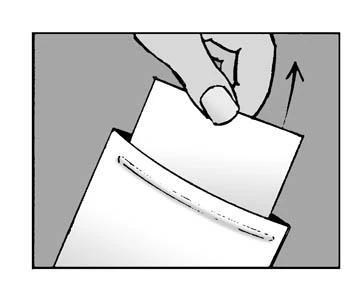
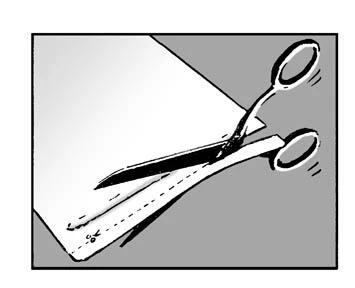
- Tear or cut the pouch along the dotted line.
- If using scissors, take care not to damage the patches.
- Take out one or more patches, depending on the size of the painful skin area.
Step 2: Close the pouch
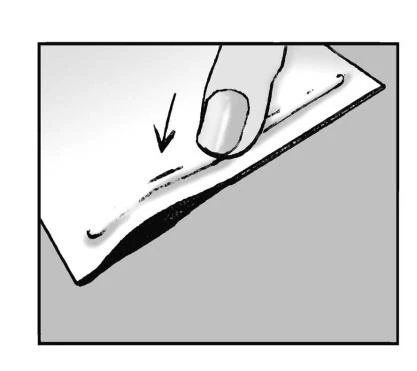
- Close the pouch tightly after use.
- The patch contains water and may dry out if the pouch is not properly resealed.
Step 3: Cut the patch, if necessary
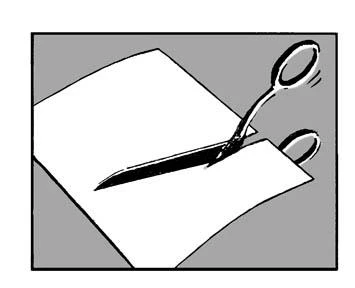
- If needed, cut the patch to the required size before removing the protective film, so that it covers the painful skin area.
Step 4: Remove the protective film
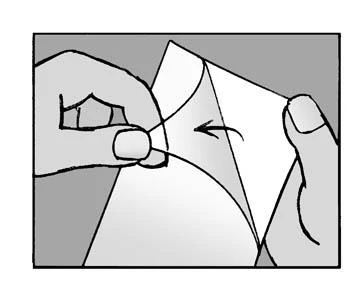
- Remove the transparent protective film from the patch.
- Try not to touch the adhesive side of the patch.
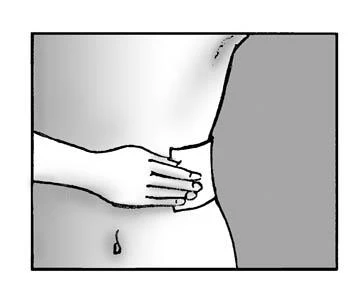
Step 5: Apply the patch and press firmly onto the skin
- Apply up to three patches to the painful area of skin.
- Press the patch onto the skin.
- Hold the patch in place for at least 10 seconds to ensure it adheres properly.
- Make sure the entire patch, including the edges, adheres to the skin.
Leave the patch in place for 12 hours only
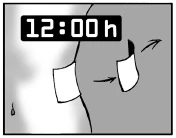
It is important that Truvinut remains on the skin for only 12 hours. For example, if your pain is worse at night, you may apply the patch at 7 p.m. and remove it at 7 a.m. If your pain is worse during the day, you may apply Truvinut at 7 a.m. and remove it at 7 p.m.
Bathing, showering and swimming
Since contact of Truvinut with water should be avoided, bathing, showering or swimming should only be done during the time when the patch is not applied. After bathing or showering, wait until the skin has cooled down before applying the patch.
If the patch comes off
Very rarely, the patch may come off or fail to adhere properly. In this case, try to reattach it to the same area. If it does not stay in place, remove it completely and apply a new patch to the same area.
How to remove Truvinut
To change the patch, remove the old patch slowly. If it does not come off easily, you may moisten it with warm water for a few minutes before removing it.
If you forget to remove the patch after 12 hours
Remove the patch as soon as you remember. The new patch can be applied after a 12-hour interval.
If you use more patches than you should
If you use more patches than necessary or leave them on for too long, your risk of experiencing side effects may increase.
If you forget to apply Truvinut
If you have forgotten to apply a new patch after the 12-hour interval without the previous patch, apply the new patch as soon as you remember.
If you have any doubts about how to use this medicine, consult your doctor or pharmacist.
4. Possible side effects
Like all medicines, this medicine can cause side effects, although not everybody gets them.
Important side effects or symptoms to be aware of and what to do in such cases
If you experience irritation or a burning sensation during application of the patch, remove the patch immediately. Do not apply another patch to that area until the irritation has healed.
Other possible side effects:
Very common (may affect more than 1 in 10 people):
Skin changes at or near the site of patch application, which may include redness, rash, itching, burning, dermatitis, and blisters.
Uncommon (may affect up to 1 in 100 people):
Skin disorders and skin injuries.
Very rare (may affect up to 1 in 10,000 people):
Open skin lesions, severe allergic reactions, and allergy.
Reporting of side effects
If you experience any side effect, including those not listed in this leaflet, talk to your doctor or pharmacist. You can also report side effects directly via the national reporting system at www.agenziafarmaco.gov.it/content/come-segnalare-una-sospetta-reazione-avversa. By reporting side effects, you can help provide more information on the safety of this medicine.
5. How to store Truvinut
Keep this medicine out of the sight and reach of children.
Do not use this medicine after the expiry date which is stated on the pouch and carton after
EXP. The expiry date refers to the last day of that month.
Do not refrigerate or freeze.
Reseal the pouch carefully after first opening.
Usable duration after first opening of the pouch: 14 days.
Do not use this medicine if you notice that the pouch is damaged. In such a case, the patch may have dried out and therefore may not adhere properly.
How to dispose of Truvinut
Used patches still contain active substance which could be dangerous for others.
Fold used patches in half with the adhesive side inside and dispose of them safely, ensuring they are out of the reach of children.
Do not dispose of any medicine via wastewater or household waste. Ask your pharmacist how to dispose of medicines you no longer use. This will help protect the environment.
6. Package contents and other information
What Truvinut contains
- the active substance is lidocaine
- each 10 cm x 14 cm patch contains 700 mg of lidocaine (equivalent to 5% w/w)
- the other components in the patch (excipients) are: glycerol, liquid sorbitol, sodium carmellose, propylene glycol (E1520), urea, heavy kaolin, tartaric acid, gelatin, polyvinyl alcohol, aluminium glycinate, disodium edetate, methyl parahydroxybenzoate (E218), propyl parahydroxybenzoate (E216), polyacrylic acid, sodium polyacrylate, purified water.
The support layer and adhesive layer: polyethylene terephthalate (PET).
Description of the appearance of Truvinut and pack contents
The medicated patches are 14 cm long and 10 cm wide. They are white, made of soft material, and bear the inscription “lidocaine 5%”. The patches are packaged in resealable pouches, each containing 5 patches.
Each package contains 5, 10, 20, 25 or 30 patches, respectively packed in 1, 2, 4, 5 or 6 pouches.
Not all pack sizes may be marketed.
Marketing Authorization Holder:
GRÜNENTHAL ITALIA S.r.l., Via Vittor Pisani 16, 20124 Milano, Italy
Manufacturer
Grünenthal GmbH – Zieglerstrasse 6 - 52078 Aachen (Germany)
This medicinal product is authorized in the European Economic Area countries under the following names:
Finland, Germany, United Kingdom: Esliva
France: Wetso
Italy: Truvinut