Trulicity
Italy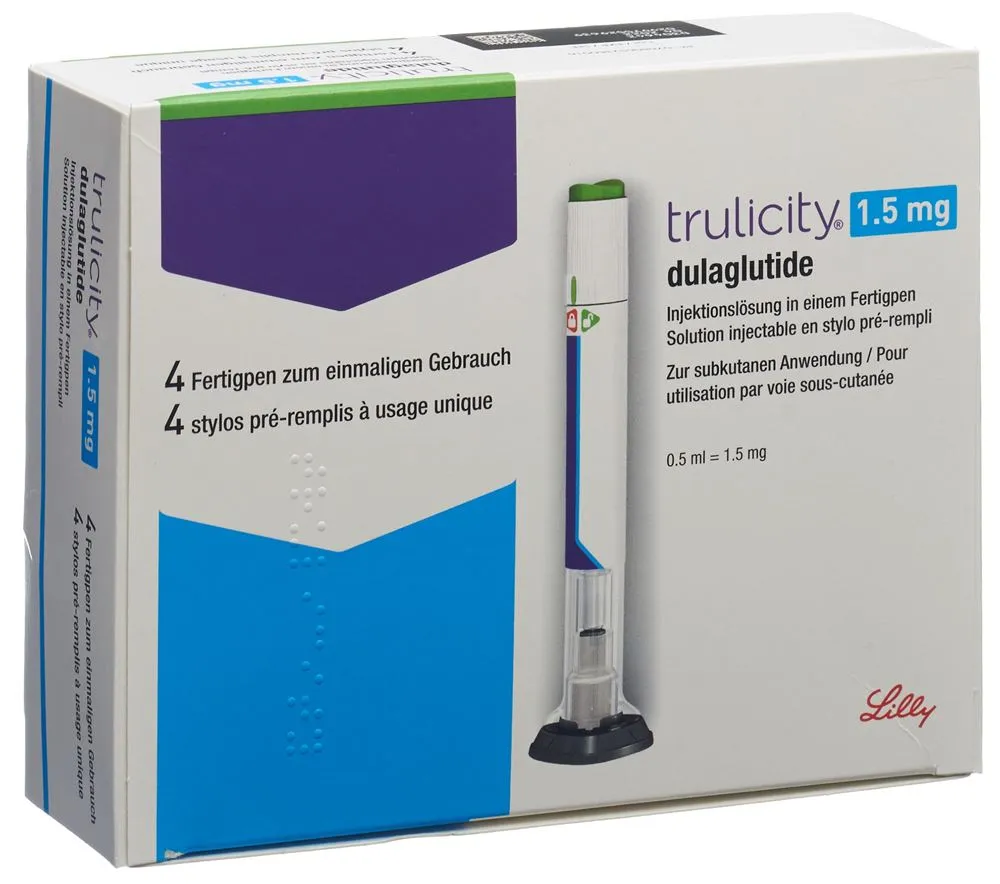
Instructions for Use
Table of Contents
- Trulicity 0.75 mg solution for injection in pre-filled pen, 1.5 mg solution for injection in pre-filled pen, 3 mg solution for injection in pre-filled pen, 4.5 mg solution for injection in pre-filled pen
- 1. What Trulicity is and what it is used for
- 2. What you need to know before using Trulicity
- 3. How to use Trulicity
- 4. Possible side effects
- 5. How to store Trulicity
- 6. Package contents and other information
- Instructions for use
- Trulicity 0.75 mg solution for injection in pre-filled pen
- Instructions for use
- Trulicity 1.5 mg solution for injection in a pre-filled pen
- Instructions for use
- Trulicity 3 mg solution for injection in a prefilled pen
- Instructions for use
- Trulicity 4.5 mg solution for injection in a pre-filled pen
Patient Information Leaflet
Trulicity 0.75 mg solution for injection in pre-filled pen, 1.5 mg solution for injection in pre-filled pen, 3 mg solution for injection in pre-filled pen, 4.5 mg solution for injection in pre-filled pen
dulaglutide
Please read this entire leaflet carefully before using this medicine, as it contains important information for you.
- Keep this leaflet. You may need to read it again.
- If you have any questions, ask your doctor, pharmacist, or nurse.
- This medicine has been prescribed for you only. Do not give it to others, even if they have the same symptoms as yours, because it may be harmful to them.
- If you experience any side effects, including those not listed in this leaflet, tell your doctor, pharmacist, or nurse. See section 4.
Contents of this leaflet:
- What Trulicity is and what it is used for
- What you need to know before using Trulicity
- How to use Trulicity
- Possible side effects
- How to store Trulicity
- Contents of the pack and other information
1. What Trulicity is and what it is used for
Trulicity contains an active substance called dulaglutide and is used to lower blood sugar (glucose) in adults and children aged 10 years and older with type 2 diabetes mellitus, and may help prevent heart disease.
Type 2 diabetes is a condition in which the body does not produce enough insulin and the insulin the body produces does not work as it should.
When this happens, sugar (glucose) builds up in the blood.
Trulicity is used:
- on its own if your blood sugar level is not adequately controlled by diet and exercise alone and you cannot take metformin (another diabetes medicine).
- or in combination with other diabetes medicines when these are not sufficient to control blood sugar levels. These other medicines may include oral medicines and/or insulin administered by injection.
It is important to continue following your doctor’s, pharmacist’s, or nurse’s advice regarding diet and exercise.
2. What you need to know before using Trulicity
Do not use Trulicity
- if you are allergic to dulaglutide or to any of the other ingredients of this medicine (listed in section 6).
Warnings and precautions
Talk to your doctor, pharmacist, or nurse before using Trulicity if:
- you are on dialysis, as this medicine is not recommended.
- you have type 1 diabetes (the type of diabetes in which the body does not produce insulin at all), as this medicine may not be suitable for you.
- you have diabetic ketoacidosis (a complication of diabetes that occurs when the body cannot lower blood glucose levels due to insufficient insulin). Signs include rapid weight loss, nausea or vomiting, sweet-smelling breath, a sweet or metallic taste in the mouth, or unusual odour of urine or sweat.
- you have severe digestive problems or food remains in the stomach longer than normal (including gastroparesis).
- you have ever had pancreatitis (inflammation of the pancreas), which causes severe and persistent stomach and back pain.
- you are taking a sulfonylurea or insulin for diabetes, as excessively low blood sugar levels (hypoglycaemia) may occur. Your doctor may consider it necessary to adjust the dose of these other medicines to reduce this risk. Trulicity is not insulin and therefore must not be used as a substitute for insulin.
In patients treated with Trulicity, symptoms—sometimes severe—of delayed gastric emptying have been reported, such as a feeling of fullness, nausea and/or vomiting. Inform your doctor if you develop severe stomach emptying problems that do not resolve during treatment with Trulicity.
If you are scheduled for surgery under anaesthesia, inform your doctor that you are using Trulicity.
When starting treatment with Trulicity, fluid loss/dehydration may occur in some cases, for example due to vomiting, nausea and/or diarrhoea, which could lead to reduced kidney function. It is important to prevent dehydration by drinking plenty of fluids.
Contact your doctor if you have any questions or concerns.
Children and adolescents
Trulicity can be used in children and adolescents aged 10 years and older. Data are not available in children under 10 years of age.
Other medicines and Trulicity
Since Trulicity may slow stomach emptying, which could affect the action of other medicines, inform your doctor, pharmacist, or nurse if you are taking, have recently taken, or might take any other medicines.
Pregnancy
It is not known whether dulaglutide may harm the unborn baby. Women who could become pregnant should use contraceptive methods during treatment with dulaglutide. Inform your doctor if you are pregnant, suspect you may be pregnant, or are planning a pregnancy, as Trulicity should not be used during pregnancy. Talk to your doctor about the best way to control blood sugar levels during pregnancy.
Breast-feeding
Talk to your doctor if you are breast-feeding or plan to breast-feed before taking this medicine. Do not use Trulicity if you are breast-feeding. It is not known whether dulaglutide passes into breast milk.
Driving and using machines
Trulicity has no effect or a negligible effect on the ability to drive or operate machinery. However, if you use Trulicity in combination with a sulfonylurea or insulin, excessively low blood sugar levels (hypoglycaemia) may occur, which can impair concentration. Avoid driving or operating machinery if you experience any signs of low blood sugar. See section 2, "Warnings and precautions", for information on the increased risk of low blood sugar, and section 4 for warning signs of low blood sugar. Talk to your doctor for further information.
Trulicity contains sodium
This medicine contains less than 1 mmol (23 mg) of sodium per dose, i.e., essentially “sodium-free”.
3. How to use Trulicity
Use this medicine exactly as instructed by your doctor or pharmacist. If you have
any doubts about how to use this medicine, consult your doctor or pharmacist.
Adults
Your doctor may recommend a dose of 0.75 mg once weekly for the treatment of diabetes
when Trulicity is used alone.
When used in combination with other antidiabetic medicines, your doctor may recommend a dose of
1.5 mg once weekly.
If blood sugar levels are not adequately controlled, your doctor may increase the
dose to 3 mg once weekly.
If further blood glucose control is needed, the dose may be increased again to 4.5 mg
once weekly.
Children and adolescents
The initial dose for children and adolescents aged 10 years and older is 0.75 mg once weekly. If blood sugar levels are not adequately controlled after at least
4 weeks, your doctor may increase the dose to 1.5 mg once weekly.
Each pen contains one weekly dose of Trulicity (0.75 mg, 1.5 mg, 3 mg or 4.5 mg). Each pen delivers only one dose.
You may use the pen at any time of day, regardless of meals. For best results, take the medicine on the same day each week. To help you remember, you may write down the day of the week you take your first dose on the table provided in the pen package, or on a calendar.
Trulicity is injected under the skin (subcutaneous injection) into the abdominal area or the upper thigh. If someone else administers the injection, it may also be given into the upper arm.
If you wish, you may use the same body area each week, but you must always choose a different injection site within that area.
It is important that you monitor your blood glucose levels as directed by your doctor, pharmacist, or
nurse, especially if you are taking Trulicity together with a sulfonylurea or insulin.
Read carefully the "Instructions for Use" leaflet provided with the pen before using Trulicity.
If you use more Trulicity than you should
If you have injected a higher dose of Trulicity than intended, you must speak to your doctor immediately.
An overdose of this medicine may lower blood sugar too much (hypoglycaemia) and may cause nausea or vomiting.
If you forget to use Trulicity
If you forget to inject a dose and there are at least 3 days remaining before your next scheduled dose, inject the missed dose as soon as possible. Then take your next dose on the regularly scheduled day.
If there are less than 3 days remaining before your next dose, skip the missed dose and inject the next dose on the regularly scheduled day.
Do not use a double dose to make up for a forgotten dose.
If necessary, you may also change the day of the week you inject Trulicity, provided that at least 3 days have passed since your last Trulicity dose.
If you stop using Trulicity
Do not stop using Trulicity without consulting your doctor. If you stop treatment with Trulicity, your blood sugar levels may rise.
If you have any questions about using this medicine, consult your doctor, pharmacist, or nurse.
4. Possible side effects
Like all medicines, this medicine can cause side effects, although not everybody gets them.
Serious side effects
Rare: may affect up to 1 in 1,000 people
- Severe allergic reactions (anaphylactic reactions, angioedema). You must contact a doctor immediately if you experience symptoms such as rash, itching, rapid swelling of tissues in the neck, face, mouth or throat, hives, or difficulty breathing.
- Inflammation of the pancreas (acute pancreatitis), which may cause severe stomach and back pain that does not go away. You must contact a doctor immediately if you experience these symptoms.
Frequency not known: frequency cannot be estimated from the available data:
- Bowel obstruction: a serious form of constipation with additional symptoms such as stomach ache, abdominal swelling or vomiting. You must contact a doctor immediately if you experience these symptoms.
Other side effects
Very common: may affect more than 1 in 10 people
-
Nausea – this usually goes away over time
-
Vomiting – this usually goes away over time
-
Diarrhoea – this usually goes away over time
-
Stomach (abdominal) pain. These side effects are usually not serious. They are more common at the beginning of dulaglutide therapy, but decrease over time in most patients.
-
Low blood sugar (hypoglycaemia) is very common when dulaglutide is used with medicines containing metformin, a sulphonylurea and/or insulin. If you are taking a sulphonylurea or insulin, it may be necessary to reduce the dose of these medicines while using dulaglutide.
-
Symptoms of low blood sugar may include headache, drowsiness, weakness, dizziness, feeling hungry, confusion, irritability, rapid heartbeat, and sweating. Your doctor should advise you on how to manage hypoglycaemia.
Common: may affect up to 1 in 10 people
- Low blood sugar (hypoglycaemia) is common when dulaglutide is used alone or with metformin and pioglitazone together, or in combination with sodium-glucose cotransporter-2 (SGLT2i) inhibitors with or without metformin. For a list of possible symptoms, see above under very common side effects.
- Decreased appetite
- Indigestion
- Constipation
- Flatulence
- Stomach bloating
- Reflux or heartburn (also known as gastroesophageal reflux disease - GERD) – a condition caused by acid passing from the stomach into the mouth
- Belching
- Feeling tired
- Increased heart rate
- Slowing of electrical conduction in the heart
Uncommon: may affect up to 1 in 100 people
- Injection site reactions (e.g. rash or redness)
- Allergic reactions (hypersensitivity) (e.g. swelling, rash with itching (urticaria))
- Dehydration, often associated with nausea, vomiting and/or diarrhoea
- Gallstones
- Inflammation of the gallbladder
- Change in the taste of food or drinks
Rare: may affect up to 1 in 1,000 people
- Delayed gastric emptying
Reporting of side effects
If you experience any side effects, including those not listed in this leaflet, talk to your doctor, pharmacist or nurse. You can also report side effects directly via the national reporting system detailed in Appendix V. By reporting side effects, you can help provide more information on the safety of this medicine.
5. How to store Trulicity
Keep this medicine out of the sight and reach of children.
Do not use this medicine after the expiry date which is stated on the pack and on the label of the pen after “Exp”. The expiry date refers to the last day of that month.
Store in the refrigerator (2 °C – 8 °C). Do not freeze.
Keep in the original packaging to protect the medicine from light.
Trulicity may be kept outside the refrigerator for up to 14 days at a temperature not exceeding 30°C.
Do not use this medicine if you notice that the pen is damaged, or if the solution appears cloudy, has changed colour, or contains particles.
Do not dispose of medicines via wastewater or household waste. Ask your pharmacist how to dispose of medicines you no longer use. This will help protect the environment.
6. Package contents and other information
What Trulicity contains
The active substance is dulaglutide.
- Trulicity 0.75 mg: Each pre-filled pen contains 0.75 mg of dulaglutide in 0.5 mL of solution.
- Trulicity 1.5 mg: Each pre-filled pen contains 1.5 mg of dulaglutide in 0.5 mL of solution.
- Trulicity 3 mg: Each pre-filled pen contains 3 mg of dulaglutide in 0.5 mL of solution.
- Trulicity 4.5 mg: Each pre-filled pen contains 4.5 mg of dulaglutide in 0.5 mL of solution.
The other components are sodium citrate (for further information see “Trulicity contains sodium” in paragraph 2); citric acid; mannitol; polysorbate 80; and water for injections.
Description of the appearance of Trulicity and contents of the pack
Trulicity is a clear, colourless injectable solution in a pre-filled pen.
Each pre-filled pen contains 0.5 mL of solution.
The pre-filled pen is for single use only.
Packs of 2, 4 or multiple packs of 12 (3 packs of 4) pre-filled pens. Not all pack sizes may be marketed in your country.
Marketing Authorisation Holder
Eli Lilly Nederland B.V., Papendorpseweg 83, 3528 BJ Utrecht, The Netherlands.
Manufacturer
Eli Lilly Italia S.p.A., Via Gramsci 731/733, 50019, Sesto Fiorentino, Florence (FI), Italy.
Lilly France, 2, rue du Colonel Lilly, 67640 Fegersheim, France
For further information on this medicinal product, please contact the local representative of the Marketing Authorisation Holder:
Belgique/België/Belgien Lietuva
Eli Lilly Benelux S.A./N.V. Eli Lilly Lietuva
Tél/Tel: + 32-(0)2 548 84 84 Tel. +370 (5) 2649600
България Luxembourg/Luxemburg
ТП "Ели Лили Недерланд" Б.В. - България Eli Lilly Benelux S.A./N.V.
тел. + 359 2 491 41 40 Tél/Tel: + 32-(0)2 548 84 84
Česká republika Magyarország
ELI LILLY ČR, s.r.o. Lilly Hungária Kft.
Tel: + 420 234 664 111 Tel: + 36 1 328 5100
Danmark Malta
Eli Lilly Danmark A/S Charles de Giorgio Ltd.
Tlf.: +45 45 26 60 00 Tel: + 356 25600 500
Deutschland Nederland
Lilly Deutschland GmbH Eli Lilly Nederland B.V.
Tel. + 49-(0) 6172 273 2222 Tel: + 31-(0) 30 60 25 800
Eesti Norge
Eli Lilly Nederland B.V. Eli Lilly Norge A.S.
Tel: +372 6 817 280 Tlf: + 47 22 88 18 00
Ελλάδα Österreich
ΦΑΡΜΑΣΕΡΒ-ΛΙΛΛΥ Α.Ε.Β.Ε. Eli Lilly Ges.m.b.H.
Τηλ: +30 210 629 4600 Tel: + 43-(0) 1 711 780
España Polska
Lilly S.A. Eli Lilly Polska Sp. z o.o.
Tel: + 34-91 663 50 00 Tel: +48 22 440 33 00
France Portugal
Lilly France Lilly Portugal Produtos Farmacêuticos, Lda
Tél: +33-(0) 1 55 49 34 34 Tel: + 351-21-4126600
Hrvatska România
Eli Lilly Hrvatska d.o.o. Eli Lilly România S.R.L.
Tel: +385 1 2350 999 Tel: + 40 21 4023000
Ireland Slovenija
Eli Lilly and Company (Ireland) Limited Eli Lilly farmacevtska družba, d.o.o.
Tel: + 353-(0) 1 661 4377 Tel: +386 (0)1 580 00 10
Ísland Slovenská republika
Icepharma hf. Eli Lilly Slovakia s.r.o.
Sími + 354 540 8000 Tel: + 421 220 663 111
Italia Suomi/Finland
Eli Lilly Italia S.p.A. Oy Eli Lilly Finland Ab
Tel: + 39- 055 42571 Puh/Tel: + 358-(0) 9 85 45 250
Κύπρος Sverige
Phadisco Ltd Eli Lilly Sweden AB
Τηλ: +357 22 715000 Tel: + 46-(0) 8 7378800
Latvija
Eli Lilly (Suisse) S.A Pārstāvniecība Latvijā
Tel: + 371 67364000
Other sources of information
More detailed information on this medicinal product is available on the European Medicines Agency website: http://www.ema.europa.eu
Instructions for use
Trulicity 0.75 mg solution for injection in pre-filled pen
dulaglutide
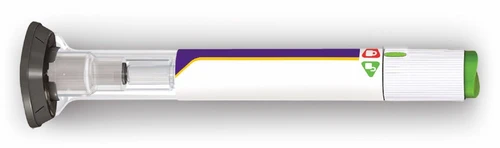
BREAK THE SEAL
THE SEAL BREAK
Open and unfold

Read both sides for complete instructions
INFORMATION ON THE TRULICITY PRE-FILLED PEN
Please read carefully and to the end these instructions for use and the patient information in the
package leaflet before using the pre-filled pen. Consult your doctor, pharmacist, or nurse for
information on how to correctly inject Trulicity.
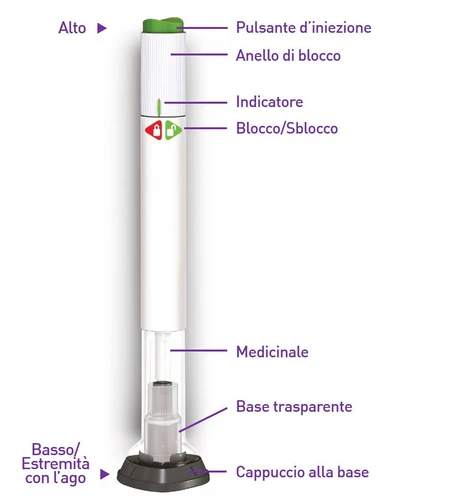
- The pen is a disposable, pre-filled, ready-to-use delivery device. Each pen contains one weekly dose of Trulicity (0.75 mg). Each pen delivers a single dose.
- Trulicity is administered once weekly. It is recommended to mark on your calendar when you should inject the next dose.
- When you press the green injection button, the pen will automatically insert the needle into the skin, deliver the medicine, and retract the needle after completing the injection.
BEFORE USE
Remove Check Inspect Prepare
from the refrigerator. the label on the pen. Do not use if you wash your hands first.
ensure you have the notice the pen is
Leave the cap damaged, the
on the base until you are correct medicine and that it medicine is cloudy, has
ready to inject. has not expired. changed color, or
contains particles.
CHOOSE THE INJECTION SITE

- Your doctor, pharmacist, or nurse can help you choose the most suitable injection site.
- You may inject the medicine in the abdominal area or the thigh.
- Another person may administer the injection into the upper arm.
- Rotate the injection site each week. You may use the same body area, but you must select a different injection site within that area.
1. REMOVE THE CAP
2. POSITION AND UNLOCK
3. PRESS AND HOLD
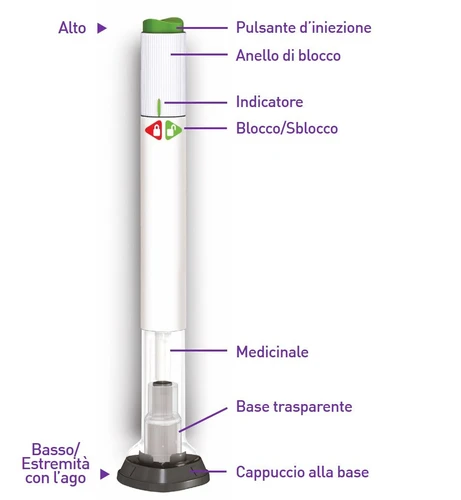
1 REMOVE THE
CAP
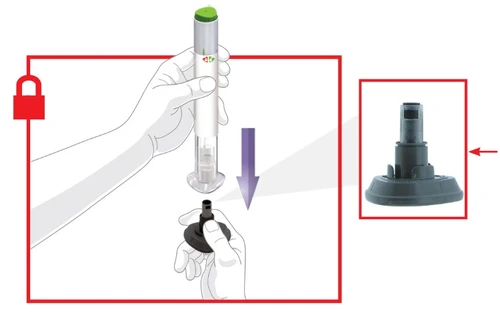
Ensure the pen is
locked.
Cap
gray at the base. Gray cap at the base
Do not replace the
cap at the base – this
may damage the needle. Do not touch the needle.
- When removed, the gray cap at the base will appear as shown in the image and may be discarded.
If the gray cap at the
base does not appear as
shown in the image above:
- Do not use the pen.
- Store the pen and cap safely and contact Lilly.
- Use a new pen.
2 POSITION AND
UNLOCK
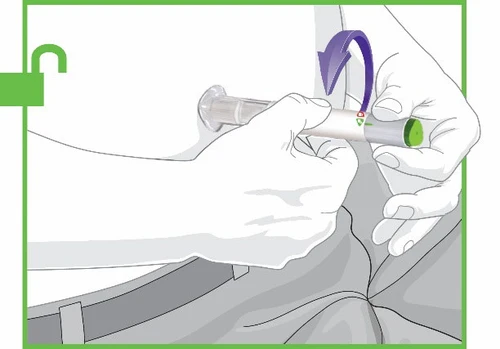
- Place the transparent base flat and firmly against the skin at the injection site.

Unlock by rotating
the locking ring.
3 PRESS AND HOLD
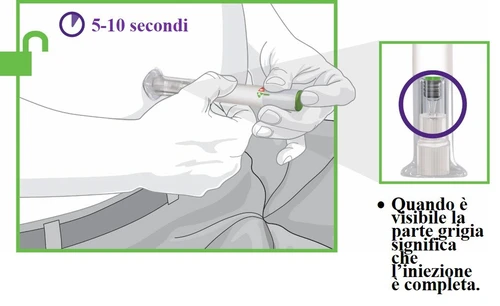
DOWN
- Press and hold down the green injection button; you will hear a distinct click.

Continue to hold the
transparent base firmly
against the skin until you
hear a second click. This
occurs when the needle
starts to retract, within
approximately 5–10 seconds.
- Remove the pen from the skin.
IMPORTANT INFORMATION
Storage and handling
Disposal of the pen
Frequently asked questions
Other information
Where to find more information
STORAGE AND HANDLING
- The pen contains glass components. Handle with care. If the pen falls on a hard surface, do not use it. Use a new pen to administer the injection.
- Store the pen in the refrigerator.
- When refrigeration is not possible, the pen may be kept at room temperature (below 30°C) for up to a total of 14 days.
- Do not freeze the pen. If the pen has been frozen, DO NOT USE IT.
- Keep the pen in its original packaging to protect it from light.
- Keep the pen out of the sight and reach of children.
- For complete information on proper storage, read the Patient Information Leaflet.
DISPOSAL OF THE PEN
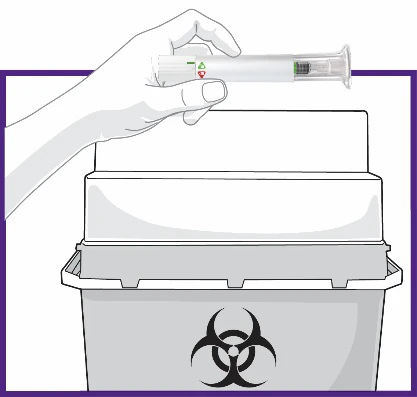
- Dispose of the pen in a designated sharps container or as instructed by your doctor, pharmacist, or nurse.
- Do not recycle the designated sharps container (once it is full).
- Ask your doctor, pharmacist, or nurse how to dispose of medicines you no longer use.
FREQUENTLY ASKED QUESTIONS
What if I see an air bubble in my pen?
Air bubbles are normal. They are not harmful and will not affect the dose.
What if I unlock the pen and press the green injection button before removing the cap at the base?
Do not remove the cap at the base and do not use the pen. Discard the pen as instructed by your doctor,
pharmacist, or nurse. Use a new pen to administer your dose.
What if there is a drop of liquid at the tip of the needle when I remove the cap at the base?
A drop of liquid at the needle tip is not unusual and will not affect the dose.
Do I need to hold down the injection button until the injection is complete?
It is not necessary to hold down the injection button, but doing so may help keep the pen steady and firmly against the skin.
I heard more than two clicks during my injection – two loud clicks and one soft click. Did I receive the full dose?
Some patients may hear a soft click immediately before the second loud click. This is normal pen function. Do not remove the pen from the skin until you hear the second, louder click.
What if there is a drop of liquid or blood on my skin after the injection?
This is not unusual and will not affect the dose.
I am not sure whether my pen worked correctly.
Check to see whether you received the dose. The dose has been properly administered if the gray section is visible (see step 3). For further instructions, contact your local Lilly office listed in the Patient Information Leaflet. Until then, store the pen safely to avoid accidental needle injury.
OTHER INFORMATION
- If you have vision problems, DO NOT use the pen without the help of someone experienced in using the Trulicity pen.
WHERE CAN YOU FIND OUT MORE
- If you have any questions or problems with your Trulicity pen, consult your doctor, pharmacist, or nurse.
SCAN THIS CODE TO ACCESS
CE www.trulicity.eu
QR
Instructions for use
Trulicity 1.5 mg solution for injection in a pre-filled pen
dulaglutide
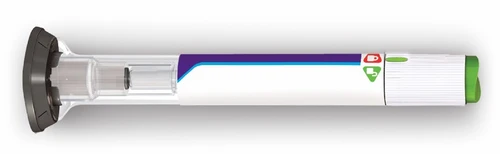
BREAK THE SEAL BREAK THE SEAL
Open and unfold

Read both sides for complete instructions
INFORMATION ON THE TRULICITY PRE-FILLED PEN
Please read these instructions for use and the patient information leaflet carefully and in full before using the pre-filled pen. Consult your doctor, pharmacist, or nurse for information on how to correctly inject Trulicity.
- The pen is a disposable, pre-filled, ready-to-use delivery device. Each pen contains one weekly dose of Trulicity (1.5 mg). Each pen delivers a single dose.
- Trulicity is administered once weekly. It is recommended to mark on your calendar when you will take your next dose.
- When you press the green injection button, the pen will automatically insert the needle into the skin, inject the medication, and retract the needle after completing the injection.
BEFORE USE
Remove Check Inspect Prepare
from the refrigerator. the label on the pen. Do not use after washing hands.
ensure you have the if you notice the pen is
Leave the cap correct medicine and it damaged, the
on the base until you is not expired. medicine is cloudy, has
are ready to give the changed colour, or
injection. contains particles.
CHOOSE THE INJECTION SITE

- Your doctor, pharmacist, or nurse can help you choose the most suitable injection site for you.
- You may inject the medicine in the abdominal area or the thigh.
- Another person may inject you in the upper arm.
- Change (rotate) the injection site each week. You may use the same body area, but you must select a different injection site within that area.
1. REMOVE THE CAP
2. POSITION AND UNLOCK
3. PRESS AND HOLD
1 REMOVE THE
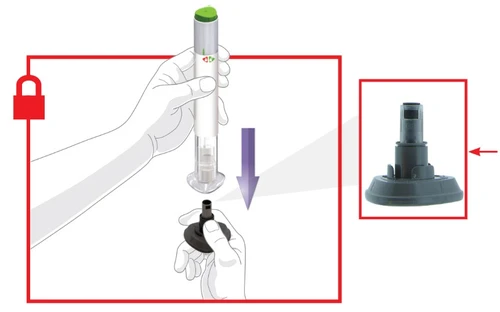
CAP
Ensure the pen is
locked.
- Remove the grey cap at the base. Grey cap at base Do not replace the cap If the grey cap at the on the base – this may base does not appear as damage the needle. Do shown in the image not touch the needle. above:
- Do not use the pen.
- Store the pen and cap
- When removed, the grey safely and contact cap at the base should Lilly.
appear as shown in the - Use a new pen. image and may be discarded.
2 POSITION AND
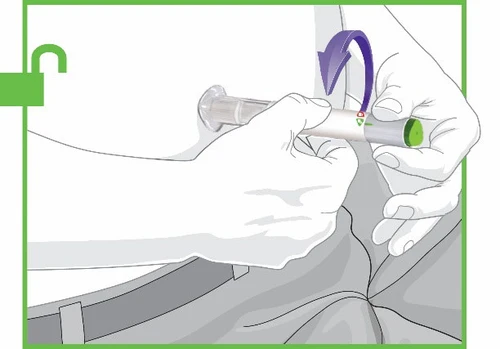
UNLOCK
- Place the transparent base flat and firmly against the skin at the injection site.

Unlock by rotating
the locking ring.
3 PRESS AND
HOLD
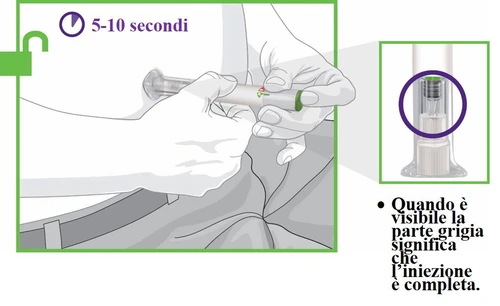
PRESS
- Press and hold the green injection button; you will hear a loud click.

Continue holding the
transparent base firmly
against the skin until you
hear a second click. This
occurs when the needle
starts to retract, in about
5–10 seconds.
- Remove the pen from the skin.
IMPORTANT INFORMATION
Storage and handling
Disposal of the pen
Frequently asked questions
Additional information
Where to find more information
STORAGE AND HANDLING
- The pen contains glass parts. Handle with care. If the pen is dropped on a hard surface, do not use it. Use a new pen for the injection.
- Store the pen in the refrigerator.
- When refrigeration is not possible, the pen may be kept at room temperature (below 30°C) for up to 14 days in total.
- Do not freeze the pen. If the pen has been frozen, do not use it.
- Keep the pen in its original packaging to protect it from light.
- Keep the pen out of the sight and reach of children.
- For complete information on proper storage, read the Patient Information Leaflet.
DISPOSAL OF THE PEN
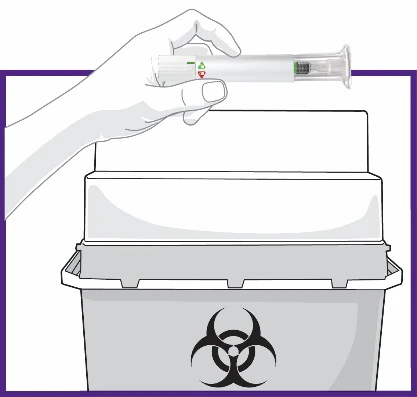
- Dispose of the pen in a sharps container or as instructed by your doctor, pharmacist, or nurse.
- Do not reuse the sharps container once it is full.
- Ask your doctor, pharmacist, or nurse how to dispose of medicines you no longer use.
FREQUENTLY ASKED QUESTIONS
What if I see an air bubble in my pen?
Air bubbles are normal. They are not harmful and will not affect the dose.
What if I unlock the pen and press the green injection button before removing the base cap?
Do not remove the base cap and do not use the pen. Dispose of the pen as instructed by your doctor, pharmacist, or nurse. Use another pen to administer your dose.
What if there is a drop of liquid on the tip of the needle when I remove the base cap?
A drop of liquid on the needle tip is not unusual and will not affect the dose.
Do I need to keep holding the injection button until the injection is complete?
It is not necessary to keep holding the injection button, but doing so may help keep the pen steady and firmly against the skin.
I heard more than two clicks during my injection – two loud clicks and one soft click. Did I receive the full dose?
Some patients may hear a soft click immediately before the second loud click. This is normal pen function. Do not remove the pen from the skin until you hear the second, louder click.
What if there is a drop of liquid or blood on my skin after the injection?
This is not unusual and will not affect the dose.
I am not sure whether my pen worked correctly.
Check whether you received the dose. The dose has been properly administered if the grey part is visible. (See step 3.) For further instructions, contact your local Lilly office listed in the Patient Information Leaflet. Until then, store the pen safely to avoid accidental needle injury.
ADDITIONAL INFORMATION
- If you have vision problems, do not use the pen without the help of someone experienced in using the Trulicity pen.
WHERE TO FIND MORE INFORMATION
- If you have any questions or problems with your Trulicity pen, consult your doctor, pharmacist, or nurse.
SCAN THIS CODE TO ACCESS
CE www.trulicity.eu
QR
Instructions for use
Trulicity 3 mg solution for injection in a prefilled pen
dulaglutide
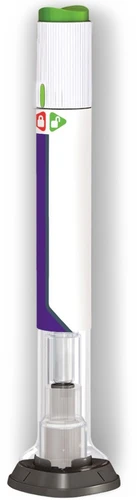
BREAK THE SEAL BREAK THE SEAL
Open and unfold

Read both sides for complete instructions
INFORMATION ABOUT THE TRULICITY PREFILLED PEN
Please read carefully and completely these instructions for use and the patient information in the
package leaflet before using the prefilled pen. Contact your doctor, pharmacist, or nurse for
information on how to correctly inject Trulicity.
- The pen is a single-use, prefilled, ready-to-use delivery device. Each pen contains one weekly dose of Trulicity (3 mg). Each pen delivers a single dose.
- Trulicity is administered once weekly. It is recommended to mark on your calendar when your next dose is due.
- When you press the green injection button, the pen will automatically insert the needle into the skin, deliver the medicine, and retract the needle after the injection is complete.
BEFORE USE
Remove Check Inspect Wash hands
from the refrigerator. the label for the correct pen. Do not use if you notice the pen is damaged, the medicine is cloudy, has changed colour, or contains particles.
CHOOSE THE INJECTION SITE
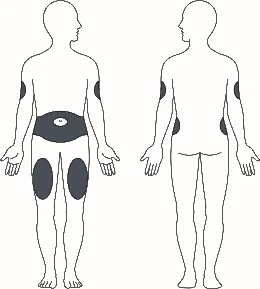
- Your doctor, pharmacist, or nurse can help you choose the most suitable injection site.
- You may inject the medicine in the abdominal area or thigh.
- Another person may administer the injection into the upper arm.
- Rotate (change) the injection site each week. You may use the same body area, but you must select a different injection site within that area.
1. REMOVE THE CAP
2. POSITION AND UNLOCK
3. PRESS AND HOLD
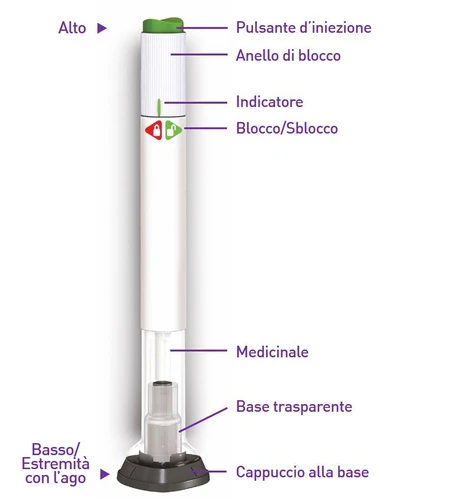
1 REMOVE THE
CAP
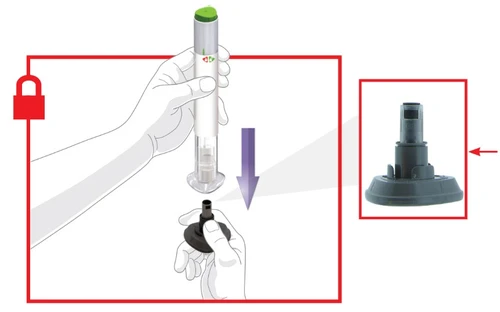
Ensure the pen is locked.
- Remove the grey cap at the base. Grey cap at base – Do not reattach the base cap – If the grey cap at base does not appear as shown in the image above:
- Do not use the pen.
- When removed, the grey cap at base should appear as shown in the image and may be discarded.
- Store the pen and cap safely, and contact Lilly.
- Use a new pen.
2 POSITION AND
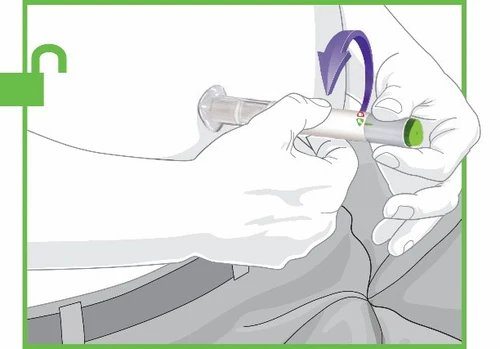
UNLOCK
- Place the transparent base flat and firmly against the skin at the injection site.

Unlock by rotating the locking ring.
3 PRESS AND
HOLD
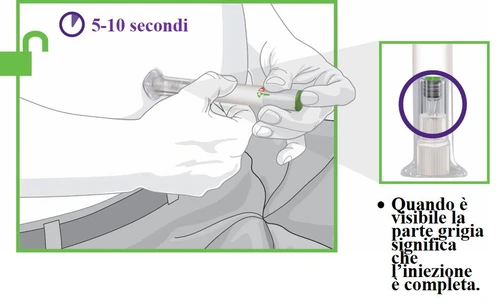
PRESS
- Press and hold the green injection button; you will hear a loud click.

Continue holding the transparent base firmly against the skin until you hear a second click. This occurs as the needle begins to retract, approximately 5–10 seconds later.
- Remove the pen from the skin.
IMPORTANT INFORMATION
Storage and handling
Disposal of the pen
Frequently asked questions
Additional information
Where to find more information
STORAGE AND HANDLING
- The pen contains glass parts. Handle with care. If the pen is dropped on a hard surface, do not use it. Use a new pen for the injection.
- Store the pen in the refrigerator.
- When refrigeration is not possible, the pen may be kept at room temperature (below 30 °C) for up to a total of 14 days.
- Do not freeze the pen. If the pen has been frozen, DO NOT USE IT.
- Keep the pen in its original packaging to protect it from light.
- Keep the pen out of sight and reach of children.
- For complete information on proper storage, read the Patient Information.
DISPOSAL OF THE PEN
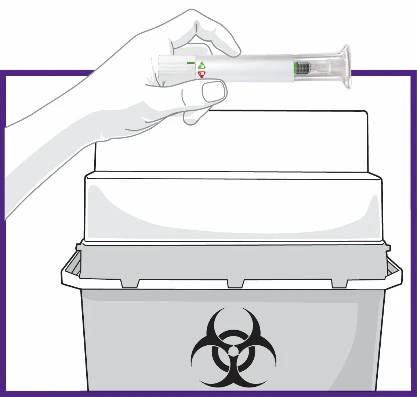
- Dispose of the pen in a sharps container or as instructed by your doctor, pharmacist, or nurse.
- Do not reuse the sharps container (once it is full).
- Ask your doctor, pharmacist, or nurse how to dispose of medicines you no longer use.
FREQUENTLY ASKED QUESTIONS
What if I see an air bubble in my pen?
Air bubbles are normal. They are not harmful and will not affect the dose.
What if I unlock the pen and press the green injection button before removing the base cap?
Do not remove the base cap and do not use the pen. Dispose of the pen as instructed by your doctor, pharmacist, or nurse. Use another pen to administer your dose.
What if there is a drop of liquid on the needle tip when I remove the base cap?
A drop of liquid on the needle tip is not unusual and will not affect the dose.
Do I need to keep holding the injection button until the injection is complete?
It is not necessary to keep holding the injection button, but doing so may help keep the pen steady and firmly against the skin.
I heard more than two clicks during my injection – two loud clicks and one soft click. Did I receive the full dose?
Some patients may hear a soft click immediately before the second loud click. This is normal pen function. Do not remove the pen from the skin until you hear the second, louder click.
What if there is a drop of liquid or blood on my skin after the injection?
This is not unusual and will not affect the dose.
I am not sure whether my pen worked correctly.
Check to see whether you received the dose. The dose has been delivered correctly if the grey part is visible. (See step 3.) For further instructions, contact your local Lilly office listed in the Patient Information. Until then, store the pen safely to avoid accidental needle injury.
ADDITIONAL INFORMATION
- If you have vision problems, DO NOT use the pen without the help of someone experienced in using the Trulicity pen.
WHERE CAN YOU FIND MORE INFORMATION
- If you have any questions or problems with your Trulicity pen, contact your doctor, pharmacist, or nurse.
SCAN THIS CODE TO ACCESS
CE www.trulicity.eu
QR
Instructions for use
Trulicity 4.5 mg solution for injection in a pre-filled pen
dulaglutide
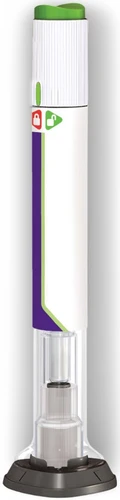
BREAK THE SEAL THE SEAL BREAK
Open and unfold

Read both sides for complete instructions
INFORMATION ON THE TRULICITY PRE-FILLED PEN
Please read carefully and completely these instructions for use and the patient information in the
package leaflet before using the pre-filled pen. Consult your doctor, pharmacist, or nurse for
information on how to correctly inject Trulicity.
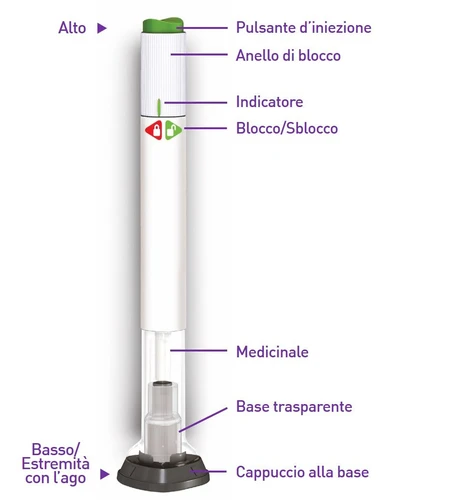
- The pen is a disposable, pre-filled, ready-to-use delivery device. Each pen contains one weekly dose of Trulicity (4.5 mg). Each pen delivers a single dose.
- Trulicity is administered once weekly. It is recommended to mark on your calendar when you will administer the next dose.
- When you press the green injection button, the pen will automatically insert the needle into the skin, deliver the medicine, and retract the needle after the injection is complete.
BEFORE USE
Remove Check Inspect Prepare
from the refrigerator. the label for the pen. Do not use wash your hands.
ensure you have the if you notice the pen is
Leave the cap correct medicine and damaged, the
at the base until it is that it has not expired. medicine is cloudy, has
ready for injection. changed color, or
contains particles.
CHOOSE THE INJECTION SITE
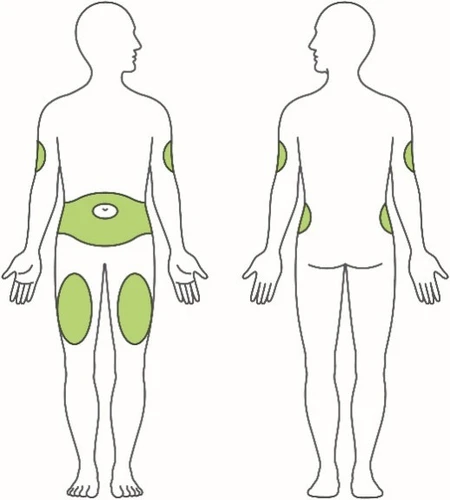
- Your doctor, pharmacist, or nurse can help you choose the most suitable injection site.
- You may inject the medicine in the abdominal area or the thigh.
- Another person may administer the injection into the upper arm.
- Rotate (change) the injection site each week. You may use the same body area, but you must select a different injection site within that area.
1. REMOVE THE CAP
2. POSITION AND UNLOCK
3. PRESS AND HOLD
1 REMOVE THE
CAP
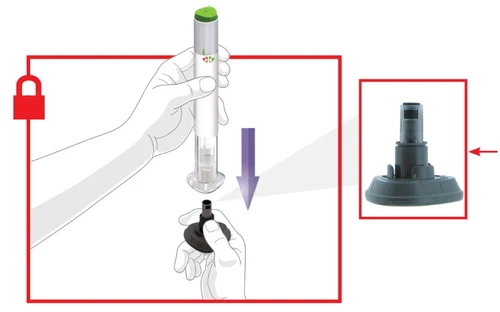
Ensure the pen is
locked.
- Remove the grey cap at the base. Grey cap at base
Do not reattach the base cap – this may damage the needle. Do not touch the needle.
If the grey cap at the base does not appear as shown in the image above: - When removed, • Do not use the pen.
the grey cap at the base • Store the pen and cap
appears as shown in the safely and contact Lilly.
image and may be • Use a new pen.
discarded.
2 POSITION AND
UNLOCK
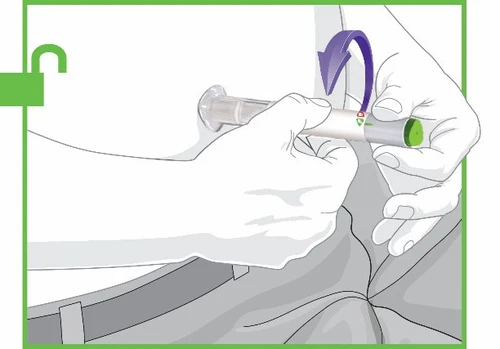

- Place the transparent base flat and firmly against the skin at the injection site.
Unlock by rotating the locking ring.
3 PRESS AND HOLD
DOWN
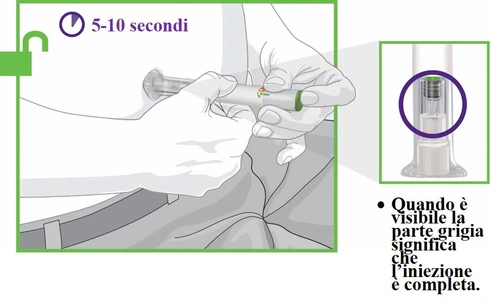
- Press and hold down the green injection button; you will hear a loud click.

Continue to hold the transparent base firmly against the skin until you hear a second click. This occurs as the needle begins to retract, approximately 5–10 seconds later.
- Remove the pen from the skin.
IMPORTANT INFORMATION
Storage and handling
Disposal of the pen
Frequently asked questions
Other information
Where to find more information
STORAGE AND HANDLING
- The pen contains glass parts. Handle with care. If the pen falls on a hard surface, do not use it. Use a new pen for the injection.
- Store the pen in the refrigerator.
- When refrigeration is not possible, the pen may be kept at room temperature (below 30°C) for up to a total of 14 days.
- Do not freeze the pen. If the pen has been frozen, do not use it.
- Keep the pen in its original packaging to protect it from light.
- Keep the pen out of the sight and reach of children.
- For complete information on proper storage, read the Patient Information Leaflet.
DISPOSAL OF THE PEN
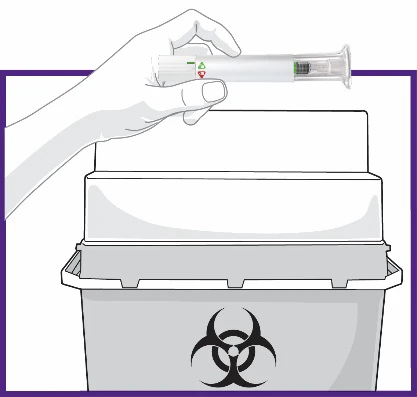
- Dispose of the pen in a sharps container or as instructed by your doctor, pharmacist, or nurse.
- Do not reuse the sharps container (once full).
- Ask your doctor, pharmacist, or nurse how to dispose of medicines you no longer use.
FREQUENTLY ASKED QUESTIONS
What if I see an air bubble in my pen?
Air bubbles are normal. They are not harmful and will not affect the dose.
What if I unlock the pen and press the green injection button before removing the base cap?
Do not remove the base cap and do not use the pen. Discard the pen as instructed by your doctor, pharmacist, or nurse. Use another pen to administer your dose.
What if there is a drop of liquid at the tip of the needle when I remove the base cap?
A drop of liquid at the needle tip is not unusual and will not affect the dose.
Do I need to keep holding the injection button until the injection is complete?
It is not necessary to keep holding the injection button, but doing so may help keep the pen steady and firmly against the skin.
I heard more than two clicks during my injection – two loud clicks and one soft click. Did I receive the full dose?
Some patients may hear a soft click immediately before the second loud click. This is normal pen function. Do not remove the pen from the skin until you hear the second, louder click.
What if there is a drop of liquid or blood on my skin after the injection?
This is not unusual and will not affect the dose.
I am not sure whether my pen worked correctly.
Check to see if you received the dose. The dose was delivered correctly if the grey section is visible. (See step 3.) For further instructions, contact your local Lilly office listed in the Patient Information Leaflet. Until then, store the pen safely to avoid accidental needle injury.
OTHER INFORMATION
- If you have vision problems, do not use the pen without the help of someone experienced in using the Trulicity pen.
WHERE TO FIND MORE INFORMATION
- If you have any questions or problems with your Trulicity pen, consult your doctor, pharmacist, or nurse.
SCAN THIS CODE TO ACCESS
CE www.trulicity.eu
QR
ANNEX IV
SCIENTIFIC CONCLUSIONS AND GROUNDS FOR THE VARIATION TO THE TERMS OF THE
MARKETING AUTHORISATION
Scientific conclusions
Taking into account the assessment by the Pharmacovigilance Risk Assessment Committee (PRAC) of the Periodic Safety Update Report (PSUR) for dulaglutide, the scientific conclusions of the PRAC are as follows:
In light of data from the full pool of placebo-controlled clinical trials, post-marketing cases showing positive dechallenge and rechallenge, and given that dysgeusia is included in the product information of other GLP-1 receptor agonists, there is considered to be reasonable evidence supporting an association between dulaglutide and dysgeusia. It is therefore recommended to update the product information for Trulicity to include “dysgeusia” as a new adverse reaction in section 4.8 of the SmPC. The patient leaflet should be updated accordingly.
Having reviewed the PRAC recommendation, the Committee for Medicinal Products for Human Use (CHMP) agrees with the general conclusions and reasoning of the recommendation.
Grounds for the variation to the terms of the marketing authorisation
Based on the scientific conclusions for dulaglutide, the CHMP considers that the benefit-risk balance of the medicinal product containing dulaglutide remains unchanged, subject to the proposed amendments to the product information.
The CHMP recommends the variation to the terms of the marketing authorisation.
This page has been machine-translated and may contain inaccuracies. The original data is available in the manufacturing country's language.
Last data check: May 11, 2026 · Data source: Agenzia Italiana del Farmaco (AIFA)