Trizibe
Italy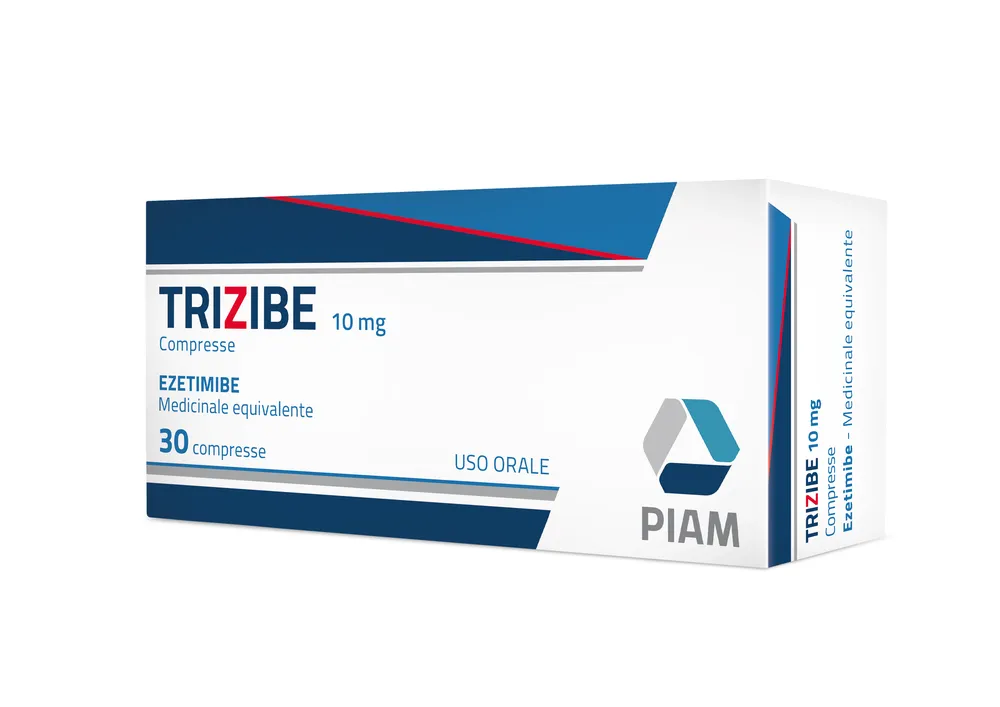
Table of Contents
Package leaflet: Information for the patient
TRIZIBE 10 mg tablets
Ezetimibe
Generic medicine
Please read all of this leaflet carefully before taking this medicine because it contains
important information for you.
- Keep this leaflet. You may need to read it again.
- If you have any questions, ask your doctor or pharmacist.
- This medicine has been prescribed for you only. Do not give it to other people, even if their symptoms are the same as yours, because it could be harmful.
- If you experience any adverse reaction, including those not listed in this leaflet, contact your doctor. See section 4.
Contents of this leaflet
- What TRIZIBE is and what it is used for
- What you need to know before taking TRIZIBE
- How to take TRIZIBE
- Possible side effects
- How to store TRIZIBE
- Contents of the pack and other information
1. What TRIZIBE is and what it is used for
TRIZIBE is a medicine used to reduce elevated cholesterol levels.
TRIZIBE lowers levels of total cholesterol, "bad" cholesterol (LDL cholesterol), and fat substances called triglycerides in the blood. In addition, TRIZIBE increases levels of "good" cholesterol (HDL cholesterol).
TRIZIBE works by reducing cholesterol absorption in the intestine.
The cholesterol-lowering effect of TRIZIBE adds to that provided by statins, a group of medicines that work by reducing cholesterol production within the body itself.
Cholesterol is one of many fatty substances found in the bloodstream. Total cholesterol consists mainly of LDL and HDL cholesterol.
LDL cholesterol is often called "bad" because it can accumulate in the walls of arteries, forming plaques. Over time, this plaque can lead to narrowing of the arteries. This narrowing can slow down or block blood flow to vital organs such as the heart and brain. This blockage of blood flow may cause a heart attack or stroke.
HDL cholesterol is often called "good" cholesterol because it helps prevent "bad" cholesterol from building up in the arteries, thus protecting against heart disease.
Triglycerides are another form of fat in the blood that may increase the risk of heart disease.
TRIZIBE is used in patients who cannot control their cholesterol levels through diet alone. You must follow a cholesterol-lowering diet while taking this medicine.
TRIZIBE is used in addition to diet if you have:
- elevated blood cholesterol levels (primary hypercholesterolemia [heterozygous familial and non-familial]) in combination with a statin, when cholesterol levels are not adequately controlled with a statin alone, or as monotherapy when treatment with a statin is not appropriate or not well tolerated.
- an inherited disease (homozygous familial hypercholesterolemia) that increases cholesterol levels in the blood. You will also be prescribed a statin and may receive additional therapy.
- an inherited disease (homozygous sitosterolemia, also known as phytosterolemia) that increases levels of plant sterols in the blood.
If you have heart disease, TRIZIBE, in combination with cholesterol-lowering medicines called statins, reduces the risk of heart attack, stroke, surgery to improve blood flow, or hospitalization for chest pain.
TRIZIBE does not help with weight loss.
2. What you need to know before taking TRIZIBE
If you are taking TRIZIBE together with a statin, please read the package leaflet of that specific medicine.
Do not take TRIZIBE:
- if you are allergic to the active substance ezetimibe or to any of the other ingredients of this medicine (listed in section 6).
Do not take TRIZIBE together with a statin if:
- you currently have liver problems
- you are pregnant or breastfeeding.
Warnings and precautions
Talk to your doctor or pharmacist before taking TRIZIBE.
- Inform your doctor about your medical condition, including any allergies.
- Your doctor will perform blood tests before starting treatment with TRIZIBE together with a statin. These tests are to check how well your liver is functioning.
- Your doctor may also want to perform blood tests to monitor liver function after you have started taking TRIZIBE with a statin.
If you have moderate or severe liver problems, the use of TRIZIBE is not recommended.
The safety and efficacy of combining TRIZIBE with fibrates have not been established.
Fibrates are medicines used to lower cholesterol.
Children and adolescents
Do not give this medicine to children and adolescents aged 6 to 17 years unless prescribed by a specialist, as there is limited data on safety and efficacy. Do not give this medicine to children under 6 years of age, as there is no information available for this age group.
Other medicines and TRIZIBE
Tell your doctor or pharmacist if you are taking, have recently taken, or might take any other medicines. In particular, inform your doctor if you are taking medicines containing any of the following active substances:
- cyclosporine (often used in patients who have had organ transplants)
- medicines containing active substances that prevent blood clotting, such as warfarin, fenoprocoumon, acenocoumarol, or fluindione (anticoagulants)
- colestyramine (also used to lower cholesterol), as it affects the mechanism of action of TRIZIBE
- fibrates (also used to lower cholesterol)
Pregnancy, breastfeeding and fertility
If you are pregnant, think you may be pregnant, are planning to become pregnant, or are breastfeeding, ask your doctor or pharmacist for advice before taking this medicine.
Do not take TRIZIBE together with a statin if you are pregnant, trying to become pregnant, or think you could be pregnant. If you become pregnant while taking TRIZIBE with a statin, stop taking both medicines immediately and inform your doctor.
There is no experience with the use of TRIZIBE without a statin during pregnancy. If you are pregnant, consult your doctor before taking TRIZIBE.
Do not take TRIZIBE with a statin if you are breastfeeding, as it is not known whether the medicines pass into breast milk.
Do not take TRIZIBE without a statin if you are breastfeeding. Consult your doctor.
Driving and using machines
TRIZIBE is not expected to affect your ability to drive or use machinery.
However, you should be aware that some people may experience dizziness after taking TRIZIBE.
TRIZIBE contains lactose
If your doctor has diagnosed you with an intolerance to certain sugars, consult them before taking this medicine.
3. How to take TRIZIBE
Take this medicine exactly as directed by your doctor. If you have any doubts, consult your doctor or pharmacist. Continue taking your other cholesterol-lowering medicines unless your doctor tells you to stop.
- Before starting treatment with TRIZIBE, you must follow a cholesterol-lowering diet.
- You must continue this diet while taking TRIZIBE.
The recommended dose is one 10 mg TRIZIBE tablet taken by mouth once daily.
You may take this medicine at any time of day, with or without food.
To remove the TRIZIBE tablet from the blister pack, it is not necessary to push on the tablet through the blister.
Cut out the square containing one tablet along the pre-cut line on the blister and peel back the lower layer of the blister to remove the tablet.
If your doctor has prescribed TRIZIBE in combination with a statin, both medicines may be taken at the same time. In this case, read the dosing instructions in the package leaflet of that specific medicine.
If your doctor has prescribed TRIZIBE together with another cholesterol-lowering medicine containing the active substance colestyramine or any other medicine containing a bile acid sequestrant, you must take TRIZIBE at least 2 hours before or 4 hours after taking the bile acid sequestrant.
If you take more TRIZIBE than you should
Inform your doctor or pharmacist.
If you forget to take TRIZIBE
Do not take a double dose to make up for the missed tablet. Simply take your usual dose of TRIZIBE at the next scheduled time.
If you stop taking TRIZIBE
Inform your doctor or pharmacist, as your cholesterol levels may rise again.
If you have any questions about how to use this medicine, ask your doctor or pharmacist.
4. Possible side effects
Like all medicines, this medicine can cause side effects, although not everyone experiences them.
Stop taking TRIZIBE and contact your doctor or go immediately to the nearest emergency room
if you experience any of the following symptoms:
- Unexplained muscle pain, tenderness, or weakness. This is because, in rare cases, muscle problems, including damage to muscle tissue, leading to kidney injury, can be serious and potentially life-threatening.
- Allergic reactions, including swelling of the face, lips, tongue, and/or throat, which may cause difficulty breathing or swallowing.
When used alone, the following side effects have been reported:
Common (may affect up to 1 in 10 people):
- abdominal pain, diarrhoea, flatulence
- feeling of tiredness
Uncommon (may affect up to 1 in 100 people):
- increases in blood test values related to liver function (transaminases) and/or muscle function (CK)
- cough
- indigestion, heartburn
- nausea
- joint pain, muscle spasms, neck pain
- pain
- chest pain
- reduced appetite
- hot flushes
- high blood pressure
In addition, when used with a statin, the following side effects have been reported:
Common (may affect up to 1 in 10 people):
- increases in blood test values related to liver function (transaminases)
- headache
- muscle pain, tenderness, or weakness
Uncommon (may affect up to 1 in 100 people):
- tingling sensation
- dry mouth
- itching sensation
- rash, urticaria
- back pain
- muscle weakness
- pain in arms and legs
- unusual tiredness or weakness
- swelling, especially in hands and feet.
When used with fenofibrates, the following common side effects have been reported (may
affect up to 1 in 10 people):
- abdominal pain.
In addition, with general use of the medicine, the following side effects have been reported:
- dizziness
- muscle pain
- liver problems
- allergic reactions including rash and urticaria, raised red rash, sometimes with target-like lesions (erythema multiforme)
- muscle pain, tenderness, or weakness, muscle tissue damage
- gallstones or inflammation of the gallbladder (which may cause abdominal pain, nausea, vomiting)
- inflammation of the pancreas, often with severe abdominal pain
- constipation
- reduction in blood cell count, which may cause bruising/bleeding (thrombocytopenia)
- tingling sensation
- depression
- unusual tiredness or weakness
- shortness of breath
Reporting of side effects
If you experience any side effect, including those not listed in this leaflet, talk to your doctor or pharmacist.
You can also report side effects directly via the national reporting system at https://www.aifa.gov.it/content/segnalazioni-reazioni-avverse.
By reporting side effects, you can help provide more information on the safety of this medicine.
5. How to store TRIZIBE
Keep this medicine out of the sight and reach of children.
Do not use this medicine after the expiry date stated on the carton, blister leaflet, or container after Exp. The expiry date refers to the last day of that month.
This medicine does not require any special storage conditions.
Do not dispose of medicines via wastewater or household waste. Ask your pharmacist how to dispose of medicines you no longer use. This will help protect the environment.
6. Package contents and other information
What TRIZIBE contains
- The active substance is ezetimibe. Each 10 mg tablet of TRIZIBE contains 10 mg of ezetimibe.
- The other components are: monohydrate lactose, microcrystalline cellulose, croscarmellose sodium, sodium lauryl sulfate, magnesium stearate, hypromellose and crospovidone.
Description of the appearance of TRIZIBE and contents of the pack
TRIZIBE 10 mg tablets are capsule-shaped, white to off-white tablets, 8 mm x 4 mm in size, imprinted with "713" on one side and smooth on the other.
TRIZIBE is available in blister packs with a peelable foil backing layer.
Pack sizes:
Blister packs: 30 tablets.
Marketing Authorization Holder
PIAM Farmaceutici S.p.A. Via XII Ottobre, 10
16121 Genova
Italy
Manufacturer
Balkanpharma-Dupnitsa AD, 3 Samokovsko Shosse Str., Dupnitza 2600, Bulgaria
Actavis Ltd BLB 015-016 Bulebel Industrial Estate, Zejtun ZTN 3000 Malta