Trimeton
Italy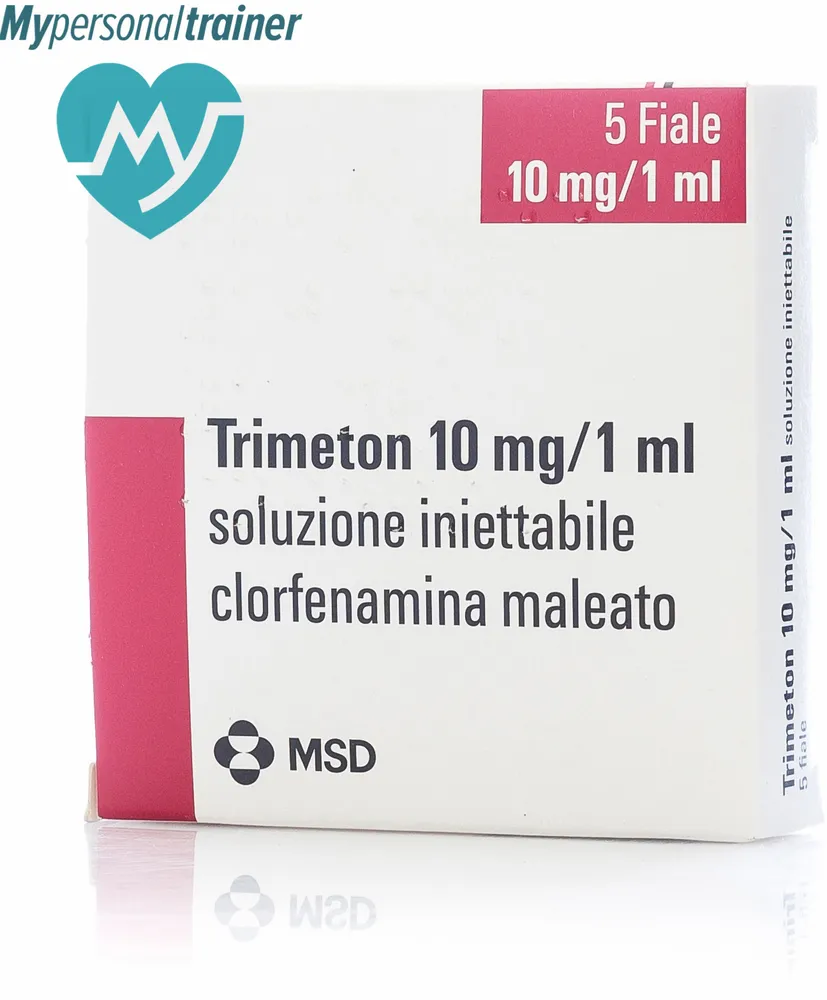
Table of Contents
PACKAGE LEAFLET
Package leaflet: information for the patient
Trimeton 10 mg/1 ml injectable solution
chlorphenamine maleate
Please read this leaflet carefully before using this medicine because it contains important information for you.
- Keep this leaflet. You may need to read it again.
- If you have any questions, ask your doctor or pharmacist.
- This medicine has been prescribed for you only. Do not give it to other people, even if their symptoms are the same as yours, as it may be harmful.
- If you experience any side effects, including those not listed in this leaflet, consult your doctor or pharmacist. See section 4.
Contents of this leaflet:
- What Trimeton is and what it is used for
- What you need to know before using Trimeton
- How to use Trimeton
- Possible side effects
- How to store Trimeton
- Contents of the pack and other information
1. What Trimeton is and what it is used for
Trimeton 10 mg/1 ml injectable solution is a medicine with antihistamine properties (i.e. capable of counteracting allergies) belonging to the class of antihistamines, and is effective in relieving symptoms arising from allergic diseases of the upper respiratory tract and skin.
Trimeton is indicated for:
- the treatment of symptoms of seasonal and perennial allergic rhinitis, vasomotor rhinitis, an eye disease characterized by intense itching and tearing, usually due to the presence of pollen (allergic conjunctivitis), skin eruptions that are manifestations of allergic diseases (uncomplicated allergic skin manifestations such as urticaria and angioedema), pruritus, insect bites, and certain allergic reactions caused by contact between the skin and an irritating substance (allergic dermatoses), such as atopic dermatitis;
- adjunctive therapy in allergic reactions to medicines, blood (serum) transfusions, or vaccines;
- the treatment of a neurological disorder some people experience due to rhythmic or irregular body movements (motion sickness) and vomiting;
- Trimeton is indicated when a rapid therapeutic effect is required.
What are seasonal and perennial allergic rhinitis and vasomotor rhinitis?
Seasonal allergic rhinitis, which occurs during certain times of the year, is an allergic reaction caused by inhaling pollen and molds.
Perennial allergic rhinitis is present throughout the year, and symptoms may be triggered by sensitivity to a variety of factors, including house dust mites, animal dander, feathers, and certain foods. These allergies cause nasal discharge, sneezing, and swelling of the nasal mucosa, leading to a sensation of nasal obstruction.
Vasomotor rhinitis, on the other hand, is not an allergic reaction and may be triggered by various non-specific stimuli, such as: changes in ambient temperature; exposure to light; inhalation, even in minimal amounts, of irritating gases, dusts, or vapors; hormonal changes (related to the menstrual cycle, early months of pregnancy, menopause, overactivity of the thyroid gland, a gland located in the neck); medical treatments, such as certain antihypertensive drugs; intense emotions.
2. What you need to know before using Trimeton
Do not use Trimeton
- if you are allergic to the active substance, to other similar antihistamines, or to any of the other ingredients of this medicine (listed in section 6);
- in newborns and premature infants;
- in children under 12 years of age;
- if you are taking medicines used to treat depression (monoamine oxidase inhibitors);
- if you have a bronchial disease (lower airway disease).
Warnings and precautions
Talk to your doctor or pharmacist before using Trimeton.
Use Trimeton with caution:
- if you have severe glaucoma, a disease of the eye caused by increased pressure of the fluid inside the eye (closed-angle glaucoma);
- if you have an ulcerative lesion of the upper digestive tract mucosa leading to narrowing (stenosing peptic ulcer);
- if you have narrowing of the pylorus, the valve allowing passage of digested food from the stomach to the intestine (pyloric stenosis);
- if you have narrowing of the duodenum, the initial part of the intestine (duodenal stenosis);
- if you have an enlarged prostate, the gland in men that produces seminal fluid (prostatic hypertrophy);
- if you have narrowing of the bladder neck;
- if you have bronchial asthma, a respiratory disease characterized by obstruction of the bronchi;
- if you suffer from epilepsy, a disease characterized by seizure episodes;
- if you have cardiovascular diseases;
- if you have high blood pressure;
- if you have increased intraocular pressure;
- if you have an overactive thyroid gland located in the neck (hyperthyroidism);
- if Trimeton is administered to prevent allergic reactions during blood transfusions, it must not be mixed with transfused blood, but must be administered directly before the transfusion;
- if you receive subsequent transfusions, you will receive another dose of Trimeton.
Elderly patients
Antihistamines are more likely to cause dizziness, mental and muscular relaxation, and lowering of blood pressure in elderly patients (aged 60 years or older). Dosage adjustment is necessary in the elderly due to their increased sensitivity to antihistamines.
Other medicines and Trimeton
Tell your doctor or pharmacist if you are taking, have recently taken, or might take any other medicines.
Medicines used to treat depression (anti-MAO agents) prolong and intensify the effects of antihistamines, possibly causing severe lowering of blood pressure.
Concomitant use of Trimeton with other antihistamines, alcohol, medicines used to treat depression, or those acting on the brain (tricyclic antidepressants, barbiturates, or other central nervous system depressants) may enhance the sedative effect of Trimeton.
The use of antihistamines may mask the early signs of ototoxicity (ringing in the ears, decreased hearing sensitivity) from certain antibiotics and may reduce the duration of action of medicines used to thin the blood, preventing clot formation (oral anticoagulants).
Antihistamine use should be discontinued approximately four days before undergoing skin tests to identify possible allergies, as these medicines may alter the test results.
Trimeton with food, drinks and alcohol
Administering the medicine after meals may help prevent the onset of discomfort in the central upper abdominal area (epigastrium).
Concomitant use of alcohol may enhance the relaxing effect of Trimeton.
Pregnancy and breastfeeding
If you are pregnant, think you might be pregnant, planning a pregnancy, or breastfeeding, consult your doctor or pharmacist before using this medicine.
In the absence of adequate studies, the safety of Trimeton during pregnancy and breastfeeding has not been established. Therefore, when considering the use of this medicine in pregnant women, the potential benefits must be weighed against the possible risks to the mother and fetus.
Medicines used to treat vomiting should generally be administered only in cases of clear symptoms for which no alternative intervention is possible, and not for common, mild episodes of pregnancy-related vomiting. It is also not recommended to use these medicines to prevent vomiting.
The use of antihistamines during the third trimester of pregnancy may cause adverse effects in premature infants and newborns due to their particular sensitivity to this class of medicines.
Driving and using machines
Antihistamines may cause mental and muscular relaxation.
When using Trimeton, exercise caution when driving vehicles or operating machinery, as the medicine may cause drowsiness and impair your ability to drive or operate machinery.
3. How to use Trimeton
Use this medicine exactly as instructed by your doctor or pharmacist. If you have
any doubts, consult your doctor or pharmacist.
Trimeton must be administered through a vein (intravenous route), into a muscle (intramuscular route), or under the skin (subcutaneous route).
Your doctor will personalize the dose of Trimeton according to your needs and your response to treatment.
Adults and adolescents over 12 years of age: the recommended dose is 1–2 vials of 10 mg daily, administered intramuscularly, subcutaneously, or, in more severe cases, intravenously.
The maximum recommended dose is 40 mg within 24 hours.
Trimeton must not be mixed with other injectable medicines or with substances used for diagnostic tests (diagnostic agents).
Use in children and adolescents
Trimeton is contraindicated in newborns, premature infants, and adolescents under 12 years of age.
If you use more Trimeton than you should
In case of overdose, pronounced effects on the central nervous system (CNS), either depressive or stimulant, may occur; therefore, emergency treatment must be initiated immediately.
Symptoms
Symptoms of antihistamine overdose may range from depression of brain activity (mental and muscular relaxation, absence of breathing (apnea), reduced level of consciousness (consciousness obtundation), bluish discoloration of the skin and mucous membranes due to respiratory or blood problems (cyanosis), excessive reflex response to stimuli (hyperreflexia), inadequate blood circulation (cardiocirculatory collapse)) to excitation (insomnia, hallucinations, tremors, or convulsions), and even death. Other possible symptoms include: dizziness (vertigo), ringing in the ears, progressive loss of muscle coordination, blurred vision, and low blood pressure. Agitation (state of excitement) and signs and symptoms such as dry mouth, fixed and dilated pupils, hot flushes, a marked increase in body temperature (also known as heat stroke), and gastrointestinal symptoms may also occur.
Treatment
There are no specific antidotes; therefore, all manifested symptoms must be treated specifically.
If you forget to use Trimeton
Do not take a double dose to make up for the missed dose.
If you stop using Trimeton
If you have any doubts about using this medicine, consult your doctor or pharmacist.
4. Possible side effects
Like all medicines, this medicine can cause side effects, although not everybody gets them.
Mild to moderate drowsiness is the most common adverse reaction of chlorphenamine maleate.
Adverse reactions such as urticaria (hives), skin redness accompanied by itching; skin rash in response to the medicine; severe, rapidly occurring allergic reaction that may be life-threatening (anaphylactic shock) have been reported.
The following side effects are listed by frequency:
Very common (may affect more than 1 in 10 people)
Mental and muscular relaxation, drowsiness, weakness, difficulty in performing coordinated movements, dizziness, ringing in the ears (tinnitus), blurred vision.
Common (may affect up to 1 in 10 people)
Dryness of the mouth, nose, and throat, constipation, difficulty in urinating, urinary retention, reduced and thickened bronchial mucus accompanied by breathing difficulty and a feeling of tightness in the chest.
Upper abdominal disturbances may be avoided by taking the medicine after meals.
Rare (may affect up to 1 in 1,000 people)
Excessive sweating, chills, pallor, weak pulse, and temporary reduction in blood pressure; these symptoms usually resolve within one hour without requiring specific treatment. Should any of these rare side effects occur, discontinue use of the medicine.
Other possible side effects for which frequency is not known
Nervous system disorders
When using antihistamines, signs of increased brain activity are possible, especially in predisposed individuals, resulting in nervousness, insomnia, tremors, and, at high doses, convulsions.
Heart and blood disorders
At commonly used doses, the medicine does not show evident effects on the heart and blood circulation. However, especially in elderly individuals and allergic subjects, headache, increased heart rate, and reduced blood pressure may occur. Agranulocytosis (severe reduction in certain types of white blood cells) and other serious blood cell reactions (reduced platelet count; hemolytic anemia – low red blood cell count due to their destruction) are very rare.
Allergic reactions
Antihistamines are medicines that may cause allergic reactions or photosensitivity reactions. Allergy (anaphylaxis) may occur when the medicine is injected into the body.
The occurrence of side effects may require dosage adjustment and, in more severe cases, discontinuation of treatment.
Injection site reactions
You may experience a burning sensation at the injection site, which generally does not last longer than five minutes.
Following the instructions provided in this leaflet reduces the risk of side effects.
Reporting of side effects
If you experience any side effect, including those not listed in this leaflet, talk to your doctor or pharmacist. You can also report side effects directly via the website http://www.agenziafarmaco.gov.it/it/responsabili.
By reporting side effects, you can help provide more information on the safety of this medicine.
5. How to store Trimeton
Keep this medicine out of the sight and reach of children.
Do not use this medicine after the expiry date stated on the pack after "Exp.". The expiry date refers to the last day of that month.
Do not use this medicine if you notice particles in suspension or changes in colour.
Do not dispose of any medicine via wastewater or household waste. Ask your pharmacist how to dispose of medicines you no longer use. This will help protect the environment.
6. Package contents and other information
What Trimeton contains
- The active substance is chlorphenamine maleate.
- The other component is water for injections.
Description of the appearance of Trimeton and contents of the pack
Each ml of Trimeton contains 10 mg of chlorphenamine maleate in a sterile, colourless solution.
Box containing 5 vials of 1 ml of injectable solution.
Marketing Authorisation Holder and manufacturers
Marketing Authorisation Holder:
Bayer Spa
Viale Certosa 130
20156 Milan
Manufacturer:
- Doppel Farmaceutici S.r.l. - Quinto de’ Stampi-Rozzano (MI) plant - Via Volturno 48.