Triacort
Italy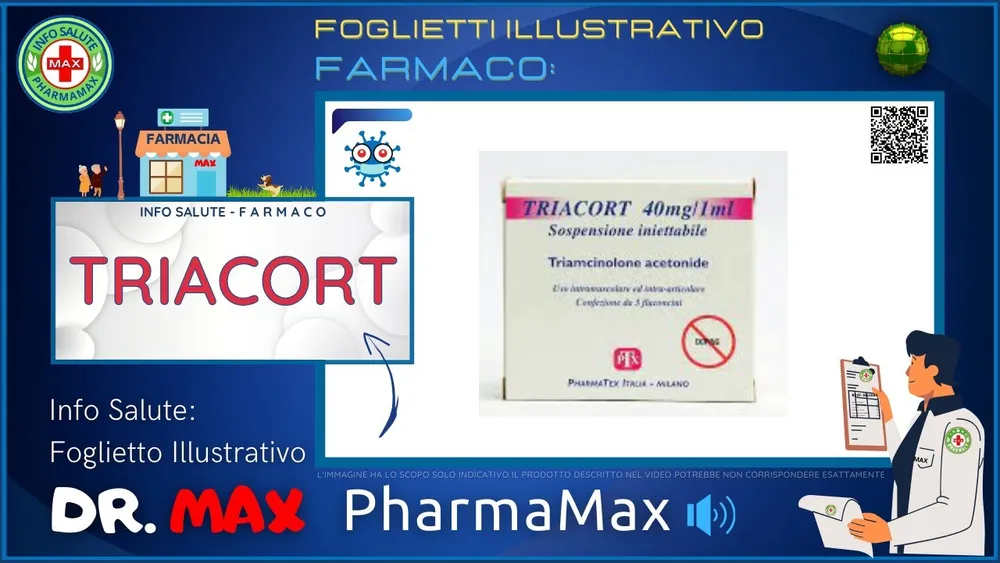
TRIACORT 40 mg/1 ml injectable suspension
TRIACORT 80 mg/2 ml injectable suspension
(triamcinolone acetonide)
PHARMACOTHERAPEUTIC CATEGORY
Systemic corticosteroid
THERAPEUTIC INDICATIONS
Intramuscular administration of TRIACORT (injectable suspension of Triamcinolone Acetonide) is indicated for systemic corticosteroid therapy in pathological conditions such as allergic syndromes (to control severe or debilitating conditions not amenable to conventional treatment), dermatoses, generalized rheumatoid arthritis, and other connective tissue disorders. The intramuscular route of administration is particularly useful in the above-mentioned diseases when oral corticosteroid therapy is not feasible.
TRIACORT may also be administered intra-articularly or intra-bursally, and directly into tendon sheaths and tendon cystic formations.
These modes of administration allow effective short-term local treatment of pain, swelling, and joint stiffness resulting from traumatic or rheumatoid arthritis, osteoarthritis, synovitis, bursitis, and tenosynovitis.
In the treatment of generalized arthritic diseases, intra-articular injection of triamcinolone acetonide should be considered as an adjunct to other conventional therapeutic measures.
Localized pathological processes such as traumatic arthritis or bursitis may represent typical indications for therapy conducted exclusively via the intra-articular route.
CONTRAINDICATIONS
Hypersensitivity to the active substance (triamcinolone acetonide) or to any of the excipients. Corticosteroids are contraindicated in patients with systemic infections and in children under two years of age. Intramuscular administration of corticosteroids is contraindicated in the presence of idiopathic thrombocytopenic purpura.
PRECAUTIONS FOR USE
A state of secondary adrenal insufficiency may occur during corticosteroid treatment and may persist for months after discontinuation of therapy. Therefore, in any stressful condition (such as trauma, surgery, or severe illness) occurring during this period, hormonal therapy must be resumed. Since mineralocorticoid secretion may be impaired, concomitant administration of sodium chloride and/or mineralocorticoids should be considered.
In hypothyroid patients or those with hepatic cirrhosis, the response to corticosteroids may be enhanced.
Caution is advised in patients with ocular herpes simplex, as corneal perforation may occur.
During corticosteroid therapy, various types of psychiatric disturbances may occur: euphoria, insomnia, mood and personality changes, severe depression, or symptoms of true psychosis. Pre-existing emotional instability or psychotic tendencies may be exacerbated by corticosteroids. The use of antidepressant drugs does not alleviate these disorders and may worsen corticosteroid-induced mental disturbances.
Corticosteroids should be administered with caution in the following conditions: non-specific ulcerative colitis with risk of perforation, abscesses and pyogenic infections in general, diverticulitis, recent intestinal anastomoses, active or latent peptic ulcer, renal insufficiency, acute glomerulonephritis, chronic nephritis, hypertension, congestive heart failure, thrombophlebitis, thromboembolic episodes, osteoporosis, rash, metastatic carcinoma, myasthenia gravis.
Although TRIACORT may improve inflammatory symptoms, the underlying cause should be investigated and treated.
Intra-articular administration of a corticosteroid may produce systemic effects as well as local effects. Accidental injection of the suspension into periarticular soft tissues may also cause systemic effects and is the most frequent cause of local therapeutic failure. Patients undergoing intra-articular treatment should avoid excessive strain on joints that have shown symptomatic improvement, otherwise increased joint deterioration may occur. During intra-articular administration, overdistension of the joint capsule and leakage of steroid along the needle track should be avoided, as subcutaneous atrophy may result.
Avoid injecting the preparation into unstable joints. In some cases, repeated intra-articular injections may themselves cause joint instability. In certain specific cases, especially after repeated administrations, radiographic examination is recommended.
Intra-articular injection rarely causes joint discomfort. An increase in pain accompanied by local swelling, further limitation of joint mobility, fever, or malaise should raise suspicion of septic arthritis. If confirmed, corticosteroid administration must be discontinued and appropriate antibacterial therapy initiated immediately, continuing for 7 to 10 days after all signs of infection have disappeared.
Avoid intra-articular injection in joints previously affected by infectious processes.
Repeated injections into inflamed tendons have been associated with tendon rupture, and this practice should therefore be avoided.
Edema may occur in the presence of renal dysfunction with reduced glomerular filtration rate.
During prolonged therapy, adequate protein intake is essential to counteract the tendency toward gradual weight loss, sometimes associated with negative nitrogen balance, emaciation, and skeletal muscle weakness.
In women undergoing corticosteroid treatment, menstrual irregularities may occur.
In peptic ulcer disease, recurrence may remain asymptomatic until perforation or hemorrhage occurs.
Prolonged corticosteroid therapy may cause hyperacidity or peptic ulcer; therefore, administration of an antacid is recommended.
Close monitoring of patients is essential even after discontinuation of triamcinolone acetonide therapy, as a sudden recurrence of the main symptoms of the disease being treated may occur.
Use in children
Exposure to excessive amounts of benzyl alcohol has been associated with toxicity (hypotension, metabolic acidosis), especially in neonates, and an increased incidence of nuclear jaundice, particularly in premature infants. Rare reports of death, mainly in premature infants, have been associated with exposure to excessive amounts of benzyl alcohol (see also section SPECIAL WARNINGS).
TRIACORT is not recommended in children under 6 years of age.
Children undergoing prolonged corticosteroid therapy should be closely monitored for growth and development, as corticosteroids may suppress growth.
Caution should be exercised in case of exposure to varicella, measles, or other infectious diseases.
Children should not be vaccinated or immunized during corticosteroid therapy. These agents may affect endogenous steroid production.
Use in the elderly
Adverse effects such as osteoporosis or hypertension, common in systemic corticosteroid therapy, may have more serious consequences in elderly patients.
Close clinical monitoring is therefore recommended.
Menstrual irregularities may occur, and vaginal bleeding has been observed in postmenopausal women. Female patients should be informed of this risk but should still undergo appropriate diagnostic evaluations.
Interactions with other medicinal products and other forms of interaction
Amphotericin B injections and agents causing potassium depletion: patients receiving these agents should be monitored for possible hypokalemia.
Anticholinesterases: antagonistic reactions may occur with this agent.
Oral anticoagulants: corticosteroids may either increase or decrease anticoagulant effect; therefore, close monitoring is required in patients receiving both oral anticoagulants and corticosteroids.
Antidiabetic agents: corticosteroids may increase blood glucose; close monitoring of diabetic patients is necessary, especially at the start, interruption, or dosage modification of corticosteroid therapy.
Antituberculosis drugs: serum concentrations of isoniazid may be reduced.
Cyclosporine: increased activity of both corticosteroid drugs and cyclosporine has been observed when administered concurrently.
Cardiac glycosides: possible increase in digitalis toxicity may occur when administered concurrently with corticosteroids.
Estrogens, including oral contraceptives: an increase in both half-life and concentration of corticosteroids may occur, while clearance may decrease.
Hepatic enzyme inducers (e.g., barbiturates, phenytoin, carbamazepine, rifampicin): increased metabolic clearance of triamcinolone acetonide has been observed; patients receiving these therapies should be closely monitored and corticosteroid dosage adjusted if necessary.
Human growth hormone (e.g., somatrem): growth-stimulating effects may be inhibited.
Ketoconazole: decreased clearance of corticosteroids may occur, resulting in increased effects.
Non-depolarizing muscle relaxants: corticosteroids may decrease or increase neuromuscular blocking action.
Non-steroidal anti-inflammatory drugs (NSAIDs): corticosteroids may increase the incidence and/or severity of gastrointestinal bleeding and ulceration caused by NSAIDs. In addition, corticosteroids may reduce serum salicylate levels, leading to decreased efficacy. Conversely, discontinuation of corticosteroids during high-dose salicylate therapy may lead to salicylate toxicity.
In patients with hypoprothrombinemia, the combination of corticosteroids and aspirin should be administered with caution.
Thyroid drugs: metabolic clearance of corticosteroids is decreased in hypothyroid patients and increased in hyperthyroid patients. Corticosteroid dosage should be re-evaluated in case of changes in thyroid status.
Vaccines: patients receiving corticosteroid therapy who are vaccinated may experience neurological complications and loss of antibody response. Inform your doctor or pharmacist if you have recently taken any other medicine, including those without a prescription.
SPECIAL WARNINGS
This product contains benzyl alcohol as a preservative. Benzyl alcohol has been associated with serious adverse events and death, particularly in pediatric patients. "Gasping syndrome" has been associated with benzyl alcohol. Although normal therapeutic doses of this product release amounts of benzyl alcohol substantially lower than those reported in association with "gasping syndrome," the minimum dose of benzyl alcohol that may cause toxicity is unknown.
Premature and low-birth-weight neonates, as well as patients receiving high doses, may be more prone to develop toxicity.
Due to the presence of benzyl alcohol, the product must not be administered to children under two years of age.
Do not inject intravenously, as this is a suspension.
No studies have been conducted to demonstrate the safety of TRIACORT administered via intranasal (turbinates), subconjunctival, sub-tendon, retrobulbar, or intraocular (intravitreal) routes.
Following intravitreal administration, cases of endophthalmitis, eye inflammation, increased intraocular pressure, and visual disturbances including vision loss have been reported. Numerous cases of blindness have also been reported following injections of corticosteroid suspensions into nasal turbinates and head lesions. Administration of TRIACORT (Triamcinolone Acetonide Injectable Suspension) is not recommended and is not indicated for any of these routes of administration.
Epidural or intrathecal administration of TRIACORT must not be used. Cases of serious adverse events have been associated with epidural or intrathecal administration.
Cases of severe anaphylactic reactions and anaphylactic shock, including death, have been reported in patients receiving triamcinolone acetonide injections, regardless of the route of administration.
TRIACORT is a long-acting preparation and is not recommended for acute situations.
To prevent drug-induced adrenal insufficiency, supportive therapy is indicated in stressful situations (trauma, surgery, or severe illness), both during TRIACORT treatment and during the year following its discontinuation.
Prolonged use of corticosteroids may lead to posterior subcapsular cataract, glaucoma with possible optic nerve damage, and increased risk of secondary ocular infections.
Moderate to high doses of cortisone or hydrocortisone may cause increased blood pressure, fluid and salt retention, and increased potassium excretion. These effects are less likely with synthetic derivatives unless used at high doses.
A low-salt diet may be necessary, and potassium supplements may be required. All corticosteroids increase calcium excretion, which may contribute to or worsen pre-existing osteoporosis.
Corticosteroids may mask signs of infection, and intercurrent infections may occur during their use. During corticosteroid therapy, defense mechanisms may be impaired, and localization of an infection site may be difficult. Furthermore, patients undergoing immunosuppressive therapy, including corticosteroids, are more susceptible to infections than those not taking these drugs.
Varicella and measles may have a more severe or even fatal course in patients receiving corticosteroid therapy. In children or adults receiving corticosteroids who have not had these diseases, particular care should be taken to avoid contagion. If exposure occurs, therapy with varicella-specific immunoglobulins (VZIG) or pooled intravenous immunoglobulins (IVIG) may be indicated. If varicella or herpes zoster develops, antiviral therapy may be considered.
Similarly, corticosteroid drugs must be used with extreme caution in patients with Strongyloides infestation (pinworms), as corticosteroid-induced immunosuppression may lead to Strongyloides superinfection with dissemination and widespread larval migration, often accompanied by severe enterocolitis and potentially fatal gram-negative septicemia.
Patients undergoing corticosteroid therapy, especially at high doses, should not be vaccinated or immunized, as the loss of antibody response predisposes them to clinical complications, particularly neurological ones.
The use of triamcinolone acetonide in active tuberculosis should be limited to cases of fulminant or disseminated disease, where the corticosteroid is used to treat the infection alongside adequate antitubercular therapy. If corticosteroids are administered to patients with latent tuberculosis or a positive tuberculin reaction, chemoprophylaxis is required.
Since rare cases of anaphylactic reactions have occurred in patients receiving parenteral corticosteroids, appropriate precautions must be taken before administration, especially if the patient has a history of drug allergies.
It is recommended that intramuscular injection be performed deeply, as local atrophy may occur. The gluteal region is preferred over the deltoid area, as local atrophy occurs more frequently in the latter.
Pregnancy and lactation
Many corticosteroids used at low doses have shown teratogenic effects in laboratory animals. Since adequate studies on human reproduction have not been conducted, the use of corticosteroids during pregnancy, lactation, or in women of childbearing potential should be evaluated based on the potential benefit versus the potential risk to the mother, embryo, fetus, or nursing infant.
Newborns of mothers who received substantial doses of corticosteroids during pregnancy should be closely monitored for signs of adrenal insufficiency. Consult your doctor or pharmacist before taking any medicine.
Effects on ability to drive and use machines
Due to the possible occurrence of adverse effects on the Central Nervous System (e.g., dizziness), patients intending to drive or operate machinery should take this into account.
FOR THOSE ENGAGED IN SPORTING ACTIVITY: USING THE DRUG WITHOUT THERAPEUTIC NEED CONSTITUTES DOPING AND MAY RESULT IN POSITIVE ANTI-DOPING TESTS.
DOSAGE, METHOD AND DURATION OF ADMINISTRATION
General:
The initial dose of TRIACORT may range from 2.5 to 60 mg/day depending on the specific condition being treated.
In milder cases, lower doses may be sufficient, while in other patients higher initial doses may be required. Generally, the amount of drug administered parenterally varies from one-third to one-half of the orally administered dose every 12 hours. In life-threatening cases, higher doses may be justified. The initial dose should be maintained or adjusted until a satisfactory clinical response is achieved.
If this is not achieved after a reasonable period, TRIACORT should be gradually discontinued and the patient treated with alternative therapy.
THE DOSING REGIMEN IS VARIABLE AND MUST BE INDIVIDUALIZED BASED ON THE CONDITION BEING TREATED AND THE PATIENT'S RESPONSE.
It is recommended to use the lowest effective dose for the condition under treatment.
Once a positive response to therapy is achieved, the appropriate maintenance dose should be determined by gradually reducing the initial dose until the lowest effective dose maintaining the desired therapeutic response is reached. If the product must be discontinued after long-term therapy, gradual, not abrupt, withdrawal is recommended.
Dosage
Systemic use
Adults and children over 12 years
The recommended initial dose is 60 mg. Administer the injection deeply into the muscles of the gluteal region.
Incorrect injection technique may lead to subcutaneous fat atrophy. The dosage is generally adjusted between 40 and 80 mg, depending on patient response and duration of remission. In some patients, symptoms may be adequately controlled with low doses of 20 mg or less. Patients with hay fever or pollen-induced asthma unresponsive to desensitizing therapy and other conventional treatments may achieve symptom remission lasting the entire pollen season with a single injection of 40–100 mg.
Children aged 6 to 12 years: the recommended initial dose is 40 mg, although dosage depends more on symptom severity than on age or body weight.
Neonates or premature infants: this preparation contains benzyl alcohol. Do not use in neonates or premature infants (see also sections PRECAUTIONS FOR USE, USE IN CHILDREN, and SPECIAL WARNINGS).
Local administration
Intra-articular or intra-bursal administration and injection into tendon sheaths: a single injection of triamcinolone acetonide is often sufficient, but multiple injections may be needed to adequately relieve symptoms.
Initial dose: 2.5–5 mg for small joints, 5–15 mg for larger joints, depending on the type of condition being treated. In adults, doses up to 10 mg for smaller areas and up to 40 mg for larger areas are generally sufficient. Doses up to a total of 80 mg administered via single injections have been used without complications.
Administration
General:
Administration must be performed under strictly sterile conditions. Before use, shake the vial well to ensure uniform suspension of the preparation and check for absence of aggregates. Exposure to low temperatures may cause aggregation, and in such cases the product must not be used. After withdrawal, administer the injection immediately to avoid sedimentation in the syringe. Take all precautions to prevent infection or accidental intravascular needle insertion.
Systemic administration
The injection should be administered deeply into the muscles of the gluteal region. For adults, an injection needle of at least 4 cm length is recommended; in obese subjects, a longer needle may be required. Alternate injection sites with each subsequent administration.
Local administration
In cases of significant intra-articular effusion, it is advisable to perform preventive aspiration of part of the synovial fluid, without completely emptying the joint space; this helps facilitate symptom remission while avoiding excessive dilution of the injected steroid. Proceed then with intra-articular administration according to standard techniques for joint cavity injections.
With intra-articular or intra-bursal administration, and with injection of TRIACORT into tendon sheaths or tendon cystic formations, concomitant use of a local anesthetic is often advisable.
Maximum care must be taken with this type of injection, especially when performed in the deltoid region or tendon sheaths, to avoid injecting the suspension into surrounding tissues, as this may lead to tissue atrophy. In non-specific acute tenosynovitis, it is important that the injection be performed inside the sheath and not into the tendon. In epicondylitis, treatment may be performed by infiltrating the product at the softest point.
DO NOT USE TRIACORT FOR INTRAVENOUS, INTRADERMAL, SUB-TENDON, INTRANASAL (TURBINATES), SUBCONJUNCTIVAL, RETROBULBAR OR INTRAOCULAR (INTRAVITREAL), EPIDURAL OR INTRATHECAL INJECTION. SEE SPECIAL WARNINGS SECTION FOR DETAILS.
Overdose
Chronic overdose: symptoms of glucocorticoid overdose may include confusion, anxiety, depression, gastrointestinal cramps or bleeding, bruising, moon face, and hypertension. After prolonged therapy, abrupt discontinuation may cause acute adrenal insufficiency. This may also occur during periods of stress. After prolonged high-dose therapy, Cushingoid changes may occur.
Acute overdose: there is no specific treatment for acute corticosteroid overdose; supportive therapy should be instituted, and in case of gastrointestinal bleeding, management should be as for peptic ulcer.
If you have any doubts about the use of TRIACORT, consult your doctor or pharmacist.
UNDESIRABLE EFFECTS
Like all medicines, TRIACORT can cause undesirable effects, although not everyone experiences them.
List of undesirable effects:
Common (may affect up to 1 in 10 people):
- Infection
- Headache
- Cataract
- Injection site reactions
Uncommon (may affect up to 1 in 100 people): - Sterile abscess at injection site, masked infection
- Anaphylactoid reaction, anaphylactic reaction, anaphylactic shock
- Cushingoid features, adrenal suppression
- Sodium retention, fluid retention, hypokalemic alkalosis, hyperglycemia, diabetes mellitus, inadequate control of diabetes mellitus
- Psychiatric symptom, depression, euphoric mood, mood swings, psychotic disorder, personality change, insomnia
- Seizures, syncope, benign intracranial hypertension, neuritis, paresthesia
- Blindness, glaucoma, exophthalmos, corneal perforation
- Dizziness
- Congestive heart failure, arrhythmia
- Hypertension, embolism, thrombophlebitis, necrotizing vasculitis
- Peptic ulcer, peptic ulcer with perforation, peptic ulcer with hemorrhage, pancreatitis, abdominal distension, ulcerative esophagitis
- Urticaria, rash, skin hyperpigmentation, skin hypopigmentation, skin atrophy, skin fragility, petechiae, bruising, erythema, hyperhidrosis, purpura, striae, hirsutism, acneiform dermatitis, cutaneous lupus erythematosus
- Osteoporosis, osteonecrosis, pathological fracture, delayed fracture healing, musculoskeletal discomfort, muscle weakness, myopathy, muscle atrophy, growth retardation, neuropathic arthropathy
- Glycosuria
- Menstrual irregularities, amenorrhea, postmenopausal bleeding
- Synovitis, pain, irritation at injection site, discomfort at injection site, fatigue, incomplete healing
- Decreased blood potassium, electrocardiogram changes, reduced carbohydrate tolerance, negative nitrogen balance, increased intraocular pressure, interference with laboratory tests
- Compressive vertebral fracture
Following the instructions in the package leaflet reduces the risk of undesirable effects.
Reporting of undesirable effects
If you experience any undesirable effect, including those not listed in this leaflet, consult your doctor. You may also report undesirable effects directly via the national reporting system at
http://www.agenziafarmaco.gov.it/it/responsabili.
By reporting undesirable effects, you can help provide more information on the safety of this medicine.
KEEP THIS MEDICINE OUT OF THE SIGHT AND REACH OF CHILDREN
EXPIRY DATE AND STORAGE
Do not store above 25°C
ATTENTION: DO NOT USE THE MEDICINE AFTER THE EXPIRY DATE STATED ON THE PACKAGING
AVOID FREEZING
COMPOSITION
Each 40 mg/1 ml vial of injectable suspension contains: ACTIVE SUBSTANCE:
Triamcinolone acetonide 40.0 mg; EXCIPIENTS: sodium carmellose; sodium chloride; polysorbate; benzyl alcohol; water for injections q.s. to 1.0 ml.
Each 80 mg/2 ml vial of injectable suspension contains: ACTIVE SUBSTANCE:
Triamcinolone acetonide 80.0 mg; EXCIPIENTS: sodium carmellose; sodium chloride; polysorbate; benzyl alcohol; water for injections q.s. to 2.0 ml.
PHARMACEUTICAL FORM AND CONTENT
Injectable suspension for intramuscular and intra-articular use.
Packaging: 3 vials of 40 mg/1 ml
Packaging: 3 vials of 80 mg/2 ml
MARKETING AUTHORIZATION HOLDER:
PHARMATEX ITALIA SRL
VIA APPIANI, 22
20121 MILAN (ITALY)
MANUFACTURER:
LISAPHARMA SPA
VIA LICINIO 11
22036 ERBA (COMO)
FINAL MANUFACTURER AND QUALITY CONTROLLER:
FISIOPHARMA SRL
INDUSTRIAL ESTATE
84020 PALOMONTE (SA)
ITALY