Trevicta
Italy
Table of Contents
- Package leaflet: Information for the user
- TREVICTA 175 mg prolonged-release injectable suspension, 263 mg prolonged-release injectable suspension, 350 mg prolonged-release injectable suspension, 525 mg prolonged-release injectable suspension
- 1. What TREVICTA is and what it is used for
- 2. What you need to know before using TREVICTA
- 3. How to use TREVICTA
- 4. Possible side effects
- 5. How to store TREVICTA
- 6. Package contents and other information
- TREVICTA must be administered by a healthcare professional as a single injection. DO NOT
Package leaflet: Information for the user
TREVICTA 175 mg prolonged-release injectable suspension, 263 mg prolonged-release injectable suspension, 350 mg prolonged-release injectable suspension, 525 mg prolonged-release injectable suspension
paliperidone
Please read all of this leaflet carefully before you start using this medicine because it contains important information for you.
- Keep this leaflet. You may need to read it again.
- If you have any questions, ask your doctor, pharmacist or nurse.
- If you get any side effects, talk to your doctor, pharmacist or nurse. This includes any side effects not listed in this leaflet. See section 4.
What is in this leaflet
- What TREVICTA is and what it is used for
- What you need to know before using TREVICTA
- How to use TREVICTA
- Possible side effects
- How to store TREVICTA
- Contents of the pack and other information
1. What TREVICTA is and what it is used for
TREVICTA contains the active substance paliperidone, which belongs to a class of medicines called antipsychotics, and is used as maintenance treatment for the symptoms of schizophrenia in adult patients.
If you have responded well to treatment with monthly paliperidone palmitate injection, your doctor may start you on treatment with TREVICTA.
Schizophrenia is a condition with "positive" and "negative" symptoms. "Positive" refers to an excess of symptoms that are not normally present. For example, a person with schizophrenia may hear voices or see things that do not exist (called hallucinations), believe things that are not true (called delusions), or be unusually suspicious of others. "Negative" symptoms refer to a lack of behaviours or feelings that are normally present. For example, a person with schizophrenia may tend to withdraw socially, may not respond emotionally, or may have difficulty speaking clearly and logically. People with this condition may also feel depressed, anxious, guilty, or tense.
TREVICTA can help relieve the symptoms of your illness and help prevent them from returning.
2. What you need to know before using TREVICTA
Do not use TREVICTA
- if you are allergic to paliperidone or to any of the other excipients of this medicine (listed in section 6).
- if you are allergic to another antipsychotic medicine, including risperidone.
Warnings and precautions
Talk to your doctor, pharmacist, or nurse before using TREVICTA.
This medicine has not been studied in elderly patients with dementia. However, elderly patients
with dementia, treated with other similar medicines, may have an increased risk of stroke or death
(see section 4).
All medicines have side effects, and some of the side effects of this medicine may worsen symptoms
of other medical conditions. For this reason, it is important that you discuss with your doctor any of
the following conditions, which could potentially worsen during treatment with this medicine:
- if you have Parkinson's disease
- if you have ever been diagnosed with a condition whose symptoms include high body temperature and muscle stiffness (also known as Neuroleptic Malignant Syndrome)
- if you have ever experienced uncontrollable abnormal movements of the face, tongue, or other body parts (Tardive Dyskinesia)
- if you know you have previously had low levels of white blood cells in your blood (whether or not caused by other medicines)
- if you have diabetes or are predisposed to diabetes
- if you have been diagnosed with breast cancer or a tumour of the pituitary gland in the brain
- if you have heart disease or are taking treatment for heart disease that tends to lower your blood pressure
- if you have low blood pressure when standing up or when quickly moving from lying down to sitting
- if you suffer from epilepsy
- if you have kidney problems
- if you have liver problems
- if you have a prolonged and/or painful erection
- if you have difficulty controlling your internal body temperature or are exposed to excessive heat
- if you have abnormally high levels of the hormone prolactin in your blood or if you have a possible prolactin-dependent tumour
- if you or someone in your family has a history of blood clots (thrombosis), as antipsychotics have been associated with blood clot formation.
If you have any of these conditions, consult your doctor so they can assess whether it is necessary to adjust your dose or monitor you closely for a period.
Since a dangerously low number of a certain type of white blood cells needed to fight infections in the blood has very rarely been observed in patients taking this medicine, your doctor may check your white blood cell count.
Even if you previously tolerated oral paliperidone or oral risperidone, allergic reactions may rarely occur after receiving TREVICTA injections. Contact your doctor immediately if you develop a rash, throat swelling, itching, or breathing difficulties, as these may be signs of a serious allergic reaction.
This medicine may cause weight gain. Significant weight gain may negatively affect your health. Your doctor should weigh you regularly.
Since diabetes mellitus or worsening of pre-existing diabetes mellitus has been observed in patients taking this medicine, your doctor should check for high blood sugar levels. In patients with pre-existing diabetes mellitus, blood glucose levels should be monitored regularly.
As this medicine may reduce the vomiting reflex, there is a possibility it could mask the body's normal response to ingesting toxic substances or other medical conditions.
During eye surgery for cataract (clouding of the lens), the pupil (the black circle in the center of your eye) may not dilate as required. In addition, the iris (the coloured part of the eye) may become floppy during surgery, which could lead to eye damage. If you are planning eye surgery, make sure to inform your ophthalmologist that you are taking this medicine.
Children and adolescents
Do not use this medicine in children and adolescents under 18 years of age. It is not known whether it is safe and effective in these patients.
Other medicines and TREVICTA
Tell your doctor if you are taking, have recently taken, or might take any other medicines.
Taking this medicine with carbamazepine (an antiepileptic and mood stabiliser) may require adjustment of the dose of this medicine.
Since this medicine acts mainly on the brain, using other medicines that act on the brain may increase side effects such as drowsiness or other brain-related effects, as seen with other psychiatric medicines, opioids, antihistamines, and sleep medications.
As this medicine may lower blood pressure, caution is advised when using it with other medicines that lower blood pressure.
This medicine may reduce the effect of medicines used for Parkinson's disease and restless legs syndrome (e.g. levodopa).
This medicine may cause an abnormality in the electrocardiogram (ECG), characterised by a longer time for an electrical impulse to travel through a certain part of the heart, known as "QT interval prolongation". Other medicines that have this effect include some used to treat heart rhythm disorders or infections, and other antipsychotics.
If you have a history of seizures, this medicine may increase the likelihood of having them. Other medicines that have this effect include some used to treat depression or infections, and other antipsychotics.
TREVICTA should be used with caution with medicines that increase central nervous system activity (psychostimulants such as methylphenidate).
TREVICTA and alcohol
Alcohol should be avoided.
Pregnancy and breastfeeding
If you are pregnant, think you may be pregnant, are planning to become pregnant, or are breastfeeding, consult your doctor or pharmacist before using this medicine. You should not use this medicine during pregnancy unless you have discussed it with your doctor. The following symptoms may occur in newborns whose mothers used paliperidone during the third trimester (last three months of pregnancy): tremors, muscle stiffness and/or weakness, drowsiness, agitation, breathing difficulties, and feeding problems. If your baby develops any of these symptoms, contact your doctor.
This medicine may pass from mother to baby through breast milk and may harm the baby. Therefore, you must not breastfeed while using this medicine.
Driving and using machines
While being treated with this medicine, dizziness, extreme tiredness, and vision problems may occur (see section 4). This should be taken into account when full alertness is required, for example when driving a car or operating machinery.
TREVICTA contains sodium
This medicine contains less than 1 mmol (23 mg) of sodium per dose, i.e. it is essentially "sodium-free".
3. How to use TREVICTA
This medicine is administered by a doctor or other healthcare professional. Your doctor will inform you when your next injection is due. It is important not to miss the scheduled dose.
If you are unable to attend your appointment, contact your doctor immediately to reschedule as soon as possible.
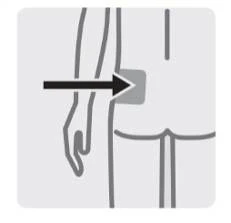
You will receive an injection of TREVICTA every 3 months in the upper arm or buttock.
Depending on your symptoms, your doctor may increase or decrease the amount of medicine you receive at your next scheduled injection.
Patients with kidney problems
If you have mild kidney problems, your doctor will determine the appropriate dose of TREVICTA based on the dose of injectable paliperidone palmitate you were previously receiving on a monthly basis. If you have moderate or severe kidney problems, this medicine must not be used.
Elderly patients
Your doctor will determine the appropriate dose of this medicine for you if you have reduced kidney function.
If you take more TREVICTA than you should
This medicine will be administered under medical supervision, so it is unlikely that you will receive an overdose.
Patients who have received an excessive dose of paliperidone may experience the following symptoms: drowsiness or sedation, increased heart rate, low blood pressure, abnormalities in the electrocardiogram (ECG – recording of the heart's electrical activity), or slow or abnormal movements of the face, body, arms, or legs.
If you stop using TREVICTA
If you stop receiving your injections, your schizophrenia symptoms may worsen. You must not stop using this medicine unless instructed to do so by your doctor.
If you have any further questions about the use of this medicine, ask your doctor or pharmacist.
4. Possible side effects
Like all medicines, this medicine can cause side effects, although not everybody gets them.
Tell your doctor immediately if:
-
you feel you have blood clots in your veins, particularly in the legs (symptoms include swelling, pain and redness in the legs), which may travel through the bloodstream to the lungs, causing chest pain and difficulty breathing. If you notice any of these symptoms, consult your doctor immediately
-
you have dementia and notice a sudden change in your mental state, or sudden weakness or numbness in the face, arms or legs, especially on one side, or if your speech becomes slurred or incomprehensible, even briefly. These may be signs of a stroke
-
you have fever, muscle stiffness, sweating or reduced level of consciousness (a condition called "Neuroleptic Malignant Syndrome"). Immediate medical treatment may be required
-
you are a man and have a prolonged or painful erection. This condition is called priapism. Immediate medical treatment may be needed
-
you experience involuntary rhythmic movements of the tongue, mouth or face. It may be necessary to discontinue paliperidone
-
you develop a severe allergic reaction with symptoms such as fever, swelling of the mouth, face, lips or tongue, shortness of breath, itching, skin rash and sometimes a drop in blood pressure (consistent with an 'anaphylactic reaction'). Although you may have previously tolerated oral risperidone or oral paliperidone, allergic reactions rarely occur after receiving paliperidone injections
-
you are planning to undergo eye surgery, make sure to inform your ophthalmologist that you are taking this medicine. During cataract surgery, the iris (the coloured part of the eye) may become floppy during the operation (this is called "Iris Floppy Lens Syndrome") and may cause eye damage
-
you are aware of having a dangerously low number of a certain type of white blood cells in your blood, which are necessary to fight infections
The following side effects may occur.
Very common: may affect more than 1 in 10 people
- difficulty falling asleep or staying asleep
Common: may affect up to 1 in 10 people
- symptoms of common cold, urinary tract infection, feeling as if you have the flu
- TREVICTA may increase levels of a hormone called "prolactin" detected in a blood test (which may or may not cause symptoms). When symptoms due to high prolactin levels occur, they may include: (in men) breast enlargement, difficulty achieving or maintaining erection or other sexual dysfunction; (in women) breast tenderness, milk discharge from the breast, absence of menstrual periods or other menstrual problems
- increased blood sugar levels, weight gain, weight loss, decreased appetite
- irritability, depression, anxiety
- feeling restless
- parkinsonism: this condition may include slow or altered movements, a feeling of stiffness or muscle tension (causing jerky movements), and sometimes a sensation of "freezing" where movement stops and then restarts. Other signs of parkinsonism include slow shuffling gait, resting tremor, increased salivation and/or drooling, and reduced facial expression
- restlessness, drowsiness or loss of alertness
- dystonia: this is a condition involving slow or prolonged involuntary muscle contractions. Although it may affect any part of the body (resulting in abnormal posture), dystonia often affects facial muscles, including abnormal movements of the eyes, mouth, tongue or jaw
- dizziness
- dyskinesia: this is a condition involving involuntary muscle movements and may include repetitive, jerky, twisting or writhing movements
- tremor
- headache
- fast heartbeat
- high blood pressure
- cough, stuffy nose
- abdominal pain, vomiting, nausea, constipation, diarrhoea, indigestion, toothache
- increased liver transaminases in the blood
- bone, muscle or joint pain, back pain
- loss of menstrual periods
- fever, weakness, fatigue (tiredness)
- a reaction at the injection site, including itching, pain or swelling
Uncommon: may affect up to 1 in 100 people
- pneumonia, chest infection (bronchitis), respiratory tract infection, sinusitis, bladder infection, ear infection, tonsillitis, fungal nail infection, skin infection, subcutaneous abscess
- decrease in white blood cell count, decrease in a certain type of white blood cells that protect the body against infections, anaemia
- allergic reaction
- diabetes or worsening of diabetes, increased insulin in the blood (a hormone that controls blood sugar levels)
- increased appetite
- loss of appetite leading to malnutrition and low body weight
- elevated triglyceride levels (fats), increased cholesterol in the blood
- sleep disorders, elevated mood (mania), reduced sexual drive, nervousness, nightmares
- tardive dyskinesia (involuntary jerky movements or contractions of the face, tongue or other body parts). Contact your doctor immediately if you experience involuntary rhythmic movements of the tongue, mouth or face. Discontinuation of this medicine may be necessary
- fainting, constant need to move body parts, dizziness when standing up, attention disturbances, speech problems, loss or altered sense of taste, reduced skin sensitivity to pain and touch, tingling, prickling or numbness of the skin
- blurred vision, eye infection or conjunctivitis, dry eyes
- sensation of spinning (vertigo), ringing in the ears, ear pain
- interruption of conduction between upper and lower parts of the heart, abnormal electrical conduction of the heart, QT interval prolongation on ECG, rapid heartbeat when standing up, slow heartbeat, abnormal heart electrical trace (electrocardiogram or ECG), sensation of rapid heartbeat or pounding in the chest (palpitations)
- low blood pressure, drop in blood pressure when standing up (as a result, some people taking this medicine may feel faint, lightheaded or may faint when standing up or sitting up quickly)
- shortness of breath, sore throat, nosebleeds
- abdominal discomfort, stomach or intestinal infection, difficulty swallowing, dry mouth, excessive passing of gas or air
- increased GGT in the blood (a liver enzyme called gamma-glutamyl transferase), increased liver enzymes in the blood
- hives, itching, skin rash, hair loss, eczema, dry skin, red skin, acne
- increased CPK (creatine phosphokinase) in the blood, an enzyme that is sometimes released when muscle damage occurs, muscle spasms, joint stiffness, muscle weakness, urinary incontinence (lack of control), frequent urination, pain during urination
- erectile dysfunction, ejaculation disorders, loss of menstrual periods or other menstrual problems (women), breast development in men, sexual dysfunction, breast pain, milk discharge from the breast
- swelling of the face, mouth, eyes or lips, swelling of the body, arms or legs
- increased body temperature
- change in walking pattern
- chest pain, chest discomfort, feeling of malaise
- hardening of the skin
- falls
Rare: may affect up to 1 in 1,000 people
- eye infection
- skin inflammation caused by mites, scalp or skin flaking and itching, increased eosinophils (a type of white blood cells) in your blood
- decrease in platelets (blood cells that help stop bleeding)
- inappropriate secretion of a hormone that controls urine volume
- sugar in the urine
- complications from uncontrolled diabetes leading to life-threatening conditions
- low blood sugar
- excessive water intake
- absence of movements or responses when awake (catatonia)
- confusion
- head tremor
- sleepwalking
- lack of emotions
- inability to reach orgasm
- neuroleptic malignant syndrome (confusion, reduced or loss of consciousness, high fever and severe muscle rigidity), brain vascular problems including sudden loss of blood supply to the brain (stroke or "mini" stroke), lack of response to stimuli, loss of consciousness, reduced level of consciousness, seizures (convulsive fits), balance disorders
- abnormal coordination
- glaucoma (increased pressure inside the eyeball)
- eye movement problems, eye rolling, light sensitivity of the eyes, increased tearing, eye redness
- atrial fibrillation (an abnormal heart rhythm), irregular heartbeat
- blood clots in the veins, particularly in the legs (symptoms include swelling, pain and redness in the legs). If you notice any of these symptoms, consult your doctor immediately
- blood clots in the lungs which may cause chest pain and difficulty breathing. If you notice any of these symptoms, contact your doctor immediately
- hot flushes
- disturbed breathing during sleep (sleep apnoea)
- lung congestion, respiratory congestion, wheezing
- lung crackles
- pancreatitis (inflammation of the pancreas), tongue swelling, faecal incontinence, very hard stools
- intestinal blockage
- chapped lips
- drug-related skin rash, skin thickening, dandruff
- joint swelling
- inability to urinate
- breast discomfort, enlargement of mammary glands, breast enlargement
- vaginal discharge
- priapism (a prolonged erection of the penis which may require surgical treatment)
- very low body temperature, chills, feeling thirsty
- drug withdrawal symptoms
- pus accumulation due to infection at the injection site, deep skin infection, cyst at the injection site, bruising at the injection site
Not known: frequency cannot be estimated from available data
- dangerous decrease in a certain type of white blood cells in the blood that helps protect the body from infections
- severe allergic reaction characterised by fever, swelling of the mouth, face, lips or tongue, shortness of breath, itching, skin rash and sometimes drop in blood pressure
- dangerously excessive water intake
- sleep-related eating disorder
- coma caused by uncontrolled diabetes
- rapid and shallow breathing, pneumonia caused by inhalation of food, voice disorders
- reduced oxygen in parts of your body (due to reduced blood flow)
- lack of intestinal muscle movement causing blockage
- yellowing of the skin and eyes (jaundice)
- severe or life-threatening skin rash with blisters and skin peeling that may start inside and around the mouth, nose, eyes and genitals and spread to other areas of the body (Stevens-Johnson Syndrome / Toxic Epidermal Necrolysis)
- severe allergic reaction with swelling that may affect the throat causing breathing difficulties
- change in skin colour
- abnormal posture
- newborns of mothers who have taken TREVICTA during pregnancy may experience drug-related side effects and/or withdrawal symptoms such as irritability, slow or prolonged muscle contractions, tremor, drowsiness, breathing or feeding difficulties
- decreased body temperature
- death of skin cells at the injection site, ulcer at the injection site
Reporting of side effects
If you experience any side effect, including those not listed in this leaflet, talk to your doctor, pharmacist or nurse.
You can also report side effects directly via the national reporting system listed in Annex V.* By reporting side effects, you can help provide more information on the safety of this medicine.
5. How to store TREVICTA
Keep this medicine out of the sight and reach of children.
Do not use this medicine after the expiry date stated on the cardboard carton. The expiry date refers to the last day of the month.
This medicine does not require any special storage conditions.
Do not dispose of medicines via wastewater or household waste. Ask your pharmacist how to dispose of medicines you no longer use. This will help protect the environment.
6. Package contents and other information
What TREVICTA contains
The active substance is paliperidone.
Each pre-filled syringe of TREVICTA 175 mg contains 273 mg of paliperidone palmitate in 0.88 mL.
Each pre-filled syringe of TREVICTA 263 mg contains 410 mg of paliperidone palmitate in 1.32 mL.
Each pre-filled syringe of TREVICTA 350 mg contains 546 mg of paliperidone palmitate in 1.75 mL.
Each pre-filled syringe of TREVICTA 525 mg contains 819 mg of paliperidone palmitate in 2.63 mL.
The other ingredients are:
Polysorbate 20
Polyethylene glycol 4000
Monohydrate citric acid
Monosodium dihydrogen phosphate monohydrate
Sodium hydroxide (for pH adjustment)
Water for injections
Description of the appearance of TREVICTA and contents of the pack
TREVICTA is a white to off-white prolonged-release injectable suspension contained in a pre-filled syringe, which the doctor or nurse will shake vigorously to properly suspend the medicine before injection.
Each pack contains 1 pre-filled syringe and 2 needles.
Not all pack sizes may be marketed.
Marketing Authorization Holder
Janssen-Cilag International NV
Turnhoutseweg 30
B-2340 Beerse
Belgium
Manufacturer
Janssen Pharmaceutica NV
Turnhoutseweg 30
B-2340 Beerse
Belgium
For further information about this medicinal product, please contact the local representative of the Marketing Authorization Holder:
België/Belgique/Belgien Lietuva
Janssen-Cilag NV UAB “JOHNSON & JOHNSON”
Tel/Tél: +32 14 64 94 11 Tel: +370 5 278 68 88
България Luxembourg/Luxemburg
”Джонсън & Джонсън България” ЕООД Janssen-Cilag NV
Тел.:+359 2 489 94 00 Tél/Tel: +32 14 64 94 11
Česká republika Magyarország
Janssen-Cilag s.r.o. Janssen-Cilag Kft.
Tel:+420 227 012 227 Tel.:+36 1 884 2858
Danmark Malta
Janssen-Cilag A/S AM MANGION LTD.
Tlf: +45 45 94 82 82 Tel: +356 2397 6000
Deutschland Nederland
Janssen-Cilag GmbH Janssen-Cilag B.V.
Tel: +49 2137-955-955 Tel: +31 76 711 1111
Eesti Norge
UAB “JOHNSON & JOHNSON” Eesti filiaal Janssen-Cilag AS
Tel.: +372 617 7410 Tlf: +47 24 12 65 00
Ελλάδα Österreich
Janssen-Cilag Φαρμακευτική Α.Ε.Β.Ε Janssen-Cilag Pharma GmbH
Tηλ: +30 210 80 90 000 Tel: +43 1 610 300
España Polska
Janssen-Cilag, S.A. Janssen-Cilag Polska Sp. z o.o.
Tel: +34 91 722 81 00 Tel.: +48 22 237 60 00
France Portugal
Janssen-Cilag Janssen-Cilag Farmacêutica, Lda.
Tel: 0 800 25 50 75 / +33 1 55 00 40 03 Tel: +351 214 368 600
Hrvatska România
Johnson & Johnson S.E. d.o.o. Johnson & Johnson România SRL
Tel: +385 1 6610 700 Tel: +40 21 207 1800
Ireland Slovenija
Janssen Sciences Ireland UC Johnson & Johnson d.o.o.
Tel: 1 800 709 122 Tel: +386 1 401 18 00
[email protected]
Ísland Slovenská republika
Janssen-Cilag AB Johnson & Johnson s.r.o.
C/o Vistor hf Tel: +421 232 408 400
Sími: +354 535 7000
Italia Suomi/Finland
Janssen-Cilag SpA Janssen-Cilag Oy
Tel: 800.688.777 / +39 02 2510 1 Puh/Tel: +358 207 531 300
Κύπρος Sverige
Βαρνάβας Χατζηπαναγής Λτδ Janssen-Cilag AB
Tηλ: +357 22 207 700 Tfn: +46 8 626 50 00
Latvija United Kingdom (Northern Ireland)
UAB “JOHNSON & JOHNSON” filiāle Latvijā Janssen Sciences Ireland UC
Tel: +371 6789 3561 Tel: +44 1 494 567 444
[email protected]
More detailed information on this medicinal product is available on the European Medicines Agency website: http://www.ema.europa.eu.
Information intended for healthcare professionals
The following information is intended exclusively for physicians or healthcare professionals and must be read by physicians or healthcare professionals together with the complete prescribing information (Summary of Product Characteristics).

Administer every 3 months
Shake the syringe vigorously for at least 15 seconds
For intramuscular injection only. Do not administer by any other route.
Important
Read all instructions completely before use. TREVICTA requires careful attention to all points in these Instructions for Use to ensure proper administration.
TREVICTA must be administered by a healthcare professional as a single injection. DO NOT
divide the dose into multiple injections.
TREVICTA is intended for intramuscular use only. Inject slowly and deeply into the muscle,
taking care to avoid injecting into a blood vessel.
Dosage
TREVICTA must be administered once every 3 months.
Preparation
Remove the label from the syringe and attach it to the patient’s medical record.
TREVICTA requires longer and more vigorous shaking compared to monthly injectable paliperidone palmitate. Shake the syringe vigorously with the tip pointing upwards for at least 15 seconds within the 5 minutes prior to administration (see Step 2).
Selection of the thin-wall safety needle
Thin-wall safety needles are designed for use with TREVICTA. It is important to use only the needles supplied in the TREVICTA package.
Package contents
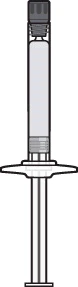
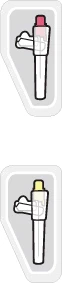
1 Selection of the needle
Needle selection is based on the injection site and the patient’s weight.
Injection into the deltoid Injection into the gluteal
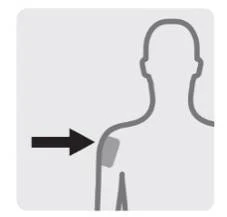
If the patient weighs regardless of patient weight
less than 90 kg yellow hub
pink hub


90 kg or more
yellow hub


Immediately dispose of any unused needle in an appropriate container. Do not save it for future use.
2 Preparation of the injection
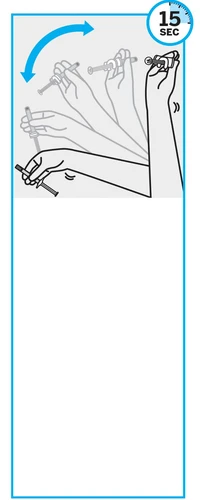
SHAKE VIGOROUSLY
for at least 15 seconds
With the tip of the syringe pointing
upwards, SHAKE VIGOROUSLY with a "wrist flick"
for at least 15 seconds to ensure a homogeneous suspension.
NOTE: This medicine requires a longer and more vigorous shaking compared to monthly injectable paliperidone palmitate.

Proceed immediately to the next step after shaking. If more than 5 minutes elapse before the injection is given, shake again vigorously with the tip of the syringe pointing upwards for at least 15 seconds to re-suspend the medication.
Check the suspension
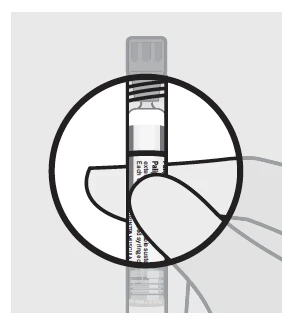
After shaking the syringe for at least 15 seconds, check the appearance of the suspension through the inspection window.
The suspension should appear uniform and milky white.
The presence of small air bubbles is normal.
Open the needle blister pack and remove the cap
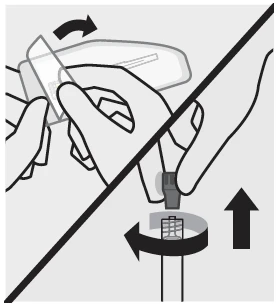
First, open the needle blister pack by peeling back the lid only halfway and place it on a flat surface.
Then, holding the syringe in an upright position, remove the rubber cap with a twisting motion.
Grasp the needle blister
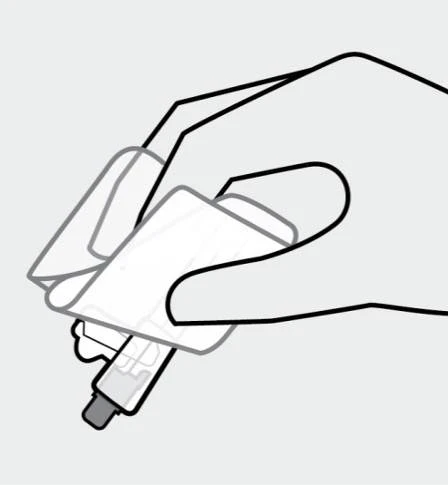
Fold back the needle cover and the plastic blister. Then firmly grasp the safety needle sheath through the open wrapper, as shown in the figure.
Attach the needle
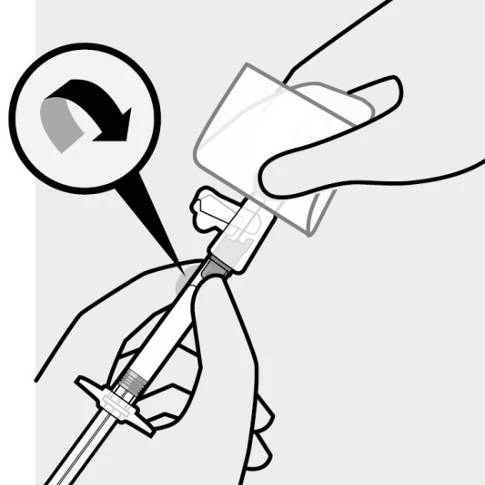
Hold the syringe with the tip pointing upwards. Attach the safety needle to the syringe using a slight twisting motion to avoid breakage or damage at the needle hub. Always check for any signs of damage or leakage before administration.
Remove the needle sheath
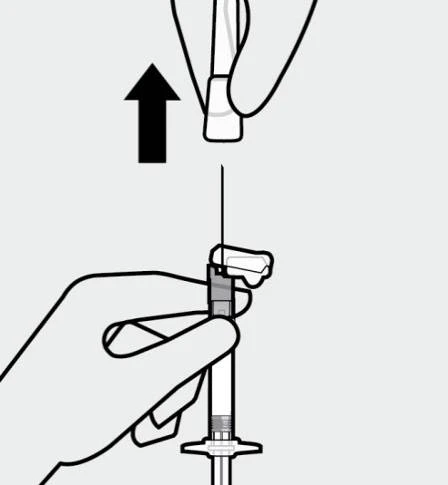
Remove the needle sheath with a straight, steady pull.
Do NOT rotate the sheath, as the needle may loosen from the syringe.
Remove air bubbles
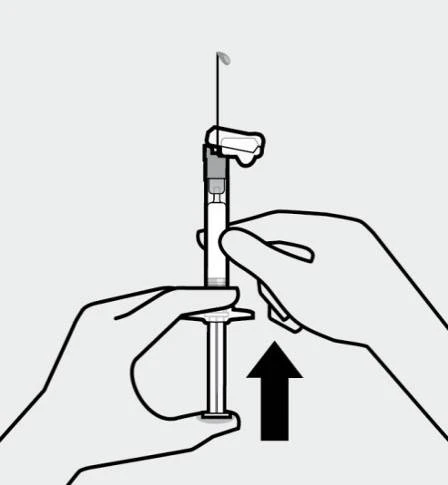
Hold the syringe upright and gently tap to allow air bubbles to rise.
Slowly and carefully push the plunger forward to expel the air.
3 Injection
Administer the dose
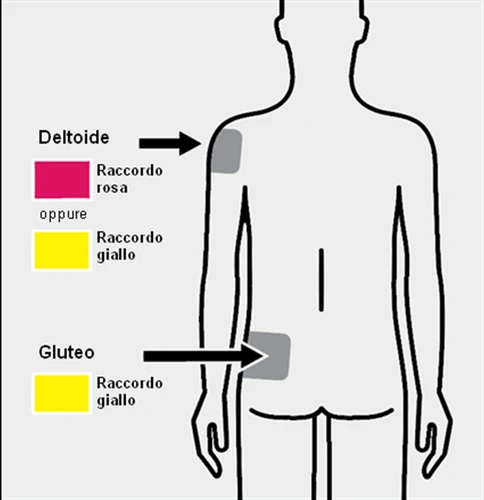
Inject the entire contents of the syringe slowly by deep intramuscular injection into the selected deltoid or gluteal muscle.
Do not administer intravenously or subcutaneously.
4 After injection
Activate the safety needle
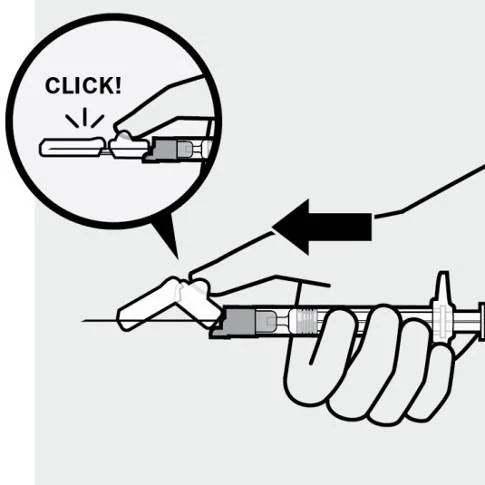
After the injection is complete, use your thumb or a flat surface to push the needle into the safety mechanism. The needle is secure when a “click” is heard.
Dispose properly
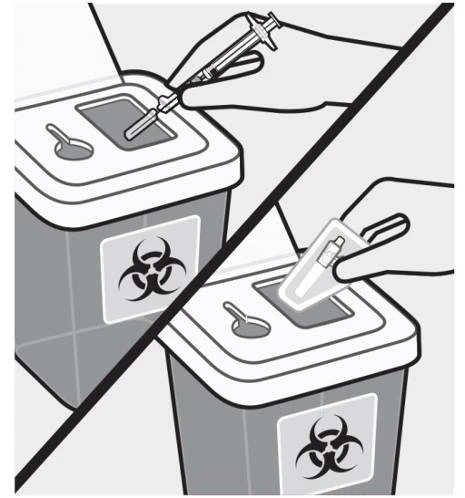
Dispose of the syringe and any unused needle in an appropriate container.

Safety needles are specifically designed for use with TREVICTA. Unused needles must be discarded and not saved for future use.