Tresuvi
Italy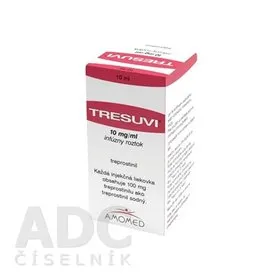
Table of Contents
- Package leaflet: Information for the user
- Tresuvi 1 mg/ml solution for infusion, 2.5 mg/ml solution for infusion, 5 mg/ml solution for infusion, 10 mg/ml solution for infusion
- 1. What Tresuvi is and what it is used for
- 2. What you need to know before using Tresuvi
- 3. How to use Tresuvi
- 4. Possible side effects
- 5. How to store Tresuvi
- 6. Package contents and other information
Package leaflet: Information for the user
Tresuvi 1 mg/ml solution for infusion, 2.5 mg/ml solution for infusion, 5 mg/ml solution for infusion, 10 mg/ml solution for infusion
Treprostinil
Generic medicine
Please read all of this leaflet carefully before you start using this medicine because it contains important information for you.
- Keep this leaflet. You may need to read it again.
- If you have any questions, ask your doctor.
- This medicine has been prescribed for you only. Do not give it to others, even if their symptoms are the same as yours, as it could be harmful.
- If you experience any side effects, including those not listed in this leaflet, talk to your doctor or pharmacist. See section 4.
Contents of this leaflet
- What Tresuvi is and what it is used for
- What you need to know before using Tresuvi
- How to use Tresuvi
- Possible side effects
- How to store Tresuvi
- Contents of the pack and other information
1. What Tresuvi is and what it is used for
What Tresuvi is
The active substance in Tresuvi is treprostinil.
Treprostinil belongs to a group of medicines that act similarly to naturally occurring prostacyclins. Prostacyclins are hormone-like substances that reduce blood pressure by causing relaxation and thus dilation of blood vessels; this allows blood to flow more easily. Prostacyclins may also play a role in preventing blood clotting.
What Tresuvi is used for
Tresuvi is used to treat idiopathic or hereditary pulmonary arterial hypertension (PAH) in patients with moderately severe symptoms. Pulmonary arterial hypertension is a condition in which the blood pressure in the blood vessels between the heart and the lungs is too high, causing shortness of breath, dizziness, fatigue, fainting, palpitations or irregular heartbeat, dry cough, chest pain, and swelling of the ankles or legs.
Tresuvi is initially administered as a continuous subcutaneous infusion (under the skin). Some patients may become unable to tolerate this due to pain and local swelling at the injection site. Your doctor will decide whether Tresuvi should then be given by continuous intravenous infusion directly into a vein, using a central venous catheter connected to an external pump or, depending on your condition, to a pump surgically implanted under the skin of the abdomen. Your doctor will determine which option is best for you.
How Tresuvi works
Tresuvi lowers blood pressure in the pulmonary artery by improving blood circulation and reducing the workload on the heart. Improved blood circulation leads to better oxygen delivery to the body and reduces strain on the heart, allowing it to function more effectively. Tresuvi improves symptoms associated with PAH and enhances exercise capacity in patients whose physical activity is limited.
2. What you need to know before using Tresuvi
Do not use Tresuvi:
- if you are allergic to treprostinil or to any of the other ingredients of this medicine (listed in section 6);
- if you have been diagnosed with a condition called "pulmonary veno-occlusive disease". This is a disease in which the blood vessels carrying blood through the lungs become swollen and blocked, leading to increased pressure in the blood vessels between the heart and the lungs;
- if you have severe liver disease;
- if you have a heart condition, for example: a heart attack (myocardial infarction) within the last six months; significant changes in heart rate; severe coronary artery disease or unstable angina; you have been diagnosed with a heart defect, such as a faulty heart valve causing improper heart function; any untreated or poorly monitored heart disease;
- if you are at high specific risk of bleeding, for example in case of active gastric ulcers, injuries, or other bleeding conditions;
- if you have had a stroke within the last 3 months or any other interruption of blood supply to the brain.
Warnings and precautions
Talk to your doctor before using Tresuvi
- if you have any liver disease;
- if you have been medically diagnosed as obese (body mass index [BMI] greater than 30 kg/m²);
- if you have a human immunodeficiency virus (HIV) infection;
- if you have high blood pressure in the liver veins (portal hypertension);
- if you have a congenital heart defect affecting how blood flows through the heart.
During treatment with Tresuvi, inform your doctor:
- if your blood pressure decreases (hypotension);
- if you experience a sudden worsening of breathing difficulties or persistent cough (this may be related to pulmonary congestion, asthma, or other conditions); in such cases, you must contact your doctor immediately;
- if you experience excessive bleeding, as treprostinil may increase the risk of bleeding by preventing blood clotting;
- if you develop a fever while receiving treprostinil intravenously, or if the intravenous infusion site becomes red, swollen, and/or painful to touch, as this could be a sign of infection.
Other medicines and Tresuvi
Inform your doctor if you are taking, have recently taken, or might take any other medicines. Inform your doctor if you are taking:
- medicines used to treat high blood pressure (antihypertensives or other vasodilators);
- medicines used to increase urine output (diuretics), including furosemide;
- medicines that block blood clotting (anticoagulants), such as warfarin, heparin, or nitric oxide-based products;
- any non-steroidal anti-inflammatory drugs ( NSAIDs ) (e.g. acetylsalicylic acid, ibuprofen);
- any medicines that may increase or decrease the effect of treprostinil (e.g. gemfibrozil, rifampicin, trimethoprim, deferasirox, phenytoin, carbamazepine, phenobarbital, St. John’s wort), as your doctor may need to adjust the dose of Tresuvi.
Pregnancy and breastfeeding
Tresuvi is not recommended if you are pregnant, suspect you may be pregnant, or are planning a pregnancy, unless considered essential by your doctor. The safety of this medicine during pregnancy has not been established.
Contraception is strongly recommended during treatment with Tresuvi.
The use of Tresuvi is not recommended during breastfeeding unless considered necessary by your doctor. You are advised to stop breastfeeding if Tresuvi is prescribed, as it is unknown whether this medicine passes into breast milk.
If you are pregnant, suspect you may be pregnant, are planning a pregnancy, or are breastfeeding, consult your doctor before using this medicine.
Driving and using machines
Tresuvi may cause low blood pressure with dizziness or fainting. If this occurs, do not drive or operate machinery and consult your doctor.
Tresuvi contains sodium
Inform your doctor if you are on a low-sodium diet. Your doctor should take into account that each vial of Tresuvi contains the following amounts of sodium:
Tresuvi 1 mg/ml solution for infusion:
this medicine contains 36.8 mg of sodium (the main component of table salt) per 10 ml vial. This corresponds to 1.8% of the maximum daily recommended dietary intake for an adult.
Tresuvi 2.5 mg/ml solution for infusion:
this medicine contains 37.3 mg of sodium (the main component of table salt) per 10 ml vial. This corresponds to 1.9% of the maximum daily recommended dietary intake for an adult.
Tresuvi 5 mg/ml solution for infusion:
this medicine contains 39.1 mg of sodium (the main component of table salt) per 10 ml vial. This corresponds to 2.0% of the maximum daily recommended dietary intake for an adult.
Tresuvi 10 mg/ml solution for infusion:
this medicine contains 37.4 mg of sodium (the main component of table salt) per 10 ml vial. This corresponds to 1.9% of the maximum daily recommended dietary intake for an adult.
3. How to use Tresuvi
Use this medicine exactly as instructed by your doctor. If you have any doubts, consult your doctor.
Method of administration
Tresuvi is administered as a continuous infusion:
- subcutaneously (under the skin) via a small tube (catheter) placed in the abdomen or thigh; or
- intravenously via a small tube (catheter) usually placed in the neck, chest, or groin.
In both cases, Tresuvi is delivered through the tube by a portable pump located outside the body
(external).
Before leaving the hospital or clinic, your doctor will instruct you on how to prepare Tresuvi and at what rate the pump should deliver treprostinil.
Flushing the infusion line while it is connected may cause accidental overdose.
Alternatively, Tresuvi can be administered intravenously using an implantable infusion pump, typically surgically inserted under the skin of the abdomen. In this case, both the pump and the catheter are completely inside the body (internal pump), and you will need to visit the hospital or clinic periodically (e.g., every 4 weeks) to refill the internal reservoir.
In any case, you must also be provided with information on how to properly use the pump and what to do if it stops working. You should also be informed who to contact in an emergency.
Tresuvi must be diluted only when administered by continuous intravenous infusion.
For intravenous infusion with a portable external pump: the treprostinil solution should be diluted only with sterile water for injections or with 0.9% sodium chloride for injections (as directed by your doctor).
For intravenous infusion with an implantable infusion pump: you will need to visit the hospital or clinic periodically (e.g., every 4 weeks), where healthcare professionals will dilute the treprostinil solution with 0.9% sodium chloride for injections and refill the internal reservoir.
Adult patients
Tresuvi is available as an infusion solution at concentrations of 1 mg/ml, 2.5 mg/ml, 5 mg/ml, or 10 mg/ml. Your doctor will determine the appropriate infusion rate and dose based on your condition.
Overweight patients
If you are overweight (body weight equal to or greater than 130% of your ideal body weight), your doctor will determine the initial and subsequent doses based on your ideal body weight. Refer also to section 2, “Warnings and precautions”.
Elderly patients
Your doctor will determine the appropriate infusion rate and dose for your condition.
Use in children and adolescents
Limited data are available for children and adolescents.
Dose adjustment
The infusion rate may be reduced or increased on an individual basis only under medical supervision.
Adjusting the infusion rate aims to establish an effective maintenance rate that improves symptoms of PAH while minimizing side effects.
If your symptoms worsen, if you require complete rest, if you are confined to bed or chair, or if any physical activity causes discomfort and symptoms occur at rest, do not increase the dose without consulting your doctor. This medicine may no longer be sufficient to treat your condition, and additional treatment may be required.
How can bloodstream infections be prevented during intravenous Tresuvi treatment?
As with any long-term intravenous treatment, there is a risk of developing bloodstream infections. Your doctor will advise you on how to prevent this from happening.
If you use more Tresuvi than you should
In case of accidental overdose of this medicine, symptoms such as nausea, vomiting, diarrhea, low blood pressure (dizziness, lightheadedness, or fainting), skin flushing, and/or headache may occur.
If any of these effects become severe, contact your doctor or hospital immediately. Your doctor may reduce or stop the infusion until symptoms resolve. The Tresuvi infusion solution will then be reintroduced at a dose level recommended by your doctor.
If you stop Tresuvi treatment
Always use Tresuvi exactly as directed by your doctor or hospital specialist. Do not stop Tresuvi unless advised by your doctor.
Sudden discontinuation or abrupt reduction of treprostinil dose may cause recurrence of pulmonary arterial hypertension, with a potential risk of rapid and severe deterioration of your condition.
If you have any questions about using this medicine, consult your doctor.
4. Possible side effects
Like all medicines, this medicine can cause side effects, although not everybody gets them.
Very common (may affect more than 1 in 10 people)
- Dilation of blood vessels with skin flushing
- Pain or tenderness at the infusion site
- Skin discoloration or bruising around the infusion site
- Headache
- Skin rashes
- Nausea
- Diarrhea
- Jaw pain
Common (may affect up to 1 in 10 people)
- Dizziness
- Vomiting
- Feeling of dizziness or faintness due to low blood pressure
- Itching or skin redness
- Swelling of feet, ankles, legs or fluid retention
- Bleeding episodes such as nosebleeds, coughing up blood, blood in urine, bleeding from gums, blood in stools
- Joint pain
- Muscle pain
- Pain in legs and/or arms
Not known (frequency cannot be estimated from available data)
- Infection at the infusion site
- Abscess at the infusion site
- Decrease in blood platelets (thrombocytopenia), cells that help blood to clot
- Bleeding at the infusion site
- Infection of subcutaneous tissues (cellulitis)
- Bone pain
- Skin rashes with skin discoloration or raised bumps
- Heart failure with high blood flow output from the heart leading to shortness of breath, fatigue, swelling of legs and abdomen, and persistent cough (high-output heart failure)
Not known (frequency cannot be estimated from available data)
Additional side effects associated with intravenous administration
- Inflammation of the vein (thrombophlebitis)
- Bacterial infection in the bloodstream (bacteraemia)* (see section 3)
- Septicaemia (severe bacterial infection of the blood)
* Life-threatening or fatal cases of bacteraemia have been reported.
Reporting of side effects
If you experience any side effects, including those not listed in this leaflet, tell your doctor. You may also report side effects directly via the national reporting system at https://www.aifa.gov.it/content/segnalazioni-reazioni-avverse .
Reporting side effects can help provide more information on the safety of this medicine.
5. How to store Tresuvi
Keep this medicine out of the sight and reach of children.
Do not use this medicine after the expiry date stated on the carton and vial after "EXP." The expiry date refers to the last day of that month.
Do not use this medicine if you notice any damage to the vial, discoloration, or other signs of deterioration. A Tresuvi vial must be used or discarded within 30 days of first opening.
This medicine does not require any special storage conditions.
Stability period during continuous subcutaneous infusion
The chemical–physical and microbiological stability of a single undiluted treprostinil reservoir (syringe) administered via subcutaneous infusion has been demonstrated for up to 14 days at 37°C. Any other storage times and conditions are the responsibility of the user.
Stability period during continuous intravenous infusion
The chemical–physical and microbiological stability of a single diluted treprostinil reservoir (syringe) administered via intravenous infusion has been demonstrated for up to 24 hours at 37°C (at concentrations of 0.004 mg/ml) in polyvinyl chloride, polypropylene, and glass. To minimize the risk of bloodstream infections, the maximum duration of use of diluted treprostinil should not exceed 24 hours. Any other storage times and conditions after first opening are the responsibility of the user.
During continuous intravenous infusion using implantable infusion pumps, diluted Tresuvi introduced into the pump reservoir must be used within a maximum of 30 days. Your healthcare provider will inform you of the time interval required before the next reservoir refill.
Any remaining diluted solution must be discarded.
For instructions on use, see section 3 "How to use Tresuvi".
Do not dispose of medicines via wastewater or household waste. Ask your pharmacist how to dispose of medicines you no longer use. This will help protect the environment.
6. Package contents and other information
What Tresuvi contains
The active substance is treprostinil (1 mg/ml, 2.5 mg/ml, 5 mg/ml, 10 mg/ml).
Each ml contains 1 mg of treprostinil as sodium treprostinil.
Each ml contains 2.5 mg of treprostinil as sodium treprostinil.
Each ml contains 5 mg of treprostinil as sodium treprostinil.
Each ml contains 10 mg of treprostinil as sodium treprostinil.
The other components are:
Sodium citrate, hydrochloric acid (for pH adjustment), m-cresol, sodium hydroxide, sodium chloride, and
water for injections.
Description of the appearance of Tresuvi and package contents
Tresuvi is a clear, particle-free solution ranging from colourless to slightly yellow, supplied in a 10 ml transparent glass vial sealed with a rubber stopper and a colour-coded aluminium cap:
- Tresuvi 1 mg/ml solution for infusion has a yellow cap.
- Tresuvi 2.5 mg/ml solution for infusion has a blue cap.
- Tresuvi 5 mg/ml solution for infusion has a green cap.
- Tresuvi 10 mg/ml solution for infusion has a red cap.
Each pack contains one vial.
Marketing Authorisation Holder and Manufacturer
Marketing Authorisation Holder
Orpha-Devel Handels und Vertriebs GmbH
Wintergasse 85/1B
3002 Purkersdorf
Austria
Manufacturer
AOP Orphan Pharmaceuticals GmbH
Leopold-Ungar-Platz 2
1190 Vienna
Austria
This medicinal product is authorised in the European Economic Area countries under the following names:
Austria Treprostinil Orpha-Devel, Infusionslösung
Belgium Tresuvi, Solution for perfusion
Croatia Tresuvi, Otopina za infuziju
Estonia Tresuvi, Infusioonilahus
France Treposuvi, Solution pour perfusion
Germany Tresuvi, Infusionslösung
Ireland Treposuvi, Solution for infusion
Italy Tresuvi, Soluzione per infusione
Latvia Treposuvi, šķīdums infūzijām
Lithuania Tresuvi, Infuzinis tirpalas
Malta Tresuvi, Solution for infusion
The Netherlands Treposuvi, Oplossing voor infusie
Sweden Tresuvi, Infusionsvätska, lösning