Tremfya
Italy
Table of Contents
- Package leaflet: Information for the user
- Tremfya 45 mg/0.45 mL solution for injection in pre-filled pen
- 1. What Tremfya is and what it is used for
- 2. What you need to know before using Tremfya
- 3. How to use Tremfya
- 4. Possible side effects
- 5. How to store Tremfya
- 6. Package contents and other information
- Instructions for use
- Tremfya 45 mg/0.45 mL solution for injection in a pre-filled pen
- 1. Preparation
- 2. Preparation of the Tremfya injection
- 3. Removing air bubbles
- 4. Dose Setting
- 5. Tremfya Injection
- 6. After injection
- Package leaflet: Information for the user
- 1. What Tremfya is and what it is used for
- 2. What you need to know before using Tremfya
- 3. How to use Tremfya
- 4. Possible side effects
- 5. How to store Tremfya
- 6. Package contents and other information
- Instructions for Use
- 1. Preparation for Injection
- 2. TREMFYA Injection Using the Prefilled Syringe
- 3. After the injection
- Package leaflet: information for the user
- Tremfya 100 mg OnePress solution for injection in a prefilled pen
- 1. What Tremfya is and what it is used for
- 2. What you need to know before using Tremfya
- 3. How to use Tremfya
- 4. Possible side effects
- 5. How to store Tremfya
- 6. Package contents and other information
- Instructions for use
- Tremfia
- 2. TREMFYA Injection Using the Prefilled Pen
- 3. After injection
- Package leaflet: information for the user
- Tremfya 100 mg PushPen pre-filled pen injectable solution
- 1. What Tremfya is and what it is used for
- 2. What you need to know before using Tremfya
- 3. How to use Tremfya
- 4. Possible side effects
- 5. How to store Tremfya
- 6. Package contents and other information
- Instructions for use
- Tremfya
- 1. Preparation
- 2. Preparation for injection
- 3. Injecting Tremfya using the pre-filled pen
- 4. After the injection
- Package leaflet: information for the user
- Tremfya 200 mg solution for injection in a pre-filled syringe
- 1. What Tremfya is and what it is used for
- 2. What you should know before using Tremfya
- 3. How to use Tremfya
- 4. Possible side effects
- 5. How to store Tremfya
- 6. Package contents and other information
- Instructions for use
- Tremfia
- 1. Preparation
- 2. Preparation for injection
- 3. Injecting Tremfya using the prefilled syringe
- 4. After the injection
- Package leaflet: information for the user
- Tremfya 200 mg solution for injection in a pre-filled pen
- 1. What Tremfya is and what it is used for
- 2. What you need to know before using Tremfya
- 3. How to use Tremfya
- 4. Possible side effects
- 5. How to store Tremfya
- 6. Package contents and other information
- Instructions for use
- Tremfya 200 mg
- 1. Preparation
- 2. Preparation for injection
- 3. Tremfya Injection Using the Pre-filled Pen
- 4. After the injection
- Package leaflet: Information for the user
- Tremfya 200 mg concentrate for solution for infusion
- 1. What Tremfya is and what it is used for
- 2. What you need to know before using Tremfya
- 3. How to use Tremfya
- 4. Possible side effects
- 5. How to store Tremfya
- 6. Package contents and other information
Package leaflet: Information for the user
Tremfya 45 mg/0.45 mL solution for injection in pre-filled pen
guselkumab
Please read all of this leaflet carefully before you start using this medicine because it contains important information for you. This patient information leaflet is intended for the person taking the medicine. If you are a parent or caregiver administering Tremfya to a child, please read these instructions carefully.
- Keep this leaflet. You may need to read it again.
- If you have any questions, ask your doctor, pharmacist, or nurse.
- This medicine has been prescribed for you only. Do not give it to other people, even if they have the same symptoms as yours, because it may be harmful.
- If you experience any adverse reactions, including those not listed in this leaflet, contact your doctor, pharmacist, or nurse. See section 4.
Contents of this leaflet
- What Tremfya is and what it is used for
- What you need to know before using Tremfya
- How to use Tremfya
- Possible side effects
- How to store Tremfya
- Contents of the pack and other information
1. What Tremfya is and what it is used for
Tremfya contains the active substance guselkumab, which is a type of protein called a monoclonal antibody.
This medicine works by blocking the activity of a protein called IL-23, which is present at higher levels in people with psoriasis.
Plaque psoriasis in children
Tremfya is used to treat children aged 6 years and older with moderate to severe "plaque psoriasis", an inflammatory condition affecting the skin.
Tremfya can improve skin condition and reduce signs and symptoms such as scaling and redness.
2. What you need to know before using Tremfya
Do not use Tremfya
- if you are allergic to guselkumab or to any of the other ingredients of this medicine (listed in section 6). If you think you may be allergic, ask your doctor for advice before using Tremfya;
- if you have an active infection, including active tuberculosis.
Warnings and precautions
Talk to your doctor, pharmacist, or nurse before using Tremfya:
- if you are being treated for an infection;
- if you have had an infection that does not go away or keeps coming back;
- if you have tuberculosis or have been in close contact with someone who has tuberculosis;
- if you think you may have an infection or develop symptoms of an infection (see below "Be aware of possible infections and allergic reactions");
- if you have recently received a vaccine or if you need to receive a vaccine during treatment with Tremfya. Before starting Tremfya, children should have received all age-appropriate vaccinations.
If you are unsure whether any of the conditions described above apply to you, speak to your doctor, pharmacist, or nurse before taking Tremfya.
Be aware of possible infections and allergic reactions
Tremfya may potentially cause serious side effects, including allergic reactions and infections.
You should be vigilant for any signs of these conditions while taking Tremfya.
Signs and symptoms of infection may include fever or flu-like symptoms; muscle aches;
cough; shortness of breath; burning sensation during urination or more frequent urination than usual;
blood in sputum (mucus); weight loss; diarrhoea or stomach pain; skin that is warm, red, or painful, or sores on the body that are different from those of psoriasis.
Serious allergic reactions have occurred with Tremfya. Symptoms may include swelling of the face, lips, mouth, tongue, or throat, difficulty swallowing or breathing, feeling faint or dizzy, or hives (see “Serious side effects” in section 4).
Stop treatment with Tremfya and contact your doctor immediately or seek immediate medical help if you notice any signs of a possible serious allergic reaction or infection.
Children
Do not give this medicine to children under 6 years of age, as it has not been studied in this age group.
Other medicines and TREMFYA
Inform your doctor or pharmacist:
- if you are taking, have recently taken, or might take any other medicines.
- if you have recently been vaccinated or if you need to be vaccinated. You must not receive certain types of vaccines (live vaccines) while using Tremfya.
Pregnancy and breastfeeding
- Tremfya must not be used during pregnancy as the effects of this medicine in pregnant women are unknown. If you are a woman of childbearing age, you are advised to avoid becoming pregnant; you should use an effective method of contraception during treatment with Tremfya and for at least 12 weeks after the last dose of Tremfya. Please talk to your doctor if you are pregnant, suspect you may be pregnant, or are planning to become pregnant.
- Please talk to your doctor if you are breastfeeding or planning to breastfeed. You and your doctor will decide whether you should breastfeed or use Tremfya.
Driving and using machines
It is unlikely that Tremfya will affect your ability to drive or operate machinery.
Tremfya contains polysorbate 80
This medicine contains 0.3 mg of polysorbate 80 per pre-filled pen, equivalent to 0.5 mg/mL. Polysorbates may cause allergic reactions. Inform your doctor if you have known allergies.
3. How to use Tremfya
Use this medicine exactly as instructed by your doctor. If you have any doubts, consult your
doctor or pharmacist.
How Tremfya is administered and for how long
Your doctor will decide how long you need to use Tremfya.
Plaque psoriasis in children from 6 years of age
Children weighing less than 40 kg:
- The recommended dose of Tremfya for children weighing less than 40 kg depends on body weight. Your doctor will tell you the correct dose to use.
- A pre-filled pen containing 45 mg/0.45 mL of Tremfya is used to administer the dose by injection under the skin (subcutaneous injection). The medicine may be administered by your doctor or nurse.
- After the first dose, you will receive the next dose 4 weeks later, and thereafter every 8 weeks.
Children weighing 40 kg or more:
- For children weighing 40 kg or more, a pre-filled syringe containing 100 mg is available.
Initially, Tremfya will be injected by your doctor or nurse. Your doctor may decide that your caregiver can administer Tremfya after receiving adequate training from your doctor on how to inject Tremfya. If you have any questions about the injection, speak to your doctor or nurse.
For detailed instructions on how to use Tremfya, carefully read the instruction leaflet “Instructions for use” included in the package before use.
If you use more Tremfya than you should
If you have received more Tremfya than prescribed, or if the dose was administered earlier than scheduled, inform your doctor.
If you forget to use Tremfya
If you have forgotten to inject a dose of Tremfya, inform your doctor.
If you stop using Tremfya
Do not stop using Tremfya without first discussing it with your doctor. If you stop treatment, your symptoms may return.
If you have any questions about using this medicine, consult your doctor, pharmacist, or nurse.
4. Possible side effects
Like all medicines, this medicine can cause side effects, although not everyone gets them.
Serious side effects
Stop using Tremfya and contact your doctor immediately or seek immediate medical help if you experience any of the following side effects:
Possible severe allergic reactions (may affect up to 1 in 1,000 patients). Signs may include:
- difficulty breathing or swallowing
- swelling of the face, lips, tongue or throat
- severe skin itching, with a red rash or raised bumps
- dizziness, low blood pressure or lightheadedness
Other side effects
The following side effects are all mild to moderate in severity. If any of these side effects become severe, inform your doctor, pharmacist or nurse immediately.
Very common (may affect more than 1 in 10 people):
- respiratory tract infections
Common (may affect up to 1 in 10 people):
- headache
- joint pain (arthralgia)
- diarrhoea
- increased levels of liver enzymes in the blood
- skin rash
- redness, irritation or pain at the injection site
Uncommon (may affect up to 1 in 100 people):
- decrease in the number of a type of white blood cells called neutrophils
- herpes simplex infections
- fungal skin infection, for example between the toes (e.g. athlete’s foot)
- gastroenteritis (intestinal flu)
- hives (urticaria)
Rare (may affect up to 1 in 1,000 people):
- allergic reaction
Reporting of side effects
If you experience any side effect, including those not listed in this leaflet, tell your doctor, pharmacist or nurse. You can also report side effects directly via the national reporting system listed in Annex V. By reporting side effects, you can help provide more information on the safety of this medicine.
5. How to store Tremfya
Keep this medicine out of the sight and reach of children.
- Do not use this medicine after the expiry date stated on the label of the pre-filled pen and on the outer carton after "Exp.". The expiry date refers to the last day of that month.
Keep the pre-filled pen in the outer packaging to protect the medicine from light.
Store this medicine in the refrigerator (2 °C–8 °C). Do not freeze this medicine.
Do not shake this medicine.
Do not use this medicine if it appears cloudy, has changed colour, or contains large particles.
Before use, remove the carton from the refrigerator and allow the pre-filled pen to reach room temperature while remaining inside the carton, waiting for 30 minutes.
This medicine is for single use only. Do not dispose of any medicine via wastewater or household waste. Ask your pharmacist how to dispose of medicines you no longer use. This will help protect the environment.
6. Package contents and other information
What Tremfya contains
- The active substance is guselkumab. Each pre-filled pen contains 45 mg of guselkumab in 0.45 mL of solution.
- The other components are L-histidine, L-histidine monohydrochloride monohydrate, polysorbate 80 (E433), sucrose and water for injections (see section 2 “Tremfya contains polysorbate 80”).
Description of the appearance of Tremfya and package contents
Tremfya is a clear injectable solution (for injection) that may be colourless to pale yellow.
It is available in packages containing one pre-filled pen.
Marketing Authorisation Holder
Janssen-Cilag International NV
Turnhoutseweg 30
B-2340 Beerse
Belgium
Manufacturer
Janssen Biologics B.V.
Einsteinweg 101
2333CB Leiden
The Netherlands
For further information about this medicine, please contact the local representative of the Marketing Authorisation Holder:
België/Belgique/Belgien Lietuva
Janssen-Cilag NV UAB "JOHNSON & JOHNSON"
Tel/Tél: +32 14 64 94 11 Tel: +370 5 278 68 88
[email protected] [email protected]
България Luxembourg/Luxemburg
"Johnson & Johnson Bulgaria" EOOD Janssen-Cilag NV
Tel.: +359 2 489 94 00 Tél/Tel: +32 14 64 94 11
[email protected] [email protected]
Česká republika Magyarország
Janssen-Cilag s.r.o. Janssen-Cilag Kft.
Tel.: +420 227 012 227 Tel.: +36 1 884 2858
[email protected]
Danmark Malta
Janssen-Cilag A/S AM MANGION LTD.
Tlf: +45 45 94 8282 Tel: +356 2397 6000
[email protected]
Deutschland Nederland
Janssen-Cilag GmbH Janssen-Cilag B.V.
Tel: 0800 086 9247 / +49 2137 955 6955 Tel: +31 76 711 1111
[email protected] [email protected]
Eesti Norge
UAB "JOHNSON & JOHNSON" Eesti filiaal Janssen-Cilag AS
Tel: +372 617 7410 Tlf: +47 24 12 65 00
[email protected] [email protected]
Ελλάδα Österreich
Janssen-Cilag Pharmaceutical Single-Member Company Janssen-Cilag Pharma GmbH
Tel: +30 210 80 90 000 Tel: +43 1 610 300
España Polska
Janssen-Cilag, S.A. Janssen-Cilag Polska Sp. z o.o.
Tel: +34 91 722 81 00 Tel.: +48 22 237 60 00
[email protected]
France Portugal
Janssen-Cilag Janssen-Cilag Farmacêutica, Lda.
Tél: 0 800 25 50 75 / +33 1 55 00 40 03 Tel: +351 214368 600
[email protected]
Hrvatska România
Johnson & Johnson S.E. d.o.o. Johnson & Johnson România SRL
Tel: +385 1 6610 700 Tel: +40 21 207 1800
[email protected]
Ireland Slovenija
Janssen Sciences Ireland UC Johnson & Johnson d.o.o.
Tel: 1 800 709 122 Tel: +386 1 401 18 00
[email protected] [email protected]
Ísland Slovenská republika
Janssen-Cilag AB Johnson & Johnson, s.r.o.
c/o Vistor ehf. Tel: +421 232 408 400
Sími: +354 535 7000
[email protected]
Italia Suomi/Finland
Janssen Cilag SpA Janssen-Cilag Oy
Tel: 800.688.777/+39 02 2510 1 Puh/Tel: +358 207 531 300
[email protected] [email protected]
Κύπρος Sverige
Varnavas Hadjipanagis Ltd Janssen-Cilag AB
Tel: +357 22 207 700 Tfn: +46 8 626 50 00
[email protected]
Latvija
UAB "JOHNSON & JOHNSON" filiāle Latvijā
Tel: +371 678 93561
[email protected]
Other sources of information
More detailed information on this medicine is available on the website of the European Medicines Agency: https://www.ema.europa.eu.
Instructions for use
Tremfya 45 mg/0.45 mL solution for injection in a pre-filled pen
For pediatric patients weighing less than 40 kg
SINGLE-USE DEVICE
These Instructions for Use provide information on how to inject Tremfya.
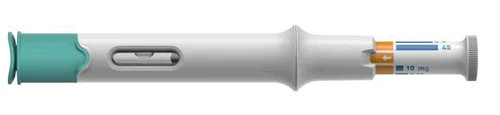
Know your dose.
Important information to know before injecting Tremfya
Tremfya is available in a single-use pre-filled pen that allows manual setting of the prescribed dose.
If you have any doubts about the correct dose, consult your prescribing doctor before administering
the injection.
If your doctor determines that a caregiver may be able to administer Tremfya injections at home,
the caregiver must be trained in the correct way to prepare and inject Tremfya before using the
pre-filled pen. If the caregiver has not received training or has any questions, please speak to your doctor.
Read these Instructions for Use before using the Tremfya pre-filled pen and each time you receive a new supply of the medication, as there may be new information.
This instructional guide should not replace discussions with your doctor regarding your medical condition or treatment.
Please also read the package leaflet carefully before starting the injection and discuss any questions you may have with your doctor or nurse.
Each pre-filled pen is for single use only. Dispose of the pre-filled pen after one dose, even if there is still medication remaining.
Do not reuse the pre-filled pen.

Storage information
Store in a refrigerator at 2 °C - 8 °C.
Do not freeze the pre-filled pen.
Do not shake the pre-filled pen.
Keep the pre-filled pen in its original packaging to protect it from light and physical damage.
Keep the Tremfya pre-filled pen and all medicines out of the reach of children.

Need help?
Talk to your doctor about any questions you may have. For further assistance, refer to the package leaflet for contact details of the local representative.
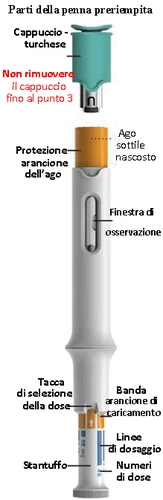
You will need the following materials:
- 1 pre-filled pen
Not supplied in the pre-filled pen package: - alcohol swab
- cotton ball or gauze pad
- adhesive bandage
- sharps container
1. Preparation
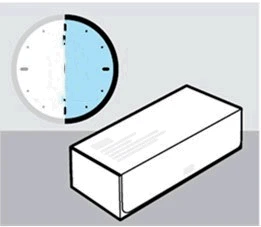
Allow Tremfya to reach room temperature and inspect the packaging
Remove the package from the refrigerator and place it on a flat surface at room temperature for approximately 30 minutes before use.
Do not heat the prefilled pen in any other way.
Check the expiration date (“Exp.”) on the carton.
Do not use the prefilled pen if the expiration date has passed or if the seal on the packaging is broken. Contact your doctor or pharmacist to obtain another prefilled pen.
2. Preparation of the Tremfya injection
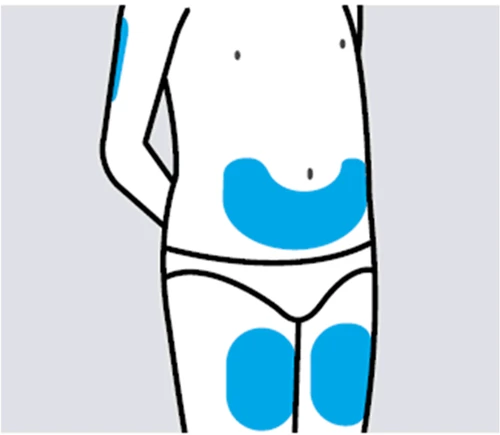
Choose the injection site
Select a site in one of the following areas for the injection:
- Front of the thighs
- Lower abdomen (lower belly), avoiding the area within 5 centimeters around the navel
- Back of the upper arms
Do not inject into areas of sensitive skin, or skin that is bruised, red, cracked, hardened, thickened, scarred, or affected by psoriasis.
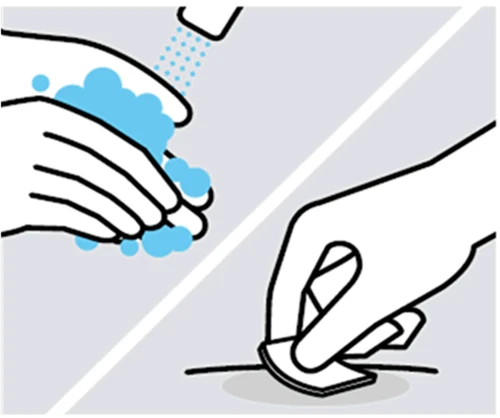
Wash your hands and
Clean the injection site
Wash your hands thoroughly with soap and lukewarm water.
Clean the chosen injection site with an alcohol swab and allow it to air dry.
Do not touch, fan, or blow on the injection site after cleaning.
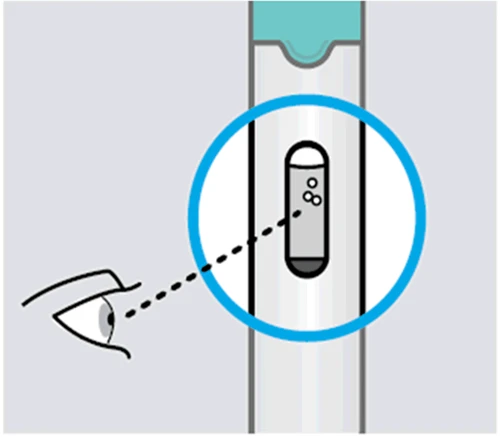
Inspect the liquid in the viewing window
Remove the prefilled pen from its packaging.
Check the liquid visible in the viewing window. It should be clear, colourless to pale yellow, and may contain small white or transparent particles.
Small air bubbles may also be present.
This is normal.
Do not administer the injection if the liquid is:
- cloudy, or
- has changed colour, or
- contains large particles.
Contact your doctor or pharmacist to obtain another prefilled pen.
3. Removing air bubbles
Keep the pre-filled pen with the tip pointing upwards during this step
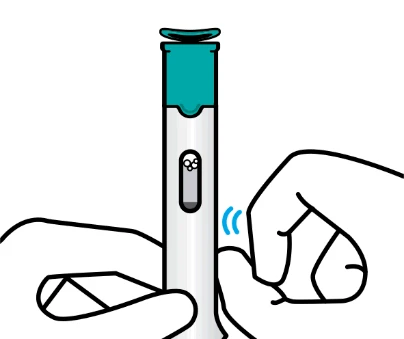
Tap the pre-filled pen to move air bubbles upwards, even if no air bubbles are visible
Hold the pre-filled pen with the aqua-green cap pointing upwards.
Gently tap near the viewing window. This will cause any air bubbles to rise to the top.
Do not place the pre-filled pen down before removing air bubbles.
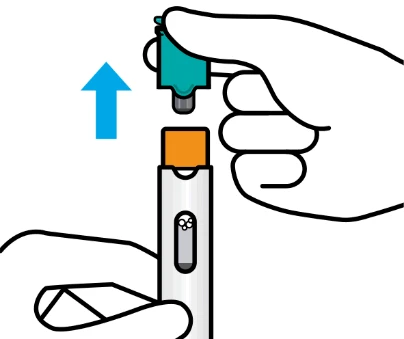
Remove the cap
Continue holding the pre-filled pen with the aqua-green cap pointing upwards, then pull the cap to remove it.
After removing the cap, keep hands away from the orange needle shield.
If the needle shield is pressed too early, the pre-filled pen may lock and the dose cannot be administered.
Do not reattach the cap, as this may damage the needle.
Do not use the pre-filled pen if it has been dropped after removing the cap. Contact your doctor or pharmacist to obtain a new pre-filled pen.
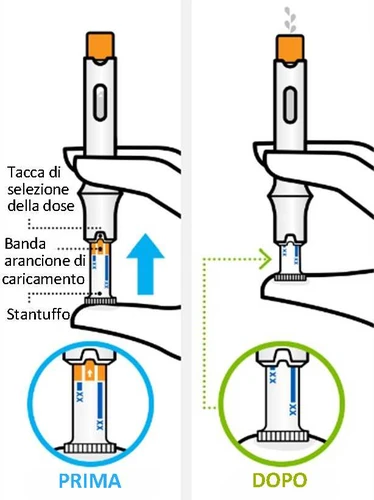
Press the plunger until it stops to expel air bubbles
Continue holding the pre-filled pen with the orange needle shield pointing upwards.
Confirm removal of air bubbles by checking that the orange loading band is no longer visible in the dose selection window.
A small amount of liquid may escape. This is normal.
4. Dose Setting
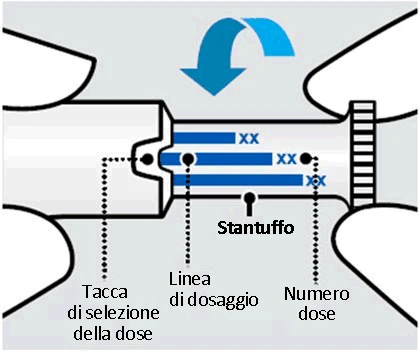
Rotate the plunger to set the dose
Rotate the plunger until the dose line and the dose number corresponding to the
prescribed dose (see the table below) align with the dose selection mark, as
shown in the image above.
| Prescribed dose | Rotate the plunger to: |
| 20 mg = 20 mg | |
| 25 mg = 25 | |
| 30 mg = 30 | |
| 35 mg = 35 | |
| 40 mg = 40 | |
| 45 mg = 45 | |
5. Tremfya Injection
Before injecting, read all sub-steps from A to D
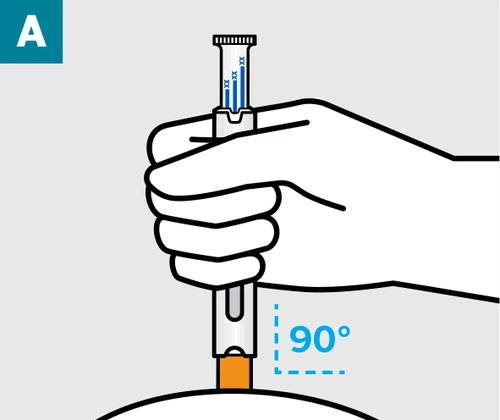
Position the pre-filled pen vertically at the injection site
Position the pre-filled pen vertically at the injection site, with the orange needle cap
against the skin and the viewing window facing toward you.
Continue to hold the pre-filled pen against the skin.
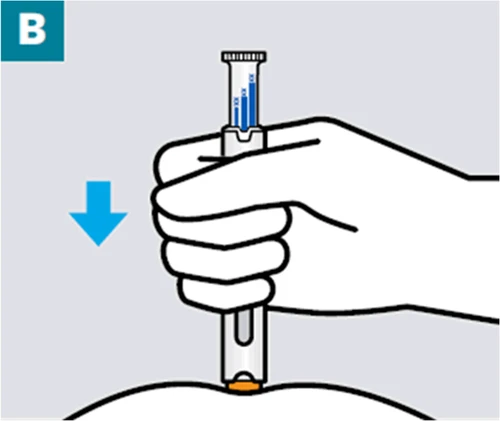
Push the pre-filled pen downward to insert the needle into the skin and hold in place
Do not press the plunger yet.
Do not lift the pre-filled pen away from the skin.
Push the pre-filled pen into the skin until the orange needle shield locks, thereby inserting the needle into the skin. A small portion of orange will still be visible.
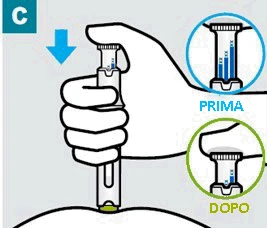
Slowly press the plunger completely down until it stops, to inject all of the liquid
Do not lift the pre-filled pen away from the skin during injection.
Otherwise, the orange needle shield will lock and the full dose cannot be delivered.
You may feel some resistance when pressing the plunger. This is normal.
If a small dose has been set, the plunger will move only slightly.
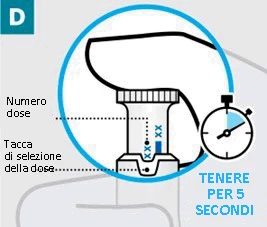
Hold and confirm that the injection has been completed
Keep the pre-filled pen in place and continue to press against the skin for 5 seconds.
Confirm completion of the injection by checking the following:
- the plunger cannot be pressed further down
- the blue selected dose line is no longer visible
- only the number of the selected dose is visible in the dose selection notch
After confirmation, lift the pre-filled pen away from the skin. The orange needle shield will extend and lock. It is normal to see some residual liquid remaining in the viewing window.
6. After injection
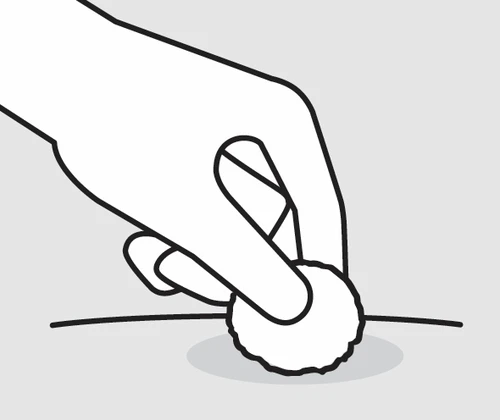
Check the injection site
A small amount of blood or liquid may be present at the injection site. Apply and maintain gentle pressure on the injection site using a cotton ball or gauze until bleeding stops.
Do not rub the injection site.
If necessary, cover the injection site with a plaster.
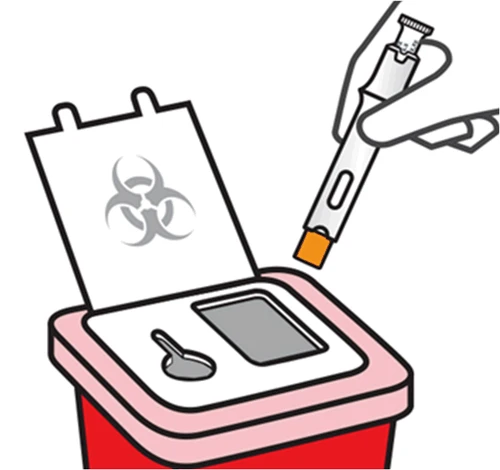
Disposal of the pre-filled pen
Place the used pre-filled pen into a sharps disposal container immediately after use.
Do not dispose of (throw away) the pre-filled pen in household waste.
When the container is full, make sure to dispose of it as instructed by your doctor or nurse.
Do not recycle the used sharps disposal container.
Package leaflet: Information for the user
“Tremfya” 100 mg solution for injection in pre-filled syringe
guselkumab
Please read all of this leaflet carefully before you start using this medicine because it contains important information for you.
- Keep this leaflet. You may need to read it again.
- If you have any questions, ask your doctor, pharmacist, or nurse.
- This medicine has been prescribed for you only. Do not pass it on to others, even if they have the same symptoms as you, because it may be harmful.
- If you experience any side effects, including those not listed in this leaflet, tell your doctor, pharmacist, or nurse. See section 4.
Contents of this leaflet
- What Tremfya is and what it is used for
- What you need to know before using Tremfya
- How to use Tremfya
- Possible side effects
- How to store Tremfya
- Contents of the pack and other information
1. What Tremfya is and what it is used for
Tremfya contains the active substance guselkumab, which is a type of protein called a monoclonal antibody.
This medicine works by blocking the activity of a protein called IL-23, which is present at higher levels in people with psoriasis, psoriatic arthritis, ulcerative colitis, and Crohn’s disease.
Plaque psoriasis
Adults
Tremfya is used to treat adults with moderate to severe plaque psoriasis, an inflammatory condition affecting the skin and nails.
Tremfya can improve skin condition and the appearance of nails, and reduce symptoms such as scaling, flaking, itching, pain, and burning.
Children
Tremfya is used to treat children aged 6 years and older with moderate to severe plaque psoriasis, an inflammatory condition affecting the skin.
Tremfya can improve skin condition and reduce signs and symptoms such as scaling and redness.
Psoriatic arthritis
Tremfya is used to treat a condition called psoriatic arthritis, an inflammatory joint disease often associated with plaque psoriasis. If you have psoriatic arthritis, you will first be given other medicines. If your response to these medicines is not satisfactory, or if you are intolerant to them, Tremfya will be given to reduce the signs and symptoms of the disease. Tremfya may be used alone or in combination with another medicine called methotrexate.
The use of Tremfya in psoriatic arthritis will benefit you by reducing the signs and symptoms of the disease, slowing the progression of joint cartilage and bone damage, and improving your ability to perform normal daily activities.
Ulcerative colitis
Tremfya is used to treat adults with moderate to severe ulcerative colitis, an inflammatory bowel disease. If you have ulcerative colitis, you will first be given other medicines. If you do not respond adequately or cannot tolerate these medicines, Tremfya may be given to you.
The use of Tremfya in ulcerative colitis may benefit you by relieving the signs and symptoms of the disease. These include reduced bloody stools, reduced frequency and urgency of bowel movements, abdominal pain, and intestinal mucosal inflammation. These effects may improve your ability to perform normal daily activities and reduce feelings of fatigue.
Crohn’s disease
Tremfya is used to treat adults with moderate to severe Crohn’s disease, an inflammatory bowel disease. If you have Crohn’s disease, you will first be given other medicines. If you do not respond adequately or cannot tolerate these medicines, Tremfya may be given to you.
The use of Tremfya in Crohn’s disease may help reduce the signs and symptoms of the disease, such as diarrhea, abdominal pain, and intestinal mucosal inflammation. These effects may improve your ability to perform normal daily activities and reduce fatigue.
2. What you need to know before using Tremfya
Do not use Tremfya
- if you are allergic to guselkumab or to any of the other ingredients of this medicine (listed in section 6). If you think you may be allergic, ask your doctor for advice before using Tremfya;
- if you have an active infection, including active tuberculosis (TB).
Warnings and precautions
Talk to your doctor, pharmacist, or nurse before using Tremfya:
- if you are being treated for an infection;
- if you have had an infection that does not heal or keeps coming back;
- if you have TB or have been in close contact with someone who has TB;
- if you think you may have an infection or if you develop symptoms of an infection (see below "Watch out for infections and allergic reactions");
- if you have recently received a vaccine or if you need to receive a vaccine during treatment with Tremfya. Before starting Tremfya, children should have received all age-appropriate vaccinations.
If you are unsure whether any of the conditions described above apply to you, talk to your doctor, pharmacist, or nurse before taking Tremfya.
As directed by your doctor, you may need to have blood tests to check whether you have elevated liver enzymes before starting Tremfya and during treatment.
Increased liver enzymes may occur more frequently in patients using Tremfya every 4 weeks compared to patients using Tremfya every 8 weeks (see "How to use Tremfya" in section 3).
Watch out for possible infections and allergic reactions
Tremfya may potentially cause serious side effects, including allergic reactions and infections.
You should be vigilant for any signs of these conditions while taking Tremfya.
Signs or symptoms of infection may include fever or flu-like symptoms; muscle aches; cough; shortness of breath; burning sensation during urination or more frequent urination than usual; blood in sputum (mucus); weight loss; diarrhea or stomach pain; warm, red, or painful skin, or sores on the body that are different from those caused by psoriasis.
Severe allergic reactions have occurred with Tremfya. Symptoms may include swelling of the face, lips, mouth, tongue, or throat, difficulty swallowing or breathing, feeling faint or dizzy, or hives (see "Serious side effects" in section 4).
Stop treatment with Tremfya and inform your doctor immediately or seek immediate medical help if you notice any signs of a possible severe allergic reaction or infection.
Children and adolescents
Do not administer this medicine to children under 6 years of age with plaque psoriasis or to individuals under 18 years of age with psoriatic arthritis, ulcerative colitis, or Crohn’s disease, as it has not been studied in these age groups.
Other medicines and TREMFYA
Inform your doctor or pharmacist:
- if you are taking, have recently taken, or might take any other medicines.
- if you have recently received a vaccination or if you need to receive a vaccination. You must not receive certain types of vaccines (live vaccines) while using Tremfya.
Pregnancy and breastfeeding
- Tremfya should not be used during pregnancy as the effects of this medicine in pregnant women are unknown. If you are a woman of childbearing age, you are advised to avoid pregnancy; you should use an effective method of contraception during treatment with Tremfya and for at least 12 weeks after the last dose of Tremfya. Please speak with your doctor if you are pregnant, suspect you may be pregnant, or are planning to become pregnant.
- Please speak with your doctor if you are breastfeeding or planning to breastfeed. You and your doctor will need to decide whether you should breastfeed or use Tremfya.
Driving and using machines
It is unlikely that Tremfya will affect your ability to drive or operate machinery.
Tremfya contains polysorbate 80
This medicine contains 0.5 mg of polysorbate 80 per pre-filled syringe, equivalent to 0.5 mg/mL. Polysorbates may cause allergic reactions. Inform your doctor if you have known allergies.
3. How to use Tremfya
Use this medicine exactly as your doctor has told you. If you have any doubts, consult your doctor or pharmacist.
How Tremfya is administered and for how long
Your doctor will decide how long you need to use Tremfya.
Plaque psoriasis
Adults:
- The dose is 100 mg (the content of 1 pre-filled syringe) administered by subcutaneous injection (injection under the skin). The medicine may be administered by your doctor or nurse.
- After the first dose, you will receive the next dose 4 weeks later, and then every 8 weeks thereafter.
Children:
- For children weighing 40 kg or more, the dose is 100 mg (the content of 1 pre-filled syringe) administered by subcutaneous injection (injection under the skin). The medicine may be administered by your doctor or nurse.
- For children weighing less than 40 kg, a 45 mg/0.45 mL pre-filled pen is available.
- After the first dose, you will receive the next dose 4 weeks later, and then every 8 weeks thereafter.
Psoriatic arthritis
- The dose is 100 mg (the content of 1 pre-filled syringe) administered by subcutaneous injection (injection under the skin). The medicine may be administered by your doctor or nurse.
- After the first dose, you will receive the next dose 4 weeks later, and then every 8 weeks thereafter. For some patients, after the first dose, Tremfya may be administered every 4 weeks. Your doctor will decide the frequency of Tremfya administration.
Ulcerative colitis
Induction treatment:
Induction treatment may be administered either by intravenous infusion or subcutaneous administration:
- Intravenous infusion: the first dose of Tremfya is 200 mg and will be administered by your doctor or nurse as an intravenous infusion (a drip into a vein in the arm). After the first dose, you will receive a second dose 4 weeks later and then a third dose 4 weeks after that.
- Subcutaneous administration: the first dose of Tremfya is 400 mg and will be administered under the skin (subcutaneous injection) at multiple sites on the body. After the first dose, you will receive a second dose 4 weeks later and then a third dose 4 weeks after that.
Maintenance therapy: a maintenance dose of Tremfya will be administered by subcutaneous injection (injection under the skin) with either 100 mg or 200 mg. Your doctor will decide which maintenance dose you will receive:
- A 100 mg dose will be administered 8 weeks after the third induction dose and then every 8 weeks thereafter.
- A 200 mg dose will be administered 4 weeks after the third induction dose and then every 4 weeks thereafter.
Crohn’s disease
Induction treatment:
Induction treatment may be administered either by intravenous infusion or subcutaneous administration:
- Intravenous infusion: the first dose of Tremfya is 200 mg and will be administered by your doctor or nurse as an intravenous infusion (a drip into a vein in the arm). After the first dose, you will receive a second dose 4 weeks later and then a third dose 4 weeks after that.
- Subcutaneous administration: the first dose of Tremfya is 400 mg and will be administered under the skin (subcutaneous injection) at multiple sites on the body. After the first dose, you will receive a second dose 4 weeks later and then a third dose 4 weeks after that.
Maintenance therapy: a maintenance dose of Tremfya will be administered by subcutaneous injection (injection under the skin) with either 100 mg or 200 mg. Your doctor will decide which maintenance dose you will receive:
- A 100 mg dose will be administered 8 weeks after the third induction dose and then every 8 weeks thereafter.
- A 200 mg dose will be administered 4 weeks after the third induction dose and then every 4 weeks thereafter.
You may decide together with your doctor to self-administer Tremfya. In this case, you will be given instructions on how to inject Tremfya. Please speak with your doctor or nurse if you have any questions about self-injecting the medicine. It is important not to attempt to inject the medicine yourself until you have been properly trained by your doctor or nurse.
Children under 18 years of age must not self-inject Tremfya. Your doctor may decide that your caregiver may be able to administer Tremfya after receiving adequate training on how to inject it.
For detailed instructions on how to use Tremfya, carefully read the separate leaflet “Instructions for use” included in the package before use.
If you use more Tremfya than you should
If you have received more Tremfya than prescribed or the dose was administered earlier than scheduled, inform your doctor.
If you forget to use Tremfya
If you forget to inject a dose of Tremfya, inform your doctor.
If you stop using Tremfya
Do not stop using Tremfya without first talking to your doctor. If you stop treatment, your symptoms may return.
If you have any questions about the use of this medicine, consult your doctor, pharmacist, or nurse.
4. Possible side effects
Like all medicines, this medicine can cause side effects, although not everyone will experience them.
Serious side effects
Stop using Tremfya and contact your doctor immediately or seek immediate medical help if you notice any of the following side effects:
Possible severe allergic reactions (may affect up to 1 in 1,000 patients) – signs or symptoms may include:
- difficulty breathing or swallowing
- swelling of the face, lips, tongue, or throat
- severe skin itching, with a red rash or raised bumps
- dizziness, low blood pressure, or lightheadedness
Other side effects
The following side effects are all mild to moderate in severity. If any of these side effects become severe, inform your doctor, pharmacist, or nurse immediately.
Very common (may affect more than 1 in 10 people):
- respiratory tract infections
Common (may affect up to 1 in 10 people):
- headache
- joint pain (arthralgia)
- diarrhea
- increased levels of liver enzymes in the blood
- skin rash
- redness, irritation, or pain at the injection site
Uncommon (may affect up to 1 in 100 people):
- decrease in the number of a type of white blood cells called neutrophils
- herpes simplex infections
- fungal skin infections, for example between the toes (e.g. athlete’s foot)
- gastrointestinal flu (gastroenteritis)
- hives
Rare (may affect up to 1 in 1,000 people):
- allergic reaction
Reporting of side effects
If you experience any side effect, including those not listed in this leaflet, talk to your doctor, pharmacist, or nurse. You can also report side effects directly via the national reporting system listed in Annex V. By reporting side effects, you can help provide more information on the safety of this medicine.
5. How to store Tremfya
Keep this medicine out of the sight and reach of children.
- Do not use this medicine after the expiry date stated on the syringe label and outer carton after “Exp.”. The expiry date refers to the last day of that month.
Keep the pre-filled syringe in the outer packaging to protect the medicine from light.
Store this medicine in the refrigerator (2 °C - 8 °C). Do not freeze this medicine.
Do not shake this medicine.
Do not use this medicine if it appears cloudy or discoloured, or if it contains large particles. Before use, remove the carton from the refrigerator and allow the pre-filled syringe to reach room temperature by leaving it inside the carton for 30 minutes.
This medicine is for single use only. Do not dispose of any medicine via wastewater or household waste. Ask your pharmacist how to dispose of medicines no longer required. This will help protect the environment.
6. Package contents and other information
What Tremfya contains
- The active substance is guselkumab. Each pre-filled syringe contains 100 mg of guselkumab in 1 mL of solution.
- The other components are L-histidine, L-histidine monohydrochloride monohydrate, polysorbate 80 (E433), sucrose and water for injections (see section 2 “Tremfya contains polysorbate 80”).
Description of the appearance of Tremfya and contents of the pack
Tremfya is a clear injectable solution (for injection), which may be colourless to light yellow.
It is available in packs containing one pre-filled syringe and in multiple packs of 2 boxes,
each containing 1 pre-filled syringe. Not all pack sizes may be
marketed.
Marketing Authorisation Holder
Janssen-Cilag International NV
Turnhoutseweg 30
B-2340 Beerse
Belgium
Manufacturer
Janssen Biologics B.V.
Einsteinweg 101
2333CB Leiden
The Netherlands
For further information about this medicine, please contact the local representative of the Marketing Authorisation Holder:
België/Belgique/Belgien Lietuva
Janssen-Cilag NV UAB "JOHNSON & JOHNSON"
Tel/Tél: +32 14 64 94 11 Tel: +370 5 278 68 88
[email protected] [email protected]
България Luxembourg/Luxemburg
„Джонсън&ДжонсънБългария” ЕООД Janssen-Cilag NV
Тел.: +359 2 489 94 00 Tél/Tel: +32 14 64 94 11
[email protected] [email protected]
Česká republika Magyarország
Janssen-Cilag s.r.o. Janssen-Cilag Kft.
Tel.: +420 227 012 227 Tel.: +36 1 884 2858
[email protected]
Danmark Malta
Janssen-Cilag A/S AM MANGION LTD.
Tlf: +45 45 94 8282 Tel: +356 2397 6000
[email protected]
Deutschland Nederland
Janssen-Cilag GmbH Janssen-Cilag B.V.
Tel: 0 800 086 9247 / +49 2137 955 6955 Tel: +31 76 711 1111
[email protected] [email protected]
Eesti Norge
UAB "JOHNSON & JOHNSON" Eesti filiaal Janssen-Cilag AS
Tel: +372 617 7410 Tlf: +47 24 12 65 00
[email protected] [email protected]
Ελλάδα Österreich
Janssen-Cilag Φαρμακευτική Μονοπρόσωπη Janssen-Cilag Pharma GmbH
Tηλ: +30 210 80 90 000 Tel: +43 1 610 300
España Polska
Janssen-Cilag, S.A. Janssen-Cilag Polska Sp. z o.o.
Tel: +34 91 722 81 00 Tel.: +48 22 237 60 00
[email protected]
France Portugal
Janssen-Cilag Janssen-Cilag Farmacêutica, Lda.
Tél: 0 800 25 50 75 / +33 1 55 00 40 03 Tel: +351 214368 600
[email protected]
Hrvatska România
Johnson & Johnson S.E. d.o.o. Johnson & Johnson România SRL
Tel: +385 1 6610 700 Tel: +40 21 207 1800
[email protected]
Ireland Slovenija
Janssen Sciences Ireland UC Johnson & Johnson d.o.o.
Tel: 1 800 709 122 Tel: +386 1 401 18 00
[email protected] [email protected]
Ísland Slovenská republika
Janssen-Cilag AB Johnson & Johnson, s.r.o.
c/o Vistor ehf. Tel: +421 232 408 400
Sími: +354 535 7000
[email protected]
Italia Suomi/Finland
Janssen Cilag SpA Janssen-Cilag Oy
Tel: 800.688.777/+39 02 2510 1 Puh/Tel: +358 207 531 300
[email protected] [email protected]
Κύπρος Sverige
Βαρνάβας Χατζηπαναγής Λτδ Janssen-Cilag AB
Τηλ: +357 22 207 700 Tfn: +46 8 626 50 00
[email protected]
Latvija
UAB "JOHNSON & JOHNSON" filiāle Latvijā
Tel: +371 678 93561
[email protected]
Other sources of information
More detailed information on this medicine is available on the website of the European Medicines Agency: https://www.ema.europa.eu.
Instructions for Use
Tremfya
100 mg in pre-filled syringe
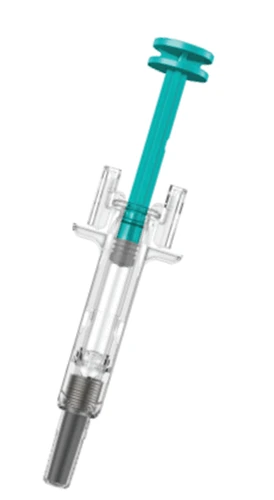
SINGLE-USE DEVICE
Important
If your doctor decides that you or someone assisting you can be trained to administer Tremfya injections at home, you must receive training on the correct way to prepare and inject Tremfya using the pre-filled syringe before attempting the injection. Do not try to inject yourself until your doctor has shown you the proper way to administer the injections.
For pediatric patients, Tremfya must be administered by a doctor, nurse, or caregiver who has been trained by a doctor on the correct way to give the injections.
Please read these Instructions for Use carefully before using the pre-filled syringe of Tremfya and each time you need an injection. There may be new information. This instructional guide should not replace discussions with your doctor about your medical condition or your treatment. Also, please read the Patient Information Leaflet carefully before starting the injection and discuss any questions you may have with your doctor or nurse.
The pre-filled syringe of Tremfya is intended for subcutaneous injection only, not into muscle or vein.
After injection, the needle will retract into the body of the device and lock in place.

Storage Information
Store in a refrigerator at a temperature between 2°C and 8°C. Do not freeze.
Keep the pre-filled syringe in its original packaging to protect it from light and physical damage.
Keep TREMFYA and all medicines out of the reach of children.
Do not shake the pre-filled syringe at any time.

Need help?
Call your doctor to discuss any questions you may have. For additional assistance or to share your feedback, refer to the Patient Information Leaflet for contact details of the local representative.
Description of the pre-filled syringe use
Before injection
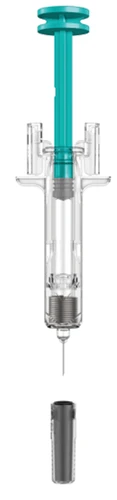
Plunger
Do not grasp or pull the plunger at any time.
Safety system
Flange
Body
Hold the syringe body below the flange.
View window
Needle cap
Do not remove it until you are ready for the Tremfya injection (see step 2).
After injection
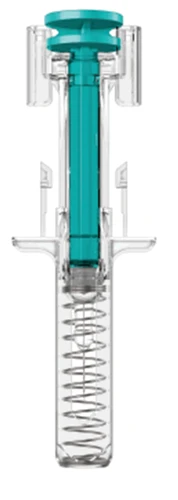
The plunger stops
The safety system is
activated
The needle retracts
into the syringe body
You will need the following materials:
- 1 Alcohol swab
- 1 Cotton ball or gauze pad
- 1 Adhesive bandage
- 1 Sharps container (see step 3)
1. Preparation for Injection
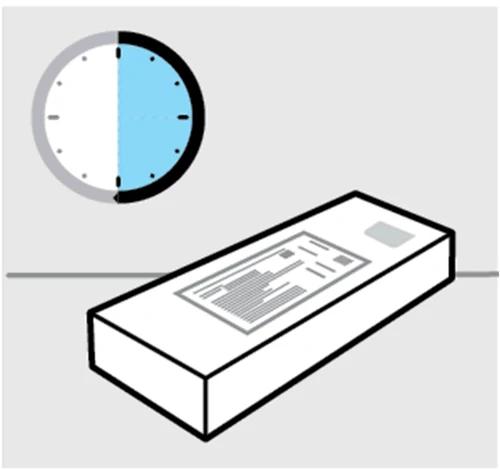
30
MIN
Inspect the carton
Remove the carton containing the pre-filled syringe from the refrigerator.
Keep the pre-filled syringe in the carton and place it on a flat surface at room temperature for at least 30 minutes before use.
Do not heat it in any other way.
Check the expiration date ('Exp') on the back of the carton.
Do not use if the expiration date has been exceeded.
Do not inject if the seal on the carton is broken.
Contact your doctor or pharmacist to obtain another syringe.
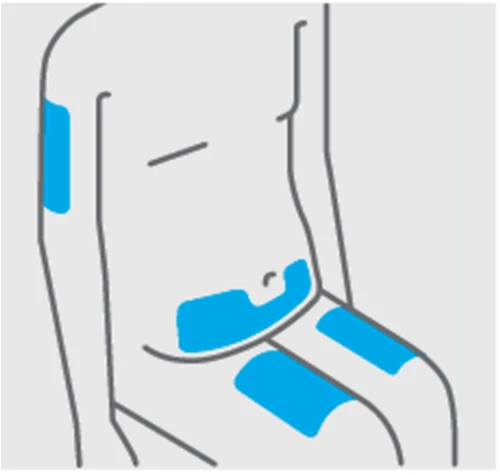
Choosing the injection site
Choose one of the following areas for injection:
- Front of the thighs (recommended)
- Lower abdomen — Do not use the area within 5 centimeters around the navel.
- Back of the upper arms (if someone is assisting you with the injection)
Do not inject the solution into areas of skin that are painful, bruised, red, cracked, or hardened.
Do not perform the injection in areas with scars or stretch marks.
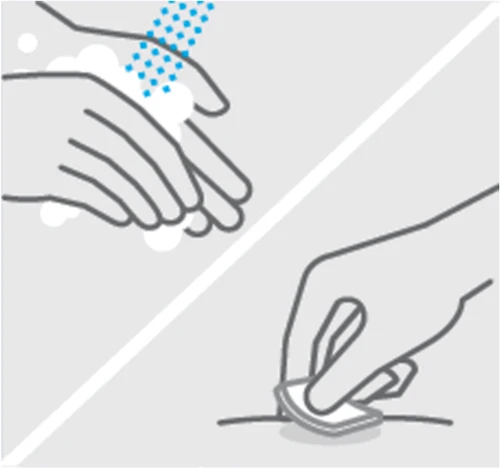
Cleaning the injection site
Wash your hands thoroughly with soap and lukewarm water.
Clean the chosen injection site with an alcohol swab and allow it to dry.
Do not touch, blow on, or fan the injection site after cleaning.
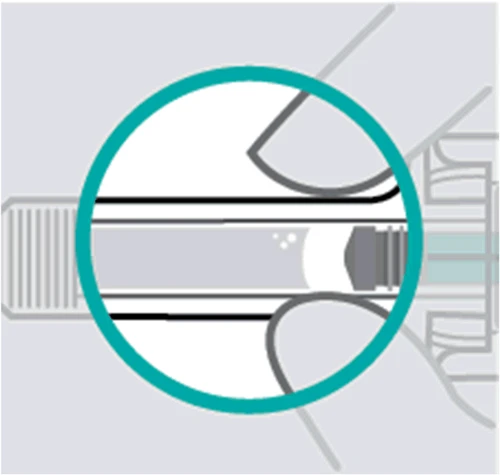
Inspecting the liquid
Remove the pre-filled syringe from the carton.
Check the liquid through the viewing window. It should be clear to pale yellow in color and may contain small white or clear particles. You may also see one or more air bubbles.
This is normal.
Do not administer the injection if the liquid is cloudy, has changed color, or contains large particles. If you have any doubts, contact your doctor or pharmacist to obtain another syringe.
2. TREMFYA Injection Using the Prefilled Syringe
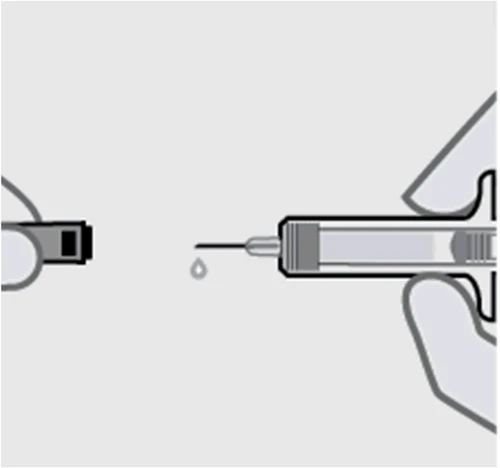
Remove the needle cap
Hold the syringe by the barrel and remove the needle cap straight off.
It is normal to see a drop of liquid.
Inject within 5 minutes after removing the needle cap.
Do not reattach the needle cap, as this may damage the needle.
Do not touch the needle or allow it to touch any surface.
Do not use the Tremfya prefilled syringe if it has been dropped. Contact your doctor or pharmacist for a replacement syringe.
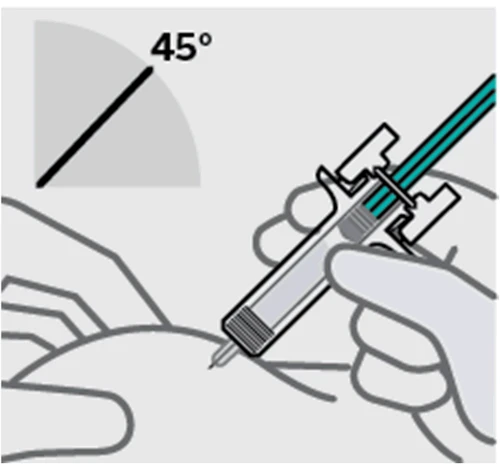
Finger placement and needle insertion
Place your thumb, index finger, and middle fingers directly under the flange of the syringe, as shown.
Do not touch the plunger or the area above the syringe flange, as this may activate the needle safety system.
Use your other hand to pinch the skin at the injection site.
Position the syringe at an angle of approximately 45 degrees to the skin.
It is important to lift a sufficient area of skin to perform a subcutaneous injection and not inject into the muscle.
Insert the needle with a quick motion, similar to throwing a dart.
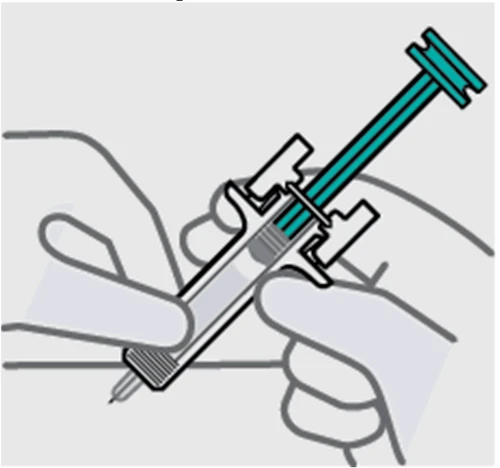
Release the skin and reposition your hand
Use your free hand to grasp the body of the syringe.
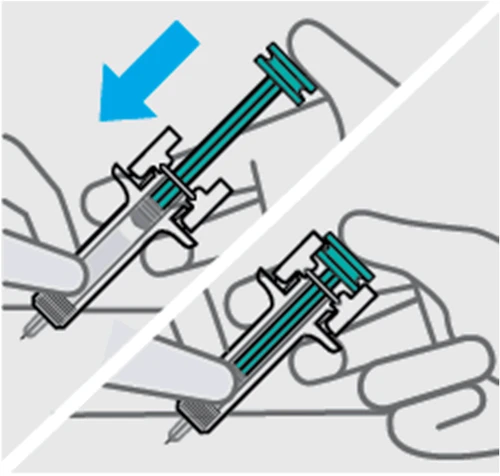
Push the plunger
Place the thumb of your opposite hand on the plunger and push the plunger all the way down until it stops.
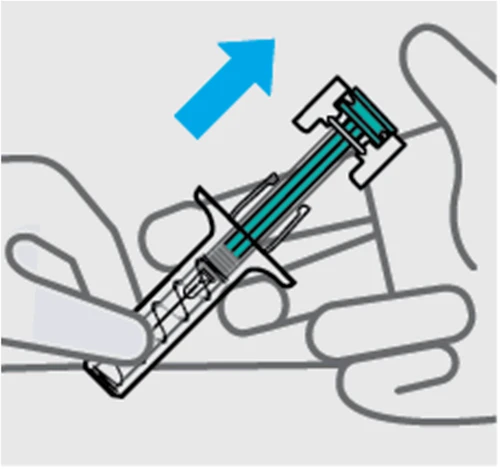
Release pressure from the plunger
The safety mechanism will cover the needle, lock it in place, and the needle will be withdrawn from the skin.
3. After the injection
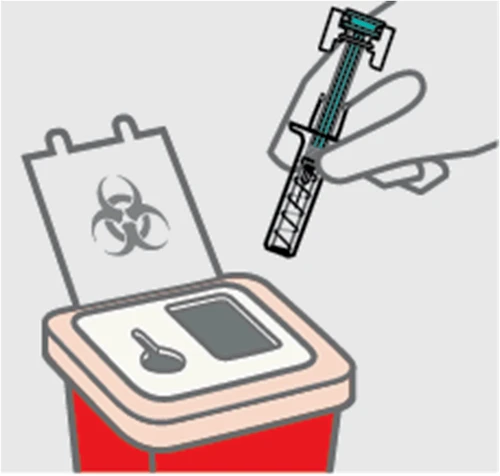
Dispose of the used pre-filled syringe immediately
Place the used syringe into a sharps disposal container immediately after use.
Do not throw away (dispose of) the pre-filled syringe in household waste.
Make sure to dispose of the container (when full) as instructed by your doctor or nurse.
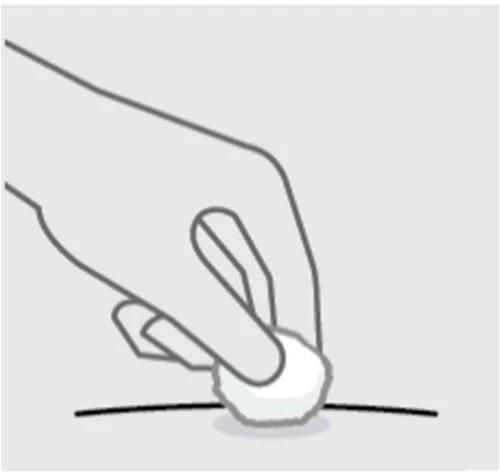
Check the injection site
There may be a small amount of blood or fluid at the injection site.
Apply pressure to the skin with a cotton ball or gauze until bleeding stops.
Do not rub the injection site.
If needed, cover the injection site with a plaster (bandage).
The injection is now complete!
Package leaflet: information for the user
Tremfya 100 mg OnePress solution for injection in a prefilled pen
guselkumab
Please read this leaflet carefully before using this medicine because it contains important information for you.
- Keep this leaflet. You may need to read it again.
- If you have any questions, ask your doctor, pharmacist or nurse.
- This medicine has been prescribed for you only. Do not give it to others, even if their symptoms are the same as yours, as it may be harmful.
- If you experience any side effects, including those not listed in this leaflet, talk to your doctor, nurse or pharmacist. See section 4.
Contents of this leaflet
- What Tremfya is and what it is used for
- What you need to know before using Tremfya
- How to use Tremfya
- Possible side effects
- How to store Tremfya
- Contents of the pack and other information
1. What Tremfya is and what it is used for
Tremfya contains the active substance guselkumab, which is a type of protein called a monoclonal antibody.
This medicine works by blocking the activity of a protein called IL-23, which is present at higher levels in people with psoriasis, psoriatic arthritis, ulcerative colitis, and Crohn’s disease.
Plaque psoriasis
Tremfya is used to treat adults with moderate to severe "plaque psoriasis", an inflammatory condition affecting the skin and nails.
Tremfya can improve skin condition and the appearance of nails, and reduce symptoms such as scaling, hair loss, shedding, itching, pain, and burning.
Psoriatic arthritis
Tremfya is used to treat a condition called "psoriatic arthritis", an inflammatory joint disease often associated with plaque psoriasis. If you have psoriatic arthritis, you will usually have been given other medicines first. If your response to these medicines is not satisfactory or if you are unable to tolerate them, Tremfya will be given to reduce the signs and symptoms of the disease. Tremfya can be used alone or in combination with another medicine called methotrexate.
The use of Tremfya in psoriatic arthritis will benefit you by reducing the signs and symptoms of the disease, slowing the progression of cartilage and bone damage in the joints, and improving your ability to carry out normal daily activities.
Ulcerative colitis
Tremfya is used to treat adults with moderate to severe ulcerative colitis, an inflammatory bowel disease. If you have ulcerative colitis, you will usually have been given other medicines first. If you do not respond adequately or cannot tolerate these medicines, Tremfya may be given to you.
The use of Tremfya in ulcerative colitis may benefit you by relieving the signs and symptoms of the disease. These include reduced bloody stools, reduced frequency and urgency of bowel movements, decreased abdominal pain, and reduced inflammation of the intestinal mucosa. These effects may improve your ability to carry out normal daily activities and reduce feelings of fatigue.
Crohn’s disease
Tremfya is used to treat adults with moderate to severe Crohn’s disease, an inflammatory bowel disease. If you have Crohn’s disease, you will usually have been given other medicines first. If you do not respond adequately or cannot tolerate these medicines, Tremfya may be given to you.
The use of Tremfya in Crohn’s disease may help reduce the signs and symptoms of the disease, such as diarrhoea, abdominal pain, and inflammation of the intestinal mucosa. These effects may improve your ability to carry out normal daily activities and reduce fatigue.
2. What you need to know before using Tremfya
Do not use Tremfya
- if you are allergic to guselkumab or to any of the other ingredients of this medicine (listed in section 6). If you think you may be allergic, ask your doctor for advice before using Tremfya;
- if you have an active infection, including active tuberculosis (TB).
Warnings and precautions
Talk to your doctor, pharmacist, or nurse before using Tremfya:
- if you are being treated for an infection;
- if you have developed an infection that does not heal or that keeps recurring;
- if you have TB or have been in close contact with someone who has TB;
- if you think you may have an infection or if you develop symptoms of an infection (see below "Watch out for infections and allergic reactions");
- if you have recently received a vaccine or need to receive a vaccine during treatment with Tremfya.
If you are unsure whether any of the conditions described above apply to you, talk to your doctor, pharmacist, or nurse before taking Tremfya.
As directed by your doctor, you may need to have blood tests to check whether you have elevated liver enzymes before starting Tremfya and during treatment.
Increased liver enzymes may occur more frequently in patients using Tremfya every 4 weeks compared to patients using Tremfya every 8 weeks (see "How to use Tremfya" in section 3).
Watch out for possible infections and allergic reactions
Tremfya may potentially cause serious side effects, including allergic reactions and infections.
You should be vigilant for any signs of these conditions while taking Tremfya.
Signs or symptoms of infection may include fever or flu-like symptoms; muscle aches; cough; shortness of breath; burning sensation during urination or more frequent urination than usual; blood in sputum (phlegm); weight loss; diarrhea or stomach pain; warm, red, or painful skin, or sores on the body that are different from those caused by psoriasis.
Severe allergic reactions have occurred with Tremfya. Symptoms may include: swelling of the face, lips, mouth, tongue, or throat; difficulty swallowing or breathing; dizziness or lightheadedness; or hives (see "Serious side effects" in section 4).
Stop treatment with Tremfya and inform your doctor immediately, or seek immediate medical help if you notice any signs of a possible severe allergic reaction or an infection.
Children and adolescents
Do not administer this medicine to children and adolescents under 18 years of age, as it has not been studied in this age group.
Other medicines and Tremfya
Inform your doctor or pharmacist:
- if you are currently using, have recently used, or might use any other medicines.
- if you have recently been vaccinated or if you need to be vaccinated. You must not receive certain types of vaccines (live vaccines) while using Tremfya.
Pregnancy and breastfeeding
- Tremfya must not be used during pregnancy as the effects of this medicine in pregnant women are unknown. If you are a woman of childbearing potential, you are advised to avoid pregnancy; you must use an effective method of contraception during treatment with Tremfya and for at least 12 weeks after the last dose of Tremfya. Please speak with your doctor if you are pregnant, suspect you may be pregnant, or are planning to become pregnant.
- Please speak with your doctor if you are breastfeeding or planning to breastfeed. You and your doctor will need to decide whether you should breastfeed or use Tremfya.
Driving and using machines
It is unlikely that Tremfya will affect your ability to drive or operate machinery.
Tremfya contains polysorbate 80
This medicine contains 0.5 mg of polysorbate 80 per pre-filled pen, equivalent to 0.5 mg/mL. Polysorbates may cause allergic reactions. Inform your doctor if you have known allergies.
3. How to use Tremfya
Use this medicine exactly as instructed by your doctor. If you have any doubts, consult your
doctor or pharmacist.
What dose of Tremfya is administered and for how long
Your doctor will decide how long you need to use Tremfya.
Plaque psoriasis
- The dose is 100 mg (the content of 1 pre-filled pen) administered by subcutaneous injection (injection under the skin). The medicine may be administered by your doctor or nurse.
- After the first dose, you will receive the next dose 4 weeks later, and thereafter every 8 weeks.
Psoriatic arthritis
- The dose is 100 mg (the content of 1 pre-filled pen) administered by subcutaneous injection (injection under the skin). The medicine may be administered by your doctor or nurse.
- After the first dose, you will receive the next dose 4 weeks later, and thereafter every 8 weeks. For some patients, Tremfya may be administered every 4 weeks after the first dose. Your doctor will decide the frequency of Tremfya administration.
Ulcerative colitis
Starting treatment:
Initial treatment may be administered either by intravenous infusion or subcutaneous administration:
- Intravenous infusion: the first dose of Tremfya is 200 mg and will be administered by your doctor or nurse as an intravenous infusion (a drip into a vein in the arm). After the first dose, you will receive a second dose 4 weeks later, and then a third dose 4 weeks after that.
- Subcutaneous administration: the first dose of Tremfya is 400 mg and will be administered under the skin (subcutaneous injection) at several body sites. After the first dose, you will receive a second dose 4 weeks later, and then a third dose 4 weeks after that.
Maintenance therapy: a maintenance dose of Tremfya will be administered by subcutaneous injection (injection under the skin) with either 100 mg or 200 mg. Your doctor will decide which maintenance dose you will receive: - A dose of 100 mg will be administered 8 weeks after the third induction dose, and thereafter every 8 weeks.
- A dose of 200 mg will be administered 4 weeks after the third induction dose, and thereafter every 4 weeks.
Crohn’s disease
Starting treatment:
Initial treatment may be administered either by intravenous infusion or subcutaneous administration:
- Intravenous infusion: the first dose of Tremfya is 200 mg and will be administered by your doctor or nurse as an intravenous infusion (a drip into a vein in the arm). After the first dose, you will receive a second dose 4 weeks later, and then a third dose 4 weeks after that.
- Subcutaneous administration: the first dose of Tremfya is 400 mg and will be administered under the skin (subcutaneous injection) at several body sites. After the first dose, you will receive a second dose 4 weeks later, and then a third dose 4 weeks after that.
Maintenance therapy: a maintenance dose of Tremfya will be administered by subcutaneous injection (injection under the skin) with either 100 mg or 200 mg. Your doctor will decide which maintenance dose you will receive: - A dose of 100 mg will be administered 8 weeks after the third induction dose, and thereafter every 8 weeks.
- A dose of 200 mg will be administered 4 weeks after the third induction dose, and thereafter every 4 weeks.
You may decide together with your doctor to self-administer Tremfya. In this case, you will be provided with instructions on how to inject Tremfya. Please speak with your doctor or nurse if you have any questions about self-injecting the medicine. It is important not to attempt to inject the medicine yourself until you have been properly trained by your doctor or nurse.
For detailed instructions on how to use Tremfya, carefully read the instruction leaflet titled “Instructions for use” included in the package before use.
If you use more Tremfya than you should
If you have received more Tremfya than prescribed or the dose was administered earlier than scheduled, inform your doctor.
If you forget to use Tremfya
If you have forgotten to inject a dose of Tremfya, inform your doctor.
If you stop using Tremfya
Do not stop using Tremfya without first discussing it with your doctor. If you stop treatment, your symptoms may return.
If you have any questions about the use of this medicine, consult your doctor, pharmacist, or nurse.
4. Possible side effects
Like all medicines, this medicine can cause side effects, although not everybody gets them.
Serious side effects
Stop using Tremfya and contact your doctor immediately or seek immediate medical help if you experience any of the following side effects:
Possible severe allergic reactions (may affect up to 1 in 1,000 patients) – signs or symptoms may include:
- difficulty breathing or swallowing
- swelling of the face, lips, tongue or throat
- severe itching of the skin, with a red rash or raised bumps
- dizziness, low blood pressure or feeling faint
Other side effects
The following side effects are all mild to moderate in severity. If any of these side effects become severe, inform your doctor, pharmacist or nurse immediately.
Very common (may affect more than 1 in 10 people):
- respiratory tract infections
Common (may affect up to 1 in 10 people):
- headache
- joint pain (arthralgia)
- diarrhoea
- increased levels of liver enzymes in the blood
- skin rash
- redness, irritation or pain at the injection site
Uncommon (may affect up to 1 in 100 people):
- decrease in the number of a type of white blood cells called neutrophils
- herpes simplex infections
- fungal skin infection, for example between the toes (e.g. athlete’s foot)
- gastrointestinal flu (gastroenteritis)
- urticaria
Rare (may affect up to 1 in 1,000 people):
- allergic reaction
Reporting of side effects
If you get any side effects, including ones not listed in this leaflet, talk to your doctor, nurse or pharmacist. You can also report side effects directly through the national reporting system listed in Annex V. By reporting side effects, you can help provide more information on the safety of this medicine.
5. How to store Tremfya
Keep this medicine out of the sight and reach of children.
Do not use this medicine after the expiry date stated on the label of the pre-filled pen and on the outer carton after "Exp.". The expiry date refers to the last day of that month.
Keep the pre-filled pen in the outer packaging to protect the medicine from light.
Store this medicine in a refrigerator (2°C - 8°C). Do not freeze this medicine.
Do not shake this medicine.
Do not use this medicine if you notice that it is cloudy, has changed colour, or contains large particles. Before use, remove the carton from the refrigerator and allow the pre-filled pen to remain inside the carton at room temperature for 30 minutes to reach room temperature.
This medicine is for single use only. Do not dispose of any medicine via wastewater or household waste. Ask your pharmacist how to dispose of medicines you no longer use. This will help protect the environment.
6. Package contents and other information
What Tremfya contains
- The active substance is guselkumab. Each pre-filled pen contains 100 mg of guselkumab in 1 mL of solution.
- The other components are L-histidine, L-histidine monohydrochloride monohydrate, polysorbate 80 (E433), sucrose and water for injections (see section 2 “Tremfya contains polysorbate 80”).
Description of the appearance of Tremfya and contents of the pack
Tremfya is a clear injectable solution (for injection) that may be colourless to pale yellow.
It is available in packs containing one pre-filled pen and in multiple packs of 2 boxes,
each containing 1 pre-filled pen. Not all pack sizes may be
marketed.
Marketing Authorisation Holder
Janssen-Cilag International NV
Turnhoutseweg 30
B-2340 Beerse
Belgium
Manufacturer
Janssen Biologics B.V.
Einsteinweg 101
2333CB Leiden
The Netherlands
Janssen Pharmaceutica NV
Turnhoutseweg 30
B-2340 Beerse
Belgium
For further information on this medicinal product, please contact the local representative of the marketing authorisation holder:
België/Belgique/Belgien Lietuva
Janssen-Cilag NV UAB "JOHNSON & JOHNSON"
Tel/Tél: +32 14 64 94 11 Tel: +370 5 278 68 88
[email protected] [email protected]
България Luxembourg/Luxemburg
"Johnson & Johnson Bulgaria" EOOD Janssen-Cilag NV
Tel: +359 2 489 94 00 Tél/Tel: +32 14 64 94 11
[email protected] [email protected]
Česká republika Magyarország
Janssen-Cilag s.r.o. Janssen-Cilag Kft.
Tel: +420 227 012 227 Tel.: +36 1 884 2858
[email protected]
Danmark Malta
Janssen-Cilag A/S AM MANGION LTD
Tlf.: +45 4594 8282 Tel: +356 2397 6000
[email protected]
Deutschland Nederland
Janssen-Cilag GmbH Janssen-Cilag B.V.
Tel: 0 800 086 9247 / +49 2137 955 6955 Tel: +31 76 711 1111
[email protected] [email protected]
Eesti Norge
UAB "JOHNSON & JOHNSON" Eesti filiaal Janssen-Cilag AS
Tel: +372 617 7410 Tlf: +47 24 12 65 00
[email protected] [email protected]
Ελλάδα Österreich
Janssen-Cilag Φαρμακευτική Μονοπρόσωπη Janssen-Cilag Pharma GmbH
Α.Ε.Β.Ε. Tel: +43 1 610 300
Tηλ: +30 210 80 90 000
España Polska
Janssen-Cilag, S.A. Janssen-Cilag Polska Sp. Z o.o.
Tel: +34 91 722 81 00 Tel.: +48 22 237 60 00
[email protected]
France Portugal
Janssen-Cilag Janssen-Cilag Farmacêutica, Lda.
Tél: 0 800 25 50 75 / +33 1 55 00 40 03 Tel: +351 214368 600
[email protected]
Hrvatska România
Johnson & Johnson S.E. d.o.o. Johnson & Johnson România SRL
Tel: +385 1 6610 700 Tel: +40 21 207 1800
[email protected]
Ireland Slovenija
Janssen Sciences Ireland UC Johnson & Johnson d.o.o.
Tel: 1 800 709 122 Tel: +386 1 401 18 00
[email protected] [email protected]
Ísland Slovenská republika
Janssen-Cilag AB Johnson & Johnson, s.r.o.
c/o Vistor ehf. Tel: +421 232 408 400
Sími: +354 535 7000
[email protected]
Italia Suomi/Finland
Janssen-Cilag SpA Janssen-Cilag Oy
Tel: 800.688.777/+39 02 2510 1 Puh/Tel: +358 207 531 300
[email protected] [email protected]
Κύπρος Sverige
Varnavas Hadjipanagis Ltd Janssen-Cilag AB
Tηλ: +357 22 207 700 Tfn: +46 8 626 50 00
[email protected]
Latvija
UAB "JOHNSON & JOHNSON" filiāle Latvijā
Tel: +371 678 93561
[email protected]
More detailed information on this medicinal product is available on the website of the European Medicines Agency, https://www.ema.europa.eu.
Instructions for use
Tremfia
100 mg in OnePress prefilled pen
SINGLE-USE DEVICE
Important
If your doctor decides that you or a caregiver may be able to administer Tremfia injections at home, you must receive training on the correct way to prepare and inject Tremfia using the prefilled pen.
Please read these Instructions for Use carefully before using the Tremfia prefilled pen and each time you receive a new prefilled pen. There may be new information. This instructional guide does not replace discussions with your doctor about your medical condition or treatment.
Additionally, please read the Patient Information Leaflet carefully before starting the injection and discuss any questions you may have with your doctor or nurse.
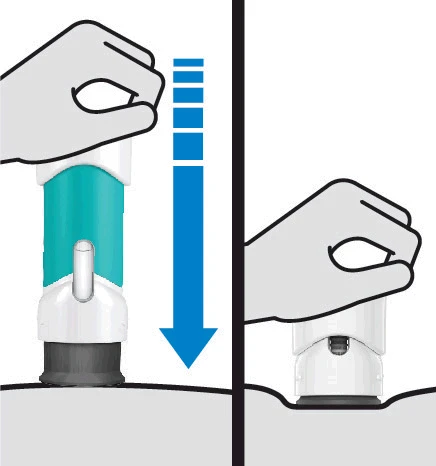
During the injection, press the activation button fully downward until the green body becomes visible to deliver the full dose.
DO NOT LIFT THE PREFILLED PEN during the injection. If lifted, the prefilled pen will lock and the full dose will not be administered.

Storage information
Store in a refrigerator at a temperature between 2°C and 8°C.
Do not freeze.
Do not shake the prefilled pen at any time.
Keep the prefilled pen in its original packaging to protect it from light and physical damage.
Keep Tremfia and all medicines out of the reach of children.

Need help?
Contact your doctor to discuss any questions you may have. For further assistance or to share your feedback, refer to the Patient Information Leaflet for contact details of the local representative.
Description of prefilled pen use
Before use After use
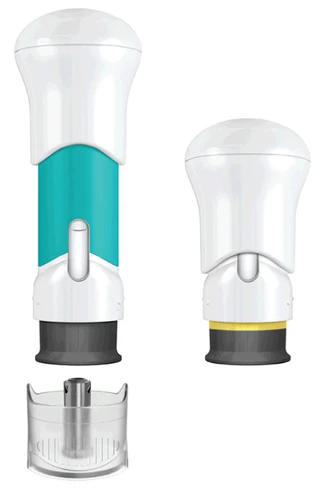
Activation button
The activation button has been
Green body pressed fully down.
The green body
Viewing window is not visible.
Automatic needle shield Once lifted, the
safety mechanism will
lock and the yellow
strip will be visible.
Do not lift during
injection.
Lower cap
Remove the cap when ready for injection
(see step 2).
You will need the following materials:
- 1 Alcohol swab
- 1 Cotton ball or gauze
- 1 Adhesive bandage
- 1 Sharps container (see step 3)
- Prepare for injection
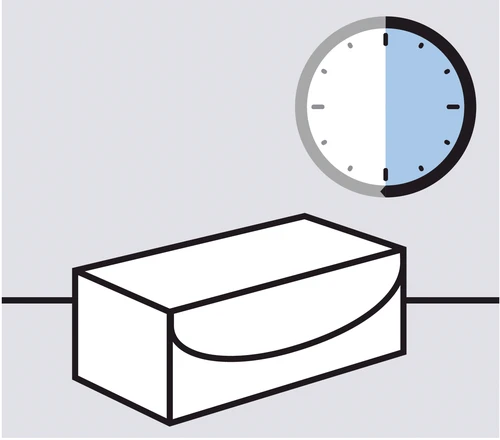
Inspect the box and allow Tremfia to reach room temperature
Remove the prefilled pen box from the refrigerator.
Keep the prefilled pen in the box and place it on a flat surface at room temperature for approximately 30 minutes before use.
Do not heat in any other way.
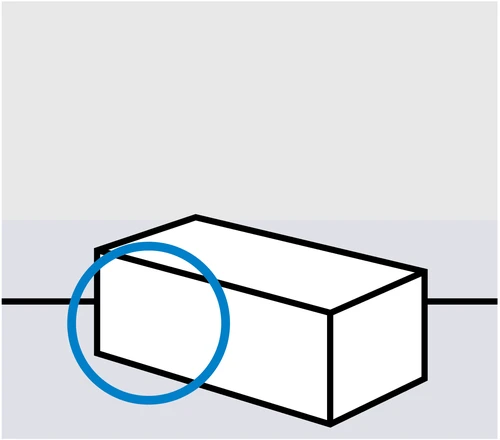
EXP
Check the expiration date (“Exp.”) on the box.
Do not use if the expiration date has passed.
Do not inject if the seal on the box is broken.
Contact your doctor or pharmacist to obtain a new prefilled pen.
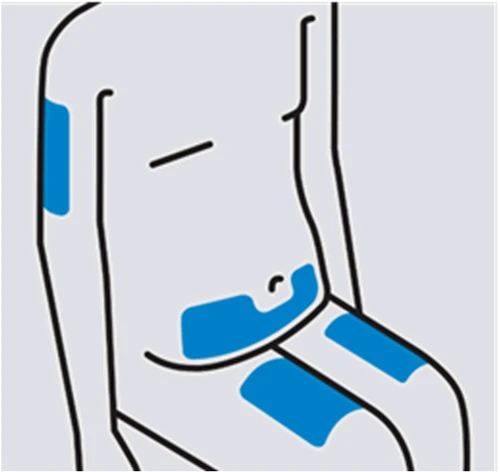
Choose the injection site
Select one of the following areas for injection:
- Front of the thighs (recommended)
- Lower abdomen Do not use the area within 5 centimeters around the navel.
- Back of the upper arms (if a caregiver is administering the injection)
Do not inject into areas of skin that are tender, bruised, red, cracked, hardened, scarred, or have stretch marks.
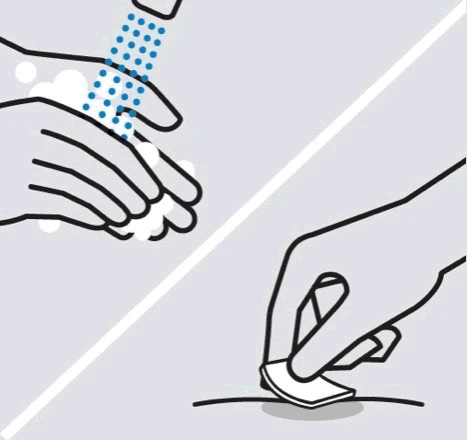
Wash hands
Wash your hands thoroughly with soap and warm water.
Clean the injection site
Clean the chosen injection site with an alcohol swab and allow it to dry.
Do not touch, fan, or blow on the injection site after cleaning.
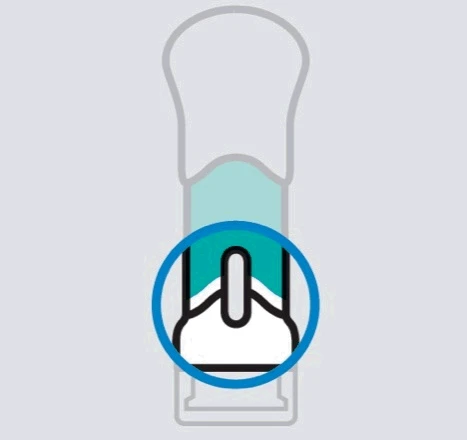
Inspect the solution
Remove the prefilled pen from the box.
Check the liquid visible in the viewing window. It should be clear to pale yellow, and may contain small white or clear particles. You may also see one or more small air bubbles.
This is normal.
Do not inject if the solution is:
- cloudy, or
- has changed color, or
- contains large particles. If in doubt, contact your doctor or pharmacist to obtain a new prefilled pen.
2. TREMFYA Injection Using the Prefilled Pen
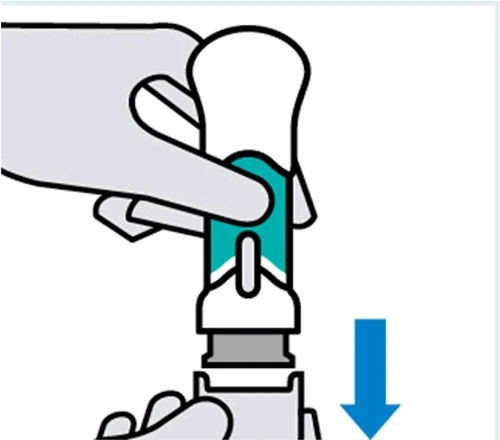
Remove the lower cap when ready for injection
Keep hands away from the needle safety shield after removing the cap.
It is normal to see a few drops of liquid.
Inject within 5 minutes after removing the cap.
Do NOT reattach the needle cap. This may damage the needle.
Do NOT use the prefilled pen if it has been dropped after removing the cap.
Contact your doctor or pharmacist to obtain a new prefilled pen.
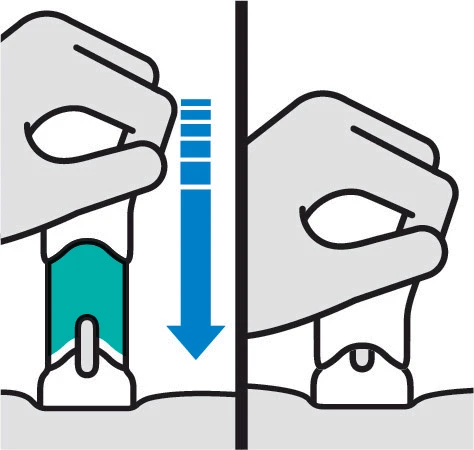
Place directly on skin
Press the activation button fully until the green body is no longer visible
DO NOT LIFT THE PREFILLED PEN DURING INJECTION!
If lifted, the needle safety system will lock, showing a yellow stripe, and the full dose will not be delivered.
You may hear a click when the injection starts. Continue pressing.
If you feel resistance, continue pressing. This is normal.
The medicine is injected as you press. Administer the injection at a speed comfortable for you.
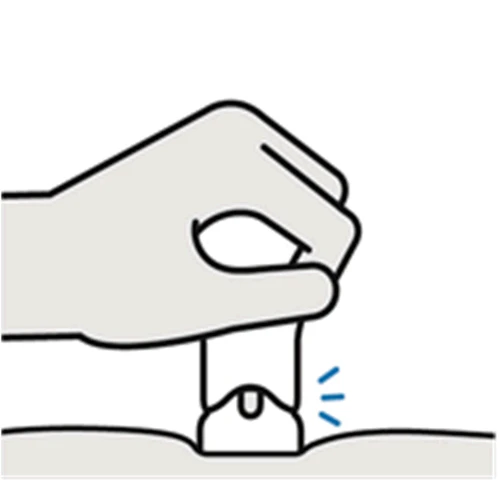
click
Make sure the injection is complete
The injection is complete when:
- the green body is no longer visible
- You cannot press the activation button down any further
- You may hear a click
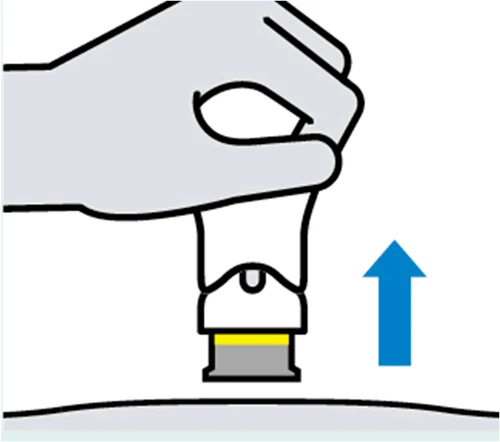
Lift the pen upward
The yellow band indicates that the needle safety system is activated.
3. After injection
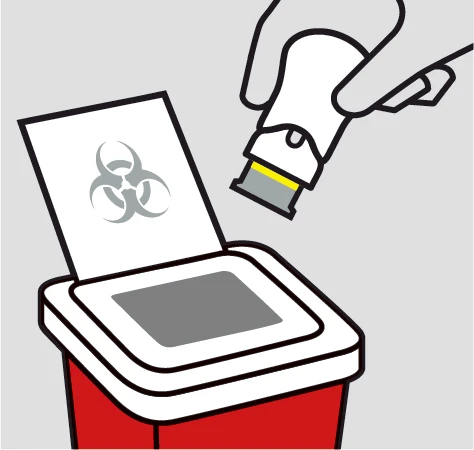
Dispose of the used pre-filled pen immediately
Place the used pre-filled pen into a sharps disposal container immediately after use.
Make sure to dispose of the container (when full) as instructed by your doctor or nurse.
Do not throw (dispose of) the pre-filled pen in household waste.
Do not recycle the used sharps disposal container.
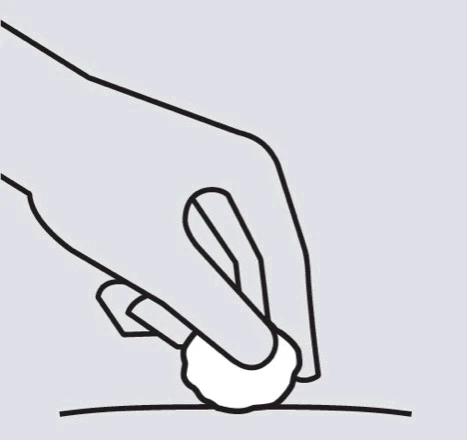
Check the injection site
There may be a small amount of blood or fluid. Apply pressure to the skin with a cotton ball or gauze pad until bleeding stops.
Do not rub the injection site.
If needed, cover the injection site with a plaster.
The injection is now complete!
Package leaflet: information for the user
Tremfya 100 mg PushPen pre-filled pen injectable solution
guselkumab
Please read this entire leaflet carefully before using this medicine, as it contains important information for you.
- Keep this leaflet. You may need to read it again.
- If you have any questions, ask your doctor, pharmacist or nurse.
- This medicine has been prescribed for you only. Do not give it to other people, even if they have the same symptoms as you, because it may be harmful.
- If you experience any side effects, including those not listed in this leaflet, consult your doctor, nurse or pharmacist. See section 4.
Contents of this leaflet
- What Tremfya is and what it is used for
- What you need to know before using Tremfya
- How to use Tremfya
- Possible side effects
- How to store Tremfya
- Contents of the pack and other information
1. What Tremfya is and what it is used for
Tremfya contains the active substance guselkumab, which is a type of protein called a monoclonal antibody.
This medicine works by blocking the activity of a protein called IL-23, which is present at higher levels in people with psoriasis, psoriatic arthritis, ulcerative colitis, and Crohn’s disease.
Plaque psoriasis
Tremfya is used to treat adults with moderate to severe "plaque psoriasis", an inflammatory condition affecting the skin and nails.
Tremfya can improve skin condition and the appearance of nails, and reduce symptoms such as scaling, hair loss, shedding, itching, pain, and burning.
Psoriatic arthritis
Tremfya is used to treat a condition called "psoriatic arthritis", an inflammatory joint disease often associated with plaque psoriasis. If you have psoriatic arthritis, you will first be given other medicines. If your response to these medicines is not satisfactory, or if you experience intolerance, Tremfya will be prescribed to reduce the signs and symptoms of the disease. Tremfya may be used alone or in combination with another medicine called methotrexate.
The use of Tremfya in psoriatic arthritis will benefit you by reducing disease signs and symptoms, slowing the progression of joint cartilage and bone damage, and improving your ability to perform daily activities.
Ulcerative colitis
Tremfya is used to treat adults with moderate to severe ulcerative colitis, an inflammatory bowel disease. If you have ulcerative colitis, you will first be given other medications. If you do not respond adequately or cannot tolerate these medications, Tremfya may be prescribed.
The use of Tremfya in ulcerative colitis may benefit you by relieving disease signs and symptoms, including reduction of bloody stools, bowel movement frequency and urgency, abdominal pain, and intestinal mucosal inflammation. These effects may improve your ability to perform daily activities and reduce feelings of fatigue.
Crohn’s disease
Tremfya is used to treat adults with moderate to severe Crohn’s disease, an inflammatory bowel disease. If you have Crohn’s disease, you will first be given other medications. If you do not respond adequately or cannot tolerate these medications, Tremfya may be prescribed.
The use of Tremfya in Crohn’s disease may help reduce disease signs and symptoms, such as diarrhea, abdominal pain, and intestinal mucosal inflammation. These effects may improve your ability to perform daily activities and reduce fatigue.
2. What you need to know before using Tremfya
Do not use Tremfya
- if you are allergic to guselkumab or to any of the other ingredients of this medicine (listed in section 6). If you think you may be allergic, consult your doctor before using Tremfya;
- if you have an active infection, including active tuberculosis (TB).
Warnings and precautions
Talk to your doctor, pharmacist, or nurse before using Tremfya:
- if you are being treated for an infection;
- if you have had an infection that does not heal or keeps coming back;
- if you have TB or have been in close contact with someone who has TB;
- if you think you may have an infection or if you develop symptoms of an infection (see below "Watch out for infections and allergic reactions");
- if you have recently received or need to receive a vaccine while being treated with Tremfya.
If you are unsure whether any of the conditions described above apply to you, talk to your doctor,
pharmacist, or nurse before taking Tremfya.
As advised by your doctor, you may need to have blood tests to check whether you have elevated
liver enzyme levels before starting and during treatment with Tremfya.
Elevated liver enzymes may occur more frequently in patients using Tremfya every 4 weeks compared
to patients using Tremfya every 8 weeks (see "How to use Tremfya" in section 3).
Watch out for infections and allergic reactions
Tremfya may potentially cause serious side effects, including allergic reactions and infections.
You should be vigilant for signs of these conditions while taking Tremfya.
Signs or symptoms of infection may include fever or flu-like symptoms; muscle aches; cough; shortness
of breath; burning sensation during urination or more frequent urination than usual; blood in sputum
(phlegm); weight loss; diarrhea or stomach pain; warm, red, or painful skin, or sores on the body that are
different from those caused by psoriasis.
Severe allergic reactions have occurred with Tremfya. Symptoms may include: swelling of the face,
lips, mouth, tongue, or throat; difficulty swallowing or breathing; dizziness or lightheadedness, or hives
(see "Serious side effects" in section 4).
Stop treatment with Tremfya and inform your doctor immediately or seek immediate medical help if you notice any signs of a possible severe allergic reaction or an infection.
Children and adolescents
Do not administer this medicine to children and adolescents under 18 years of age, as it has not been studied in this age group.
Other medicines and Tremfya
Inform your doctor or pharmacist:
- if you are currently using, have recently used, or might use any other medicines.
- if you have recently received or need to receive a vaccination. You must not receive certain types of vaccines (live vaccines) while using Tremfya.
Pregnancy and breastfeeding
- Tremfya must not be used during pregnancy as the effects of this medicine in pregnant women are unknown. If you are a woman of childbearing potential, you are advised to avoid pregnancy; you should use an effective method of contraception during treatment with Tremfya and for at least 12 weeks after the last dose of Tremfya. Please speak with your doctor if you are pregnant, suspect you may be pregnant, or are planning a pregnancy.
- Please speak with your doctor if you are breastfeeding or planning to breastfeed. You and your doctor will need to decide whether you should breastfeed or use Tremfya.
Driving and using machines
It is unlikely that Tremfya will affect your ability to drive or operate machinery.
Tremfya contains polysorbate 80
This medicine contains 0.5 mg of polysorbate 80 per pre-filled pen, equivalent to 0.5 mg/mL. Polysorbates may cause allergic reactions. Inform your doctor if you have known allergies.
3. How to use Tremfya
Use this medicine exactly as your doctor has told you. If you have any doubts, consult your doctor or pharmacist.
What dose of Tremfya is administered and for how long
Your doctor will decide how long you need to use Tremfya.
Plaque psoriasis
- The dose is 100 mg (the content of 1 pre-filled pen) administered by injection under the skin (subcutaneous injection). The medicine may be administered by your doctor or nurse.
- After the first dose, you will receive the next dose 4 weeks later, and then every 8 weeks thereafter.
Psoriatic arthritis
- The dose is 100 mg (the content of 1 pre-filled pen) administered by injection under the skin (subcutaneous injection). The medicine may be administered by your doctor or nurse.
- After the first dose, you will receive the next dose 4 weeks later, and then every 8 weeks thereafter. For some patients, after the first dose, Tremfya may be administered every 4 weeks. Your doctor will decide the frequency of Tremfya administration.
Ulcerative colitis
Induction therapy:
Initial treatment can be administered either by intravenous infusion or subcutaneous administration:
- Intravenous infusion: the first dose of Tremfya is 200 mg and will be administered by your doctor or nurse as an intravenous infusion (an infusion into a vein in the arm). After the first dose, you will receive a second dose 4 weeks later, and then a third dose 4 weeks after that.
- Subcutaneous administration: the first dose of Tremfya is 400 mg and will be administered under the skin (subcutaneous injection) at multiple sites on the body. After the first dose, you will receive a second dose 4 weeks later, and then a third dose 4 weeks after that.
Maintenance therapy: a maintenance dose of Tremfya will be administered by subcutaneous injection with either 100 mg or 200 mg. Your doctor will decide which maintenance dose you will receive:
- A 100 mg dose will be administered 8 weeks after the third induction dose, and then every 8 weeks thereafter.
- A 200 mg dose will be administered 4 weeks after the third induction dose, and then every 4 weeks thereafter.
Crohn’s disease
Induction therapy:
Initial treatment can be administered either by intravenous infusion or subcutaneous administration:
- Intravenous infusion: the first dose of Tremfya is 200 mg and will be administered by your doctor or nurse as an intravenous infusion (an infusion into a vein in the arm). After the first dose, you will receive a second dose 4 weeks later, and then a third dose 4 weeks after that.
- Subcutaneous administration: the first dose of Tremfya is 400 mg and will be administered under the skin (subcutaneous injection) at multiple sites on the body. After the first dose, you will receive a second dose 4 weeks later, and then a third dose 4 weeks after that.
Maintenance therapy: a maintenance dose of Tremfya will be administered by subcutaneous injection with either 100 mg or 200 mg. Your doctor will decide which maintenance dose you will receive:
- A 100 mg dose will be administered 8 weeks after the third induction dose, and then every 8 weeks thereafter.
- A 200 mg dose will be administered 4 weeks after the third induction dose, and then every 4 weeks thereafter.
You may decide together with your doctor to self-administer Tremfya. In this case, you will be given instructions on how to inject Tremfya. Please speak with your doctor or nurse if you have any questions about self-injecting the medicine. It is important not to attempt to inject the medicine yourself until you have been properly trained by your doctor or nurse.
For detailed instructions on how to use Tremfya, please read the instruction leaflet “Instructions for use” included in the package carefully before use.
If you use more Tremfya than you should
If you have received more Tremfya than prescribed or the dose was administered earlier than scheduled, inform your doctor.
If you forget to use Tremfya
If you have forgotten to inject a dose of Tremfya, inform your doctor.
If you stop using Tremfya
Do not stop using Tremfya without first talking to your doctor. If you stop treatment, your symptoms may return.
If you have any questions about the use of this medicine, ask your doctor, pharmacist, or nurse.
4. Possible side effects
Like all medicines, this medicine can cause side effects, although not everyone gets them.
Serious side effects
Stop using Tremfya and contact your doctor immediately or seek immediate medical help if you notice any of the following side effects:
Possible severe allergic reactions (may affect up to 1 in 1,000 patients) – signs or symptoms may include:
- difficulty breathing or swallowing
- swelling of the face, lips, tongue or throat
- severe itching of the skin, with a red rash or raised bumps
- dizziness, low blood pressure or feeling faint
Other side effects
The following side effects are all mild to moderate in severity. If any of these side effects become severe, inform your doctor, pharmacist or nurse immediately.
Very common (may affect more than 1 in 10 people):
- respiratory tract infections
Common (may affect up to 1 in 10 people):
- headache
- joint pain (arthralgia)
- diarrhoea
- increased levels of liver enzymes in the blood
- skin rash
- redness, irritation or pain at the injection site
Uncommon (may affect up to 1 in 100 people):
- reduction in the number of a type of white blood cells called neutrophils
- herpes simplex infections
- fungal skin infections, for example between the toes (e.g. athlete’s foot)
- gastrointestinal flu (gastroenteritis)
- hives (urticaria)
Rare (may affect up to 1 in 1,000 people):
- allergic reaction
Reporting of side effects
If you get any side effects, including ones not listed in this leaflet, talk to your doctor, nurse or pharmacist. You can also report side effects directly via the national reporting system listed in Annex V. By reporting side effects, you can help provide more information on the safety of this medicine.
5. How to store Tremfya
Keep this medicine out of the sight and reach of children.
Do not use this medicine after the expiry date which is stated on the label of the prefilled pen and on the outer carton after "Exp.". The expiry date refers to the last day of that month.
Keep the prefilled pen in its outer packaging to protect the medicine from light.
Store in a refrigerator (2 °C – 8 °C). Do not freeze.
Do not shake this medicine.
Do not use this medicine if you notice that it is cloudy, has changed colour, or contains large particles. Before use, remove the carton from the refrigerator and allow the prefilled pen to reach room temperature by leaving it inside the carton for 30 minutes.
This medicine is for single use only. Do not dispose of any medicine via wastewater or household waste. Ask your pharmacist how to dispose of medicines you no longer use. This will help protect the environment.
6. Package contents and other information
What Tremfya contains
- The active substance is guselkumab. Each pre-filled pen contains 100 mg of guselkumab in 1 mL of solution.
- The other components are L-histidine, L-histidine monohydrochloride monohydrate, polysorbate 80 (E433), sucrose and water for injections (see section 2 “Tremfya contains polysorbate 80”).
Description of the appearance of Tremfya and contents of the pack
Tremfya is a clear injectable solution (for injection) that may be colourless to pale yellow.
It is available in packs containing one pre-filled pen and in multiple packs containing 2 cartons,
each containing 1 pre-filled pen. Not all pack sizes may be marketed.
Marketing Authorisation Holder
Janssen-Cilag International NV
Turnhoutseweg 30
B-2340 Beerse
Belgium
Manufacturer
Janssen Biologics B.V.
Einsteinweg 101
2333CB Leiden
The Netherlands
For further information on this medicinal product, please contact the local representative of the Marketing Authorisation Holder:
België/Belgique/Belgien Lietuva
Janssen-Cilag NV UAB "JOHNSON & JOHNSON"
Tel/Tél: +32 14 64 94 11 Tel: +370 5 278 68 88
[email protected] [email protected]
България Luxembourg/Luxemburg
„Джонсън&ДжонсънБългария” ЕООД Janssen-Cilag NV
Тел.: +359 2 489 94 00 Tél/Tel: +32 14 64 94 11
[email protected] [email protected]
Česká republika Magyarország
Janssen-Cilag s.r.o. Janssen-Cilag Kft.
Tel: +420 227 012 227 Tel.: +36 1 884 2858
[email protected]
Danmark Malta
Janssen-Cilag A/S AM MANGION LTD
Tlf.: +45 4594 8282 Tel: +356 2397 6000
[email protected]
Deutschland Nederland
Janssen-Cilag GmbH Janssen-Cilag B.V.
Tel: 0 800 086 9247 / +49 2137 955 6955 Tel: +31 76 711 1111
[email protected] [email protected]
Eesti Norge
UAB ”JOHNSON & JOHNSON” Eesti filiaal Janssen-Cilag AS
Tel: +372 617 7410 Tlf: +47 24 12 65 00
[email protected] [email protected]
Ελλάδα Österreich
Janssen-Cilag Φαρμακευτική Μονοπρόσωπη Janssen-Cilag Pharma GmbH
Α.Ε.Β.Ε. Tel: +43 1 610 300
Tηλ: +30 210 80 90 000
España Polska
Janssen-Cilag, S.A. Janssen-Cilag Polska Sp. z o.o.
Tel: +34 91 722 81 00 Tel.: +48 22 237 60 00
[email protected]
France Portugal
Janssen-Cilag Janssen-Cilag Farmacêutica, Lda.
Tél: 0 800 25 50 75 / +33 1 55 00 40 03 Tel: +351 214 368 600
[email protected]
Hrvatska România
Johnson & Johnson S.E. d.o.o. Johnson & Johnson România SRL
Tel: +385 1 6610 700 Tel: +40 21 207 1800
[email protected]
Ireland Slovenija
Janssen Sciences Ireland UC Johnson & Johnson d.o.o.
Tel: 1 800 709 122 Tel: +386 1 401 18 00
[email protected] [email protected]
Ísland Slovenská republika
Janssen-Cilag AB Johnson & Johnson, s.r.o.
c/o Vistor ehf. Tel: +421 232 408 400
Sími: +354 535 7000
[email protected]
Italia Suomi/Finland
Janssen-Cilag SpA Janssen-Cilag Oy
Tel: 800.688.777/+39 02 2510 1 Puh/Tel: +358 207 531 300
[email protected] [email protected]
Κύπρος Sverige
Βαρνάβας Χατζηπαναγής Λτδ Janssen-Cilag AB
Τηλ: +357 22 207 700 Tfn: +46 8 626 50 00
[email protected]
Latvija
UAB "JOHNSON & JOHNSON" filiāle Latvijā
Tel: +371 678 93561
[email protected]
More detailed information on this medicinal product is available on the European Medicines Agency website: https://www.ema.europa.eu.
Instructions for use
Tremfya
100 mg PushPen prefilled pen
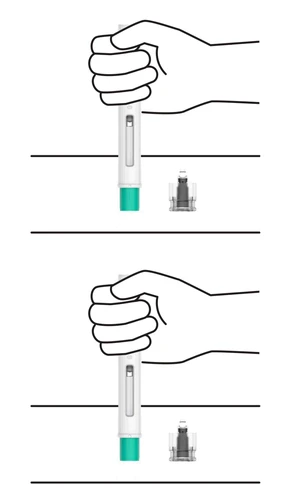
SINGLE-USE DEVICE
Important
Tremfya is available in a single-use prefilled pen containing a 100 mg dose.
If your doctor decides that you or a caregiver may be able to administer injections of
Tremfya at home, you must receive training on the correct way to prepare and inject Tremfya
using the prefilled pen.
Please read these Instructions for Use carefully before using the Tremfya prefilled pen and each time you receive a new prefilled pen. There may be new information. This instructional guide should not replace discussions with your doctor regarding your medical condition or treatment.
Additionally, please read the Patient Information Leaflet carefully before starting the injection and discuss any questions you may have with your doctor or nurse.
Each Tremfya prefilled pen is for single use only. Dispose of the used prefilled pen (see step 4) after one dose, even if medicine remains. Do not reuse the prefilled pen.

Storage information
Store in a refrigerator at a temperature between 2°C and 8°C.
Do not freeze.
Do not shake the prefilled pen at any time.
Keep the prefilled pen in its original packaging to protect it from light and physical damage.
Keep Tremfya and all medicines out of the reach of children.

Need help?
Contact your doctor to discuss any questions you may have. For further assistance or to share your feedback, refer to the Patient Information Leaflet for contact details of the local representative.
Description of the prefilled pen
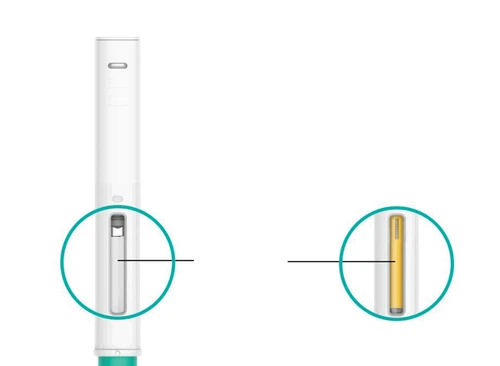
Before use
After use
The yellow plunger rod fills the viewing window
Viewing
window
Green needle
shield
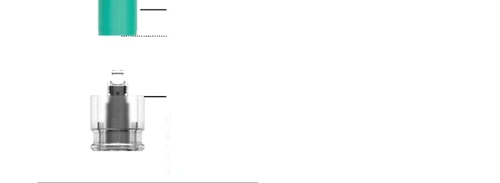
Hidden thin needle
Cap
Do not remove
until ready for
injection
(See step 3)
You will need the following
materials:
- 1 prefilled pen
Not provided in the package:
- Alcohol wipes
- Cotton balls or gauze pads
- Plasters (bandages)
- Sharps container (see step 4)
1. Preparation
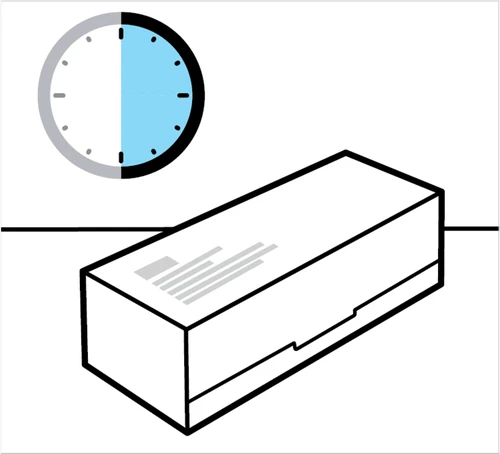
Allow Tremfya to reach room temperature
Remove the carton from the refrigerator and place it on a flat surface at room temperature for about
30 minutes before use.
Do not heat the pre-filled pen in any other way.
Check the expiration date (“EXP.”) on the carton.
Do not use the pre-filled pen if the expiration date has passed or if the seal on the carton is
broken.
Contact your doctor or pharmacist to obtain another pre-filled pen.
2. Preparation for injection
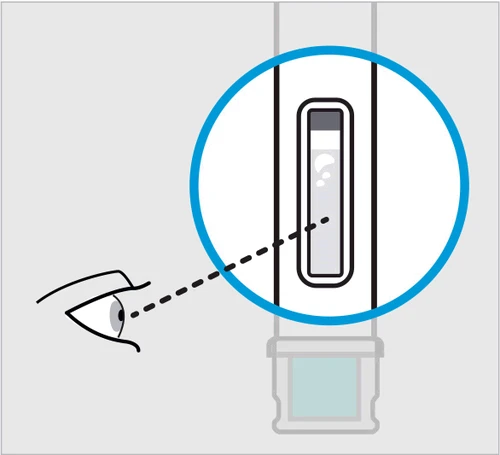
Inspect the liquid through the viewing window to ensure it is clear to pale yellow
Remove the pre-filled pen from its box.
Check the liquid through the viewing window. It should be clear to pale yellow in color and may contain small white or clear particles. You may also see one or more air bubbles.
This is normal.
Do not administer the injection if the liquid is:
- cloudy, or
- has changed color, or
- contains large particles.
If in doubt, contact your doctor or pharmacist for a new pre-filled pen.
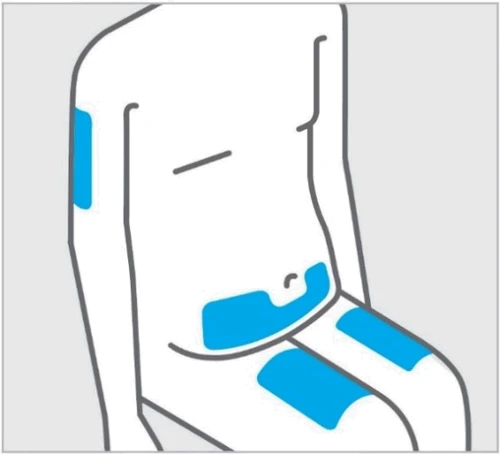
Choosing the injection site
Select one of the following areas for injection:
- Front of the thighs
- Lower abdomen — Do not use the area within 5 centimeters of the navel
- Back of the upper arms (if someone is assisting you with the injection)
Do not inject into areas of skin that are painful, bruised, red, cracked, thickened, or hardened. Avoid areas with scars or stretch marks.
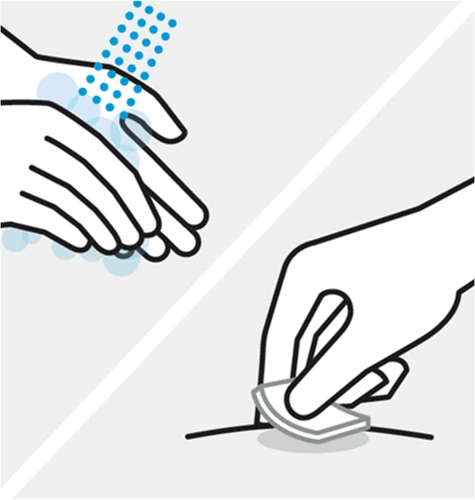
Wash hands and prepare the injection site
Wash your hands well with soap and lukewarm water.
Clean the chosen injection site with an alcohol swab and allow it to dry.
Do not touch, blow on, or fan the injection site after cleaning.
3. Injecting Tremfya using the pre-filled pen
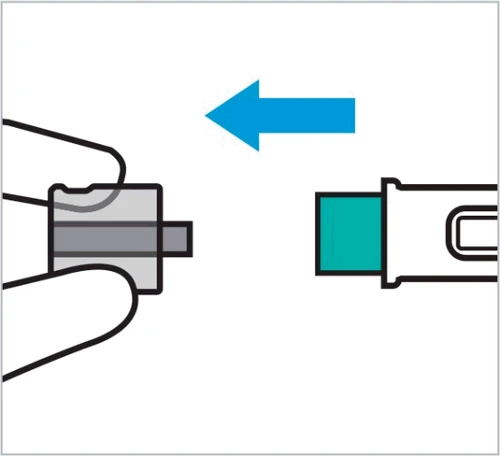
Remove the cap when ready to inject
Do not touch the green needle shield!
This could start the injection and you will not receive the full dose.
Remove the cap. It is normal to see a few drops of liquid.
Inject Tremfya within 5 minutes after removing the cap.
Do not reattach the needle cap. This may damage the needle.
Do not use the pre-filled pen if it has been dropped after removing the cap.
Contact your doctor or pharmacist for a replacement pre-filled pen.
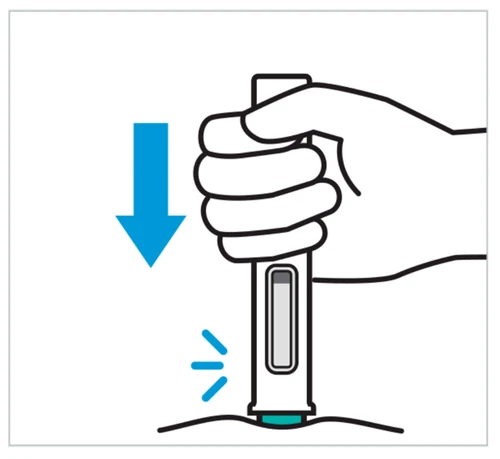
1st
CLICK!
Place the pre-filled pen directly on the injection site, then press and keep pressing
the pre-filled pen
Do not lift the pre-filled pen during injection!
If lifted, the green needle shield will lock and the full dose will not be delivered.
Place the pre-filled pen directly on the injection site with the green needle shield against the skin and the viewing window facing toward you.
Press firmly on the pre-filled pen and hold it pressed against the skin.
You will hear the first click.
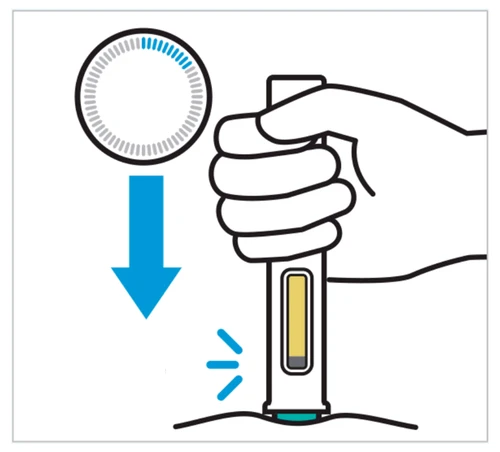
10

SEC
2nd

CLICK!
Continue holding the pre-filled pen firmly against the skin for about 10 seconds until
you hear a second click.
You are almost finished.
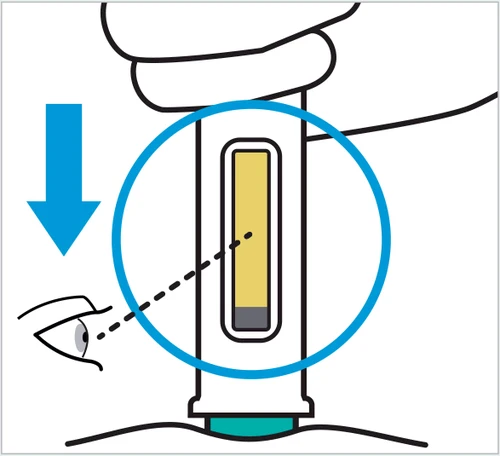
Hold firmly against the skin and make sure the injection is completed.
The injection is complete when the yellow plunger rod stops moving and fills the viewing window.
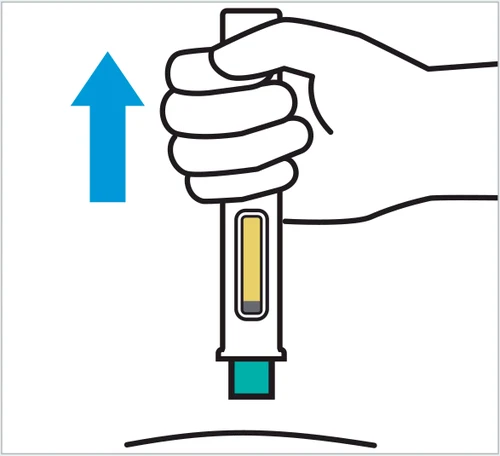
Lift upward
4. After the injection
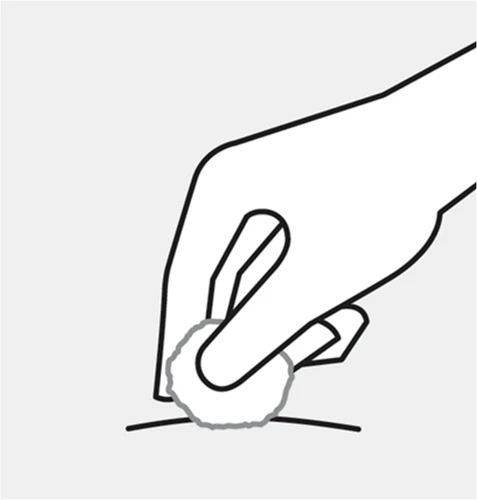
Check the injection site
A small amount of blood or fluid may appear at the injection site.
Gently press on the injection site with a cotton ball or gauze pad until bleeding stops.
Do not rub the injection site. If needed, cover the injection site with a bandage.
The injection is now complete!
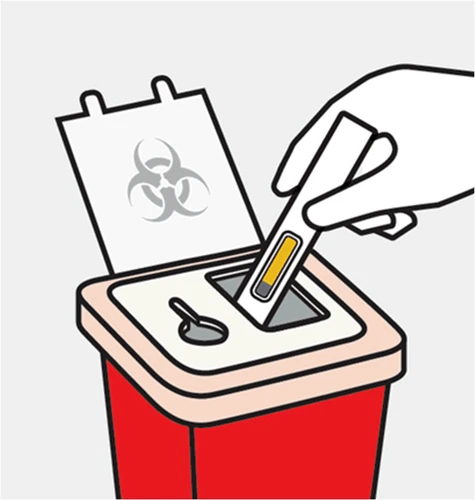
Dispose of the used pre-filled pen and cap
Place the used pre-filled pen and cap into a sharps disposal container immediately after use.
Make sure to dispose of the container when it is full, as instructed by your doctor or nurse.
Do not throw (dispose of) the pre-filled pen in household waste.
Do not recycle the used sharps disposal container.
Package leaflet: information for the user
Tremfya 200 mg solution for injection in a pre-filled syringe
guselkumab
Please read this leaflet carefully before using this medicine because it contains important information for you.
- Keep this leaflet. You may need to read it again.
- If you have any questions, ask your doctor, pharmacist or nurse.
- This medicine has been prescribed for you only. Do not give it to other people, even if they have the same symptoms as yours, because it may be harmful.
- If you experience any side effects, including those not listed in this leaflet, talk to your doctor, pharmacist or nurse. See section 4.
Contents of this leaflet
- What Tremfya is and what it is used for
- What you need to know before using Tremfya
- How to use Tremfya
- Possible side effects
- How to store Tremfya
- Contents of the pack and other information
1. What Tremfya is and what it is used for
Tremfya contains the active substance guselkumab, which is a type of protein called a monoclonal antibody.
This medicine works by blocking the activity of a protein called IL-23, which is present at higher levels in people with ulcerative colitis and Crohn's disease.
Ulcerative colitis
Tremfya is used to treat adults with moderate to severe ulcerative colitis, a type of inflammatory bowel disease. If you have ulcerative colitis, you will have been given other medicines first. If you do not respond adequately or cannot tolerate these medicines, Tremfya may be given to you.
The use of Tremfya in ulcerative colitis may benefit you by relieving the signs and symptoms of the disease. These include reduced bloody stools, reduced frequency and urgency of bowel movements, abdominal pain, and intestinal mucosal inflammation. These effects may improve your ability to carry out daily activities and reduce feelings of fatigue.
Crohn's disease
Tremfya is used to treat adults with moderate to severe Crohn's disease, a type of inflammatory bowel disease. If you have Crohn's disease, you will have been given other medicines first. If you do not respond adequately or cannot tolerate these medicines, Tremfya may be given to you.
The use of Tremfya in Crohn's disease may help reduce the signs and symptoms of the disease, such as diarrhoea, abdominal pain, and intestinal mucosal inflammation. These effects may improve your ability to carry out daily activities and reduce fatigue.
2. What you should know before using Tremfya
Do not use Tremfya
- if you are allergic to guselkumab or to any of the other ingredients of this medicine (listed in section 6). If you think you may be allergic, ask your doctor for advice before using Tremfya;
- if you have an active infection, including active tuberculosis (TB).
Warnings and precautions
Talk to your doctor, pharmacist, or nurse before using Tremfya:
- if you are being treated for an infection;
- if you have had an infection that does not heal or keeps coming back;
- if you have TB or have been in close contact with someone who has TB;
- if you think you may have an infection or develop symptoms of an infection (see below "Watch for possible infections and allergic reactions");
- if you have recently received a vaccine or if you need to receive a vaccine while being treated with Tremfya.
If you are unsure whether any of the conditions described above apply to you, talk to your doctor, pharmacist, or nurse before taking Tremfya.
As directed by your doctor, you may need to have blood tests to check whether you have elevated liver enzymes before starting treatment with Tremfya and during treatment.
Increased liver enzymes may occur more frequently in patients using Tremfya every 4 weeks compared to patients using Tremfya every 8 weeks (see "How to use Tremfya" in section 3).
Watch for possible infections and allergic reactions
Tremfya may potentially cause serious side effects, including allergic reactions and infections.
You should be vigilant for any signs of these conditions while taking Tremfya.
Signs or symptoms of infection may include fever or flu-like symptoms; muscle aches; cough; shortness of breath; burning sensation during urination or more frequent urination than usual; blood in sputum (mucus); weight loss; diarrhoea or stomach pain; warm, red, painful skin or sores on the body.
Serious allergic reactions have occurred with Tremfya. Symptoms may include: swelling of the face, lips, mouth, tongue, or throat, difficulty swallowing or breathing, feeling faint or dizzy, or hives (see "Serious side effects" in section 4).
Stop treatment with Tremfya and inform your doctor immediately or seek immediate medical help if you notice any signs of a possible serious allergic reaction or infection.
Children and adolescents
Do not give this medicine to children and adolescents under 18 years of age, as it has not been studied in this age group.
Other medicines and TREMFYA
Inform your doctor or pharmacist:
- if you are currently taking, have recently taken, or might take any other medicines.
- if you have recently been vaccinated or need to be vaccinated. You must not receive certain types of vaccines (live vaccines) while using Tremfya.
Pregnancy and breastfeeding
- Tremfya must not be used during pregnancy as the effects of this medicine in pregnant women are unknown. If you are a woman of childbearing age, you are advised to avoid pregnancy; you should use an effective method of contraception during treatment with Tremfya and for at least 12 weeks after the last dose of Tremfya. Please speak with your doctor if you are pregnant, suspect you may be pregnant, or are planning to become pregnant.
- Please speak with your doctor if you are breastfeeding or planning to breastfeed. You and your doctor will need to decide whether you should breastfeed or use Tremfya.
Driving and using machines
It is unlikely that Tremfya will affect your ability to drive or operate machinery.
Tremfya contains polysorbate 80
This medicine contains 1 mg of polysorbate 80 per pre-filled syringe, equivalent to 0.5 mg/mL. Polysorbates may cause allergic reactions. Inform your doctor if you have known allergies.
3. How to use Tremfya
Use this medicine exactly as your doctor has told you. If you are unsure, consult your doctor or pharmacist.
How Tremfya is administered and for how long
Your doctor will decide how long you need to take Tremfya.
Ulcerative colitis
Induction treatment:
Initial treatment may be given either as an intravenous infusion or subcutaneous administration:
- Intravenous infusion: The first dose of Tremfya is 200 mg and will be administered by your doctor or nurse as an intravenous infusion (a drip into a vein in your arm). After the first dose, you will receive a second dose 4 weeks later, followed by a third dose 4 weeks after that.
- Subcutaneous administration: The first dose of Tremfya is 400 mg and will be administered under the skin (subcutaneous injection) at several body sites. After the first dose, you will receive a second dose 4 weeks later, followed by a third dose 4 weeks after that.
Maintenance therapy:
A maintenance dose of Tremfya will be administered by subcutaneous injection (injection under the skin) at either 100 mg or 200 mg. Your doctor will decide which maintenance dose you will receive:
- A 100 mg dose will be administered 8 weeks after the third induction dose, and then every 8 weeks thereafter.
- A 200 mg dose will be administered 4 weeks after the third induction dose, and then every 4 weeks thereafter.
Crohn’s disease
Induction treatment:
Initial treatment may be given either as an intravenous infusion or subcutaneous administration:
- Intravenous infusion: The first dose of Tremfya is 200 mg and will be administered by your doctor or nurse as an intravenous infusion (a drip into a vein in your arm). After the first dose, you will receive a second dose 4 weeks later, followed by a third dose 4 weeks after that.
- Subcutaneous administration: The first dose of Tremfya is 400 mg and will be administered under the skin (subcutaneous injection) at several body sites. After the first dose, you will receive a second dose 4 weeks later, followed by a third dose 4 weeks after that.
Maintenance therapy:
A maintenance dose of Tremfya will be administered by subcutaneous injection (injection under the skin) at either 100 mg or 200 mg. Your doctor will decide which maintenance dose you will receive:
- A 100 mg dose will be administered 8 weeks after the third induction dose, and then every 8 weeks thereafter.
- A 200 mg dose will be administered 4 weeks after the third induction dose, and then every 4 weeks thereafter.
You may decide together with your doctor to self-administer Tremfya. In this case, you will be given instructions on how to inject Tremfya. Please speak with your doctor or nurse if you have any questions about self-injection. It is important not to attempt to inject the medicine yourself until you have been properly trained by your doctor or nurse.
For detailed instructions on how to use Tremfya, carefully read the instruction leaflet “Instructions for Use” included separately in the package.
If you use more Tremfya than you should
If you have received more Tremfya than prescribed, or if the dose was administered earlier than scheduled, inform your doctor immediately.
If you forget to use Tremfya
If you have forgotten to inject a dose of Tremfya, inform your doctor.
If you stop using Tremfya
Do not stop using Tremfya without first discussing it with your doctor. If you stop treatment, your symptoms may return.
If you have any doubts about how to use this medicine, consult your doctor, pharmacist, or nurse.
4. Possible side effects
Like all medicines, this medicine can cause side effects, although not everyone gets them.
Serious side effects
Stop using Tremfya and inform your doctor immediately or seek immediate medical help if you notice any of the following side effects:
Possible severe allergic reactions (may affect up to 1 in 1,000 patients) – signs or symptoms may include:
- difficulty breathing or swallowing
- swelling of the face, lips, tongue, or throat
- severe skin itching, with red rash or raised bumps
- dizziness, low blood pressure, or lightheadedness
Other side effects
The following side effects are all mild to moderate in severity. If any of these side effects become severe, inform your doctor, pharmacist, or nurse immediately.
Very common (may affect more than 1 in 10 people):
- respiratory tract infections
Common (may affect up to 1 in 10 people):
- headache
- joint pain (arthralgia)
- diarrhoea
- increased levels of liver enzymes in the blood
- skin rash
- redness, irritation, or pain at the injection site
Uncommon (may affect up to 1 in 100 people):
- reduction in the number of a type of white blood cells called neutrophils
- herpes simplex infections
- fungal skin infections, for example between the toes (e.g. athlete’s foot)
- gastrointestinal flu (gastroenteritis)
- urticaria
Rare (may affect up to 1 in 1,000 people):
- allergic reaction
Reporting of side effects
If you experience any side effects, including those not listed in this leaflet, talk to your doctor, pharmacist, or nurse. You can also report side effects directly via the national reporting system listed in Annex V. By reporting side effects, you can help provide more information on the safety of this medicine.
5. How to store Tremfya
Keep this medicine out of the sight and reach of children.
- Do not use this medicine after the expiry date which is stated on the syringe label and outer carton after “Exp.”. The expiry date refers to the last day of that month. Keep the pre-filled syringe in the outer packaging to protect the medicine from light.
Store this medicine in a refrigerator (2 °C - 8 °C). Do not freeze this medicine.
Do not shake this medicine.
Do not use this medicine if you notice that it is cloudy, has changed colour, or contains large particles.
Before use, remove the carton from the refrigerator and allow the pre-filled syringe to reach room temperature by leaving it in the carton for 30 minutes.
This medicine is for single use only. Do not dispose of any medicine via wastewater or household waste. Ask your pharmacist how to dispose of medicines you no longer use. This will help protect the environment.
6. Package contents and other information
What Tremfya contains
- The active substance is guselkumab. Each pre-filled syringe contains 200 mg of guselkumab in 2 mL of solution.
- The other components are L-histidine, L-histidine monohydrochloride monohydrate, polysorbate 80 (E433), sucrose and water for injections (see section 2 “Tremfya contains polysorbate 80”).
Description of the appearance of Tremfya and contents of the pack
Tremfya is a clear injectable solution (for injection) that may range from colourless to pale yellow.
It is available in packs containing one pre-filled syringe and in multiple packs consisting of 2 boxes,
each containing 1 pre-filled syringe. Not all pack sizes may be
marketed.
Marketing Authorisation Holder
Janssen-Cilag International NV
Turnhoutseweg 30
B-2340 Beerse
Belgium
Manufacturer
Janssen Biologics B.V.
Einsteinweg 101
2333CB Leiden
The Netherlands
For further information on this medicinal product, please contact the local representative of the Marketing Authorisation Holder:
België/Belgique/Belgien Lietuva
Janssen-Cilag NV UAB "JOHNSON & JO”HNSON"
Tel/Tél: +32 14 64 94 11 Tel: +370 5 278 68 88
[email protected] [email protected]
България Luxembourg/Luxemburg
„Джонсън&ДжонсънБългария” ЕООД Janssen-Cilag NV
Тел.: +359 2 489 94 00 Tél/Tel: +32 14 64 94 11
[email protected] [email protected]
Česká republika Magyarország
Janssen-Cilag s.r.o. Janssen-Cilag Kft.
Tel.: +420 227 012 227 Tel.: +36 1 884 2858
[email protected]
Danmark Malta
Janssen-Cilag A/S AM MANGION LTD.
Tlf.: +45 4594 8282 Tel: +356 2397 6000
[email protected]
Deutschland Nederland
Janssen-Cilag GmbH Janssen-Cilag B.V.
Tel: 0 800 086 9247 / +49 2137 955 6955 Tel: +31 76 711 1111
[email protected] [email protected]
Eesti Norge
UAB "JOHNSON & JOHNSON" Eesti filiaal Janssen-Cilag AS
Tel: +372 617 7410 Tlf: +47 24 12 65 00
[email protected] [email protected]
Ελλάδα Österreich
Janssen-Cilag Φαρμακευτική Μονοπρόσωπη Janssen-Cilag Pharma GmbH
Α.Ε.Β.Ε. Tel: +43 1 610 300
Tηλ: +30 210 80 90 000
España Polska
Janssen-Cilag, S.A. Janssen-Cilag Polska Sp. z o.o.
Tel: +34 91 722 81 00 Tel.: +48 22 237 60 00
[email protected]
France Portugal
Janssen-Cilag Janssen-Cilag Farmacêutica, Lda.
Tél: 0 800 25 50 75 / +33 1 55 00 40 03 Tel: +351 214368 600
[email protected]
Hrvatska România
Johnson & Johnson S.E. d.o.o. Johnson & Johnson România SRL
Tel: +385 1 6610 700 Tel: +40 21 207 1800
[email protected]
Ireland Slovenija
Janssen Sciences Ireland UC Johnson & Johnson d.o.o.
Tel: 1 800 709 122 Tel: +386 1 401 18 00
[email protected] [email protected]
Ísland Slovenská republika
Janssen-Cilag AB Johnson & Johnson, s.r.o.
c/o Vistor ehf. Tel: +421 232 408 400
Sími: +354 535 7000
[email protected]
Italia Suomi/Finland
Janssen Cilag SpA Janssen-Cilag Oy
Tel: 800.688.777/+39 02 2510 1 Puh/Tel: +358 207 531 300
[email protected] [email protected]
Κύπρος Sverige
Βαρνάβας Χατζηπαναγής Λτδ Janssen-Cilag AB
Τηλ: +357 22 207 700 Tfn: +46 8 626 50 00
[email protected]
Latvija
UAB "JOHNSON & JOHNSON" filiāle Latvijā
Tel: +371 678 93561
[email protected]
More detailed information on this medicinal product is available on the European Medicines Agency website, https://www.ema.europa.eu.
Instructions for use
Tremfia
Prefilled Syringe 200 mg
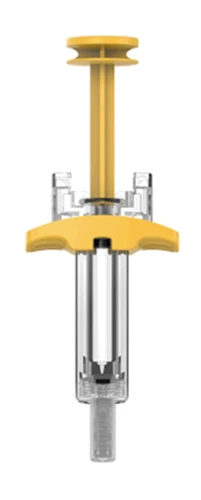
SINGLE-USE DEVICE
Important
Tremfya is available in a single-dose prefilled syringe containing 200 mg.
Your doctor will tell you whether you need to use 1 or 2 prefilled syringes.
If your doctor determines that you or a caregiver may be able to administer Tremfya injections at home, you must receive training on the correct way to prepare and inject Tremfya using the prefilled syringe.
Please read these Instructions for Use carefully before using the Tremfya prefilled syringe and each time you need an injection. There may be new information. This instructional guide should not replace discussions with your doctor about your medical condition or your treatment. Additionally, please read the Patient Information Leaflet carefully before starting the injection and discuss any questions you may have with your doctor or nurse.
Each prefilled syringe of Tremfya is for single use only. Dispose of the used prefilled syringe (see step 4) after one dose, even if it still contains medicine. Do not reuse the Tremfya prefilled syringe.
The Tremfya prefilled syringe is intended for subcutaneous injection only, not into muscle or vein.
After injection, the needle will retract into the device and lock in place.

Storage Information
Store in a refrigerator at a temperature between 2°C and 8°C.
Do not freeze.
Do not shake the prefilled syringe.
Keep the prefilled syringe in its original packaging to protect it from light and physical damage.
Keep Tremfya and all medicines out of the reach of children.

Need Help?
Contact your doctor to discuss any questions you may have. For additional assistance or to share your feedback, refer to the Patient Information Leaflet for contact details of the local representative.
Description of the prefilled syringe use
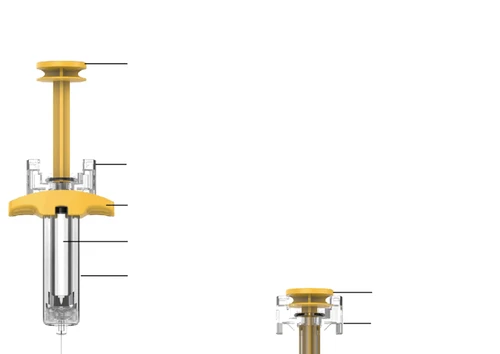

Before Use
Plunger
Do not touch or pull the
plunger at any time.
Safety system
Flange
Viewing
window

After Use
Plunger stops
The safety system
is activated
Body
Needle
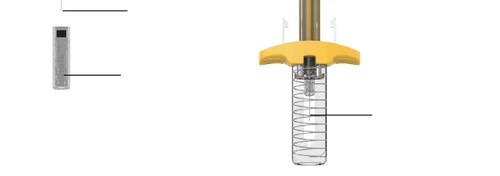
Needle cap

Do not remove until ready
for injection
(see step 3)
The needle retracts
into the syringe body
You will need the following
items:
- 1 prefilled syringe or 2 prefilled syringes, depending on the dose prescribed by your doctor
Not supplied in the pack: - Alcohol swabs
- Cotton balls or gauze pads
- Adhesive bandages
- Sharps container (see step 4)
1. Preparation
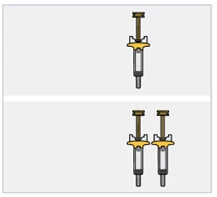
200 mg
1 pre-filled syringe
400 mg
2 pre-filled syringes
Check the dose to see whether 1 or 2 pre-filled syringes are needed and inspect the
package(s)
Remove the pre-filled syringe (or syringes) package (packages) from the refrigerator.
Check the expiry date (“Exp.”).
Do not use the pre-filled syringe if the expiry date has passed or if the seal on the carton is
broken.
Contact your doctor or pharmacist to obtain another pre-filled syringe.
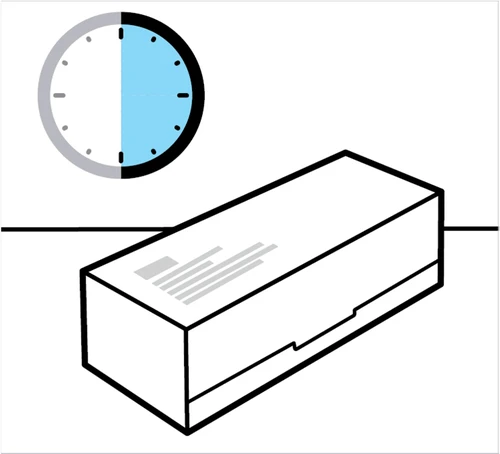
Allow Tremfya to reach room temperature
Place the package (packages) on a flat surface at room temperature for about 30 minutes before use.
Do not heat the pre-filled syringe (or pre-filled syringes) in any other way.
2. Preparation for injection
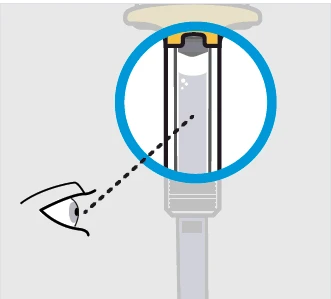
Inspect the liquid for clarity and pale yellow color
Remove the prefilled syringe from the box.
Check the liquid through the viewing window. It should be clear to pale yellow in color and may contain small white or clear particles. You may also see one or more air bubbles. This is normal.
Do not administer the injection if the liquid is:
- cloudy, or
- has changed color, or
- contains large particles.
Do not use the prefilled syringe if it has been dropped. If in doubt, contact your doctor or pharmacist to obtain a new prefilled syringe.
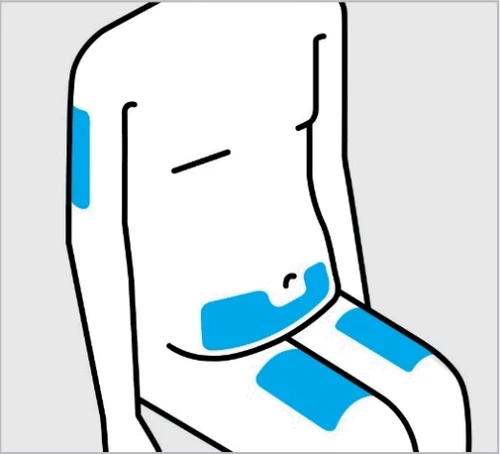
Choosing the injection site
Select one of the following areas for injection:
- Front of the thighs
- Lower abdomen — Do not use the area within 5 centimeters of the navel
- Back of the upper arms (if another person is assisting with the injection)
If two injections are needed to complete the dose, choose different sites or leave at least 5 centimeters between injection sites.
Do not inject into areas of skin that are painful, bruised, red, cracked, thickened, or hardened. Avoid areas with scars or stretch marks.
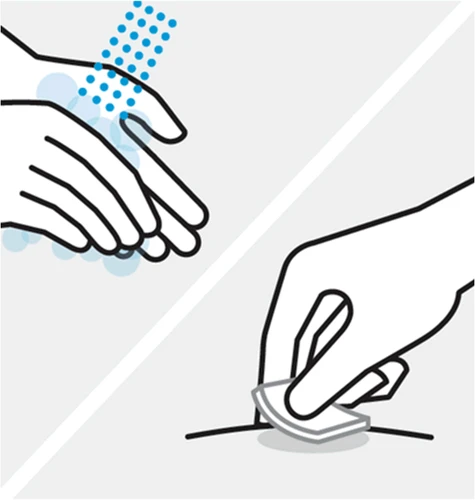
Cleaning hands and the injection site
Wash your hands thoroughly with soap and lukewarm water.
Clean the chosen injection site with an alcohol swab and allow it to dry.
Do not touch, fan, or blow on the injection site after cleaning.
3. Injecting Tremfya using the prefilled syringe
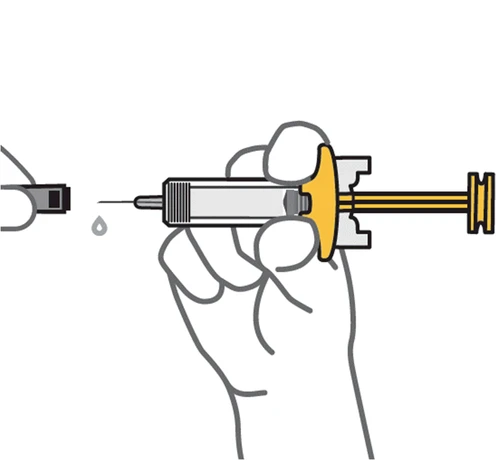
Remove the needle cap when ready to inject
Hold the prefilled syringe by the body and remove the needle cap.
It is normal to see a few drops of liquid.
Inject Tremfya within 5 minutes after removing the needle cap.
Do not replace the needle cap, as this may damage the needle or cause a needle-stick injury.
Do not touch the needle and avoid letting it touch any surface.
Do not use the prefilled syringe if it has been dropped. Contact your doctor or pharmacist for a replacement prefilled syringe.
Do not grasp or pull the plunger at any time.
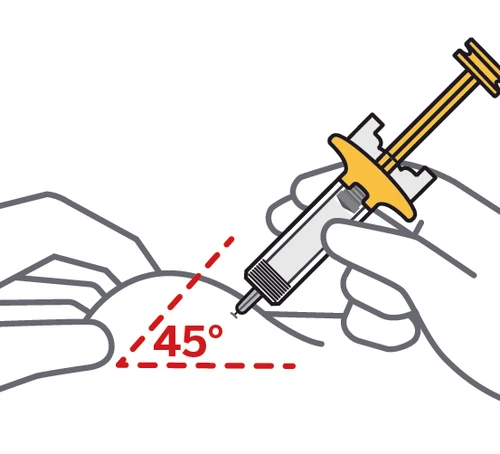
Lift the injection site and insert the needle at an angle of approximately 45 degrees
It is important to lift enough skin to ensure the injection is given under the skin and not into the muscle.
Insert the needle with a quick motion, similar to throwing a dart.
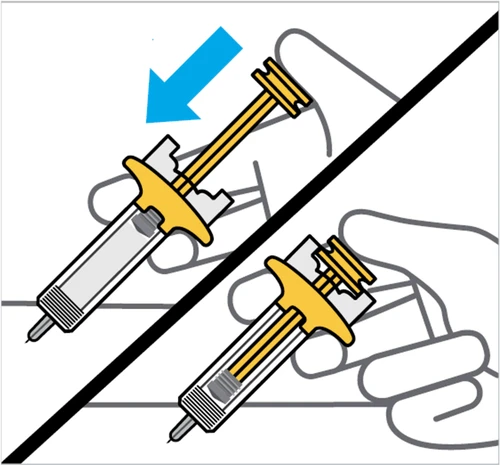
SLOWLY
Slowly push the plunger until it stops to inject all the liquid
You will feel some resistance when pushing the plunger; this is normal.
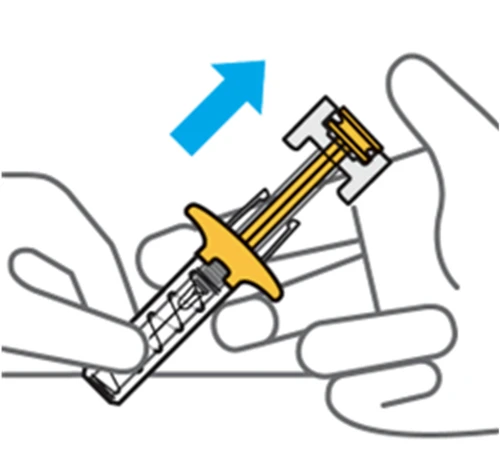
Release pressure on the plunger to remove the needle from the skin
The needle will retract into the device and lock in place.
If the prescribed dose requires two injections, repeat steps 2 to 4 with the second prefilled syringe.
4. After the injection
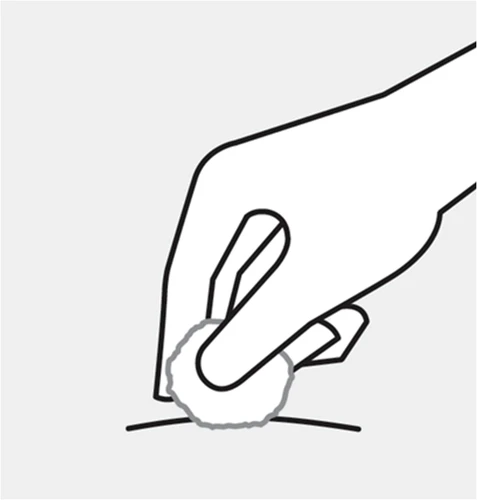
Check the injection site
A small amount of blood or liquid may be present at the injection site.
Gently press on the injection site with a cotton ball or gauze until bleeding stops.
Do not rub the injection site. If needed, cover the injection site with a bandage.
The injection is now complete!
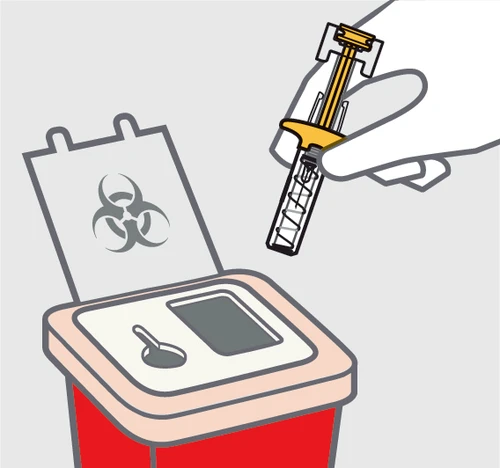
Dispose of the used pre-filled syringe
Place the used pre-filled syringe into a sharps disposal container immediately after use.
Make sure to dispose of the container when full, as instructed by your doctor or nurse.
Do not throw (dispose of) the pre-filled syringe in household waste.
Do not recycle the used sharps disposal container.
Package leaflet: information for the user
Tremfya 200 mg solution for injection in a pre-filled pen
guselkumab
Please read this leaflet carefully before using this medicine because it contains important information for you.
- Keep this leaflet. You may need to read it again.
- If you have any questions, ask your doctor, pharmacist, or nurse.
- This medicine has been prescribed for you only. Do not give it to other people, even if their symptoms are the same as yours, as it may be harmful.
- If you experience any side effects, including those not listed in this leaflet, speak to your doctor, nurse, or pharmacist. See section 4.
Contents of this leaflet
- What Tremfya is and what it is used for
- What you need to know before using Tremfya
- How to use Tremfya
- Possible side effects
- How to store Tremfya
- Contents of the pack and other information
1. What Tremfya is and what it is used for
Tremfya contains the active substance guselkumab, which is a type of protein called a monoclonal antibody.
This medicine works by blocking the activity of a protein called IL-23, which is present at higher levels in people with ulcerative colitis and Crohn's disease.
Ulcerative colitis
Tremfya is used to treat adults with moderate to severe ulcerative colitis, an inflammatory bowel disease. If you have ulcerative colitis, you will have been given other medicines before. If you do not respond adequately or cannot tolerate these medicines, you may be given Tremfya.
The use of Tremfya in ulcerative colitis may benefit you by relieving the signs and symptoms of the disease. These include reduced bloody stools, reduced frequency and urgency of bowel movements, abdominal pain, and intestinal mucosal inflammation. These effects may improve your ability to carry out normal daily activities and reduce feelings of fatigue.
Crohn's disease
Tremfya is used to treat adults with moderate to severe Crohn's disease, an inflammatory bowel disease. If you have Crohn's disease, you will have been given other medicines before. If you do not respond adequately or cannot tolerate these medicines, you may be given Tremfya.
The use of Tremfya in Crohn's disease may help reduce the signs and symptoms of the disease, such as diarrhoea, abdominal pain, and intestinal mucosal inflammation. These effects may improve your ability to carry out normal daily activities and reduce fatigue.
2. What you need to know before using Tremfya
Do not use Tremfya
- if you are allergic to guselkumab or to any of the other ingredients of this medicine (listed in section 6). If you think you may be allergic, ask your doctor for advice before using Tremfya;
- if you have an active infection, including active tuberculosis (TB).
Warnings and precautions
Talk to your doctor, pharmacist, or nurse before using Tremfya:
- if you are being treated for an infection;
- if you have had an infection that does not go away or keeps coming back;
- if you have TB or have been in close contact with someone who has TB;
- if you think you may have an infection or if you develop symptoms of an infection (see below "Be alert for infections and allergic reactions");
- if you have recently received a vaccine or need to receive a vaccine while being treated with Tremfya.
If you have any doubts whether any of the conditions described above apply to you, talk to your doctor, pharmacist, or nurse before using Tremfya.
As directed by your doctor, you may need to have blood tests to check whether you have elevated levels of liver enzymes before starting Tremfya and during treatment.
Increased liver enzymes may occur more frequently in patients using Tremfya every 4 weeks compared to patients using Tremfya every 8 weeks (see "How to use Tremfya" in section 3).
Be alert for infections and allergic reactions
Tremfya may potentially cause serious side effects, including allergic reactions and infections.
You should be vigilant for any signs of these conditions while taking Tremfya.
Signs or symptoms of infection may include fever or flu-like symptoms; muscle aches; cough; shortness of breath; burning sensation during urination or more frequent urination than usual; blood in sputum (mucus); weight loss; diarrhea or stomach pain; warm, red, or painful skin, or sores on the body.
Serious allergic reactions have occurred with Tremfya. Symptoms may include: swelling of the face, lips, mouth, tongue, or throat; difficulty swallowing or breathing; dizziness or lightheadedness; or hives (see "Serious side effects" in section 4).
Stop treatment with Tremfya and inform your doctor immediately, or seek immediate medical help, if you notice any signs of a possible serious allergic reaction or an infection.
Children and adolescents
Do not give this medicine to children and adolescents under 18 years of age, as it has not been studied in this age group.
Other medicines and Tremfya
Inform your doctor or pharmacist:
- if you are currently using, have recently used, or might use any other medicines.
- if you have recently been vaccinated or need to be vaccinated. You must not receive certain types of vaccines (live vaccines) while using Tremfya.
Pregnancy and breastfeeding
-
Tremfya must not be used during pregnancy as the effects of this medicine in pregnant women are unknown. If you are a woman of childbearing age, you are advised to avoid pregnancy. You must use an effective method of contraception during treatment with Tremfya and for at least 12 weeks after the last dose of Tremfya. Please speak with your doctor if you are pregnant, suspect you may be pregnant, or are planning to become pregnant.
-
Please speak with your doctor if you are breastfeeding or planning to breastfeed. You and your doctor will decide whether you should breastfeed or use Tremfya.
Driving and using machines
It is unlikely that Tremfya will affect your ability to drive or operate machinery.
Tremfya contains polysorbate 80
This medicine contains 1 mg of polysorbate 80 per pre-filled pen, equivalent to 0.5 mg/mL. Polysorbates may cause allergic reactions. Inform your doctor if you have known allergies.
3. How to use Tremfya
Use this medicine exactly as instructed by your doctor. If you have any doubts, consult your doctor or pharmacist.
What dose of Tremfya is administered and for how long
Your doctor will decide how long you need to take Tremfya.
Ulcerative colitis
Induction treatment:
The initial treatment can be administered either via intravenous infusion or subcutaneous administration:
- Intravenous infusion: The first dose of Tremfya is 200 mg and will be administered by your doctor or nurse as an intravenous infusion (a drip into a vein in your arm). After the first dose, you will receive a second dose 4 weeks later, followed by a third dose 4 weeks after that.
- Subcutaneous administration: The first dose of Tremfya is 400 mg and will be administered under the skin (subcutaneous injection) at several body sites. After the first dose, you will receive a second dose 4 weeks later, followed by a third dose 4 weeks after that.
Maintenance therapy: A maintenance dose of Tremfya will be administered by subcutaneous injection (injection under the skin) with either 100 mg or 200 mg. Your doctor will decide which maintenance dose you will receive:
- A dose of 100 mg will be administered 8 weeks after the third induction dose, and then every 8 weeks thereafter.
- A dose of 200 mg will be administered 4 weeks after the third induction dose, and then every 4 weeks thereafter.
Crohn’s disease
Induction treatment:
The initial treatment can be administered either via intravenous infusion or subcutaneous administration:
- Intravenous infusion: The first dose of Tremfya is 200 mg and will be administered by your doctor or nurse as an intravenous infusion (a drip into a vein in your arm). After the first dose, you will receive a second dose 4 weeks later, followed by a third dose 4 weeks after that.
- Subcutaneous administration: The first dose of Tremfya is 400 mg and will be administered under the skin (subcutaneous injection) at several body sites. After the first dose, you will receive a second dose 4 weeks later, followed by a third dose 4 weeks after that.
Maintenance therapy: A maintenance dose of Tremfya will be administered by subcutaneous injection (injection under the skin) with either 100 mg or 200 mg. Your doctor will decide which maintenance dose you will receive:
- A dose of 100 mg will be administered 8 weeks after the third induction dose, and then every 8 weeks thereafter.
- A dose of 200 mg will be administered 4 weeks after the third induction dose, and then every 4 weeks thereafter.
You may decide together with your doctor to self-administer Tremfya. In this case, you will be given instructions on how to inject Tremfya. Please speak with your doctor or nurse if you have any questions about self-injecting. It is important not to attempt to inject the medicine yourself until you have been properly trained by your doctor or nurse.
For detailed instructions on how to use Tremfya, carefully read the instruction leaflet titled “Instructions for use” included in the package before use.
If you use more Tremfya than you should
If you have received more Tremfya than you should, or if the dose was administered earlier than prescribed, inform your doctor immediately.
If you forget to use Tremfya
If you have forgotten to inject a dose of Tremfya, inform your doctor.
If you stop using Tremfya
Do not stop using Tremfya without first discussing it with your doctor. If you stop treatment, your symptoms may return.
If you have any doubts about how to use this medicine, consult your doctor, pharmacist, or nurse.
4. Possible side effects
Like all medicines, this medicine can cause side effects, although not everybody gets them.
Serious side effects
Stop using Tremfya and contact your doctor immediately or seek immediate medical help if you notice any of the following side effects:
Severe allergic reactions (may affect up to 1 in 1,000 patients) – signs or symptoms may include:
- difficulty breathing or swallowing
- swelling of the face, lips, tongue or throat
- severe skin itching, with a red rash or raised bumps
- dizziness, low blood pressure or feeling lightheaded
Other side effects
The following side effects are all mild to moderate in severity. If any of these side effects become severe, inform your doctor, pharmacist or nurse immediately.
Very common (may affect more than 1 in 10 people):
- respiratory tract infections
Common (may affect up to 1 in 10 people):
- headache
- joint pain (arthralgia)
- diarrhoea
- increased levels of liver enzymes in the blood
- skin rash
- redness, irritation or pain at the injection site
Uncommon (may affect up to 1 in 100 people):
- decrease in the number of a type of white blood cells called neutrophils
- herpes simplex infections
- fungal skin infection, for example between the toes (e.g. athlete’s foot)
- stomach flu (gastroenteritis)
- urticaria
Rare (may affect up to 1 in 1,000 people):
- allergic reaction
Reporting of side effects
If you get any side effects, including any not listed in this leaflet, talk to your doctor, nurse or pharmacist. You can also report side effects directly through the national reporting system listed in Annex V. By reporting side effects, you can help provide more information on the safety of this medicine.
5. How to store Tremfya
Keep this medicine out of the sight and reach of children.
Do not use this medicine after the expiry date stated on the label of the pre-filled pen and on the outer carton after "Exp.". The expiry date refers to the last day of that month.
Keep the pre-filled pen in the outer packaging to protect the medicine from light.
Store this medicine in a refrigerator (2°C – 8°C). Do not freeze this medicine.
Do not shake this medicine.
Do not use this medicine if you notice it is cloudy, has changed colour, or contains large particles. Before use, remove the carton from the refrigerator and allow the pre-filled pen to reach room temperature by leaving it inside the carton for 30 minutes.
This medicine is for single use only. Do not dispose of any medicine via wastewater or household waste. Ask your pharmacist how to dispose of medicines you no longer use. This will help protect the environment.
6. Package contents and other information
What Tremfya contains
- The active substance is guselkumab. Each pre-filled pen contains 200 mg of guselkumab in 2 mL of solution.
- The other components are L-histidine, L-histidine monohydrochloride monohydrate, polysorbate 80 (E433), sucrose and water for injections (see section 2 “Tremfya contains polysorbate 80”).
Description of the appearance of Tremfya and contents of the pack
Tremfya is a clear injectable solution (for injection) that may be colourless to slightly yellow.
It is available in packs containing one pre-filled pen and in multiple packs of 2 boxes, each containing 1 pre-filled pen. Not all pack sizes may be marketed.
Marketing Authorisation Holder
Janssen-Cilag International NV
Turnhoutseweg 30
B-2340 Beerse
Belgium
Manufacturer
Janssen Biologics B.V.
Einsteinweg 101
2333CB Leiden
The Netherlands
For further information about this medicinal product, please contact the local representative of the Marketing Authorisation Holder:
België/Belgique/Belgien Lietuva
Janssen-Cilag NV UAB “JOHNSON & JOHNSON”
Tel/Tél: +32 14 64 94 11 Tel: +370 5 278 68 88
[email protected] [email protected]
България Luxembourg/Luxemburg
„Джонсън&ДжонсънБългария” ЕООД Janssen-Cilag NV
Тел.: +359 2 489 94 00 Tél/Tel: +32 14 64 94 11
[email protected] [email protected]
Česká republika Magyarország
Janssen-Cilag s.r.o. Janssen-Cilag Kft.
Tel: +420 227 012 227 Tel.: +36 1 884 2858
[email protected]
Danmark Malta
Janssen-Cilag A/S AM MANGION LTD
Tlf.: +45 4594 8282 Tel: +356 2397 6000
[email protected]
Deutschland Nederland
Janssen-Cilag GmbH Janssen-Cilag B.V.
Tel: 0 800 086 9247 / +49 2137 955 6955 Tel: +31 76 711 1111
[email protected] [email protected]
Eesti Norge
UAB “JOHNSON & JOHNSON” Eesti filiaal Janssen-Cilag AS
Tel: +372 617 7410 Tlf: +47 24 12 65 00
[email protected] [email protected]
Ελλάδα Österreich
Janssen-Cilag Φαρμακευτική Μονοπρόσωπη Janssen-Cilag Pharma GmbH
Α.Ε.Β.Ε. Tel: +43 1 610 300
Tηλ: +30 210 80 90 000
España Polska
Janssen-Cilag, S.A. Janssen-Cilag Polska Sp. Z o.o.
Tel: +34 91 722 81 00 Tel.: +48 22 237 60 00
[email protected]
France Portugal
Janssen-Cilag Janssen-Cilag Farmacêutica, Lda.
Tél: 0 800 25 50 75 / +33 1 55 00 40 03 Tel: +351 214368 600
[email protected]
Hrvatska România
Johnson & Johnson S.E. d.o.o. Johnson & Johnson România SRL
Tel: +385 1 6610 700 Tel: +40 21 207 1800
[email protected]
Ireland Slovenija
Janssen Sciences Ireland UC Johnson & Johnson d.o.o.
Tel: 1 800 709 122 Tel: +386 1 401 18 00
[email protected] [email protected]
Ísland Slovenská republika
Janssen-Cilag AB Johnson & Johnson, s.r.o.
c/o Vistor ehf. Tel: +421 232 408 400
Sími: +354 535 7000
[email protected]
Italia Suomi/Finland
Janssen-Cilag SpA Janssen-Cilag Oy
Tel: 800.688.777/+39 02 2510 1 Puh/Tel: +358 207 531 300
[email protected] [email protected]
Κύπρος Sverige
Βαρνάβας Χατζηπαναγής Λτδ Janssen-Cilag AB
Τηλ: +357 22 207 700 Tfn: +46 8 626 50 00
[email protected]
Latvija
UAB “JOHNSON & JOHNSON” filiāle Latvijā
Tel: +371 678 93561
[email protected]
More detailed information on this medicinal product is available on the European Medicines Agency website: https://www.ema.europa.eu.
Instructions for use
Tremfya 200 mg
prefilled pen
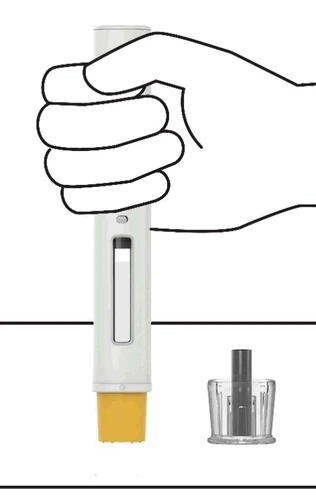
SINGLE-USE DEVICE
Important
Tremfya is available in a single-use prefilled pen containing a 200 mg dose.
Your doctor will tell you whether you need to use 1 or 2 prefilled pens.
If your doctor decides that you or someone assisting you may be able to administer Tremfya injections at home, you must receive training on the correct way to prepare and inject Tremfya using the prefilled pen.
Please read these Instructions for Use carefully before using the Tremfya prefilled pen and each time you receive a new prefilled pen. There may be new information. This instructional guide should not replace discussions with your doctor regarding your medical condition or treatment. Additionally, please read the Package Leaflet carefully before starting the injection and discuss any questions you may have with your doctor or nurse.
Each Tremfya prefilled pen is for single use only. Dispose of the used prefilled pen (see step 4) after one dose, even if it still contains medicine. Do not reuse the prefilled pen.

Storage information
Store in a refrigerator at a temperature between 2 °C and 8 °C.
Do not freeze.
Do not shake the prefilled pen.
Keep the prefilled pen in its original packaging to protect it from light and physical damage.
Keep Tremfya and all medicines out of the reach of children.

Need help?
Call your doctor to discuss any questions you may have. For further assistance or to share your feedback, refer to the Package Leaflet for contact details of the local representative.
Description of the prefilled pen
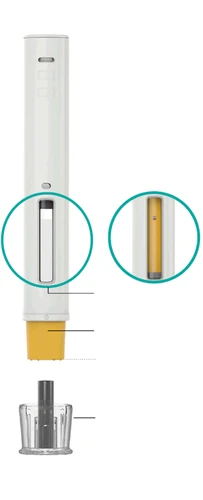
Before use
After use
The plunger rod

fills the
viewing window
Viewing
window
Yellow needle
cap
Hidden fine
needle
Cap

Do not remove
until ready for
injection
(see step 3)
You will need the following
items:
- 1 or 2 prefilled pens, depending on the dose prescribed by your doctor
Not supplied in the pack: - Alcohol swabs
- Cotton balls or gauze pads
- Plasters
- Sharps disposal container (see step 4)
1. Preparation
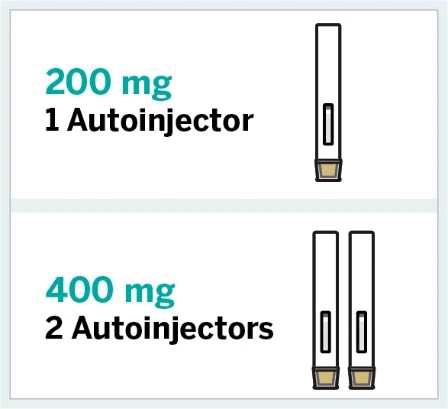
200 mg
400 mg
Check the prescribed dose to determine whether you need to use 1 or 2 prefilled pens and
inspect the pen/pens packaging
Remove the prefilled pen (or pens) packaging from the refrigerator.
Check the expiration date ("Exp.") on the box.
Do not use the prefilled pen if the expiration date has passed or if the seal on the box is broken.
Contact your doctor or pharmacist to obtain another prefilled pen.
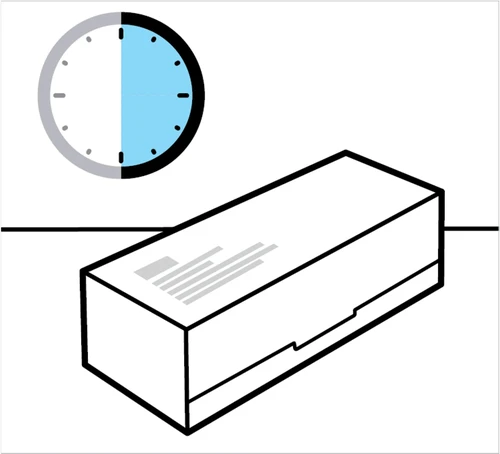
ATTEN
TION
30
MIN
Allow Tremfya to reach room temperature
Place the packaging (or packages) on a flat surface at room temperature for about 30 minutes before use.
Do not heat the prefilled pen (or prefilled pens) in any other way.
2. Preparation for injection
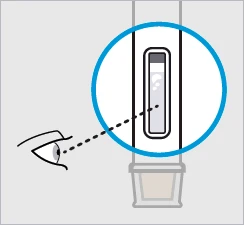
Inspect the liquid through the viewing window to ensure it is clear to
pale yellow
Remove the pre-filled pen from the box.
Check the liquid through the viewing window. It should be clear to pale yellow in color and may contain small white or clear particles. You may also see one or more air bubbles.
This is normal.
Do not administer the injection if the liquid is:
- cloudy or
- has changed color or
- contains large particles. If in doubt, contact your doctor or pharmacist for a new pre-filled pen.
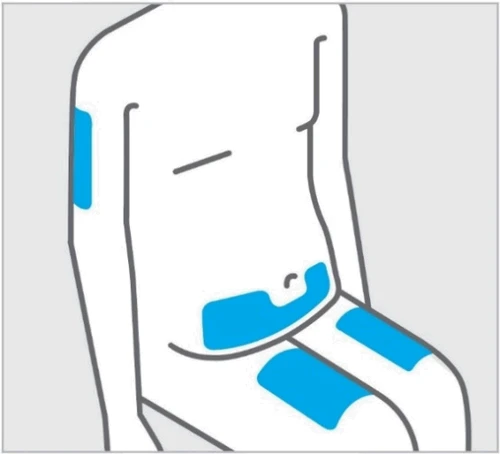
Choosing the injection site
Select one of the following areas for injection:
- Front of the thighs
- Lower abdomen Do not use the area within 5 centimeters around the navel.
- Back of the upper arms (if someone is assisting you with the injection) If two injections are required to complete the dose, choose different sites or leave at least 5 centimeters between injection sites. Do not inject into areas of skin that are tender, bruised, red, cracked, thickened, or hardened. Avoid areas with scars or stretch marks.
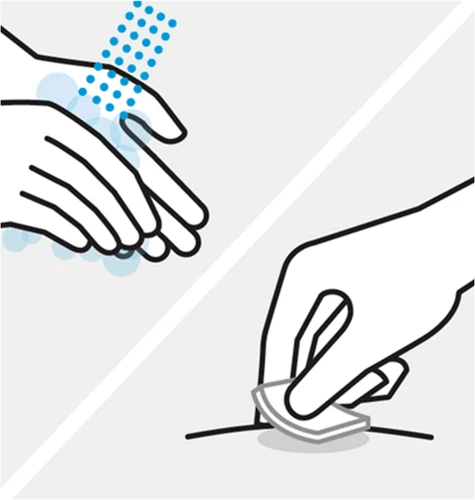
Cleaning hands and the injection site
Wash your hands thoroughly with soap and lukewarm water.
Clean the chosen injection site with an alcohol swab and allow it to dry.
Do not touch, blow on, or fan the injection site after cleaning.
3. Tremfya Injection Using the Pre-filled Pen
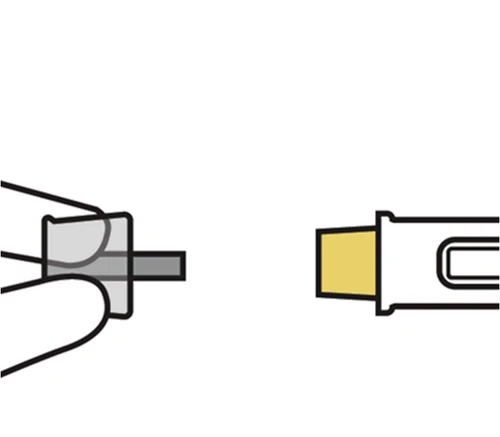

Remove the bottom cap when you are ready for injection
Do not touch the yellow needle cover!
This could start the injection and you will not receive the full dose.
Remove the cap. It is normal to see a few drops of liquid.
Inject Tremfya within 5 minutes after removing the cap.
Do not reattach the needle cap. This may damage the needle.
Do not use the pre-filled pen if it has been dropped after removing the cap.
Contact your doctor or pharmacist for a new pre-filled pen.
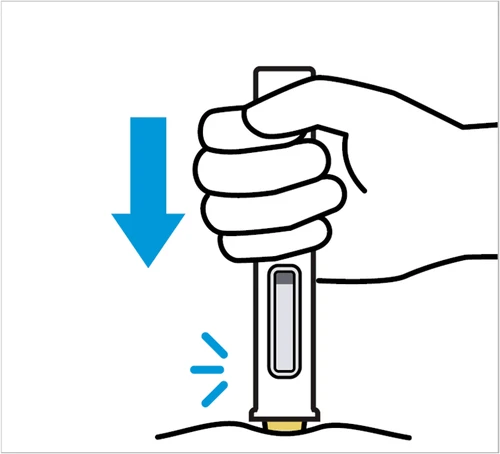
Step 1
CLICK!
Place the pre-filled pen directly onto the injection site, then press and continue to hold down
the pre-filled pen
Do not lift the pre-filled pen during injection!
If lifted, the yellow needle cover will lock and the full dose will not be administered.
Place the pre-filled pen directly on the injection site with the yellow needle cover against the skin and the viewing window facing toward you.
Press down on the pre-filled pen and hold it firmly against the skin.
You will hear the first click.
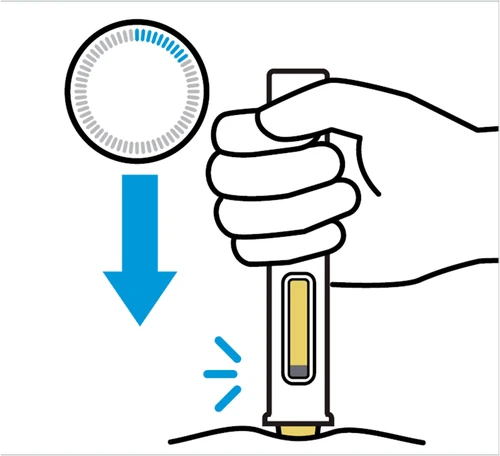
10

SEC
Step 2
CLICK!
Continue holding the pre-filled pen firmly against the skin for about 10 seconds until you hear a second click.
You are almost finished.
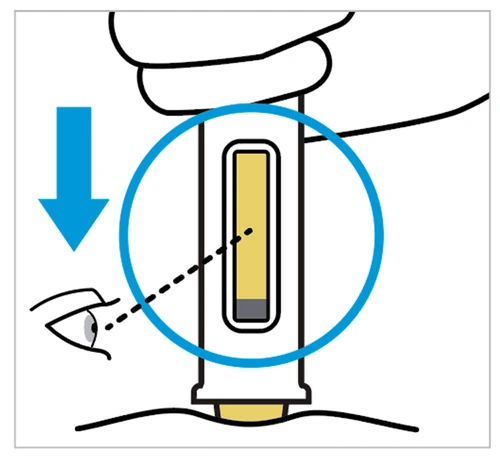
Hold firmly against the skin and make sure the injection is complete.
The injection is complete when the plunger rod stops moving and fills the viewing window.
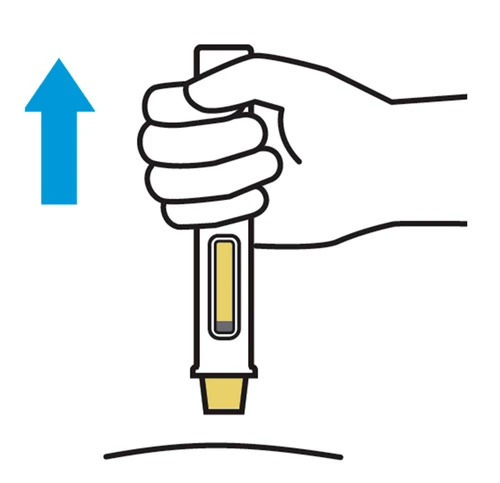
Lift upward
If the prescribed dose requires two injections, repeat steps 2 to 4 with the second pre-filled pen.
4. After the injection
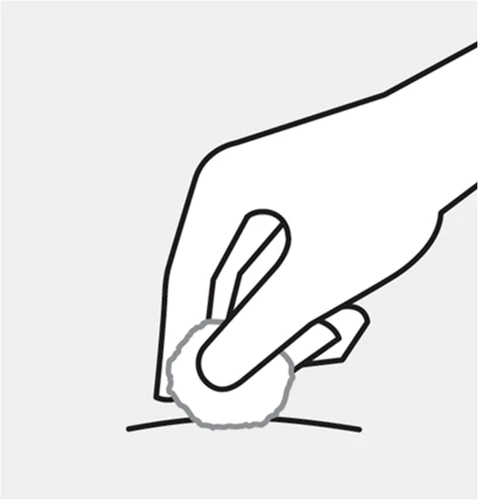
Check the injection site
A small amount of blood or liquid may be present at the injection site.
Gently press on the injection site with a cotton ball or gauze until bleeding stops.
Do not rub the injection site. If needed, cover the injection site with a plaster.
The injection is now complete!
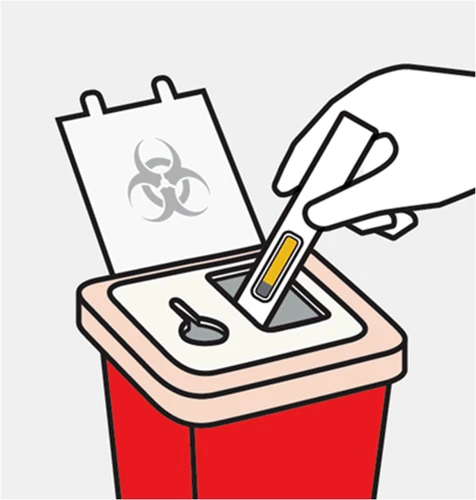
Dispose of the used pre-filled pen and cap
Place the used pre-filled pen and cap into a sharps disposal container immediately after use.
Make sure to dispose of the container when full, as instructed by your doctor or nurse.
Do not throw (dispose of) the pre-filled pen in household waste.
Do not recycle the used sharps disposal container.
Package leaflet: Information for the user
Tremfya 200 mg concentrate for solution for infusion
guselkumab
Please read this leaflet carefully before using this medicine because it contains important information for you.
- Keep this leaflet. You may need to read it again.
- If you have any questions, consult your doctor, pharmacist, or nurse.
- This medicine has been prescribed for you only. Do not give it to others, even if they have the same symptoms as yours, because it could be harmful.
- If you experience any side effects, including those not listed in this leaflet, consult your doctor, nurse, or pharmacist. See section 4.
Contents of this leaflet
- What Tremfya is and what it is used for
- What you need to know before using Tremfya
- How to use Tremfya
- Possible side effects
- How to store Tremfya
- Contents of the pack and other information
1. What Tremfya is and what it is used for
Tremfya contains the active substance guselkumab, which is a type of protein called a monoclonal antibody.
This medicine works by blocking the activity of a protein called IL-23, which is present at higher levels in people with ulcerative colitis and Crohn’s disease.
Ulcerative colitis
Tremfya is used to treat adults with moderate to severe ulcerative colitis, a type of inflammatory bowel disease. If you have ulcerative colitis, you will have been given other medicines first. If you do not respond adequately or cannot tolerate these medicines, you may be given Tremfya.
The use of Tremfya in ulcerative colitis may benefit you by relieving the signs and symptoms of the disease. These include reducing bloody stools, bowel movement frequency and urgency, abdominal pain, and intestinal mucosal inflammation. These effects may improve your ability to carry out daily activities and reduce feelings of fatigue.
Crohn’s disease
Tremfya is used to treat adults with moderate to severe Crohn’s disease, an inflammatory bowel disease. If you have Crohn’s disease, you will have been given other medicines first. If you do not respond adequately or cannot tolerate these medicines, you may be given Tremfya.
The use of Tremfya in Crohn’s disease may help reduce the signs and symptoms of the disease, such as diarrhoea, abdominal pain, and intestinal mucosal inflammation. These effects may improve your ability to carry out daily activities and reduce fatigue.
2. What you need to know before using Tremfya
Do not use Tremfya
- if you are allergic to guselkumab or to any of the other ingredients of this medicine (listed in section 6). If you think you may be allergic, ask your doctor for advice before using Tremfya;
- if you have an active infection, including active tuberculosis (TB).
Warnings and precautions
Talk to your doctor, pharmacist, or nurse before using Tremfya:
- if you are being treated for an infection;
- if you have had an infection that does not heal or keeps coming back;
- if you have TB or have been in close contact with someone who has TB;
- if you think you may have an infection or if you develop signs of an infection (see below “Watch for infections and allergic reactions”);
- if you have recently received a vaccine or are due to receive a vaccine during treatment with Tremfya.
If you are unsure whether any of the conditions described above apply to you, talk to your doctor, pharmacist, or nurse before using Tremfya.
As directed by your doctor, you may need to have blood tests to check whether you have elevated liver enzyme levels before starting Tremfya and during treatment.
Increases in liver enzymes may occur more frequently in patients using Tremfya every 4 weeks compared to patients using Tremfya every 8 weeks (see “How to use Tremfya” in section 3).
Watch for possible infections and allergic reactions
Tremfya may potentially cause serious side effects, including allergic reactions and infections.
You should be alert for any signs of these conditions while taking Tremfya.
Signs or symptoms of infection may include fever or flu-like symptoms; muscle aches; cough; shortness of breath; burning sensation during urination or more frequent urination than usual; blood in sputum (mucus); weight loss; diarrhoea or stomach pain; warm, red, or painful skin, or sores on the body.
Severe allergic reactions have occurred with Tremfya. Symptoms may include: swelling of the face, lips, mouth, tongue, or throat, difficulty swallowing or breathing, feeling faint or dizzy, or hives (see “Serious side effects” in section 4).
Stop treatment with Tremfya and inform your doctor immediately or seek immediate medical help if you notice any signs of a possible severe allergic reaction or an infection.
Children and adolescents
Do not give this medicine to children and adolescents under 18 years of age, as it has not been studied in this age group.
Other medicines and Tremfya
Tell your doctor or pharmacist:
- if you are taking, have recently taken, or might take any other medicines.
- if you have recently been vaccinated or are due to be vaccinated. You must not receive certain types of vaccines (live vaccines) while using Tremfya.
Pregnancy and breastfeeding
-
Tremfya must not be used during pregnancy as the effects of this medicine in pregnant women are unknown. If you are a woman of childbearing age, you are advised to avoid pregnancy. You must use an effective method of contraception during treatment with Tremfya and for at least 12 weeks after the last dose of Tremfya. Please speak with your doctor if you are pregnant, suspect you may be pregnant, or are planning to become pregnant.
-
Please speak with your doctor if you are breastfeeding or planning to breastfeed. You and your doctor will decide whether you should breastfeed or use Tremfya.
Driving and using machines
It is unlikely that Tremfya will affect your ability to drive or use machines.
Tremfya contains polysorbate 80
This medicine contains 10 mg of polysorbate 80 per vial, equivalent to 0.5 mg/mL. Polysorbates may cause allergic reactions. Inform your doctor if you have known allergies.
Tremfya contains sodium
This medicine contains less than 1 mmol (23 mg) of sodium per dose, i.e. essentially “sodium-free”.
However, before administration, Tremfya is mixed with a solution containing sodium. Talk to your doctor if you are on a low-salt diet.
3. How to use Tremfya
Tremfya is intended for use under the guidance and supervision of a physician experienced in the diagnosis and treatment of ulcerative colitis and Crohn's disease.
What dose of Tremfya is given and for how long
Your doctor will decide for how long you need to use Tremfya.
Ulcerative colitis
Initiation of treatment:
Initial treatment can be administered either via intravenous infusion or subcutaneous administration:
- Intravenous infusion: The first dose of Tremfya is 200 mg and will be administered by your doctor or nurse as an intravenous infusion (an infusion into a vein in the arm). After the first dose, you will receive a second dose 4 weeks later, followed by a third dose 4 weeks after that.
- Subcutaneous administration: The first dose of Tremfya is 400 mg and will be administered under the skin (subcutaneous injection) at several sites on the body. After the first dose, you will receive a second dose 4 weeks later, followed by a third dose 4 weeks after that.
Maintenance therapy: A maintenance dose of Tremfya will be administered by subcutaneous injection (injection under the skin) with either 100 mg or 200 mg. Your doctor will decide which maintenance dose you will receive: - A dose of 100 mg will be administered 8 weeks after the third induction dose, and then every 8 weeks thereafter.
- A dose of 200 mg will be administered 4 weeks after the third induction dose, and then every 4 weeks thereafter.
Crohn's disease
Initiation of treatment:
Initial treatment can be administered either via intravenous infusion or subcutaneous administration:
- Intravenous infusion: The first dose of Tremfya is 200 mg and will be administered by your doctor or nurse as an intravenous infusion (an infusion into a vein in the arm). After the first dose, you will receive a second dose 4 weeks later, followed by a third dose 4 weeks after that.
- Subcutaneous administration: The first dose of Tremfya is 400 mg and will be administered under the skin (subcutaneous injection) at several sites on the body. After the first dose, you will receive a second dose 4 weeks later, followed by a third dose 4 weeks after that.
Maintenance therapy: A maintenance dose of Tremfya will be administered by subcutaneous injection (injection under the skin) with either 100 mg or 200 mg. Your doctor will decide which maintenance dose you will receive: - A dose of 100 mg will be administered 8 weeks after the third induction dose, and then every 8 weeks thereafter.
- A dose of 200 mg will be administered 4 weeks after the third induction dose, and then every 4 weeks thereafter.
If you use more Tremfya than you should
If you have received more Tremfya than prescribed or the dose was administered earlier than scheduled, inform your doctor.
If you forget to use Tremfya
If you have forgotten to inject a dose of Tremfya, inform your doctor.
If you stop using Tremfya
You must not stop using Tremfya without first discussing it with your doctor. If you stop treatment, your symptoms may return.
If you have any doubts about how to use this medicine, consult your doctor, pharmacist, or nurse.
4. Possible side effects
Like all medicines, this medicine can cause side effects, although not everybody gets them.
Serious side effects
Stop using Tremfya and contact your doctor immediately or seek immediate medical help if you notice any of the following side effects:
Severe allergic reactions (may affect up to 1 in 1,000 people) – signs or symptoms may include:
- difficulty breathing or swallowing
- swelling of the face, lips, tongue or throat
- severe itching of the skin, with a red rash or raised bumps
- dizziness, low blood pressure or feeling faint
Other side effects
The following side effects are all mild to moderate in severity. If any of these side effects become severe, inform your doctor, pharmacist or nurse immediately.
Very common (may affect more than 1 in 10 people):
- respiratory tract infections
Common (may affect up to 1 in 10 people):
- headache
- joint pain (arthralgia)
- diarrhoea
- increased levels of liver enzymes in the blood
- skin rash
- redness, irritation or pain at the injection site
Uncommon (may affect up to 1 in 100 people):
- decrease in the number of a type of white blood cells called neutrophils
- herpes simplex infections
- fungal skin infection, for example between the toes (e.g. athlete’s foot)
- gastrointestinal flu (gastroenteritis)
- hives
Rare (may affect up to 1 in 1,000 people):
- allergic reaction
Reporting of side effects
If you get any side effects, including ones not listed in this leaflet, talk to your doctor, nurse or pharmacist. You can also report side effects directly via the national reporting system listed in Annex V. By reporting side effects, you can help provide more information on the safety of this medicine.
5. How to store Tremfya
Tremfya 200 mg concentrate for solution for infusion is administered in a hospital or clinic setting,
and patients should not store or handle it.
Keep this medicine out of the sight and reach of children.
Do not use this medicine after the expiry date stated on the vial label and the carton after "Exp.". The expiry date refers to the last day of that month.
Keep the vial in its outer packaging to protect the medicine from light.
Store this medicine in the refrigerator (2°C - 8°C). Do not freeze this medicine.
Do not shake this medicine.
Do not use this medicine if you notice it is cloudy, has changed colour, or contains large particles.
This medicine is for single use only.
Do not dispose of any medicine via wastewater or household waste. Ask your pharmacist how to dispose of medicines you no longer use. This will help protect the environment.
6. Package contents and other information
What Tremfya contains
- The active substance is guselkumab. Each vial contains 200 mg of guselkumab in 20 mL of solution.
- The other components are disodium edetate dihydrate, L-histidine, L-histidine monohydrochloride monohydrate, methionine, polysorbate 80 (E433), sucrose and water for injections (see section 2 “Tremfya contains polysorbate 80”).
Description of the appearance of Tremfya and contents of the pack
Tremfya is a clear, colourless to pale yellow infusion solution.
Each pack contains 1 vial.
Marketing Authorisation Holder
Janssen-Cilag International NV
Turnhoutseweg 30
B-2340 Beerse
Belgium
Manufacturer
Janssen Biologics B.V.
Einsteinweg 101
2333CB Leiden
The Netherlands
For further information about this medicine, please contact the local representative of the Marketing Authorisation Holder:
België/Belgique/Belgien Lietuva
Janssen-Cilag NV UAB "JOHNSON & JOHNSON"
Tel/Tél: +32 14 64 94 11 Tel: +370 5 278 68 88
[email protected] [email protected]
България Luxembourg/Luxemburg
„Джонсън&ДжонсънБългария” ЕООД Janssen-Cilag NV
Тел.: +359 2 489 94 00 Tél/Tel: +32 14 64 94 11
[email protected] [email protected]
Česká republika Magyarország
Janssen-Cilag s.r.o. Janssen-Cilag Kft.
Tel: +420 227 012 227 Tel.: +36 1 884 2858
[email protected]
Danmark Malta
Janssen-Cilag A/S AM MANGION LTD
Tlf.: +45 4594 8282 Tel: +356 2397 6000
[email protected]
Deutschland Nederland
Janssen-Cilag GmbH Janssen-Cilag B.V.
Tel: 0 800 0869247 / +49 2137 955 6955 Tel: +31 76 711 1111
[email protected] [email protected]
Eesti Norge
UAB "JOHNSON & JOHNSON" Eesti filiaal Janssen-Cilag AS
Tel: +372 617 7410 Tlf: +47 24 12 65 00
[email protected] [email protected]
Ελλάδα Österreich
Janssen-Cilag Φαρμακευτική Μονοπρόσωπη Janssen-Cilag Pharma GmbH
Α.Ε.Β.Ε. Tel: +43 1 610 300
Tηλ: +30 210 80 90 000
España Polska
Janssen-Cilag, S.A. Janssen-Cilag Polska Sp. z o.o.
Tel: +34 91 722 81 00 Tel.: +48 22 237 60 00
[email protected]
France Portugal
Janssen-Cilag Janssen-Cilag Farmacêutica, Lda.
Tél: 0 800 25 50 75 / +33 1 55 00 40 03 Tel: +351 214368 600
[email protected]
Hrvatska România
Johnson & Johnson S.E. d.o.o. Johnson & Johnson România SRL
Tel: +385 1 6610 700 Tel: +40 21 207 1800
[email protected]
Ireland Slovenija
Janssen Sciences Ireland UC Johnson & Johnson d.o.o.
Tel: 1 800 709 122 Tel: +386 1 401 18 00
[email protected] [email protected]
Ísland Slovenská republika
Janssen-Cilag AB Johnson & Johnson, s.r.o.
c/o Vistor ehf. Tel: +421 232 408 400
Sími: +354 535 7000
[email protected]
Italia Suomi/Finland
Janssen-Cilag SpA Janssen-Cilag Oy
Tel: 800.688.777/+39 02 2510 1 Puh/Tel: +358 207 531 300
[email protected] [email protected]
Κύπρος Sverige
Βαρνάβας Χατζηπαναγής Λτδ Janssen-Cilag AB
Τηλ: +357 22 207 700 Tfn: +46 8 626 50 00
[email protected]
Latvija
UAB "JOHNSON & JOHNSON" filiāle Latvijā
Tel: +371 678 93561
[email protected]
More detailed information on this medicine is available on the European Medicines Agency website: https://www.ema.europa.eu
------------------------------------------------------------- ---------------------------------------------------------
Tremfya 200 mg concentrate for solution for infusion
guselkumab
The following information is intended exclusively for healthcare professionals.
Traceability
In order to improve the traceability of biological medicinal products, the name and batch number of the administered product should be clearly recorded.
Tremfya 200 mg/20 mL (10 mg/mL) vial for intravenous infusion
The Tremfya solution for intravenous infusion must be diluted, prepared and administered by a healthcare professional using aseptic technique. Each vial is for single use only.
Before administration, visually inspect Tremfya for the presence of particles and any change in colour. Tremfya is a clear, colourless to pale yellow solution which may contain small translucent particles. Do not use if the solution contains large particles, has changed colour or appears cloudy.
Instructions for dilution and administration
Add Tremfya to a 250 mL intravenous infusion bag containing 0.9% sodium chloride injection solution as follows:
- Withdraw and then discard 20 mL of 0.9% sodium chloride injection solution from the 250 mL infusion bag, equal to the volume of Tremfya to be added.
- Withdraw 20 mL of Tremfya from the vial and add it to the 250 mL intravenous infusion bag of 0.9% sodium chloride injection solution to achieve a final concentration of 0.8 mg/mL. Gently mix the diluted solution. Dispose of the vial with any remaining solution.
- Prior to infusion, visually inspect the diluted solution for the presence of particles and any change in colour. Infuse the diluted solution over at least one hour.
- Use only a sterile, pyrogen-free, low-protein-binding infusion set with an in-line filter (pore size 0.2 micrometres).
- Do not co-infuse Tremfya with other medicinal products in the same intravenous line.
- Unused medicine and waste material should be disposed of in accordance with local regulations.