Trazodone EG
Italy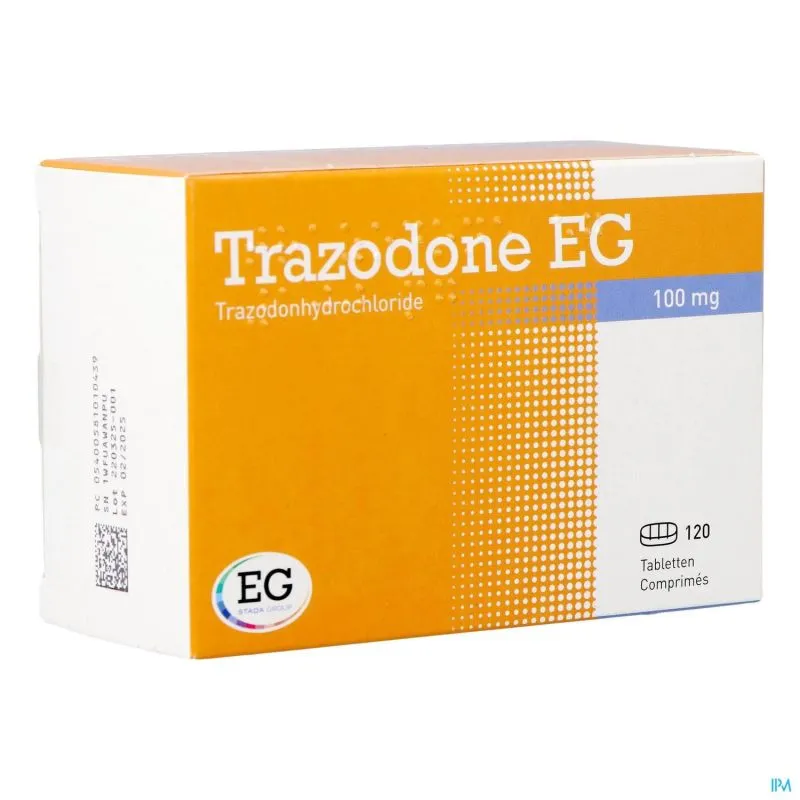
Table of Contents
- Patient Information Leaflet
- Trazodone EG 50 mg tablets, 100 mg tablets, 150 mg tablets
- 1. What Trazodone EG is and what it is used for
- 2. What you need to know before taking Trazodone EG
- 3. How to take Trazodone EG
- 4. Possible side effects
- 5. How to store Trazodone EG
- 6. Package contents and other information
Patient Information Leaflet
Trazodone EG 50 mg tablets, 100 mg tablets, 150 mg tablets
Generic medicine
Please read this leaflet carefully before taking this medicine because it contains important information for you.
- Keep this leaflet. You may need to read it again.
- If you have any questions, ask your doctor or pharmacist.
- This medicine has been prescribed for you only. Do not give it to other people, even if they have the same symptoms as yours, because it may be harmful.
- If you experience any side effects, including those not listed in this leaflet, tell your doctor or pharmacist. See section 4.
Contents of this leaflet
- What Trazodone EG is and what it is used for
- What you need to know before taking Trazodone EG
- How to take Trazodone EG
- Possible side effects
- How to store Trazodone EG
- Contents of the pack and other information
1. What Trazodone EG is and what it is used for
Trazodone EG contains the active substance trazodone hydrochloride, which belongs to a group of medicines called antidepressants.
Trazodone EG is used to treat symptoms of depression (major depressive episodes) in adults.
2. What you need to know before taking Trazodone EG
Do not take Trazodone EG if:
- you are allergic to trazodone hydrochloride or any of the other ingredients of this medicine (listed in section 6);
- you are consuming alcohol or are taking medicines that help you sleep (alcohol or hypnotic intoxication);
- you have recently had a heart attack.
Warnings and precautions
Suicidal thoughts and worsening of depression
If you are depressed, you may have thoughts of harming yourself or committing suicide. These effects may worsen when starting antidepressants, as all medicines of this type require time to take effect, usually about two weeks but sometimes longer.
You are more likely to experience such thoughts:
- if you have previously had suicidal or self-harming thoughts;
- if you are a young adult. Clinical trial data have shown an increased risk of suicidal behaviour in psychiatric patients under 25 years of age previously treated with an antidepressant.
If at any time you experience thoughts of self-harm or suicide, contact your doctor immediately or go to hospital.
It may be helpful to inform a family member or close friend that you are feeling depressed and ask them to read this leaflet. You may ask them whether they notice your depression or anxiety worsening, or if they observe any concerning changes in your behaviour.
Liver problems
Severe liver disorders associated with trazodone use have been reported. Seek immediate medical advice if you experience any of the following symptoms:
- weakness (asthenia),
- loss of appetite (anorexia),
- nausea, vomiting,
- stomach pain,
- yellowing of the skin and/or eyes (jaundice).
Consult your doctor or pharmacist before taking Trazodone EG if:
- you suffer or have previously suffered from seizures (epilepsy);
- you have severe liver or kidney problems;
- you have heart conditions (such as cardiovascular insufficiency, angina pectoris, conduction disorders or AV blocks of varying degree, arrhythmias, recent myocardial infarction, congenital long QT syndrome, or bradycardia);
- you have low potassium levels in the blood (hypokalaemia), which may cause muscle weakness, spasms, or abnormal heart rhythm;
- your blood magnesium levels are low (hypomagnesaemia);
- you have an overactive thyroid (hyperthyroidism);
- you have difficulty urinating or need to urinate frequently;
- you have an enlarged prostate;
- you have closed-angle glaucoma (an eye disorder);
- you have low blood pressure (hypotension);
- you suffer from schizophrenia or other mental disorders;
- you are elderly and therefore may be more sensitive to adverse effects such as a drop in blood pressure when standing up quickly from a sitting or lying position (orthostatic hypotension), sometimes associated with dizziness, unsteadiness, mental agitation, seeing things that are not really there (hallucinations), or hyponatraemia (low sodium levels in the blood that may make you feel tired, weak, or confused, and cause painful, stiff, or uncoordinated muscles).
Cases of severe, potentially fatal liver disorders have been reported with trazodone use.
Discontinue Trazodone EG and contact your doctor immediately if you notice yellowing of the skin or whites of the eyes (jaundice), or signs of weakness, anorexia, nausea, vomiting, or abdominal pain (see section 4 “Possible side effects”).
Administration of antidepressants in patients with schizophrenia or other psychotic disorders may lead to a possible worsening of psychotic symptoms. Paranoid thoughts may intensify. During treatment with Trazodone EG, a depressive phase of manic-depressive psychosis may shift into a manic phase. In such cases, treatment with Trazodone EG should be discontinued.
During treatment with Trazodone EG, contact your doctor immediately if you develop sore throat, fever, or flu-like symptoms. A blood test is recommended in such cases, as these symptoms may indicate agranulocytosis, a blood disorder.
Caution is advised when trazodone is used concomitantly with other medicines known to prolong the QT interval or increase the risk of serotonin syndrome/neuroleptic malignant syndrome (see “Other medicines and Trazodone EG” and section 4 “Possible side effects”).
Elderly
If you are elderly, you may experience a sensation of light-headedness or dizziness when standing up or stretching. You may also feel more drowsy or sleepier than usual.
Particular caution is recommended if you have other medical conditions and are taking medicines to treat them alongside Trazodone EG.
Children and adolescents
Trazodone EG must not be administered to children and adolescents under 18 years of age.
Other medicines and Trazodone EG
Inform your doctor or pharmacist if you are taking, have recently taken, or might take any other medicines, including those not requiring a prescription and herbal remedies.
This is because Trazodone EG may affect how other medicines work, and vice versa.
Inform your doctor if you are taking any of the following medicines:
- monoamine oxidase inhibitors (MAOIs), such as tranylcypromine, phenelzine, and isocarbazide (used for depression) or selegiline (for Parkinson’s disease), or if you have taken them within the last two weeks;
- other antidepressants (such as amitriptyline, nefazodone, or fluoxetine);
- tryptophan (an amino acid used in protein biosynthesis);
- triptans (medicines used to treat migraine);
- antipsychotic medicines used in the treatment of schizophrenia and other mental disorders (such as phenothiazines, e.g. chlorpromazine, fluphenazine, levomepromazine, perphenazine);
- levodopa – for the treatment of Parkinson’s disease;
- buprenorphine – used for pain treatment. This medicine may interact with Trazodone EG and cause symptoms such as rhythmic, involuntary muscle contractions including those controlling eye movements, agitation, hallucinations, coma, excessive sweating, tremor, exaggerated reflexes, increased muscle tone, and body temperature above 38°C. Inform your doctor if you experience these symptoms;
- sedatives – such as tranquillisers, sleeping pills;
- medicines known to prolong the QT interval on ECG, such as class IA and III antiarrhythmics (a group of medicines used to suppress abnormal heart rhythms);
- medicines used to treat allergies such as antihistamines;
- oral contraceptives (birth control pills);
- muscle relaxants (a group of medicines capable of relaxing or reducing muscle tension);
- medicines used to treat epilepsy such as carbamazepine and phenytoin;
- medicines for high blood pressure such as clonidine;
- digoxin – used to treat heart conditions;
- warfarin – used to prevent blood clotting;
- medicines used to treat fungal infections such as ketoconazole and itraconazole;
- certain HIV treatments such as ritonavir and indinavir;
- erythromycin – an antibiotic used to treat infections;
- St. John’s Wort – a herbal remedy.
Anaesthetics
If you are undergoing anaesthesia (for surgery), inform your doctor or dentist that you are taking Trazodone EG.
Trazodone EG and alcohol
Avoid consuming alcohol during treatment with Trazodone EG.
Pregnancy and breastfeeding
Pregnancy
If you are pregnant, think you may be pregnant, or are planning to become pregnant, consult your doctor before taking this medicine. Trazodone EG must not be taken during the first three months of pregnancy.
Taking Trazodone EG in the later stages of pregnancy may cause withdrawal symptoms in the newborn. In such cases, your baby will be monitored by a doctor.
Breastfeeding
If you are breastfeeding or intend to breastfeed, consult your doctor or pharmacist before taking this medicine.
Driving and using machines
Trazodone EG may cause drowsiness or dizziness. It may also cause blurred vision and confusion. If this occurs, do not drive or operate tools or machinery.
Trazodone EG contains sodium
This medicine contains less than 1 mmol (23 mg) of sodium per tablet, i.e. essentially “sodium-free”.
3. How to take Trazodone EG
Take this medicine exactly as your doctor has told you. If you have any doubts, consult your doctor or pharmacist.
Adults
Depression
- The usual starting dose in adults is 150 mg per day, taken as a single dose or divided doses.
- Your doctor may gradually increase the dose, e.g. by 50 mg every 3–4 days, up to a maximum of 300 mg per day, depending on your condition.
- For hospitalized adults, the dose may be increased up to 600 mg per day.
Elderly patients
Elderly or frail patients usually start with a dose of 100 mg per day.
Children and adolescents
Trazodone EG must not be given to children and adolescents under 18 years of age.
How to take the medicine
- Trazodone EG is for oral use.
- Swallow the tablet whole with water.
- Take the tablet after meals. Taking the tablet after food may reduce the risk of unwanted effects.
- If you have been told to take Trazodone EG only once a day, take it before going to bed.
Trazodone EG 50 mg tablets
The score line is not intended for dividing the tablet.
Trazodone EG 100 / 150 mg tablets
The tablet may be divided into equal doses.
Duration of treatment
It may take two to four weeks before you notice an improvement.
Your doctor will periodically reassess your dose according to your condition and will decide whether to continue maintenance treatment.
If you take more Trazodone EG than you should
If you take too much Trazodone EG, contact your doctor immediately or go to the nearest hospital Emergency Department. Take the medicine pack with you so that the doctor knows what you have taken.
Symptoms may include: nausea or vomiting, drowsiness, dizziness or fainting, seizures (epileptic fits), confusion, breathing difficulties or heart problems.
If you forget to take Trazodone EG
If you forget to take a dose, take it as soon as you remember. However, if it is almost time for your next dose, skip the missed dose. Do not take a double dose to make up for the forgotten dose.
If you stop taking Trazodone EG
Continue taking Trazodone EG until your doctor tells you to stop. Do not stop treatment with Trazodone EG just because you feel better.
When your doctor tells you to stop taking this medicine, they will instruct you to gradually reduce the dose to avoid withdrawal symptoms such as agitation, sleep disturbances, nausea, headache, and general malaise.
If you have any questions about how to use this medicine, ask your doctor or pharmacist.
4. Possible side effects
Like all medicines, this medicine can cause side effects, although not everybody will experience them.
Stop taking Trazodone EG and contact a doctor immediately or go to hospital if you experience any of the following side effects:
Not known: frequency cannot be estimated from the available data
- swelling of the hands, feet, ankles, face, lips or throat, which may cause difficulty in swallowing or breathing, itching and hives. These may indicate an allergic reaction to Trazodone EG;
- painful and prolonged erection not related to sexual activity (priapism);
- loss of appetite, nausea or vomiting, confusion, abdominal pain, fever, yellowing of the skin or eyes (jaundice). These may be symptoms of a serious liver problem such as hepatitis;
- increased susceptibility to infections possibly due to a blood disorder (agranulocytosis);
- increased tendency to bruise, which may be due to a blood disorder (thrombocytopenia);
- severe abdominal pain and bloating, vomiting and constipation. These could be signs of intestinal malfunction (paralytic ileus).
Contact your doctor immediately if you experience any of the following side effects:
Not known: frequency cannot be estimated from the available data
- thoughts of harming yourself or of suicide;
- feeling tired, weak, dizzy, with pale skin. These may be signs of anaemia;
- rapid, slow or irregular heartbeat;
- seizures/epileptic fits;
- unusual skin sensations such as numbness, tingling, itching, burning or chills (paraesthesia);
- confusion, restlessness, sweating, tremor, chills, hallucinations (strange sounds or visions), sudden muscle contractions or rapid heartbeat. These may be symptoms of serotonin syndrome;
- severe general malaise, possibly associated with difficulty breathing (dyspnoea), difficulty walking or shuffling gait, tremors, uncontrolled muscle contractions and high fever (over 38°C). These may be symptoms of a condition known as Neuroleptic Malignant Syndrome.
Other side effects:
Not known: frequency cannot be estimated from the available data
- feeling sleepy or very drowsy (somnolence);
- feeling less alert than usual;
- feeling weak;
- feeling unwell (nausea) or vomiting;
- constipation;
- diarrhoea;
- dry mouth, altered taste, increased salivation, nasal congestion;
- dizziness, headache, confusion, weakness, tremors (tremor);
- blurred vision;
- weight loss;
- fast or slow heartbeat;
- chest pain;
- high blood pressure;
- feeling dizzy or lightheaded when standing up or sitting down quickly (postural hypotension), fainting (syncope);
- feeling restless, agitated, anxious or more nervous than usual;
- difficulty sleeping, nightmares;
- decreased sexual desire;
- hyperactive behaviours or thoughts (mania), believing things that are not true (delusions), memory disturbances;
- fluid retention which may cause swelling of arms or legs;
- skin rash;
- pain in arms, legs, muscles or joints, flu-like symptoms;
- high fever;
- frequent infections with high fever, severe chills, sore throat or mouth ulcers. These could be signs of a blood disorder called leucopenia;
- difficulty speaking;
- white blood cell count higher than normal (detected by blood test);
- increased levels of liver enzymes (detected by blood test);
- feeling tired, weak, confused, with muscle aches. Headache, loss of appetite, nausea or vomiting may also occur. This could be caused by low levels of sodium in the blood (detected by blood test).
Reporting of side effects
If you experience any side effect, including those not listed in this leaflet, talk to your doctor or pharmacist. You can also report side effects directly via the national reporting system at https://www.aifa.gov.it/content/segnalazioni-reazioni-avverse. Reporting side effects can help provide more information on the safety of this medicine.
5. How to store Trazodone EG
Keep this medicine out of the sight and reach of children.
Do not use Trazodone EG after the expiry date stated on the blister pack and carton after Exp. The expiry date refers to the last day of that month.
This medicine does not require any special storage temperature conditions.
Store in the original packaging to protect the medicine from light.
Do not dispose of medicines via wastewater or household waste. Ask your pharmacist how to dispose of medicines you no longer use. This will help protect the environment.
6. Package contents and other information
What Trazodone EG contains
- The active substance is trazodone hydrochloride. Each tablet of Trazodone EG 50 mg contains 50 mg of trazodone hydrochloride. Each tablet of Trazodone EG 100 mg contains 100 mg of trazodone hydrochloride. Each tablet of Trazodone EG 150 mg contains 150 mg of trazodone hydrochloride.
- The other components are: microcrystalline cellulose, sodium carboxymethylamide (Type A), pregelatinized corn starch, anhydrous colloidal silica, magnesium stearate.
Description of the appearance of Trazodone EG and contents of the pack
Trazodone EG 50 mg is available as tablets of white to off-white color, round, biconvex, with a diameter of 7.14 mm, marked with 'IT' above and 'I' below a division line on one side and smooth on the other side.
The score line is not intended for dividing the tablet.
Trazodone EG 100 mg is available as tablets of white to off-white color, round, biconvex, with a diameter of 9.52 mm, marked with 'IT' above and 'II' below a division line on one side and smooth on the other side.
The tablet can be divided into equal doses.
Trazodone EG 150 mg is available as oval tablets, white to off-white in color, flat-faced with bevelled edges, 16.90 mm long and 8.40 mm wide, marked with “IT” above and “III” below a division line on one side and smooth on the other side.
The tablet can be divided into equal doses.
Packs containing 20, 30, 50 and 100 tablets.
Not all pack sizes may be marketed.
Marketing Authorization Holder
EG S.p.A., via Pavia 6, 20136 Milano, Italy
Manufacturers
STADA Arzneimittel AG, Stadastrasse 2-18, 61118 Bad Vilbel, Germany
Laboratori Fundacio Dau, Calle Lletra C 12-14, Poligono Industrial Zona Franca, 08040 Barcelona, Spain
This medicinal product is authorized in the European Economic Area (EEA) Member States under the following names:
Germany: Trazodon AL 50 mg Tabletten
Trazodon AL 100 mg Tabletten
Trazodon AL 150 mg Tabletten
Italy: Trazodone EG