Transact Lat
Italy
Table of Contents
- Package leaflet: information for the patient
- TRANSACT Lat 40 mg medicated patches
- 1. What TRANSACT Lat is and what it is used for
- 2. What you need to know before using TRANSACT Lat
- 3. How to use TRANSACT Lat
- 4. Possible side effects
- 5. How to store TRANSACT Lat
- 6. Package contents and other information
Package leaflet: information for the patient
TRANSACT Lat 40 mg medicated patches
Flurbiprofen
Please read this leaflet carefully before using this medicine because it contains important information for you.
Always use this medicine exactly as described in this leaflet or as your doctor or pharmacist has told you to do.
- Keep this leaflet. You may need to read it again.
- If you need more information or advice, consult your pharmacist.
- If you experience any of the side effects, including those not listed in this leaflet, contact your doctor or pharmacist. See section 4.
- Contact your doctor if you do not notice any improvement or if you notice worsening of symptoms after a short period of treatment.
Contents of this leaflet:
- What TRANSACT Lat is and what it is used for
- What you need to know before using TRANSACT Lat
- How to use TRANSACT Lat
- Possible side effects
- How to store TRANSACT Lat
- Contents of the pack and other information
1. What TRANSACT Lat is and what it is used for
TRANSACT Lat contains the active ingredient flurbiprofen and belongs to the group of topical non-steroidal anti-inflammatory drugs (used locally).
TRANSACT Lat is indicated for the local symptomatic treatment of painful conditions affecting the musculoskeletal system.
Consult your doctor if you do not feel better or if you feel worse after a short period of treatment (a few days).
2. What you need to know before using TRANSACT Lat
Do not use TRANSACT Lat
- If you are allergic to flurbiprofen, acetylsalicylic acid, other NSAIDs (non-steroidal anti-inflammatory drugs), or to any of the other ingredients of this medicine (listed in section 6).
- If you have suffered or are suffering from gastrointestinal bleeding or perforation related to previous treatment with NSAIDs.
- If you have or have had ulcerative colitis or Crohn’s disease (chronic inflammatory bowel diseases), recurrent peptic ulcer (painful sores or ulcers in the stomach and first part of the intestine), or gastrointestinal bleeding (defined as two or more distinct episodes of proven ulceration or bleeding).
- If you have severe heart failure (a condition in which the heart is unable to pump sufficient blood).
- If you are in the last three months of pregnancy.
Warnings and precautions
Talk to your doctor or pharmacist before using TRANSACT Lat.
- The patch must be applied only to intact, unbroken skin: do not apply the patch to skin wounds or open lesions. Remove the patch during bathing or showering.
- The patch must not come into contact with or be applied to mucous membranes (the membranes lining and protecting the body's internal surfaces) or eyes.
- Do not use with occlusive dressings (air- and water-impermeable coverings).
- Discontinue treatment if a skin rash appears.
- If you have an infection – see the section “Infections” below.
Infections
Non-steroidal anti-inflammatory drugs (NSAIDs) may mask signs of infection such as fever and pain.
This may delay appropriate treatment of the infection, which in turn may increase the risk of complications.
If you take this medicine during an infection and infection symptoms persist or worsen, contact your doctor or pharmacist immediately.
Gastrointestinal effects
- The risk of gastrointestinal bleeding, ulceration, or perforation of the stomach and intestines is higher with increasing doses of flurbiprofen in patients with a history of peptic ulcer (painful sores or ulcers in the stomach and first part of the intestine), especially if complicated by bleeding or perforation, and in elderly patients. In these situations, you must inform your doctor of any unusual symptoms, particularly during the initial phase of treatment. You should start treatment with the lowest effective dose possible.
- Flurbiprofen should be administered with caution if you have a history of ulcerative colitis or Crohn’s disease (chronic inflammatory bowel diseases), as treatment with this medicine may worsen these conditions.
- Treatment must be discontinued in case of gastrointestinal bleeding or ulceration.
Effects on heart, brain, and blood vessels
- If you have a history of high blood pressure and/or heart failure, monitoring by your doctor will be necessary, who will also provide appropriate instructions for managing your therapy, as fluid retention and swelling have been observed with NSAID treatment. The use of some NSAIDs (especially at high doses and for long-term treatment) may be associated with a small increased risk of myocardial infarction (heart attack) or stroke.
- If you suffer from uncontrolled high blood pressure, heart failure, ischemic heart disease (reduced blood supply to the heart), peripheral arterial disease (involvement of blood vessels), and/or cerebrovascular disease (problems with blood circulation in the brain), treatment with flurbiprofen may only be carried out after careful evaluation by your doctor (see section 2).
- Similar considerations should be taken into account before starting long-term treatment if you have risk factors for heart and blood vessel diseases (elevated blood lipid levels, diabetes mellitus, smoking): consult your doctor or pharmacist.
- Medicines such as TRANSACT Lat may be associated with an increased risk of myocardial infarction (heart attack) or stroke. The risk is higher at high doses and with prolonged treatment. Do not exceed the recommended dose or duration of treatment.
- Flurbiprofen, like other NSAIDs, may inhibit platelet aggregation (platelets are blood cells responsible for clotting) and prolong bleeding time.
Effects on the skin
Very rarely, severe skin reactions have been reported, some of which have been fatal, including exfoliative dermatitis (shedding of large areas of skin), Stevens-Johnson syndrome (a severe allergic reaction with characteristic skin rash), and toxic epidermal necrolysis (a rare, potentially fatal skin condition caused by a reaction to a medicine, associated with NSAID administration [see section 4 “Possible side effects”]). The risk of these reactions appears to be higher at the beginning of treatment, as most of them occur within the first month of treatment. If you notice early signs of a rash, mouth lesions, or hypersensitivity reactions, stop treatment with TRANSACT Lat immediately and inform your doctor.
Effects on the respiratory system
TRANSACT Lat should be used with caution if you have a history of non-allergic asthma. Cases of bronchospasm (narrowing of the airways) have been reported with flurbiprofen use in patients with a history of asthma.
Effects on the liver
Flurbiprofen should be administered cautiously if you have liver problems: you may be at increased risk of bleeding and fluid retention. NSAIDs should be avoided in cases of severe liver disease.
Effects on the kidneys
NSAIDs should be avoided if possible or used with caution in patients with impaired kidney function; the lowest possible dose for the shortest possible time should be used, and kidney function should be monitored. NSAIDs may cause kidney failure, especially in patients who have or have had kidney problems.
Effects on fertility
Long-term use of some NSAIDs is associated with reduced female fertility, which reverses after discontinuation of treatment. The use of NSAIDs during pregnancy may delay the onset of labor and prolong its duration (see section 2).
Other effects
- At the beginning of treatment, flurbiprofen, like all NSAIDs, should be administered with caution if you are dehydrated (lack of fluids).
- If you have systemic lupus erythematosus (a multisystem autoimmune disease primarily affecting the skin and joints, although any part of the body may be involved) or mixed connective tissue disease (an autoimmune disorder), there may be an increased risk of aseptic meningitis (a disease characterized by severe inflammation of the membranes covering the brain).
- Since absorption of the active ingredient in TRANSACT Lat through the skin is possible, the occurrence of systemic effects cannot be ruled out. The risk of such effects depends, among other things, on the area exposed, the amount applied, and the duration of exposure.
Elderly
Elderly patients have an increased frequency of adverse reactions to NSAIDs, especially gastrointestinal bleeding and perforation, which can be very serious and life-threatening.
Children
Use is not recommended in children.
Other medicines and TRANSACT Lat
Inform your doctor or pharmacist if you are taking, have recently taken, or might take any other medicines.
You should be cautious if you are being treated with any of the following medicines, as interactions have been reported in some patients.
-
Possible interactions may occur with systemic administration of tolbutamide (used to treat non-insulin-dependent diabetes), antacids (medicines that reduce stomach acidity).
-
Diuretics, ACE inhibitors, and angiotensin II antagonists: non-steroidal anti-inflammatory drugs (NSAIDs) may reduce the effectiveness of medicines used to treat high blood pressure. In some patients with impaired kidney function (e.g., dehydrated patients or elderly patients with compromised kidney function), concomitant use of an ACE inhibitor or an angiotensin II antagonist with anti-inflammatory agents such as flurbiprofen may lead to further deterioration of kidney function. These interactions must be considered in patients using flurbiprofen patches, particularly when applied over large skin areas and for prolonged periods, in combination with ACE inhibitors (medicines mainly used to treat high blood pressure and heart failure) or angiotensin II antagonists (medicines used to control high blood pressure, treat heart failure, and prevent kidney failure in patients with diabetes and high blood pressure). Therefore, the combination of these medicines should be used with caution, especially in elderly patients.
You should be adequately hydrated, and your doctor should monitor your kidney function both after starting concomitant therapy and subsequently. -
Cardiac glycosides (such as digoxin, used to treat heart failure and certain heart rhythm disorders): NSAIDs may worsen heart failure and increase the risk of glycoside toxicity.
-
Anticoagulants (a class of medicines that thin the blood): NSAIDs may enhance the effect of anticoagulants (such as warfarin).
-
Acetylsalicylic acid, other NSAIDs, and selective COX-2 inhibitors (used to reduce fever and pain and as anti-inflammatory agents): concomitant administration of flurbiprofen with aspirin or other anti-inflammatory drugs is not recommended due to the potential for increased adverse effects.
-
Antiplatelet agents (agents that reduce platelet aggregation and thus thin the blood) and selective serotonin reuptake inhibitors (medicines used to treat depression): increased risk of gastrointestinal bleeding.
-
Lithium salts (used for mood stabilization): NSAIDs may reduce lithium elimination, leading to increased plasma levels and toxicity. If flurbiprofen is used in patients receiving lithium therapy, lithium levels should be closely monitored.
-
Methotrexate (a medicine that suppresses the immune system): caution is advised when administering flurbiprofen concomitantly with methotrexate, as NSAIDs may increase methotrexate levels.
-
Cyclosporine (a medicine that reduces the body's ability to reject a transplanted organ): increased risk of kidney toxicity with concomitant treatment with NSAIDs.
-
Corticosteroids (cortisone and similar drugs): increased risk of gastrointestinal ulcers or bleeding.
-
Quinolone antibiotics (antibacterial medicines used to treat bacterial infections): patients taking NSAIDs and quinolones may have an increased risk of developing seizures.
-
Mifepristone (a medicine that blocks the hormone progesterone, necessary for maintaining pregnancy): NSAIDs should not be taken for 8–12 days after mifepristone administration, as they may reduce its effectiveness.
-
Tacrolimus (a medicine used to reduce inflammatory skin reactions): possible increased risk of kidney toxicity when administered concomitantly with NSAIDs.
-
Zidovudine (a medicine used to treat HIV): increased risk of blood toxicity when administered concomitantly with NSAIDs; increased risk of hemarthrosis (bleeding into joints) and hematomas (localized blood collections outside blood vessels) in hemophilic patients (patients with a genetic clotting disorder) with HIV receiving concomitant treatment with zidovudine and other NSAIDs.
Pregnancy, breastfeeding, and fertility
If you are pregnant, think you may be pregnant, are planning to become pregnant, or are breastfeeding, consult your doctor or pharmacist before using this medicine.
Pregnancy
Oral formulations (e.g., tablets) of flurbiprofen may cause adverse effects in the fetus. Study results suggest an increased risk of miscarriage, congenital heart defects, and gastroschisis (a birth defect of the abdominal wall) in children whose mothers were treated with this medicine early in pregnancy. The use of NSAIDs during pregnancy may delay the onset of labor and prolong its duration.
It is not known whether the same risk applies to TRANSACT Lat. Do not take TRANSACT Lat during the last three months of pregnancy. Do not take TRANSACT Lat during the first six months of pregnancy unless absolutely necessary and under medical advice. If treatment is required during this period, take the lowest possible dose for the shortest possible time.
Breastfeeding
The safety of TRANSACT Lat during breastfeeding has not been established.
Administration of flurbiprofen is not recommended in breastfeeding mothers.
Fertility
Long-term use of some NSAIDs is associated with reduced female fertility, which is reversible after discontinuation of treatment.
Driving and using machines
TRANSACT Lat does not impair the ability to drive or operate machinery.
3. How to use TRANSACT Lat
Use this medicine exactly as stated in this leaflet or as directed by your doctor or pharmacist. If you have any doubts, consult your doctor or pharmacist.
The lowest effective dose for the shortest duration necessary to relieve symptoms should be used.
If you have an infection, consult your doctor or pharmacist immediately if symptoms (such as fever and pain) persist or worsen (refer to section 2).
Method and route of administration
TRANSACT Lat is for topical use only. Follow the instructions below carefully.

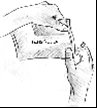
[Image]
Fig. 1 Fig. 2
Wash and thoroughly dry the painful area. Remove one medicated patch from the pouch and reseal the pouch tightly.
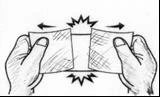
[Image]
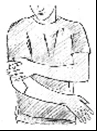
Fig. 3
Holding both shorter ends of the TRANSACT Lat patch with both hands, gently pull in opposite directions as indicated by the arrows.
This will cause the central protective film to lift.
Remove the protective film and apply the adhesive side directly onto the skin. Fig. 4
Apply the medicated patch to the painful area, smoothing it gently to avoid the formation of folds. Immediately after application, a cooling sensation may occur.
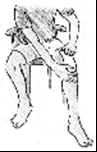

Fig. 6
If TRANSACT Lat needs to be applied to highly mobile joints, such as the elbow or knee, it is advisable to use the retention bandage provided.
Fig. 5
If the affected area is a joint, gently bend the joint before applying the patch.
Apply one medicated patch at a time to the affected area every 12 hours.
Use in children
Use is not recommended in children.
Use in elderly patients or patients with impaired renal function
Elderly individuals, particularly those with renal insufficiency, eliminate NSAIDs more slowly. In these cases, TRANSACT Lat should be administered with caution.
If you use more TRANSACT Lat than you should
Incorrect application of the patch may lead to overdose symptoms such as abdominal pain, stomach and intestinal irritation, nausea, and vomiting. There is no specific antidote for flurbiprofen. In case of accidental ingestion or excessive intake of TRANSACT Lat, contact your doctor immediately or go to the nearest hospital so that appropriate measures for NSAID overdose can be taken.
If you have any doubts about how to use this medicine, consult your doctor or pharmacist.
4. Possible side effects
Like all medicines, TRANSACT Lat can cause side effects, although not everybody gets them.
Very rare (may affect up to 1 in 10,000 people)
- Pancreatitis (inflammation of the pancreas)
- Bullous dermatitis (an autoimmune disorder causing skin blisters)
- Stevens-Johnson syndrome (a severe allergic reaction characterized by skin rash), toxic epidermal necrolysis (a serious, potentially life-threatening skin condition caused by a reaction to a medicine), erythema multiforme (a skin reaction caused by allergy or infection)
Not known (cannot be estimated from the available data)
- Thrombocytopenia (reduced platelet count)
- Aplastic anemia (severe reduction in blood cell production)
- Agranulocytosis (low level of white blood cells)
- Neutropenia (reduced neutrophils, a type of white blood cells)
- Hemolytic anemia (a condition in which destruction of red blood cells exceeds their production by the bone marrow)
- Allergic reactions
- Angioedema (localized swelling of the skin and mucous membranes)
- Anaphylactic reactions (severe, rapidly-onset allergic reactions)
- Depression
- Dizziness
- Cerebrovascular accident (stroke)
- Optic neuritis (inflammation of the optic nerve that may cause partial or total vision loss)
- Migraine
- Paresthesia (tingling, itching, prickling, or burning sensation of the skin)
- Tingling
- Dysesthesia (an abnormal and unpleasant sensation felt upon touch)
- Confusion
- Hallucinations
- Vertigo
- Somnolence
- Aseptic meningitis (severe inflammation of the membranes covering the brain), particularly in patients with pre-existing autoimmune disorders such as systemic lupus erythematosus (an autoimmune disease mainly affecting the skin and joints, but which can involve any part of the body) and mixed connective tissue disease, with symptoms such as stiff neck, headache, nausea, vomiting, fever, or disorientation
- Vision disorders
- Tinnitus (perception of ringing or noise in the ear)
- Edema (swelling)
- Heart failure
- Arterial hypertension (high blood pressure)
- Arterial thromboembolic events (blockage of blood vessels)
- Respiratory tract reactivity (asthma, bronchospasm—i.e., narrowing of the airways—and dyspnea, difficulty breathing)
- Abdominal pain
- Dyspepsia (indigestion)
- Nausea
- Diarrhea
- Vomiting
- Melena (passing black stools due to presence of blood)
- Hematemesis (vomiting blood)
- Ulcerative stomatitis (inflamed and painful mouth)
- Peptic ulcer (painful sore or ulcer in the stomach lining)
- Perforated ulcer (a very serious condition in which an untreated ulcer can perforate the stomach wall) and hemorrhagic ulcer
- Gastritis (inflammation of the stomach)
- Gastrointestinal hemorrhage
- Flatulence (gas in the stomach)
- Constipation
- Worsening of colitis (inflammation of the colon)
- Crohn's disease (a chronic inflammatory bowel disease)
- Interstitial nephritis (inflammation of kidney tissue) and nephrotic syndrome (a kidney disorder characterized by a set of signs and symptoms)
- Renal failure (poor kidney function)
- Malaise (general feeling of discomfort or uneasiness)
- Fatigue
- Rashes
- Flushing
- Urticaria (skin rash with redness and hives, mild localized swelling)
- Itching
- Rash
- Purpura (red or purple skin discoloration that does not fade under pressure)
Reporting of side effects
If you experience any side effect, including those not listed in this leaflet, please inform your doctor or pharmacist. You may also report side effects directly via the national reporting system at https://www.aifa.gov.it/content/segnalazioni-reazioni-avverse. By reporting side effects, you can help provide more information on the safety of this medicine.
5. How to store TRANSACT Lat
Keep this medicine out of the sight and reach of children.
Do not use this medicine after the expiry date stated on the packaging.
The expiry date refers to the product in its original, undamaged packaging, properly stored.
Store below 25°C.
Do not dispose of any medicine via wastewater or household waste. Ask your pharmacist how to dispose of medicines you no longer use. This will help protect the environment.
6. Package contents and other information
What TRANSACT Lat contains
- The active substance is flurbiprofen. Each medicated patch contains 40.0 mg of flurbiprofen.
- The other components are: tartaric acid, purified water, titanium dioxide (E 171), kaolin, sodium carmellose, peppermint flavour, glycerol, isopropyl myristate, sodium polyacrylate, polysorbate 80, sorbitan sesquioleate. Polyester support with polypropylene protective film, to be removed before use.
Description of the appearance of TRANSACT Lat and contents of the pack
Box containing 5 medicated patches of 40 mg
Box containing 10 medicated patches of 40 mg
Marketing Authorisation Holder
Amdipharm Limited
Unit 17
Northwood House
Northwood Crescent
Northwood
Dublin 9
D09 V504
Ireland
Under licence from: Lead Chemical Co. Ltd.
Manufacturer
Famar A.V.E. - Avlon Plant (48th), 48th km National Road, Athens – Lamia, Avlona Attiki 19011 – Greece