Torisel
Italy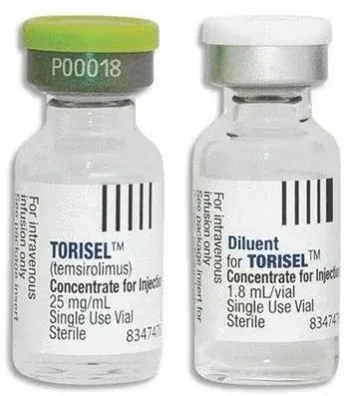
Table of Contents
- Package leaflet: Information for the patient
- Torisel 30 mg concentrate and solvent for solution for infusion
- 1. What Torisel is and what it is used for
- 2. What you should know before using Torisel
- 3. How to use Torisel
- 4. Possible side effects
- 5. How to store Torisel
- 6. Package contents and other information
- The following information is intended exclusively for healthcare professionals
Package leaflet: Information for the patient
Torisel 30 mg concentrate and solvent for solution for infusion
temsirolimus
Please read this leaflet carefully before using this medicine because it contains
important information for you
- Keep this leaflet. You may need to read it again.
- If you have any questions, ask your doctor, pharmacist, or nurse.
- If you experience any side effects, including those not listed in this leaflet, tell your doctor, pharmacist, or nurse. See section 4. Contents of this leaflet
- What Torisel is and what it is used for
- What you need to know before using Torisel
- How to use Torisel
- Possible side effects
- How to store Torisel
- Contents of the pack and other information
1. What Torisel is and what it is used for
Torisel contains the active substance temsirolimus.
Temsirolimus is a selective inhibitor of the mTOR (mammalian target of rapamycin) enzyme, which
blocks the growth and division of tumor cells.
Torisel is used to treat one of the following types of cancer in adults:
- Advanced renal cell carcinoma (kidney cancer).
- Previously treated mantle cell lymphoma, a type of cancer affecting the lymph nodes.
2. What you should know before using Torisel
Do not use Torisel
- if you are allergic to temsirolimus, polysorbate 80, or any of the other ingredients listed in section 6.
- if you are allergic to sirolimus (used to prevent your body from rejecting transplanted kidneys), since sirolimus is released in the body from temsirolimus.
- if you have mantle cell lymphoma and liver problems.
Warnings and precautions
Talk to your doctor, pharmacist, or nurse before using Torisel:
- if you are allergic to antihistamines or cannot use antihistamines for other medical reasons. Antihistamines are used to help prevent allergic reactions to Torisel, including some life-threatening and rare fatal reactions. Discuss an alternative with your doctor.
- if you have or have had brain or spinal cord tumors, bleeding problems, or bruising, or if you are taking medicines that prevent blood clotting (such as warfarin and acenocoumarol). Torisel may increase the risk of bleeding in the brain. Inform your doctor if you are taking anticoagulant medicines or if you experience bleeding or bruising during treatment with Torisel.
- if you have shortness of breath, cough, and/or fever. Torisel can weaken the immune system. During treatment with Torisel, you may be at risk of developing infections of the blood, skin, upper respiratory tract (including pneumonia), and/or urinary tract. Inform your doctor if you develop new symptoms or worsening of existing ones, or if you are taking or have recently taken medicines that weaken the immune system.
- if you have or have had lung inflammation. Torisel can cause nonspecific interstitial pneumonia. Some patients may not experience symptoms or may have only mild symptoms. For this reason, your doctor may recommend lung evaluation before and during treatment with Torisel using computed tomography or chest X-ray. Immediately inform your doctor if you develop new or worsening respiratory symptoms such as shortness of breath or difficulty breathing.
- if you drink alcohol or are an alcoholic. Torisel contains alcohol and may be harmful to individuals who drink alcohol or suffer from alcoholism. Inform your doctor if you have problems with drinking or consume alcohol (see section “Torisel contains ethanol [alcohol]”).
- if you have or have had kidney problems. Your doctor will monitor kidney function.
- if you have or have had liver problems. Inform your doctor if you develop any of the following signs or symptoms of liver problems during treatment with Torisel: itching, yellowing of the eyes or skin, dark urine, or pain or discomfort in the upper right part of the abdomen. Your doctor may recommend blood tests to assess liver function and may decide to reduce the dose of Torisel.
- if you have or have had high cholesterol levels. Torisel may increase levels of triglycerides and/or cholesterol, which may require treatment with lipid-lowering agents (medicines used to reduce cholesterol in the blood).
- if you are scheduled for surgery or have recently undergone surgery. Torisel may increase the risk of wound healing complications. If you are scheduled for surgery, treatment with Torisel will likely be temporarily discontinued. Your doctor will decide when to resume treatment.
- if you are considering vaccination during treatment with Torisel. Vaccination may be less effective, and certain types of vaccines should be avoided during treatment with Torisel.
- if you are over 65 years of age. You may be at increased risk of certain adverse effects, including facial swelling, diarrhea, pneumonia, anxiety, depression, shortness of breath, reduced white blood cell count, muscle pain, altered taste, upper respiratory tract infection, fluid around the lungs, infections, and inflammation of the mouth and/or digestive tract, nasal discharge, dizziness, and infections.
- Torisel may increase blood glucose levels and worsen diabetes mellitus. This may lead to a need for insulin and/or oral antidiabetic therapy. Inform your doctor if you experience excessive thirst or increased frequency and volume of urination.
- Torisel may reduce the number of blood cells that help with clotting and fight infections. This may increase the risk of bleeding/bruising and infections (see section “Possible side effects”).
- if you have or have had eye problems such as cataracts. Your doctor may prescribe an eye examination before or during treatment with Torisel.
- if you are receiving Torisel, you may have an increased risk of developing certain tumors, such as skin cancers and lymph node tumors (lymphoma).
- if you are receiving Torisel, you may have an increased risk of heart attack. Inform your doctor if you experience symptoms such as chest pain or pressure, pain in the arm, shoulder, or jaw, shortness of breath, nausea, anxiety, sweating, or dizziness.
If you have any doubts, consult your doctor, pharmacist, or nurse.
Children and adolescents
This medicine is not intended for children and adolescents under 18 years of age, as advanced renal cell carcinoma and mantle cell lymphoma are conditions that do not typically affect these patients, and this medicine is not effective in other types of tumors.
Other medicines and Torisel
Inform your doctor or pharmacist if you are taking, have recently taken, or might take any other medicines.
Some medicines may interfere with the breakdown or metabolism of Torisel, and therefore a dose adjustment of Torisel may be necessary. In particular, inform your doctor or pharmacist if you are taking any of the following medicines:
- protease inhibitors used in the treatment of Human Immunodeficiency Virus (HIV)
- antibiotics (including rifampicin) or antifungals (including itraconazole, ketoconazole, and voriconazole) used to treat infections
- nefazodone or selective serotonin reuptake inhibitors (SSRIs), used to treat depression
- antiepileptic medicines, including carbamazepine, phenytoin, and phenobarbital
- rifabutin, used to treat infections in patients with HIV and other conditions
- herbal or natural remedies containing St. John's wort (Hypericum perforatum) used to treat mild depression
- angiotensin-converting enzyme (ACE) inhibitors (such as enalapril, ramipril, lisinopril) or calcium channel blockers (such as amlodipine) used to treat hypertension or other cardiovascular problems
- amphotericin B used to treat heart arrhythmias (such as amiodarone), or statins used to treat hypercholesterolemia
- sunitinib used to treat renal carcinoma
- medicines that are substrates of P-glycoprotein (such as digoxin, vincristine, colchicine, dabigatran, lenalidomide, paclitaxel)
- cannabidiol (used, among others, to treat seizures).
Torisel with food and drinks
Grapefruit and grapefruit juice may increase blood levels of Torisel and should be avoided.
Pregnancy and breastfeeding
If you are pregnant, suspect you may be pregnant, planning to become pregnant, or breastfeeding, consult your doctor before taking this medicine.
Torisel has not been studied in pregnant women and should not be used during pregnancy unless absolutely necessary.
Women of childbearing potential must use an effective method of contraception during treatment with Torisel. Men with partners of childbearing potential must use an effective medically approved method of contraception during treatment with Torisel.
Women must not breastfeed during treatment with Torisel, as this medicine may interfere with the growth and development of the infant.
Torisel contains alcohol (ethanol). If you are pregnant or breastfeeding, consult your doctor or pharmacist before taking this medicine.
Torisel contains propylene glycol. If you are pregnant, do not take this medicine unless otherwise recommended by your doctor (see section "Torisel contains propylene glycol"). Propylene glycol may pass into breast milk; if you are breastfeeding, do not take this medicine unless otherwise recommended by your doctor (see section "Torisel contains propylene glycol").
Driving and using machines
It is unlikely that Torisel affects the ability to drive or use machines.
However, feeling unwell (nausea and vomiting) and difficulty falling or staying asleep are very common side effects. If you feel unwell (nausea and vomiting) or have trouble sleeping, exercise particular caution when driving or operating machinery.
For patients receiving the highest dose of Torisel for the treatment of mantle cell lymphoma, the amount of alcohol in this medicine may impair the ability to drive or use machines (see the following section “Torisel contains ethanol [alcohol]”).
Torisel contains ethanol (alcohol)
This medicine contains ethanol (alcohol) equivalent to 18 ml of beer or 7 ml of wine per 25 mg dose. Patients receiving the higher 175 mg dose of Torisel for initial treatment of mantle cell lymphoma receive an ethanol dose equivalent to up to 122 ml of beer or 49 ml of wine per dose. This is harmful if you suffer from alcoholism and should be considered in pregnant or breastfeeding women, children, and high-risk groups such as patients with liver disease or epilepsy.
The amount of alcohol in this medicine does not appear to have an effect on adults and adolescents, and its effects in children are not evident. However, some effects may occur in newborns and young children, for example, drowsiness. If you are alcohol-dependent, talk to your doctor or pharmacist before taking this medicine.
The amount of alcohol in this medicine may alter the effects of other medicines. Talk to your doctor or pharmacist if you are taking other medicines.
The amount of alcohol in this medicine may impair the ability to drive or alter the effects of other medicines (see sections “Warnings and precautions” and “Driving and using machines”).
Torisel contains propylene glycol
Torisel contains 503.3 mg of propylene glycol in each 25 mg dose, equivalent to 201.33 mg/ml of diluted product. If your child is under 5 years of age, talk to your doctor or pharmacist before administering this medicine, especially if the child is taking other medicines containing propylene glycol or alcohol. If you are pregnant or breastfeeding, or if you have liver or kidney disease, do not take this medicine unless otherwise recommended by your doctor. Your doctor may perform additional monitoring during treatment.
3. How to use Torisel
Torisel will always be prepared and administered to you by a doctor or healthcare professional as an intravenous infusion (into your vein).
An antihistamine injection (to help prevent an allergic reaction to Torisel) must be given directly into a vein approximately 30 minutes before your dose of Torisel.
The Torisel concentrate must first be diluted with 1.8 ml of the provided solvent to obtain a concentration of 10 mg/ml prior to administration in a sodium chloride solution 9 mg/ml (0.9%) for injection (see dilution instructions at the end of this leaflet).
For renal cancer, the recommended dose is 25 mg infused (by intravenous infusion) over 30–60 minutes, once weekly.
For mantle cell lymphoma, the recommended dose is 175 mg infused (by intravenous infusion) over 30–60 minutes once weekly for 3 weeks, followed by weekly single doses of 75 mg infused (by intravenous infusion) over 30–60 minutes.
Treatment with Torisel should continue until you no longer benefit from the therapy or until intolerable side effects occur.
Since this medicine is prepared and administered by healthcare professionals, it is unlikely that you will receive too much or miss a dose.
If you are concerned that this has happened, consult your doctor immediately.
If you have any doubts about how to use this medicine, ask your doctor, pharmacist, or nurse.
4. Possible side effects
Like all medicines, this medicine can cause side effects, although not everyone gets them.
Side effects may be more pronounced with the higher dose of 175 mg per week, in the initial treatment of mantle cell lymphoma.
The most important side effects you may experience during treatment with Torisel are listed below. If you experience any of these side effects, contact your doctor immediately.
Allergic reactions
You must inform your doctor or nurse immediately if you have symptoms of angioedema, such as swelling of the face, tongue and throat, and difficulty breathing.
If you experience any of these symptoms during administration of Torisel, your doctor or nurse will stop the infusion.
Cerebral haemorrhage
You must contact your doctor immediately if you feel confused, unusually tired, have difficulty speaking or swallowing, or if your pupils are of unequal size. These symptoms may be caused by bleeding in the brain.
Perforation, tear or hole in the intestine
You must contact your doctor immediately if you have severe abdominal pain, high fever, nausea and vomiting, or blood in your stools. These symptoms may be caused by intestinal perforation.
Kidney failure
You must contact your doctor immediately if you experience generalised swelling, shortness of breath, or fatigue. These symptoms may be caused by a sudden reduction in kidney function.
Pulmonary embolism
You must contact your doctor immediately if you experience shortness of breath, chest pain, coughing up blood, rapid heartbeat, nausea, fainting, sweating, wheezing, and moist or bluish skin. These symptoms may be caused by a blood clot in the lung.
You should also inform your doctor immediately if:
- you have cough, chest pain, or difficulty breathing. Your doctor may prescribe a chest X-ray.
- your white blood cell count is reduced. This may increase your risk of fever and infections.
- your platelet count (a type of blood cell that helps blood to clot) is reduced. This may increase the risk of bleeding in the body.
- your blood levels of cholesterol and triglycerides are increased.
- you feel extremely thirsty or pass more urine than usual or more frequently. Your doctor may prescribe insulin and/or oral antidiabetic medicines.
- you have recently undergone surgery. Your doctor may delay administration of Torisel until the wound is fully healed, as this medicine may interfere with the healing process of pre-existing wounds.
Other side effects with Torisel may include
Very common side effects (may affect more than 1 in 10 patients)
General feeling of weakness, chills, swelling due to fluid retention, pain (including abdominal, back, chest and joint pain), feeling of stomach discomfort (nausea and vomiting), diarrhoea, constipation, headache, fever, infections and inflammation of the mouth and/or digestive tract, cough, pneumonia, nosebleeds, rash, itching, dry skin, reduced appetite, shortness of breath, low levels of potassium in the blood (which may cause muscle weakness), reduced red blood cell count, reduced count of a type of white blood cells leading to increased susceptibility to infections, high blood sugar levels, high cholesterol, high triglycerides, abscess, infections (including eye infections, influenza, viral infections, bronchitis), abnormal kidney function (including kidney failure), blood tests showing changes in kidney function, altered taste sensation, difficulty sleeping, low platelet count which may cause bleeding and bruising.
Common side effects (may affect up to 1 in 10 patients)
Nasal discharge, redness and swelling of the gums, mouth pain (including mouth ulcers), stomach swelling, sore throat, high blood pressure, red eyes including eye tearing disorders, loss of taste, redness and swelling of skin follicles, allergic reactions, severe skin peeling, increased blood clotting (including venous thrombosis), low calcium levels in the blood, low phosphate levels in the blood, upper respiratory tract infections, lung inflammation, presence of fluid in the chest cavity, blood infection, dehydration, agitation, depression, numbness and tingling of the skin, dizziness, drowsiness, bleeding (from lips, mouth, stomach or intestine), inflammation of the intestinal wall, difficulty swallowing, skin bleeding (bruising), pinpoint haemorrhagic skin rash, nail disorders, acne, yeast infection, fungal infection, urinary tract infections, cystitis, blood tests showing changes in liver function, elevated levels of fats in the blood other than triglycerides, diabetes, muscle pain.
Uncommon side effects (may affect up to 1 in 100 patients)
Pericardial effusion (fluid accumulation around the heart which may require drainage and may negatively affect blood pumping).
Cerebral haemorrhage in patients with brain tumours or on anticoagulant therapy, ocular bleeding. Pulmonary embolism, intestinal perforation, wound healing complications following surgery, inflammation and swelling of the larynx.
Rare side effects (may affect up to 1 in 1,000 patients)
Lung infection caused by Pneumocystis jiroveci (Pneumocystis jiroveci pneumonia).
Side effects with unknown frequency (frequency cannot be estimated from the available data)
Swelling of the face, lips, tongue and throat which may cause difficulty breathing.
Severe skin and/or mucosal reactions which may include painful blisters and fever (Stevens-Johnson syndrome).
Weakness or sensitivity to touch, unexplained muscle pain which may be a symptom of muscle damage (rhabdomyolysis).
Reporting of side effects
If you experience any side effect, including those not listed in this leaflet, talk to your doctor, pharmacist or nurse. You can also report side effects directly via the national reporting system listed in Annex V. By reporting side effects, you can help provide more information on the safety of this medicine.
5. How to store Torisel
Keep this medicine out of the sight and reach of children.
Do not use this medicine after the expiry date stated on the vial label and on the
packaging. The expiry date refers to the last day of that month.
Store in a refrigerator (2°C - 8°C).
Do not freeze.
Keep the vials in the outer packaging to protect them from light.
After the first dilution of the concentrate with 1.8 ml of the provided solvent, the mixture may be
stored for up to 24 hours at a temperature below 25°C and protected from light prior to further
dilution.
After further dilution of the concentrate-solvent mixture with an injection solution of sodium chloride 9 mg/ml (0.9%), the solution may be stored for up to 6 hours at a temperature below 25°C and protected from light.
Do not dispose of any medicine via wastewater. Ask your pharmacist how to dispose of medicines you no longer use. This will help protect the environment.
6. Package contents and other information
What Torisel contains
The active substance is temsirolimus.
Each vial of concentrate contains 30 mg of temsirolimus.
After initial dilution of the concentrate with 1.8 ml of the provided solvent, the concentration of
temsirolimus is 10 mg/ml.
The other components contained in the concentrate are anhydrous ethanol, dl-alpha-tocopherol (E 307),
propylene glycol (E 1520) and citric acid (E 330). The solvent contains polysorbate 80 (E 433),
macrogol 400 and anhydrous ethanol (see section 2 “Torisel contains ethanol [alcohol]” and
“Torisel contains propylene glycol”).
Description of the appearance of Torisel and contents of the pack
Torisel is a concentrate and solvent for solution for infusion.
The concentrate is a clear, colourless or pale yellow solution. The solvent is a clear or slightly opalescent solution, pale yellow to yellow. The solutions are practically free from visible particles.
Each pack of Torisel contains one 1.2 ml glass vial of concentrate and one 2.2 ml glass vial of solvent.
Marketing Authorisation Holder
Pfizer Europe MA EEIG
Boulevard de la Plaine 17
1050 Brussels
Belgium
Manufacturer
Wyeth Lederle S.r.l.
Via Franco Gorgone
Zona Industriale
95100 Catania
Italy
For further information about this medicine, please contact the local representative of the Marketing Authorisation Holder:
België/Belgique/Belgien Lietuva
Pfizer S.A./N.V. Pfizer Luxembourg SARL filialas Lietuvoje
Tél/Tel: +32 (0)2 554 62 11 Tel. +3705 2514000
България Luxembourg/Luxemburg
Пфайзер Люксембург САРЛ, Клон България Pfizer S.A./ N.V.
Тел.: +359 2 970 4333 Tél/Tel: +32 (0)2 554 62 11
Česká republika Magyarország
Pfizer, spol. s.r.o. Wyeth Kft
Tel: +420 283 004 111 Tel: +36 1 488 3700
Danmark Malta
Pfizer ApS Vivian Corporation Ltd.
Tlf.: +45 44 201 100 Tel: +35621 344610
Deutschland Nederland
Pfizer Pharma GmbH Pfizer bv
Tel: (0)30 550055-51000 Tel: +31 (0)10 406 43 01
Eesti Norge
Pfizer Luxembourg SARL Eesti filiaal Pfizer AS
Tel: +372 666 7500 Tlf: +47 67 52 61 00
Ελλάδα Österreich
PFIZER ΕΛΛΑΣ A.E. Pfizer Corporation Austria Ges.m.b.H.
Tηλ: +30 210 67 85 800 Tel: +43 (0)1 521 15-0
España Polska
Pfizer, S.L. Pfizer Polska Sp. z o.o.
Tel: +34 91 490 99 00 Tel: +48 22 335 61 00
France Portugal
Pfizer Laboratoires Pfizer Lda.
Tél: +33 (0)1 58 07 34 40 Tel: +351 21 423 55 00
Hrvatska România
Pfizer Croatia d.o.o. Pfizer Romania S.R.L
Tel: + 385 1 3908 777 Tel: +40 (0) 21 207 28 00
Ireland Slovenija
Pfizer Healthcare Ireland Unlimited Company Pfizer Luxembourg SARL, Pfizer, podružnica za
Tel: +1800 633 363 (toll free) svetovanje s področja farmacevtske dejavnosti,
Tel: +44 (0)1304 616161 Ljubljana
Tel: +386 (0)1 52 11 400
Ísland Slovenská republika
Icepharma hf. Pfizer Luxembourg SARL,
Sími: +354 540 8000 organizačná zložka
Tel: +421 2 3355 5500
Italia Suomi/Finland
Pfizer S.r.l. Pfizer Oy
Tel: +39 06 33 18 21 Puh/Tel: +358 (0)9 430 040
Κύπρος Sverige
PFIZER ΕΛΛΑΣ Α.Ε. (CYPRUS BRANCH) Pfizer AB
T ∋( : +357 22 817690 Tel: +46 (0)8 550 520 00
Latvija
Pfizer Luxembourg SARL filiāle Latvijā
Tel. +371 67035775
Other sources of information
More detailed information on this medicine is available on the website of the European Medicines Agency: http://www.ema.europa.eu. In addition, links to other websites on rare diseases and their therapeutic treatments are provided.
The following information is intended exclusively for healthcare professionals
During handling and preparation of the mixture, Torisel must be protected from excessive artificial and solar light.
Bags/containers that come into contact with Torisel must be made of glass, polyolefin, or polyethylene.
Medical devices and infusion bags made of polyvinyl chloride (PVC) must not be used for administration of preparations containing polysorbate 80, because polysorbate 80 may extract di-2-ethylhexyl phthalate (DEHP) from PVC.
Before administration, the Torisel concentrate and solvent must be visually inspected for the presence of particles and discoloration.
Do not use if particles are present or if discoloration occurs. Use a new vial.
Dilution
The concentrate for solution for infusion must be diluted with the supplied solvent prior to administration in sodium chloride 9 mg/ml (0.9%) solution for injection.
Note: For mantle cell lymphoma, multiple vials will be required for each dose greater than 25 mg. Each Torisel vial must be diluted according to the instructions below. The required volume of the concentrate-solvent mixture from each vial should be transferred into a syringe and rapidly injected into 250 ml of sodium chloride 9 mg/ml (0.9%) solution for injection.
The concentrate-solvent mixture must be visually inspected for the presence of particles and discoloration.
Do not use if particles are present or if discoloration occurs.
In preparing the solution, the two steps listed below must be performed under sterile conditions in accordance with local standards for handling cytotoxic/cytostatic medicinal products:
STEP 1: DILUTION OF THE CONCENTRATE FOR INFUSION SOLUTION WITH THE SUPPLIED SOLVENT
! Withdraw 1.8 ml of the supplied solvent.
! Inject 1.8 ml of solvent into the 30 mg Torisel concentrate vial.
! Mix the solvent and concentrate thoroughly by inverting the vial. Allow sufficient time for air bubbles to disappear. The solution should appear from clear to slightly opalescent, from colorless to pale yellow or yellow, and essentially free from visible particles.
One vial of Torisel concentrate contains 30 mg of temsirolimus: when 1.2 ml of concentrate is combined with 1.8 ml of the supplied solvent, a total volume of 3.0 ml is obtained, resulting in a temsirolimus concentration of 10 mg/ml. The concentrate-solvent mixture is stable at temperatures below 25°C for up to 24 hours.
STEP 2: ADMINISTRATION OF THE CONCENTRATE-SOLVENT MIXTURE INTO SODIUM CHLORIDE 9 MG/ML (0.9%) SOLUTION FOR INJECTION
! Withdraw from the vial the required volume of concentrate-solvent mixture (containing 10 mg/ml temsirolimus), i.e., 2.5 ml for a 25 mg temsirolimus dose.
! Rapidly inject the withdrawn volume into 250 ml of sodium chloride 9 mg/ml (0.9%) solution for injection to ensure adequate mixing.
The mixture should be mixed by gentle inversion of the bag or bottle, avoiding excessive shaking, as this may cause foaming.
The final diluted solution contained in the bag or bottle must be visually inspected for the presence of particles and discoloration prior to administration.
The Torisel mixture in sodium chloride 9 mg/ml (0.9%) solution for injection must be protected from excessive artificial and solar light.
For mantle cell lymphoma, multiple vials will be required for each dose greater than 25 mg.
Administration
Administration of the final diluted solution must be completed within 6 hours after Torisel was first added to the sodium chloride 9 mg/ml (0.9%) solution for injection.
Torisel is administered once weekly as a 30-60 minute infusion. The use of an infusion pump is the preferred method of administration to ensure accurate delivery of the medicinal product.
Appropriate administration materials must be used to minimize loss of medicinal product and reduce the degree of DEHP extraction. Suitable administration materials must consist of non-DEHP and non-PVC tubing with appropriate filters. An in-line filter made of polyether sulfone with a pore size no greater than 5 microns is recommended for administration to prevent infusion of particles larger than 5 microns. If the available administration set does not have an integrated in-line filter, a filter must be added at the end of the set (i.e., a terminal filter) before the mixture reaches the patient's vein. Different terminal filters may be used, with pore sizes ranging from 0.2 to 5 microns. The use of both an in-line and a terminal filter is not recommended.
Torisel, once diluted, contains polysorbate 80 and therefore appropriate administration materials must be used. It is important that the recommendations provided in sections 4.2 and 6.6 of the SmPC are strictly followed.
Disposal
Any unused medicinal product and waste materials derived from its use must be disposed of in accordance with local regulations.