Tobramycin EG
Italy
Table of Contents
- Package leaflet: Information for the user
- Tobramycin EG 0.3% eye drops, solution
- 1. What Tobramicina EG is and what it is used for
- 2. What you need to know before using Tobramycin EG
- 3. How to use Tobramycin EG
- 4. Possible side effects
- 5. How to store Tobramycin EG
- 6. Contents of the pack and other information
Package leaflet: Information for the user
Tobramycin EG 0.3% eye drops, solution
Generic medicine
Please read all of this leaflet carefully before you start using this medicine, because it contains important information for you.
Keep this leaflet. You may need to read it again.
If you have any questions, ask your doctor or pharmacist.
This medicine has been prescribed for you only. Do not give it to other people, even if their symptoms are the same as yours, as it may be harmful.
If you experience any side effects, including those not listed in this leaflet, contact your doctor or pharmacist. See section 4.
Contents of this leaflet:
- What Tobramycin EG is and what it is used for
- What you need to know before using Tobramycin EG
- How to use Tobramycin EG
- Possible side effects
- How to store Tobramycin EG
- Contents of the pack and other information
1. What Tobramicina EG is and what it is used for
Tobramicina EG 0.3% eye drops, solution contains the active substance tobramycin, an antibiotic of the aminoglycoside family, which acts against various bacteria that can cause eye infections.
Tobramicina EG is used in adults and children from one year of age onwards to treat infections of the eye and associated structures caused by bacteria sensitive to tobramycin: acute, subacute, and chronic catarrhal inflammations of the conjunctiva (the transparent membrane covering the white part of the eye and the inner surface of the eyelids); eyelid inflammations; corneal inflammations (the transparent membrane covering the coloured part of the eye); lacrimal sac inflammations.
Tobramicina EG is also used before and after surgical procedures on the anterior part of the eye.
2. What you need to know before using Tobramycin EG
Do not use Tobramycin EG
if you are allergic to tobramycin or to any of the other ingredients of this medicine (listed in
section 6);
Warnings and precautions
- Consult your doctor before using Tobramycin EG.
- In some patients, sensitization (allergic reaction) to aminoglycoside antibiotics such as tobramycin administered in the eyes may occur. This allergic reaction may range from localized itching or redness of the skin to severe generalized allergic reactions (anaphylactic reactions) or serious skin reactions. If you experience these symptoms while using Tobramycin EG, stop treatment and consult your doctor. Also note that this allergic sensitivity may also occur with other antibiotics belonging to the same aminoglycoside class, whether administered in the eyes or systemically (by injection).
- Consult your doctor if you have or have ever had conditions such as myasthenia gravis or Parkinson's disease. This type of antibiotic may worsen muscle weakness.
- In patients who have received tobramycin systemically (by injection), serious adverse effects affecting the nervous system, ears, and kidneys have occurred. Be cautious and consult your doctor if you are using Tobramycin EG together with systemic tobramycin (by injection).
- As with other antibiotics, prolonged use of Tobramycin EG may increase your susceptibility to eye infections, including those caused by fungi. If your symptoms worsen or suddenly reappear, consult your doctor.
- Do not wear contact lenses during treatment for an eye infection (also read the section “Tobramycin EG contains benzalkonium chloride”).
Other medicines and Tobramycin EG
Inform your doctor or pharmacist if you are taking, have recently taken, or might take any
other medicine.
Incompatibility
The component tyloxapol contained in the eye drops is incompatible with tetracycline. Do not use
Tobramycin EG together with other eye products containing tetracycline.
Pregnancy, breastfeeding, and fertility
If you are pregnant, suspect you may be pregnant, planning a pregnancy, or breastfeeding, consult your doctor or pharmacist before using this medicine.
Pregnancy
Data on the use of tobramycin in the eyes during human pregnancy are lacking or limited. Animal studies have shown reproductive toxicity. Tobramycin should be used during pregnancy only if strictly necessary.
Breastfeeding
It is not known whether tobramycin is excreted in breast milk after ocular administration. Tobramycin is excreted in breast milk following systemic administration (by injection). The risk to breastfed infants cannot be excluded. Consult your doctor, who will decide whether you should discontinue breastfeeding or discontinue treatment with tobramycin.
Fertility
No studies have been conducted to evaluate the effect of topical ocular administration of Tobramycin EG eye drops on human fertility.
Driving and using machines
Tobramycin EG does not affect, or affects only transiently, the ability to drive or operate machinery.
For a certain period after instillation of Tobramycin EG, blurred vision or other visual disturbances may occur, which could affect your ability to drive or use machinery. If you experience these effects, wait until your vision clears before driving or operating machinery.
Tobramycin EG contains benzalkonium chloride
This medicine contains 0.5 mg of benzalkonium chloride per vial. Benzalkonium chloride may be absorbed by soft contact lenses and may cause discoloration. Remove contact lenses before using this medicine and wait 15 minutes before reinserting them.
Benzalkonium chloride may also cause eye irritation, especially if you have dry eye or corneal disorders (the transparent outer layer of the eye). If you experience unusual sensations in the eye, such as burning or pain after using this medicine, speak with your doctor.
Tobramycin EG contains boric acid
This medicine should not be administered to children under 2 years of age without medical advice, as it contains boron and may impair future fertility.
3. How to use Tobramycin EG
Use Tobramycin EG only for instillation into the eyes.
Always use this medicine exactly as instructed by your doctor. If you have any doubts, consult your doctor or pharmacist.
Recommended dose
Instill two drops into the conjunctival sac four times daily in acute cases and three times daily in chronic cases, as directed by your doctor. Use the product for the length of time specified by your doctor.
The following procedure helps limit the amount of medicine that passes into the bloodstream after application in the eye:
keep the eyelid closed and, at the same time, apply gentle pressure with a finger at the inner corner of the eye near the nose for at least 2 minutes.
If you are using other eye drops or ophthalmic ointments, wait at least 5 minutes between instillation of each medicine. Ophthalmic ointment should be used last.
Use in children and adolescents
Do not use Tobramycin EG in children under 1 year of age, as safety and efficacy have not been established in this population and no data are available.
Tobramycin EG may be used in children aged 1 year and older at the same doses as recommended for adults.
Due to the presence of boric acid, do not exceed the maximum number of drops that can be administered in one day in children aged 1 to 2 years, as higher doses may impair fertility in the future.
How to apply Tobramycin EG
1 2
- Wash your hands.
- Take the Tobramycin EG bottle and unscrew the cap.
- If you are opening the bottle for the first time, remove the detached ring from the cap before using the product.
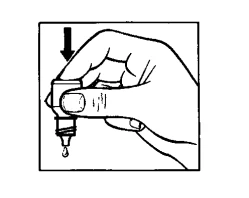
- Hold the bottle upside down between your thumb and middle finger.
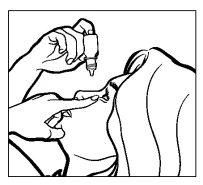
- Tilt your head backward. Gently pull down the eyelid with a clean finger to form a pouch between the eyelid and the eye. The drop should be instilled into this pouch (Figure 1).
- Bring the tip of the bottle close to the eye.
- Do not touch the eye, eyelid, surrounding areas, or any other surfaces with the dropper tip to avoid contaminating the remaining drops in the bottle.
- Gently press the base of the bottle to release one drop of Tobramycin EG at a time.
- Do not squeeze the bottle: it is designed so that only gentle pressure on the bottom is needed (Figure 2).
- If you are instilling drops into both eyes, repeat the same procedure for the other eye.
- Immediately replace the cap after use, screwing it on tightly.
- If a drop misses the eye, try again.
If you use more Tobramycin EG than you should
If you use more medicine than recommended, rinse your eye immediately with lukewarm water. However, no adverse effects are expected.
Do not use the medicine again until the next scheduled dose.
If you forget to use Tobramycin EG
If you forget to use Tobramycin EG, do not worry—instill it as soon as you remember. However, if it is almost time for the next dose, skip the missed dose and return to your regular dosing schedule.
Do not use a double dose to make up for the forgotten dose.
If you stop using Tobramycin EG
It is important to complete the full course of treatment as prescribed by your doctor. If you stop using this medicine too early, the infection may not be completely cured, and symptoms may return or worsen. You may also develop resistance to the antibiotic.
If you have any doubts about how to use this medicine, consult your doctor or pharmacist.
4. Possible side effects
Like all medicines, this medicine can cause side effects, although not everybody gets them.
The following side effects have been reported with the use of Tobramycin EG.
Common side effects (may affect up to 1 in 10 people):
- Eye-related effects: eye discomfort, redness
Uncommon side effects (may affect up to 1 in 100 people):
- Eye-related effects: inflammation of the eye surface, corneal damage (damage to the transparent membrane covering the coloured part of the eye), impaired vision, blurred vision, eyelid redness, eye and eyelid swelling, eye pain, dry eye, eye discharge, eye itching, increased tearing.
- General side effects: allergy (hypersensitivity), headache, urticaria, skin inflammation (dermatitis), reduced growth or number of eyelashes, loss of skin pigmentation, itching, dry skin.
Side effects of unknown frequency (frequency cannot be estimated from the available data):
- Eye-related effects: eye allergy, eye irritation, eyelid itching.
- General side effects: severe allergic reactions, skin rash, severe skin eruptions (Stevens-Johnson Syndrome, erythema multiforme).
Reporting of side effects
If you experience any side effect, including those not listed in this leaflet, please inform your doctor or pharmacist. You may also report side effects directly via the national reporting system at the following website: https://www.aifa.gov.it/content/segnalazioni-reazioni-avverse. By reporting side effects, you can help provide more information on the safety of this medicine.
5. How to store Tobramycin EG
Keep this medicine out of the sight and reach of children.
Do not use this medicine after the expiry date stated on the carton and bottle after Exp.
The expiry date refers to the last day of that month.
This medicine does not require any special storage conditions.
After 28 days from first opening, the medicine must be discarded, even if not completely used.
Do not dispose of any medicine via wastewater or household waste. Ask your pharmacist how to dispose of medicines you no longer use. This will help protect the environment.
6. Contents of the pack and other information
What Tobramicina EG contains
The active substance is tobramycin. One vial contains 15 mg of tobramycin.
The other components are tyloxapol, benzalkonium chloride, boric acid, anhydrous sodium sulfate, sodium chloride, water for injections.
Description of the appearance of Tobramicina EG and contents of the pack
Tobramicina EG is a clear, colourless eye drop solution in a polyethylene container with a dropper. Each vial contains 5 ml of eye drops.
Tobramicina EG is available in packs of 1 vial.
Marketing Authorization Holder
EG S.p.A., Via Pavia 6 – 20136 Milan, Italy
Manufacturer
Genetic S.p.A., Contrada Canfora, 84084 Fisciano (SA)