Tivdak
Italy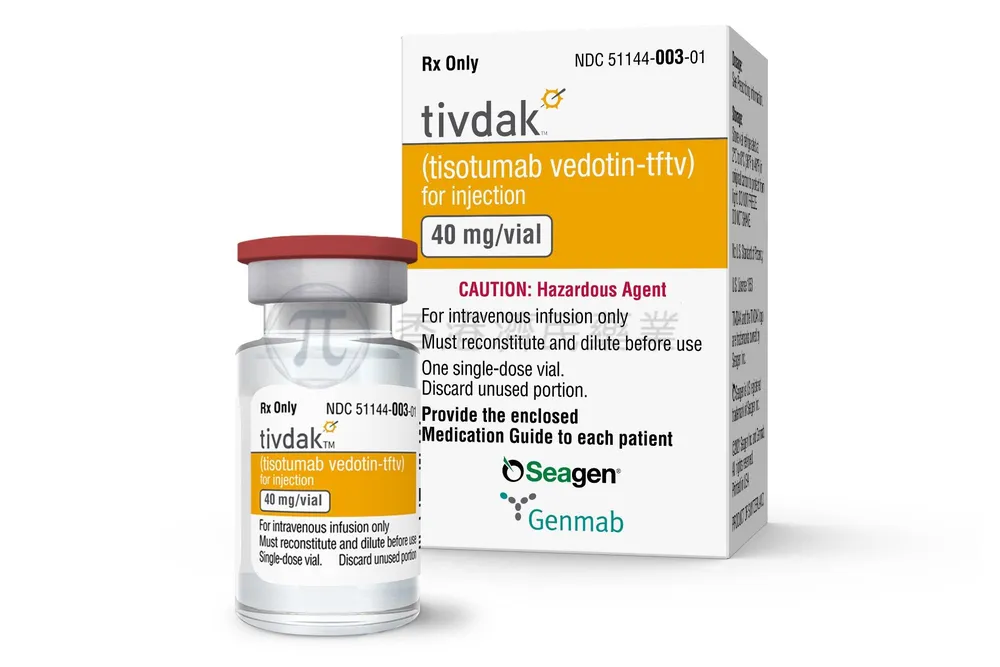
Table of Contents
- Package leaflet: Information for the patient
- Tivdak 40 mg, powder for concentrate for solution for infusion
- 1. What Tivdak is and what it is used for
- 2. What you should know before receiving Tivdak
- 3. How Tivdak is administered
- 4. Possible side effects
- 5. How to store Tivdak
- 6. Package contents and other information
- The following information is intended exclusively for healthcare professionals:
Package leaflet: Information for the patient
Tivdak 40 mg, powder for concentrate for solution for infusion
tisotumab vedotin

This medicinal product is subject to additional monitoring. This will allow rapid identification of new safety information. You can help by reporting any side effects you experience while taking this medicine. See the end of section 4 for information on how to report side effects.
Please read this leaflet carefully before receiving this medicine as it contains important information for you.
- Keep this leaflet. You may need to read it again.
- If you have any questions, consult your doctor.
- If you experience any side effect, including those not listed in this leaflet, consult your doctor. See section 4.
Contents of this leaflet
- What Tivdak is and what it is used for
- What you need to know before receiving Tivdak
- How Tivdak is administered
- Possible side effects
- How to store Tivdak
- Contents of the pack and other information
1. What Tivdak is and what it is used for
Tivdak is an anticancer medicine that contains the active substance tisotumab vedotin.
It is used in adults to treat cervical cancer. People are given Tivdak when the
cancer has recurred or spread after previous anticancer therapy.
The active substance in Tivdak is a monoclonal antibody (a type of protein designed to
recognise and bind to a specific target) linked to MMAE, a substance intended to
kill cancer cells. The monoclonal antibody binds to a protein called tissue factor, which is present at high levels on the surface of many types of cancer cells, and releases
MMAE inside these cells. Once inside the cancer cells, MMAE kills the
cancer cells by interfering with their ability to divide and grow. Tivdak also
stimulates the immune system (the body’s natural defences) to attack cancer cells, and these combined actions are expected to slow down disease progression.
2. What you should know before receiving Tivdak
Do not receive Tivdak
- if you are allergic to tisotumab vedotin or to any of the other ingredients of this medicine (listed in section 6)
Before receiving Tivdak, tell your healthcare provider about all your medical conditions, including if:
- you have a history of eye or vision problems
- you have peripheral neuropathy (nerve damage causing numbness or tingling in the hands or feet)
- you have liver problems
Warnings and precautions
Eye problems
Tivdak can cause eye problems, including dry eyes, itchy eyes, a sensation of having something in the eye, redness of the eyes, eye pain, excessive tearing, difficulty opening the eye, crusting or discharge around the eye, eye irritation, burning or stinging sensation in the eyes, decreased vision, or abnormal sensitivity to light.
Before starting Tivdak, you will be referred to an ophthalmologist for an eye examination. Before each infusion, your doctor will examine your eyes and ask whether you have any signs or symptoms of eye problems. If you develop new signs or symptoms of eye problems or if existing ones worsen, you may be referred to an ophthalmologist. If you experience eye problems, your doctor may suspend treatment or reduce the dose until signs or symptoms improve. If the eye problem worsens, your doctor may stop treatment.
Before starting treatment with Tivdak, your doctor will prescribe three different types of eye drops.
Bring your eye drops with you every time Tivdak is administered and use them as directed by your doctor to reduce the risk of eye problems:
- you must use 1 drop of steroid in each eye 3 times a day, starting 1 day before each infusion and continuing as prescribed until 3 days after each infusion
- you must use vasoconstrictor eye drops in each eye immediately before each infusion
- you must use lubricating eye drops several times a day throughout the duration of treatment and for 30 days after the last dose of Tivdak
Cold packs will be applied to your eyes before the infusion and must remain in place during the infusion and for 30 minutes after it ends.
Do not wear contact lenses during treatment with Tivdak unless your doctor has advised you to do so.
Nerve problems
Tivdak can cause nerve problems (neuropathy), such as numbness, tingling, or burning sensations in the hands or feet, or muscle weakness. Inform your doctor immediately if you experience symptoms of nerve problems. If this occurs, your doctor may suspend treatment or reduce the dose until symptoms improve. If symptoms worsen, your doctor may stop treatment.
Skin problems
Tivdak can cause serious skin problems such as Stevens-Johnson syndrome (SJS), erythema multiforme (red patches on the skin), and bullous dermatitis (blistering rash). Signs and symptoms include a rash that looks like rings (target lesions), blisters or peeling skin, painful sores or ulcers in the mouth, nose, throat, or genital area, fever or flu-like symptoms, or swollen lymph nodes. Inform your doctor immediately if you develop signs or symptoms of serious skin reactions. Your doctor may suspend treatment until the cause of these symptoms is determined. If the skin reaction worsens and is confirmed, your doctor may stop treatment.
Children and adolescents
This medicine must not be used in children and adolescents under 18 years of age.
Other medicines and Tivdak
Tell your doctor if you are taking, have recently taken, or might take any other medicines.
Tell your doctor if you are taking medicines for fungal infections (e.g., ketoconazole, itraconazole, posaconazole, voriconazole) or viral infections (e.g., boceprevir, cobicistat, indinavir, nefazodone, nelfinavir, ritonavir, saquinavir, telaprevir), as they may increase the amount of Tivdak in your blood. If you regularly take these medicines, your doctor may switch them and prescribe a different medicine during treatment.
Tell your doctor if you are taking medicines for bacterial infections (e.g., clarithromycin, telithromycin, rifampicin), as they may increase or decrease the amount of Tivdak in your blood. If you regularly take these medicines, your doctor may switch them and prescribe a different medicine during treatment.
Pregnancy, breastfeeding and fertility
If you are pregnant, suspect you may be pregnant, or are planning a pregnancy, consult your doctor before starting this medicine.
Tivdak may harm the unborn baby. You must not take this medicine if you are pregnant.
If you are a woman of childbearing potential receiving Tivdak, you must use an effective method of contraception (birth control) during treatment and for at least 2 months after stopping treatment with this medicine.
If you are a man receiving Tivdak and your partner is of childbearing potential, you must use an effective method of contraception during treatment and for at least 4 months after the end of treatment. Ask your doctor which methods of contraception are suitable for you.
It is not known whether this medicine passes into breast milk and could harm the baby. Do not breastfeed during treatment and for at least 3 weeks after stopping Tivdak.
Driving and using machines
Do not drive or operate machinery if you do not feel well during treatment.
3. How Tivdak is administered
You will receive Tivdak at a hospital or outpatient clinic, under the supervision of a doctor experienced in administering such treatments.
How much Tivdak you will receive
The recommended dose of this medicine is 2 mg per kilogram of body weight (up to a maximum of 200 mg for patients ≥100 kg), administered once every 3 weeks. Your doctor will decide how many treatments are needed.
How you will receive Tivdak
Tivdak will be given to you as an intravenous infusion (a drip) into a vein, lasting 30 minutes. If you experience side effects, your doctor may reduce the dose or temporarily or permanently discontinue treatment with Tivdak. During the infusion and for 30 minutes after it ends, cold compresses will be applied to your eyes.
If you miss a dose of Tivdak
It is very important that you attend all your scheduled appointments to receive Tivdak. If you miss an appointment, contact your doctor as soon as possible to reschedule the next dose.
If you stop taking Tivdak
Do not stop treatment with Tivdak unless you have discussed it with your doctor. Stopping treatment may interrupt the medicine's effect.
4. Possible side effects
Like all medicines, this medicine can cause side effects, although not everyone gets them.
Some possible side effects could be serious:
Contact your doctor immediately if you experience any of the following serious side effects.
Very common (may affect more than 1 in 10 people):
- Inflammation of the thin membrane covering the front part of the eye (conjunctivitis) or of the transparent layer covering the pupil and iris (keratitis).
- Nerve problems. Contact your doctor immediately if you experience numbness, tingling, or a burning sensation in your hands or feet, or muscle weakness.
Common (may affect up to 1 in 10 people):
- Damage or ulceration of the transparent layer covering the pupil and iris (punctate keratitis, ulcerative keratitis) or of the thin membrane covering the front part of the eye (conjunctival ulcer).
- Inward turning of the eyelid (entropion).
Uncommon (may affect up to 1 in 100 people):
- Severe skin reactions. This medicine may cause skin reactions such as Stevens-Johnson syndrome (SJS), erythema multiforme (development of red patches on the skin), and bullous dermatitis (skin rash with blisters). Contact your doctor immediately if you experience any of these signs or symptoms of a serious skin reaction: ring-shaped skin reactions (target lesions), rash or itching that continues to worsen, blisters or peeling of the skin, painful sores or ulcers in the mouth, nose, throat, or genital area, fever or flu-like symptoms, or swollen lymph nodes.
- Scarring or changes in the transparent layer covering the pupil and iris (corneal scar, corneal degeneration) or in the thin membrane covering the front part of the eye (conjunctival scar).
- Eye inflammation causing adhesion of the eyelid to the eyeball (symblepharon).
Other possible side effects
Other side effects are listed below. Contact your doctor or nurse if you experience any of these side effects.
Very common (may affect more than 1 in 10 people):
- Feeling unwell (nausea)
- Nosebleed (epistaxis)
- Hair loss (alopecia)
- Low red blood cell count (anaemia)
- Diarrhoea
- Constipation
- Reduced appetite
- Tiredness (fatigue)
- Abdominal pain
- Skin rash
- Dry eye
- Vomiting
- Fever (pyrexia)
- Lack of energy (asthenia)
- Dry or itchy skin (pruritus)
Common (may affect up to 1 in 10 people):
- Eye irritation
- Low white blood cell count (neutropenia)
- Inflammation of the eyelid (blepharitis) or of the eyelid glands (meibomitis)
- Itchy eye (ocular pruritus)
- Redness of the eye (ocular hyperaemia) or of the thin membrane covering the front part of the eye (conjunctival hyperaemia)
- Inflammation of the tissue between the inner eyelid and the white part of the eye (episcleritis)
Uncommon (may affect up to 1 in 100 people):
- Damage, irritation, cloudiness, or thinning of the transparent layer covering the pupil and iris (corneal erosion, positive corneal vital staining, keratopathy, corneal irritation, corneal opacity, corneal thinning)
- Eyelashes growing inward toward the eye (trichiasis)
- Fever with low white blood cell count (febrile neutropenia)
- Damage, swelling, or inflammation of the thin membrane covering the front part of the eye (conjunctival disorder, conjunctival erosion, conjunctival abrasion, conjunctival oedema, non-infectious conjunctivitis)
- Swelling, redness, or crusting of the eyelid (eyelid oedema, eyelid swelling, eyelid erythema, eyelid margin crusts)
- Loss of eyelashes (madarosis)
- Dysfunction of the eyelid glands (Meibomian gland dysfunction)
- Swelling around the eye (periorbital oedema)
- Nodule on the eyelid (chalazion)
Reporting of side effects
If you experience any side effect, including those not listed in this leaflet, contact your doctor. You can also report side effects directly via the national reporting system listed in Annex V. By reporting side effects, you can help provide more information on the safety of this medicine.
5. How to store Tivdak
Keep this medicine out of the sight and reach of children.
Do not use this medicine after the expiry date stated on the carton and label of the vial following "Exp.". The expiry date refers to the last day of that month.
Store in a refrigerator (2 °C-8 °C). Do not freeze.
Do not store any unused portion of the infusion solution for later use. Unused medicine and waste material derived from this medicine must be disposed of in accordance with local regulations.
6. Package contents and other information
What Tivdak contains
- The active substance is tisotumab vedotin.
- One vial of powder for concentrate for solution for infusion contains 40 mg of tisotumab vedotin.
- After reconstitution, each mL of solution contains 10 mg of tisotumab vedotin.
The other components are L-histidine, L-histidine hydrochloride monohydrate, sucrose, and D-mannitol.
Description of the appearance of Tivdak and contents of the pack
Tivdak powder for concentrate for solution for infusion is a white to off-white powder or lyophilisate.
Tivdak is supplied in a carton containing 1 glass vial.
Marketing Authorisation Holder and Manufacturer
Genmab A/S
Carl Jacobsens Vej 30
2500 Valby
Denmark
Tel: +45 89 88 95 37
[email protected]
Other sources of information
More detailed information on this medicinal product is available on the website of the European Medicines Agency: https://www.ema.europa.eu.
The following information is intended exclusively for healthcare professionals:
Traceability
In order to improve the traceability of biological medicinal products, the name and batch number of the administered medicinal product must be clearly documented.
Instructions for preparation and administration
Reconstitution in single-dose vial
- Follow appropriate procedures for handling and disposal of cytotoxic medicinal products.
- Use appropriate aseptic techniques for reconstitution and preparation of solutions for administration.
- Calculate the recommended dose based on the patient’s actual body weight to determine the number of vials required.
- Reconstitute each 40 mg vial with 4 mL of sterile water for injections to obtain a concentration of 10 mg/mL of Tivdak.
- Gently rotate each vial until the contents are completely dissolved. Allow the reconstituted vial(s) to stand. Do not shake the vial. Do not expose to direct sunlight.
- Parenteral medicinal products should be visually inspected for particulate matter and discoloration prior to administration, whenever solution and container permit. The reconstituted solution should be clear or slightly opalescent, colourless to brownish-yellow, and free of visible particles. Discard vials showing visible particles or discoloration.
- Based on the calculated dose, the reconstituted solution from the vial(s) must be immediately transferred into an infusion bag. This product contains no preservatives. If not used immediately, reconstituted vials may be stored for up to 24 hours under refrigeration at 2 °C–8 °C or at room temperature (9 °C–25 °C) for up to a maximum of 8 hours prior to dilution. Do not freeze. After the recommended storage period, discard unused vials containing reconstituted solution.
Dilution in infusion bag
- Withdraw the calculated dose of reconstituted solution from the vial(s) and transfer it into an infusion bag.
- Dilute Tivdak with one of the following: 50 mg/mL (5%) dextrose injection solution, 9 mg/mL (0.9%) sodium chloride injection solution, or lactated Ringer’s solution. The size of the infusion bag must allow sufficient diluent volume to achieve a final concentration between 0.7 mg/mL and 2.4 mg/mL of Tivdak.
- Mix the diluted solution by gentle inversion. Do not shake the bag. Do not expose to direct sunlight.
- Prior to use, visually inspect the infusion bag for presence of particulate matter or discoloration. The diluted solution should be clear or slightly opalescent, colourless to brownish-yellow, and free of visible particles. Do not use the infusion bag if particulate matter or discoloration is observed.
- Discard any residual product remaining in the single-dose vials.
Administration
- Confirm administration of steroid and vasoconstrictor eye drops (see section 4.2).
- After administration of the vasoconstrictor eye drop, apply cold compresses to the eyes, leaving them in place during the infusion and for 30 minutes after completion. Change cold compresses as needed during the infusion to ensure the eye area remains cold (see section 4.2).
- Administer the infusion immediately over 30 minutes through an intravenous line equipped with an in-line 0.2 µm filter.
- If the infusion is not administered immediately, store the diluted Tivdak solution under refrigeration as specified in Table 1. If storage times exceed these limits, discard the solution. Do not freeze. After removing the solution from the refrigerator, complete administration of the diluted Tivdak infusion solution within 4 hours (including infusion time).
Table 1: Refrigerated storage conditions for diluted Tivdak solution
Diluent used for infusion solution preparation Storage conditions for diluted Tivdak solution (including infusion time)
Sodium chloride 9 mg/mL (0.9%) injection solution Up to 18 hours at 2 °C–8 °C
Dextrose 50 mg/mL (5%) injection solution Up to 24 hours at 2 °C–8 °C
Lactated Ringer’s injection solution Up to 12 hours at 2 °C–8 °C
Disposal
| Unused medicine and waste material from such medicine must be disposed of in accordance with | |
| applicable local regulations. | |