Tiorfix
Italy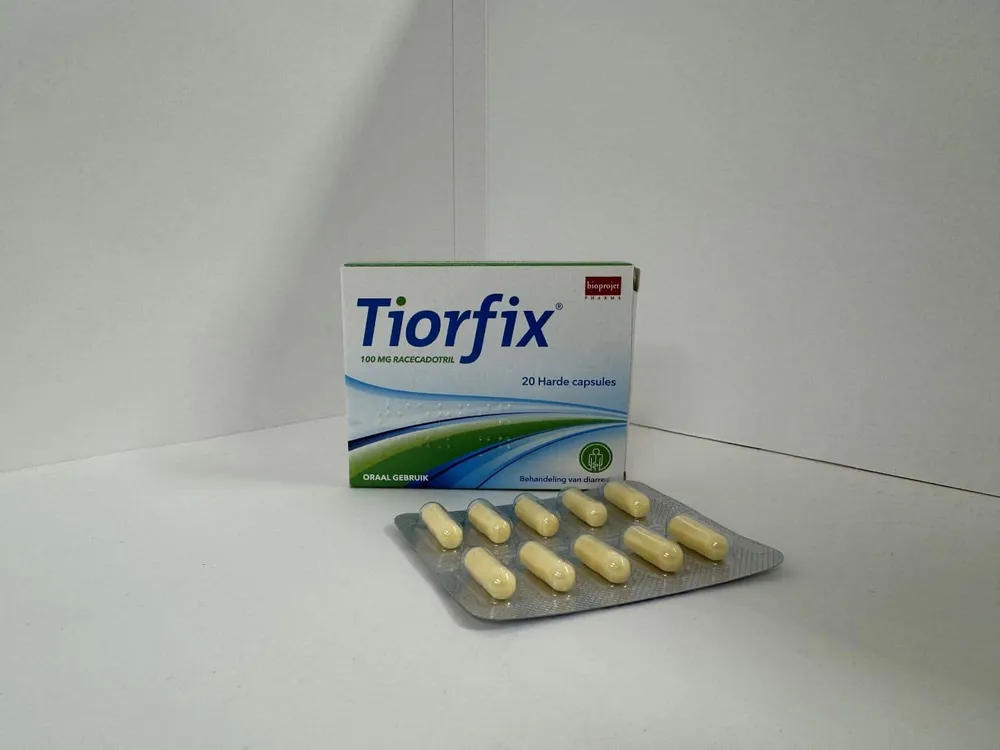
Table of Contents
- Package leaflet: Information for the user
- TIORFIX 10 mg granules for oral suspension INFANT
- 1. What Tiorfix is and what it is used for
- 2. What you should know before taking Tiorfix
- 3. How to take Tiorfix
- 4. Possible side effects
- 5. How to store Tiorfix
- 6. Package contents and other information
- Package leaflet: Information for the user
- TIORFIX 30 mg granules for oral suspension CHILDREN
- 2. What Tiorfix is and what it is used for
- 4. What you should know before taking Tiorfix
- 5. How to take Tiorfix
- 4. Possible side effects
- 5. How to store Tiorfix
- 6. Package contents and other information
- Tiorfix 100 mg hard capsules
- 3. What Tiorfix is and what it is used for
- 6. What you need to know before taking Tiorfix
- 7. How to take Tiorfix
- 4. Possible side effects
- 5. How to store Tiorfix
- 6. Package contents and other information
Package leaflet: Information for the user
TIORFIX 10 mg granules for oral suspension INFANT
racecadotril
Please read all of this leaflet carefully before taking this medicine because it contains important information for you.
- Keep this leaflet. You may need to read it again.
- If you have any questions, ask your doctor or pharmacist.
- This medicine has been prescribed for your child. Do not give it to others, even if their symptoms are the same as your child's, as it could be harmful.
- If your child experiences any side effects, including those not listed in this leaflet, talk to your doctor or pharmacist. See section 4.
Contents of this leaflet
- What Tiorfix is and what it is used for
- What you need to know before taking Tiorfix
- How to take Tiorfix
- Possible side effects
- How to store Tiorfix
- Contents of the pack and other information
1. What Tiorfix is and what it is used for
Tiorfix is a medicinal product for the treatment of diarrhoea.
Tiorfix is used for the symptomatic treatment of acute diarrhoea in children over three months of age.
It should be used in association with the intake of abundant fluids and standard dietary measures, when these measures alone are not sufficiently effective in controlling diarrhoea, and when causal treatment is not possible.
Racecadotril may be administered as a complementary treatment when causal treatment is feasible.
2. What you should know before taking Tiorfix
Do not administer Tiorfix
- If the child is allergic to racecadotril or to any of the other ingredients of Tiorfix (listed in section 6).
- If your doctor has told you that your child is intolerant to certain sugars, consult your doctor before administering Tiorfix to the child.
- If a severe skin rash, skin peeling, blisters and/or mouth sores have previously occurred after taking racecadotril.
Warnings and precautions
Consult your doctor or pharmacist before administering Tiorfix to your child if:
Your child is less than three months old,
- You notice blood or pus in the child's stools and the child has a fever. The cause of diarrhoea may be a bacterial infection requiring medical treatment.
- Your child suffers from chronic diarrhoea or diarrhoea caused by antibiotics.
- Your child has kidney disease or impaired liver function.
- Your child has prolonged or uncontrolled vomiting.
- Your child has diabetes (see "Important information about some of the excipients in Tiorfix").
Skin reactions have been reported following the use of this product. In most cases, these reactions were mild to moderate. However, if severe skin reactions occur, treatment must be stopped immediately.
Pay special attention when using racecadotril:
Severe skin reactions, including drug reaction with eosinophilia and systemic symptoms (DRESS), have been reported in association with treatment using racecadotril. Discontinue use of racecadotril and contact a doctor immediately if you notice any of the symptoms related to these severe skin reactions described in section 4.
Other medicines and Tiorfix
Inform your doctor if your child is taking, has recently taken, or might take any other medicines.
In particular, inform your doctor if your child is taking any of the following medicines:
ACE inhibitors (e.g. captopril, enalapril, lisinopril, perindopril, ramipril), used to lower blood pressure or to help heart function.
Pregnancy and breastfeeding
The use of Tiorfix is not recommended during pregnancy and breastfeeding. Consult your doctor or pharmacist before taking this medicine.
Driving and using machines
Tiorfix does not affect, or affects only negligibly, the ability to drive or use machinery.
Tiorfix contains sucrose
Tiorfix contains approximately 1 g of sucrose per sachet.
If your doctor has told you that your child is intolerant to certain sugars, contact your doctor before administering Tiorfix to your child.
In diabetic neonates, if your doctor has prescribed more than 5 sachets of Tiorfix per day (equivalent to more than 5 g of sucrose), this must be taken into account when calculating the child's total daily sugar intake.
3. How to take Tiorfix
Administer Tiorfix to your child exactly as directed by the doctor. If you have any doubts, consult your doctor or pharmacist.
Tiorfix is supplied as granules.
The granules should be added to food or dissolved in a glass of water or in a feeding bottle, mixed well, and administered immediately.
The recommended daily dose depends on the child's body weight: 1.5 mg/kg per dose (corresponding to 1 or 2 sachets), given three times daily at regular intervals.
In newborns weighing less than 9 kg: one sachet per dose.
In newborns weighing from 9 kg to 13 kg: two sachets per dose.
Your doctor will advise you on how long the treatment with Tiorfix should continue. It should be continued until the child has passed two normal stools, but not for longer than 7 days.
To compensate for fluid loss due to diarrhoea, this medicine should be used together with adequate fluid and salt (electrolyte) replacement. The best fluid and electrolyte replacement is achieved with an oral rehydration solution (if you have any doubts, consult your doctor or pharmacist).
If you take more Tiorfix than you should
If your child has taken more Tiorfix than they should have, contact your doctor or pharmacist immediately.
If you forget to take Tiorfix
Do not give your child a double dose to make up for a forgotten dose. Continue treatment as usual.
4. Possible side effects
Like all medicines, this medicine can cause side effects, although not everybody will experience them.
Immediately stop administering Tiorfix to your child and contact your doctor immediately if your child shows symptoms of angioedema such as:
- swollen face, tongue or pharynx
- difficulty swallowing
- hives and difficulty breathing
Stop using racecadotril and seek immediate medical attention if any of the following symptoms occur:
- Widespread rash, high body temperature, and swollen lymph nodes (DRESS syndrome)
- Breathing difficulties, swelling, dizziness, rapid heartbeat, sweating, and feeling faint – these are symptoms of a sudden and severe allergic reaction
The following side effects have also been reported:
Uncommon (may affect up to 1 in 100 people): tonsillitis (inflammation of the tonsils), skin rash, erythema (redness of the skin).
Frequency not known (frequency cannot be estimated from the available data): erythema multiforme (pinkish lesions on extremities and inside the mouth), inflammation of the tongue, facial inflammation, inflammation of the lips, inflammation of the eyelids, urticaria, nodular erythema (inflammatory nodules under the skin), papular skin eruption (skin rash with small, firm, nodular lesions), prurigo (itchy skin lesions), pruritus (generalized itching sensation).
Reporting of side effects
If you experience any side effect, including those not listed in this leaflet, please contact your doctor or pharmacist. You may also report side effects directly through the national reporting system at the following website:
www.agenziafarmaco.gov.it/content/come-segnalare-una-sospetta-reazione-avversa
By reporting side effects, you can help provide more information on the safety of this medicine.
5. How to store Tiorfix
Keep this medicine out of the sight and reach of children.
Do not use this medicine after the expiry date stated on the packaging after "Exp.".
The expiry date refers to the last day of the month.
This medicine does not require any special storage conditions.
Do not dispose of any medicine via wastewater or household waste. Ask your pharmacist how to dispose of medicines you no longer use. This will help protect the environment.
6. Package contents and other information
What Tiorfix contains
The active substance is racecadotril. Each sachet contains 10 mg of racecadotril.
The other components are:
Sucrose,
Anhydrous colloidal silica,
Polyacrylate dispersion 30%,
Apricot flavouring.
Description of the appearance of Tiorfix and contents of the pack
Tiorfix is a granulate for oral suspension contained in sachets.
Each pack contains 10, 16, 20, 30, 50, or 100 sachets (the 100-sachet pack is for hospital use only).
Not all pack sizes may be marketed.
Marketing Authorisation Holder
Bioprojet Europe Ltd.
101 Furry Park Road
Killester
DUBLIN 5
IRELAND
Manufacturer
SOPHARTEX
21 rue de Pressoir
28500 Vernouillet (France)
or
FERRER INTERNACIONAL S.A.
Joan Buscallà 1-9
08173 Sant Cugat del Vallès
Barcelona (Spain)
This medicinal product is authorised in the Member States of the European Economic Area under the following names:
Package leaflet: Information for the user
TIORFIX 30 mg granules for oral suspension CHILDREN
racecadotril
Please read this leaflet carefully before taking this medicine because it contains important information for you.
- Keep this leaflet. You may need to read it again.
- If you have any questions, consult your doctor or pharmacist.
- This medicine has been prescribed for your child. Do not give it to other people, even if their symptoms are the same as your child's, because it could be harmful.
- If your child experiences any side effects, including those not listed in this leaflet, consult your doctor or pharmacist. See section 4.
Contents of this leaflet
- What Tiorfix is and what it is used for
- What you need to know before taking Tiorfix
- How to take Tiorfix
- Possible side effects
- How to store Tiorfix
- Contents of the pack and other information
2. What Tiorfix is and what it is used for
Tiorfix is a medicinal product used for the treatment of diarrhoea.
Tiorfix is indicated for the symptomatic treatment of acute diarrhoea in children over three months of age.
It should be used in association with the intake of abundant fluids and standard dietary measures, when these measures alone are not sufficiently effective in controlling diarrhoea, and when causal treatment is not possible.
Racecadotril may be administered as a complementary treatment when causal therapy is feasible.
4. What you should know before taking Tiorfix
Do not administer Tiorfix
- If the child is allergic to racecadotril or to any of the other components of Tiorfix (listed in section 6).
- If your doctor has told you that your child is intolerant to certain sugars, ask your doctor before giving Tiorfix to the child.
- If the child has previously experienced a severe skin rash, skin peeling, blisters and/or mouth sores after taking racecadotril.
Warnings and precautions
Talk to your doctor or pharmacist before administering Tiorfix to your child if:
Your child is less than three months old,
- You notice blood or pus in the child's stools and the child has a fever. The cause of the diarrhoea may be a bacterial infection that needs to be treated by a doctor.
- Your child suffers from chronic diarrhoea or from diarrhoea caused by antibiotics.
- Your child has kidney disease or impaired liver function.
- Your child suffers from prolonged or uncontrolled vomiting.
- Your child has diabetes (see "Important information about some of the excipients of Tiorfix").
Skin reactions have been reported following the use of this product. In most cases, these reactions are mild to moderate in severity. If severe skin reactions occur, treatment must be stopped immediately.
Pay special attention when using racecadotril:
Severe skin reactions have been reported in association with treatment with racecadotril, including drug reaction with eosinophilia and systemic symptoms (DRESS). Discontinue the use of racecadotril and contact a doctor immediately if you notice any of the symptoms related to these severe skin reactions described in section 4.
Other medicines and Tiorfix
Inform your doctor if your child is taking, has recently taken, or might take any other medicines.
In particular, inform your doctor if your child is taking any of the following medicines:
ACE inhibitors (e.g. captopril, enalapril, lisinopril, perindopril, ramipril), used to lower blood pressure or to help the heart work more easily.
Pregnancy and breastfeeding
The use of Tiorfix is not recommended during pregnancy and breastfeeding.
Talk to your doctor or pharmacist before taking this medicine.
Driving and using machines
Tiorfix has no effect or negligible effect on the ability to drive or use machinery.
Tiorfix contains sucrose
Tiorfix contains approximately 3 g of sucrose per sachet.
If your doctor has told you that your child is intolerant to certain sugars, contact your doctor before administering Tiorfix to the child.
In children with diabetes, the amount of sucrose ingested with Tiorfix should be taken into account when calculating the child's total daily sugar intake.
5. How to take Tiorfix
Give Tiorfix to your child exactly as directed by the doctor. If you have any doubts, consult your doctor or pharmacist.
Tiorfix is available as granules.
The granules should be added to food or dissolved in a glass of water or in a feeding bottle, mixed well, and administered immediately.
The recommended daily dose depends on the child's body weight: 1.5 mg/kg per dose (equivalent to 1 or 2 sachets), given three times daily at regular intervals.
In children weighing between 13 and 27 kg: one sachet per dose.
In children weighing more than approximately 27 kg: two sachets per dose.
Your doctor will tell you how long the treatment with Tiorfix should continue. It should be continued until the child has passed two normal stools, but not for longer than 7 days.
To compensate for fluid loss due to diarrhoea, this medicine should be used together with adequate fluid and salt (electrolyte) replacement. The best fluid and electrolyte replacement is achieved with an oral rehydration solution (if you have any doubts, consult your doctor or pharmacist).
If you take more Tiorfix than you should
If your child has taken more Tiorfix than they should have, contact your doctor or pharmacist immediately.
If you forget to administer Tiorfix
Do not give a double dose to your child to make up for a missed dose. Continue the treatment as usual.
4. Possible side effects
Like all medicines, Tiorfix can cause side effects, although not everyone experiences them.
Immediately stop administering Tiorfix to your child and contact your doctor immediately if your child shows symptoms of angioedema, such as:
- swollen face, tongue or pharynx
- difficulty swallowing
- hives and breathing difficulties
Stop using racecadotril and seek immediate medical attention if any of the following symptoms occur:
- Widespread rash, high body temperature, and swollen lymph nodes (DRESS syndrome)
- Breathing difficulties, swelling, dizziness, rapid heartbeat, sweating, and feeling faint—these are symptoms of a sudden and severe allergic reaction
The following side effects have also been reported:
Uncommon ( may affect up to 1 in 100 people ): tonsillitis (inflammation of the tonsils), skin rash, and erythema (redness of the skin).
Frequency not known ( cannot be estimated from the available data ): erythema multiforme (rose-colored lesions on extremities and inside the mouth), inflammation of the tongue, facial inflammation, inflammation of the lips, inflammation of the eyelids, hives, nodular erythema (inflammatory nodules under the skin), papular skin rash (skin eruption with small, firm, nodular lesions), prurigo (itchy skin lesions), pruritus (general itching sensation).
Reporting of side effects
If you experience any side effect, including those not listed in this leaflet, talk to your doctor or pharmacist. You can also report side effects directly via the national reporting system at the following website:
www.agenziafarmaco.gov.it/content/come-segnalare-una-sospetta-reazione-avversa .
By reporting side effects, you can help provide more information on the safety of this medicine.
5. How to store Tiorfix
Keep this medicine out of the sight and reach of children.
Do not use this medicine after the expiry date which is stated on the container after "Exp.".
The expiry date refers to the last day of the month.
This medicine does not require any special storage conditions.
Do not dispose of medicines via wastewater or household waste. Ask your pharmacist how to dispose of medicines you no longer use. This will help protect the environment.
6. Package contents and other information
What Tiorfix contains
The active substance is racecadotril. Each sachet contains 30 mg of racecadotril.
The other components are:
Sucrose,
Anhydrous colloidal silica,
Polacrilin potassium 30% dispersion,
Apricot flavor.
Description of the appearance of Tiorfix and the contents of the pack
Tiorfix is presented as an oral suspension granulate contained in sachets.
Each pack contains 10, 16, 20, 30, 50, or 100 sachets (pack of 100 sachets for hospital use only).
Not all pack sizes may be marketed.
Marketing Authorization Holder
Bioprojet Europe Ltd.
101 Furry Park Road
Killester
DUBLIN 5
IRELAND
Manufacturer
SOPHARTEX
21 rue de Pressoir
28500 Vernouillet (France)
or
FERRER INTERNACIONAL S.A.
Joan Buscallà 1-9
08173 Sant Cugat del Vallès
Barcelona (Spain)
This medicinal product is authorized in the European Economic Area countries under the following
names:
Package leaflet: Information for the user
Tiorfix 100 mg hard capsules
racecadotril
Please read this leaflet carefully before taking this medicine because it contains important information for you.
Keep this leaflet. You may need to read it again.
- If you have any questions, consult your doctor or pharmacist.
- This medicine has been prescribed for you only. Do not give it to others, even if their symptoms are the same as yours, as it could be dangerous.
- If you experience any adverse reaction, including those not listed in this leaflet, consult your doctor or pharmacist.
Contents of this leaflet
- What Tiorfix is and what it is used for
- What you need to know before taking Tiorfix
- How to take Tiorfix
- Possible side effects
- How to store Tiorfix
- Contents of the pack and other information
3. What Tiorfix is and what it is used for
Tiorfix is a medicinal product for the treatment of diarrhoea.
Tiorfix is indicated for the symptomatic treatment of acute diarrhoea in adults when causal treatment is not possible.
Racecadotril may be administered as a complementary treatment when causal treatment is possible.
6. What you need to know before taking Tiorfix
Do not take Tiorfix
- If you are allergic to racecadotril or to any of the other ingredients of Tiorfix (listed in section 6).
- If you have previously experienced a severe skin rash or skin peeling, blisters and/or mouth sores after taking racecadotril.
Warnings and precautions
Talk to your doctor or pharmacist before taking Tiorfix if:
- You notice blood or pus in your stools and have a fever. The cause of your diarrhoea may be a bacterial infection requiring medical treatment.
- You suffer from chronic diarrhoea or diarrhoea caused by antibiotics.
- You have kidney disease or impaired liver function.
- You have prolonged or uncontrolled vomiting.
- You have lactose intolerance (see "Important information about some of the excipients of Tiorfix").
Skin reactions have been reported following the use of this product. In most cases, these reactions are mild to moderate in severity. If severe skin reactions occur, treatment must be stopped immediately.
Pay special attention when using racecadotril:
Severe skin reactions, including drug reaction with eosinophilia and systemic symptoms (DRESS), have been reported in association with racecadotril treatment. Discontinue use of racecadotril and seek immediate medical advice if you notice any of the symptoms related to these severe skin reactions described in section 4.
Other medicines and Tiorfix
Inform your doctor if you are currently taking, have recently taken, or might take any other medicines.
In particular, inform your doctor if you are taking any of the following medicines:
ACE inhibitors (e.g. captopril, enalapril, lisinopril, perindopril, ramipril), used to lower blood pressure or to help the heart work more easily.
Pregnancy and breastfeeding
Tiorfix is not recommended if you are pregnant, suspect you may be pregnant, or are breastfeeding.
Ask your doctor or pharmacist for advice before taking this medicine.
Driving and using machines
Tiorfix does not affect or affects negligibly the ability to drive or use machinery.
Tiorfix contains lactose
Tiorfix contains lactose (a type of sugar). If your doctor has diagnosed you with an intolerance to certain sugars, contact him or her before taking Tiorfix.
This medicine does not contain gluten.
7. How to take Tiorfix
Take this medicine exactly as directed by your doctor. If you have any doubts, consult your
doctor or pharmacist.
Tiorfix is available in capsule form.
The usual dose is one capsule three times a day, taken with a glass of water.
Tiorfix should preferably be taken before main meals; however, at the beginning of treatment, you may
take one capsule of Tiorfix at any time of the day.
Your doctor will advise you on how long to continue treatment with Tiorfix. Treatment should continue until two normal bowel movements occur, but not beyond 7 days.
To compensate for fluid loss due to diarrhoea, this medicine should be used together with adequate fluid and salt (electrolyte) replacement. The best fluid and electrolyte replacement is achieved with an oral rehydration solution (if you have any doubts, consult your doctor or pharmacist).
Dosage adjustment is not required in elderly patients.
Children
Other formulations of Tiorfix are available for infants and children.
If you have taken more Tiorfix than you should have, contact your doctor or pharmacist immediately.
If you forget to take Tiorfix
Do not take a double dose to make up for the forgotten dose. Continue your treatment as normal.
4. Possible side effects
Like all medicines, Tiorfix can cause side effects, although not everyone gets them.
Stop taking Tiorfix immediately and contact your doctor immediately if you experience symptoms of
angioedema, such as:
- swollen face, tongue or pharynx
- difficulty swallowing
- hives and difficulty breathing
Stop using racecadotril and contact a doctor immediately if you notice any of the following symptoms:
- Widespread rash, high body temperature, and swollen lymph nodes (DRESS syndrome)
- Breathing difficulties, swelling, dizziness, rapid heartbeat, sweating, and feeling faint, which are symptoms of a sudden and severe allergic reaction
The following side effects have been reported:
Common (may affect up to 1 in 10 people): headache
Uncommon (may affect up to 1 in 100 people): skin rash and erythema (redness of the skin).
Frequency not known (frequency cannot be estimated from the available data): erythema multiforme (pinkish lesions on extremities and inside the mouth), inflammation of the tongue, facial inflammation, inflammation of the lips, eyelid inflammation, urticaria, nodular erythema (inflammatory nodules under the skin), papular skin rash (skin-level rash with small, firm, nodular lesions), prurigo (itchy skin lesions), pruritus (general itching sensation), toxic skin eruption.
Reporting of side effects
If you experience any side effect, including those not listed in this leaflet, talk to your doctor or pharmacist. You can also report side effects directly via the national reporting system at the website
www.agenziafarmaco.gov.it/content/come-segnalare-una-sospetta-reazione-avversa.
By reporting side effects, you can help provide more information on the safety of this medicine.
5. How to store Tiorfix
Keep this medicine out of the sight and reach of children.
Do not use this medicine after the expiry date stated on the packaging after "Exp.".
The expiry date refers to the last day of the month.
This medicine does not require any special storage conditions.
Do not dispose of any medicine via wastewater or household waste. Ask your pharmacist how to dispose of medicines you no longer use. This will help protect the environment.
6. Package contents and other information
What Tiorfix contains
The active substance is racecadotril. Each capsule contains 100 mg of racecadotril.
The other components are: monohydrate lactose, pregelatinized corn starch, magnesium stearate and anhydrous colloidal silica.
The capsule shell contains gelatin, yellow iron oxide (E 172) and titanium dioxide (E171).
Description of the appearance of Tiorfix and package contents
Tiorfix is presented as ivory-coloured hard capsules.
Each pack contains 6, 10, 20, 100 or 500 hard capsules. Packs containing 100 or 500 capsules are intended for hospital use only.
Not all pack sizes may be marketed.
Marketing Authorization Holder
Bioprojet Europe Ltd.
101 Furry Park Road
Killester
DUBLIN 5
IRELAND
Manufacturer
SOPHARTEX
21 rue du Pressoir
28500 Vernouillet (France)
or
FERRER INTERNACIONAL S.A.
Joan Buscallà 1-9
08173 Sant Cugat del Vallès
Barcelona (Spain)
This medicinal product is authorized in the Member States of the European Economic Area under the following names: