Tiche
Italy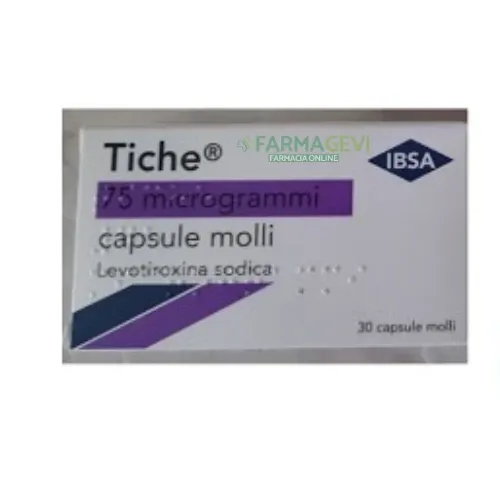
Table of Contents
- PATIENT INFORMATION LEAFLET: INFORMATION FOR THE USER
- TICHE 13 microgram soft capsules, 25 microgram soft capsules, 50 microgram soft capsules, 75 microgram soft capsules, 88 microgram soft capsules, 100 microgram soft capsules, 112 microgram soft capsules, 125 microgram soft capsules, 137 microgram soft capsules, 150 microgram soft capsules, 175 microgram soft capsules, 200 microgram soft capsules
- 1. WHAT TICHE IS AND WHAT IT IS USED FOR
- 2. BEFORE TAKING TICHE
- 3. HOW TO TAKE TICHE
- 4. POSSIBLE ADVERSE EFFECTS
- 5. HOW TO STORE TICHE
- 6. OTHER INFORMATION
PATIENT INFORMATION LEAFLET: INFORMATION FOR THE USER
TICHE 13 microgram soft capsules, 25 microgram soft capsules, 50 microgram soft capsules, 75 microgram soft capsules, 88 microgram soft capsules, 100 microgram soft capsules, 112 microgram soft capsules, 125 microgram soft capsules, 137 microgram soft capsules, 150 microgram soft capsules, 175 microgram soft capsules, 200 microgram soft capsules
Levothyroxine sodium
Please read all of this leaflet carefully before you start taking this medicine.
- Keep this leaflet. You may need to read it again.
- If you have any questions, ask your doctor or pharmacist.
- This medicine has been prescribed for you. Do not give it to others, even if they have the same symptoms as yours, because it could be harmful.
- If any of the side effects worsens, or if you notice any side effects not listed in this leaflet, inform your doctor or pharmacist.
Contents of this leaflet:
- What TICHE is and what it is used for
- Before taking TICHE
- How to take TICHE
- Possible side effects
- How to store TICHE
- Further information
1. WHAT TICHE IS AND WHAT IT IS USED FOR
The active substance of TICHE is levothyroxine sodium (T4), a synthetic thyroid hormone whose
structure and action are identical to those of the natural thyroid hormone.
TICHE 25 - 200 is used
- In thyroid hormone replacement therapy in cases of hypofunction of the thyroid gland;
- for prevention of recurrent goitre after surgical intervention, in patients with normal thyroid function;
- for treatment of benign goitre in patients with normal thyroid function;
- for suppression of renewed growth of (malignant) thyroid tumours, particularly after surgery, and as a substitute for thyroid hormone deficiency;
- as concomitant therapy in the treatment of hyperactive thyroid;
- in the thyroid suppression test.
TICHE 13 is used
-
in children as an initial dose in thyroid hormone replacement therapy in cases of hypofunction of the thyroid gland,
-
in elderly patients, in patients with coronary heart disease, and in those with severe or chronic hypothyroidism as a minimal initial dose, which should then be increased slowly and at
prolonged intervals (e.g. a gradual dose increase of 13 mcg every 14 days) with
frequent monitoring of thyroid hormone levels; -
in any patient in whom a gradual increase in levothyroxine dose is required.
2. BEFORE TAKING TICHE
Do not take TICHE
- if you are allergic (hypersensitive) to sodium levothyroxine or any of the excipients of TICHE;
- if you have recently had a heart attack, acute inflammation of the heart muscle, and/or acute inflammation of all layers of the heart wall (pancarditis);
- if you are pregnant and are simultaneously taking medications for hyperthyroidism (thyrostatics) (see "Pregnancy and breastfeeding");
- if you have untreated adrenal insufficiency (adrenocortical insufficiency), untreated pituitary gland hypofunction (pituitary insufficiency), and/or untreated hyperfunction of the thyroid gland;
- if you are unable to swallow a soft capsule whole.
Exercise particular caution with TICHE
if you have any of the following heart conditions:
- high blood pressure,
- rapid or irregular heartbeat,
- fatty deposits on arterial walls (atherosclerosis),
- chest pain with a feeling of tightness (angina pectoris),
- insufficient blood flow in the coronary arteries (coronary insufficiency).
These conditions must be treated with medication before taking TICHE, and while taking TICHE, thyroid hormone levels should be monitored frequently.
Inform your doctor if you suspect you have any of the above-mentioned conditions or if you have been diagnosed with one of them and have not yet been treated.
If you are about to undergo laboratory tests to monitor thyroid hormone levels, you must inform your doctor and/or laboratory personnel that you are currently taking or have recently taken biotin (also known as vitamin H, vitamin B7, or vitamin B8). Biotin can affect laboratory test results. Depending on the test, results may be falsely high or falsely low due to biotin. Your doctor may ask you to stop taking biotin before undergoing laboratory tests. You should also be aware that other products you may be taking, such as multivitamin complexes or supplements for hair, skin, and nails, might contain biotin. This could affect laboratory test results. Inform your doctor and/or laboratory personnel if you are taking such products (refer to the section Taking TICHE with other medicines).
Before treatment
- Your doctor will perform tests to check whether you have a disorder of the adrenal gland, pituitary gland, or thyroid gland caused by uncontrolled overproduction of thyroid hormones (thyroid autonomy), as this condition must be pharmacologically treated before starting TICHE.
- Inform your doctor if you are currently in menopause or post-menopause. With regard to the risk of osteoporosis, regular monitoring of thyroid function may be necessary.
- Inform your doctor if you notice signs of psychiatric disorders (closer monitoring and dose adjustment may be required).
- Inform your doctor before starting, stopping, or changing treatment with orlistat (a medicine used to treat obesity; closer monitoring and dose adjustment may be required).
- Some heart conditions must be treated before taking TICHE; please read carefully the information provided in the section “Exercise particular caution with TICHE”.
- If you have altered blood glucose levels (diabetes) or are taking certain medicines that help thin the blood, please read carefully the section “Taking TICHE with other medicines”.
- When switching to another levothyroxine-containing product, thyroid imbalance may occur. Consult your doctor for any questions regarding a change in medication. Close monitoring (biological and clinical) is required during the transition period. Contact your doctor if you experience any adverse effects, as this may require an increase or decrease in dose.
- Do not take TICHE for weight loss. If your blood thyroid hormone levels are within normal limits, taking additional thyroid hormones will not lead to weight loss. Taking additional thyroid hormones without specific medical advice can cause serious or even life-threatening side effects, especially if taken together with other weight-loss substances.
Elderly patients
Careful dosing and frequent medical checks are necessary in elderly patients.
Taking TICHE with other medicines
Taking other medicines together with TICHE may affect its action or the action of the other medicine. Make sure your doctor is aware of all medicines you are taking.
Do not take other medicines while taking TICHE unless you have first informed your doctor or pharmacist and obtained their advice, including over-the-counter medicines.
Inform your doctor if you are taking the following medicines.
- Medicines to lower blood glucose (antidiabetics): TICHE may reduce the effect of the antidiabetic medicine you are taking. Additional tests to measure blood glucose levels may be necessary, especially at the beginning of TICHE therapy. During treatment with TICHE, adjustment of the antidiabetic medicine dosage may be required.
- Medicines that help thin the blood (coumarin derivatives): TICHE may increase the effect of these medicines. Regular monitoring of blood coagulation may be necessary, especially at the beginning of TICHE therapy. During treatment with TICHE, adjustment of the coumarin medicine dosage may be required.
- Propylthiouracil (medicine for treating hyperthyroidism),
- Glucocorticoids (anti-allergic and anti-inflammatory medicines),
- Beta-blockers (medicines to reduce blood pressure, also used in treating heart conditions),
- Sertraline (medicine for treating depression),
- Chloroquine or proguanil (medicines for preventing or treating malaria),
- Medicines for treating epilepsy, such as carbamazepine, phenytoin, phenobarbital, primidone,
- Medicines containing estrogens used for hormone replacement therapy during or after menopause or as contraceptives,
- Salicylates (medicines used to relieve pain or reduce fever),
- Dicoumarol (medicine used to inhibit blood coagulation),
- Furosemide at high doses equal to or greater than 250 mg (medicine used to increase urine production),
- Clofibrate (medicine used to reduce fats in the blood),
- Amiodarone (medicine for treating heart rhythm disorders),
- Sevelamer (medicine used in dialysis patients or non-dialysis patients with chronic kidney disease),
- Tyrosine kinase inhibitors (anticancer and anti-inflammatory medicines),
- Orlistat (e.g. alli) (medicine used for weight loss),
- Products containing St. John's wort (a herbal medicine);
- Proton pump inhibitors: Proton pump inhibitors (such as omeprazole, esomeprazole, pantoprazole, rabeprazole, and lansoprazole) are used to reduce stomach acid production, which may decrease levothyroxine absorption from the intestine and thus reduce its effectiveness. If you are taking levothyroxine during treatment with proton pump inhibitors, your doctor should monitor your thyroid function and may need to adjust your TICHE dose;
- Biotin: If you are taking or have recently taken biotin, you must inform your doctor and/or laboratory personnel when undergoing laboratory tests to monitor thyroid hormone levels. Biotin can affect laboratory test results (see section “Exercise particular caution with TICHE”).
May affect the action of levothyroxine:
- Ritonavir, used to control HIV and chronic hepatitis C viruses.
If you are taking any of the following medicines, ensure you observe the recommended time interval:
- Antacids (medicines used to relieve gastric symptoms and heartburn), sucralfate (for treating peptic ulcers), and medicines containing aluminium, iron, or calcium: Take TICHE at least 2 hours before taking any of these medicines, as their effect may reduce the effectiveness of TICHE.
- Medicines used to bind bile acids and lower high cholesterol levels (such as cholestyramine or colestipol): Take TICHE 4–5 hours before these medicines, as they may inhibit the intestinal absorption of TICHE.
Also exercise caution when taking TICHE with other medicines:
If you are scheduled for an X-ray or other diagnostic test involving a contrast agent, inform your doctor that you are taking TICHE, as the injected substance may affect thyroid function.
Taking TICHE with food and drinks
Inform your doctor if you consume soy products, especially if you change the proportion of soy products in your diet. Soy products may reduce intestinal absorption of levothyroxine; therefore, your TICHE dose may need to be adjusted.
Pregnancy and breastfeeding
Ask your doctor or pharmacist for advice before taking any medicine.
Pregnancy
- Treatment with TICHE is particularly important during pregnancy and must not be interrupted. This is essential for the normal development of the unborn child. Consult your doctor, as your levothyroxine dose may need adjustment, since your requirement may increase during pregnancy. Careful monitoring of thyroid function is necessary.
- TICHE must not be used during pregnancy together with medicines for treating hyperthyroidism (thyrostatics). During pregnancy, hyperthyroidism must be treated exclusively with low-dose thyrostatics (see “Do not take TICHE”).
Breastfeeding
- TICHE may be used during breastfeeding. There is no evidence that using TICHE in breastfeeding women harms the infant with normal thyroid function. TICHE must not be used during breastfeeding together with medicines for treating hyperthyroidism (thyrostatics).
Driving and using machines
There is no evidence suggesting that TICHE impairs the ability to drive vehicles or operate machinery, as levothyroxine is identical to the natural thyroid hormone.
TICHE contains sodium
This medicine contains less than 1 mmol (23 mg) of sodium per capsule, i.e., essentially 'sodium-free'.
3. HOW TO TAKE TICHE
Always take TICHE exactly as instructed by your doctor. If you have any doubts, consult your doctor or pharmacist.
Your doctor will determine your individual dose based on laboratory test results.
Dosage
For individual treatment, soft capsules of TICHE are available containing varying amounts of sodium levothyroxine from 13 to 200 micrograms, allowing you to take just one capsule per day.
Adults
- Treatment of hypothyroidism: Initially, adults should take 25–50 micrograms of sodium levothyroxine daily. Your doctor may prescribe increasing this dose by 25–50 micrograms of sodium levothyroxine every two to four weeks, up to a daily dose of 100–200 micrograms of sodium levothyroxine (equivalent to 1–2 soft capsules of TICHE).
- Prevention of recurrent goitre after surgical removal and treatment of benign goitre: the daily dose is 75–200 micrograms of sodium levothyroxine.
- Adjunctive therapy in antithyroid treatment of hyperthyroidism: the daily dose is 50–100 micrograms of sodium levothyroxine.
- After surgery for malignant thyroid tumour: the daily dose is 150–300 micrograms of sodium levothyroxine.
For initiating treatment and increasing the dose in adults, as well as for treatment of children, it is recommended to use, where indicated, the dosage form with the lowest active substance content.
Elderly patients, patients with coronary heart disease, and patients with severe or chronic hypothyroidism
Treatment with thyroid hormones must be initiated with particular caution. This means starting with a low dose, gradually increasing it at prolonged intervals, with frequent monitoring through laboratory tests.
Children
- TICHE is not indicated in children who are unable to swallow an intact capsule. TICHE is not indicated in children under 6 years of age.
- In children, treatment should be started with a daily dose of 13–50 micrograms of sodium levothyroxine. For long-term treatment, the dose depends on the child's age and body surface area, as well as other factors. The individual dose is determined by the doctor.
Inform your doctor or pharmacist if you think the effects of TICHE are too strong or too weak.
How to take the medicine
- Swallow the capsule whole with an adequate amount of liquid (e.g. half a glass of water).
- Take the full daily dose in the morning, on an empty stomach, at least 30 minutes before breakfast. Absorption of the active substance is better on an empty stomach than after a meal. The soft capsules of TICHE must not be crushed before taking, nor suspended or dissolved in water.
Duration of treatment
Take this medicine for the entire duration prescribed by your doctor.
- If you have hypothyroidism or have undergone surgery for malignant thyroid tumour, you will generally need to take TICHE for life.
- For benign goitre and prevention of recurrent goitre, you must take TICHE for a period ranging from several months to the rest of your life.
- In adjunctive therapy for the treatment of hyperthyroidism, you must take TICHE for as long as you are taking the antithyroid medicine.
- For treatment of benign goitre with normal thyroid function, a treatment period of 6 months to 2 years is required. If treatment with TICHE has not achieved the desired result within this period, other therapeutic options should be considered.
If you take more TICHE than you should
If you take a higher dose than prescribed, symptoms of hyperthyroidism may occur, such as palpitations, anxiety, restlessness, excessive sweating, or tremor (see “4. Possible side effects”). In such cases, consult your doctor.
If you forget to take TICHE
If you forget to take a dose, do not take it when you remember. Skip the missed dose and take your next dose as usual the following day.
If you stop taking TICHE
TICHE must be taken regularly at the dose prescribed by your doctor for the treatment to be effective. Do not change, stop, or interrupt the treatment without consulting your doctor. Stopping or temporarily interrupting treatment may cause symptoms to return.
If you have any doubts about how to use this medicine, consult your doctor or pharmacist.
4. POSSIBLE ADVERSE EFFECTS
Like all medicines, TICHE may cause adverse effects, although not everyone experiences them.
If you take the prescribed dose of TICHE and attend your doctor's appointments for laboratory tests as recommended, adverse effects are not expected. Indeed, levothyroxine, the active substance in TICHE, is identical to the natural thyroid hormone.
The following adverse effects may occur with unknown frequency: angioedema, skin rash, urticaria.
If you take more TICHE than prescribed or do not tolerate the dose (e.g. if the dose has been increased too rapidly), symptoms characteristic of hyperthyroidism may occur, such as:
- weight loss, increased appetite,
- finger tremors, restlessness, insomnia, headache, increased intracranial pressure with eye swelling (particularly in children),
- palpitations, cardiac rhythm disturbances, especially tachycardia, chest pain with a sensation of tightness (angina pectoris),
- increased blood pressure,
- vomiting, diarrhoea,
- weakness and muscle cramps,
- irregular menstruation,
- excessive sweating, hair loss, sensation of warmth (facial flushing), fever.
If any of the above symptoms occur, inform your doctor immediately. The doctor may decide to interrupt treatment for a few days or reduce the dose until the adverse effects disappear.
In case of hypersensitivity, allergic reactions may affect the skin and breathing. In this case, seek immediate medical advice.
If you notice any adverse effect not listed in this leaflet, inform your doctor or pharmacist.
Reporting of adverse effects
If you experience any adverse effect, including those not listed in this leaflet, talk to your doctor or pharmacist. You can also report adverse effects directly via the national reporting system at the following website: https://www.aifa.gov.it/content/segnalazioni-reazioni-avverse .
By reporting adverse effects, you can help provide more information on the safety of this medicine.
5. HOW TO STORE TICHE
Keep out of the sight and reach of children.
Do not use TICHE after the expiry date stated on the outer packaging following the wording EXP. The
expiry date refers to the last day of the month.
Do not store above 25°C.
6. OTHER INFORMATION
What TICHE contains
The active substance is levothyroxine sodium.
1 soft capsule of TICHE 13 micrograms contains 13 micrograms of levothyroxine sodium.
1 soft capsule of TICHE 25 micrograms contains 25 micrograms of levothyroxine sodium.
1 soft capsule of TICHE 50 micrograms contains 50 micrograms of levothyroxine sodium.
1 soft capsule of TICHE 75 micrograms contains 75 micrograms of levothyroxine sodium.
1 soft capsule of TICHE 88 micrograms contains 88 micrograms of levothyroxine sodium.
1 soft capsule of TICHE 100 micrograms contains 100 micrograms of levothyroxine sodium.
1 soft capsule of TICHE 112 micrograms contains 112 micrograms of levothyroxine sodium.
1 soft capsule of TICHE 125 micrograms contains 125 micrograms of levothyroxine sodium.
1 soft capsule of TICHE 137 micrograms contains 137 micrograms of levothyroxine sodium.
1 soft capsule of TICHE 150 micrograms contains 150 micrograms of levothyroxine sodium.
1 soft capsule of TICHE 175 micrograms contains 175 micrograms of levothyroxine sodium.
1 soft capsule of TICHE 200 micrograms contains 200 micrograms of levothyroxine sodium.
The excipients are:
gelatin, glycerol, purified water.
Description of the appearance of TICHE and contents of the pack
TICHE are soft, oval, round amber-colored capsules.
Each capsule is marked with an identifying symbol (letter) indicating the dosage strength.
TICHE 13 microgram soft capsules are identified by the letter "A".
TICHE 25 microgram soft capsules are identified by the letter "E".
TICHE 50 microgram soft capsules are identified by the letter "G".
TICHE 75 microgram soft capsules are identified by the letter "H".
TICHE 88 microgram soft capsules are identified by the letter "J".
TICHE 100 microgram soft capsules are identified by the letter "K".
TICHE 112 microgram soft capsules are identified by the letter "M".
TICHE 125 microgram soft capsules are identified by the letter "N".
TICHE 137 microgram soft capsules are identified by the letter "P".
TICHE 150 microgram soft capsules are identified by the letter "S".
TICHE 175 microgram soft capsules are identified by the letter "U".
TICHE 200 microgram soft capsules are identified by the letter "Y".
TICHE is packaged in PVC-polychlorotrifluoroethylene (PCTFE)/aluminum/aluminum blisters in packs of 30, 50 or 100 soft capsules. Not all pack sizes may be marketed.
Marketing Authorization Holder
IBSA Farmaceutici Italia S.r.l., Via Martiri di Cefalonia, 2, 26900 Lodi
Manufacturer responsible for batch release
IBSA Farmaceutici Italia S.r.l., Via Martiri di Cefalonia, 2, 26900 Lodi
This summary of product characteristics was last approved on