Testoviron
Italy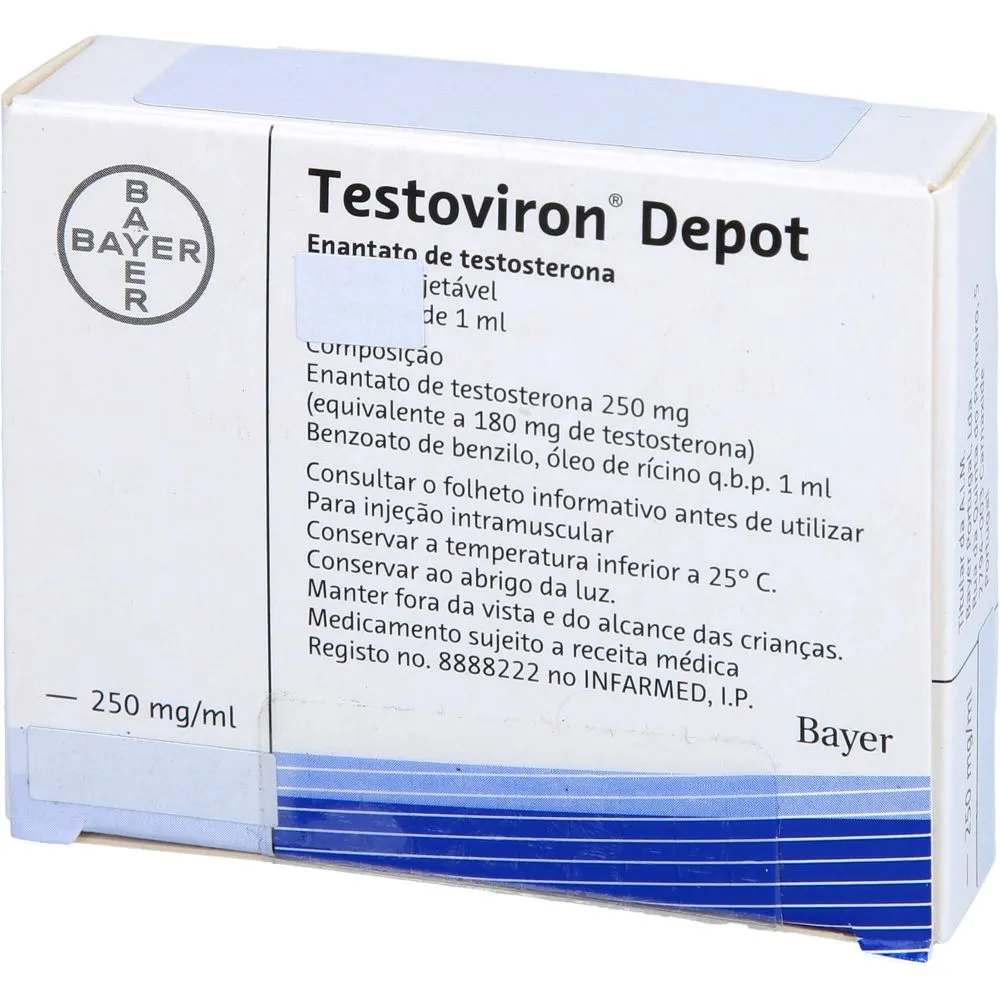
Table of Contents
- Package leaflet: Information for the patient
- Testoviron 250 mg/ml prolonged-release injectable solution for intramuscular use
- 1. What Testoviron is and what it is used for
- 2. What you need to know before using Testoviron
- 3. How to use Testoviron
- 4. Possible side effects
- 5. How to store Testoviron
- 6. Package contents and other information
Package leaflet: Information for the patient
Testoviron 250 mg/ml prolonged-release injectable solution for intramuscular use
testosterone enantate
Please read all of this leaflet carefully before you start using this medicine because it contains important information for you.
- Keep this leaflet. You may need to read it again.
- If you have any questions, ask your doctor or pharmacist.
- This medicine has been prescribed for you only. Do not give it to other people, even if their symptoms are the same as yours, as it may be harmful.
- If you experience any side effect, including those not listed in this leaflet, talk to your doctor or pharmacist. See section 4.
Contents of this leaflet:
- What Testoviron is and what it is used for
- What you need to know before using Testoviron
- How to use Testoviron
- Possible side effects
- How to store Testoviron
- Contents of the pack and other information
1. What Testoviron is and what it is used for
Testoviron is used to replace testosterone in adult men for the treatment of various health problems caused by testosterone deficiency (male hypogonadism). This condition must be confirmed by two separate measurements of testosterone in the blood and must include clinical symptoms such as:
- impotence
- infertility
- low sexual desire
- fatigue
- depressed mood
- loss of bone tissue due to low hormone levels
2. What you need to know before using Testoviron
Do not use Testoviron
- if you are allergic to testosterone enantate or to any of the other ingredients of this medicine (listed in section 6);
- if you have androgen-dependent carcinoma of the prostate or male breast;
- if you have hypercalcaemia (excess calcium in the blood) secondary to malignant tumours;
- if you have or have had a liver tumour;
- if you suffer from kidney disease;
- if you have high blood pressure;
- if you suffer from severe liver dysfunction.
Warnings and precautions
Testoviron is not indicated to increase muscle development in healthy individuals or to enhance physical performance.
Consult your doctor before using Testoviron if you have or have ever had:
- fluid retention causing swollen legs (oedema);
- temporary interruptions in breathing during sleep (apnoea), as these may worsen;
- blood clotting disorders or bleeding disorders (e.g. haemophilia) or thrombophilia (a blood coagulation disorder increasing the risk of thrombosis – blood clots in blood vessels) or risk factors increasing the likelihood of blood clots in a vein: previous blood clots in a vein; smoking; obesity; cancer; immobility; if one of your close relatives has had a blood clot in a leg, lung or other organ at a young age (e.g. under approximately 50 years of age); or ageing.
How to recognize a blood clot: painful swelling of one leg or sudden change in skin colour, for example becoming pale, red or blue; sudden unexplained shortness of breath; sudden cough possibly producing blood; sudden chest pain; severe mental confusion or dizziness; severe stomach pain; sudden loss of vision. Seek immediate medical attention if any of these symptoms occur.
Inform your doctor if you have high blood pressure or are being treated for high blood pressure, as testosterone may increase blood pressure.
If you suffer from severe heart, liver or kidney disease, treatment with Testoviron may lead to serious complications such as fluid accumulation in the body, sometimes accompanied by congestive heart failure.
Misuse and dependence
Always take this medicine exactly as prescribed by your doctor or pharmacist.
Abuse of testosterone, especially when taken in excess alone or in combination with other anabolic androgenic steroids, may cause serious health problems affecting the heart and blood vessels (which may be fatal), mental health and/or the liver.
Individuals who have abused testosterone may develop dependence and may experience withdrawal symptoms when dosage is significantly reduced or abruptly discontinued. Do not misuse this medicine alone or in combination with other anabolic androgenic steroids, as it poses serious health risks (see “Possible side effects”).
Medical examinations/consultations
As a precaution, undergo periodic andrological examinations including digital rectal examination of the prostate.
Before and during treatment, your doctor should perform the following blood tests: blood testosterone levels, complete blood count.
Benign and malignant liver tumours have been observed following the use of Testoviron, which may lead to life-threatening intra-abdominal bleeding. If you experience discomfort in the upper abdomen, consult your doctor, who will perform tests to rule out the presence of a liver tumour.
Elderly patients treated with androgens may have an increased risk of developing benign prostatic hyperplasia (enlargement of the prostate). Although there is no clear evidence that androgens cause prostate carcinoma (prostate cancer), they may promote the growth of existing tumours. Therefore, before prescribing testosterone-based therapy, your doctor must exclude the presence of prostate carcinoma.
Testoviron may cause excessive sexual stimulation. If this occurs, consult your doctor.
If you are elderly, your doctor will carefully monitor whether this medicine causes you excessive and undesirable physical, nervous or mental stimulation.
Like all oily solutions, Testoviron must be administered only by slow intramuscular injection. Pulmonary microembolism caused by oily solutions (small oil droplets in the pulmonary arteries) may result in signs and symptoms such as cough, breathing difficulties and chest pain.
Other signs and symptoms may also occur, including malaise, sweating, dizziness, paraesthesia (altered sensation, e.g. tingling) or fainting. These reactions may occur during or immediately after injection and are reversible. Treatment consists of supportive measures such as oxygen administration.
Testoviron must not be used in women, as it may cause jaundice (yellowing of the skin and whites of the eyes) and signs of virilization such as acne, abnormal growth of hair in areas typical of men, and voice changes.
For athletes
Using this medicine without therapeutic need constitutes doping and may result in a positive anti-doping test.
Additional information on special populations
Children and adolescents
The use of Testoviron is not indicated in children and adolescents.
In children, testosterone may cause masculinizing effects and may affect bone maturation, resulting in reduced height growth.
Elderly patients (65 years or older)
No dose adjustment is required in elderly patients (see “Medical examinations/consultations”).
Patients with impaired liver function
The use of Testoviron is contraindicated in patients who have or have had liver tumours (see “Do not use Testoviron”).
Other medicines and Testoviron
Inform your doctor or pharmacist if you are taking, have recently taken or might take any other medicines.
In particular, inform your doctor if you are taking the following medicines:
- medicines used to treat neurological disorders and sleep problems (barbiturates or other enzyme inducers), as they may reduce the effectiveness of Testoviron;
- medicines used to treat pain and inflammation (oxyphenbutazone);
- medicines used to thin the blood (oral anticoagulants, coumarin derivatives), as they may increase the risk of bleeding. Your doctor will monitor and adjust your dose accordingly and will closely monitor your coagulation parameters;
- medicines used to treat diabetes. The dose of blood sugar-lowering medicines may need to be adjusted. Like other androgens, testosterone may enhance the effect of insulin. Taking SGLT-2 inhibitors (such as empagliflozin, dapagliflozin or canagliflozin) together with testosterone may increase the number of red blood cells in the blood. Your doctor may need to perform blood tests more frequently.
Remember to inform your doctor if you have a coagulation disorder, as it is important that your doctor is aware of this before deciding to administer Testoviron.
Fertility
Testosterone replacement therapy may reversibly reduce spermatogenesis (sperm production – see section 4).
Driving and using machines
Testoviron does not affect the ability to drive or operate machinery.
Testoviron contains benzyl benzoate
This medicine contains 342.0 mg of benzyl benzoate in each 1 ml vial.
Testoviron contains castor oil
It may cause severe allergic reactions.
3. How to use Testoviron
Use this medicine exactly as instructed by your doctor or pharmacist. If you have
any doubts, consult your doctor or pharmacist.
This medicine is for intramuscular use only.
The oily solution must be injected very slowly (see "Warnings and precautions" and
"Possible side effects"), immediately after being drawn into the syringe.
Recommended dose:
For development and stimulation of androgen-dependent target organs and initial treatment
of deficiency symptoms: one vial of 250 mg every 2–3 weeks.
For maintenance of adequate androgenic effect: one vial of 250 mg every 3–4 weeks.
Depending on individual requirements, the doctor may decide to shorten the intervals between
injections, while in many cases longer intervals, up to 6 weeks, may be sufficient.
Before starting treatment, and periodically thereafter, at the end of an injection interval, your doctor will
measure your blood testosterone levels. Levels below the normal range indicate the need to shorten the injection interval, whereas the interval should be extended if levels are high.
If you use more Testoviron than you should
In case of accidental ingestion/overdose of Testoviron, contact your doctor immediately or go to the nearest hospital.
No specific therapeutic measures are required; the doctor will decide whether to discontinue treatment or reduce the dose.
If you have any doubts about how to use this medicine, consult your doctor or pharmacist.
4. Possible side effects
Like all medicines, this medicine can cause side effects, although not everybody will experience them.
For information on side effects associated with the use of androgens, also refer to the section "Warnings and precautions".
The most commonly reported side effects with Testoviron are pain at the injection site, itching (erythema) at the injection site, cough and/or difficulty breathing during or immediately after injection.
Common side effects are: increased red blood cell count, haematocrit (percentage of red blood cells in the blood), and haemoglobin (the component of red blood cells that carries oxygen), as shown by periodic blood tests, and weight gain.
The side effects listed below are derived from spontaneous reports and scientific literature; therefore, it is not possible to estimate their frequency from the available data.
- benign and malignant liver tumours,
- allergic reaction
- increased number of red blood cells in the blood (polycythaemia)
- increased or decreased sexual desire (increased or reduced libido)
- depression
- difficulty sleeping (insomnia)
- restlessness
- aggression
- emotional disturbance
- irritability
- headache, migraine or tremor
- dizziness
- skin redness and sudden sensation of warmth throughout the body (hot flush)
- high blood pressure (hypertension)
- cough, bronchitis, sinusitis, snoring
- difficulty breathing (dyspnoea)
- changes in voice quality and tone (dysphonia)
- frequent or loose bowel movements (diarrhoea)
- malaise (nausea)
- yellowish discoloration of the skin and whites of the eyes (jaundice)
- skin reactions such as:
- acne
- hair loss (alopecia)
- skin rash
- itching and small spots on the skin (urticaria)
- itching
- skin redness (erythema)
- dry skin
- excessive sweating (hyperhidrosis)
- joint pain (arthralgia), pain in arms and legs (pain in extremities), or muscle pain (myalgia)
- various types of reaction at the injection site (pain, itching, redness, hardening, swelling, inflammation)
- tiredness (fatigue)
- weakness (asthenia)
- increased prostate-specific antigen (PSA) (increased immune response)
- abnormal liver function tests (e.g. increased aspartate aminotransferase)
- increased glycated haemoglobin
- increased testosterone in the blood
- increased oestradiol in the blood
- breast hardening or enlargement in males (gynaecomastia)
- breast pain
- testicular pain
- enlarged prostate and associated disorders
- increased appetite, changes in certain blood tests (e.g. increased blood sugar or blood fats)
- muscle problems (e.g. spasm, stiffness, muscle strain)
- increased creatine phosphokinase in the blood
- urinary tract disorders (e.g. decreased urinary flow, urinary retention, need to urinate at night, difficulty during urination)
- prostate disorders (e.g. prostate dysplasia, prostate hardening or inflammation).
In rare cases, injections of oily solutions such as Testoviron may lead to a blood clot in a blood vessel in the lungs (pulmonary microembolism). This may result in the following symptoms:
- cough
- difficulty breathing (dyspnoea)
- feeling unwell and/or dizziness
- excessive sweating (hyperhidrosis)
- chest pain
- abnormal skin sensations such as burning, tingling, itching, or pricking (paraesthesia)
- fainting
These reactions may occur during or immediately after the injection and are reversible. The patient should therefore be kept under observation during and immediately after each injection to allow rapid identification of any signs and symptoms of oil-induced pulmonary microembolism.
High-dose or long-term administration of testosterone may induce anxiety states, hypercalcaemia (increased calcium levels in the blood), and may increase the tendency to fluid retention (accumulation of fluid in tissues) and oedema (swelling). Your doctor should monitor you carefully if you show such a tendency, particularly if you have severe kidney or heart problems, asthma, or epilepsy.
High doses of testosterone or its derivatives inhibit gonadotropin secretion (the hormones that stimulate the testes), resulting in testicular atrophy.
Prolonged and high-dose treatment with Testoviron may reversibly inhibit or reduce spermatogenesis.
If, in individual cases, frequent or persistent erections occur (priapism), your doctor will decide whether to reduce the dose or discontinue treatment to avoid penile damage.
Hostility/aggression and increased body hair growth have been reported during treatment with testosterone-containing medicines.
Reporting of side effects
If you experience any side effect, including those not listed in this leaflet, talk to your doctor or pharmacist. You may also report side effects directly via the national reporting system at the website
www.aifa.gov.it/content/segnalazioni-reazioni-avverse .
By reporting side effects, you can help provide more information on the safety of this medicine.
5. How to store Testoviron
Keep this medicine out of the sight and reach of children.
Do not use this medicine after the expiry date stated on the carton after "expiry".
The expiry date refers to the last day of that month. The expiry date applies to the product in its original, unopened packaging, stored correctly.
Do not dispose of any medicine via wastewater or household waste. Ask your pharmacist how to dispose of medicines no longer required. This will help protect the environment.
6. Package contents and other information
What Testoviron contains
- The active substance is testosterone enantate. One vial contains 250 mg of testosterone enantate (equivalent to 180 mg of testosterone).
- The other components are: benzyl benzoate, refined castor oil.
Description of the appearance of Testoviron and contents of the pack
Testoviron is a clear, yellowish oily solution. It is available in packs (boxes) containing 1 vial of 250 mg/1 ml.
Marketing Authorization Holder and Manufacturer
Marketing Authorization Holder
Advanz Pharma Limited
Unit 17, Northwood House,
Northwood Crescent,
Dublin 9,
D09 V504,
Ireland
Manufacturer
Bayer AG, Müllerstrasse 170-178, D-13353 Berlin (Germany).