Terbinafine Doc Generici
Italy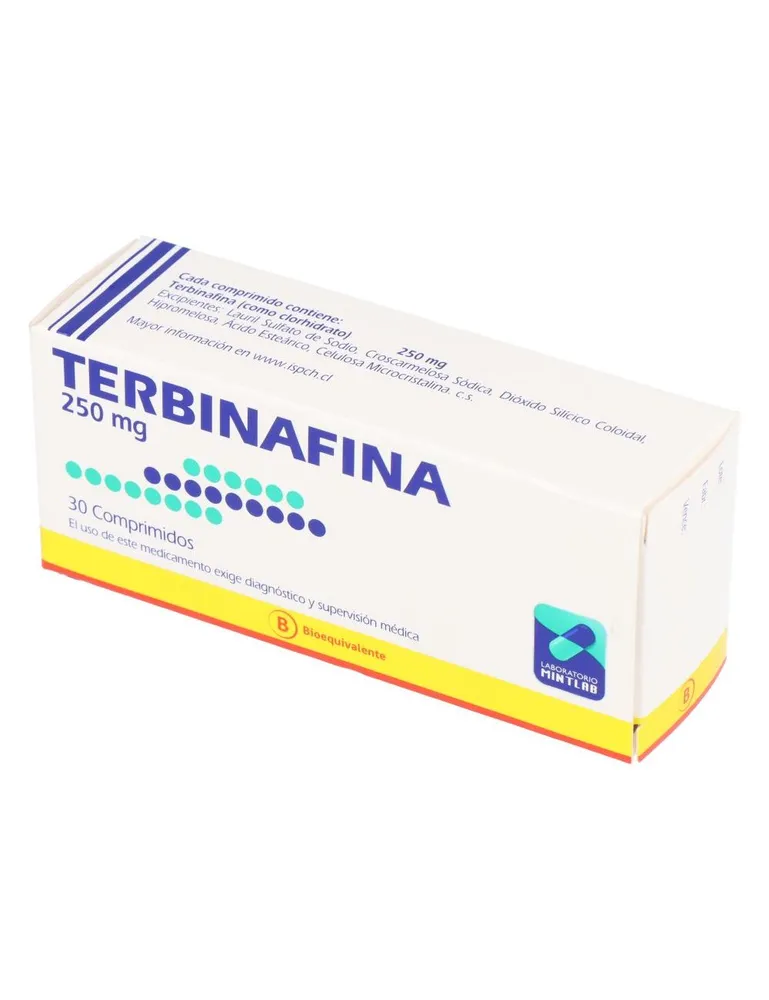
Table of Contents
- Patient Information Leaflet: Information for the User
- TERBINAFINE DOC Generics 250 mg Tablets
- 1. What TERBINAFINA DOC Generici is and what it is used for
- 2. What you need to know before taking TERBINAFINA DOC Generici
- 3. How to take TERBINAFINA DOC Generici
- 4. Possible side effects
- 5. How to store TERBINAFINA DOC Generici
- 6. Package contents and other information
Patient Information Leaflet: Information for the User
TERBINAFINE DOC Generics 250 mg Tablets
Equivalent Medicine
Please read this leaflet carefully before taking this medicine, as it contains
important information for you.
- Keep this leaflet. You may need to read it again.
- If you have any questions, ask your doctor or pharmacist.
- This medicine has been prescribed for you only. Do not give it to others, even if their symptoms are the same as yours, as it may be harmful.
- If you experience any adverse reactions that worsen, including those not listed in this leaflet, consult your doctor or pharmacist.
Contents of this leaflet:
- What TERBINAFINE DOC Generics is and what it is used for
- What you need to know before taking TERBINAFINE DOC Generics
- How to take TERBINAFINE DOC Generics
- Possible side effects
- How to store TERBINAFINE DOC Generics
- Contents of the pack and other information
1. What TERBINAFINA DOC Generici is and what it is used for
TERBINAFINA DOC Generici 250 mg tablets is a systemic antifungal medicinal product indicated for the treatment of:
Fungal infections of the scalp and nails caused by dermatophytes, namely Trichophyton (e.g. T. rubrum, T. mentagrophytes, T. verrucosum, T. tonsurans, T. violaceum), Microsporum canis and Epidermophyton floccosum.
The administration of tablets is indicated for the treatment of dermatophyte skin infections (Tinea corporis, Tinea cruris, Tinea pedis and Tinea capitis) and cutaneous yeast infections, caused for example by Candida species (e.g.: Candida albicans), when oral therapy is considered appropriate due to the site, severity or extent of the infection.
Onychomycosis (fungal infections of the nails) caused by dermatophyte fungi.
Note: Unlike topical formulations, orally administered terbinafine is inactive against Pityriasis versicolor.
2. What you need to know before taking TERBINAFINA DOC Generici
Do not take TERBINAFINA DOC Generici
- if you are allergic to the active substance or to any of the other ingredients of this medicine.
- if you suffer from active or chronic liver disease.
Do not administer TERBINAFINA DOC Generici to children under 2 years of age.
TERBINAFINA DOC Generici is generally contraindicated during pregnancy and breastfeeding (see Fertility, pregnancy and breastfeeding).
Warnings and precautions
Exercise particular caution with TERBINAFINA DOC Generici in the following cases:
Liver function
Terbinafine tablets are not recommended in patients with active or chronic liver disease. Liver function tests should be performed before prescribing terbinafine tablets. Hepatic toxicity may occur in patients with or without pre-existing liver disease; therefore, periodic monitoring (after 4-6 weeks of treatment) with liver function tests is recommended. Very rare cases of severe liver failure (some fatal or requiring liver transplantation) have been reported in patients treated with terbinafine tablets. In most cases of liver failure, patients had pre-existing serious systemic conditions, and a causal relationship with terbinafine tablet intake was not certain (see Possible Undesirable Effects).
Patients undergoing treatment with terbinafine tablets should be advised to promptly inform their physician of any signs or symptoms such as persistent nausea without apparent cause, loss of appetite, fatigue, vomiting, right upper quadrant abdominal pain, jaundice, dark urine, or pale stools. Patients experiencing these symptoms should discontinue therapy with oral terbinafine and have their liver function immediately evaluated.
Dermatological effects
Very rare cases of severe dermatological reactions (e.g., Stevens-Johnson syndrome, toxic epidermal necrolysis) have been reported in patients treated with terbinafine tablets. If a progressive worsening skin rash occurs, treatment with terbinafine tablets must be discontinued.
Hematological effects
Very rare cases of blood dyscrasias (neutropenia, agranulocytosis, thrombocytopenia, pancytopenia) have been reported in patients treated with terbinafine tablets. The etiology of any blood disorder occurring in patients receiving terbinafine tablets should be evaluated, and possible changes in the therapeutic regimen, including discontinuation of terbinafine tablets, should be considered.
Renal function
The use of terbinafine tablets in patients with impaired renal function (creatinine clearance less than 50 ml/min or serum creatinine greater than 300 micromoles/l) has not been adequately studied and is therefore not recommended.
Terbinafine should be administered with caution to patients with a history of psoriasis or lupus erythematosus, as very rare cases of lupus erythematosus have been reported.
Interactions with other medicines
In vitro and in vivo studies have shown that terbinafine inhibits metabolism mediated by the CYP2D6 enzyme. Therefore, patients should be monitored when receiving concomitant treatment with drugs primarily metabolized by CYP2D6 (e.g., certain drugs belonging to the following classes: tricyclic antidepressants, beta-blockers, selective serotonin reuptake inhibitors, antiarrhythmics (including those of class IA, IB and IC), monoamine oxidase inhibitors of type B), especially if the co-administered drug has a narrow therapeutic window (see Taking TERBINAFINA DOC Generici with other medicines).
Other medicines and TERBINAFINA DOC Generici
Inform your doctor or pharmacist if you are taking, have recently taken, or might take any other medicine, including those without a prescription.
Effects of other drugs on terbinafine
The plasma clearance of terbinafine may be accelerated by drugs that induce metabolism and may be inhibited by drugs that inhibit cytochrome P450. When co-administration of these drugs is necessary, an adjustment of the terbinafine tablet dosage may be required.
- The following medicines may increase the effect or plasma concentration of terbinafine
Cimetidine reduced the clearance of terbinafine by 33%. Fluconazole increased the Cmax and AUC of terbinafine by 52% and 69%, respectively, due to inhibition of both CYP2C9 and CYP3A4 enzymes. A similar increase in exposure may occur when other drugs that inhibit both CYP2C9 and CYP3A4, such as ketoconazole and amiodarone, are administered concomitantly with terbinafine. - The following medicines may decrease the effect or plasma concentration of terbinafine
Rifampicin increased the clearance of terbinafine by 100%.
Effects of terbinafine on other medicines
Based on results from in vitro and studies in healthy volunteers, terbinafine has negligible effects on the plasma clearance of most drugs metabolized via the cytochrome P450 enzyme system (e.g., terfenadine, triazolam, tolbutamide, or oral contraceptives), except for those metabolized through CYP2D6 (see below).
Terbinafine does not interfere with the clearance of antipyrine or digoxin.
In patients who have taken terbinafine tablets concomitantly with oral contraceptives, some cases of irregular menstruation have been observed, although the incidence of these disturbances falls within the range observed in patients taking oral contraceptives alone.
-
Terbinafine may increase the effect or plasma concentration of the following medicines
Caffeine
Terbinafine reduced the clearance of intravenously administered caffeine by 19%.
Drugs primarily metabolized by CYP2D6
In vitro and in vivo studies have shown that terbinafine inhibits metabolism mediated by the CYP2D6 enzyme. This could be clinically significant for drugs primarily metabolized by CYP2D6, e.g., certain drugs belonging to the following classes: tricyclic antidepressants, beta-blockers, selective serotonin reuptake inhibitors, antiarrhythmics (including those of class IA, IB and IC), monoamine oxidase inhibitors of type B), especially when these drugs also have a narrow therapeutic window (see Exercise particular caution with TERBINAFINA DOC Generici). Terbinafine reduced the clearance of desipramine by 82%. -
Terbinafine may decrease the effect or plasma concentration of the following medicines
Terbinafine increased the clearance of cyclosporine by 15%.
Pregnancy, breastfeeding and fertility
If you are pregnant, think you may be pregnant, are planning a pregnancy, or are breastfeeding, consult your doctor or pharmacist before taking this medicine.
Pregnancy
Animal studies on fetal toxicity and fertility have not shown any adverse effects.
Since clinical experience in pregnant women is very limited, terbinafine tablets should not be used during pregnancy unless the woman's clinical condition requires oral treatment with terbinafine and the potential benefits to the mother outweigh the potential risks to the fetus.
Breastfeeding
Terbinafine is excreted in breast milk; therefore, patients treated with oral terbinafine should not breastfeed.
Fertility
Animal studies on toxicity and fertility have not shown any adverse effects.
Driving and use of machines
No studies have been conducted on the effects of terbinafine tablets on the ability to drive vehicles or operate machinery. Patients who experience dizziness as an adverse effect should avoid driving vehicles or operating machinery.
TERBINAFINA DOC Generici contains sodium
This medicine contains less than 1 mmol (23 mg) of sodium per tablet, i.e., essentially 'sodium-free'.
3. How to take TERBINAFINA DOC Generici
Take this medicine exactly as directed by your doctor. If you have any doubts, consult your doctor.
The duration of oral treatment varies depending on the type and severity of the infection and may possibly be extended at the doctor's discretion.
Adults
Cutaneous fungal infections (Tinea pedis interdigital, plantar and/or moccasin type, Tinea corporis,
Tinea cruris, and cutaneous candidiasis):
1 tablet of 250 mg once daily for 2 weeks.
Complete resolution of infection signs and symptoms may occur several weeks after mycological healing.
Onychomycosis: 1 tablet of 250 mg once daily. For most patients, the treatment duration ranges between 6 and 12 weeks: 6 weeks of therapy are generally sufficient for fingernail onychomycosis, 12 weeks for toenail onychomycosis.
Some patients with reduced nail growth may require prolonged treatment.
Complete resolution of infection signs and symptoms may take several months after discontinuation of treatment (i.e., until nail plate regrowth has resulted in complete replacement of the affected nail).
Children over 2 years of age weighing more than 12 kg
| Daily dosage | |
| Body weight | Dosage |
| < 20 kg | 62.5 mg |
| 20 - 40 kg | 125 mg |
| > 40 kg | 250 mg |
Recommended duration of treatment:
Tinea pedis (interdigital, plantar and/or moccasin type): 2 - 6 weeks
Tinea corporis, cruris: 2 - 4 weeks
Cutaneous candidiasis: 2 - 4 weeks
Tinea capitis: 2 - 4 weeks
Onychomycosis: 6 - 12 weeks
Fingernail onychomycosis: 6 weeks
Toenail onychomycosis: 12 weeks
Note: Tinea capitis is mainly observed in children.
Additional information on specific patient populations
Patients with hepatic impairment
Terbinafine tablets are not recommended for patients with chronic or active liver disease (see Do not take TERBINAFINA DOC Generici and Take special care with TERBINAFINA DOC Generici).
Patients with renal impairment
The use of terbinafine tablets has not been adequately studied in patients with renal impairment and is therefore not recommended in this patient population (see Take special care with TERBINAFINA DOC Generici).
Elderly patients
There is no evidence suggesting that elderly patients require different dosing or are at increased risk of adverse effects compared to younger patients. When prescribing terbinafine tablets to patients in this age group, the possibility of pre-existing hepatic or renal impairment should be taken into consideration (see section Take special care with TERBINAFINA DOC Generici).
Use in children
In children above 2 years of age, terbinafine tablets have been shown to be well tolerated.
If you take more TERBINAFINA DOC Generici than you should
Cases of overdose (up to 5 g) have been reported, resulting in headache, nausea, upper abdominal pain, and dizziness.
In case of overdose, elimination of the drug by administration of activated charcoal is recommended, accompanied, if necessary, by supportive symptomatic treatment.
If you have any questions about the use of TERBINAFINA DOC Generici, consult your doctor or pharmacist.
4. Possible side effects
Like all medicines, this medicine can cause side effects, although not everybody will experience them.
If any of the side effects worsen, or if you notice any side effects not listed in this leaflet, inform your doctor or pharmacist.
The following adverse reactions have been observed during clinical studies or in post-marketing experience.
The adverse reactions (Table 1) are classified by frequency, listing the most frequent first, using the following convention: very common (≥ 1/10); common (≥ 1/100 and < 1/10); uncommon (≥ 1/1,000 and < 1/100); rare (≥ 1/10,000 and < 1/1,000); very rare (< 1/10,000); and not known (frequency cannot be estimated from the available data).
Table 1
Blood and lymphatic system disorders
Very rare Neutropenia, agranulocytosis, thrombocytopenia,
pancytopenia.
Not known Anaemia.
Immune system disorders
Very rare Anaphylactoid reactions, angioedema, cutaneous and systemic lupus erythematosus.
Not known Anaphylactic reactions, serum sickness-like reactions.
Metabolism and nutrition disorders
Very common Decreased appetite.
Psychiatric disorders
Not known Anxiety, depression.
Nervous system disorders
Common Headache.
Uncommon Hypogeusia, ageusia.
Very rare Dizziness, paraesthesia, and hypoaesthesia.
Not known Anosmia.
Ear and labyrinth disorders
Not known Hearing impairment, hearing disturbances, tinnitus.
Vascular disorders
Not known Vasculitis.
Gastrointestinal disorders
Very common Abdominal distension, dyspepsia, nausea, abdominal pain, diarrhoea.
Not known Pancreatitis.
Hepatobiliary disorders
Rare Hepatic failure, increased liver enzyme levels.
Not known Hepatitis, jaundice, cholestasis.
Skin and subcutaneous tissue disorders
Very common Rash, urticaria.
Very rare Erythema multiforme, Stevens-Johnson syndrome, toxic epidermal necrolysis, acute generalised exanthematous pustulosis (AGEP).
Psoriasiform eruptions or exacerbations of psoriasis.
Alopecia.
Not known Photosensitivity reaction, photodermatosis, allergic photosensitivity reactions, and polymorphic light eruption.
Musculoskeletal and connective tissue disorders
Very common Arthralgia, myalgia.
Not known Rhabdomyolysis.
General disorders and administration site conditions
Very rare Fatigue.
Not known Influenza-like illness, pyrexia.
Investigations
Not known Increased blood creatine phosphokinase levels, decreased body weight***.
* Anxiety and depressive symptoms secondary to dysgeusia.
** Hypogeusia including ageusia, which generally resolves within a few weeks after discontinuation of the medicine. Isolated cases of hypogeusia have been reported.
*** Weight loss secondary to hypogeusia.
Reporting of side effects
If you experience any side effect, including those not listed in this leaflet, talk to your doctor or pharmacist. You can also report side effects directly via the national reporting system at www.aifa.gov.it/content/segnalazioni-reazioni-avverse. By reporting side effects, you can help provide more information on the safety of this medicine.
5. How to store TERBINAFINA DOC Generici
Do not store at temperatures above 25 °C.
Keep this medicine out of the sight and reach of children.
Do not use this medicine after the expiry date stated on the label. The expiry date refers to the last day of the month.
Do not dispose of any medicine via wastewater or household waste. Ask your pharmacist how to dispose of medicines no longer required. This will help protect the environment.
6. Package contents and other information
What TERBINAFINA DOC Generici contains
The active substance is: terbinafine.
Each tablet contains: terbinafine 250 mg (as terbinafine hydrochloride).
The excipients are: methylcellulose, sodium croscarmellose, magnesium stearate, colloidal anhydrous silica.
Description of the appearance of TERBINAFINA DOC Generici and package contents
TERBINAFINA DOC Generici tablets are white or almost white, round, with "TER" and "250" engraved on one side separated by a breakline, and plain on the other side.
The breakline is intended only to divide the tablet for ease of swallowing and does not divide it into two equal doses.
TERBINAFINA DOC Generici is available in packs of 8 tablets of 250 mg in blister packs.
Marketing Authorization Holder
DOC Generici S.r.l. - Via Turati 40 - 20121 Milan, Italy
Manufacturers
Lamp San Prospero S.p.A., Via della Pace 25/A – 41030 San Prospero S/S (MO) - Italy
INDUSTRIA FARMACEUTICA NOVA ARGENTIA S.R.L.,
Via G. Pascoli, 1 - 20064 Gorgonzola (MI) - Italy