Temozolomide Sun
Italy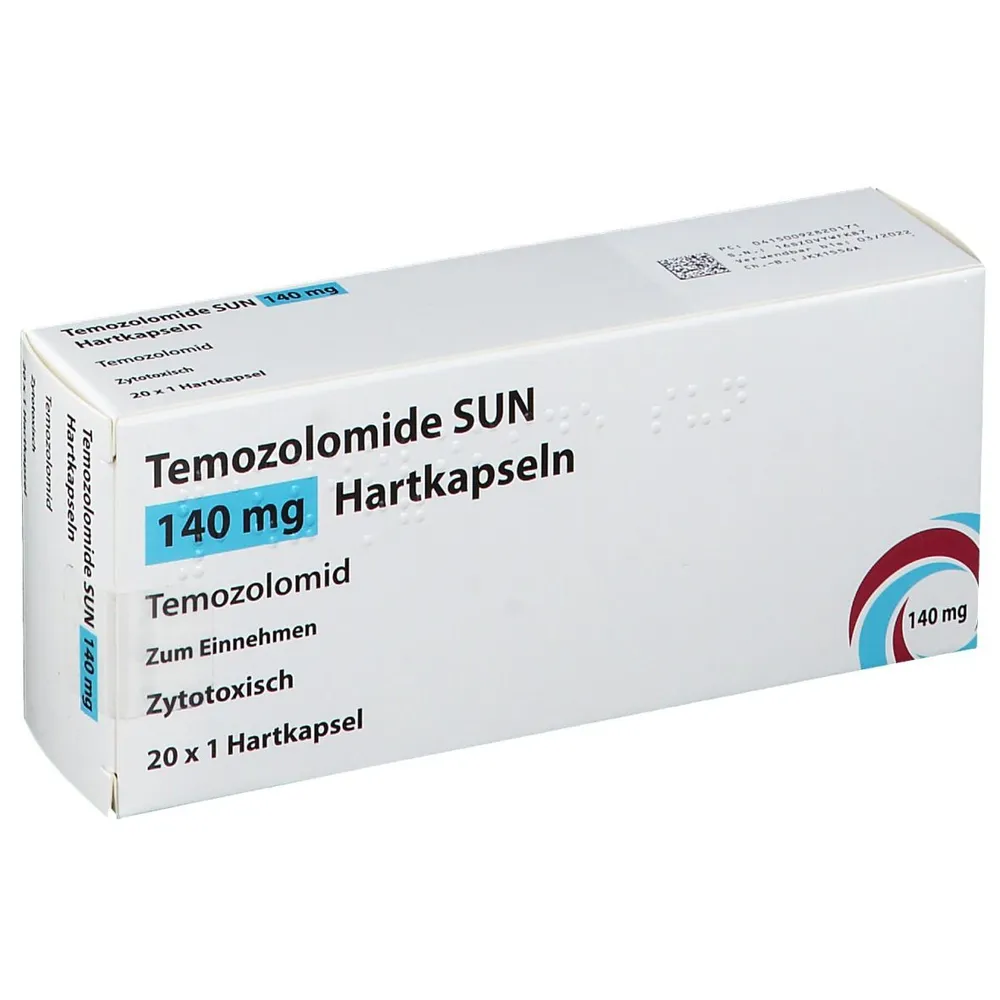
Table of Contents
- Patient Information Leaflet
- Temozolomide SUN 5 mg hard capsules, 20 mg hard capsules, 100 mg hard capsules, 140 mg hard capsules, 180 mg hard capsules, 250 mg hard capsules
- 1. What Temozolomide SUN is and what it is used for
- 2. What you need to know before taking Temozolomide SUN
- 3. How to take Temozolomide SUN
- 4. Possible side effects
- 5. How to store Temozolomide SUN
- 6. Package contents and other information
Patient Information Leaflet
Temozolomide SUN 5 mg hard capsules, 20 mg hard capsules, 100 mg hard capsules, 140 mg hard capsules, 180 mg hard capsules, 250 mg hard capsules
temozolomide
Please read all of this leaflet carefully before you start taking this medicine because it contains important information for you.
- Keep this leaflet. You may need to read it again.
- If you have any questions, ask your doctor, pharmacist, or nurse.
- This medicine has been prescribed for you only. Do not give it to other people, even if they have the same symptoms as yours, as it may be harmful to them.
- If you get any side effects, talk to your doctor, pharmacist, or nurse. This includes any side effects not listed in this leaflet. See section 4.
What is in this leaflet
- What Temozolomide SUN is and what it is used for
- What you need to know before taking Temozolomide SUN
- How to take Temozolomide SUN
- Possible side effects
- How to store Temozolomide SUN
- Contents of the pack and other information
1. What Temozolomide SUN is and what it is used for
Temozolomide SUN contains a medicinal substance called temozolomide. This medicine is an antitumour agent.
Temozolomide SUN is used to treat specific types of brain tumour:
- in adults with newly diagnosed glioblastoma multiforme. Temozolomide SUN is initially used in combination with radiotherapy (concomitant treatment phase) and subsequently used alone (monotherapy treatment phase).
- in children aged 3 years and older and in adult patients with malignant glioma, such as glioblastoma multiforme or anaplastic astrocytoma. Temozolomide SUN is used in these tumours when recurrence or progression occurs after standard therapy.
2. What you need to know before taking Temozolomide SUN
Do not take Temozolomide SUN
- if you are allergic to temozolomide or to any of the other ingredients of this medicine (listed in section 6).
- if you have had an allergic reaction to dacarbazine (an anticancer medicine sometimes called DTIC). Signs of an allergic reaction include itching, shortness of breath or wheezing, swelling of the face, lips, tongue or throat.
- if the number of certain types of blood cells is severely reduced (myelosuppression), such as white blood cells or platelets. These blood cells are important for
fighting infections and proper blood clotting. Your doctor will perform blood tests to ensure that the number of these cells is sufficient before starting treatment.
Warnings and precautions
Talk to your doctor, pharmacist, or nurse before taking Temozolomide SUN
- because you must remain under close medical supervision to detect any possible development of a serious chest infection called Pneumocystis jirovecii pneumonia (PCP). If you are a newly diagnosed patient (with glioblastoma multiforme), you may be given Temozolomide SUN for 42 days in combination with radiotherapy. In this case, your doctor will also prescribe a medicine to help prevent this type of pneumonia (PCP).
- if you have ever had or may currently have hepatitis B infection. This is because Temozolomide SUN could cause reactivation of hepatitis B, which in some cases may be fatal. Before starting treatment, patients will be carefully monitored by the doctor to check for signs of this infection.
- if you have a low number of red blood cells (anaemia), white blood cells and platelets, or blood clotting problems before starting treatment, or if you develop them during treatment. Your doctor may decide to reduce the dose, interrupt, suspend or change the treatment. You may also require additional treatments. In some cases, administration of Temozolomide SUN may need to be suspended. Blood samples will be frequently analysed during treatment to monitor any adverse effects of Temozolomide SUN on your blood cells.
- because there is a low risk that you may develop other blood cell abnormalities, including leukaemia.
- if you have nausea (feeling of discomfort in the stomach) and/or vomiting, which are very common side effects of Temozolomide SUN (see section 4), your doctor may prescribe an anti-emetic medicine to help prevent vomiting. If you vomit frequently before or during treatment, ask your doctor about the best time to take Temozolomide SUN until vomiting is under control. If you vomit after taking a dose, do not take a second dose on the same day.
- if you develop fever or signs of an infection, contact your doctor immediately.
- if you are over 70 years old, you may be more prone to infections, bruising or bleeding.
- if you have liver or kidney problems, your dose of Temozolomide SUN may need to be adjusted.
Children and adolescents
Do not give this medicine to children under 3 years of age, as it has not been studied in this age group.
There is limited information available in patients over 3 years of age who have taken Temozolomide SUN.
Other medicines and Temozolomide SUN
Inform your doctor or pharmacist if you are taking, have recently taken, or might take any other medicines.
Pregnancy, breastfeeding and fertility
If you are pregnant, suspect you may be pregnant, planning to become pregnant, or are breastfeeding, consult your doctor or pharmacist before taking this medicine. This is because you should not be treated with Temozolomide SUN during pregnancy unless clearly indicated by your doctor.
Effective contraceptive precautions must be used by female patients of childbearing age during treatment with Temozolomide SUN and for at least 6 months after completion of treatment.
You must stop breastfeeding while receiving Temozolomide SUN.
Male fertility
Temozolomide SUN may cause permanent infertility. Male patients should use an effective contraceptive method and should not attempt to father a child for at least 3 months after stopping treatment. It is recommended to discuss sperm preservation before starting treatment.
Driving and using machines
Temozolomide SUN may make you feel tired or drowsy. If this occurs, do not drive or operate any tools, machinery or bicycles until you know how this medicine affects you (see section 4).
Temozolomide SUN contains lactose
Temozolomide SUN contains lactose (a type of sugar). If your doctor has diagnosed you with an intolerance to certain sugars, contact him or her before taking this medicine.
3. How to take Temozolomide SUN
Take this medicine exactly as your doctor or pharmacist has told you. If
you are not sure, consult your doctor or pharmacist.
Dose and duration of treatment
Your doctor will calculate your dose of Temozolomide SUN. The dose will depend on your height and weight,
and on whether your tumour has recurred and whether you have previously received chemotherapy.
You may be prescribed other medicines (antiemetics) to take before and/or after taking
Temozolomide SUN to prevent or control nausea and vomiting.
Patients with newly diagnosed glioblastoma multiforme
If you are a newly diagnosed patient, treatment will consist of two phases:
- first, treatment combined with radiotherapy (concomitant phase)
- followed by treatment with Temozolomide SUN alone (monotherapy phase).
During the concomitant phase, your doctor will start Temozolomide SUN at a dose of 75 mg/m² (standard
dose). You will take this dose daily for a period of 42 to 49 days, in combination with
radiotherapy. The dose of Temozolomide SUN may be delayed or interrupted, depending on your blood
tests and how well you tolerate the medicine during the concomitant phase.
Once radiotherapy has been completed, you will not receive any treatment for 4 weeks. This will allow
your body some time to recover.
Then you will start the monotherapy phase.
During the monotherapy phase, the dose and administration schedule of Temozolomide SUN may
vary. Your doctor will calculate the exact dose. There may be up to 6 treatment periods (cycles).
Each cycle lasts 28 days. The initial dose will be 150 mg/m². You will take the new dose of
Temozolomide SUN once daily for the first 5 days (“dosing days”) of each cycle.
Then there will be 23 days without Temozolomide SUN. This completes the 28-day treatment cycle.
On day 28, you will start the next cycle. You will again take Temozolomide SUN once daily for 5 days,
followed by 23 days without taking the medicine. The dose of Temozolomide SUN
may be adjusted, delayed or interrupted depending on blood tests and how well you tolerate the
medicine during each treatment cycle.
Patients with recurrent or worsening tumours (malignant gliomas, such as glioblastoma multiforme or
anaplastic astrocytoma) treated with Temozolomide SUN alone
A treatment cycle with Temozolomide SUN lasts 28 days.
You will take Temozolomide SUN once daily for the first 5 days. The daily dose
depends on whether or not you have previously received chemotherapy.
If you have never been treated with chemotherapy, the initial dose of Temozolomide SUN will be
200 mg/m² once daily for the first 5 days. If you have previously received chemotherapy, the initial dose of Temozolomide SUN will be 150 mg/m² once daily for the first
5 days. For the following 23 days you will not receive Temozolomide SUN. This completes the 28-day
treatment cycle.
On day 28, you will start the next cycle. You will again take Temozolomide SUN once daily for 5 days,
followed by 23 days without taking the medicine.
Before each new treatment cycle, your doctor will perform a blood test to check whether the dose of Temozolomide SUN needs to be adjusted. Depending on the results of the blood test, your
doctor may adjust the dose for the next cycle.
How to take Temozolomide SUN
Take your prescribed dose of Temozolomide SUN once daily, preferably at the same
time each day.
Take the capsules on an empty stomach; for example, at least one hour before breakfast. Swallow the capsule(s) whole with a glass of water. Do not open, crush or chew the capsules. If a capsule is damaged, avoid contact of the powder with skin, eyes or nasal mucosa. If powder accidentally comes into contact with eyes or nose, rinse the affected area with water.
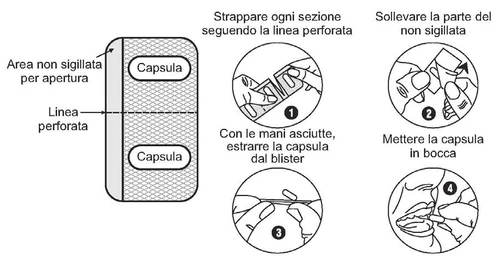
Depending on your prescribed dose, you may need to take more than one capsule at a time. To achieve
a dose, you may need to take capsules of different strengths. The marking on the capsules is
different for each strength (see table below).
| Strength | Marking on the capsule |
| Temozolomide SUN 5 mg hard capsules | 890 & 5 mg |
| Temozolomide SUN 20 mg hard capsules | 891 & 20 mg |
| Temozolomide SUN 100 mg hard capsules | 892 & 100 mg |
| Temozolomide SUN 140 mg hard capsules | 929 & 140 mg |
| Temozolomide SUN 180 mg hard capsules | 930 & 180 mg |
| Temozolomide SUN 250 mg hard capsules | 893 & 250 mg |
You must ensure that you fully understand the following:
- how many capsules you need to take for your daily dose. Ask your doctor or pharmacist to write this down for you (including the markings)
- which days you need to take the capsules. Check the dose with your doctor every time you start a new cycle, as it may differ from the previous cycle.
Always take Temozolomide SUN exactly as explained by your doctor. If you have any doubts, it is very important that you consult your doctor or pharmacist. Any mistake in the way you take this medicine could have serious consequences for your health.
If you take more Temozolomide SUN than you should
If you accidentally take more capsules of Temozolomide SUN than prescribed, contact your doctor, pharmacist, or nurse immediately.
If you forget to take Temozolomide SUN
Take the missed dose as soon as possible on the same day. If a full day has passed, consult your doctor. Do not take a double dose to make up for a forgotten dose, unless your doctor specifically tells you to do so.
If you have any further questions about the use of this medicine, please consult your doctor, pharmacist, or nurse.
4. Possible side effects
Like all medicines, this medicine can cause side effects, although not everybody gets them.
Immediately inform your doctor if you notice any of the following side effects:
- a severe allergic (hypersensitivity) reaction (hives, shortness of breath or other breathing difficulties)
- uncontrolled bleeding
- seizures
- fever
- chills
- severe headache that does not go away.
Treatment with Temozolomide SUN may cause a decrease in certain types of blood cells. This could lead to increased bruising and bleeding, anaemia (a reduction in red blood cells), fever, and a reduced resistance to infections. The reduction in red blood cells is usually short-lived. In some cases, it may persist and may lead to a very severe form of anaemia (aplastic anaemia). Your doctor will carry out regular blood tests to detect any changes, and will decide whether any specific treatment is needed. In some cases, the dose of Temozolomide SUN may need to be reduced or treatment stopped.
Other side effects that have been reported are listed below:
Very common side effects (may affect more than 1 in 10 people):
- loss of appetite, difficulty speaking, headache
- vomiting, nausea, diarrhoea, constipation
- skin rash, hair loss
- tiredness.
Common side effects (may affect up to 1 in 10 people):
- infections, mouth infections, wound infections
- reduction in blood cell counts (neutropenia, lymphopenia, thrombocytopenia)
- allergic reaction
- increased blood sugar levels
- memory loss, depression, anxiety, confusion, difficulty falling or staying asleep
- coordination disorders and balance problems
- difficulty concentrating, altered mental state or attention, memory loss
- dizziness, sensory disturbances, tingling sensation, tremor, altered taste
- partial loss of vision, abnormal vision, double vision, dry or painful eyes
- hearing loss, ringing in the ears, earache
- blood clots in the lung or legs, high blood pressure
- pneumonia, shortness of breath, bronchitis, cough, inflammation of the nasal cavities
- stomach or abdominal pain, stomach discomfort/heartburn, difficulty swallowing
- dry skin, itching
- muscle damage, muscle weakness, muscle pain and spasms
- joint pain, back pain
- frequent urination, difficulty holding urine
- fever, flu-like symptoms, pain, feeling unwell, cold or flu
- fluid retention, swollen legs
- increased liver enzymes
- weight loss, weight gain
- radiation injury.
Uncommon side effects (may affect up to 1 in 100 people):
- brain infections (herpes meningoencephalitis), including cases that have led to death
- new or reactivated cytomegalovirus infections
- infections caused by reactivated hepatitis B virus
- secondary tumours including leukaemia
- reduction in blood cell counts (pancytopenia, anaemia, leucopenia)
- red spots under the skin
- diabetes insipidus (symptoms include increased urine output and thirst), low blood potassium levels
- mood changes, hallucinations
- partial paralysis, changes in smell perception
- hearing disorders, middle ear infection
- palpitations (when you can feel your heartbeat), hot flushes
- abdominal swelling, difficulty controlling bowel movements, haemorrhoids, dry mouth
- hepatitis and liver damage (including liver failure leading to death), cholestasis, increased bilirubin
- blisters on the body or in the mouth, skin peeling, skin rash, painful redness of the skin, severe skin rash with swelling of the skin (including palms of hands and soles of feet)
- increased skin sensitivity to sunlight, hives (wheals), increased sweating, changes in skin pigmentation
- difficulty urinating
- vaginal bleeding, vaginal irritation, absent or heavy menstrual periods, breast pain, sexual impotence
- chills, facial swelling, discoloured tongue, thirst, dental disorders.
Reporting of side effects
If you experience any side effect, including those not listed in this leaflet, talk to your doctor, pharmacist or nurse. You can also report side effects directly via the national reporting system referred to in Annex V.
By reporting side effects, you can help provide more information on the safety of this medicine.
5. How to store Temozolomide SUN
Keep this medicine out of the sight and reach of children, preferably in a locked cabinet.
Accidental ingestion may be fatal in children.
Do not use this medicine after the expiry date stated on the label and carton. The expiry date refers to the last day of that month.
Do not store above 25°C.
Inform your pharmacist if you notice any changes in the appearance of the capsules.
Do not dispose of any medicine via wastewater or household waste. Ask your pharmacist how to dispose of medicines no longer required. This will help protect the environment.
6. Package contents and other information
What Temozolomide SUN contains
-
The active substance is temozolomide.
Temozolomide SUN 5 mg hard capsules: Each hard capsule contains 5 mg of temozolomide.
Temozolomide SUN 20 mg hard capsules: Each hard capsule contains 20 mg of temozolomide.
Temozolomide SUN 100 mg hard capsules: Each hard capsule contains 100 mg of temozolomide.
Temozolomide SUN 140 mg hard capsules: Each hard capsule contains 140 mg of temozolomide.
Temozolomide SUN 180 mg hard capsules: Each hard capsule contains 180 mg of temozolomide.
Temozolomide SUN 250 mg hard capsules: Each hard capsule contains 250 mg of temozolomide. -
The other components (excipients) are:
Capsule contents: lactose, sodium starch glycolate (type B), tartaric acid, stearic acid (see section 2 “Temozolomide SUN contains lactose”)
Capsule shell: gelatin, titanium dioxide (E171), sodium lauryl sulfate
Printing ink:
Temozolomide SUN 5 mg hard capsules: lacquer, propylene glycol, yellow iron oxide (E172), brilliant blue FCF aluminum lake (E133, Blue No. 1).
Temozolomide SUN 20 mg hard capsules: lacquer, propylene glycol, yellow iron oxide (E172).
Temozolomide SUN 100 mg hard capsules: lacquer, propylene glycol, yellow iron oxide (E172), red iron oxide (E172), titanium dioxide (E171).
Temozolomide SUN 140 mg hard capsules: lacquer, propylene glycol, titanium dioxide (E171), brilliant blue FCF aluminum lake (E133, Blue No. 1).
Temozolomide SUN 180 mg hard capsules: lacquer, propylene glycol, red iron oxide (E172).
Temozolomide SUN 250 mg hard capsules: lacquer, propylene glycol, black iron oxide (E172).
Description of the appearance of Temozolomide SUN and contents of the pack
5 mg hard capsules
Temozolomide SUN 5 mg hard gelatin capsules have an opaque white body and cap, printed with green ink. The cap is marked with ‘890’. The body is marked with ‘5 mg’ and two lines.
20 mg hard capsules
Temozolomide SUN 20 mg hard gelatin capsules have an opaque white body and cap, printed with yellow ink. The cap is marked with ‘891’. The body is marked with ‘20 mg’ and two lines.
100 mg hard capsules
Temozolomide SUN 100 mg hard gelatin capsules have an opaque white body and cap, printed with pink ink. The cap is marked with ‘892’. The body is marked with ‘100 mg’ and two lines.
140 mg hard capsules
Temozolomide SUN 140 mg hard gelatin capsules have an opaque white body and cap, printed with blue ink. The cap is marked with ‘929’. The body is marked with ‘140 mg’ and two lines.
180 mg hard capsules
Temozolomide SUN 180 mg hard gelatin capsules have an opaque white body and cap, printed with red ink. The cap is marked with ‘930’. The body is marked with ‘180 mg’ and two lines.
250 mg hard capsules
Temozolomide SUN 250 mg hard gelatin capsules have an opaque white body and cap, printed with black ink. The cap is marked with ‘893’. The body is marked with ‘250 mg’ and two lines.
The hard capsules are available in blisters containing 5 capsules. For 20-capsule packs, the carton contains 4 blisters of 5 capsules each.
Not all pack sizes may be marketed.
Marketing Authorisation Holder and Manufacturer
Sun Pharmaceutical Industries Europe B.V.
Polarisavenue 87
2132 JH Hoofddorp
The Netherlands
For further information about this medicinal product, please contact the local representative of the Marketing Authorisation Holder:
België/Belgique/Belgien/България/Česká republika/
Danmark/Eesti/Ελλάδα/Hrvatska/Ireland/Ísland/
Κύπρος/Latvija/Lietuva/Luxembourg/Luxemburg/Magyarország/
Malta/Nederland/Norge/Österreich/Portugal/
Slovenija/Slovenská republika/Suomi/Finland/Sverige
Sun Pharmaceutical Industries Europe B.V.
Polarisavenue 87
2132 JH Hoofddorp
Nederland/Pays-Bas/Niederlande/Нидерландия/Nizozemsko/
Nederlandene/Holland/Ολλανδία/Nizozemska/The Netherlands/Holland/
Ολλανδία/Nīderlande/Nyderlandai/Pays-Bas/Niederlande/Hollandia/
L-Olanda/Nederland/Nederland/Niederlande/Países Baixos/
Nizozemska/Holandsko/Alankomaat/Nederländerna/Nederländerna
Tel./тел./tlf./τηλ./Sími/τηλ./Tlf./Puh./
+31 (0)23 568 5501
Deutschland
Sun Pharmaceuticals Germany GmbH
Hemmelrather Weg 201
51377 Leverkusen
Germany
Tel. +49 214 403 990
España
Sun Pharma Laboratorios, S.L.
Rambla de Catalunya 53-55
08007 Barcelona
Spain
Tel. +34 93 342 78 90
France
Sun Pharma France
11-15, Quai de Dion Bouton
92800 Puteaux
France
Tel. +33 1 41 44 44 50
Italia
Sun Pharma Italia Srl
Viale Giulio Richard, 1
20143 Milano
Italy
Tel. +39 02 33 49 07 93
Polska
Ranbaxy (Poland) Sp. z o.o.
ul. Kubickiego 11
02-954 Warszawa
Poland
Tel. +48 22 642 07 75
România
Terapia S.A.
Str. Fabricii nr 124
Cluj-Napoca, Judeţul Cluj
Romania
Tel. +40 (264) 501 500
United Kingdom (Northern Ireland)
Ranbaxy UK Ltd
a Sun Pharma Company
Millington Road 11
Hyde Park, Hayes 3
5 Floor
UB3 4AZ HAYES
United Kingdom
Tel. +44 (0) 208 848 8688
Other sources of information
More detailed information on this medicinal product is available on the European Medicines Agency website: http://www.ema.europa.eu/.