Temetex
Italy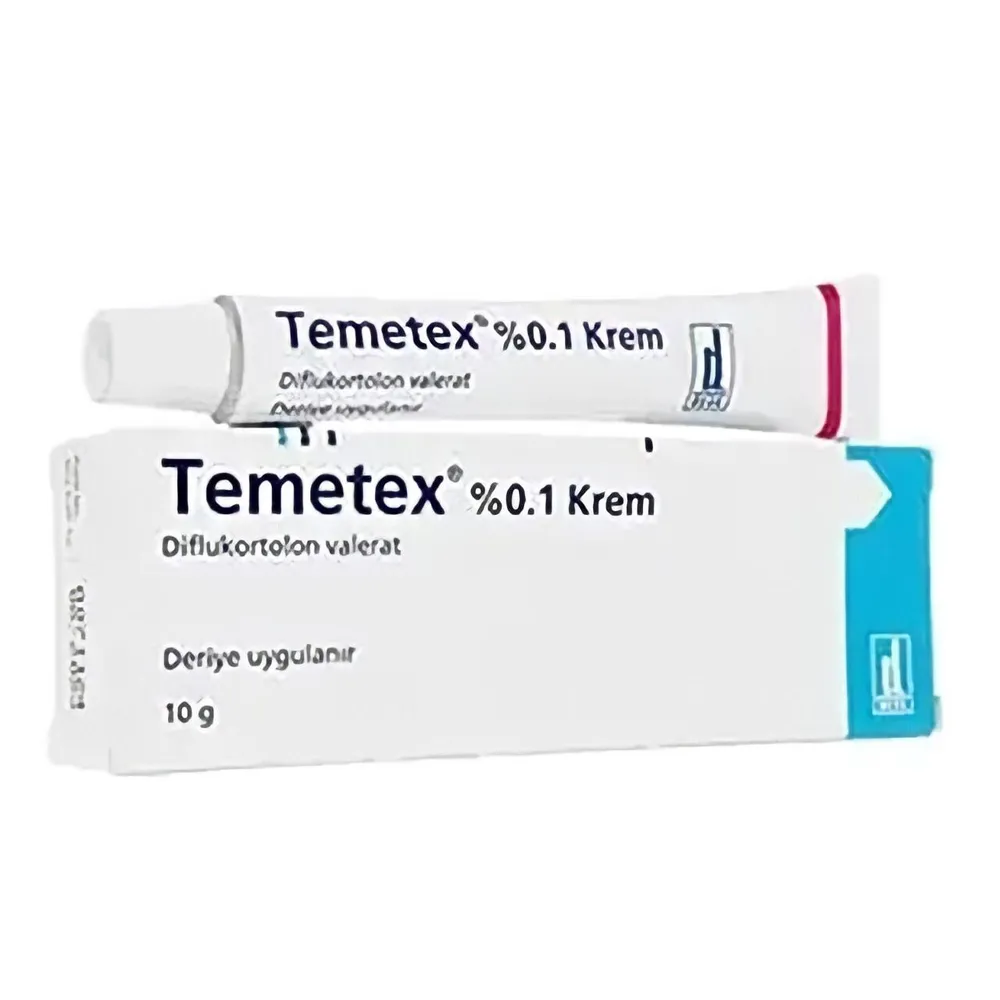
Table of Contents
- Package leaflet: Information for the patient
- TEMETEX 1 mg/g hydrophilic cream
- 1. What Temetex is and what it is used for
- 2. What you need to know before using Temetex
- 3. How to use Temetex
- 4. Possible side effects
- 5. How to store Temetex
- 6. Package contents and other information
- Patient Information Leaflet
- TEMETEX 1 mg/g hydrophobic cream
- 1. What Temetex is and what it is used for
- 2. What you need to know before using Temetex
- 3. How to use Temetex
- 4. Possible side effects
- 5. How to store Temetex
- 6. Package contents and other information
- Patient information leaflet
- TEMETEX 3 mg/g hydrophobic cream
- 1. What Temetex is and what it is used for
- 2. What you need to know before using Temetex
- 3. How to use Temetex
- 4. Possible side effects
- 5. How to store Temetex
- 6. Package contents and other information
Package leaflet: Information for the patient
TEMETEX 1 mg/g hydrophilic cream
Diflucortolone
Please read this leaflet carefully before using this medicine because it contains
important information for you.
- Keep this leaflet. You may need to read it again.
- If you have any questions, ask your doctor or pharmacist.
- This medicine has been prescribed for you only. Do not give it to others, even if they have the same symptoms as you, because it could be harmful.
- If you experience any side effects, including those not listed in this leaflet, contact your doctor. See section 4.
Contents of this leaflet:
- What Temetex is and what it is used for
- What you need to know before using Temetex
- How to use Temetex
- Possible side effects
- How to store Temetex
- Contents of the pack and other information
1. What Temetex is and what it is used for
Temetex contains the active substance diflucortolone, which belongs to the class of topical corticosteroid medicines. It is indicated for the treatment of certain inflammatory and allergic skin diseases such as allergic contact eczema, contact dermatitis (of allergic or toxic origin, such as hypersensitivity to detergents or other chemical agents), atopic eczema (acute and chronic phases), microbial eczema, dermoepidermitis, seborrheic eczema, varicose eczema (but not directly on the ulcer), childhood eczema, and anal eczema.
2. What you need to know before using Temetex
Do not use Temetex:
- If you are allergic to the active substance or to any of the other ingredients of this medicine (listed in section 6).
- If there are skin lesions at the application site caused by vaccination, tuberculosis, fungal, bacterial or viral infections (e.g. herpes, chickenpox, etc.), rosacea or skin ulcers. This preparation is not for ophthalmic use.
- Occlusive dressings (bandaging with gauze or other material to maintain locally applied medicines on the skin) are contraindicated in exudative lesions (those with fluid discharge due to inflammation) and in skin infections.
Warnings and precautions
In skin diseases associated with bacterial infections, it is advisable to combine treatment with locally acting chemotherapeutic agents; in case of fungal infections (mycosis), local antifungals are required. Temetex is not indicated for the treatment of eye diseases.
Temetex must not be applied to the eyes. When applying the product to the face, care should be taken to avoid contact with the eyes. Applying corticosteroids to the skin in the treatment of extensive and/or long-term dermatoses (skin diseases) may result in secondary systemic absorption, potentially leading to hormonal disturbances (Cushing's syndrome, hypothalamic-pituitary axis suppression). This is more likely in children and when occlusive dressings are used.
In pediatric use, skin folds and diapers may act as occlusive dressings. Therefore, in the treatment of chronic conditions requiring prolonged therapy, once a favorable therapeutic effect has been achieved, the dosage and frequency of application should be reduced to the minimum necessary to control symptoms and prevent relapses, and treatment should be discontinued as soon as possible.
During treatment, the patient's condition should be monitored regularly to detect early signs and symptoms of steroid excess (e.g. asthenia (weakness), arterial hypertension, electrolyte imbalances (alterations in blood mineral levels), etc.). In all cases, topical steroid use (i.e. for local application) should be limited to short durations.
Contact your doctor if you experience blurred vision or other visual disturbances.
Children
In infants and children under four years of age, treatment for longer than three weeks is not recommended, especially in diaper-covered areas. (See "Warnings and precautions").
Other medicines and Temetex
Inform your doctor or pharmacist if you are taking, have recently taken, or might take any other medicines.
No possible interactions or incompatibilities with other medicines are known.
Pregnancy and breastfeeding
If you are pregnant, think you might be pregnant, planning to become pregnant, or are breastfeeding, consult your doctor or pharmacist before using this medicine.
Local application of corticosteroids to pregnant laboratory animals has been shown to cause fetal malformations. However, the relevance of these findings to humans has not been established. In general, topical preparations (i.e. for local use) containing corticosteroids, such as Temetex, are not recommended during the first trimester of pregnancy. In particular, application over large skin areas or for prolonged periods should be avoided.
In pregnant women, Temetex should only be used if clearly needed and under direct medical supervision.
Driving and using machines
Temetex does not impair the ability to drive vehicles or operate machinery.
Temetex contains parahydroxybenzoates and stearyl alcohol
This medicine contains methyl p-hydroxybenzoate and propyl p-hydroxybenzoate, which may cause allergic reactions (including delayed reactions).
This medicine contains stearyl alcohol, which may cause localized skin reactions (e.g. contact dermatitis).
3. How to use Temetex
Use this medicine exactly as instructed by your doctor or pharmacist. If you have
any doubts, consult your doctor or pharmacist.
Unless otherwise prescribed by your doctor, begin treatment by applying the preparation as a thin layer 2–3
times daily. As soon as the clinical condition improves, a single daily application is sufficient.
Due to its special composition (a low-fat "oil in water" emulsion), Temetex is
particularly suitable for the treatment of exuding lesions and moist skin areas, such as the
anal region and the axillary cavity, where it is advisable to use a base with a high aqueous content.
Temetex hydrophilic cream allows drainage of exudate and promotes rapid resorption (i.e., rapid removal from the smallest blood vessels and collection of the liquid material produced
by tissue inflammation) and drying of the skin.
The preparation does not leave any greasy residue on the skin and is therefore also suitable for application on the
face and on exposed skin areas.
Use in children
In infants and children under 4 years of age, treatment lasting longer than
three weeks is not recommended, especially in areas covered by diapers.
If you use more Temetex than you should:
In case of accidental ingestion/overdose of Temetex, contact your
doctor immediately or go to the nearest hospital. Cases of overdose are not known.
If you forget to use Temetex
Do not take a double dose to make up for the missed dose.
If you stop using Temetex
If you have any doubts about the use of Temetex, consult your doctor or pharmacist.
4. Possible side effects
Like all medicines, this medicine can cause side effects, although not everyone gets them.
Side effects that may occur with the use of this medicine include:
Local redness, swelling (edema), desquamation (loss of the outer layer of skin), itching as signs of hypersensitivity to the medicine. Other side effects include hypertrichosis (increased growth of body hair), acneiform eruptions (acne-like rashes), cutaneous atrophy (reduction in skin volume), hypopigmentation (decreased skin color), telangiectasias (dilation of small blood vessels becoming visible under the skin), striae, vascular fragility, purpura (reddish skin discoloration due to small hemorrhages from capillary vessels), blurred vision (uncommon frequency reported; frequency cannot be determined from available data).
Following prolonged treatment (especially on the face), steroid-responsive pustular dermatitis (skin eruptions resembling blisters appearing upon discontinuation of the drug) may occur. These become evident only upon stopping therapy, as they are steroid-responsive, such as with Temetex.
During treatment of extensive skin areas (approximately 10% or more of body surface area) and/or prolonged use (beyond 4 weeks), especially under occlusive dressing, the following concomitant reactions cannot be excluded—as with all other topical corticosteroids: cutaneous atrophy (loss of the outer layer of skin), telangiectasias (dilation of small blood vessels becoming visible under the skin), striae, acneiform manifestations (acne-like eruptions), perioral dermatitis (inflammation of the skin around the mouth), increased growth of body hair (hypertrichosis).
Systemic symptoms (i.e., those that may manifest throughout the body, for example, as hormonal disturbances) due to cutaneous absorption of corticosteroids. In occlusive treatments, bear in mind that dressings or films used for bandaging may themselves cause sensitization reactions. The use, especially if prolonged, of topical products may lead to sensitization reactions. In such cases, treatment must be discontinued and appropriate therapy initiated.
In predisposed individuals, hypersensitivity reactions may occur.
Following the instructions provided in this leaflet reduces the risk of side effects.
Reporting of side effects
If you experience any side effect, including those not listed in this leaflet, talk to your doctor. You may also report side effects directly via the national reporting system at the following address:
https://www.aifa.gov.it/content/segnalazioni-reazioni-avverse.
By reporting side effects, you can help provide more information on the safety of this medicine.
5. How to store Temetex
Keep this medicine out of the sight and reach of children.
Temetex does not require any special storage precautions.
Do not use this medicine after the expiry date stated on the packaging after "Exp." The expiry date refers to the last day of that month.
The expiry date refers to the product in its original, undamaged packaging, correctly stored.
Do not use this medicine if you notice any visible signs of deterioration.
Medicines must not be disposed of via wastewater or household waste. Ask your pharmacist how to dispose of medicines you no longer use. This will help protect the environment.
6. Package contents and other information
What Temetex contains
100 g of cream contain:
Active substance: diflucortolone valerate 0.1 g.
Other components: polyethylene glycol monostearate, stearyl alcohol, liquid paraffin, white soft paraffin,
disodium edetate, carbomer, sodium hydroxide, methyl 4-hydroxybenzoate, propyl 4-hydroxybenzoate, purified water.
Description of the appearance of Temetex and pack contents
Temetex 1 mg/g hydrophilic cream is a white or slightly yellowish cream for topical use, supplied in a 30 g tube.
Marketing Authorization Holder and Manufacturer:
Marketing Authorization Holder
TEOFARMA S.r.l.
Via F.lli Cervi, 8
27010 Valle Salimbene (PV)
Manufacturer
TEOFARMA S.r.l.
Viale Certosa, 8/A
27100 Pavia
Patient Information Leaflet
TEMETEX 1 mg/g hydrophobic cream
Diflucortolone
Please read this leaflet carefully before using this medicine because it contains important information for you.
- Keep this leaflet. You may need to read it again.
- If you have any questions, consult your doctor or pharmacist.
- This medicine has been prescribed for you only. Do not give it to others, even if their symptoms are the same as yours, as it could be harmful.
- If you experience any side effects, including those not listed in this leaflet, contact your doctor. See section 4.
Contents of this leaflet:
- What Temetex is and what it is used for
- What you need to know before using Temetex
- How to use Temetex
- Possible side effects
- How to store Temetex
- Package contents and other information
1. What Temetex is and what it is used for
Temetex contains the active substance diflucortolone, which belongs to the class of corticosteroid medicines for topical use. It is used for the treatment of contact eczema, contact dermatitis (of allergic or toxic nature, such as hypersensitivity to detergents or other chemical agents), atopic eczema (acute and chronic phases), microbial eczema, dermoepidermitis, seborrhoeic eczema, varicose eczema (however, not directly on the ulcer), infantile eczema, and anal eczema.
2. What you need to know before using Temetex
Do not use Temetex:
- If you are allergic to the active substance or to any of the other ingredients of this medicine (listed in section 6).
- If there are skin lesions at the site to be treated due to vaccination, tuberculosis, fungal, bacterial or viral infections (e.g. herpes, chickenpox, etc.), rosacea or skin ulcers. This preparation is not for ophthalmic use.
- Occlusive dressing is contraindicated in exudative lesions and in skin infections.
Warnings and precautions
In skin diseases associated with bacterial infections, it is advisable to combine treatment with topical chemotherapeutic agents; in case of fungal infections, local antifungals are required.
Temetex is not indicated for the treatment of eye diseases.
Temetex must not be applied to the eyes. If applying the product to the face, avoid contact with the eyes.
Topical application of corticosteroids for the treatment of extensive dermatoses and/or for prolonged periods may result in systemic absorption and secondary effects. This is more likely in children and when occlusive bandaging is used. In pediatric use, skin folds and diapers may act as occlusive dressings. Therefore, when treating chronic conditions requiring prolonged therapy, once a favorable therapeutic effect has been achieved, the dosage and frequency of application should be reduced to the minimum necessary to control symptoms and prevent relapses, and use of the product should be discontinued as soon as possible.
During treatment, the patient's condition should be monitored closely in order to detect early signs and symptoms of steroid excess (e.g. asthenia, hypertension, electrolyte imbalances, etc.). In all cases, the use of topical steroids should be limited to short periods of time.
Contact your doctor if you experience blurred vision or other visual disturbances.
Children
In infants and children under four years of age, treatment for longer than three weeks is not recommended, especially in areas covered by diapers (see "Warnings and precautions").
Other medicines and Temetex
Inform your doctor or pharmacist if you are currently using, have recently used, or might use any other medicines.
No possible interactions or incompatibilities with other medicines are known.
Pregnancy and breastfeeding
If you are pregnant, think you may be pregnant or are planning to become pregnant, or if you are breastfeeding, consult your doctor or pharmacist before using this medicine.
Topical application of corticosteroids to pregnant laboratory animals has been shown to induce fetal malformations. However, the relevance of these findings to humans has not been established.
In general, topical preparations containing corticosteroids are not recommended during the first trimester of pregnancy.
In particular, application of the product over large skin areas or for prolonged periods should be avoided.
In pregnant women, Temetex should only be used when clearly necessary and under direct medical supervision.
Driving and operating machinery
Temetex does not impair the ability to drive vehicles or operate machinery.
Temetex contains stearyl alcohol
It may cause localized skin reactions (e.g. contact dermatitis).
3. How to use Temetex
Use this medicine exactly as directed by your doctor or pharmacist. If
you have any doubts, consult your doctor or pharmacist.
Unless otherwise prescribed by your doctor, begin treatment by applying the preparation as a thin layer 2–
3 times daily. As soon as the clinical condition improves, once-daily application is sufficient.
Due to its particular formulation (a low-fat "oil in water" emulsion), Temetex is
especially suitable for the treatment of exuding lesions and moist skin areas, such as the anal region and the axillae, where it is advisable to use a base with a high aqueous content.
The preparation does not leave a greasy residue on the skin and is therefore also suitable for application to the face and exposed skin areas.
Use in children
In infants and children under 4 years of age, treatment for periods longer than three weeks is not recommended, especially in areas covered by diapers.
If you use more Temetex than you should:
In case of accidental ingestion/overdose of Temetex hydrophobic cream,
contact your doctor immediately or go to the nearest hospital. Cases of overdose are not known.
If you forget to use Temetex
Do not apply a double dose to make up for the missed dose.
If you stop using Temetex
If you have any questions about the use of this medicine, consult your doctor or pharmacist.
4. Possible side effects
Like all medicines, this medicine can cause side effects, although not everybody gets them.
Side effects that may occur with the use of this medicine include:
Local redness, swelling (edema), peeling, itching as signs of hypersensitivity to the medicine. Other side effects include increased body hair growth (hypertrichosis), acneiform eruptions, reduction in skin thickness (cutaneous atrophy), changes in skin color (hypopigmentation), dilation of small blood vessels, usually superficial (telangiectasias), striae, vascular fragility, purpura, blurred vision (frequency not known, frequency cannot be estimated from the available data). After prolonged treatment (especially on the face), pustular rebound dermatitis—which is steroid-sensitive—may become evident only upon discontinuation of therapy.
During treatment of extensive skin areas (10% or more of body surface area) and/or prolonged use (more than 4 weeks), especially under occlusive dressing, the following concomitant reactions cannot be excluded—as with all other topical corticosteroids: reduction in skin thickness (cutaneous atrophy), dilation of small blood vessels, usually superficial (telangiectasias), striae, acneiform manifestations, perioral dermatitis, increased body hair growth (hypertrichosis).
Systemic symptoms due to cutaneous absorption of corticosteroids.
In occlusive treatments, it should be borne in mind that films used for dressing may themselves cause sensitization reactions. The use, especially prolonged use, of topical products may lead to sensitization phenomena.
In such cases, treatment must be discontinued and appropriate therapy instituted. In predisposed individuals, hypersensitivity reactions may occur.
Following the instructions provided in this leaflet reduces the risk of side effects.
Reporting of side effects
If you experience any side effect, including those not listed in this leaflet, talk to your doctor or pharmacist. You can also report side effects directly via the national reporting system at the website https://www.aifa.gov.it/content/segnalazioni-reazioni-avverse.
By reporting side effects, you can help provide more information on the safety of this medicine.
5. How to store Temetex
Temetex does not require any special storage precautions.
Keep this medicine out of the sight and reach of children.
Do not use this medicine after the expiry date stated on the packaging after "Exp." The expiry date refers to the last day of that month.
The expiry date applies to the product stored in its original, undamaged packaging and kept under proper storage conditions.
Do not use this medicine if you notice any visible signs of deterioration.
Medicines should not be disposed of via wastewater or household waste. Ask your pharmacist how to dispose of medicines you no longer use. This will help protect the environment.
6. Package contents and other information
What Temetex contains:
100 g of cream contain:
Active substance: diflucortolone valerate 0.1 g.
Other components: white beeswax, liquid paraffin, white vaseline, Dehymuls® E (beeswax,
sorbitan, (Z)-9-octadecenoate (2:3), C12-18 fatty acid, mixed esters with citric acid,
pentaerythritol and stearyl alcohol), purified water.
Description of the appearance of Temetex and package contents
Temetex 1 mg/g hydrophobic cream is a white or slightly yellowish cream supplied in a 30 g tube.
Marketing Authorization Holder and Manufacturer
Marketing Authorization Holder
TEOFARMA S.r.l.
Via F.lli Cervi, 8
27010 Valle Salimbene (PV)
Manufacturer
Teofarma S.r.l.
Viale Certosa, 8/A
27100 Pavia
Patient information leaflet
TEMETEX 3 mg/g hydrophobic cream
Diflucortolone
Please read this leaflet carefully before using this medicine because it contains important information for you.
- Keep this leaflet. You may need to read it again.
- If you have any questions, consult your doctor or pharmacist.
- This medicine has been prescribed for you only. Do not give it to others, even if their symptoms are the same as yours, as it may be harmful.
- If you experience any side effects, including those not listed in this leaflet, contact your doctor. See section 4.
Contents of this leaflet:
- What Temetex is and what it is used for
- What you need to know before using Temetex
- How to use Temetex
- Possible side effects
- How to store Temetex
- Package contents and other information
1. What Temetex is and what it is used for
Temetex contains the active substance diflucortolone, a topical corticosteroid.
It is used for the treatment of resistant, localized plaques of: psoriasis, lichenification, discoid lupus erythematosus, hypertrophic lichen, hypertrophic scars.
2. What you need to know before using Temetex
Do not use Temetex:
- If you are allergic to the active substance or to any of the other ingredients of this medicinal product (listed in section 6).
- If there are skin lesions in the area to be treated due to vaccination, tuberculosis, fungal, bacterial or viral infections (e.g. herpes, varicella, etc.), rosacea or skin ulcers. This preparation is not intended for ophthalmic use.
Warnings and precautions
In skin diseases associated with bacterial infections, concomitant treatment with topical chemotherapeutic agents is advisable; in case of fungal infections, local antifungals are required. Temetex is not indicated for the treatment of eye diseases.
Temetex must not be applied to the eyes. When applying the product to the face, care must be taken to avoid contact with the eyes.
Due to the high concentration of the active substance, this preparation is not indicated for use in infants and children under 4 years of age. For the same reason, the product must not be applied to the face.
Topical application of corticosteroids in the treatment of extensive dermatoses and/or for prolonged periods may result in systemic absorption with secondary effects. This is more likely in children and when occlusive dressings are used.
In pediatric use, skin folds and diapers may act as occlusive dressings. Therefore, when treating chronic conditions requiring prolonged therapy, once a favorable therapeutic response has been achieved, the dosage and frequency of application should be reduced to the minimum necessary to control symptoms and prevent relapses, and treatment should be discontinued as soon as possible.
During treatment, the patient's condition should be monitored closely to detect early signs and symptoms of steroid excess (e.g. weakness, hypertension, electrolyte disturbances, etc.). In all cases, the use of topical corticosteroids should be limited to short periods of time.
Contact your doctor if you experience blurred vision or other visual disturbances.
Children
This medicinal product is not recommended in infants and children under four years of age (see "Warnings and precautions").
Other medicines and Temetex
Inform your doctor or pharmacist if you are taking, have recently taken or might take any other medicines.
No potential interactions or incompatibilities with other medicines are known.
Pregnancy and breastfeeding
If you are pregnant, think you may be pregnant, are planning a pregnancy, or are breastfeeding, consult your doctor or pharmacist before using this medicinal product.
Local application of corticosteroids to pregnant laboratory animals has been shown to cause fetal malformations. However, the relevance of these findings to humans has not been established.
In general, topical preparations containing corticosteroids are not recommended during the first trimester of pregnancy.
In particular, application of the product over large skin areas or for prolonged periods should be avoided.
In pregnant women, Temetex should only be used when clearly needed and under direct medical supervision.
Driving and using machines
Temetex does not impair the ability to drive or operate machinery.
Temetex contains cetyl alcohol
It may cause localized skin reactions (e.g. contact dermatitis).
3. How to use Temetex
Use this medicine exactly as directed by your doctor or pharmacist. If
you have any doubts, consult your doctor or pharmacist.
Unless otherwise prescribed by the physician, begin treatment by applying a thin layer of the preparation 2–
3 times daily. This dosage regimen should be followed for a period of 1–2 weeks, during which
significant clinical improvement is generally observed. As soon as the clinical condition improves,
it is sufficient to reduce administration to a single daily application, or switch to the analogous medicinal product with a lower concentration (Temetex hydrophobic cream 1 mg/g).
In particularly resistant cases, the physician may prescribe treatment under occlusive dressing. However,
its use over large areas of the body is not recommended. If cutaneous infections should
occur during treatment, occlusive dressing should be temporarily discontinued. In cases of extensive lesions, it is advisable to treat small areas sequentially, one at a time.
Due to its particular composition (a low-fat "oil in water" emulsion), Temetex provides the skin with an appropriate lipid supply without impairing transpiration or heat exchange. It is therefore suitable for use in cutaneous conditions that are neither excessively exudative nor particularly dry.
If you use more Temetex than you should
In case of accidental ingestion/overdose, inform your doctor immediately or go to the nearest hospital. Cases of overdose are not known.
If you forget to use Temetex
Do not use a double dose to make up for the forgotten dose.
If you stop using Temetex
If you have any doubts about using this medicine, consult your doctor or pharmacist.
4. Possible side effects
Like all medicines, this medicine can cause side effects, although not everybody will experience them.
Local redness, swelling (edema), peeling, and itching as signs of hypersensitivity to the medicine. Other effects include vascular fragility, purpura, and pustular rebound dermatitis after prolonged treatment, which, being steroid-sensitive, become evident only upon discontinuation of therapy. During treatment of extensive skin areas (10% or more of body surface area) and/or prolonged use (more than 10 days), especially under occlusive dressing, the following concomitant reactions cannot be excluded—as with all other topical corticosteroids: reduction in skin thickness (cutaneous atrophy), changes in skin color (hypopigmentation), dilation of small blood vessels, usually superficial (telangiectasias), striae, acneiform eruptions, perioral dermatitis, and increased body hair growth (hypertrichosis).
Systemic symptoms due to cutaneous absorption of corticosteroids.
With occlusive dressings, bear in mind that the films used for bandaging themselves may cause sensitization reactions. The use, especially if prolonged, of topical products may lead to sensitization phenomena. In such cases, treatment must be discontinued and appropriate therapy initiated.
Hypersensitivity reactions may occur in predisposed individuals.
Frequency unknown (frequency cannot be estimated from the available data): blurred vision.
Following the instructions provided in this leaflet reduces the risk of side effects.
Reporting of side effects
If you experience any side effect, including those not listed in this leaflet, consult your doctor or pharmacist. You may also report side effects directly via the national reporting system at the website
https://www.aifa.gov.it/content/segnalazioni-reazioni-avverse.
By reporting side effects, you can help provide more information on the safety of this medicine.
5. How to store Temetex
Temetex does not require any special storage precautions. Keep this
medicine out of the sight and reach of children.
Do not use this medicine after the expiry date stated on the packaging after Exp. The expiry date refers to the last day of that month.
The expiry date applies to the product in its original packaging, properly stored.
Do not use this medicine if you notice any visible signs of deterioration.
Medicines must not be disposed of via wastewater or household waste. Ask your
pharmacist how to dispose of medicines you no longer use. This will help protect
the environment.
6. Package contents and other information
What Temetex contains
100 g of cream contain:
Active substance: diflucortolone valerate 0.3 g.
Other components: white beeswax, liquid paraffin, white soft paraffin, Dehymuls® E (beeswax, sorbitan, (Z)-9-octadecenoate (2:3), C12-18 fatty acid, mixture of esters with citric acid, pentaerythritol and stearyl alcohol), purified water.
Description of the appearance of Temetex and contents of the pack
Temetex 3 mg/g hydrophobic cream is a white cream supplied in a 20 g tube.
Marketing Authorisation Holder and Manufacturer
Marketing Authorisation Holder
TEOFARMA S.r.l.
Via F.lli Cervi, 8
27010 Valle Salimbene (PV)
Manufacturer
Teofarma S.r.l.
Viale Certosa, 8/A
27100 Pavia