Tasigna
Italy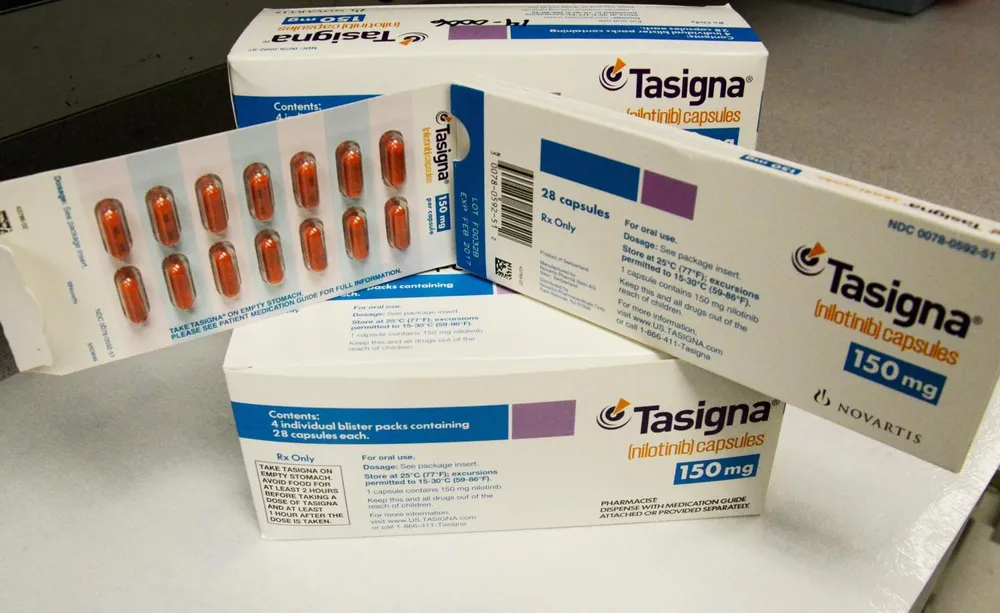
Table of Contents
Package leaflet: Information for the user
Tasigna 50 mg, 150 mg and 200 mg hard capsules
nilotinib
Please read all of this leaflet carefully before taking this medicine because it contains important information for you.
- Keep this leaflet. You may need to read it again.
- If you have any questions, ask your doctor or pharmacist.
- This medicine has been prescribed for you only. Do not give it to other people, even if their symptoms are the same as yours, as it may be harmful.
- If you experience any side effects, including those not listed in this leaflet, tell your doctor or pharmacist. See section 4.
Contents of this leaflet
- What Tasigna is and what it is used for
- What you need to know before taking Tasigna
- How to take Tasigna
- Possible side effects
- How to store Tasigna
- Contents of the pack and other information
1. What Tasigna is and what it is used for
What Tasigna is
Tasigna is a medicine containing an active substance called nilotinib.
What Tasigna is used for
Tasigna is used to treat a type of leukaemia called Philadelphia chromosome-positive chronic myeloid leukaemia (Ph+ CML). CML is a blood cancer that causes the body to produce too many abnormal white blood cells.
Tasigna is used in adult and paediatric patients with newly diagnosed CML or in patients with CML who no longer benefit from prior treatments, including imatinib. It is also used in adult and paediatric patients who have experienced severe adverse reactions to prior treatments and are no longer able to continue them.
How Tasigna works
In patients with CML, a change in DNA (genetic material) triggers a signal that causes the body to produce abnormal white blood cells. Tasigna blocks this signal, thereby stopping the production of these cells.
Monitoring during treatment with Tasigna
During treatment, regular check-ups will be carried out, including blood tests. These tests will monitor:
- blood cell counts (white blood cells, red blood cells, and platelets) to assess how well Tasigna is tolerated.
- pancreatic and liver function to evaluate how well Tasigna is tolerated.
- electrolytes in the body (potassium, magnesium). These electrolytes are important for heart function.
- blood sugar and fat levels. Heart rate will also be monitored using a device that measures the heart's electrical activity (a test called "ECG").
Your doctor will regularly evaluate your treatment and decide whether you should continue taking Tasigna.
If you are told to stop taking this medicine, your doctor will continue to monitor your CML and may instruct you to restart Tasigna if your condition indicates that this is necessary.
If you have any questions about how Tasigna works or why it has been prescribed for you or your child, please consult your doctor.
2. What you need to know before taking Tasigna
Follow your doctor’s instructions carefully. These instructions may differ from the general information contained in this leaflet.
Do not take Tasigna
- if you are allergic to nilotinib or to any of the other ingredients of this medicine (listed in section 6). If you think you are allergic, inform your doctor before taking Tasigna.
Warnings and precautions
Talk to your doctor or pharmacist before taking Tasigna:
- if you have had previous cardiovascular events such as a heart attack, chest pain (angina), problems with blood flow to the brain (stroke), or problems with blood flow to the leg (claudication), or if you have risk factors for cardiovascular disease such as high blood pressure (hypertension), diabetes, or problems with lipid levels in the blood (dyslipidemia).
- if you have heart problems, such as an abnormal electrical signal known as “QT interval prolongation”.
- if you are being treated with medicines that lower cholesterol in your blood, affect heart rhythm (antiarrhythmics), or affect the liver (see Other medicines and Tasigna).
- if you have low levels of potassium or magnesium.
- if you have liver or pancreatic disorders.
- if you have symptoms such as tendency to bruise easily, feeling tired, shortness of breath, or have had repeated infections.
- if you have had surgery involving removal of the entire stomach (total gastrectomy).
- if you have ever had or may currently have hepatitis B infection. This is because Tasigna can cause reactivation of hepatitis B, which in some cases can be fatal. Patients will be closely monitored by the doctor for signs of this infection before starting treatment. If any of these conditions apply to you or your child, inform your doctor.
During treatment with Tasigna
- if you faint (lose consciousness) or experience irregular heartbeat during treatment with this medicine, inform your doctor immediately, as this may be a sign of a serious heart condition. QT interval prolongation or irregular heartbeat can lead to sudden death. Uncommon cases of sudden death have been reported in patients treated with Tasigna.
- if you experience sudden rapid heartbeat, severe muscle weakness or paralysis, seizures, or sudden changes in thinking or level of alertness, inform your doctor immediately, as this may be a sign of a rapid breakdown of tumor cells called tumor lysis syndrome. Rare cases of tumor lysis syndrome have been reported in patients treated with Tasigna.
- if you experience chest pain or discomfort, numbness or weakness, difficulty walking or speaking, pain, color change, or cold sensation in a limb, inform your doctor immediately, as this may be a sign of a cardiovascular event. Serious cardiovascular events, including problems with blood flow to the leg (peripheral arterial occlusive disease), ischemic heart disease, and problems with blood flow to the brain (ischemic cerebrovascular disease), have been reported in patients treated with Tasigna. Your doctor must assess your blood lipid and blood sugar levels before starting treatment with Tasigna and during treatment.
- if you experience swelling of the feet or hands, generalized swelling, or rapid weight gain, inform your doctor, as these may be signs of severe fluid retention. Uncommon cases of severe fluid retention have been reported in patients treated with Tasigna. If you are the parent of a child being treated with Tasigna, inform your doctor if any of the above conditions apply.
Children and adolescents
Tasigna is a treatment for children and adolescents with CML. There is no experience with the use of this medicine in children under 2 years of age. There is no experience with the use of Tasigna in children under 10 years of age with newly diagnosed disease, and limited experience in patients under 6 years of age who no longer benefit from prior treatment for CML.
Some children and adolescents taking Tasigna may experience slower than normal growth. Your doctor will monitor growth with regular check-ups.
Other medicines and Tasigna
Tasigna can interact with other medicines.
Tell your doctor or pharmacist if you are taking, have recently taken, or might take any other medicines. This includes in particular:
- antiarrhythmics – used to treat irregular heartbeat;
- chloroquine, halofantrine, clarithromycin, haloperidol, methadone, moxifloxacin – medicines that may have an undesirable effect on the heart’s electrical activity;
- ketoconazole, itraconazole, voriconazole, clarithromycin, telithromycin – used to treat infections;
- ritonavir – an “antiprotease” medicine used to treat HIV;
- carbamazepine, phenobarbital, phenytoin – used to treat epilepsy;
- rifampicin – used to treat tuberculosis;
- St. John’s wort – a herbal product used to treat depression and other conditions (also known as Hypericum perforatum);
- midazolam – used to relieve anxiety before surgery;
- alfentanil and fentanyl – used to treat pain and as sedatives before or during surgery or medical procedures;
- cyclosporine, sirolimus, and tacrolimus – medicines that suppress the body’s ability to “defend itself” and fight infections, commonly used to prevent rejection of transplanted organs such as liver, heart, and kidneys;
- dihydroergotamine and ergotamine – used to treat dementia;
- lovastatin, simvastatin – used to treat high levels of fats in the blood;
- warfarin – used to treat blood clotting disorders (such as blood clots or thrombosis);
- astemizole, terfenadine, cisapride, pimozide, quinidine, bepridil, or ergot alkaloids (ergotamine, dihydroergotamine).
These medicines must be avoided during treatment with Tasigna. If you are taking any of these medicines, your doctor may prescribe alternative treatments.
If you are taking a statin (a medicine that lowers cholesterol in your blood), talk to your doctor or pharmacist. When taken with certain statins, Tasigna may increase the risk of statin-related muscle problems, which in rare cases can lead to severe muscle damage (rhabdomyolysis) and subsequent kidney damage.
Also, inform your doctor or pharmacist before taking Tasigna if you are taking any antacid, i.e., a medicine for heartburn. These medicines must be taken separately from Tasigna:
- H2 blockers, which reduce acid production in the stomach. H2 blockers should be taken approximately 10 hours before and approximately 2 hours after taking Tasigna;
- antacids such as those containing aluminium hydroxide, magnesium hydroxide, and simethicone, which neutralize high stomach acidity. These antacids should be taken approximately 2 hours before or approximately 2 hours after taking Tasigna.
You must also inform your doctor if you are already taking Tasigna and are prescribed a new medicine that you have not taken before during treatment with Tasigna.
Tasigna with food and drinks
Do not take Tasigna with food. Food can increase the absorption of Tasigna and therefore increase the amount of Tasigna in the blood to a dangerous level. Do not drink grapefruit juice or eat grapefruit. These can increase the amount of Tasigna in the blood to a dangerous level.
Pregnancy and breastfeeding
- Tasigna is not recommended during pregnancy unless strictly necessary. If you are pregnant or think you may be pregnant, inform your doctor, who will discuss with you whether you can take this medicine during pregnancy.
- Women who could become pregnant are advised to use a highly effective method of contraception during treatment and for two weeks after stopping treatment.
- Breastfeeding is not recommended during treatment with Tasigna and for two weeks after the last dose. Inform your doctor if you are breastfeeding. If you are pregnant, suspect you may be pregnant, plan to become pregnant, or are breastfeeding, consult your doctor or pharmacist before taking this medicine.
Driving and using machines
If you experience side effects (such as dizziness or vision problems) that could affect your ability to drive or operate tools or machines safely after taking this medicine, you should stop these activities until the side effects resolve.
Tasigna contains lactose
This medicine contains lactose (also known as milk sugar). If your doctor has diagnosed you with an intolerance to certain sugars, contact your doctor before taking this medicine.
3. How to take Tasigna
Take this medicine exactly as your doctor or pharmacist has told you. If you
have any doubts, consult your doctor or pharmacist.
How much Tasigna to take
Use in adults
- Patients with newly diagnosed CML: The recommended dose is 600 mg daily. This dose is achieved by taking two 150 mg hard capsules twice daily.
- Patients who no longer benefit from prior CML treatment: The recommended dose is 800 mg daily. This dose is achieved by taking two 200 mg hard capsules twice daily.
Use in children and adolescents
- The dose given to your child will depend on the child's weight and height. Your doctor will calculate the correct dose and tell you which and how many Tasigna capsules to give your child. The total daily dose to be administered to your child must not exceed 800 mg.
Your doctor may prescribe a lower dose depending on how you respond to treatment.
Elderly people (65 years and over)
Tasigna may be used in people aged 65 years and over at the same dose as in other adults.
When to take Tasigna
Take the hard capsules:
- twice daily (approximately every 12 hours);
- at least 2 hours after eating;
- and then wait 1 hour before eating again. If you have questions about when to take this medicine, speak with your doctor or pharmacist. Taking Tasigna at the same time each day will help you remember when to take the hard capsules.
How to take Tasigna
- Swallow the hard capsules whole with water.
- Do not take food together with the hard capsules.
- Do not open the hard capsules unless you are unable to swallow them. In this case, you may mix the contents of each hard capsule with one teaspoon of apple sauce and take it immediately. Do not use more than one teaspoon of apple sauce per hard capsule, and do not use any other food besides apple sauce.
How long to take Tasigna
Continue taking Tasigna every day for as long as your doctor has prescribed it.
This is a long-term treatment. Your doctor will regularly monitor your condition to
check that the treatment is working as intended.
Your doctor may consider stopping treatment with Tasigna based on specific criteria.
If you have questions about how long to take Tasigna, speak with your doctor.
If you take more Tasigna than you should
If you have taken more Tasigna than you should, or if someone else has accidentally taken your
hard capsules, contact a doctor or hospital immediately for advice. Show them the packaging of the
hard capsules and this leaflet. Medical treatment may be necessary.
If you forget to take Tasigna
If you forget to take a dose, take the next dose as scheduled. Do not take a double
dose to make up for the forgotten hard capsule.
If you stop taking Tasigna
Do not stop treatment with this medicine unless your doctor tells you to do so.
Stopping Tasigna without your doctor's recommendation puts you at risk of worsening
of the disease, which may have life-threatening consequences. Make sure to discuss with your doctor,
nurse, and/or pharmacist if you are considering stopping Tasigna.
If your doctor recommends stopping Tasigna treatment
Your doctor will regularly assess your treatment using a specific diagnostic test and decide whether you should
continue taking this medicine. If you are told to stop Tasigna, your doctor
will continue to carefully monitor your CML before, during, and after stopping Tasigna and may
tell you to restart Tasigna if your condition indicates that this is necessary.
If you have any questions about using this medicine, ask your doctor or pharmacist.
4. Possible side effects
Like all medicines, this medicine can cause side effects, although not everyone gets them. Most of the side effects are mild to moderate and usually disappear after a period of treatment ranging from a few days to a few weeks.
Some side effects may be serious.
- signs of musculoskeletal pain: joint and muscle pain
- signs of heart problems: chest pain or discomfort, high or low blood pressure, irregular heartbeat (fast or slow), palpitations (sensation of rapid heartbeat), fainting, bluish colouring of lips, tongue or skin
- signs of arterial blockage: pain, discomfort, weakness or cramps in the leg muscles, which may be due to reduced blood flow, leg or arm ulcers that do not heal or heal slowly, and noticeable changes in colour (bluish or pale) or temperature (coldness) of the affected leg, arm, toes or fingers
- signs of underactive thyroid gland: weight gain, tiredness, hair loss, muscle weakness, feeling cold
- signs of overactive thyroid gland: fast heartbeat, bulging eyes, weight loss, swelling in the front of the neck
- signs of kidney or urinary tract problems: thirst, dry skin, irritability, dark urine, reduced amount of urine, difficulty and pain when urinating, urgent need to urinate, blood in urine, abnormal urine colour
- signs of high blood sugar levels: excessive thirst, increased amount of urine, increased appetite with weight loss, tiredness
- signs of dizziness: dizziness or sensation of spinning
- signs of pancreatitis: severe upper abdominal pain (in the centre or left side)
- signs of skin problems: painful red nodules, skin pain, skin redness, skin peeling or blisters
- signs of fluid retention: rapid weight gain, swelling of hands, ankles, feet or face
- signs of migraine: severe headache often accompanied by nausea, vomiting and sensitivity to light
- signs of blood disorders: fever, tendency to bruise or unexplained bleeding, severe or frequent infections, unexplained weakness
- signs of venous thrombosis: swelling and pain in one part of the body
- signs of nervous system disorders: weakness or paralysis of limbs or face, difficulty speaking, severe headache, seeing, hearing or sensing things that are not there, changes in vision, loss of consciousness, confusion, disorientation, tremors, tingling, pain or numbness in fingers of hands and feet
- signs of lung problems: difficulty breathing or painful breathing, cough, wheezing with or without fever, swelling of feet or legs
- signs of gastrointestinal problems: abdominal pain, nausea, vomiting blood, black or bloody stools, constipation, heartburn, gastric acid reflux, bloated abdomen
- signs of liver problems: yellowing of skin and eyes, nausea, loss of appetite, dark-coloured urine
- signs of liver infection: recurrence (reactivation of hepatitis B infection)
- signs of eye problems: vision disturbances including blurred vision, double vision or perception of flashes of light, decreased visual sharpness or vision loss, blood in the eye, increased sensitivity of eyes to light, eye pain, redness, itching or irritation, dry eyes, swelling or itching of eyelids
- signs of electrolyte imbalance: nausea, shortness of breath, irregular heartbeat, cloudy urine, tiredness and/or joint problems associated with abnormal blood test results (such as high levels of potassium, uric acid and phosphorus and low levels of calcium) Contact your doctor immediately if you notice any of the above side effects.
Some side effects are very common (may affect more than 1 in 10 people)
- diarrhoea
- headache
- lack of energy
- muscle pain
- itching, rash
- nausea
- constipation
- vomiting
- hair loss
- limb pain, bone pain and spinal pain after stopping treatment with Tasigna
- slowed growth in children and adolescents
- upper respiratory tract infection including sore throat, runny or blocked nose, sneezing
- low levels of blood cells (red blood cells, platelets) or haemoglobin
- high level of lipase in the blood (pancreatic function)
- high level of bilirubin in the blood (liver function)
- high level of alanine aminotransferase in the blood (liver enzymes)
Some side effects are common (may affect up to 1 in 10 people)
- pneumonia
- abdominal pain, stomach discomfort after meals, intestinal gas, abdominal swelling or distension
- bone pain, muscle spasms
- pain (including neck pain)
- dry skin, acne, decreased skin sensitivity
- weight loss or gain
- insomnia, depression, anxiety
- night sweats, excessive sweating
- general feeling of being unwell
- nosebleeds
- signs of gout: painful and swollen joints
- inability to achieve or maintain an erection
- flu-like symptoms
- sore throat
- bronchitis
- ear pain, hearing noises (e.g. ringing, buzzing) in the ears that have no external source (also called tinnitus)
- haemorrhoids
- heavy menstrual periods
- itching of hair follicles
- oral or vaginal candidiasis
- signs of conjunctivitis: eye discharge with itching, redness and swelling
- eye irritation, red eyes
- signs of hypertension: high blood pressure, headache, dizziness
- flushing
- signs of occlusive peripheral arterial disease: pain, discomfort, weakness or cramps in the leg muscles, which may be due to reduced blood flow, leg or arm ulcers that do not heal or heal slowly, and noticeable changes in colour (bluish or pale) or temperature (coldness) of the legs or arms (possible signs of arterial blockage in the leg, arm, toes or fingers)
- shortness of breath (also called dyspnoea)
- mouth ulcers with inflammation of the gums (also called stomatitis)
- high level of amylase in the blood (pancreatic function)
- high level of creatinine in the blood (kidney function)
- high level of alkaline phosphatase or creatine phosphokinase in the blood
- high level of aspartate aminotransferase in the blood (liver enzymes)
- high level of gamma-glutamyl transferase in the blood (liver enzymes)
- signs of leucopenia or neutropenia: low white blood cell count
- increased number of platelets or white blood cells in the blood
- low blood levels of magnesium, potassium, sodium, calcium or phosphorus
- increased levels of potassium, calcium and phosphorus in the blood
- high level of fats (including cholesterol) in the blood
- high level of uric acid in the blood
Some side effects are uncommon (may affect up to 1 in 100 people)
- allergy (hypersensitivity to Tasigna)
- dry mouth
- breast pain
- pain or discomfort in the side
- increased appetite
- enlargement of breast gland in men
- herpes virus infection
- stiffness of muscles and joints, joint swelling
- sensation of change in body temperature (including feeling hot, feeling cold)
- taste disturbance
- frequent urge to urinate
- signs of inflammation of the gastric mucosa: abdominal pain, nausea, vomiting, diarrhoea, abdominal distension
- memory loss
- skin cysts, thinning or thickening of the skin, thickening of the outer layer of the skin, change in skin colour
- signs of psoriasis: thickened areas of red/silvery skin
- increased skin sensitivity to light
- difficulty hearing
- joint inflammation
- urinary incontinence
- inflammation of the intestine (also called enterocolitis)
- anal abscess
- swelling of the nipple
- symptoms of restless legs syndrome (an irresistible urge to move part of the body, usually the legs, associated with uncomfortable sensations)
- signs of sepsis: fever, chest pain, increased or rapid heart rate, shortness of breath or rapid breathing
- skin infection (subcutaneous abscess)
- skin wart
- increase in specific types of white blood cells (called eosinophils) in the blood
- signs of lymphopenia: low white blood cell count
- high level of parathyroid hormone in the blood (a hormone that regulates calcium and phosphorus levels)
- high level of lactate dehydrogenase in the blood (an enzyme)
- signs of low blood sugar levels: nausea, sweating, weakness, dizziness, tremor, headache
- dehydration
- abnormal level of fats in the blood
- involuntary tremor (also called tremor)
- difficulty concentrating
- unpleasant and abnormal sensation to touch (also called dysaesthesia)
- tiredness (also called fatigue)
- numbness or tingling sensation in fingers of hands and feet (also called peripheral neuropathy)
- paralysis of any facial muscle
- red spot in the white of the eye caused by rupture of blood vessels (also called conjunctival haemorrhage)
- blood in the eyes (also called eye haemorrhage)
- eye irritation
- signs of heart attack (also called myocardial infarction): sudden crushing chest pain, tiredness, irregular heartbeat
- signs of heart murmur: tiredness, chest discomfort, dizziness, chest pain, palpitations
- fungal infection of the feet
- signs of heart failure: breathlessness, difficulty breathing when lying down, swelling of feet or legs
- pain behind the breastbone (also called pericarditis)
- signs of hypertensive crisis: severe headache, dizziness, nausea
- leg pain and weakness caused by walking (also called intermittent claudication)
- signs of narrowing of arteries in limbs: possible high blood pressure, painful cramps in one or both hips, thighs or calves after certain activities such as walking or climbing stairs, numbness or weakness in legs
- bruising (when you have not injured yourself)
- fat deposits in arteries that may cause blockage (also called arteriosclerosis)
- signs of low blood pressure (also called hypotension): dizziness, lightheadedness or fainting
- signs of pulmonary oedema: breathlessness
- signs of pleural effusion: fluid accumulation between the layers of tissue lining the lungs and chest cavity (which, if severe, may reduce the heart's ability to pump blood), chest pain-related cough, hiccups, rapid breathing
- signs of interstitial lung disease: cough, difficulty breathing, painful breathing
- signs of pleural pain: chest pain
- signs of pleuritis: cough, painful breathing
- hoarseness
- signs of pulmonary hypertension: high blood pressure in the lung arteries
- wheezing
- sensitive teeth
- signs of inflammation (also called gingivitis): bleeding gums, sensitive or swollen gums
- high level of urea in the blood (kidney function)
- changes in blood proteins (low level of globulins or presence of paraprotein)
- high level of unconjugated bilirubin in the blood
- high level of troponin in the blood
Some side effects are rare (may affect up to 1 in 1,000 people)
- redness and/or swelling and possible peeling of palms of hands and soles of feet (so-called hand-foot syndrome)
- mouth warts
- sensation of hardness or stiffness in the breast
- inflammation of the thyroid (also called thyroiditis)
- disturbed or depressed mood
- signs of secondary hyperparathyroidism: bone and joint pain, excessive urination, abdominal pain, weakness, tiredness
- signs of narrowing of arteries in the brain: partial or complete loss of vision in both eyes, double vision, vertigo (dizziness), numbness or tingling, loss of coordination, dizziness or confusion
- brain swelling (possible headache and/or changes in mental state)
- signs of optic neuritis: blurred vision, vision loss
- signs of cardiac dysfunction (reduced ejection fraction): tiredness, chest discomfort, dizziness, pain, palpitations
- low or high level of insulin in the blood (a hormone that regulates blood sugar levels)
- low level of insulin C-peptide in the blood (pancreatic function)
- sudden death
The following other side effects have been reported at an unknown frequency (cannot be estimated from the available data):
- signs of cardiac dysfunction (ventricular dysfunction): shortness of breath, effort at rest, irregular heartbeat, chest discomfort, dizziness, pain, palpitations, excessive urination, swelling of feet, ankles and abdomen.
Reporting of side effects
If you experience any side effect, including those not listed in this leaflet, talk to your doctor or pharmacist. You can also report side effects directly via the national reporting system listed in Annex V. By reporting side effects, you can help provide more information on the safety of this medicine.
5. How to store Tasigna
- Keep this medicine out of the sight and reach of children.
- Do not use this medicine after the expiry date stated on the carton and blister after EXP. The expiry date refers to the last day of that month.
- Do not store above 30°C.
- Store in the original packaging to protect the medicine from moisture.
- Do not use this medicine if you notice the packaging is damaged or tampered with.
- Do not dispose of medicines via wastewater or household waste. Ask your pharmacist how to dispose of medicines no longer required. This will help protect the environment.
6. Package Contents and Other Information
What Tasigna Contains
- The active substance is nilotinib.
- Each 50 mg hard capsule contains 50 mg of nilotinib (as monohydrochloride monohydrate). The other components are:
Capsule contents: monohydrate lactose, crospovidone type A, poloxamer 188, anhydrous colloidal silica, magnesium stearate
Capsule shell: gelatin, titanium dioxide (E171), red iron oxide (E172), yellow iron oxide (E172)
Printing ink: shellac (E904), black iron oxide (E172), propylene glycol, ammonium hydroxide - Each 150 mg hard capsule contains 150 mg of nilotinib (as monohydrochloride monohydrate). The other components are:
Capsule contents: monohydrate lactose, crospovidone type A, poloxamer 188, anhydrous colloidal silica, magnesium stearate
Capsule shell: gelatin, titanium dioxide (E171), red iron oxide (E172), yellow iron oxide (E172)
Printing ink: shellac (E904), black iron oxide (E172), n-butyl alcohol, propylene glycol, dehydrated alcohol, isopropyl alcohol, ammonium hydroxide - Each 200 mg hard capsule contains 200 mg of nilotinib (as monohydrochloride monohydrate). The other components are:
Capsule contents: monohydrate lactose, crospovidone type A, poloxamer 188, anhydrous colloidal silica, magnesium stearate
Capsule shell: gelatin, titanium dioxide (E171), yellow iron oxide (E172)
Printing ink: shellac (E904), dehydrated alcohol, isopropyl alcohol, butyl alcohol, propylene glycol, strong ammonia solution, potassium hydroxide, red iron oxide (E172)
Description of the Appearance of Tasigna and Package Contents
Tasigna 50 mg is supplied as hard capsules. The hard capsules are red/light yellow in color. A black mark is printed on each hard capsule (“NVR/ABL”).
Tasigna 150 mg is supplied as hard capsules. The hard capsules are red in color. A black mark is printed on each hard capsule (“NVR/BCR”).
Tasigna 200 mg is supplied as hard capsules. The hard capsules are light yellow in color. A red mark is printed on each hard capsule (“NVR/TKI”).
Tasigna 50 mg hard capsules are available in a pack containing 120 hard capsules (3 packs of 40 hard capsules).
Tasigna 150 mg hard capsules are available in packs containing 28 or 40 hard capsules and in multiple packs of 112 hard capsules (comprising 4 cartons, each containing 28 hard capsules), 120 hard capsules (comprising 3 cartons, each containing 40 hard capsules), or 392 hard capsules (comprising 14 cartons, each containing 28 hard capsules).
Tasigna 200 mg hard capsules are available in a wallet pack containing 28 hard capsules and in cartons containing 28 or 40 hard capsules. Tasigna is also available in multiple packs of 112 hard capsules (comprising 4 cartons, each containing 28 hard capsules), 120 hard capsules (comprising 3 cartons, each containing 40 hard capsules), or 392 hard capsules (comprising 14 cartons, each containing 28 hard capsules).
Not all pack sizes may be marketed in your country.
Marketing Authorization Holder
Novartis Europharm Limited
Vista Building
Elm Park, Merrion Road
Dublin 4
Ireland
Manufacturer
Novartis Pharmaceutical Manufacturing LLC
Verovškova ulica 57
1000 Ljubljana
Slovenia
Novartis Farmacéutica SA
Gran Via de les Corts Catalanes, 764
08013 Barcelona
Spain
Novartis Pharma GmbH
Roonstraße 25
D-90429 Nuremberg
Germany
Lek d.d, PE PROIZVODNJA LENDAVA
Trimlini 2D
Lendava, 9220
Slovenia
Novartis Pharma GmbH
Sophie-Germain-Strasse 10
90443 Nuremberg
Germany
For further information about this medicinal product, please contact the local representative of the Marketing Authorization Holder:
België/Belgique/Belgien Lietuva
Novartis Pharma N.V. SIA Novartis Baltics Lietuvos filialas
Tél/Tel: +32 2 246 16 11 Tel: +370 5 269 16 50
България Luxembourg/Luxemburg
Novartis Bulgaria EOOD Novartis Pharma N.V.
Тел.: +359 2 489 98 28 Tél/Tel: +32 2 246 16 11
Česká republika Magyarország
Novartis s.r.o. Novartis Hungária Kft.
Tel: +420 225 775 111 Tel.: +36 1 457 65 00
Danmark Malta
Novartis Healthcare A/S Novartis Pharma Services Inc.
Tlf: +45 39 16 84 00 Tel: +356 2122 2872
Deutschland Nederland
Novartis Pharma GmbH Novartis Pharma B.V.
Tel: +49 911 273 0 Tel: +31 88 04 52 111
Eesti Norge
SIA Novartis Baltics Eesti filiaal Novartis Norge AS
Tel: +372 66 30 810 Tlf: +47 23 05 20 00
Ελλάδα Österreich
Novartis (Hellas) A.E.B.E. Novartis Pharma GmbH
Τηλ: +30 210 281 17 12 Tel: +43 1 86 6570
España Polska
Novartis Farmacéutica, S.A. Novartis Poland Sp. z o.o.
Tel: +34 93 306 42 00 Tel.: +48 22 375 4888
France Portugal
Novartis Pharma S.A.S. Novartis Farma - Produtos Farmacêuticos, S.A.
Tél: +33 1 55 47 66 00 Tel: +351 21 000 8600
Hrvatska România
Novartis Hrvatska d.o.o. Novartis Pharma Services Romania SRL
Tel. +385 1 6274 220 Tel: +40 21 31299 01
Ireland Slovenija
Novartis Ireland Limited Novartis Pharma Services Inc.
Tel: +353 1 260 12 55 Tel: +386 1 300 75 50
Ísland Slovenská republika
Vistor hf. Novartis Slovakia s.r.o.
Sími: +354 535 7000 Tel: +421 2 5542 5439
Italia Suomi/Finland
Novartis Farma S.p.A. Novartis Finland Oy
Tel: +39 02 96 54 1 Puh/Tel: +358 (0)10 6133 200
Κύπρος Sverige
Novartis Pharma Services Inc. Novartis Sverige AB
Τηλ: +357 22 690 690 Tel: +46 8 732 32 00
Latvija
SIA Novartis Baltics
Tel: +371 67 887 070
Other Sources of Information
More detailed information on this medicinal product is available on the website of the European Medicines Agency, http://www.ema.europa.eu/. In addition, links to other websites on rare diseases and their therapeutic treatments are provided.