Taloxa
Italy
Table of Contents
- Package leaflet: Information for the user
- TALOXA 600 mg tablets
- 1. What Taloxa is and what it is used for
- 2. What you need to know before taking Taloxa
- 3. How to take Taloxa
- 4. Possible side effects
- 5. How to store Taloxa
- 6. Package contents and other information
- Package leaflet: information for the user
- TALOXA 600 mg/5 ml oral suspension
- 1. What Taloxa is and what it is used for
- 2. What you need to know before taking Taloxa
- 3. How to take Taloxa
- 4. Possible side effects
- 5. How to store Taloxa
- 6. Package contents and other information
Package leaflet: Information for the user
TALOXA 600 mg tablets
felbamate
Read this entire leaflet carefully before taking this medicine because it contains important information for you.
- Keep this leaflet. You may need to read it again.
- If you have any questions, ask your doctor or pharmacist.
- This medicine has been prescribed for you only. Do not give it to other people, even if their symptoms are the same as yours, as it may be harmful.
- If you experience any side effects, including those not listed in this leaflet, contact your doctor or pharmacist. See section 4.
Contents of this leaflet
- What Taloxa is and what it is used for
- What you need to know before taking Taloxa
- How to take Taloxa
- Possible side effects
- How to store Taloxa
- Contents of the pack and other information
1. What Taloxa is and what it is used for
What Taloxa is
Taloxa is an antiepileptic medicine.
What Taloxa is used for
Taloxa is not indicated for the treatment of children under 4 years of age.
Taloxa is used in adult patients and children aged 4 years and older who have Lennox-Gastaut syndrome and whose epileptic seizures are not controlled by other antiepileptic agents. Taloxa tablets are used in combination with other medicines for the control of epileptic seizures and convulsions.
2. What you need to know before taking Taloxa
Do not take Taloxa
- if you are allergic to felbamate or to any of the other ingredients of this medicine (listed in section 6).
- if you have a history of blood problems (such as anemia, low red blood cell count, bleeding disorders, bruising, frequent infections) or liver problems (such as jaundice [yellowing of the whites of the eyes or skin] or hepatitis). If you have previously had blood or liver problems, inform your doctor before taking Taloxa tablets.
Warnings and precautions
Talk to your doctor or pharmacist before taking Taloxa:
- If you have had an unusual reaction (such as hives, difficulty breathing, or other breathing problems) to the tablets or to any of the other ingredients.
- If you develop a skin rash, fever, swelling of the eyes, nose, or throat, or hives, contact your doctor immediately.
- Make sure you stay well hydrated and drink plenty of fluids while taking this medicine to help prevent the formation of crystals in the urine and to ensure the medicine is properly eliminated from your body.
- A small number of patients taking antiepileptic medicines, such as felbamate, have experienced suicidal thoughts or self-harming thoughts. If you experience any such thoughts at any time, contact your doctor immediately.
- If you are regularly taking Taloxa or other medicines to control epileptic seizures, do not stop treatment abruptly without consulting your doctor.
- If you are a woman of childbearing age, you must use adequate contraceptive precautions during treatment and for 1 month after stopping treatment. Felbamate therapy may reduce the effectiveness of oral contraceptives; therefore, another effective method of contraception should be used.
Blood tests
While taking this medicine, your doctor will prescribe frequent blood tests (every 2 weeks) to monitor your condition.
Children and adolescents
For children or adolescents who are exposed to traffic (e.g. when riding a bicycle), consider that dizziness and weakness may occur (see section "Driving and use of machines").
Other medicines and Taloxa
Inform your doctor or pharmacist if you are taking, have recently taken, or might take any other medicines.
Inform your doctor if you are taking other medicines to control epileptic seizures so that an appropriate dose can be determined for your needs.
Taloxa may interfere with the effectiveness of oral contraceptives. Consult your doctor if you are taking oral contraceptives.
If you are taking Taloxa tablets in combination with other antiepileptic medicines, you may experience an increase in side effects. Consult your doctor if any side effect becomes troublesome.
Taloxa with food and drink
Taloxa tablets are not affected by food and may therefore be taken during meals.
Pregnancy and breastfeeding
Taloxa must not be used during pregnancy unless strictly necessary. If you are a woman of childbearing age, you must use adequate contraceptive precautions during treatment and for 1 month after stopping treatment. Felbamate therapy may reduce the effectiveness of oral contraceptives; therefore, another effective method of contraception should be used.
If you are pregnant or planning a pregnancy, consult your doctor immediately. Do not stop taking the medicine until you have discussed it with your doctor. Your doctor may decide to change your treatment.
Taloxa is not recommended for women who are breastfeeding. Felbamate passes into breast milk. This may harm the infant, particularly by causing blood or liver problems.
If you are breastfeeding, your doctor will advise you whether to continue taking Taloxa.
If you are pregnant, suspect you may be pregnant, are planning a pregnancy, or are breastfeeding, ask your doctor or pharmacist for advice before taking this medicine.
Driving and use of machines
Do not use tools or machinery. If you experience dizziness or weakness while taking this medicine, do not drive or operate machinery. When Taloxa is administered to children and adolescents, consider that dizziness and weakness may occur even when they are in traffic (e.g. when riding a bicycle).
Taloxa tablets contain
Taloxa contains lactose. If your doctor has diagnosed you with an intolerance to certain sugars, contact them before taking this medicine.
This medicine contains less than 1 mmol (23 mg) of sodium per dose, i.e. essentially "sodium-free".
3. How to take Taloxa
Take Taloxa exactly as directed by your doctor. If you have any doubts, consult your doctor or
pharmacist.
How much Taloxa to take
The usual dose of Taloxa tablets should be taken in two (every 12 hours) or three divided doses
(every 8 hours) daily with water. Some people may require 4 doses per day (approximately every 6 hours).
Your doctor will determine the appropriate dosage and dosing schedule for you. During the first few
weeks, your doctor may need to adjust your dose. Once your dose has been established, make sure to
take the medicine at the same time every day. Taloxa tablets are not affected by food and may be taken
during meals.
If you feel that the effect of Taloxa tablets is too strong or too weak, consult your doctor or pharmacist.
If you or your child takes more Taloxa than you should
Contact your doctor immediately.
If you or your child forgets to take Taloxa
Take the missed dose as soon as possible, unless it is almost time for the next dose.
Do not take a double dose to make up for the missed dose.
It is important to return to your regular dosing schedule as soon as possible.
If you or your child stops taking Taloxa
Do not stop taking this medicine without consulting your doctor. Suddenly stopping antiepileptic
medicines, including Taloxa, may increase the risk of seizures.
If you have any questions about using this medicine, consult your doctor or pharmacist.
4. Possible side effects
Like all medicines, Taloxa can cause side effects, although not everybody will experience them.
The use of Taloxa tablets has been associated with rare cases of serious, potentially life-threatening blood and liver disorders.
Contact your doctor immediately if you experience:
- unusual symptoms while taking Taloxa tablets, such as bleeding, bruising, frequent infections, fatigue, jaundice (yellowing of the whites of the eyes and skin), weight loss, vomiting, and abdominal pain;
- blisters in the mouth, nose, or eyes, or blistering or peeling of the skin; or if you have muscle and joint pain, fever, rash, uncontrollable vomiting, swelling, or constipation.
Common side effects (may affect up to 1 in 10 people)
Weight loss, loss of appetite, insomnia, drowsiness, unsteady gait, dizziness, headache, visual disturbances such as double or blurred vision, nausea, vomiting, stomach discomfort, abdominal pain, diarrhoea, fatigue.
Uncommon side effects (may affect up to 1 in 100 people)
Abnormal low levels of phosphate in the blood (hypophosphataemia), speech difficulties, depression, stupor, anxiety, skin rash, abnormal gait.
Rare side effects (may affect up to 1 in 1,000 people)
Blood disorders, including thrombocytopenia (reduced platelets), leucopenia (reduced white blood cells), neutropenia (reduced white blood cells), and anaemia (reduced red blood cells). Combinations of these effects may occur, including reductions in all three cell types, together with bone marrow suppression affecting the production of all three types of blood cells.
Increased frequency of epileptic seizures (convulsions), anaphylactic shock (severe allergic reaction throughout the body), other serious allergic reactions including blisters in the mouth, nose, eyes, or other mucous membranes (Stevens-Johnson syndrome, blistering rashes), toxic epidermal necrolysis (blistering and peeling of the top layer of skin), muscle and joint pain, fever.
Very rare side effects (may affect up to 1 in 10,000 people)
Constipation, liver disorders which may be severe and include fatal liver failure, crystals in the urine.
Additional side effects in children and adolescents
Children have shown similar side effects. In addition, upper respiratory tract infections have been frequently observed in children; however, a link with treatment is unlikely.
Reporting of side effects
If you experience any side effect, including those not listed in this leaflet, talk to your doctor or pharmacist. You can also report side effects directly via the national reporting system at: https://www.aifa.gov.it/content/segnalazioni-reazioni-avverse.
By reporting side effects, you can help provide more information on the safety of this medicine.
5. How to store Taloxa
Keep this medicine out of the sight and reach of children.
Do not use Taloxa after the expiry date stated on the packaging. The expiry date refers to the
last day of that month.
Keep the blister in the outer packaging.
Keep the blister tightly closed to protect the medicine from moisture.
Do not store above 25°C.
Do not use Taloxa without consulting your doctor or pharmacist if you notice any changes in the appearance of Taloxa.
Do not dispose of medicines via wastewater or household waste. Ask your pharmacist how to
dispose of medicines you no longer use. This will help protect the environment.
6. Package contents and other information
What Taloxa contains
The active substance is felbamate. Each Taloxa tablet contains 600 mg of felbamate.
The other components are:
Pregelatinized starch, microcrystalline cellulose, sodium croscarmellose, monohydrate lactose,
magnesium stearate.
Description of the appearance of Taloxa and package contents
Taloxa 600 mg tablets.
White, capsule-shaped tablets with a score line. On one side of the score line is the Schering-Plough
logo and on the other side “600”.
The score line on the tablet is intended to facilitate breaking the tablet for easier swallowing and is not intended to divide the tablet into equal doses.
Taloxa 600 mg tablets are available in the following pack sizes:
40, 50, 60, 90, 100, 120, 200, 400 tablets in blisters (Aclar/PELD/PVC Alu)
40, 50, 60, 90, 100, 120, 200, 400 tablets in bottles (HDPE)
Not all pack sizes may be marketed.
Marketing Authorization Holder and Manufacturer
Marketing Authorization Holder:
Organon Italia S.r.l.
Piazza Carlo Magno, 21
00162 Rome
Italy
Manufacturer:
Organon Heist bv
Industriepark 30
2220 Heist-op-den-Berg
Belgium
This medicinal product is authorized in the European Economic Area countries under the following names:
BE: Taloxa-Tabs 600 mg comprimés
DE: Taloxa 600
FR: Taloxa 600 mg comprimé
IT: Taloxa 600 mg compresse
LU: Taloxa-Tabs 600 mg comprimés
NL: Taloxa-TABS 600 mg, tabletten
PT: Taloxa, 600 mg comprimidos
Package leaflet: information for the user
TALOXA 600 mg/5 ml oral suspension
felbamate
Read this entire leaflet carefully before taking this medicine because it contains important information for you.
- Keep this leaflet. You may need to read it again.
- If you have any questions, ask your doctor or pharmacist.
- This medicine has been prescribed for you only. Do not give it to others, even if their symptoms are the same as yours, as it may be harmful.
- If you experience any side effect, including those not listed in this leaflet, contact your doctor or pharmacist. See section 4.
Contents of this leaflet
- What Taloxa is and what it is used for
- What you need to know before taking Taloxa
- How to take Taloxa
- Possible side effects
- How to store Taloxa
- Contents of the pack and other information
1. What Taloxa is and what it is used for
What Taloxa is
Taloxa is an antiepileptic medicine. Epileptic seizures are also known as epilepsy or convulsive seizures (convulsions).
What Taloxa is used for
Taloxa is not indicated for the treatment of children under four years of age.
Taloxa is used in adult patients and children aged 4 years and older who have Lennox-Gastaut syndrome and whose epileptic seizures are not controlled by other antiepileptic medicines. Taloxa is used in combination with other medicines to control epileptic seizures and convulsions.
2. What you need to know before taking Taloxa
Do not take Taloxa
- if you are allergic to felbamate or to any of the other ingredients of this medicine (listed in section 6).
- if you have a history of blood problems (such as anaemia, low red blood cell count, bleeding disorders, bruising, frequent infections) or liver problems (such as jaundice [yellowing of the whites of the eyes or skin] or hepatitis). If you have previously suffered from blood or liver problems, inform your doctor before taking Taloxa.
Warnings and precautions
Talk to your doctor or pharmacist before taking Taloxa:
- If you have had an unusual reaction (such as hives, shortness of breath and other breathing problems) to the oral suspension or to any of the other ingredients.
- If you develop a skin rash; fever; inflammation of the eyes, nose or throat; hives; contact your doctor immediately.
- Make sure you stay well hydrated and drink plenty of fluids while taking this medicine to help prevent kidney stones in the urine and ensure it is properly eliminated from your body.
- A small number of patients treated with antiepileptic medicines such as felbamate have experienced suicidal thoughts or self-harming thoughts. If such thoughts occur at any time, contact your doctor immediately.
- If you are regularly taking Taloxa or other medicines to control epileptic seizures, do not stop treatment abruptly without consulting your doctor.
- If you are a woman of childbearing age, you must use adequate contraceptive precautions during treatment and for 1 month after stopping treatment. Felbamate therapy may reduce the effectiveness of oral contraceptives; therefore, another effective method of contraception should be used.
Blood tests
While taking this medicine, your doctor will prescribe frequent blood tests (every 2 weeks) to monitor your condition.
Children and adolescents
For children or adolescents who travel in traffic (e.g. when cycling), consider that dizziness and weakness may occur (see section “Driving and use of machines”).
Other medicines and Taloxa
Inform your doctor or pharmacist if you are taking, have recently taken, or might take any other medicines.
- Inform your doctor if you are taking other medicines to control epileptic seizures so that an appropriate dosage can be established for your needs.
- Taloxa may interfere with the effectiveness of oral contraceptives. Consult your doctor if you are taking oral contraceptives.
- If you are taking Taloxa in combination with other antiepileptic medicines, you may notice an increase in side effects. Consult your doctor if any side effect becomes troublesome.
Taloxa with food and drink
Taloxa is not affected by food and may therefore be taken during meals.
Pregnancy and breastfeeding
Taloxa must not be used during pregnancy unless strictly necessary. If you are a woman of childbearing age, you must use adequate contraceptive precautions during treatment and for 1 month after stopping treatment. Felbamate therapy may reduce the effectiveness of oral contraceptives; therefore, another effective method of contraception should be used.
If you are pregnant or planning a pregnancy, consult your doctor immediately. Do not stop taking the medicine until you have discussed it with your doctor. Your doctor may decide to change your treatment.
Taloxa is not recommended for women who are breastfeeding. Felbamate passes into breast milk. This may harm the infant, particularly causing damage to the blood or liver.
If you are breastfeeding, your doctor will advise you whether to continue taking Taloxa.
If you are pregnant, suspect you may be pregnant, planning a pregnancy, or breastfeeding, ask your doctor or pharmacist for advice before taking this medicine.
Driving and use of machines
Do not use tools or machinery. If you experience dizziness or weakness while taking this medicine, do not drive or operate machinery. When Taloxa is administered to children and adolescents, consider that dizziness and weakness may occur even when they are in traffic (e.g. while cycling).
Taloxa oral suspension contains
- 1.05 g of sorbitol in each 5 ml of syringe, equivalent to 210 mg/ml. Sorbitol is a source of fructose. If your doctor has informed you that you (or the child) have an intolerance to certain sugars, or if you have been diagnosed with hereditary fructose intolerance, a rare genetic disorder in which patients cannot metabolize fructose, speak with your doctor before you (or the child) take this medicine. Sorbitol may cause gastrointestinal disturbances and has a mild laxative effect.
- methyl and propyl parahydroxybenzoate, which may cause allergic reactions (including delayed reactions).
- less than 1 mmol (23 mg) of sodium per 5 ml, i.e. essentially “sodium-free”.
- 10 mg of sodium benzoate in each 5 ml, equivalent to 2 mg/ml.
3. How to take Taloxa
You or your child must take Taloxa exactly as instructed by the doctor. If you or your child have any doubts, consult the doctor or pharmacist.
How much Taloxa to take
- The doctor will determine the correct dose and duration of treatment suitable for you or your child.
- Taloxa should be taken in two doses (every 12 hours) or three doses (every 8 hours) daily with water. Some people may require four doses per day (approximately every 6 hours).
- The doctor will tell you or your child and the pharmacist what the dose is in millilitres (ml) and how many doses you or your child should take each day.
During the first few weeks:
The dose may need to be adjusted by the doctor.
Once the dose is established:
Make sure to take the medicine at the same time every day.
How to take the dose of Taloxa
- Make sure to shake the bottle well before measuring each dose.
- The dose for you or your child must be administered using the oral dosing syringe supplied in the package.
- Measurement: The dose is measured using the 5.0 ml oral dosing syringe provided.
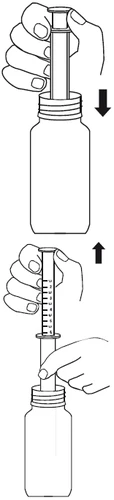
The oral plastic dosing syringe consists of two parts: a translucent cylinder and a white plunger that fits into the cylinder.
The plunger is marked with lines every 0.1 ml, starting from 0.5 ml (at the top of the plunger) up to 5 ml.
A. Insert the assembled dosing syringe into the bottle of Taloxa oral suspension.
B. Keeping the tip submerged in the liquid, pull back the plunger. As the solution fills the syringe, you or your child will see the numbers on the plunger rise.
C. Pull back the plunger until you or your child can read the correct number of ml for the dose being measured.
D. Remove the oral syringe from the bottle and check that the correct amount is visible at the bottom of the syringe. If it is too much or too little for you or your child, try again until the correct amount is obtained.
- Administration: Hold the syringe close to your or your child’s mouth and administer the dose into the mouth by pushing the plunger.
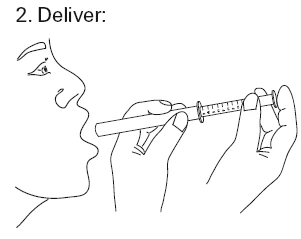
Swallow the dose.
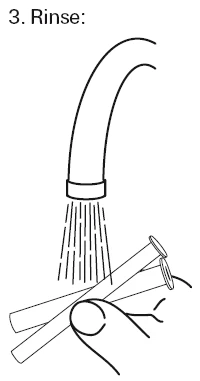
- Rinsing:
Disassemble the syringe and rinse it with water after each use.
If you or your child feel that the effect of Taloxa is too strong or too weak, consult the doctor or pharmacist.
If you or your child takes more Taloxa than you should
Contact your doctor immediately.
If you or your child forgets to take Taloxa
Take the missed dose as soon as possible, unless it is almost time for the next dose.
Do not take a double dose to make up for a forgotten dose.
It is important to return to your regular dosing schedule as soon as possible.
If you or your child stops treatment with Taloxa
Do not stop taking the medicine without consulting your doctor. Suddenly stopping antiepileptic medicines, including Taloxa, may increase the risk of seizures.
For further questions about the use of this medicine by you or your child, ask your doctor or pharmacist.
4. Possible side effects
Like all medicines, Taloxa can cause side effects, although not everybody gets them.
The use of Taloxa oral suspension has been associated with rare cases of severe, potentially life-threatening blood and liver disorders.
Contact your doctor immediately if you experience:
- unusual symptoms while taking Taloxa oral suspension, such as bleeding, bruising, frequent infections, fatigue, jaundice (yellowing of the whites of the eyes and skin), weight loss, vomiting, and abdominal pain.
- blisters in the mouth, nose, or eyes, or blistering or peeling of the skin; if you have muscle and joint pain, fever, rash, uncontrollable vomiting, swelling, or constipation.
Common side effects (may affect up to 1 in 10 people)
Weight loss, loss of appetite, insomnia, drowsiness, unsteady gait, dizziness, headache, visual disturbances such as double or blurred vision, nausea, vomiting, stomach discomfort, abdominal pain, diarrhoea, fatigue.
Uncommon side effects (may affect up to 1 in 100 people)
Abnormal and low blood phosphate levels (hypophosphataemia), difficulty speaking, depression, stupor, anxiety, skin rash, abnormal gait.
Rare side effects (may affect up to 1 in 1,000 people)
Blood abnormalities, including thrombocytopenia (decreased platelets), leucopenia (decreased white blood cells), neutropenia (decreased white blood cells), and anaemia (decreased red blood cells). Combinations of these effects may occur, including decreased levels of all three types of blood cells, together with bone marrow suppression affecting the production of all three cell types.
Increased frequency of epileptic seizures (convulsions), anaphylactic shock (severe, whole-body allergic reaction), other serious allergic reactions including blisters in the mouth, nose, eyes, or other mucous membranes (Stevens-Johnson syndrome, blistering rashes), toxic epidermal necrolysis (blisters and peeling of the top layer of skin), muscle and joint pain, fever.
Very rare side effects (may affect up to 1 in 10,000 people)
Constipation, liver disorders which may be severe and include fatal liver failure, crystals in the urine.
Additional side effects in children and adolescents
Children have shown similar side effects. In addition, upper respiratory tract infections have been frequently observed in children; however, a causal relationship with treatment is unlikely.
Reporting of side effects
If you experience any side effect, including those not listed in this leaflet, talk to your doctor or pharmacist. You can also report side effects directly via the national reporting system at: https://www.aifa.gov.it/content/segnalazioni-reazioni-avverse.
By reporting side effects, you can help provide more information on the safety of this medicine.
5. How to store Taloxa
Keep this medicine out of the sight and reach of children.
Before first opening of the bottle
Do not use Taloxa after the expiry date stated on the bottle/box. The expiry date refers to the last day of that month.
After first opening of the bottle
The shelf life is 1 month.
Keep the bottle tightly closed to protect the medicine from moisture. Discard the Taloxa bottle 1 month after first opening.
Do not store above 25°C.
Do not use Taloxa without consulting your doctor or pharmacist if you notice any changes in the appearance of Taloxa.
Do not dispose of medicines via wastewater or household waste. Ask your pharmacist how to dispose of medicines no longer required. This will help protect the environment.
6. Package contents and other information
What Taloxa contains
The active substance is felbamate. Each 5 ml of Taloxa oral suspension contains 600 mg of
felbamate.
The other components are (see section 2):
sorbitol (E420), glycerol (E422), dispersible cellulose (microcrystalline cellulose + sodium
croscarmellose), simethicone emulsion, sodium saccharin, methyl parahydroxybenzoate (E218),
polysorbate 80, propyl parahydroxybenzoate (E216), sodium benzoate (E211), Prosweet “G” #859
(glycerol (E422), vanillin, ethyl maltol), purified water.
Description of the appearance of Taloxa and package contents
Taloxa 600 mg/5 ml oral suspension is a white to off-white, opaque and viscous suspension.
Taloxa 600 mg/5 ml oral suspension is available in:
50 ml bottle (glass)
100 ml bottle (glass)
230 ml bottle (glass)
250 ml bottle (glass)
450 ml bottle (glass)
2300 ml bottle (glass)
50 ml bottle (HDPE)
100 ml bottle (HDPE)
230 ml bottle (HDPE)
250 ml bottle (HDPE)
450 ml bottle (HDPE)
2300 ml bottle (HDPE)
An oral syringe of 5.0 ml with CE mark is included.
Not all pack sizes may be marketed.
Marketing Authorisation Holder and Manufacturer
Marketing Authorisation Holder:
Organon Italia S.r.l.
Piazza Carlo Magno, 21
00162 Rome
Italy
Manufacturer:
Organon Heist bv
Industriepark 30
2220 Heist-op-den-Berg
Belgium
This medicinal product is authorised in the European Economic Area countries under the
following names:
BE: Taloxa-Susp 600 mg/5 ml Suspension buvable
DE: Taloxa Saft
FR: Taloxa 600 mg/5 ml suspension buvable
IT: Taloxa 600 mg/5 ml sospensione orale
LU: Taloxa suspension 600 mg/5 ml
NL: Taloxa-SUSP
PT: Taloxa 600 mg/5 ml suspensão oral