Tagrisso
Italy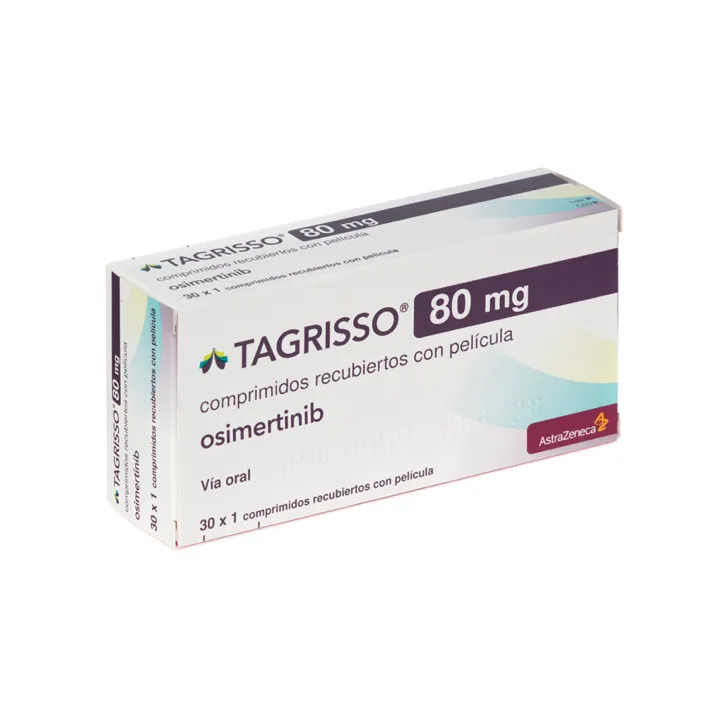
Table of Contents
Patient Information Leaflet
TAGRISSO 40 mg film-coated tablets, 80 mg film-coated tablets
osimertinib
Please read all of this leaflet carefully before you start taking this medicine, as it contains important information for you.
- Keep this leaflet. You may need to read it again.
- If you have any questions, ask your doctor, pharmacist, or nurse.
- This medicine has been prescribed for you only. Do not give it to other people, even if their symptoms are the same as yours, as it may be harmful to them.
- If you experience any side effects, including those not listed in this leaflet, tell your doctor, pharmacist, or nurse. See section 4.
Contents of this leaflet
- What TAGRISSO is and what it is used for
- What you need to know before taking TAGRISSO
- How to take TAGRISSO
- Possible side effects
- How to store TAGRISSO
- Contents of the pack and other information
1. What TAGRISSO is and what it is used for
TAGRISSO contains the active substance osimertinib, which belongs to a group of medicines called kinase inhibitors used to treat cancer. TAGRISSO is used to treat adult patients with a type of lung cancer called 'non-small cell lung cancer'. If a test has shown that the tumour has certain alterations (mutations) in a gene called 'EGFR' (epidermal growth factor receptor), the tumour is likely to respond to treatment with TAGRISSO.
TAGRISSO may be prescribed alone:
- after complete removal of the tumour as post-surgical (adjuvant) treatment, or
- for a tumour that cannot be removed (resected) by surgery and has responded to or stabilised after treatment with chemotherapy and radiation, or
- as the first medicine for treating a tumour that has spread to other parts of the body, or
- under certain circumstances if the tumour has previously been treated with other kinase inhibitor medicines.
TAGRISSO may be prescribed in combination with other anticancer medicines, including:
- pemetrexed and platinum-containing chemotherapy, as the first medicine for treating a tumour that has spread to other parts of the body.
When TAGRISSO is administered in combination with other anticancer medicines, it is important to also read the package leaflet for these other medicines. If you have any questions about these medicines, please consult your doctor.
How TAGRISSO works
TAGRISSO works by blocking EGFR and may help slow down or stop the growth of non-small cell lung cancer. It may also help reduce tumour size and prevent tumour recurrence after surgical removal.
- If you are receiving TAGRISSO after complete removal of the tumour, this means the tumour had defects in the EGFR gene, specifically 'exon 19 deletion' or 'exon 21 substitution mutation'.
- If you are receiving TAGRISSO for a tumour that cannot be removed (resected) by surgery and that has responded to or stabilised after chemotherapy and radiotherapy, this means the tumour has defects in the EGFR gene, specifically 'exon 19 deletion' or 'exon 21 substitution mutation'.
- If TAGRISSO is the first kinase inhibitor you are receiving, this means the tumour has defects in the EGFR gene, such as 'exon 19 deletion' or 'exon 21 substitution mutation'.
- If the tumour has progressed during treatment with other kinase inhibitors, this indicates the tumour has a genetic defect called 'T790M'. Due to this alteration, other kinase inhibitors may no longer be effective.
If you have any questions about how this medicine works or why it has been prescribed for you, please consult your doctor.
2. What you should know before taking TAGRISSO
Do not take TAGRISSO if:
- you are allergic (hypersensitive) to osimertinib or to any of the other ingredients of this medicine (listed in section 6).
- you are taking St John’s wort ( Hypericum perforatum ).
If you have any doubts, consult your doctor, pharmacist, or nurse before taking TAGRISSO.
Warnings and precautions
Talk to your doctor, pharmacist, or nurse before taking TAGRISSO if:
- you have previously suffered from lung inflammation (a condition called ‘interstitial lung disease’).
- you have had heart problems in the past – your doctor may wish to monitor you closely.
- you have a history of eye problems.
If you fall into any of the above conditions (or have any doubts), consult your doctor, pharmacist, or
nurse before taking this medicine.
Immediately inform your doctor if, during treatment with this medicine, you:
- experience sudden breathing difficulties together with cough or fever.
- develop severe skin peeling.
- have rapid or irregular heartbeat, dizziness, lightheadedness, chest discomfort, shortness of breath, or fainting.
- experience tearing, light sensitivity, eye pain, eye redness, or changes in vision. For further information, see ‘Serious side effects’ in section 4.
- develop persistent fever, bruising or bleeding more easily, increased tiredness, pale skin, and infections. For further information, see ‘Serious side effects’ in section 4.
Children and adolescents
TAGRISSO has not been studied in children or adolescents. This medicine must not be
administered to children or adolescents under 18 years of age.
Other medicines and TAGRISSO
Inform your doctor or pharmacist if you are taking, have recently taken, or might take
any other medicines, including herbal medicines and over-the-counter medicines. This is because TAGRISSO may affect how some other medicines work.
In addition, some other medicines may affect how TAGRISSO works.
Before taking TAGRISSO, inform your doctor if you are taking any of the following
medicines:
The following medicines may reduce the effectiveness of TAGRISSO:
- Phenytoin, carbamazepine, or phenobarbital – used for epileptic seizures or convulsions.
- Rifabutin or rifampicin – used to treat tuberculosis (TB).
- St John’s wort ( Hypericum perforatum ) – a herbal medicine used to treat depression.
TAGRISSO may affect the effectiveness of the following medicines and/or increase their side effects:
- Rosuvastatin – used to lower cholesterol levels.
- Hormonal oral contraceptive pill – used to prevent pregnancy.
- Bosentan – used for high blood pressure in the lungs.
- Efavirenz and etravirine – used to treat HIV/AIDS infections.
- Modafinil – used for sleep disorders.
- Dabigatran – used to prevent blood clots.
- Digoxin – used for irregular heartbeat or other heart problems.
- Aliskiren – used for high blood pressure.
If you are taking any of the medicines listed above, inform your doctor before
taking TAGRISSO.
Your doctor will discuss appropriate treatment options with you.
Pregnancy – information for women
- If you are pregnant, suspect you may be pregnant, or are planning a pregnancy, ask your doctor for advice before taking this medicine. If you become pregnant during treatment, inform your doctor immediately. Your doctor will decide together with you whether to continue treatment with TAGRISSO.
- You must not become pregnant during treatment with this medicine. If you are of childbearing age, you must use an effective method of contraception. See the section ‘Contraception – information for women and men’ below.
- If you are planning a pregnancy after taking the last dose of this medicine, consult your doctor. This is because a certain amount of the medicine may remain in your body (see contraceptive advice in the section below).
Pregnancy – information for men
- If your partner becomes pregnant while you are taking this medicine, inform your doctor immediately.
Contraception – information for women and men
You must use an effective method of contraception during treatment.
- TAGRISSO may interfere with the proper functioning of hormonal oral contraceptives. Discuss with your doctor the most appropriate contraceptive method.
- TAGRISSO may pass into semen. Therefore, it is important that men also use an effective method of contraception.
Contraception must be used even after completing treatment with TAGRISSO:
- Women – must continue using contraception for an additional 2 months.
- Men – must continue using contraception for an additional 4 months.
Breastfeeding
You must not breastfeed while being treated with this medicine. This is because it has not yet been established whether there is a risk to the infant.
Driving and using machines
TAGRISSO does not affect or has no marked effect on the ability to drive vehicles or use machinery.
TAGRISSO contains sodium
This medicine contains less than 1 mmol (23 mg) of sodium per tablet, i.e. essentially “sodium-free”.
3. How to take TAGRISSO
Take this medicine exactly as your doctor or pharmacist has told you. If you are unsure, consult your doctor or pharmacist.
What is the dose
- The recommended dose is one 80 mg tablet daily when TAGRISSO is taken alone.
- The recommended dose of TAGRISSO is one 80 mg tablet daily when taken with pemetrexed and platinum-based chemotherapy.
- If necessary, your doctor may reduce the dose to one 40 mg tablet daily.
How to take it
- TAGRISSO should be taken by mouth. Swallow the tablet whole with water. Do not crush, split, or chew the tablet.
- TAGRISSO should be taken every day at the same time.
- This medicine may be taken with or without food.
If you have difficulty swallowing the tablet, you may mix it in water:
- Place the tablet in a glass.
- Add 50 mL (about two-thirds of a glass) of plain water (not sparkling) – do not use any other liquid.
- Stir the water until the tablet breaks into very small pieces – the tablet will not dissolve completely.
- Drink the liquid immediately.
- To ensure you have taken the full dose of the medicine, rinse the glass with another 50 mL of water and drink it.
If you take more TAGRISSO than you should
If you take more than the prescribed dose, contact your doctor or the nearest hospital immediately.
If you forget to take TAGRISSO
If you forget to take a dose, take it as soon as you remember. However, if less than 12 hours remain before your next scheduled dose, do not take the missed dose. Take your next dose at the regular time.
If you stop taking TAGRISSO
Talk to your doctor before stopping treatment with this medicine. It is important to take this medicine every day for the length of time prescribed by your doctor.
If you have any doubts about how to use this medicine, consult your doctor, pharmacist, or nurse.
4. Possible side effects
Like all medicines, this medicine can cause side effects, although not everyone gets them.
Serious side effects
Tell your doctor immediately if you notice the following serious side effects (see also section 2):
- Sudden difficulty in breathing together with cough or fever – this may be a sign of lung inflammation (a condition called ‘interstitial lung disease’). Most cases can be treated, but some have been fatal. Your doctor may decide to stop treatment with TAGRISSO if this side effect occurs. This side effect is common: it may affect more than 1 in 10 people.
- Stevens-Johnson syndrome and toxic epidermal necrolysis, which may appear as red spots on the trunk resembling targets or circular lesions, often with central blisters, skin peeling, mouth, throat, nose, genital, and eye ulcers, and are preceded by fever and flu-like symptoms. Stevens-Johnson syndrome is rare: it may affect up to 1 in 1,000 people. The frequency of toxic epidermal necrolysis cannot be determined as cases have only been reported since TAGRISSO has been marketed.
- Changes in the electrical activity of the heart (QTc interval prolongation), such as rapid or irregular heartbeat, dizziness, lightheadedness, chest discomfort, shortness of breath, and fainting. This side effect is common: it may affect up to 1 in 10 people.
- If you develop tearing, light sensitivity, eye pain, redness in the eye, or changes in vision. These side effects are uncommon: they may affect up to 1 in 100 people.
- A blood disorder called aplastic anemia, in which the bone marrow stops producing new blood cells – signs of this blood disorder may include persistent fever, bruising or bleeding that develops more easily, increased fatigue, and a reduced ability to fight infections. This side effect is rare: it may affect up to 1 in 1,000 people.
- A condition in which the heart does not pump enough blood out of the heart with each beat, which may cause breathlessness, fatigue, and swelling of the ankles (indicative of heart failure or reduced left ventricular ejection fraction).
Tell your doctor immediately if you notice any of the serious side effects listed above.
Other side effects
Very common (may affect more than 1 in 10 people)
- Diarrhea – may come and go during treatment. Inform your doctor if diarrhea does not go away or worsens.
- Itching of the skin (pruritus) – Regular use of moisturizing products on the skin may be helpful in this case.
- Skin and nail problems – signs may include pain, itching, dry skin, rash, redness around the nails. These signs are more likely to appear in sun-exposed areas. Regular use of moisturizing products on skin and nails may be helpful. Inform your doctor if skin or nail problems worsen.
- Stomatitis – inflammation of the inner lining of the mouth or ulcers forming in the mouth.
- Loss of appetite.
Common (may affect up to 1 in 10 people)
- Lung inflammation caused by thoracic radiotherapy (Radiation Pneumonitis).
- Nosebleeds (epistaxis).
- Hair thinning (alopecia).
- Hives – itchy raised spots anywhere on the skin, which may be pink or red and round in shape. Inform your doctor if you notice this side effect.
- Hand-foot syndrome – may include redness, swelling, tingling or burning sensation with skin cracking on the palms of the hands and/or soles of the feet.
- Increase in a substance in the blood called creatinine (produced by the body and removed by the kidneys).
- Increase in a substance in the blood called creatine phosphokinase (an enzyme released into the blood when muscle is damaged).
- Decrease in the number of white blood cells (leukocytes, lymphocytes, or neutrophils).
- Decrease in the number of platelets in the blood.
Uncommon (may affect up to 1 in 100 people)
- Target lesions, which are skin reactions resembling rings (indicative of Erythema multiforme).
- Inflammation of blood vessels in the skin. This may lead to bruising or redness of the skin that does not fade when pressed (non-blanching).
- Inflammation of muscle which may cause muscle pain or weakness.
- Grayish discoloration or darkening of the skin (hyperpigmentation).
The following side effects have been reported in a clinical study of patients treated with
TAGRISSO in combination with pemetrexed and platinum-based chemotherapy:
Very common (may affect more than 1 in 10 people)
- Diarrhea – may come and go during treatment. Inform your doctor if diarrhea does not go away or worsens.
- Skin and nail problems – signs may include pain, itching, dry skin, rash, redness around the nails. These signs are more likely to appear in sun-exposed areas. Regular use of moisturizing products on skin and nails may be helpful. Inform your doctor if skin or nail problems worsen.
- Stomatitis – inflammation of the inner lining of the mouth or ulcers forming in the mouth.
- Loss of appetite.
- Decrease in the number of white blood cells (leukocytes, lymphocytes, or neutrophils).
- Decrease in the number of platelets in the blood.
- Increase in a substance in the blood called creatinine (produced by the body and removed by the kidneys).
Common (may affect up to 1 in 10 people)
- Nosebleeds (epistaxis).
- Itching of the skin (pruritus) – Regular use of moisturizing products on the skin may be helpful in this case.
- Hair thinning (alopecia).
- Target lesions, which are skin reactions resembling rings (indicative of Erythema multiforme).
- Hives – itchy raised spots anywhere on the skin, which may be pink or red and round in shape. Inform your doctor if you notice this side effect.
- Grayish discoloration or darkening of the skin (hyperpigmentation).
- Hand-foot syndrome – may include redness, swelling, tingling or burning sensation with skin cracking on the palms of the hands and/or soles of the feet.
- Increase in a substance in the blood called creatine phosphokinase (an enzyme released into the blood when muscle is damaged).
Reporting of side effects
If you get any side effects, including ones not listed in this leaflet, talk to your doctor, pharmacist, or nurse. You can also report side effects directly through the national reporting system listed in Annex V. By reporting side effects, you can help provide more information on the safety of this medicine.
5. How to store TAGRISSO
Keep this medicine out of sight and reach of children.
Do not use this medicine after the expiry date stated on the blister and the carton after EXP/Exp. The expiry date refers to the last day of that month.
This medicine does not require any special storage conditions.
Do not use this medicine if the packaging is damaged or shows signs of deterioration.
Do not dispose of any medicine via wastewater or household waste. Ask your pharmacist how to dispose of medicines you no longer use. This will help protect the environment.
6. Package contents and other information
What TAGRISSO contains
- The active substance is osimertinib (as mesilate). Each 40 mg film-coated tablet contains 40 mg of osimertinib. Each 80 mg film-coated tablet contains 80 mg of osimertinib.
- The other components are mannitol, microcrystalline cellulose, low-substituted hydroxypropylcellulose, sodium stearyl fumarate, polyvinyl alcohol, titanium dioxide, macrogol 3350, talc, yellow iron oxide, red iron oxide, black iron oxide (see section 2 “TAGRISSO contains sodium”).
Description of the appearance of TAGRISSO and pack contents
TAGRISSO 40 mg is supplied as beige, biconvex, round, film-coated tablets, marked with “AZ” and “40” on one side and plain on the other.
TAGRISSO 80 mg is supplied as beige, biconvex, oval, film-coated tablets, marked with “AZ” and “80” on one side and plain on the other.
TAGRISSO is available in blisters containing 30 x 1 film-coated tablets, packaged in boxes containing 3 blisters of 10 tablets each.
TAGRISSO is available in blisters containing 28 x 1 film-coated tablets, packaged in boxes containing 4 blisters of 7 tablets each.
Marketing Authorisation Holder
AstraZeneca AB
SE-151 85 Södertälje
Sweden
Manufacturer
AstraZeneca AB
Gärtunavägen
SE-152 57 Södertälje
Sweden
For further information on this medicinal product, please contact the local representative of the Marketing Authorisation Holder.
België/Belgique/Belgien Lietuva
AstraZeneca S.A./N.V. UAB AstraZeneca Lietuva
Tel: +32 2 370 48 11 Tel: +370 5 2660550
България Luxembourg/Luxemburg
АстраЗенека България ЕООД AstraZeneca S.A./N.V.
Тел.: +359 24455000 Tél/Tel: +32 2 370 48 11
Česká republika Magyarország
AstraZeneca Czech Republic s.r.o. AstraZeneca Kft.
Tel: +420 222 807 111 Tel.: +36 1 883 6500
Danmark Malta
AstraZeneca A/S Associated Drug Co. Ltd
Tlf.: +45 43 66 64 62 Tel: +356 2277 8000
Deutschland Nederland
AstraZeneca GmbH AstraZeneca BV
Tel: +49 40 80 90 34100 Tel: +31 85 808 9900
Eesti Norge
AstraZeneca AstraZeneca AS
Tel: +372 6549 600 Tlf: +47 21 00 64 00
Ελλάδα Österreich
AstraZeneca A.E. AstraZeneca Österreich GmbH
Τηλ: +30 210 6871500 Tel: +43 1 711 31 0
España Polska
AstraZeneca Farmacéutica Spain, S.A. AstraZeneca Pharma Poland Sp. z o.o.
Tel: +34 91 301 91 00 Tel.: +48 22 245 73 00
France Portugal
AstraZeneca AstraZeneca Produtos Farmacêuticos, Lda.
Tél: +33 1 41 29 40 00 Tel: +351 21 434 61 00
Hrvatska România
AstraZeneca d.o.o. AstraZeneca Pharma SRL
Tel: +385 1 4628 000 Tel: +40 21 317 60 41
Ireland Slovenija
AstraZeneca Pharmaceuticals (Ireland) DAC AstraZeneca UK Limited
Tel: +353 1609 7100 Tel: +386 1 51 35 600
Ísland Slovenská republika
Vistor hf. AstraZeneca AB, o.z.
Sími: +354 535 7000 Tel: +421 2 5737 7777
Italia Suomi/Finland
AstraZeneca S.p.A. AstraZeneca Oy
Tel: +39 02 00704500 Puh/Tel: +358 10 23 010
Κύπρος Sverige
Αλέκτωρ Φαρµακευτική Λτδ AstraZeneca AB
Τηλ: +357 22490305 Tel: +46 8 553 26 000
Latvija
SIA AstraZeneca Latvija
Tel: +371 67377100
Other sources of information
More detailed information on this medicinal product is available on the European Medicines Agency website: https://www.ema.europa.eu.