Tachidol
Italy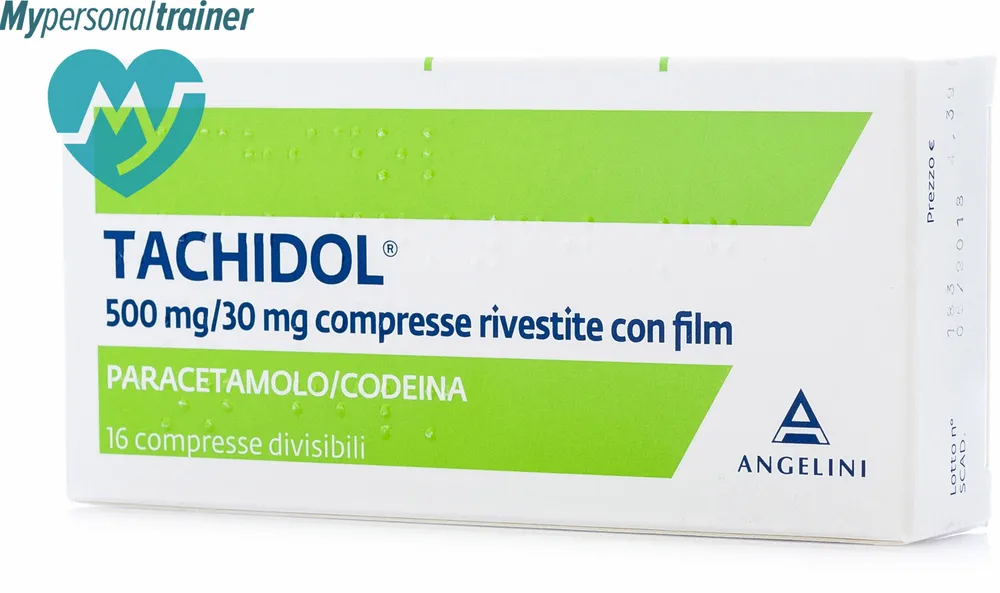
Table of Contents
- Package leaflet: Information for the patient
- TACHIDOL 500 mg/30 mg effervescent granules, 500 mg/30 mg effervescent tablets, 500 mg/30 mg film-coated tablets
- 1. What Tachidol is and what it is used for
- 2. What you should know before taking Tachidol
- 3. How to take Tachidol
- 4. Possible side effects
- 5. How to store Tachidol
- 6. Package contents and other information
Package leaflet: Information for the patient
TACHIDOL 500 mg/30 mg effervescent granules, 500 mg/30 mg effervescent tablets, 500 mg/30 mg film-coated tablets
paracetamol + codeine
Please read this leaflet carefully before taking this medicine because it contains important information for you.
- Keep this leaflet. You may need to read it again.
- If you have any questions, ask your doctor or pharmacist.
- This medicine has been prescribed for you only. Do not give it to others, even if they have the same symptoms as yours, because it could be harmful.
- If you experience any side effect, including those not listed in this leaflet, tell your doctor or pharmacist. See section 4.
Contents of this leaflet:
- What Tachidol is and what it is used for
- What you need to know before taking Tachidol
- How to take Tachidol
- Possible side effects
- How to store Tachidol
- Contents of the pack and other information
1. What Tachidol is and what it is used for
Tachidol contains two active substances (paracetamol and codeine) that act to relieve pain. The combination of paracetamol and codeine has a higher analgesic activity than either of its components taken individually, with a longer-lasting effect.
Tachidol is indicated in adults for the treatment of moderate to severe pain symptoms that do not respond to treatment with other analgesic medicines used alone.
The use of codeine (one of the two components of Tachidol) is indicated in patients over 12 years of age for the treatment of moderate acute pain (pain that arises suddenly) which does not respond adequately to other analgesics such as paracetamol or ibuprofen.
2. What you should know before taking Tachidol
Do not take Tachidol
- if you are allergic to paracetamol or codeine or to any of the other ingredients of this medicine (listed in section 6)
- if you are under 12 years of age
- if you suffer from severe haemolytic anaemia (a disease caused by destruction of certain blood cells, red blood cells)
- if you suffer from severe liver disease (severe hepatic insufficiency)
- if you have active liver disease
- if you suffer from a lung disease (respiratory failure)
- if you know you have a particularly active liver enzyme called CYP2D6 (ultra-rapid metabolizer for CYP2D6)
- if you are breastfeeding or pregnant (see section 2 “Pregnancy and breastfeeding”).
Additionally, Tachidol must not be taken by patients aged between 0 and 18 years who have undergone surgery for removal of tonsils or adenoids due to a breathing disorder called obstructive sleep apnoea syndrome, as in such cases the risk of developing serious and life-threatening adverse reactions increases.
Additionally, do not take Tachidol granules and Tachidol effervescent tablets if you suffer from phenylketonuria (see sections “Tachidol effervescent granules contain maltitol, sodium and aspartame” and “Tachidol effervescent tablets contain sorbitol, sodium and aspartame”).
Warnings and precautions
Tolerance, physical dependence and psychological dependence
This medicine contains codeine, an opioid medicine. It may cause dependence and/or tolerance.
Repeated use of opioids may lead to reduced effectiveness of the drug (the body becomes accustomed to the drug through a phenomenon called tolerance). Repeated use of TACHIDOL may also cause physical dependence, abuse and psychological dependence, which may lead to a life-threatening overdose. The risk of these adverse effects may increase with higher doses and prolonged duration of use.
Physical or psychological dependence may make you feel as though you no longer have control over the amount of medicine you need to take or how often you need to take it.
The risk of physical or psychological dependence varies from person to person. You may be at higher risk of physical or psychological dependence on TACHIDOL if:
- you or a family member have abused or been dependent on alcohol, prescription medicines or illegal drugs (“psychological dependence”)
- you are a smoker
- you have previously had mood disorders (depression, anxiety or personality disorder) or have been treated by a psychiatrist for other mental illnesses.
If you notice any of the following signs while taking TACHIDOL, it could be a sign of physical or psychological dependence:
- you feel the need to take the medicine for longer than recommended by your doctor
- you feel the need to take higher amounts than the recommended dose
- you feel compelled to continue taking the medicine, even though it does not help relieve your symptoms
- you are using the medicine for reasons other than those prescribed, for example, “to stay calm” or “to help you sleep”
- you have made repeated attempts to stop or control use of the medicine without success
- you feel unwell when you stop taking the medicine and feel better when you take it again (“withdrawal effects”).
If you notice any of these signs, consult your doctor to discuss the best treatment plan for you, including when it would be appropriate to stop and how to stop safely (see section 3, “If you stop taking TACHIDOL”).
Consult your doctor or pharmacist before taking Tachidol.
Take Tachidol with caution in the following cases:
- if you suffer from kidney disease (renal failure)
- if you suffer from liver disease (hepatic insufficiency)
- if you chronically or excessively consume alcohol (3 or more alcoholic drinks per day)
- if you suffer from anorexia (an eating disorder characterised by lack or reduction of appetite)
- if you suffer from bulimia (an eating disorder in which a person ingests excessive amounts of food and then uses various methods to eliminate it)
- if you suffer from cachexia (a condition characterised by extreme thinness, reduced muscle mass and thinning of the skin due to chronic illness)
- if you have been following an inadequate diet for a long time (chronic malnutrition)
- if you suffer from dehydration (severe loss of water/fluids from the body)
- if you suffer from hypovolemia (reduced blood volume in circulation)
- if you have glucose-6-phosphate dehydrogenase deficiency (a substance normally present in the human body, whose deficiency may cause a blood disorder)
- if you have undergone surgical removal of the gallbladder. In this case, you may experience acute abdominal pain
- if you have a cough with phlegm, as expectoration may be difficult.
During treatment with Tachidol, inform your doctor immediately if:
You suffer from serious illnesses, including severe renal impairment or sepsis (when bacteria and their toxins circulate in the blood causing organ damage), malnutrition, chronic alcoholism, or if you are also taking flucloxacillin (an antibiotic). In patients with these conditions, a serious condition called metabolic acidosis (an abnormality in blood and fluids) has been reported when paracetamol is used regularly for prolonged periods or when paracetamol is taken in combination with flucloxacillin. Symptoms of metabolic acidosis may include: severe breathing difficulties with deep, rapid breathing, drowsiness, nausea and vomiting.
Sleep-related breathing disorders
Tachidol may cause sleep-related breathing disorders such as sleep apnoea (pauses in breathing during sleep) and sleep-related hypoxaemia (low oxygen levels in the blood). Symptoms may include breathing pauses during sleep, waking up at night due to breathlessness, difficulty maintaining sleep or excessive daytime sleepiness. If you or someone else notices these symptoms, contact your doctor. Your doctor may consider reducing the dose.
Contact your doctor if you experience severe pain in the upper abdomen that may radiate to the back, nausea, vomiting or fever, as these may be symptoms associated with inflammation of the pancreas (pancreatitis) and the biliary tract system.
Consult your doctor or pharmacist if you experience pain or increased sensitivity to pain (hyperalgesia) that does not respond to higher doses of the medicine.
Treatment with Tachidol must be discontinued at the first appearance of a skin rash or any other sign of hypersensitivity (allergic reaction).
Opioid therapy may cause:
- respiratory depression (reduced respiratory function) and sedation, lowered seizure threshold (i.e., increased excitability of the nervous system, as in epilepsy)
- hyperalgesia (increased sensitivity to pain)
- constipation (difficult or infrequent bowel movements)
- nausea and vomiting
- masking of symptoms of acute abdominal conditions (conditions characterised by severe pain and signs of abdominal irritation)
- obstruction of bile and pancreatic juice outflow, as in certain biliary tract diseases, for example pancreatitis (inflammation of the pancreas) and cholelithiasis (presence of gallstones)
- increased histamine release, as in asthma (airway obstruction)
- itching
- reduced hormone levels
- inhibition of immunological function (i.e., the body's defence system)
- muscle rigidity and myoclonus (involuntary rapid muscle jerks)
- urinary retention (difficulty emptying the bladder), particularly in patients with urethral stricture (narrowing of the final part of the urinary tract) or enlarged prostate.
Use of high doses and/or for prolonged periods
The use of high doses and/or prolonged use of this medicine may cause liver disorders (hepatopathy), serious kidney and blood abnormalities, or lead to dependence, a condition in which you cannot do without the drug.
In such cases, your doctor will monitor liver and kidney function and blood composition over time through appropriate tests. Before taking this medicine, inform your doctor if the person taking it suffers from kidney or liver disease.
Prolonged use of analgesics, including opioids, increases the risk of medication-overuse headache.
With prolonged use of opioids, reduced analgesic effectiveness (tolerance) may occur.
Prolonged administration of codeine or doses above therapeutic levels may lead to physical and psychological dependence (tolerance) and withdrawal syndrome following sudden discontinuation of treatment, which may be observed both in patients and in newborns born to codeine-dependent mothers.
Tachidol should be used with caution in patients with dependence or a history of opioid dependence, and alternative analgesic therapies should be considered.
If you are elderly
If you are elderly and suffer from a disease (e.g., of the brain, bladder, etc.), prolonged use of the medicine may worsen the condition.
Elderly patients may be at greater risk of adverse effects associated with opioid use, such as respiratory depression and constipation.
Children and adolescents
Do not give this medicine to children under 12 years of age.
Do not give Tachidol to relieve pain in children and adolescents after removal of tonsils or adenoids for obstructive sleep apnoea syndrome.
Do not give Tachidol to children and adolescents with respiratory problems, as symptoms of morphine toxicity may be worse.
Other medicines and Tachidol
Inform your doctor or pharmacist if you are taking, have recently taken or might take any other medicine.
In particular, inform your doctor if the person taking the medicine is taking:
- medicines containing paracetamol. During paracetamol treatment, before taking any other medicine, check that it does not contain paracetamol, as serious adverse effects may occur if paracetamol is taken in high doses
- medicines that accelerate stomach emptying (e.g. prokinetics), as these medicines speed up the effect of paracetamol
- cholestyramine (a medicine used to reduce cholesterol levels in the blood), as it reduces the effect of paracetamol
- chloramphenicol (an antibiotic), as it may increase the risk of adverse effects
- medicines or substances that in chronic treatment alter liver function, for example:
- rifampicin (an antibiotic)
- cimetidine (a medicine used in the treatment of stomach ulcers)
- antiepileptics (medicines used to treat epilepsy), e.g. glutethimide, phenobarbital, carbamazepine, phenytoin
- zidovudine (a medicine for the treatment of HIV). The use of these medicines with Tachidol requires close medical monitoring.
- medicines or substances that prolong the effect of paracetamol, for example:
- probenecid (a medicine used in the treatment of gout)
- salicylamide (an anti-inflammatory)
- oral anticoagulants, which are medicines used to make the blood more fluid; in this case, your doctor will reduce the dose of Tachidol
- medicines that affect the activity of the central nervous system, such as:
- sedatives and tranquillisers
- antihistamines, medicines used in the treatment of allergies
- neuroleptics, medicines for treating mental illnesses
- meprobamate, a medicine for treating anxiety
- hypnotics, medicines for treating insomnia
- medicines for treating depression (amitriptyline, doxepin, mirtazapine, mianserin, trimipramine)
- centrally acting antihypertensives, medicines for treating high blood pressure
- benzodiazepines
- barbiturates
- gabapentin or pregabalin for the treatment of epilepsy or nerve-related pain (neuropathic pain)
- analgesics (alfentanil, dextromoramide, dextropropoxyphene, fentanyl, dihydrocodeine, hydromorphone, morphine, oxycodone, pethidine, phenoperidine, remifentanil, sufentanil, tramadol)
- cough medicines (dextromethorphan, noscapine, pholcodine, codeine, ethylmorphine)
- methadone, a medicine for treating drug addiction
- baclofen, a medicine to reduce and relieve excessive muscle tension (spasms) occurring in various diseases
- thalidomide, a medicine for treating a disease of the immune system (multiple myeloma)
- anticholinergics (medicines for treating various conditions such as bladder problems, allergies and depression)
- flucloxacillin (antibiotic), due to a serious risk of blood and fluid abnormalities (called metabolic acidosis with high anion gap) that must be treated urgently.
Do not take Tachidol if you are taking:
- potent analgesics (buprenorphine, nalbuphine, pentazocine)
- naltrexone, a medicine for treating drug dependence.
Concomitant use of Tachidol and sedative medicines such as benzodiazepines or related drugs increases the risk of drowsiness, breathing difficulties (respiratory depression), coma and may be life-threatening. For this reason, concomitant use should only be considered when no other therapeutic options are possible.
However, if your doctor prescribes Tachidol together with sedative medicines, the dose and duration of concomitant treatment must be limited.
Inform your doctor about all sedative medicines you are taking and strictly follow their dosage recommendations. It may be helpful to inform friends and family to watch for the signs and symptoms listed above. Contact your doctor if these symptoms occur.
Tachidol and alcohol
Do not take Tachidol with alcoholic drinks, as alcohol increases sedation and causes a state of reduced alertness that may make driving and operating machinery dangerous (see section “Driving and use of machinery”).
Take Tachidol with caution if you chronically or excessively consume alcohol (3 or more alcoholic drinks per day), as there is a risk of intoxication (see sections “Warnings and precautions” and “If you take more Tachidol than you should”).
Pregnancy and breastfeeding
If you are pregnant, suspect you may be pregnant, or are planning a pregnancy, ask your doctor or pharmacist for advice before taking this medicine.
Pregnancy
Do not take Tachidol during pregnancy (see section “Do not take Tachidol”).
Use during the third trimester may be associated with possible onset in the newborn of opioid withdrawal symptoms including restlessness, excessive crying, tremors, increased muscle tone (hypertonia), increased respiratory rate (tachypnoea), fever (pyrexia), vomiting and diarrhoea.
Breastfeeding
Do not take Tachidol if you are breastfeeding, as codeine passes into breast milk (see section “Do not take Tachidol”).
Driving and use of machinery
Tachidol may affect your ability to drive or operate machinery as it may cause drowsiness and reduced alertness.
Tachidol effervescent granules contain maltitol, sodium and aspartame
Maltitol: if your doctor has diagnosed you with intolerance to certain sugars, contact them before taking this medicine.
Sodium: this medicine contains 12.3 mmol (or 282.9 mg) of sodium (main component of table salt) per sachet. This corresponds to 14% of the maximum daily intake recommended in an adult's diet.
Aspartame: this medicine contains 25 mg of aspartame per dose equivalent to 25 mg/5945 mg. Aspartame is a source of phenylalanine. It may be harmful if you have phenylketonuria, a rare genetic disorder causing accumulation of phenylalanine because the body cannot eliminate it properly (see section “Do not take Tachidol”).
Tachidol effervescent tablets contain sorbitol, sodium and aspartame
Sorbitol: this medicine contains 252 mg of sorbitol per tablet equivalent to 252 mg/3000 mg.
Sodium: this medicine contains 15.2 mmol (or 349.6 mg) of sodium (main component of table salt) per effervescent tablet.
This corresponds to 17.5% of the maximum daily intake recommended in an adult's diet.
Aspartame: this medicine contains 30 mg of aspartame per effervescent tablet equivalent to 30 mg/3000 mg. Aspartame is a source of phenylalanine. It may be harmful if you have phenylketonuria, a rare genetic disorder causing accumulation of phenylalanine because the body cannot eliminate it properly (see section “Do not take Tachidol”).
Tachidol film-coated tablets contain lactose
If your doctor has diagnosed you with intolerance to certain sugars, contact them before taking this medicine.
3. How to take Tachidol
Take this medicine exactly as directed by your doctor or pharmacist. If you are unsure, consult your doctor or pharmacist.
Before starting treatment and regularly during treatment, your doctor will explain what you can expect from using Tachidol, when and for how long you should take it, when to contact your doctor, and when you should stop taking it (see also, If you stop taking Tachidol).
Adults and adolescents over 12 years of age
Effervescent granules in sachets
The recommended dose is 1–2 sachets as needed, up to 3 times a day.
Dissolve Tachidol effervescent granules (sachets) in half a glass of water and take at intervals of at least 4 hours.
Effervescent tablets
The recommended dose is 1–2 effervescent tablets as needed, up to 3 times a day.
Take Tachidol effervescent tablets at intervals of at least 4 hours.
Dissolve the effervescent tablets in a glass of water.
Film-coated tablets
The recommended dose is 1–2 tablets as needed, up to 3 times a day.
Take Tachidol tablets at intervals of at least 4 hours.
If you suffer from renal or hepatic impairment (severe reduction in kidney or liver function)
If your doctor has diagnosed you with severe renal or hepatic impairment, the interval between doses must be at least 8 hours.
Duration of treatment
Do not take Tachidol for more than 3 consecutive days without consulting your doctor. Your doctor must evaluate whether treatment beyond 3 consecutive days is necessary.
Tachidol should be used for the shortest duration necessary to achieve symptom relief. If you do not obtain effective pain relief during treatment with this medicine, consult a doctor.
If you take more Tachidol than you should
If you accidentally ingest or take an excessive dose of Tachidol, contact your doctor immediately or go to the nearest hospital. In hospital, you will be treated according to appropriate intervention protocols (e.g. gastric lavage, administration of antidote).
In case of accidental ingestion of very high doses of Tachidol, symptoms related to paracetamol may include: anorexia (loss or reduced appetite), nausea, vomiting, pallor, abdominal pain, malaise, sweating. Paracetamol, when taken in excessively high doses far beyond those commonly recommended, can cause severe liver damage, which may progress to coma and death.
In adults, an excessive dose of codeine may cause: reduced breathing, bluish skin due to lack of oxygen (cyanosis), drowsiness, skin flushing, itching, vomiting, difficulty in movement (ataxia).
In children, an excessive dose of codeine may cause: reduced or stopped breathing, constricted pupils (miosis), seizures, facial flushing and swelling, urticaria, collapse, urinary retention.
To avoid the risk of overdose or serious adverse effects, check that other medicines you are taking (with or without prescription) do not contain opioids or other central nervous system depressants.
Taking an excessive dose of Tachidol increases the risk of poisoning and may lead to death, especially in the following cases:
- if the person taking the medicine suffers from liver disease
- if the person taking the medicine is a chronic alcohol user (chronic alcoholism)
- if the person taking the medicine has been following a prolonged inadequate diet (chronic malnutrition)
- if the person taking the medicine is taking medicines or substances that increase liver enzyme activity.
If you forget to take Tachidol
Do not take/don’t give the adolescent a double dose to make up for a missed dose.
If you stop taking Tachidol
If you have been taking Tachidol at doses higher than the therapeutic doses, you are at risk of dependence and withdrawal syndrome following sudden discontinuation. These effects may also be observed in a newborn child if you took codeine for a prolonged period during pregnancy.
If you have any doubts about using this medicine, consult your doctor or pharmacist.
4. Possible side effects
Like all medicines, this medicine can cause side effects, although not everybody will experience them.
If you experience any of the following side effects, STOP taking this medicine and contact your doctor immediately:
- slow or difficult breathing
- confusion
- drowsiness
- constricted pupils
- nausea or vomiting
- constipation
- loss of appetite
- allergic reactions such as:
- swelling of the hands, feet, ankles, face, lips, tongue and/or throat (angioedema)
- swelling of the throat (laryngeal edema)
- severe allergic reaction (anaphylactic shock)
- itching
- skin redness accompanied by itching (urticaria)
- skin rashes.
In addition, patients taking this medicine may experience the following side effects.
Frequency not known (frequency cannot be estimated from the available data):
- skin reactions of various types and severity, including cases of erythema multiforme, Stevens-Johnson syndrome and epidermal necrolysis (skin diseases presenting with red spots, blistering lesions and areas of skin detachment). Very rare cases of serious skin reactions have been reported.
- decrease in the number of platelets in the blood (thrombocytopenia)
- decrease in the number of white blood cells in the blood (leukopenia/agranulocytosis/neutropenia)
- decrease in hemoglobin in the blood, the substance that carries oxygen in the blood (anemia)
- excitement (euphoria)
- depressed mood with agitation, irritability, nervousness (dysphoria)
- hallucination
- drug abuse
- drug dependence
- myoclonus (sudden, involuntary muscle twitch)
- paresthesia (tingling)
- syncope (transient loss of consciousness)
- tremor
- sedation
- inflammation of the liver (hepatitis)
- biliary colic (severe pain in the upper abdomen)
- reduced kidney function (acute renal failure)
- inflammation of the kidneys (interstitial nephritis)
- blood in the urine (hematuria)
- cessation or marked reduction in urine production (anuria)
- inability to empty the bladder (urinary retention)
- stomach and intestinal disturbances
- symptoms associated with inflammation of the pancreas (pancreatitis) and bile ducts (a condition affecting an intestinal valve known as Oddi sphincter dysfunction), e.g. severe upper abdominal pain possibly radiating to the back, nausea, vomiting or fever. Acute abdominal pain (which may occur particularly in patients who have had their gallbladder removed)
- dizziness
- contraction of the muscles around the airways (bronchospasm)
- dyspnea (difficulty breathing)
- severe condition that may make the blood more acidic (called metabolic acidosis), in patients with serious illness using paracetamol (see section 2).
At codeine doses higher than therapeutic doses, there is a risk of dependence and withdrawal syndrome following sudden discontinuation of treatment, which may occur both in patients and in newborns born to codeine-dependent mothers (see section “If you stop treatment with Tachidol”).
In case of overdose, paracetamol may cause severe liver damage (hepatic cytolysis which may progress to massive and irreversible necrosis).
Reporting of side effects
If you experience any side effect, including those not listed in this leaflet, talk to your doctor or pharmacist.
You can also report side effects directly via the website:
http://www.aifa.gov.it/content/segnalazioni-reazioni-avverse.
By reporting side effects, you can help provide more information on the safety of this medicine.
The use of Tachidol may alter the results of certain diagnostic tests:
- liver function tests;
- uricemia;
- blood glucose levels;
- decrease or increase in INR (a value used to express the time taken for blood to clot).
5. How to store Tachidol
Keep this medicine out of the sight and reach of children.
Do not use this medicine after the expiry date stated on the packaging after EXP. The expiry date refers to the last day of that month.
Store this medicine in a safe and secure place inaccessible to other people. It may cause serious harm or be fatal to individuals for whom it is not intended.
Effervescent granules in sachets: store below 25°C.
Effervescent tablets: store below 30°C. Keep in the original packaging to protect the medicine from moisture.
Shelf life after first opening of the container: use the medicine within 3 months; any remaining product must be discarded.
Film-coated tablets: this medicine requires no special storage conditions.
The half tablet may be stored for up to 24 hours in the original packaging to protect it from light.
Do not dispose of medicines via wastewater or household waste. Ask your pharmacist how to dispose of medicines you no longer use. This will help protect the environment.
6. Package contents and other information
What Tachidol contains
Tachidol 500 mg/30 mg effervescent granules
- The active substances are: paracetamol and codeine (each sachet contains 500 mg of paracetamol and 30 mg of codeine phosphate)
- Other components: mannitol, maltitol, sodium bicarbonate, sodium docusate, aspartame (see section “Tachidol effervescent granules contains maltitol, sodium and aspartame”), citric acid, lemon flavour, povidone.
Tachidol 500 mg/30 mg effervescent tablets
- The active substances are: paracetamol and codeine (each effervescent tablet contains 500 mg of paracetamol and 30 mg of codeine phosphate)
- Other components: anhydrous citric acid, sorbitol, sodium bicarbonate, sodium carbonate anhydrous, sodium docusate, aspartame (see section “Tachidol effervescent tablets contains sorbitol, sodium and aspartame”), orange flavour, lemon flavour, simeticone emulsion.
Tachidol 500 mg/30 mg film-coated tablets
- The active substances are: paracetamol and codeine (each tablet contains 500 mg of paracetamol and 30 mg of codeine phosphate)
- Other components: sodium croscarmellose, stearic acid, povidone, precipitated silica, sodium lauryl sulfate, lactose monohydrate (see section “Tachidol film-coated tablets contains lactose”), hypromellose, titanium dioxide (E171), Macrogol 4000.
Description of the appearance of Tachidol and pack contents
Tachidol effervescent granules
It is presented as a white granular powder contained in aluminium-paper sachets, packed in cartons containing 10 double-partitioned sachets.
Tachidol effervescent tablets
They are presented as effervescent tablets, white or almost white, round, with a break line on one side only.
They are packed in cartons containing 16 tablets divided into two plastic tubes, each containing 8 divisible effervescent tablets.
Tachidol film-coated tablets
They are presented as white to off-white, film-coated, biconvex, oblong tablets, with a break line on one side only.
They are packed in opaque blisters and available in packs of 10, 12, 16, 20, or 24 tablets.
Not all pack sizes may be marketed.
Marketing Authorization Holder
Aziende Chimiche Riunite Angelini Francesco - A.C.R.A.F. S.p.A.
Viale Amelia 70 - 00181 Rome, Italy
Manufacturer
Tachidol film-coated tablets
A.C.R.A.F. S.p.A., Via Vecchia del Pinocchio, 22 - 60131 Ancona, Italy
Tachidol effervescent granules and Tachidol effervescent tablets
A.C.R.A.F. S.p.A., Via Vecchia del Pinocchio, 22 - 60131 Ancona, Italy
or
E-Pharma Trento S.p.A., Frazione Ravina - Via Provina, 2 – 38123 Trento (TN), Italy