T.R.U.E. TEST SMARTPRACTICE
ItalyTable of Contents
- Package leaflet: Information for the user
- T.R.U.E. Test SmartPractice patch for patch testing
- 1. What T.R.U.E. Test SmartPractice is and what it is used for
- 2. What you need to know before using T.R.U.E. Test SmartPractice
- 3. How to use T.R.U.E. Test SmartPractice
- 4. Possible side effects
- 5. How to store T.R.U.E. Test SmartPractice
- 6. Package contents and other information
PACKAGE LEAFLET
Package leaflet: Information for the user
T.R.U.E. Test SmartPractice patch for patch testing
T.R.U.E. Test SmartPractice consists of 3 surgical tape panels, each with 12 cells.
Thirty-five cells are coated with a film containing a specific allergen or allergen mixture.
One of the cells (no. 9) is an empty cell.
| Active ingredient | microgram/cm2 | microgram/cell | |
| Panel 1 | 1. Nickel sulfate | 200 | 162 |
| 2. Lanolin alcohols | 1000 | 810 | |
| 3. Neomycin sulfate | 600 | 486 | |
| 4. Potassium dichromate ) | 54 | 44 | |
| 5. Caine mix a)b) | 630 | 510 | |
| 6. Fragrances mix b) | 430 | 348 | |
| 7. Colophony ) | 1200 | 972 | |
| 8. Parabens mix c) | 1000 | 810 | |
| 9. Empty cell | |||
| 10. Peru balsam | 800 | 648 | |
| 11. Ethylenediamine dihydrochloride | 50 | 41 | |
| 12. Cobalt chloride | 20 | 16 | |
| Panel 2 | 13. p-tert-Butylphenol formaldehyde resin | 45 | 36 |
| 14. Epoxy resin d) | 50 | 41 | |
| 15. Carba mix d)) | 250 | 203 | |
| 16. Rubbers mix e) | 75 | 61 | |
| 17. Methyl(chloro)isothiazolinone | 4 | 3 | |
| 18. Quaternium-15 | 100 | 81 | |
| 19. Methyl dibromo glutaronitrile | 5.0 | 4.1 | |
| 20. p-Phenylenediamine f) | 80 | 65 | |
| 21. Formaldehyde f)) | 180 | 146 | |
| 22. Mercapto mix g) | 75 | 61 | |
| 23. Thimerosal h) | 7 | 6 | |
| 24. Thiuram mix h) | 27 | 22 | |
| Panel 3 | 25. Diazolidinyl urea i) | 550 | 450 |
| 26. Quinoline mix i) | 190 | 154 | |
| 27. Tixocortol-21-pivalate | 3.0 | 2.4 | |
| 28. Sodium gold thiosulfate | 75 | 61 | |
| 29. Imidazolidinyl urea | 600 | 490 | |
| 30. Budesonide | 1.0 | 0.81 | |
| 31. Hydrocortisone-17-butyrate | 20 | 16 | |
| 32. Mercaptobenzothiazole | 75 | 61 | |
| 33. Bacitracin | 600 | 490 | |
| 34. Parthenolide | 3.0 | 2.4 | |
| 35. Disperse blue 106 | 50 | 41 | |
| 36. 2-Bromo-2-nitropropane-1,3-diol (Bronopol) | 250 | 200 |
a) Five parts of benzocaine, one part of cinchocaine hydrochloride and tetracaine hydrochloride.
b) Five parts of geraniol and oakmoss, four parts of hydroxycitronellal and cinnamyl alcohol, two parts of cinnamic aldehyde and eugenol, and one part of isoeugenol and alpha-amyl cinnamic aldehyde.
c) Equal weights of methyl-p-hydroxybenzoate, ethyl-p-hydroxybenzoate, propyl-p-hydroxybenzoate, butyl-p-hydroxybenzoate and benzyl-p-hydroxybenzoate.
d) Equal weights of diphenylguanidine, zinc diethyldithiocarbamate and zinc dibutyldithiocarbamate.
e) Two parts of N-isopropyl-N'-phenyl paraphenylenediamine, five parts of N-cyclohexyl-N'-phenyl paraphenylenediamine and five parts of N,N'-diphenyl paraphenylenediamine.
f) Contains N-hydroxymethyl succinimide.
g) Equal weights of morpholinylmercaptobenzothiazole, N-cyclohexyl benzothiazyl sulfonamide and dibenzothiazyl disulfide.
h) Equal weights of disulfiram, dipentamethylenethiuram disulfide, tetramethylthiuram disulfide and tetramethylthiuram monosulfide.
i) Equal weights of clioquinol and chlorquinaldol.
Please read this leaflet carefully before using this medicine as it contains important information for you.
- Keep this leaflet. You may need to read it again.
- If you have any questions, ask your doctor, pharmacist or nurse.
- This medicine has been prescribed for you only. Do not give it to other people, even if they have the same symptoms as you, because it could be harmful.
- If you experience any adverse reactions, including those not listed in this leaflet, contact your doctor, pharmacist or nurse. See section 4.
Contents of this leaflet:
- What T.R.U.E. Test SmartPractice is and what it is used for
- What you need to know before using T.R.U.E. Test SmartPractice
- How to use T.R.U.E. Test SmartPractice
- Possible side effects
- How to store T.R.U.E. Test SmartPractice
- Package contents and other information
1. What T.R.U.E. Test SmartPractice is and what it is used for
T.R.U.E. Test SmartPractice is used for the diagnosis of allergic contact dermatitis.
Allergic contact dermatitis is a skin reaction caused by exposure to foreign substances that trigger an allergic response.
T.R.U.E. Test SmartPractice is a ready-to-use test to help identify the cause of allergic contact dermatitis.
T.R.U.E. Test SmartPractice is indicated for use in adults.
The product consists of 3 panels of surgical tape. Each panel contains 12 cells. Each cell is coated with a film containing a substance that may cause a skin reaction in sensitive individuals. These substances are called allergens. Each cell contains a different allergen, while one cell is empty.
T.R.U.E. Test SmartPractice contains 35 of the most common allergens/allergen mixtures and one empty cell.
T.R.U.E. Test SmartPractice works by showing whether you are allergic to any of the substances (allergens) in the test cells. If a substance to which you are allergic comes into contact with your skin, it causes an inflammatory reaction known as contact dermatitis.
These substances may be an ingredient in your perfume or aftershave, a lotion or cream, rubber gloves, industrial chemicals, etc. The substances included in T.R.U.E. Test SmartPractice are well-known allergens. If you are allergic to the substance contained in a specific cell of the T.R.U.E. Test SmartPractice, the skin under that cell will react to it, becoming red and inflamed. If you are not allergic to the substance in a particular cell, the skin underneath will not react. You may be allergic to more than one of the substances contained in the cells.
2. What you need to know before using T.R.U.E. Test SmartPractice
Do not use T.R.U.E. Test SmartPractice
- if you suffer from severe or generalized dermatitis. The test should be postponed until the acute phase of contact dermatitis has resolved.
- if you are allergic to any of the excipients of T.R.U.E. Test SmartPractice (listed in section 6).
Warnings and precautions
You should avoid exposing the tested area to sunlight. Tanning may cause a lack of positive reaction
to allergens to which you are actually allergic.
- Avoid excessive sweating while wearing the test patch panels.
- If you are taking other medicines that suppress your immune system, such as corticosteroids (e.g. prednisolone), or if you are using steroid-based ointments/creams (e.g. hydrocortisone). These should not be used for at least two weeks prior to the test.
- If you have excited skin syndrome (excited skin syndrome - angry back). This is a condition of excessive skin irritability caused by a reaction elsewhere on the body. If you react to all allergens contained in the test cells, your doctor may need to repeat the test on another day.
- If you have previously experienced anaphylactoid reactions. The use of T.R.U.E. Test SmartPractice should be carefully considered.
Please consult your doctor before using T.R.U.E. Test SmartPractice if any of these conditions apply to you.
Your doctor will know what to do.
Sensitization: Rarely, you may become sensitized to a substance contained in the patches while using
T.R.U.E. Test SmartPractice. A reaction to the test appearing more than 10 days after application may
indicate contact sensitization.
T.R.U.E. Test SmartPractice must be applied only to skin that is:
- free of acne
- free of scars
- without dermatitis
- in a condition that does not interfere with test results. If you have any doubts, consult your doctor. You must avoid moisture around the test site. Therefore, when bathing or showering, take care not to wet the test panels or the surrounding area. If the test panel gets wet, it may detach and the test substances may be washed away.
Avoid any activity that could cause the patch to detach, such as sunbathing or physical exercise.
Butylated hydroxyanisole (BHA) (E320) and butylated hydroxytoluene (BHT) (E312) are present in cell n. 7
containing the allergen Colophonium (panel 1) for stability reasons. BHA and BHT may cause
local skin reactions (e.g. contact dermatitis), therefore a false positive reaction to Colophonium may occur.
Children
The use of T.R.U.E. Test SmartPractice is not recommended in children, as its safety and efficacy have not been established in this patient group.
Other medicines and T.R.U.E. Test SmartPractice
Inform your doctor or pharmacist if you are taking, have recently taken, or might take any other medicines, including those obtained without a prescription, before applying T.R.U.E. Test SmartPractice. Remember that your specialist may not be aware of other medicines you are taking.
Since corticosteroids may suppress the positive response to the test, the use of topical corticosteroids at the test site or systemic corticosteroids at doses equal to or greater than 20 mg of prednisolone per day should be discontinued at least two weeks before performing the test.
Pregnancy, breastfeeding and fertility
Pregnant women must not use T.R.U.E. Test SmartPractice. It is important to inform your doctor if you are pregnant or suspect you may be pregnant.
You must not breastfeed your baby during the use of T.R.U.E. Test SmartPractice.
Driving and using machines
It is unlikely that T.R.U.E. Test SmartPractice will affect your ability to drive or operate machinery. Discuss with your doctor if you have any concerns about this.
3. How to use T.R.U.E. Test SmartPractice
T.R.U.E. Test SmartPractice will be applied by your doctor.
- Open the package and remove the T.R.U.E. Test SmartPractice panel.
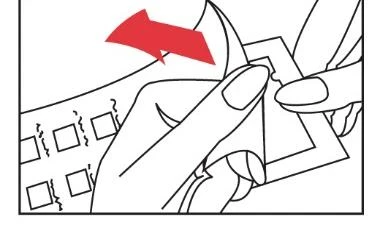
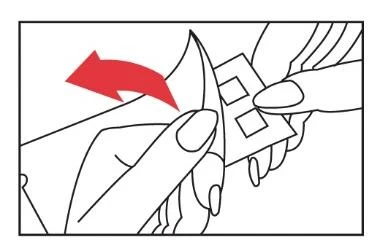
- Remove the protective plastic from the surface of the panel. Be careful not to touch the test substances. For stability reasons, panel 2 contains a desiccant.
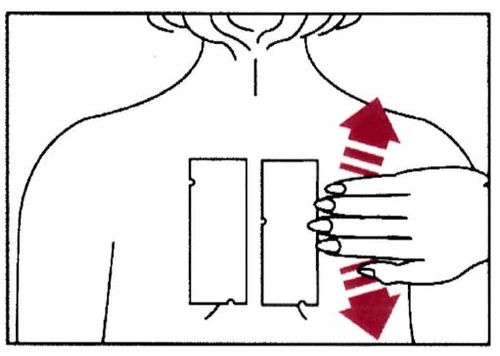
- Place the test on the upper back of the patient. However, the outer aspect of the arm may also be used. Starting from the center of the panel, smooth the edges outward, ensuring that each cell adheres well to the skin. The two panels should be positioned on each side of the spine, a few centimeters apart. The third panel should be placed adjacent to one of the other panels.
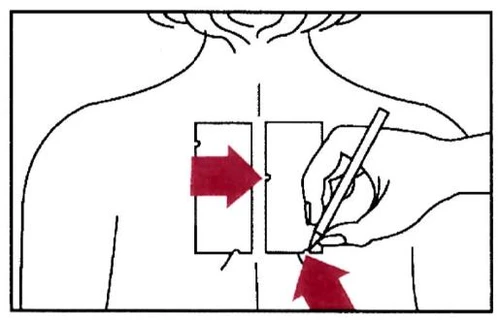
- The two notches on the panels (upper left and along the lower edge) must be marked with a medical-grade marker.
You must wear the test panels for at least 48 hours without removing them. Be careful not to
get the test area wet (water, sweat).
If the patch is removed or falls off prematurely, possible positive reactions to allergens you are truly allergic to may not be detected. Contact your doctor if the patch is
removed or detaches before 48 hours.
After 48 hours, the panels may be removed by you or your doctor.
When should the test be read?
Your doctor will read the test result half an hour after removal, and again 1–2 days after removal, when allergic reactions are fully developed and any possible irritant reactions have disappeared. Some allergens may occasionally cause reactions that appear up to 4–5 days after patch removal. Inform your doctor if this occurs.
What will the doctor look for?
The doctor will carefully examine the tested area for signs of an allergic reaction. This reaction usually consists of a rash with swelling, redness, and small blisters. Redness alone, however, does not necessarily indicate an allergic reaction. If you are allergic, the doctor will provide you with the following information:
- where, in your daily environment, you are likely to come into contact with the allergenic substances
- how best to avoid these substances. The doctor may suggest alternatives to items you need to avoid. If you have any doubts, consult your doctor or pharmacist.
Contact your doctor if you experience severe discomfort at the test site. The doctor may decide to remove the test.
4. Possible side effects
Like all medicines, this medicine can cause side effects, although not everyone experiences them.
Very common side effects (may affect more than 1 in 10 people):
- Irritation caused by the patch may occur, but generally disappears quickly
- Burning sensation.
- Prolonged test reactions. A positive test reaction usually disappears within 1-2 weeks, while a prolonged test reaction may persist for weeks or months. Common side effects (may affect up to 1 in 10 people):
- Test reactions may leave an area of skin temporarily lighter or darker.
- Skin redness due to irritation or inflammation (erythema).
Uncommon side effects (may affect up to 1 in 100 people):
- Flare-up of dermatitis.
Rare side effects (may affect up to 1 in 1,000 people):
- Sensitization to a substance in the test panel may occur during testing.
Not known (frequency cannot be estimated from available data):
- Anaphylactic reactions (systemic reaction, accompanied by a potentially life-threatening drop in blood pressure).
- Hypersensitivity (allergic reaction).
In extremely rare cases, and only in relation to certain substances, anaphylactic reactions (systemic reaction with potentially life-threatening hypotension) have been reported. Allergy clinics are, for other reasons, prepared to manage such events. Anaphylactic-type reactions related to the application of T.R.U.E. Test SmartPractice have not been documented.
Reporting of side effects
If you experience any side effect, including those not listed in this leaflet, please inform your doctor, pharmacist, or nurse. You can also report side effects directly via the national reporting system at https://www.aifa.gov.it/content/segnalazioni-reazioni-avverse .
By reporting side effects, you can help provide more information on the safety of this medicine.
5. How to store T.R.U.E. Test SmartPractice
Store in a refrigerator (2 °C – 8 °C).
Keep this medicine out of the sight and reach of children.
Do not use this medicine after the expiry date stated on the packaging. The expiry date refers to the last day of that month.
Do not dispose of any medicine via wastewater or household waste. Ask your pharmacist how to dispose of medicines no longer in use. This will help protect the environment.
6. Package contents and other information
What T.R.U.E. Test SmartPractice contains
In addition to the active substances listed on the first page, the test contains the following excipients: polyester fiber patch with binder (ethylene vinyl acetate copolymer) and acrylic adhesive, polyester cells, povidone 90, hydroxypropyl cellulose, methyl cellulose, -cyclodextrin, sodium carbonate, sodium bicarbonate, butylhydroxyanisole and butylhydroxytoluene.
Description of the appearance of T.R.U.E. Test SmartPractice and package contents
Each panel is covered with a protective polyethylene sheet coated with silicone and is individually packaged in sealed laminated foil pouches.
The pouch for panel 2 also contains a desiccant to preserve the allergens during storage.
Package contents: 10 units (1 unit = one panel 1, one panel 2 and one panel 3).
Marketing Authorization Holder and Manufacturer
SmartPractice Denmark ApS
Herredsvejen 2
3400 Hillerød
Denmark
[email protected]
Cut with scissors-------------------------------------------------------------------------------------------------------
The following information is intended exclusively for physicians or healthcare professionals:
Each package of T.R.U.E. Test SmartPractice includes a reading grid to allow rapid and easy identification of any allergen causing a reaction. To ensure correct positioning, the marks on the skin must align with the notches on the grid. Pay attention to the difference between sides 1 and 2 of the grid, which correspond to panels 1 and 2, respectively.
The interpretation method recommended by the International Contact Dermatitis Research Group is:
- Negative reaction ? Doubtful reaction: only slight macular erythema, no infiltration or very slight infiltration + Weak positive (non-vesicular) reaction: erythema, slight infiltration, possible papules ++ Strong positive (vesicular) reaction: erythema, infiltration, papules, vesicles +++ Extreme positive reaction: intense erythema, infiltration, coalescing vesicles RI Irritant reaction of various types NT Not tested
Notes
- Patients showing a negative reaction may still be sensitized to another substance not included in the test. Furthermore, false-negative results may occur. Repeating the test or performing a test with complementary substances may be indicated.
- A positive reaction must meet the criteria for an allergic reaction (papular or vesicular erythema and infiltration).
- Pustules and homogeneous or follicular erythema in patches without infiltration are generally signs of irritation and do not indicate allergy.
In evaluating a positive test response, the number of + signs assigned to the test response is not important; rather, it is essential to determine whether the response is a true positive reaction (caused by allergy) or a non-specific irritant reaction.
Occasionally, some of the allergens (neomycin sulfate, p-phenylenediamine, lanolin alcohols, Caine mix, gold sodium thiosulfate, parthenolide, Disperse Blue 106, bacitracin, imidazolidinyl urea, diazolidinyl urea, budesonide, hydrocortisone 17-butyrate and tixocortol-21-pivalate) may cause reactions that appear up to 4–5 days after application. Patients should be informed to report such reactions. If necessary, delayed reactions can be assessed during a follow-up medical visit 5–7 days after application.
All positive reactions must be carefully evaluated in the context of the individual patient’s clinical history and symptoms, particularly in cases of positive reactions to specific allergens with a lower rate of relevant sensitization (see gold sodium thiosulfate).
Contraindications
Severe or generalized dermatitis. The test should be postponed until the acute phase has resolved.
Known hypersensitivity to other excipients contained in the test, in addition to the active substances.
Special warnings and precautions for use
Sensitization to a substance in the test panel occurs only rarely. A reaction appearing more than 10 days after application may indicate contact sensitization.
The "excited skin syndrome" (Excited skin syndrome - angry back) is a state of hyperreactivity induced by dermatitis in other body areas or by a strong positive reaction to the skin test. Therefore, test results must be carefully evaluated in patients with simultaneous positive reactions in multiple cells. To identify which reactions are false positives, it may be necessary to repeat the test at a later time.
The use of T.R.U.E. Test SmartPractice in patients with a known history of anaphylactoid reactions should be carefully evaluated before application.
Excessive sweating and sun exposure at the test site should be avoided.
Tanning may reduce skin reactivity and lead to false-negative results.
Avoid applying the test on skin affected by acne, scars, dermatitis, or any other condition that could interfere with test results.
If a severe reaction to the test develops, the patient may be treated with topical corticosteroids or, in rare cases, systemic corticosteroids.
Butylhydroxyanisole (BHA) (E320) and butylhydroxytoluene (BHT) (E312) are present as antioxidants in cell no. 7 containing the allergen Colophonium (panel 1). BHA and BHT may cause local skin reactions (e.g., contact dermatitis); therefore, a false-positive reaction to Colophonium may occur.