Synflex
Italy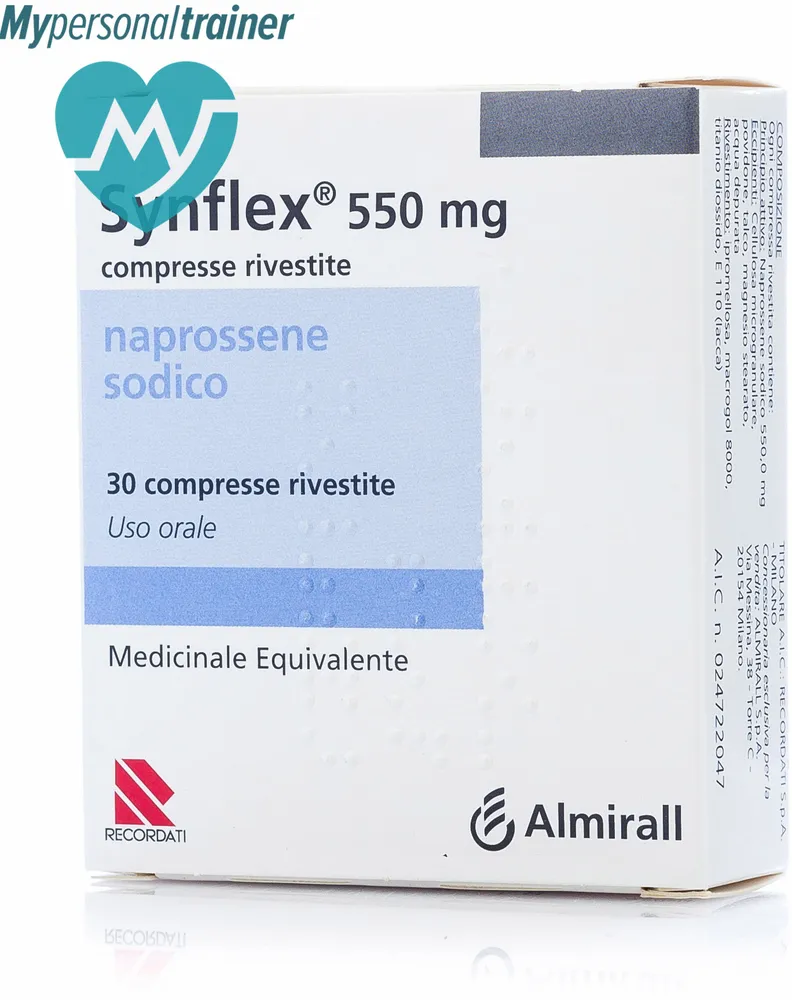
Table of Contents
- Patient Information Leaflet
- Synflex 550 mg film-coated tablets, 550 mg granules for oral suspension
- 1. What Synflex is and what it is used for
- 2. What you need to know before taking Synflex
- 3. How to take Synflex
- 4. Possible adverse effects
- 5. How to store Synflex
- 6. Package contents and other information
Patient Information Leaflet
Synflex 550 mg film-coated tablets, 550 mg granules for oral suspension
sodium naproxen
Please read all of this leaflet carefully before taking this medicine, as it contains important information for you.
- Keep this leaflet. You may need to read it again.
- If you have any questions, ask your doctor or pharmacist.
- This medicine has been prescribed for you only. Do not give it to others, even if they have the same symptoms as you, because it could be harmful.
- If you experience any side effects, including those not listed in this leaflet, contact your doctor or pharmacist. See section 4.
Contents of this leaflet:
- What Synflex is and what it is used for
- What you need to know before taking Synflex
- How to take Synflex
- Possible side effects
- How to store Synflex
- Contents of the pack and other information
1. What Synflex is and what it is used for
Synflex contains the active substance sodium naproxen.
Sodium naproxen belongs to a class of medicines called non-steroidal anti-inflammatory/anti-rheumatic drugs,
which have various actions and play an important role in pain control.
Synflex is used to treat the symptoms of:
- joint pain
- muscle pain
- pain following surgical procedures
- pain following dental procedures
- menstrual pain (dysmenorrhoea)
- headache (migraine)
2. What you need to know before taking Synflex
Do not take Synflex
- if you are allergic to naproxen sodium or to any of the other ingredients of this medicine (listed in section 6)
- if you have a lesion of the stomach or duodenal mucosa (active gastroduodenal or peptic ulcer)
- if you suffer from inflammation of the colon (ulcerative colitis)
- if you have a history of gastrointestinal bleeding or perforation due to previous treatment with naproxen, or a history of frequent bleeding/mucosal injury of the stomach (peptic ulcer) (two or more distinct episodes)
- if you suffer from severe heart problems (severe heart failure)
- if you have a history of allergies such as asthma, itching (urticaria), allergic rhinitis, severe and rapid generalized allergic reaction (anaphylactic or anaphylactoid reactions), presence of drop-shaped nodules inside the nose (nasal polyps) associated with the use of aspirin (acetylsalicylic acid) and/or other non-steroidal anti-inflammatory drugs (NSAIDs)
- if you are pregnant or breastfeeding
- if you suffer from kidney problems (renal failure)
- if it is for a child under 2 years of age.
Warnings and precautions
Talk to your doctor or pharmacist before taking Synflex:
- if you are taking other non-steroidal anti-inflammatory drugs (NSAIDs)
- if you are elderly, as you may be more likely to experience some of the adverse effects caused by Synflex, such as gastrointestinal bleeding/perforation
- if you have a history of gastric wall injury with bleeding/perforation (gastrointestinal hemorrhage, ulceration, or perforation)
- if you have or have been diagnosed with acute intestinal inflammation or if you have experienced stomach or intestinal disturbances after using medications for rheumatic diseases
- if you have a history of gastric or intestinal toxicity
- if you are taking anti-inflammatory medicines (oral corticosteroids), blood-thinning medicines (anticoagulants such as warfarin), antidepressants (selective serotonin reuptake inhibitors), or medicines such as aspirin or analogues (see “Other medicines and Synflex”)
- if you suffer from chronic inflammatory disease of the stomach and intestine (ulcerative colitis or Crohn’s disease)
- if you have impaired function of the heart, liver, or kidneys
- if you have high blood pressure and/or heart problems (heart failure)
- if you have a history of swelling of the legs, arms, face, mouth, or tongue (angioedema), breathing difficulties (bronchospasm, asthma, rhinitis), or presence of drop-shaped nodules inside the nose (nasal polyps)
- if you have a history of allergic reactions or active allergic manifestations
- if you have bleeding disorders (coagulation disorders)
- if you are planning a pregnancy
- if you have fertility problems or are undergoing fertility investigations.
Serious skin reactions, including exfoliative dermatitis, Stevens-Johnson syndrome, toxic epidermal necrolysis,
drug reaction with eosinophilia and systemic symptoms (DRESS), have been reported in association with
Synflex. If you notice any of the symptoms related to these serious skin reactions described in section 4,
discontinue treatment with Synflex and consult your doctor immediately.
Synflex must be discontinued at the first appearance of skin rashes, mucosal lesions, or any other sign of allergic reaction (hypersensitivity).
The use of high doses and prolonged treatment with Synflex may slightly increase the risk of heart attack (myocardial infarction) or damage to brain vessels (stroke).
Do not exceed the recommended dose or duration of treatment.
If you have heart problems or a history of stroke, or think you may be at risk for these conditions (e.g., if you have high blood pressure, diabetes, high cholesterol, or are a smoker), discuss your treatment with your doctor or pharmacist.
Children and adolescents
Synflex is contraindicated in children under 2 years of age.
Other medicines and Synflex
Tell your doctor or pharmacist if you are taking, have recently taken, or might take any other medicine.
The effects of Synflex may be influenced by, or may influence, the following medicines:
- Diuretics, ACE inhibitors, and angiotensin II antagonists (for treatment of high blood pressure), as their effect may be reduced when taken together with Synflex and may increase the risk of kidney damage in some dehydrated patients or elderly patients who already have impaired kidney function.
- Furosemide (to increase urine output), as concomitant administration with certain non-steroidal anti-inflammatory drugs may reduce the effect of this medicine.
- Lithium (for treatment of manic-depressive illness), as the amount of lithium in the blood may become too high.
- Propranolol and beta-blockers (for treatment of high blood pressure), as Synflex may reduce the effect of these medicines.
- Probenecid (for treatment of gout), as it increases the amount and duration of Synflex in the body.
- Methotrexate (for treatment of tumors and diseases of the immune system), as it remains in the body longer, possibly increasing its toxicity.
- Anticoagulants (to thin the blood), as non-steroidal anti-inflammatory drugs (NSAIDs) can increase the effects of anticoagulants such as warfarin or coumarin-type anticoagulants (see section “What you need to know before taking Synflex”).
- Antiplatelet agents (aspirin or similar medicines) and selective serotonin reuptake inhibitors (SSRIs) (for depression), as they increase the risk of gastrointestinal bleeding (see section “What you need to know before taking Synflex”).
- Corticosteroids (anti-inflammatory hormones), as they increase the risk of gastrointestinal injury or bleeding (see section “What you need to know before taking Synflex”).
- Naproxen sodium may reduce the effectiveness of contraceptive devices (intrauterine devices).
- Aspirin/acetylsalicylic acid used to prevent blood clot formation.
Concomitant use of non-steroidal anti-inflammatory drugs (NSAIDs), including Synflex, is discouraged with:
- naproxen
- acetylsalicylic acid
- other NSAIDs
- quinolones (antibiotics).
Synflex may interfere with certain adrenal function tests. If you are scheduled for adrenal function testing, temporarily discontinue Synflex therapy 48 hours before the test.
Synflex may also interfere with certain urinary 5-hydroxyindoleacetic acid tests.
Synflex and alcohol
Do not consume alcohol during treatment with Synflex.
Pregnancy, breastfeeding, and fertility
If you are pregnant, suspect you may be pregnant, planning to become pregnant, or breastfeeding, consult your doctor or pharmacist before taking this medicine.
This medicine is contraindicated during pregnancy and breastfeeding. It may cause kidney and heart problems in the unborn child. In addition, it may expose both you and your baby to potential bleeding and may delay or prolong labor beyond expected duration.
Do not take Synflex if you are planning a pregnancy. From week 20 of pregnancy onwards, naproxen sodium may cause kidney problems in the fetus, reducing levels of amniotic fluid surrounding the baby (oligohydramnios), or causing narrowing of a blood vessel (ductus arteriosus) in the baby’s heart.
Discontinue Synflex if you have fertility problems or are undergoing fertility investigations.
Driving and using machines
Due to possible dizziness, drowsiness, vertigo, or depression, Synflex may impair your ability to drive or operate machinery. Avoid such activities if you experience these symptoms.
Synflex coated tablets contain
- E110 (sunset yellow). May cause allergic reactions;
- sodium. This medicine contains 50 mg of sodium (main component of table salt) per tablet. This corresponds to 2.5% of the maximum daily dietary intake recommended for an adult.
Synflex oral suspension granules contain
- sucrose. If your doctor has diagnosed you with an intolerance to certain sugars, contact him before taking this medicine;
- sodium. This medicine contains 181 mg of sodium (main component of table salt) per sachet. This corresponds to 9% of the maximum daily dietary intake recommended for an adult.
3. How to take Synflex
Take this medicine exactly as directed by your doctor or pharmacist. If you have any doubts, consult your doctor or pharmacist.
Adults
The recommended dose is:
- 550 mg every 12 hours, as advised by the doctor.
Elderly
- If you are elderly, your doctor will carefully determine the dose you should take.
If you have liver problems (hepatic insufficiency)
- Your doctor will carefully determine the dose you should take.
If you have kidney problems (impaired renal function)
- Your doctor will carefully determine the dose you should take.
If you have severe kidney problems (renal insufficiency)
- Do not take Synflex.
Use in children and adolescents
Synflex is contraindicated in children under 2 years of age (see "What you need to know before taking Synflex").
If you take more Synflex than you should
If you accidentally take an excessive dose of Synflex, inform your doctor immediately or go to the nearest hospital.
If you take more Synflex than you should, the following may occur: dizziness, drowsiness, abdominal disturbances, stomach pain, nausea or vomiting, transient alterations in liver and kidney function, a decrease in a blood substance causing increased bleeding tendency (hypoprothrombinemia), increased blood acidity, absence of breathing, disorientation. Bleeding from the stomach and intestines may also occur.
If you forget to take Synflex
Do not take a double dose to make up for the forgotten dose.
If you stop taking Synflex
If you have any doubts about using this medicine, consult your doctor or pharmacist.
4. Possible adverse effects
Like all medicines, this medicine can cause adverse effects, although not everyone experiences them.
Stop taking Synflex and contact your doctor immediately if you notice any of the following adverse effects:
Not known: frequency cannot be determined from the available data
- Widespread skin rash, high body temperature, increased liver enzymes, blood abnormalities (eosinophilia), swollen lymph nodes, and involvement of other organs (drug reaction with eosinophilia and systemic symptoms, also known as DRESS). See also section 2.
- A distinct allergic skin reaction known as fixed drug eruption, which usually reappears at the same site or sites upon re-exposure to the medicine and may appear as round or oval patches with redness and swelling of the skin, skin rash with blisters (urticaria), or itching sensation.
The main adverse effects are:
- Changes in the number of certain types of blood cells (thrombocytopenia, granulocytopenia, leukopenia, eosinophilia, aplastic or hemolytic anemia)
- Severe and rapid generalized allergic reactions (anaphylactic or anaphylactoid reactions)
- High potassium levels in the blood (hyperkalemia)
- Abnormal dreams
- Depression
- Insomnia
- Dizziness
- Disorientation
- Seizures
- Headache
- Drowsiness
- Inflammation of the optic nerve (retrobulbar optic neuritis)
- Cognitive dysfunction
- Difficulty concentrating
- Inflammation of the membranes covering the brain (aseptic meningitis)
- Vision disorders (papillitis, papilledema, visual impairment, corneal opacity)
- Hearing disorders (hearing impairment, ear noise, tinnitus, vertigo)
- Irregular or forceful heartbeat (palpitations)
- Rapid heartbeat (tachycardia)
- Heart function problems (heart failure, myocardial infarction)
- Damage to blood vessels in the brain (stroke)
- High blood pressure (hypertension)
- Inflammation of blood vessels (vasculitis)
- Swelling (edema)
- Breathing difficulties (dyspnea, asthma, bronchospasm)
- Inflammation of the lungs (eosinophilic pneumonia)
- Fluid accumulation in the lungs (pulmonary edema)
- Throat swelling (laryngeal edema)
- Injury, bleeding, or perforation of the stomach and intestine (peptic ulcers, gastrointestinal perforation or hemorrhage)
- Nausea
- Vomiting
- Diarrhea
- Passage of gas from the anus (flatulence)
- Constipation
- Digestive difficulties (dyspepsia)
- Abdominal and stomach pain (abdominal and epigastric pain), stomach burning (gastric pyrosis)
- Blood in the stool (melena)
- Vomiting blood (hematemesis)
- Mouth inflammation (ulcerative stomatitis)
- Worsening of chronic inflammatory bowel disease (exacerbation of colitis and Crohn's disease)
- Inflammation of the esophagus (esophagitis)
- Inflammation of the pancreas (pancreatitis)
- Inflammation of the stomach (gastritis)
- Yellowing of the skin (jaundice)
- Inflammation of the liver (hepatitis)
- Skin rashes
- Itching
- Hives
- Bruising (ecchymoses)
- Rapid swelling of legs, arms, face, or tongue (angioedema)
- Appearance of red, swollen lumps under the skin (erythema multiforme, erythema nodosum, lichen planus)
- Red spots on the body (purpura)
- Blistering reactions including a condition called Stevens-Johnson syndrome, with severe skin, mouth, and other body part lesions, accompanied by high fever, vomiting, diarrhea, and joint pain
- Skin death (toxic epidermal necrolysis)
- Abnormal and exaggerated skin reaction to light (photosensitivity reactions)
- Hair loss (alopecia)
- Muscle pain (myalgia)
- Muscle weakness
- Blood in urine (hematuria)
- Reduced kidney function (interstitial nephritis, nephrotic syndrome, renal failure, renal papillary necrosis)
- Female infertility
- Excessive thirst
- Fever
- Chills
- Malaise
- Abnormal liver function laboratory test, increased creatinine in blood (hypercreatinemia)
Reporting of adverse effects
If you experience any adverse effect, including those not listed in this leaflet, please consult your doctor or pharmacist. You may also report adverse effects directly via the national reporting system at www.aifa.gov.it/content/segnalazioni-reazioni-avverse.
By reporting adverse effects, you can help provide more information on the safety of this medicine.
5. How to store Synflex
Keep this medicine out of the sight and reach of children.
Do not use this medicine after the expiry date stated on the pack after “Expires”. The expiry date refers to the last day of that month.
Do not dispose of medicines via wastewater or household waste. Ask your pharmacist how to dispose of medicines you no longer use. This will help protect the environment.
6. Package contents and other information
Synflex 550 mg coated tablets
- The active substance is naproxen sodium. One coated tablet contains 550 mg of naproxen sodium.
- The other components are: microcrystalline cellulose, povidone, talc, magnesium stearate, purified water. The tablet coating consists of: hypromellose, macrogol 8000, titanium dioxide, E 110 (sunset yellow).
Synflex 550 mg granules for oral suspension
- The active substance is naproxen sodium. One sachet contains 550 mg of naproxen sodium.
- The other components are: microcrystalline cellulose, sodium chloride, sodium carboxymethylcellulose, povidone, citrus flavour, citric acid, fumaric acid, sodium saccharin, sucrose, maize starch.
Description of the appearance of Synflex and pack contents
Synflex 550 mg coated tablets are available in packs of 10 and 30 tablets in PVC/aluminum blisters.
Synflex 550 mg granules for oral suspension are available in packs of 30 sachets in paper/aluminum/polyethylene laminate.
Marketing Authorisation Holder
RECORDATI Industria Chimica e Farmaceutica S.p.A. – Via Matteo Civitali, 1 – 20148 Milan, Italy.
Sales Licensee: ALMIRALL S.p.A. Via Messina, 38 – Tower C – 20154 – Milan, Italy.
Manufacturer
Synflex 550 mg coated tablets
RECORDATI Industria Chimica e Farmaceutica S.p.A. – Via Matteo Civitali, 1 – 20148 Milan, Italy.
SYNFLEX 550 mg granules for oral suspension
Fine Foods & Pharmaceuticals N.T.M. S.p.A. - Via Grignano, 43 – 24041 Brembate (BG), Italy.