Synacthen
Italy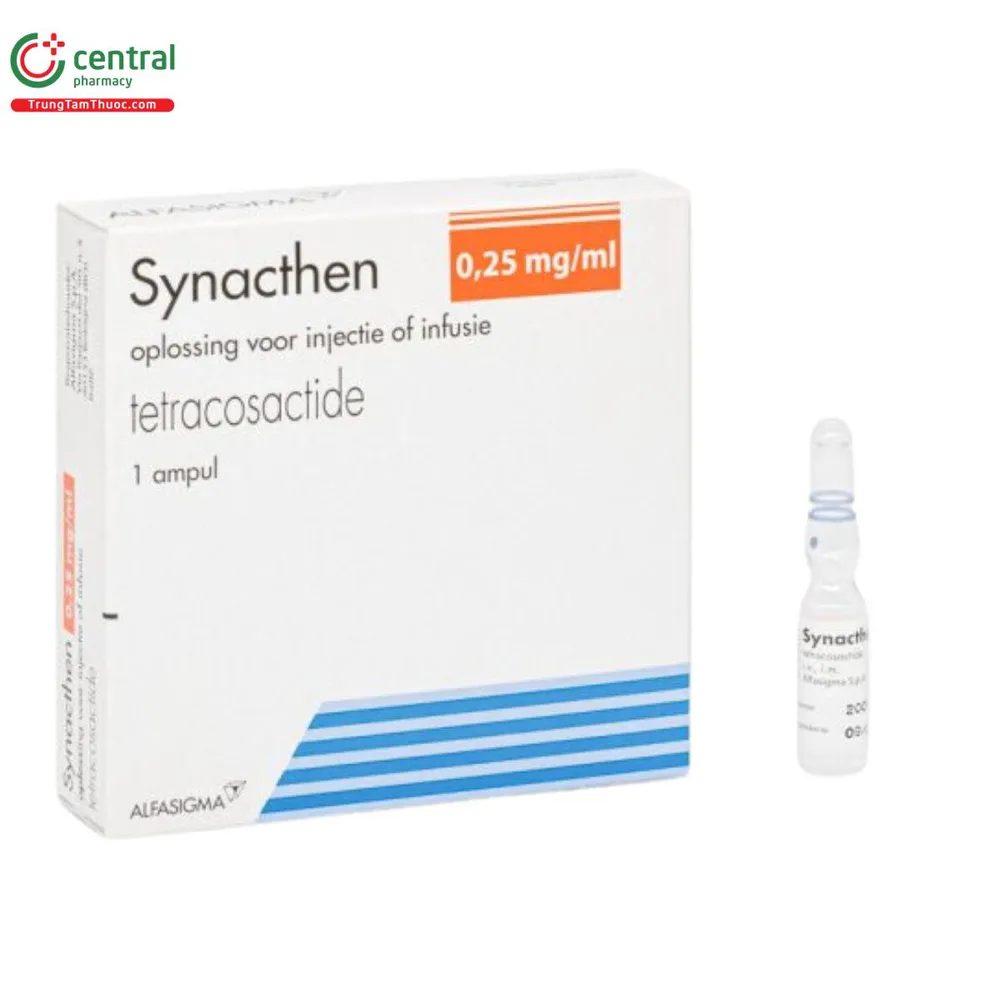
Table of Contents
- Package leaflet: Information for the user
- Synacthen 0,25 mg/ml injection solution
- 1. What Synacthen is and what it is used for
- 2. What you should know before using Synacthen
- 3. How to use Synacthen
- 4. Possible side effects
- 5. How to store Synacthen
- 6. Package contents and other information
- The following information is intended for healthcare professionals only:
Package leaflet: Information for the user
Synacthen 0,25 mg/ml injection solution
tetracosactide hexaacetate
Read this leaflet carefully before using this medicine because it contains important information for you.
- Keep this leaflet. You may need to read it again.
- If you have any questions, ask your doctor, pharmacist or nurse.
- This medicine has been prescribed for you only. Do not give it to others, even if their symptoms are the same as yours, because it could be harmful.
- If you experience any side effects, including those not listed in this leaflet, tell your doctor or pharmacist. See section 4.
Contents of this leaflet:
- What Synacthen is and what it is used for
- What you need to know before using Synacthen
- How to use Synacthen
- Possible side effects
- How to store Synacthen
- Contents of the pack and other information
1. What Synacthen is and what it is used for
Synacthen contains tetracosactide, which is similar to ACTH, a hormone that stimulates the adrenal gland (a gland located above the kidney) to produce certain hormones.
Diagnostic use
Synacthen is used intravenously and intramuscularly for diagnostic purposes to assess adrenal gland function.
Therapeutic use
Synacthen is indicated in infantile myoclonic encephalopathy with hypsarrhythmia (a brain disorder causing sudden muscle contractions or relaxations and abnormalities in the electroencephalogram (a test that records the brain's electrical activity)).
2. What you should know before using Synacthen
Do not use Synacthen
- if you are allergic to tetracosactide, other ACTH hormones, or any of the other ingredients of this medicine (listed in section 6)
- if you have mental disorders (acute psychosis)
- if you have infectious diseases
- if you have a stomach or upper intestinal lesion (peptic ulcer)
- if you have heart problems that do not respond to medication (therapy-resistant heart failure)
- if you have a disease caused by increased production of ACTH, a hormone produced by a gland called the pituitary (Cushing's syndrome)
- if you have a condition caused by reduced adrenal activity (primary adrenocortical insufficiency)
- if you have a condition characterized by excessive production of androgenic hormones (adrenogenital syndrome)
- for the treatment of asthma (bronchial constriction and inflammation) or other allergic conditions (see section "Warnings and precautions")
- if you have very high blood pressure (severe hypertension)
- if you have severe structural bone disorders (severe osteoporosis).
Warnings and precautions
Talk to your doctor or pharmacist before using Synacthen.
Contact your doctor immediately:
- if you experience the following while using Synacthen:
- local or systemic allergic reactions during or after an injection, for example:
- severe erythema (skin redness) and pain at the injection site
- urticaria (skin irritation)
- pruritus (itching)
- flushing
- severe malaise
- difficulty breathing (dyspnea)
These reactions usually occur within 30 minutes after the injection; therefore, your doctor will monitor you during this period. If you experience these reactions, treatment with Synacthen must be stopped immediately, and any ACTH-containing preparation must be avoided in the future.
Inform your doctor:
- if you experience the following while using Synacthen:
- euphoria (a state of enthusiasm and excitement)
- insomnia
- mood and personality changes
- severe depression
- symptoms of actual psychosis (mental disorders) or signs of fluid and salt retention (weight gain and swelling)
- eye problems such as cataract (clouding of the lens) and glaucoma (a serious eye disease characterized by increased intraocular pressure and reduced vision).
Inform your doctor before using Synacthen:
- if you are prone to allergies, especially asthma, because you should not use Synacthen unless specifically prescribed by your doctor
- if you have previously used ACTH-containing medicines, especially if you experienced allergic reactions after their use
- if you have an underactive thyroid (hypothyroidism)
- if you have severe liver problems (hepatic cirrhosis)
- if you have an eye infection caused by the Herpes simplex virus
- if you have amebiasis (an intestinal infection) that could reactivate (latent)
- if you have latent tuberculosis or have had a positive tuberculin test (screening test to detect tuberculosis infection)
- if you are due to be vaccinated against smallpox or with other vaccines
- if you have a bowel disorder (diverticulitis)
- if you recently underwent surgery involving intestinal anastomosis (surgical connection of two parts of the intestine)
- if you have a chronic inflammatory bowel disease (ulcerative colitis)
- if your kidneys are not functioning properly (renal insufficiency)
- if you have high blood pressure (arterial hypertension)
- if you are prone to thrombus and embolus formation (thromboembolism)
- if you have a disease characterized by altered bone structure (osteoporosis)
- if you have a severe muscle disease (myasthenia gravis).
Exercise particular caution:
- Prolonged use of Synacthen may be associated with:
- hypophysis-adrenal axis insufficiency (altered regulation of hormone production by the adrenal glands). Therefore, your doctor will request follow-up tests to prescribe appropriate therapy if necessary.
Diagnostic use
If you are scheduled to undergo a Synacthen test to assess reduced adrenal function, inform your doctor if any of the following conditions apply to you:
- if you are taking oral contraceptives (birth control pills)
- if you recently underwent surgery
- if you have severe liver disease (severe hepatopathies) or kidney disease (nephrotic syndrome)
- if your health condition is critical.
Children and adolescents
During treatment, your doctor will monitor growth.
In case of prolonged treatment with high doses, your doctor will arrange regular heart function checks in newborns and children (see section 2 "What you should know before using Synacthen").
Other medicines and Synacthen
Inform your doctor or pharmacist if you are currently using, have recently used, or might use any other medicines.
Inform your doctor if you are being treated with:
- antiepileptic drugs (medicines for seizures), such as:
- valproic acid
- phenytoin
- clonazepam
- nitrazepam
- phenobarbital
- primidone
- medicines for diabetes
- medicines for treating high blood pressure
Fertility, pregnancy and breastfeeding
If you are pregnant, suspect you may be pregnant, planning a pregnancy, or breastfeeding, consult your doctor or pharmacist before using this medicine.
Pregnancy and breastfeeding
Clinical data on the risk during pregnancy and breastfeeding are not available.
Your doctor will prescribe Synacthen only if strictly necessary.
Fertility
No data are available.
Driving and using machines
You should exercise particular caution when driving or operating machinery.
Synacthen contains sodium
This medicine contains less than 1 mmol (23 mg) of sodium per vial, i.e., it is essentially 'sodium-free'.
For those engaged in sports
Using this medicine without therapeutic need constitutes doping and may result in a positive anti-doping test.
3. How to use Synacthen
Use this medicine exactly as instructed by your doctor. If you have any doubts, consult your doctor or pharmacist.
Synacthen must be administered only under medical supervision.
THERAPEUTIC USE
Treatment is initiated with daily administration, and after approximately 3 days, intermittent therapy is started. The infusion lasts no longer than 4 hours.
Adults and adolescents over 12 years of age
The recommended initial dose is 1 mg per day.
In acute cases, 1 mg every 12 hours.
Once acute symptoms are under control, the recommended maintenance dose is 1 mg every 2–3 days.
If responding well to treatment, the dose may be reduced to 0.5 mg every 2–3 days or 1 mg weekly.
Children
The doctor will determine the appropriate dose based on individual patient response.
Infants (28 days–23 months)
The recommended initial dose is 0.25 mg per day.
The recommended maintenance dose is 0.25 mg every 2–8 days.
Children aged 2 to 5 years
The recommended initial dose is 0.25–0.5 mg per day.
The recommended maintenance dose is 0.25–0.5 mg every 2–8 days.
Children aged 6 to 12 years
The recommended initial dose is 0.25–1 mg per day.
The recommended maintenance dose is 0.25–1 mg every 2–8 days.
DIAGNOSTIC USE
The doctor will assess plasma cortisol levels immediately before and 30 minutes after intramuscular or intravenous injection of 0.25 mg of Synacthen.
How to administer Synacthen
- Shake well before use.
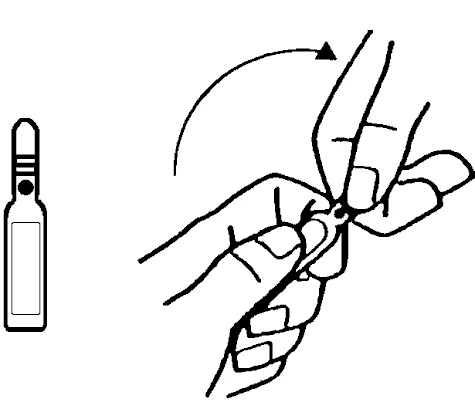
- Hold the vial as shown in the illustration, with the coloured dot facing upwards.
- Break off with a sharp movement.
If you use more Synacthen than you should
In case of accidental ingestion or overdose of Synacthen, contact your doctor immediately or go to the nearest hospital.
In case of overdose, the following signs and symptoms may occur:
- fluid retention (weight gain and swelling)
- excessive adrenal activity (Cushing's syndrome)
Treatment
In case of overdose, treatment will be discontinued or the dosage reduced.
If you forget to use Synacthen
Do not use a double dose to make up for the missed dose.
If you stop treatment with Synacthen
If you have any doubts about using this medicine, consult your doctor or pharmacist.
4. Possible side effects
Like all medicines, this medicine can cause side effects, although not everybody gets them.
The side effects listed below are of unknown frequency (the frequency cannot be determined from the available data).
Immediately inform your doctor if you experience signs and symptoms of allergy (hypersensitivity reactions), which may include:
- skin reactions at the injection site
- dizziness
- nausea
- vomiting
- urticaria
- itching
- flushing
- malaise
- dyspnoea (difficulty breathing)
- angioneurotic oedema or Quincke's oedema (swelling of the face, lips and neck)
These reactions tend to be more severe (up to anaphylactic shock) in patients predisposed to allergies, particularly those suffering from asthma.
Side effects related to the active substance:
- adrenal haemorrhage
Side effects related to the effects of certain hormones produced by the adrenal gland (glucocorticoids and mineralocorticoids).
The effects listed below are rarely observed when Synacthen is used short-term (for diagnostic use), but may occur when Synacthen is used for therapeutic purposes:
-
increased susceptibility to infections
-
abscess
-
increased number of white blood cells (leucocytosis)
-
Cushing's syndrome
-
secondary adrenal and pituitary insufficiency in response to stress periods, e.g. after trauma, surgery or illness
-
reduced carbohydrate tolerance
-
increased blood sugar levels (hyperglycaemia)
-
manifestation of latent diabetes
-
growth of hair in areas where it is normally absent, and typical of the male sex (hirsutism)
-
menstrual irregularities
-
increased appetite
-
decreased potassium levels in the blood
-
decreased calcium levels
-
sodium retention
-
fluid retention
-
psychiatric disturbances
-
headache
-
dizziness
-
seizures
-
increased intracranial pressure with consequent swelling of part of the optic nerve (benign intracranial hypertension with papilloedema)
-
posterior subcapsular cataract (clouding of the lens)
-
increased pressure inside the eyes
-
glaucoma
-
protruding eyes (exophthalmos)
-
congestive heart failure
-
reversible enlargement of the heart in neonates and children treated for long periods with high doses
-
blood vessel occlusion (embolism)
-
severe inflammation of blood vessels (necrotising vasculitis)
-
increased blood pressure
-
damage to the stomach and the first part of the intestine (peptic ulcer), with possible perforation and bleeding
-
inflammation of the pancreas (pancreatitis)
-
abdominal distension
-
inflammation of the oesophagus with ulcer formation (ulcerative oesophagitis)
-
thinning of the skin (cutaneous atrophy)
-
small, bright red spots on the skin (petechiae)
-
bruising (ecchymoses)
-
redness of the skin (erythema)
-
increased sweating
-
acne
-
change in skin colour (cutaneous hyperpigmentation)
-
severe alteration in bone structure (osteoporosis)
-
vertebral compression fractures
-
osteonecrosis (degeneration of the femoral and humeral heads)
-
pathological fractures of long bones
-
tendon ruptures
-
muscle weakness
-
alteration in muscle structure and function (myopathy)
-
loss of muscle mass (muscle atrophy)
-
weight gain
-
impaired wound healing
-
growth retardation
-
nitrogen loss due to protein breakdown (negative nitrogen balance)
-
inhibition of response to skin tests
Reporting of side effects
If you experience any side effect, including those not listed in this leaflet, please tell your doctor or pharmacist. You can also report side effects directly via the national reporting system at the website: https://www.aifa.gov.it/content/segnalazioni-reazioni-avverse.
By reporting side effects, you can help provide more information on the safety of this medicine.
5. How to store Synacthen
Store in the refrigerator (2°C-8°C). Keep the medicine in its original packaging to protect it from light.
Keep this medicine out of the sight and reach of children.
Do not use this medicine after the expiry date stated on the pack after "Exp". The expiry date refers to the last day of that month.
Do not dispose of medicines via wastewater or household waste. Ask your pharmacist how to dispose of medicines you no longer use. This will help protect the environment.
6. Package contents and other information
What Synacthen contains
- The active substance is tetracosactide hexaacetate. Each vial contains 0.27 mg of tetracosactide hexaacetate equivalent to 0.25 mg of tetracoside.
- The other components are acetic acid, sodium acetate, sodium chloride, water for injectable preparations.
Description of the appearance of Synacthen and package contents
Each package contains 1 vial with 0.25 mg/ml solution for injection.
Marketing Authorization Holder and Manufacturer
Alfasigma S.p.A. - Via Ragazzi del '99, n. 5 - 40133 Bologna (BO)
Manufacturer
DOPPEL FARMACEUTICI Srl
Via Volturno, 48
20089 Rozzano (Milan)
Alfasigma S.p.A.
Via Pontina km 30,400
00071 Pomezia (Rome)
The following information is intended for healthcare professionals only:
THERAPEUTIC USE
For therapeutic use, Synacthen injectable solution may be administered as an infusion in
glucose (5% or 12.5%) or physiological (NaCl 0.9%) solution (see 6.2 “Incompatibilities”).
Treatment is initiated with daily administration, and after approximately 3 days, intermittent therapy is started.
The infusion must last no longer than 4 hours.
For example, if 0.5 mg or 1 mg of tetracosactide (= 2 or 4 vials of Synacthen) is diluted in 250 ml of infusion fluid,
the infusion may be completed in approximately 4 hours at a rate of 20 drops (1 ml) per minute.
DIAGNOSTIC USE
Rapid Synacthen test (30 minutes)
Plasma cortisol levels are measured immediately before and exactly 30 minutes after an intramuscular (i.m.) or intravenous (i.v.) injection of 0.25 mg of Synacthen injectable solution.
Adrenal cortical function is considered normal if plasma cortisol increases by at least 200 nmol/l (70 \μg/l), i.e., if cortisol levels measured 30 minutes after injection of Synacthen injectable solution exceed 500 nmol/l (180 \μg/l). All plasma samples must be stored in a freezer until cortisol levels are assayed.
Incompatibilities
Acetated Ringer's solution is not suitable for infusion.
Only freshly prepared solutions should be used, and for stability reasons, the duration of infusion must not exceed 4 hours.
It is not advisable to add Synacthen to blood or plasma intended for transfusion, as it may be degraded by enzymes present in blood.